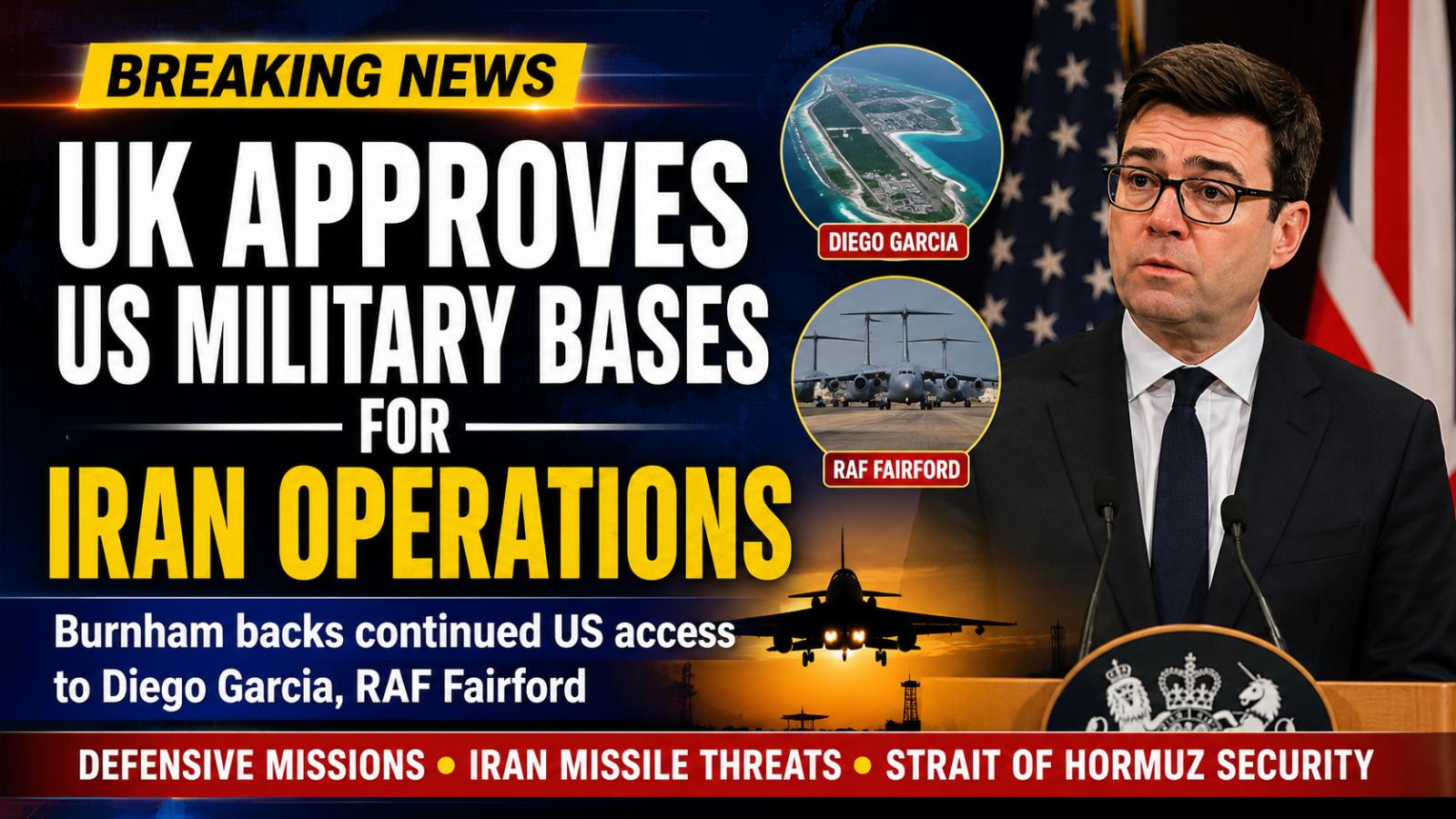
The UK approves US military bases for Iran operations under Prime Minister Andy Burnham, continuing Britain's defense cooperation with Washington. The decision allows US aircraft to operate from Diego Garcia and RAF Fairford for defensive missions linked to Iran missile threats and Strait of Hormuz security, while raising political and legal debate within the UK.
UK Approves US Military Bases for Iran Operations Under Burnham
UK-US Defense Cooperation Continues
The United Kingdom will continue allowing the United States to use British military bases for operations linked to Iran after Prime Minister Andy Burnham approved the existing defense policy shortly after taking office. The decision maintains the approach followed by the previous government and signals that Britain's strategic military cooperation with Washington remains unchanged despite the leadership transition.
According to information attributed to government officials, the policy allows US military aircraft to continue operating from key British-controlled facilities, including Diego Garcia in the Indian Ocean and RAF Fairford in Gloucestershire. Officials say these missions are defensive in nature and are intended to strengthen regional security while protecting commercial shipping routes affected by growing tensions in the Middle East.
Diego Garcia and RAF Fairford Remain Strategic Assets
Diego Garcia has long served as one of the most important military logistics hubs for the United States and the United Kingdom because of its location in the Indian Ocean. RAF Fairford also plays a significant role by supporting long-range bomber deployments and military operations involving allied forces.
Government officials say the continued access to these facilities is intended to help counter Iranian missile threats and support maritime security around the Strait of Hormuz, one of the world's busiest energy shipping routes. Any disruption in this region can affect global oil supplies and international trade, making stability a priority for Western allies.
The decision follows a review conducted by senior ministers and national security officials before Burnham became prime minister. After assuming office, he received a briefing on the review and endorsed the recommendation to continue the existing arrangement with the United States.
Strait of Hormuz Security Remains a Priority
The Strait of Hormuz remains one of the most strategically important waterways in the world, carrying a significant share of global oil exports. Western governments have repeatedly expressed concerns about regional instability, missile attacks and threats to commercial vessels operating in nearby waters.
British and American officials have consistently described recent military deployments as defensive measures designed to deter attacks rather than expand military conflict. Maintaining access to military infrastructure allows rapid response capabilities should shipping lanes or allied forces face immediate threats.
Legal and Political Questions Continue
The policy is expected to generate political debate within the United Kingdom. Opposition parties and several lawmakers have argued that permitting US forces to operate from British facilities could increase Britain's involvement in future military action against Iran.
Officials have also reportedly examined the legal implications of any future escalation, particularly after comments from US President Donald Trump suggesting that Iranian civilian infrastructure could become a possible target during military operations. Legal experts within government are said to have reviewed Britain's obligations under international law before the policy was reaffirmed.
Neither the UK government nor the US administration has issued an official public statement specifically addressing the reported discussions. However, the continued arrangement reflects the close security partnership that has existed between London and Washington for decades.
Britain's Strategic Position
The decision highlights the UK's effort to balance its longstanding alliance with the United States while managing domestic political concerns over military involvement in the Middle East. Defense cooperation remains a central pillar of British foreign policy, particularly during periods of heightened regional tension.
Officials continue to emphasize that the use of British bases is intended to support defensive operations, protect international shipping and maintain regional stability. Whether the policy remains politically sustainable will likely depend on future developments involving Iran, US military operations and diplomatic efforts aimed at reducing tensions.