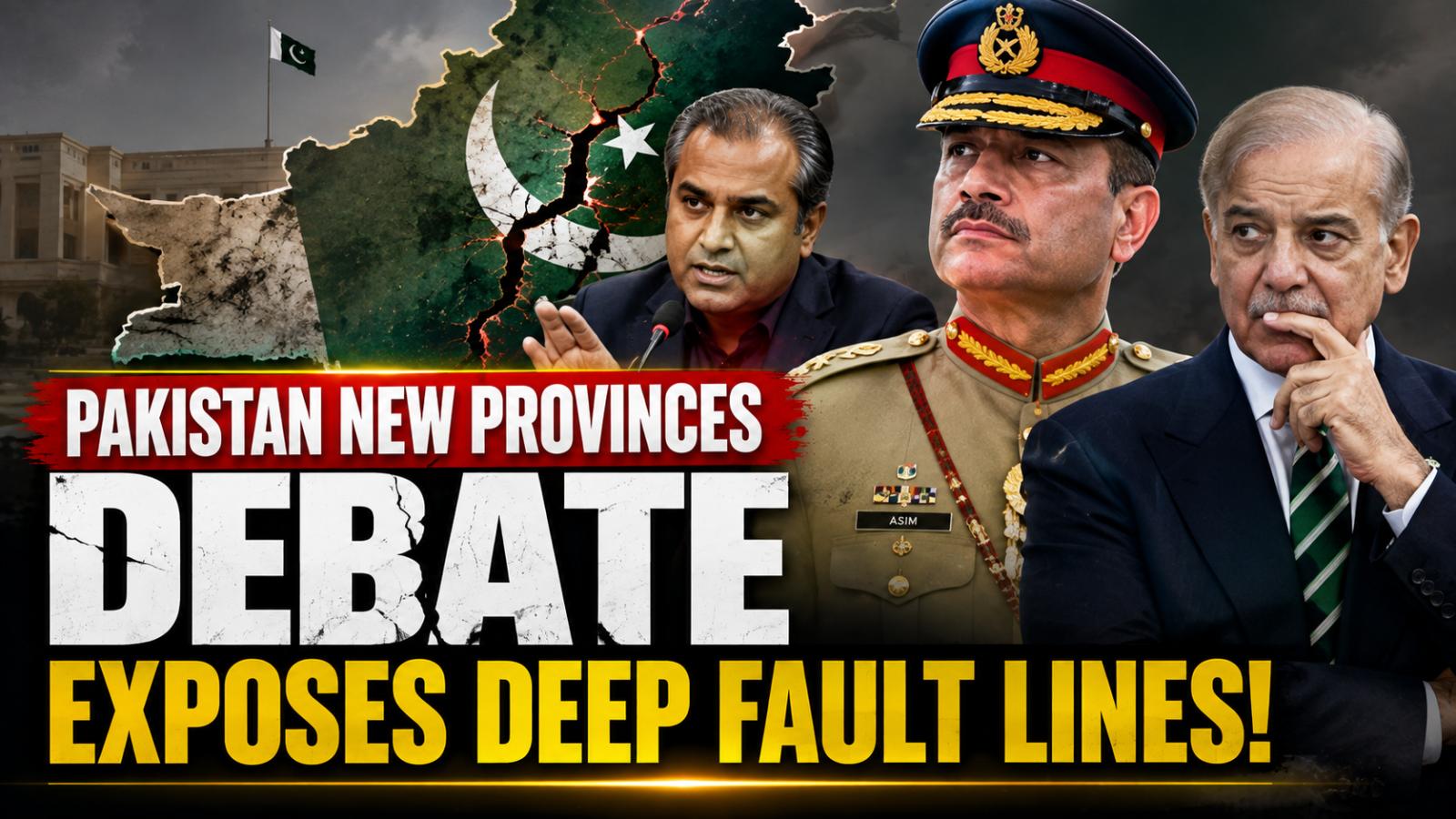
Pakistan New Provinces Debate Exposes Political Fault Lines
The Pakistan new provinces debate has intensified after Interior Minister Mohsin Naqvi declared that governance had collapsed and called for additional administrative units. Military remarks supporting governance reform have raised political concerns for the PML-N and PPP coalition.
Naqvi Province Plan Challenges the Status Quo
Pakistan’s Interior Minister Mohsin Naqvi has triggered a politically sensitive debate by calling for the creation of more provinces or administrative units to improve governance. Speaking at an economic gathering in late July, Naqvi said the existing system had failed to serve a rapidly growing population and urged political parties to build consensus around structural reform.
His intervention carries unusual weight because he is viewed as close to Pakistan’s security establishment. Naqvi served as caretaker chief minister of Punjab before entering the Senate as an independent and later joining Prime Minister Shehbaz Sharif’s cabinet as interior minister.
The proposal is not official government policy, and no constitutional bill has been announced. However, its timing has encouraged speculation that influential state institutions want the issue placed on the national agenda.
Army Reform Call Adds Political Pressure
Pakistan military spokesperson Lieutenant General Ahmed Sharif Chaudhry said good governance was essential for national security and stability. He also questioned whether four provinces could effectively administer a country with a large and expanding population.
The comments stopped short of presenting a formal military plan for redrawing provincial boundaries. Still, the military’s public focus on governance gave Naqvi’s proposal added political importance.
Pakistan’s civil-military power structure has already faced scrutiny. Defence Minister Khawaja Asif previously described the system as a hybrid model in which civilian and military leaders share authority, while Prime Minister Shehbaz Sharif has acknowledged that governments require military support to function.
Punjab and Sindh Parties Face Electoral Risks
Creating new provinces could alter the political influence of Pakistan’s largest parties. The PML-N draws much of its strength from Punjab, while the Pakistan Peoples Party remains dominant in Sindh.
The PPP has strongly resisted proposals to separate Karachi from Sindh. The PML-N has also approached demands for a southern Punjab province cautiously because new boundaries could change parliamentary representation and benefit rival parties.
Supporters argue that smaller units would bring government services closer to citizens. Critics counter that creating more provinces will not automatically solve corruption, weak local government, poor public services or economic inequality. Without administrative capacity and fiscal reform, new boundaries could simply create additional bureaucracies.
Balochistan Debate and Reko Diq Investment
Balochistan’s strategic location and mineral wealth have also entered the discussion. The province borders Iran and Afghanistan and hosts major Chinese infrastructure investments, including projects linked to the China-Pakistan Economic Corridor.
The US Export-Import Bank authorised $1.25 billion in financing for the Reko Diq mining project. The US Embassy said the project could support about 7,500 jobs in Balochistan and 6,000 jobs in the United States.
That investment confirms growing American commercial interest in Pakistan’s critical minerals. It does not establish evidence of a US plan to divide Balochistan or create a land corridor toward Iran. Presenting that theory as fact would be misleading.
Constitutional Barriers Remain Formidable
The renewed debate comes amid political unrest, militant violence and disputed elections in Pakistan-administered Kashmir. A suicide bombing at an anti-militant rally in Kabal, Swat, killed at least 14 people, including five police officers, underlining the country’s worsening security pressures.
Even with institutional support, creating a province would be difficult. Article 239 of Pakistan’s Constitution requires a two-thirds majority in both houses of Parliament. Any amendment changing a province’s boundaries must also receive support from at least two-thirds of the affected provincial assembly.
Naqvi’s proposal therefore exposes tensions within Pakistan’s ruling structure, but it does not signal an imminent territorial change. The real test will be whether political parties begin formal negotiations or allow the debate to remain a pressure tactic in the wider struggle between civilian parties and the military establishment.