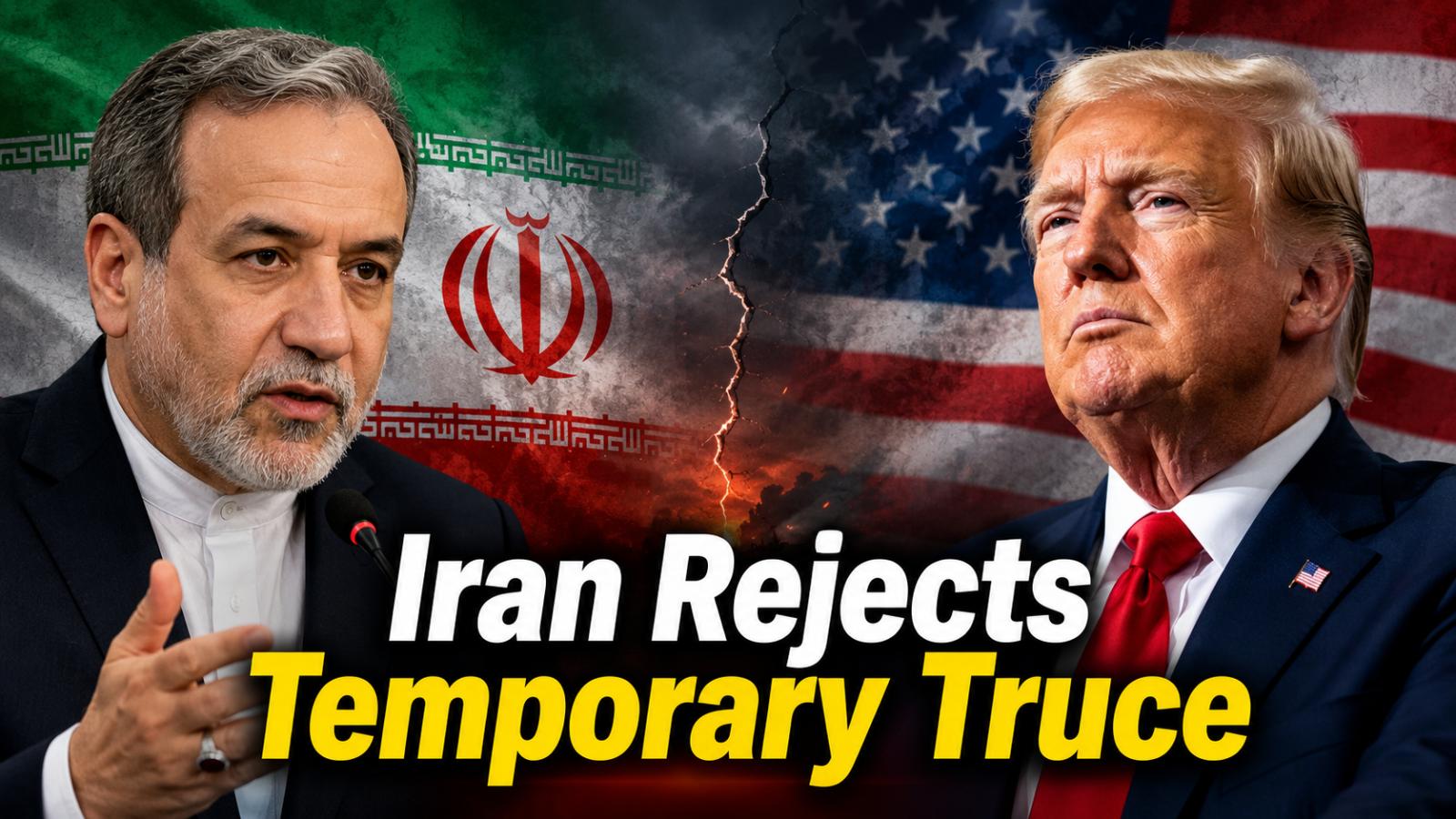
Iran is demanding a permanent end to its conflict with the United States rather than another temporary ceasefire. Foreign Minister Abbas Araghchi says Tehran wants lasting guarantees, even as the US-Iran deal stalls, Trump Iran talks remain off the table and Gulf security concerns grow.
Iran permanent peace
Iranian Foreign Minister Abbas Araghchi has rejected the idea of another temporary truce with the United States, arguing that nearly six months of conflict must end through a durable settlement. Speaking to Iran's semi-official Fars News Agency on Tuesday, Araghchi said Tehran had informed mediators that it wanted the war brought to an end in a way that would prevent another outbreak of hostilities.
His comments come as the diplomatic framework created in June reaches a critical stage. The June 17 memorandum between Washington and Tehran called for an end to military operations and opened a 60-day period for negotiations toward a broader agreement. The framework covered security, sanctions, Iran's nuclear programme and the Strait of Hormuz.
US-Iran deal
The memorandum has struggled to produce lasting stability. Military exchanges resumed after it was signed, while Washington and Tehran accused each other of failing to implement key commitments. The 60-day negotiating window expired on August 17 without a comprehensive final agreement.
Araghchi has also disputed describing the arrangement simply as a temporary ceasefire. He has argued that Tehran viewed the memorandum as a framework for ending the war itself rather than merely extending a pause in fighting.
Trump Iran talks
President Donald Trump hardened Washington's position on August 18, saying there were no talks or conversations underway or scheduled with Iran. He also said the US naval blockade remained in force and maintained that the Strait of Hormuz was open and operating.
That leaves a widening gap between the two governments. Iran wants guarantees that renewed military action will not follow another temporary arrangement, while Washington continues to use military and economic pressure as leverage.
Gulf security
Araghchi also called for a collective Gulf security system with an economic dimension, presenting regional cooperation as part of any durable settlement. He highlighted Qatar and Pakistan for their mediation efforts and said Tehran's relations with both countries remained strong.
Pakistan has played a central role in earlier efforts to stop the fighting, while Qatar and other regional states have supported diplomatic contacts. Previous Iranian statements also credited Pakistan with facilitating ceasefire negotiations and talks aimed at reaching a permanent settlement.
Ghalibaf row
Iranian Parliament Speaker Mohammad Bagher Ghalibaf meanwhile intensified criticism of Washington, accusing US officials of believing that additional pressure could force Tehran to accept concessions beyond previous agreements. In a post on X, Ghalibaf specifically targeted Treasury Secretary Scott Bessent and Defense Secretary Pete Hegseth.
The confrontation shows why a permanent settlement remains difficult. Sanctions, military pressure, the Strait of Hormuz and Iran's nuclear programme remain intertwined, while both governments publicly question the other's willingness to honour agreements.
For Tehran, the next diplomatic proposal must therefore offer more than another deadline. For Washington, the challenge is whether pressure can produce concessions without triggering another escalation. With formal talks currently absent, regional mediators such as Pakistan and Qatar may again become crucial if the two sides decide to return to negotiations.