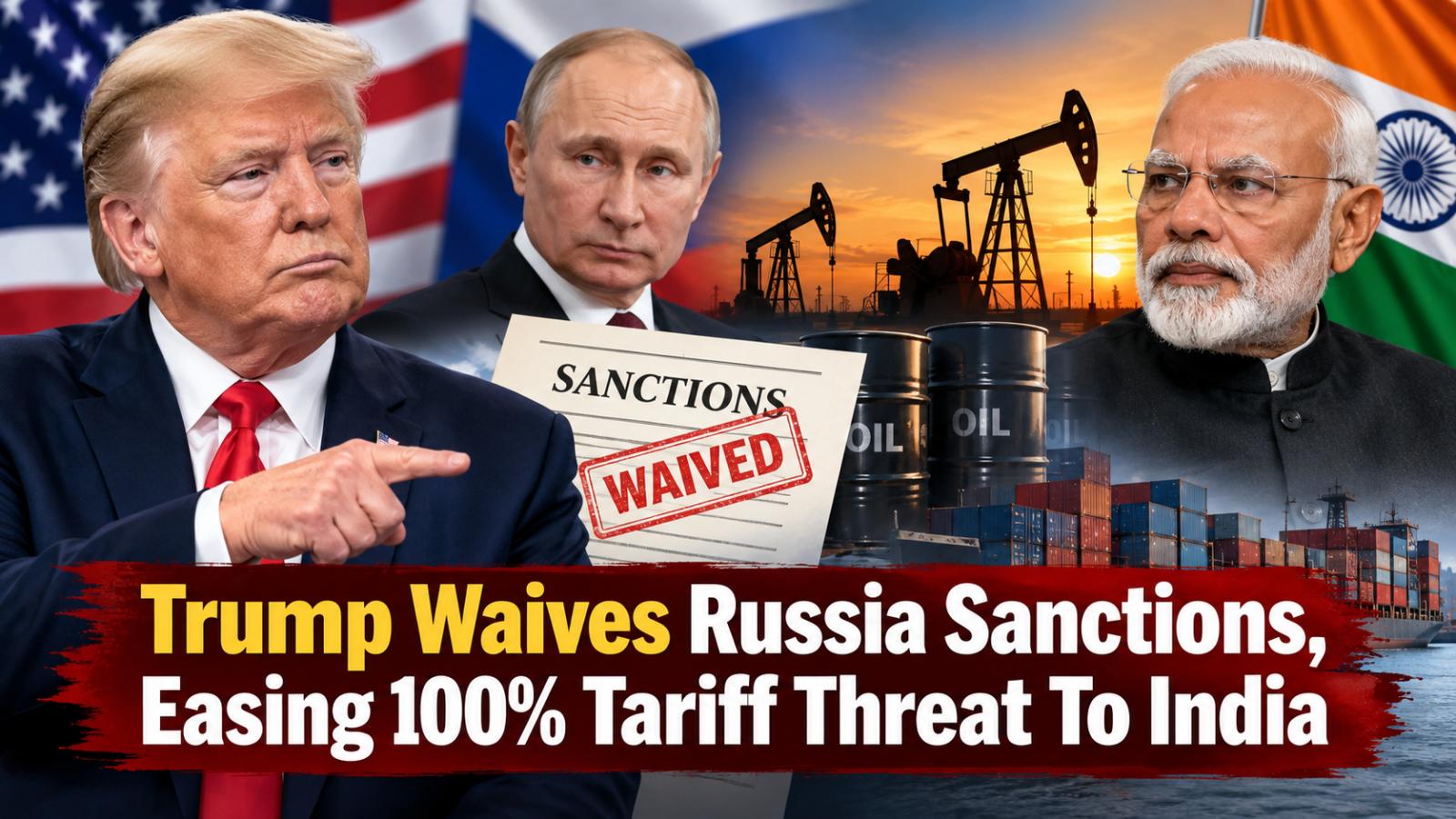
US President Donald Trump has temporarily suspended several Russia-related sanctions and tariffs, providing immediate relief to India and China just before the measures were scheduled to take effect. The decision, announced through an executive order on October 16, 2026, removes the immediate threat of additional US tariffs of up to 100% on countries purchasing Russian oil and gas.
Trump invoked national interest provisions under the Lindsey O. Graham Sanctioning Russia and Iran Act of 2026 to justify the decision. The legislation, signed into law on September 18, was designed to increase economic pressure on Moscow over its ongoing war against Ukraine.
Although the waiver offers temporary relief to countries maintaining energy trade with Russia, it does not permanently eliminate the sanctions. The Trump administration retains the authority to restore the restrictions if circumstances change.
Trump suspends Graham Act sanctions and 100% tariffs on India
The Lindsey O. Graham Sanctioning Russia and Iran Act was introduced to weaken Russia's financial ability to sustain its military operations in Ukraine. The legislation targeted Russian officials, financial institutions, energy companies and foreign entities involved in supporting Moscow's economy.
One of the law's most significant provisions allowed the United States to impose additional tariffs of 100% on goods imported from the five largest buyers of Russian crude oil and natural gas, subject to specified conditions.
India and China faced considerable exposure because of their continued purchases of Russian energy resources.
Under the legislation, countries making new purchases of Russian oil or gas from October 18, 2026, could have faced steep import duties on goods entering the American market.
The law also provided for tariffs of 500% on certain Russian imports and additional penalties against countries facilitating Russian sanctions evasion.
However, Trump used the waiver authority included in the legislation to suspend the application of these duties and several sanctions provisions.
The executive order stated that the decision was being made in the national interest of the United States. Trump also informed Congress of the waiver, as required under the legislation.
Importantly, the decision does not remove every American sanction against Russia. Restrictions imposed under other existing authorities remain in effect.
The order also directs US trade officials to continue monitoring Russian energy purchases and activities connected to sanctions evasion.
This means Washington can reconsider the waiver if it determines that additional economic measures are necessary.
The move represents a significant shift in the immediate implementation of the sanctions law, although the administration has preserved its ability to impose further restrictions.
India gets tariff relief as US-Russia energy ties draw attention
For India, Trump's decision provides welcome short-term relief amid continuing uncertainty over trade relations with Washington.
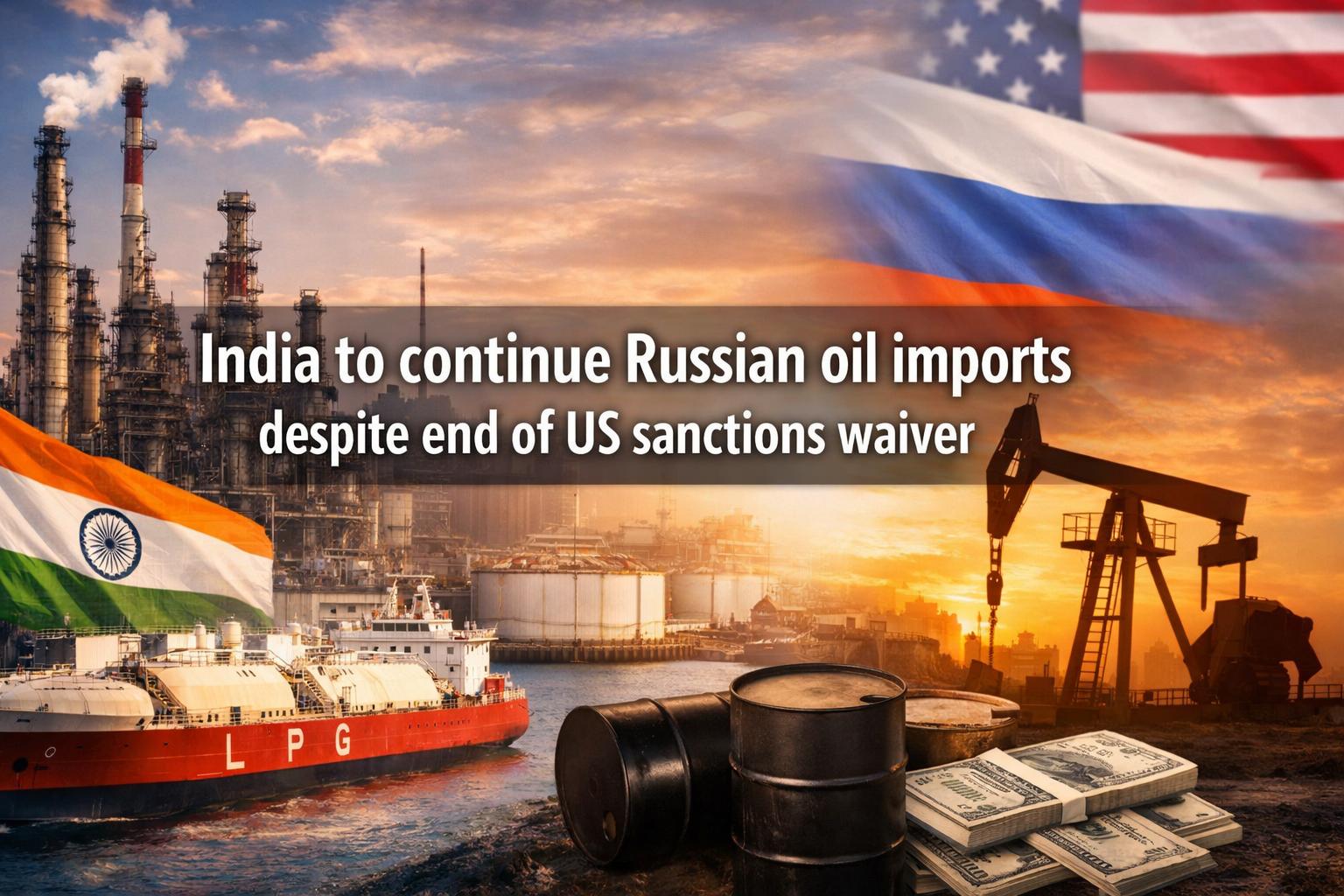
India has remained an important buyer of Russian crude oil, maintaining that its energy purchases are guided by domestic requirements, affordable pricing and supply security.
Russian energy imports have repeatedly become a source of disagreement between New Delhi and Washington, particularly as the United States has attempted to restrict Moscow's oil revenues.
Earlier trade disputes had already placed pressure on Indian exporters, with American tariffs affecting bilateral economic relations.
The possibility of an additional 100% tariff raised concerns among businesses that depend on the US market.
Such duties could have significantly increased the cost of Indian products entering the United States, potentially affecting exporters and their competitiveness.
The latest waiver reduces that immediate risk, allowing businesses some breathing room while the two countries continue navigating their economic relationship.
India has consistently maintained that ensuring affordable energy for its population remains a national priority.
The Ministry of External Affairs previously stated that India would continue making energy purchasing decisions based on diversified sourcing and changing international market conditions.
Indian officials have also communicated concerns about the broader consequences of restrictions on Russian oil purchases, including their potential impact on global energy prices.
Meanwhile, Trump's decision comes amid changing relations between Washington and Moscow.
The US president has recently shown greater willingness to engage economically with Russia, including through discussions involving Russian diesel supplies.
These developments have attracted criticism from Ukraine and some American lawmakers, who argue that easing economic pressure could benefit Moscow while its military operations continue.
Ukrainian President Volodymyr Zelensky has also expressed concerns about Washington's growing engagement with Russia during the ongoing conflict.
The sanctions waiver has drawn criticism from lawmakers who believe stronger economic restrictions are necessary to pressure Russia toward ending the war.
Despite the temporary relief, uncertainty remains for India and other major buyers of Russian energy.
The executive order allows the president or designated senior officials to reconsider the waivers, meaning future tariff decisions could depend on developments in the Russia-Ukraine conflict and broader US foreign policy.
For Indian exporters, the immediate threat of another major tariff increase has eased, but existing trade duties and other restrictions remain separate issues.
The decision also highlights the delicate balance between energy security, international diplomacy and economic sanctions.
India continues to prioritise reliable energy supplies while maintaining trade relationships with both the United States and Russia.
For now, Trump's waiver has prevented a fresh escalation in trade tensions involving Russian oil purchases. However, continued American monitoring of energy transactions means the possibility of additional tariffs has not disappeared.