BTS Performs Dynamite at FIFA World Cup Final Halftime Show
BTS delivered one of the biggest entertainment moments of the FIFA World Cup 2026 final by performing their global hit "Dynamite" during the tournament's first-ever halftime show. The performance quickly became a worldwide talking point as fans celebrated the group's appearance on football's biggest stage. BTS FIFA World Cup Halftime Show creates history
BTS Performs Dynamite at FIFA World Cup Final Halftime Show
BTS delivered one of the biggest entertainment moments of the FIFA World Cup 2026 final by performing their global hit "Dynamite" during the tournament's first-ever halftime show. The performance quickly became a worldwide talking point as fans celebrated the group's appearance on football's biggest stage. BTS FIFA World Cup Halftime Show creates history
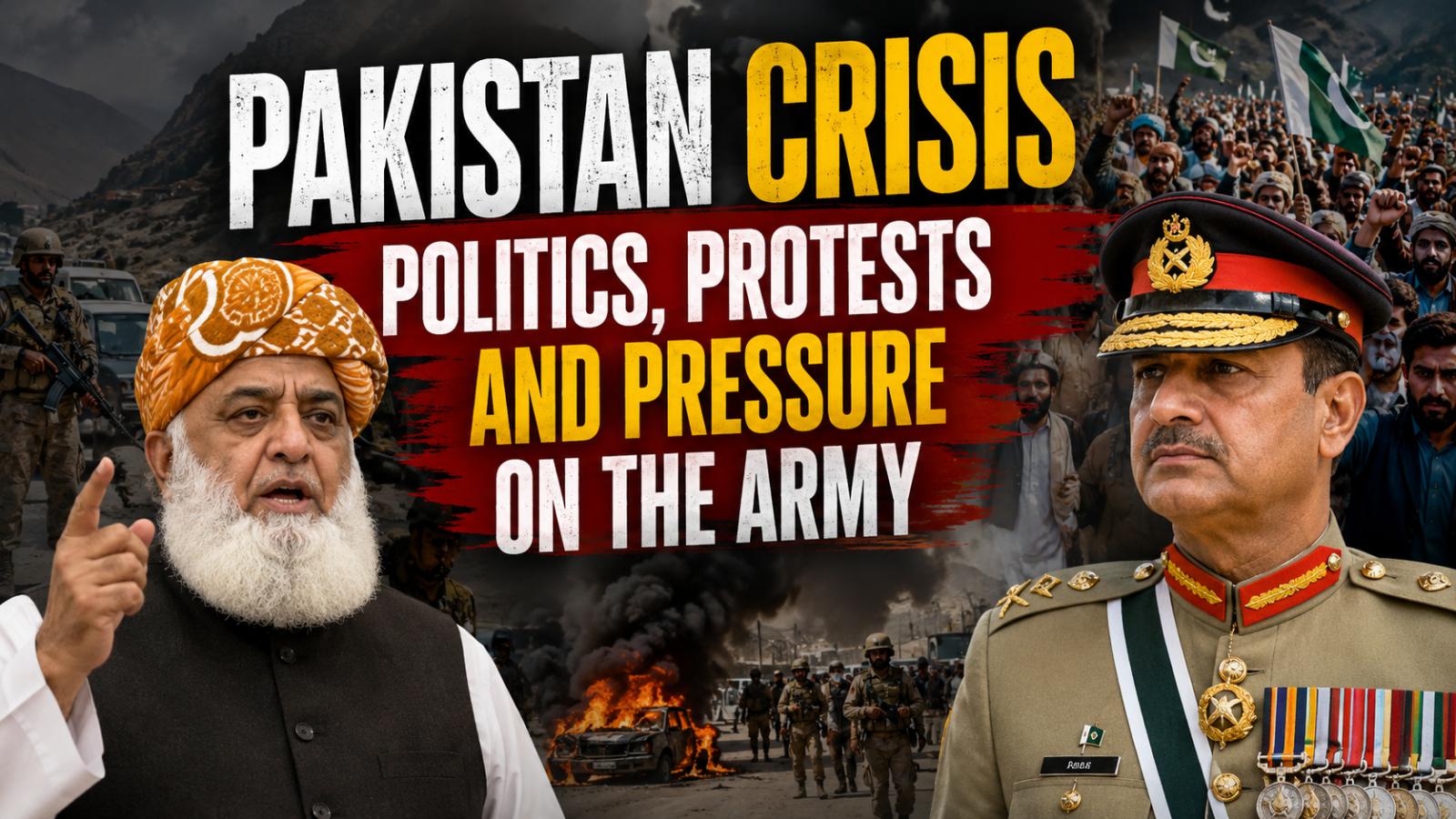
Pakistan crisis deepens as Fazlur Rehman questions army role
Pakistan’s worsening security crisis has triggered unusually sharp criticism of the military from Jamiat Ulema-e-Islam chief Maulana Fazlur Rehman. His remarks came as authorities confronted deadly militant attacks in Balochistan and renewed protests in Pakistan-administered Kashmir. Fazlur Rehman questions Pakistan Army’s political role Speaking at a public gathering in Punjab, Fazlur Rehman claimed that g
Pakistan crisis deepens as Fazlur Rehman questions army role
Pakistan’s worsening security crisis has triggered unusually sharp criticism of the military from Jamiat Ulema-e-Islam chief Maulana Fazlur Rehman. His remarks came as authorities confronted deadly militant attacks in Balochistan and renewed protests in Pakistan-administered Kashmir. Fazlur Rehman questions Pakistan Army’s political role Speaking at a public gathering in Punjab, Fazlur Rehman claimed that g
India Theatre Commands: How the New Military Structure May Work
India Theatre Commands are intended to bring the Army, Navy and Air Force under unified operational leadership. The theatreisation proposal seeks stronger jointness, faster decisions, coordinated logistics and an integrated response to land, air and maritime threats. Theatreisation could replace separate operational planning India is considering one of the biggest structural changes in the history of its armed
India Theatre Commands: How the New Military Structure May Work
India Theatre Commands are intended to bring the Army, Navy and Air Force under unified operational leadership. The theatreisation proposal seeks stronger jointness, faster decisions, coordinated logistics and an integrated response to land, air and maritime threats. Theatreisation could replace separate operational planning India is considering one of the biggest structural changes in the history of its armed
India Theaterisation Plan Moves Closer to Major Defence Reform
India’s proposed theaterisation plan could become its biggest military command reform. It aims to improve Army, Navy and Air Force coordination through integrated theatre commands, faster decisions and region-specific operational planning. Integrated theatre commands and CDS reform Reports indicate that Chief of Defence Staff General NS Raja Subramani may present the latest proposal to Defence Minister Rajnat
India Theaterisation Plan Moves Closer to Major Defence Reform
India’s proposed theaterisation plan could become its biggest military command reform. It aims to improve Army, Navy and Air Force coordination through integrated theatre commands, faster decisions and region-specific operational planning. Integrated theatre commands and CDS reform Reports indicate that Chief of Defence Staff General NS Raja Subramani may present the latest proposal to Defence Minister Rajnat
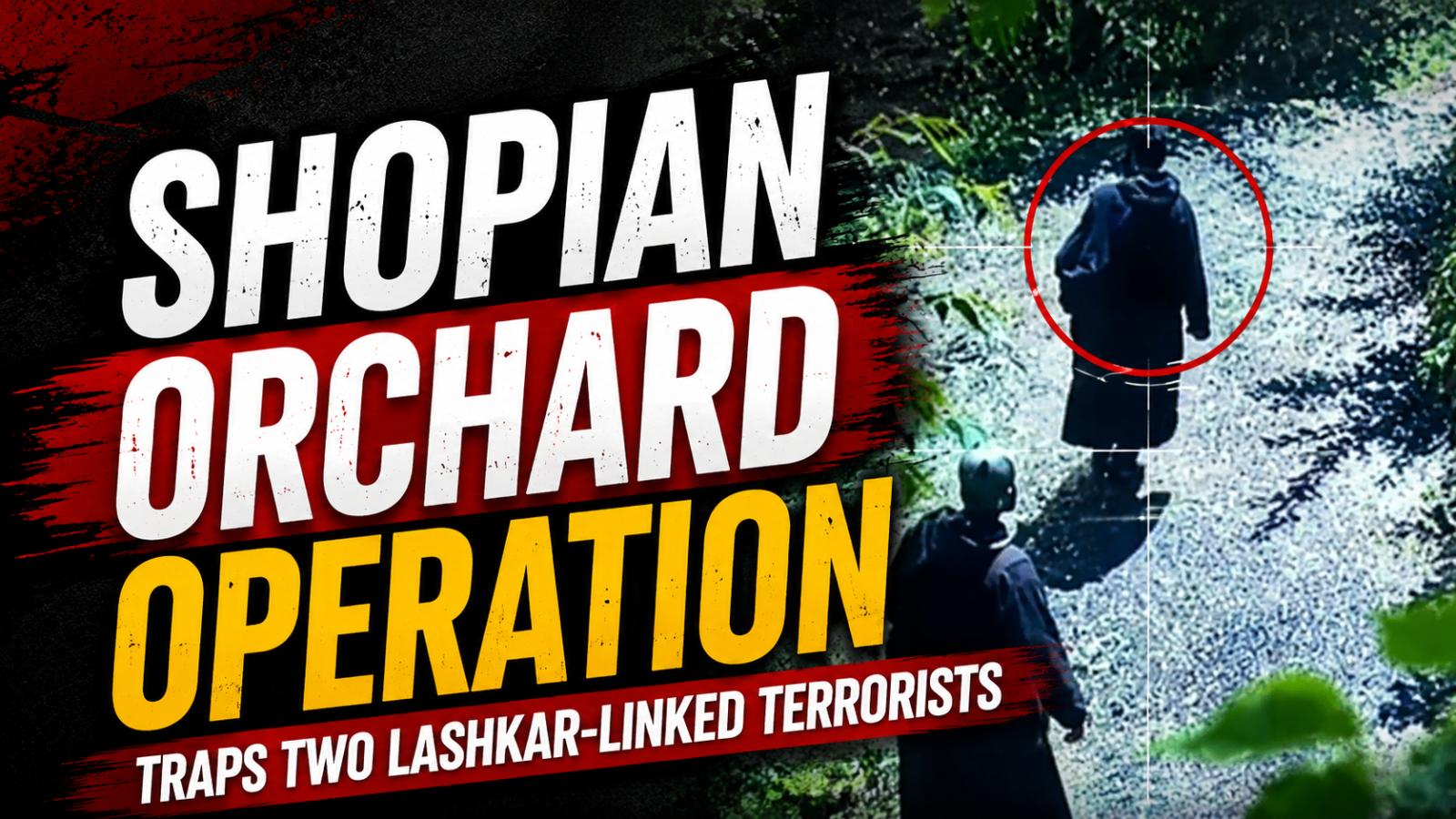
Shopian orchard operation traps two Lashkar-linked terrorists
Shopian orchard operation traps two Lashkar-linked terrorists Security forces launched a major counter-terror operation in Jammu and Kashmir’s Shopian district after cameras detected two suspected Lashkar-e-Taiba terrorists inside an orchard. The operation began after surveillance inputs confirmed movement in the area, prompting a joint team of the Indian Army, Jammu and Kashmir Police and the CRPF to seal the surrounding villages and block
Shopian orchard operation traps two Lashkar-linked terrorists
Shopian orchard operation traps two Lashkar-linked terrorists Security forces launched a major counter-terror operation in Jammu and Kashmir’s Shopian district after cameras detected two suspected Lashkar-e-Taiba terrorists inside an orchard. The operation began after surveillance inputs confirmed movement in the area, prompting a joint team of the Indian Army, Jammu and Kashmir Police and the CRPF to seal the surrounding villages and block
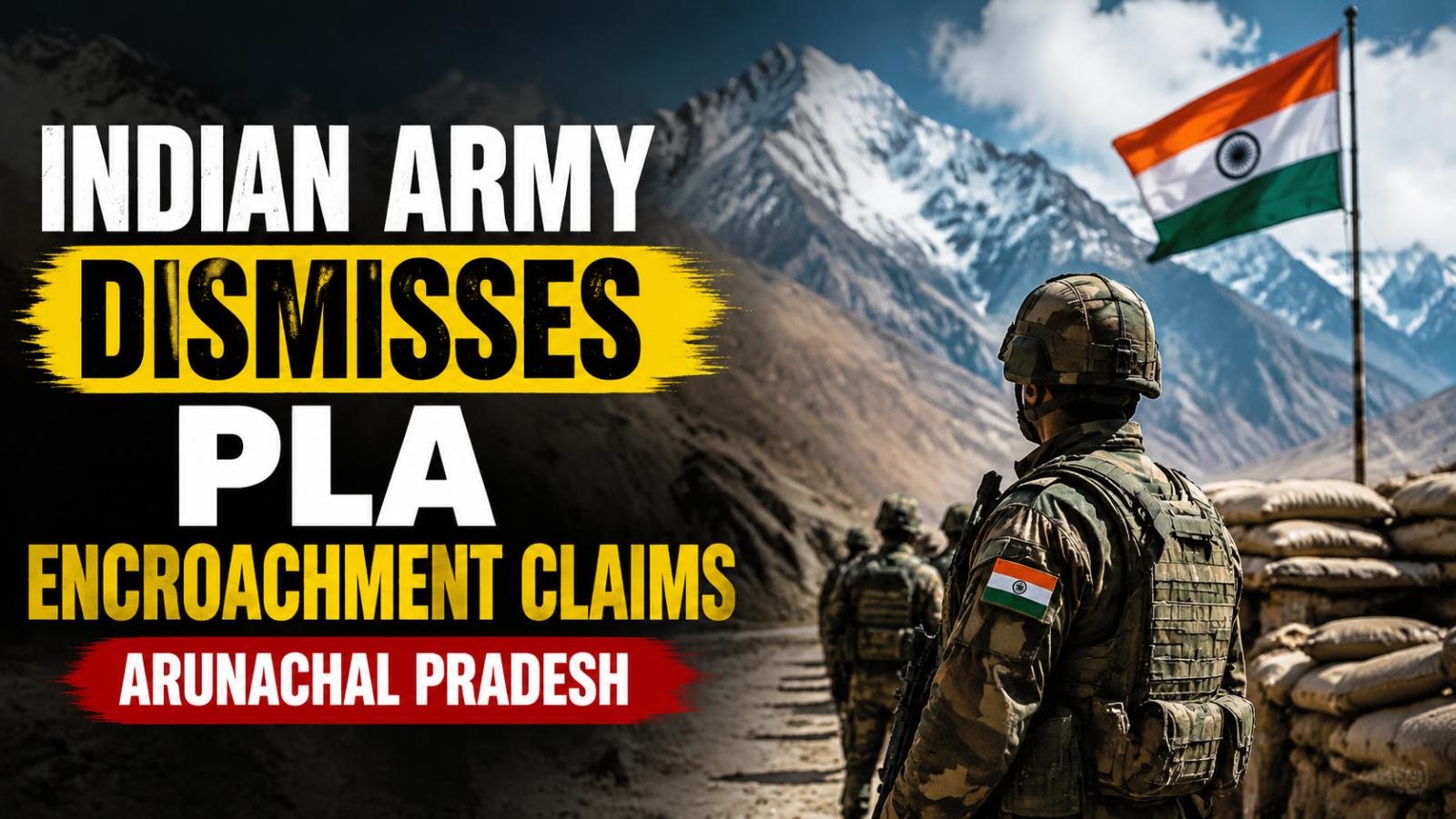
Indian Army refutes claims of PLA presence in Arunachal sector
The Indian Army has firmly rejected recent reports suggesting any presence of Chinese PLA forces inside the Taksing sector of Arunachal Pradesh. Officials clarified that routine surveillance along the India-China border continues without interruption and no unusual movement or establishment of camps has been detected within Indian territory. Ground monitoring confirms stable situation Security personnel engaged in border management confirmed that the Upper Subansiri region, including forward areas near Taksing, remains under continuous observation. According to defence inputs, patrol patterns and monitoring systems have shown no indicators of encroachment or escalation. The Army emphasized that operational readiness in the region remains unchanged and fully active. Local concerns over land access claims Separate concerns were raised by local community representatives regarding traditional grazing areas and access to ancestral land in parts of the border belt. These concerns include regions such as Oying, Paniar, Marpan, Potrang Lake, and Tindingtang. While these issues reflect long-standing livelihood sensitivities in remote tribal zones, officials have not confirmed any link between these claims and cross-border military activity. Authorities urge caution over unverified reports Officials have urged restraint in circulating unverified information related to sensitive border zones. Defence sources noted that misinformation can easily create unnecessary tension in strategically important areas like Arunachal Pradesh, where geography and accessibility already complicate communication and verification. Citizens have been advised to rely on authenticated updates from official defence channels. Border status remains unchanged At present, there is no verified evidence supporting claims of PLA encroachment or permanent presence in the reported areas. The Army reiterated that the situation along the eastern frontier remains stable, with established protocols in place for surveillance and response. Continuous monitoring and coordination with civil administration continue to ensure security across the region.
Indian Army refutes claims of PLA presence in Arunachal sector
The Indian Army has firmly rejected recent reports suggesting any presence of Chinese PLA forces inside the Taksing sector of Arunachal Pradesh. Officials clarified that routine surveillance along the India-China border continues without interruption and no unusual movement or establishment of camps has been detected within Indian territory. Ground monitoring confirms stable situation Security personnel engaged in border management confirmed that the Upper Subansiri region, including forward areas near Taksing, remains under continuous observation. According to defence inputs, patrol patterns and monitoring systems have shown no indicators of encroachment or escalation. The Army emphasized that operational readiness in the region remains unchanged and fully active. Local concerns over land access claims Separate concerns were raised by local community representatives regarding traditional grazing areas and access to ancestral land in parts of the border belt. These concerns include regions such as Oying, Paniar, Marpan, Potrang Lake, and Tindingtang. While these issues reflect long-standing livelihood sensitivities in remote tribal zones, officials have not confirmed any link between these claims and cross-border military activity. Authorities urge caution over unverified reports Officials have urged restraint in circulating unverified information related to sensitive border zones. Defence sources noted that misinformation can easily create unnecessary tension in strategically important areas like Arunachal Pradesh, where geography and accessibility already complicate communication and verification. Citizens have been advised to rely on authenticated updates from official defence channels. Border status remains unchanged At present, there is no verified evidence supporting claims of PLA encroachment or permanent presence in the reported areas. The Army reiterated that the situation along the eastern frontier remains stable, with established protocols in place for surveillance and response. Continuous monitoring and coordination with civil administration continue to ensure security across the region.
Khaan Quest 2026 brings 18 nations to Mongolia drill
Khaan Quest 2026 has officially begun at the Five Hills Training Area near Ulaanbaatar, marking one of the largest annual UN peacekeeping training exercises in the region. The drill brings together troops from 18 nations, with a focus on improving coordination in complex peace support environments. More than 1,000 personnel are taking part in structured field training designed to replicate real-world mission conditions under United Nations mandates. India strengthens peacekeeping engagement through participation The Indian Army has deployed a 40-member contingent for the exercise, including personnel from a battalion of the JAT Regiment along with supporting arms. Their participation reflects India’s continued operational commitment to global peacekeeping frameworks. Indian troops are actively engaged in tactical drills such as area domination, checkpoint operations, search procedures, and controlled movement scenarios that simulate volatile environments. Training designed for real-world mission readiness The exercise is structured around practical peacekeeping scenarios where multinational forces must operate under unified command conditions. Activities include convoy protection, casualty evacuation drills, and humanitarian response simulations. A strong emphasis is placed on interoperability, ensuring that forces from different countries can communicate and operate seamlessly during international deployments. Women, Peace and Security module gains importance A dedicated training segment on Women, Peace and Security is a key feature of this year’s exercise. It focuses on improving gender awareness in operational settings, strengthening civilian protection measures, and encouraging greater participation of women in peacekeeping roles. The module is designed to reflect evolving global expectations in modern conflict management. Exercise highlights growing global coordination Khaan Quest began as a bilateral initiative between Mongolia and the United States in the early 2000s and has since expanded into a multinational platform co-sponsored by US Indo-Pacific Command. Over the years, it has evolved into a key training ground for preparing forces for UN peace operations. The 2026 edition reinforces international cooperation, operational readiness, and shared security practices among participating nations. Strategic relevance of Khaan Quest 2026 The exercise serves as more than just a training event—it acts as a platform for military diplomacy and operational alignment among partner countries. By working together in simulated peace missions, participating forces strengthen trust, improve tactical compatibility, and enhance readiness for future UN deployments in conflict and post-conflict zones.
Khaan Quest 2026 brings 18 nations to Mongolia drill
Khaan Quest 2026 has officially begun at the Five Hills Training Area near Ulaanbaatar, marking one of the largest annual UN peacekeeping training exercises in the region. The drill brings together troops from 18 nations, with a focus on improving coordination in complex peace support environments. More than 1,000 personnel are taking part in structured field training designed to replicate real-world mission conditions under United Nations mandates. India strengthens peacekeeping engagement through participation The Indian Army has deployed a 40-member contingent for the exercise, including personnel from a battalion of the JAT Regiment along with supporting arms. Their participation reflects India’s continued operational commitment to global peacekeeping frameworks. Indian troops are actively engaged in tactical drills such as area domination, checkpoint operations, search procedures, and controlled movement scenarios that simulate volatile environments. Training designed for real-world mission readiness The exercise is structured around practical peacekeeping scenarios where multinational forces must operate under unified command conditions. Activities include convoy protection, casualty evacuation drills, and humanitarian response simulations. A strong emphasis is placed on interoperability, ensuring that forces from different countries can communicate and operate seamlessly during international deployments. Women, Peace and Security module gains importance A dedicated training segment on Women, Peace and Security is a key feature of this year’s exercise. It focuses on improving gender awareness in operational settings, strengthening civilian protection measures, and encouraging greater participation of women in peacekeeping roles. The module is designed to reflect evolving global expectations in modern conflict management. Exercise highlights growing global coordination Khaan Quest began as a bilateral initiative between Mongolia and the United States in the early 2000s and has since expanded into a multinational platform co-sponsored by US Indo-Pacific Command. Over the years, it has evolved into a key training ground for preparing forces for UN peace operations. The 2026 edition reinforces international cooperation, operational readiness, and shared security practices among participating nations. Strategic relevance of Khaan Quest 2026 The exercise serves as more than just a training event—it acts as a platform for military diplomacy and operational alignment among partner countries. By working together in simulated peace missions, participating forces strengthen trust, improve tactical compatibility, and enhance readiness for future UN deployments in conflict and post-conflict zones.
Indian Army Sniffer Dogs Join Yoga Day at Siachen
Indian Army sniffer dogs joined their handlers for International Yoga Day activities on Sunday, June 21, 2026, at the Siachen Glacier, where troops operate at elevations above 18,000 feet. Indian Army Sniffer Dogs Join Yoga Day at Siachen Known as the “Siachen Sniffers,” the specially trained dogs stood alongside personnel from the Fire & Fury Corps as yoga sessions were held amid deep snow, icy winds and thin air on the world’s highest battlef
Indian Army Sniffer Dogs Join Yoga Day at Siachen
Indian Army sniffer dogs joined their handlers for International Yoga Day activities on Sunday, June 21, 2026, at the Siachen Glacier, where troops operate at elevations above 18,000 feet. Indian Army Sniffer Dogs Join Yoga Day at Siachen Known as the “Siachen Sniffers,” the specially trained dogs stood alongside personnel from the Fire & Fury Corps as yoga sessions were held amid deep snow, icy winds and thin air on the world’s highest battlef
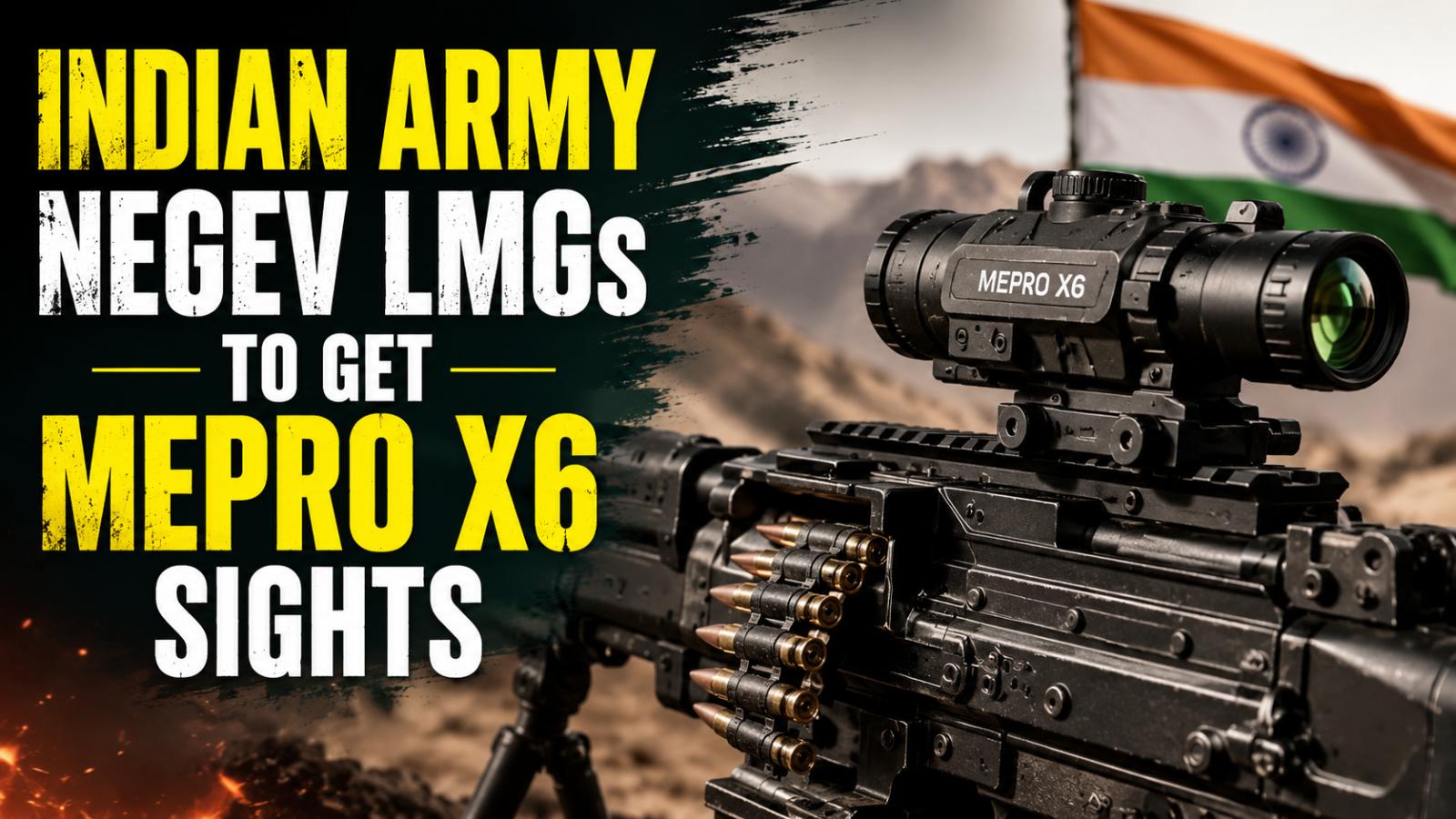
Indian Army Negev LMGs to get MEPRO X6 sights
The Indian Army’s Negev light machine guns are set for an optics upgrade with the addition of MEPRO X6 daytime sights. The move is expected to improve aiming, target visibility and firing confidence for soldiers using the weapon in field conditions. The Negev LMG, originally developed by Israel Weapon Industries, is already part of the Indian Army’s infantry firepower. The new sighting system will help troops use the weapon more effectively at longer distances, especially in open terrain, border areas and demanding operational zones. Why the MEPRO X6 sight matters A light machine gun is not just used for rapid fire. It must also deliver controlled and accurate fire when troops need to engage targets at extended ranges. That is where a reliable optic becomes important. The MEPRO X6 gives the soldier a clearer view of the target during daytime operations. Compared with basic aiming methods, a magnified sight helps improve target identification and reduces guesswork while firing. In difficult environments, this can make the weapon more useful and consistent. Tested for army requirements The Indian Army selected the MEPRO X6 after field assessments and environmental testing. Such trials are important because military equipment has to perform in heat, dust, rough movement and high-pressure combat situations. The focus was not only on accuracy but also on durability, ease of use and reliability. For soldiers, an optic must be simple to operate and strong enough to handle regular field deployment. Made in India push The order includes more than 10,000 MEPRO X6 sights, with deliveries expected during 2026 and 2027. The project also supports India’s defence manufacturing goals through local production. Meprolight has signed a Transfer of Technology agreement with RRP Defense. Under this arrangement, RRP Defense will manufacture the sights in Mumbai and supply them to Bharat Electronics Limited, which is expected to act as the main contractor for the Indian Army. Bigger demand may follow The current order covers only part of the wider Negev LMG requirement. Since the Indian Army has ordered around 41,000 Negev guns, more optics may be needed as additional weapons are delivered and deployed. The upgrade also shows the continued defence cooperation between India and Israel. At the same time, local manufacturing of the sights supports India’s effort to reduce dependence on imported defence equipment. For the soldier on the ground, the real value is simple: better visibility, better aim and better control during operations.

Indian Army Negev LMGs to get MEPRO X6 sights
The Indian Army’s Negev light machine guns are set for an optics upgrade with the addition of MEPRO X6 daytime sights. The move is expected to improve aiming, target visibility and firing confidence for soldiers using the weapon in field conditions. The Negev LMG, originally developed by Israel Weapon Industries, is already part of the Indian Army’s infantry firepower. The new sighting system will help troops use the weapon more effectively at longer distances, especially in open terrain, border areas and demanding operational zones. Why the MEPRO X6 sight matters A light machine gun is not just used for rapid fire. It must also deliver controlled and accurate fire when troops need to engage targets at extended ranges. That is where a reliable optic becomes important. The MEPRO X6 gives the soldier a clearer view of the target during daytime operations. Compared with basic aiming methods, a magnified sight helps improve target identification and reduces guesswork while firing. In difficult environments, this can make the weapon more useful and consistent. Tested for army requirements The Indian Army selected the MEPRO X6 after field assessments and environmental testing. Such trials are important because military equipment has to perform in heat, dust, rough movement and high-pressure combat situations. The focus was not only on accuracy but also on durability, ease of use and reliability. For soldiers, an optic must be simple to operate and strong enough to handle regular field deployment. Made in India push The order includes more than 10,000 MEPRO X6 sights, with deliveries expected during 2026 and 2027. The project also supports India’s defence manufacturing goals through local production. Meprolight has signed a Transfer of Technology agreement with RRP Defense. Under this arrangement, RRP Defense will manufacture the sights in Mumbai and supply them to Bharat Electronics Limited, which is expected to act as the main contractor for the Indian Army. Bigger demand may follow The current order covers only part of the wider Negev LMG requirement. Since the Indian Army has ordered around 41,000 Negev guns, more optics may be needed as additional weapons are delivered and deployed. The upgrade also shows the continued defence cooperation between India and Israel. At the same time, local manufacturing of the sights supports India’s effort to reduce dependence on imported defence equipment. For the soldier on the ground, the real value is simple: better visibility, better aim and better control during operations.




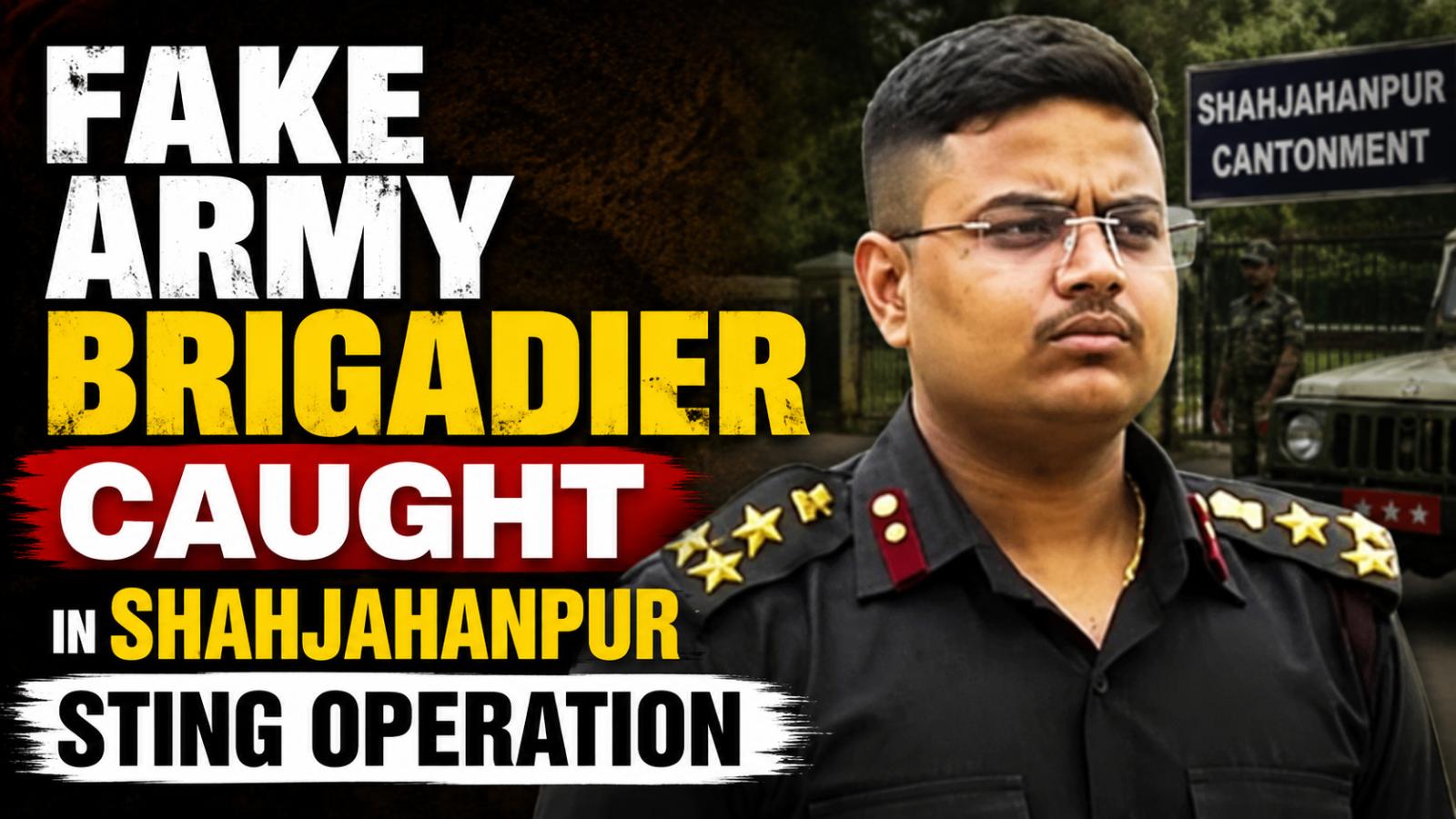
Fake Army Brigadier Caught In Shahjahanpur Sting
A 21-year-old man was detained in Uttar Pradesh’s Shahjahanpur after he allegedly posed as a senior Indian Army officer and walked into a trap laid by Army authorities. The accused, identified as Aryan Verma, had reportedly been moving around Shahjahanpur and nearby areas in full military uniform while claiming to be a Brigadier. Army authorities had been tracking him since April after receiving inputs that he was frequently seen wearing
Fake Army Brigadier Caught In Shahjahanpur Sting
A 21-year-old man was detained in Uttar Pradesh’s Shahjahanpur after he allegedly posed as a senior Indian Army officer and walked into a trap laid by Army authorities. The accused, identified as Aryan Verma, had reportedly been moving around Shahjahanpur and nearby areas in full military uniform while claiming to be a Brigadier. Army authorities had been tracking him since April after receiving inputs that he was frequently seen wearing
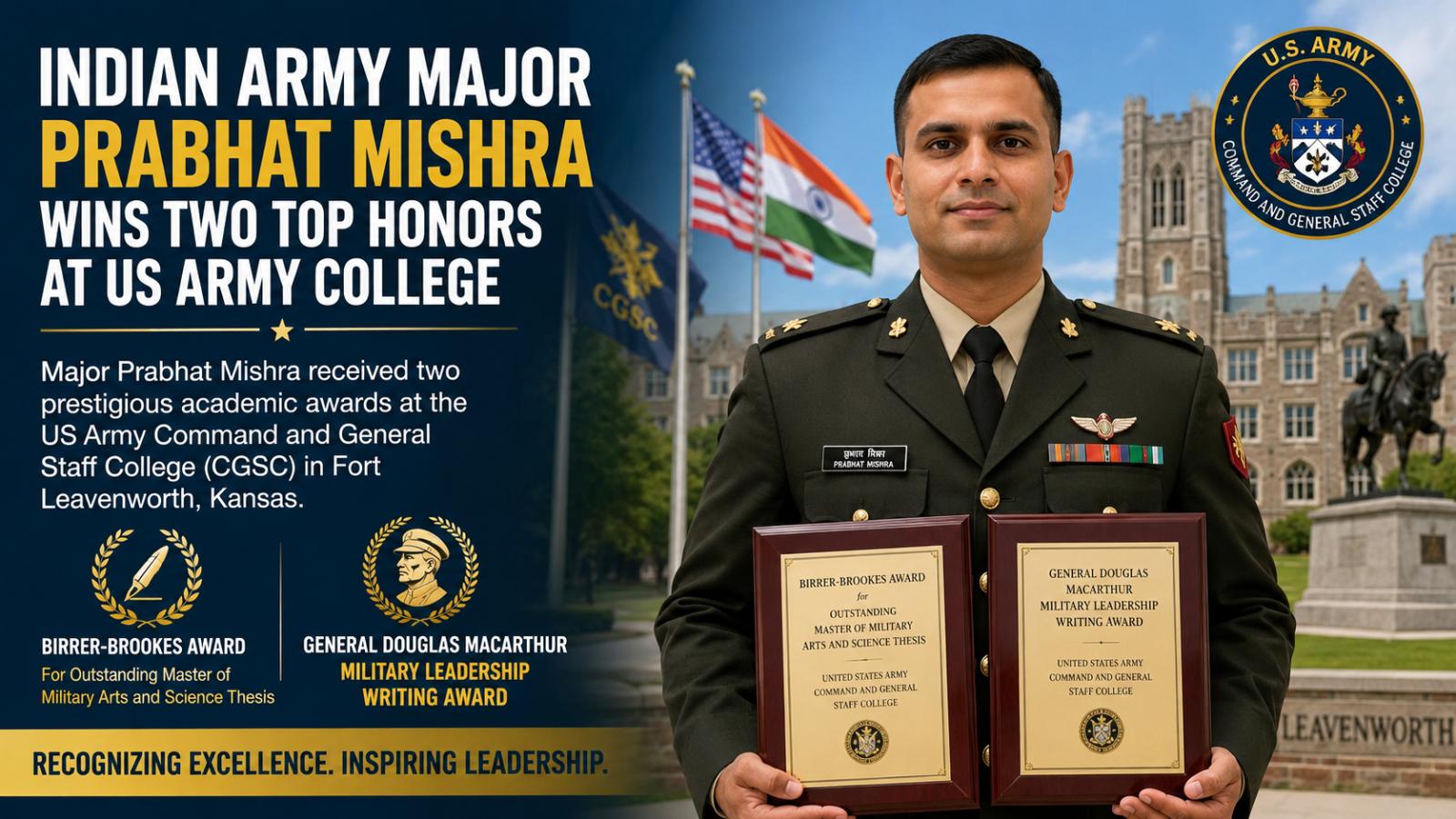
Indian Army Major Prabhat Mishra Wins Two Top Honors at US Army College
Indian Army Major Prabhat Mishra has won two top academic honors at the US Army Command and General Staff College in Fort Leavenworth, Kansas, standing out in a global military education program. Major Mishra was recognized during the graduation ceremony for the Command and General Staff Officer Course, a 10-month leadership program that graduated 951 officers, including 120 international officers from 92 countries. Indian Army Officer Honored at US Army Command a
Indian Army Major Prabhat Mishra Wins Two Top Honors at US Army College
Indian Army Major Prabhat Mishra has won two top academic honors at the US Army Command and General Staff College in Fort Leavenworth, Kansas, standing out in a global military education program. Major Mishra was recognized during the graduation ceremony for the Command and General Staff Officer Course, a 10-month leadership program that graduated 951 officers, including 120 international officers from 92 countries. Indian Army Officer Honored at US Army Command a
Ex-Taliban commander Haji Najibullah sentenced to 42 years in US prison
Former Taliban Commander Sentenced to 42 Years A former Taliban commander, Haji Najibullah, has been sentenced to 42 years in prison by a U.S. federal court for orchestrating deadly attacks on American troops and kidnapping a New York Times journalist. The 50-year-old pleaded guilty earlier this year to charges of hostage-taking and providing material support for terrorist acts resulting in deaths, accordi
Ex-Taliban commander Haji Najibullah sentenced to 42 years in US prison
Former Taliban Commander Sentenced to 42 Years A former Taliban commander, Haji Najibullah, has been sentenced to 42 years in prison by a U.S. federal court for orchestrating deadly attacks on American troops and kidnapping a New York Times journalist. The 50-year-old pleaded guilty earlier this year to charges of hostage-taking and providing material support for terrorist acts resulting in deaths, accordi
Apache Crew Rescued by Sea Drone After Crash Near Strait of Hormuz
Two U.S. Army Apache crew members were rescued by a Navy sea drone after their helicopter went down near the Strait of Hormuz, a key global shipping route, U.S. officials said. The incident occurred near the coast of Oman early Tuesday, June 9, 2026, local time, while the AH-64 Apache was operating in regional waters. Both crew members were recovered and were reported to be stable and uninjured. U.S. Navy Sea Drone Used in Rare Rescue Operation
Apache Crew Rescued by Sea Drone After Crash Near Strait of Hormuz
Two U.S. Army Apache crew members were rescued by a Navy sea drone after their helicopter went down near the Strait of Hormuz, a key global shipping route, U.S. officials said. The incident occurred near the coast of Oman early Tuesday, June 9, 2026, local time, while the AH-64 Apache was operating in regional waters. Both crew members were recovered and were reported to be stable and uninjured. U.S. Navy Sea Drone Used in Rare Rescue Operation
Apache Crew Rescued by Unmanned Boat After Crash Near Oman
A U.S. Army Apache crew was rescued by an unmanned boat after a helicopter crash off the coast of Oman, according to U.S. Central Command. The crash happened at about 3:30 a.m. local time Tuesday, though the provided account did not specify the full calendar date. Two aviators spent about two hours in the water before a 24-foot unmanned boat found them and brought them safely to shore. Apache Crew Rescued by Unmanned Boat Near Oma
Apache Crew Rescued by Unmanned Boat After Crash Near Oman
A U.S. Army Apache crew was rescued by an unmanned boat after a helicopter crash off the coast of Oman, according to U.S. Central Command. The crash happened at about 3:30 a.m. local time Tuesday, though the provided account did not specify the full calendar date. Two aviators spent about two hours in the water before a 24-foot unmanned boat found them and brought them safely to shore. Apache Crew Rescued by Unmanned Boat Near Oma
King Charles Praises New King’s Gurkha Artillery Unit at Larkhill Barracks
King Charles III praised the newly formed King’s Gurkha Artillery during a special formation parade at Larkhill Barracks in Wiltshire. The event marked an important milestone for Gurkha soldiers, as they begin a new chapter within the British Army’s Royal Artillery. The creation of the unit is seen as a major recognition of the courage, discipline and long-standing service of Gurkha soldiers. For generations, Gurkhas have been respected for their loyalty and bravery, and this ne
King Charles Praises New King’s Gurkha Artillery Unit at Larkhill Barracks
King Charles III praised the newly formed King’s Gurkha Artillery during a special formation parade at Larkhill Barracks in Wiltshire. The event marked an important milestone for Gurkha soldiers, as they begin a new chapter within the British Army’s Royal Artillery. The creation of the unit is seen as a major recognition of the courage, discipline and long-standing service of Gurkha soldiers. For generations, Gurkhas have been respected for their loyalty and bravery, and this ne
Memorial Day 2026: President Trump to Honor Fallen at Tomb of the Unknown Soldier
Trump to Lead Memorial Day Observance at Arlington President Donald Trump is scheduled to participate in the annual Memorial Day wreath-laying ceremony at Arlington National Cemetery on Monday, May 25, 2026. The Armed Forces Full Honor Wreath Ceremony will commence at noon at the Tomb of the Unknown Soldier, honoring those who have made the ultimate sacrifice for the nation.
Memorial Day 2026: President Trump to Honor Fallen at Tomb of the Unknown Soldier
Trump to Lead Memorial Day Observance at Arlington President Donald Trump is scheduled to participate in the annual Memorial Day wreath-laying ceremony at Arlington National Cemetery on Monday, May 25, 2026. The Armed Forces Full Honor Wreath Ceremony will commence at noon at the Tomb of the Unknown Soldier, honoring those who have made the ultimate sacrifice for the nation.
Pakistan Army Chief Asim Munir Calls India Conflict a Battle of Ideologies
Pakistan’s Chief of Defence Forces, General Asim Munir, on Sunday described last year’s four-day conflict with India as a “battle between two ideologies” while claiming that Pakistan’s military strategy proved superior during the hostilities. Speaking at a ceremony held at the General Headquarters in Rawalpindi to mark the first anniversary of “Marka-e-Haq,” the title Islamabad uses for the conflict, Munir said Pakistan responded with unity and military preparedness during the e
Pakistan Army Chief Asim Munir Calls India Conflict a Battle of Ideologies
Pakistan’s Chief of Defence Forces, General Asim Munir, on Sunday described last year’s four-day conflict with India as a “battle between two ideologies” while claiming that Pakistan’s military strategy proved superior during the hostilities. Speaking at a ceremony held at the General Headquarters in Rawalpindi to mark the first anniversary of “Marka-e-Haq,” the title Islamabad uses for the conflict, Munir said Pakistan responded with unity and military preparedness during the e
India marks one year since ‘Operation Sindoor’ against terrorism in Pakistan
On May 6–7, 2025, the Indian Armed Forces launched ‘Operation Sindoor,’ a bold retaliation against terrorism emanating from Pakistan. A year later, India marks the anniversary of this significant military action, which saw the Indian Air Force strike nine terror camps in Pakistan and Pakistan-occupied Kashmir (PoK). The mission was a response to the brutal Pahalgam attack earlier that year, and its swift execution sent a clear message: India forgets nothing, and it forgives nothing.
India marks one year since ‘Operation Sindoor’ against terrorism in Pakistan
On May 6–7, 2025, the Indian Armed Forces launched ‘Operation Sindoor,’ a bold retaliation against terrorism emanating from Pakistan. A year later, India marks the anniversary of this significant military action, which saw the Indian Air Force strike nine terror camps in Pakistan and Pakistan-occupied Kashmir (PoK). The mission was a response to the brutal Pahalgam attack earlier that year, and its swift execution sent a clear message: India forgets nothing, and it forgives nothing.
Punjab on High Alert After Explosions at Military Installations
Punjab was placed on heightened security alert on the night of May 5, IST after two separate explosions rocked military installations within hours of each other, one outside the BSF headquarters in Jalandhar and another near an Army camp in Amritsar. Although no casualties have been reported in either incident, the back-to-back blasts have raised alarms across security agencies, prompting a swift multi-agency response. Authorities are now investigating whether the two incidents are connected,
Punjab on High Alert After Explosions at Military Installations
Punjab was placed on heightened security alert on the night of May 5, IST after two separate explosions rocked military installations within hours of each other, one outside the BSF headquarters in Jalandhar and another near an Army camp in Amritsar. Although no casualties have been reported in either incident, the back-to-back blasts have raised alarms across security agencies, prompting a swift multi-agency response. Authorities are now investigating whether the two incidents are connected,
Regulators eye prediction markets after suspicious betting activity
Prediction markets, digital platforms that allow users to wager on future events, are drawing increasing scrutiny amid concerns over suspicious trading activity and the potential misuse of sensitive information. The issue has gained prominence following a case involving a US Army special forces soldier accused of leveraging classified intelligence to place bets linked to a mission targeting Venezuelan President Nicolas Maduro. What are prediction markets? Prediction markets such as Polymarket and Kalshi operate in a manner similar to gambling platforms, but instead of sports, they focus on real-world events. Users place wagers on outcomes ranging from political developments and economic shifts to weather patterns and online activity. Participants earn profits if their predictions are accurate, while platforms generate revenue through transaction fees. With millions of users globally, these platforms now facilitate billions of dollars in wagers across diverse subjects including elections, tariffs, and commodity prices. Are these markets legal? The legal status of prediction markets varies by region. Globally, many jurisdictions permit such platforms, but the regulatory framework in the United States remains complex. Polymarket had been restricted domestically for several years before resuming limited operations, while Kalshi operates under oversight from the Commodity Futures Trading Commission. Some users attempt to bypass restrictions through virtual private networks, raising additional compliance concerns. Unlike traditional bookmakers, these platforms position themselves as exchanges that enable trading rather than setting odds. Can prediction markets accurately forecast events? Research suggests that collective forecasting, often described as the “wisdom of crowds,” can provide valuable insights. By aggregating diverse opinions, prediction markets can sometimes outperform individual experts in anticipating political, economic, and global outcomes. What are the risks involved? Concerns have intensified regarding the potential use of insider information. In the recent case, the US soldier allegedly earned more than $400,000 by betting on outcomes tied to a military operation. Similar patterns have been observed before major geopolitical and entertainment events, where unusual betting activity accurately predicted outcomes. Such incidents have raised questions about whether privileged information is influencing market behavior. Regulatory response and growing oversight Authorities are responding to these developments with increased vigilance. Several US states have initiated measures to restrict or ban prediction markets, while platforms like Kalshi and Polymarket have introduced safeguards to prevent misuse. Kalshi has prohibited political candidates from betting on their own elections, and government agencies have cautioned officials against using insider knowledge for financial gain. A concept with historical roots Despite recent attention, prediction markets are not a new phenomenon. Early models such as the Iowa Electronic Markets, established in 1988, focused on political forecasting. In 2003, the Pentagon explored launching a platform to predict geopolitical events, including potential security threats, but the initiative was abandoned following public criticism. As scrutiny intensifies, the future of prediction markets will likely depend on how effectively regulators and platforms address concerns surrounding transparency, legality, and the ethical use of information.
Regulators eye prediction markets after suspicious betting activity
Prediction markets, digital platforms that allow users to wager on future events, are drawing increasing scrutiny amid concerns over suspicious trading activity and the potential misuse of sensitive information. The issue has gained prominence following a case involving a US Army special forces soldier accused of leveraging classified intelligence to place bets linked to a mission targeting Venezuelan President Nicolas Maduro. What are prediction markets? Prediction markets such as Polymarket and Kalshi operate in a manner similar to gambling platforms, but instead of sports, they focus on real-world events. Users place wagers on outcomes ranging from political developments and economic shifts to weather patterns and online activity. Participants earn profits if their predictions are accurate, while platforms generate revenue through transaction fees. With millions of users globally, these platforms now facilitate billions of dollars in wagers across diverse subjects including elections, tariffs, and commodity prices. Are these markets legal? The legal status of prediction markets varies by region. Globally, many jurisdictions permit such platforms, but the regulatory framework in the United States remains complex. Polymarket had been restricted domestically for several years before resuming limited operations, while Kalshi operates under oversight from the Commodity Futures Trading Commission. Some users attempt to bypass restrictions through virtual private networks, raising additional compliance concerns. Unlike traditional bookmakers, these platforms position themselves as exchanges that enable trading rather than setting odds. Can prediction markets accurately forecast events? Research suggests that collective forecasting, often described as the “wisdom of crowds,” can provide valuable insights. By aggregating diverse opinions, prediction markets can sometimes outperform individual experts in anticipating political, economic, and global outcomes. What are the risks involved? Concerns have intensified regarding the potential use of insider information. In the recent case, the US soldier allegedly earned more than $400,000 by betting on outcomes tied to a military operation. Similar patterns have been observed before major geopolitical and entertainment events, where unusual betting activity accurately predicted outcomes. Such incidents have raised questions about whether privileged information is influencing market behavior. Regulatory response and growing oversight Authorities are responding to these developments with increased vigilance. Several US states have initiated measures to restrict or ban prediction markets, while platforms like Kalshi and Polymarket have introduced safeguards to prevent misuse. Kalshi has prohibited political candidates from betting on their own elections, and government agencies have cautioned officials against using insider knowledge for financial gain. A concept with historical roots Despite recent attention, prediction markets are not a new phenomenon. Early models such as the Iowa Electronic Markets, established in 1988, focused on political forecasting. In 2003, the Pentagon explored launching a platform to predict geopolitical events, including potential security threats, but the initiative was abandoned following public criticism. As scrutiny intensifies, the future of prediction markets will likely depend on how effectively regulators and platforms address concerns surrounding transparency, legality, and the ethical use of information.