AGI by 2030: Demis Hassabis Warns the World Must Prepare for AI’s Next Big Shift
Artificial general intelligence, or AGI, is no longer just a futuristic idea discussed by scientists and technology experts. Google DeepMind CEO Demis Hassabis has warned that AGI could arrive around 2030, which means the world may have only a few years to prepare for one of the biggest technological changes in modern history. AGI refers to an advanced form of artificial intelligence that can understand, learn and solve many different types of problems at a human level or beyond. Un
AGI by 2030: Demis Hassabis Warns the World Must Prepare for AI’s Next Big Shift
Artificial general intelligence, or AGI, is no longer just a futuristic idea discussed by scientists and technology experts. Google DeepMind CEO Demis Hassabis has warned that AGI could arrive around 2030, which means the world may have only a few years to prepare for one of the biggest technological changes in modern history. AGI refers to an advanced form of artificial intelligence that can understand, learn and solve many different types of problems at a human level or beyond. Un
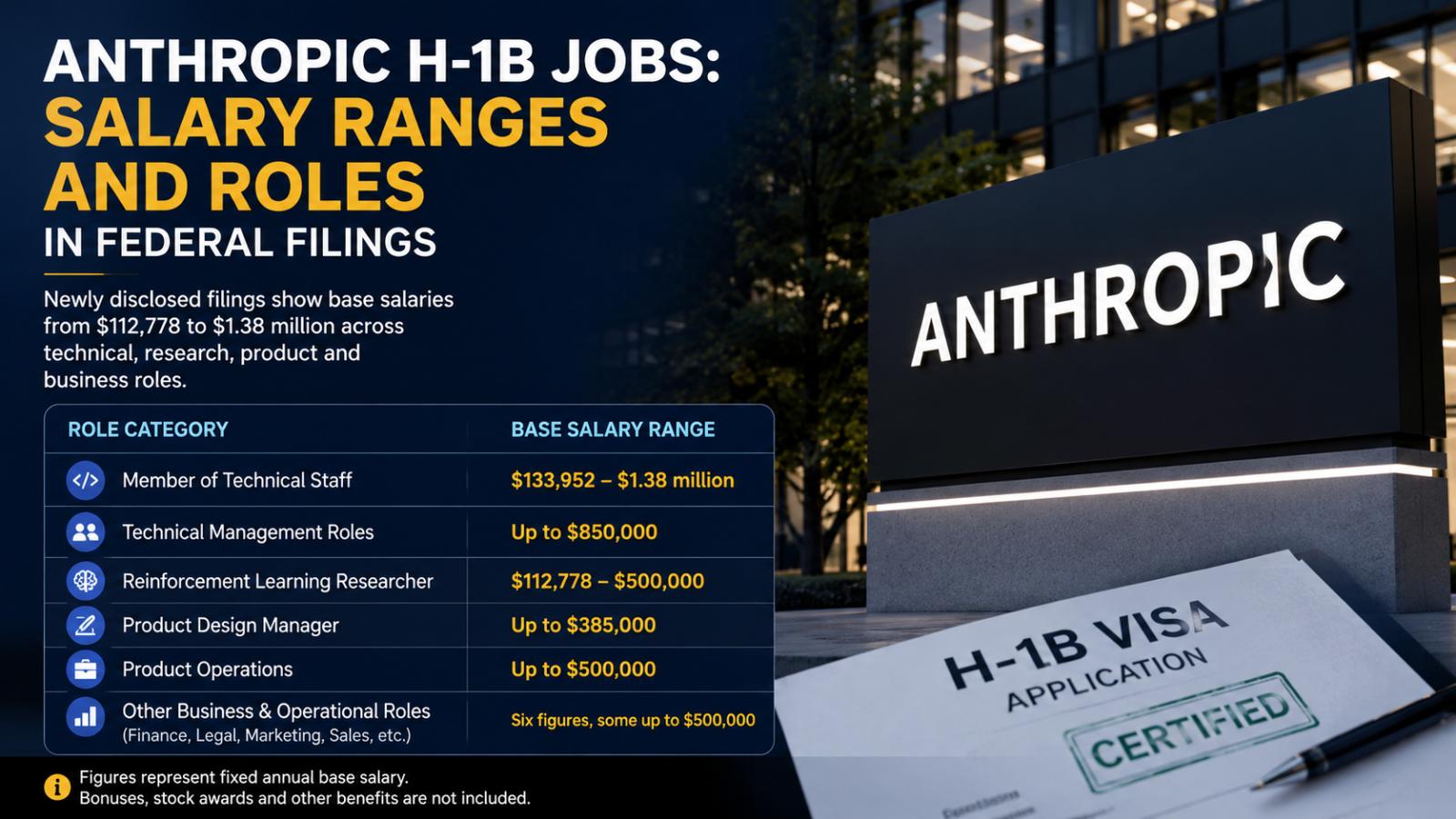
Anthropic Raises $65 Billion As AI Race Intensifies
Anthropic Valuation Climbs Anthropic announced on Thursday, May 28, that it raised $65 billion in a new funding round, lifting its valuation to $965 billion and placing the company ahead of OpenAI in the fast-moving artificial intelligence market. The company, led by former OpenAI executive Dario Amodei, has gained attention for Claude, its advanced AI assistant, and for its growing strength in coding, ente
Anthropic Raises $65 Billion As AI Race Intensifies
Anthropic Valuation Climbs Anthropic announced on Thursday, May 28, that it raised $65 billion in a new funding round, lifting its valuation to $965 billion and placing the company ahead of OpenAI in the fast-moving artificial intelligence market. The company, led by former OpenAI executive Dario Amodei, has gained attention for Claude, its advanced AI assistant, and for its growing strength in coding, ente
Illinois AI Bills Target Chatbots, Data Centers and School Phones
Illinois lawmakers are debating AI bills, school cellphone limits and data center rules as the state legislative session moves toward its Saturday, May 31, 2026, adjournment deadline. The proposals are part of a busy final stretch in Springfield, where lawmakers are also working through Gov. JB Pritzker’s proposed $56 billion state budget and discussions linked to a possible new Chicago Bears stadium project. Illinois AI bills focus on safety and chatbot transpa
Illinois AI Bills Target Chatbots, Data Centers and School Phones
Illinois lawmakers are debating AI bills, school cellphone limits and data center rules as the state legislative session moves toward its Saturday, May 31, 2026, adjournment deadline. The proposals are part of a busy final stretch in Springfield, where lawmakers are also working through Gov. JB Pritzker’s proposed $56 billion state budget and discussions linked to a possible new Chicago Bears stadium project. Illinois AI bills focus on safety and chatbot transpa
Elon Musk OpenAI Lawsuit Ruling Gives AI Firm Court Win
The Elon Musk OpenAI lawsuit ruling delivered a major courtroom victory for OpenAI after a California jury rejected Musk’s claims in a closely watched artificial intelligence case. A U.S. jury in Oakland, California, ruled against Musk on Monday, May 18, 2026, in his lawsuit against OpenAI, according to Reuters. The case focused on Musk’s claim that OpenAI had moved away from its original mission of developing artificial intelligence for the benefit of humanity.
Elon Musk OpenAI Lawsuit Ruling Gives AI Firm Court Win
The Elon Musk OpenAI lawsuit ruling delivered a major courtroom victory for OpenAI after a California jury rejected Musk’s claims in a closely watched artificial intelligence case. A U.S. jury in Oakland, California, ruled against Musk on Monday, May 18, 2026, in his lawsuit against OpenAI, according to Reuters. The case focused on Musk’s claim that OpenAI had moved away from its original mission of developing artificial intelligence for the benefit of humanity.
Elon Musk’s Grok Loses Ground to ChatGPT and Claude
Grok AI is losing momentum as ChatGPT, Claude and Gemini gain stronger adoption among consumers, paying users and enterprise teams, according to industry data cited in recent market reports. The slowdown highlights a major shift in the AI race: viral attention is no longer enough. Users and businesses are increasingly choosing AI tools that offer reliability, workplace integration and consistent productivity value. Downloads Drop After Viral Surge
Elon Musk’s Grok Loses Ground to ChatGPT and Claude
Grok AI is losing momentum as ChatGPT, Claude and Gemini gain stronger adoption among consumers, paying users and enterprise teams, according to industry data cited in recent market reports. The slowdown highlights a major shift in the AI race: viral attention is no longer enough. Users and businesses are increasingly choosing AI tools that offer reliability, workplace integration and consistent productivity value. Downloads Drop After Viral Surge
Trump and Xi Meet in Beijing Amid Rising US-China Trade Tensions
US President Donald Trump and Chinese President Xi Jinping are meeting in Beijing amid renewed efforts to prevent escalating tensions between the world’s two largest economies. The summit follows months of friction over tariffs, semiconductors, artificial intelligence, supply chains, and Taiwan, all of which have intensified competition between Washington and Beijing despite a temporary stabilisation agreement reached during the APEC summit in Busan, South Korea, in October 2025.

Trump and Xi Meet in Beijing Amid Rising US-China Trade Tensions
US President Donald Trump and Chinese President Xi Jinping are meeting in Beijing amid renewed efforts to prevent escalating tensions between the world’s two largest economies. The summit follows months of friction over tariffs, semiconductors, artificial intelligence, supply chains, and Taiwan, all of which have intensified competition between Washington and Beijing despite a temporary stabilisation agreement reached during the APEC summit in Busan, South Korea, in October 2025.

Google Warns Hackers Used AI to Plan Massive Zero-Day Cyberattack
Google warned on Monday, May 12, 2026, that hackers attempted to use artificial intelligence tools to plan a large-scale zero-day cyberattack capable of bypassing two-factor authentication systems. The company’s Threat Intelligence Group (GTIG) said it has “high confidence” that cybercriminals used advanced AI models to identify and exploit an undisclosed software vulnerability before developers became aware of it. Officials said Google’s proactive discovery may have stopped what could have become a “mass vulnerability exploitation operation.” AI Security Threats Raise Industry Alarm The report highlights growing fears that AI-powered hacking tools are accelerating cyber threats against businesses, government agencies, and critical digital infrastructure worldwide. Google clarified that its own Gemini AI model was not involved. However, investigators found evidence that hackers were using publicly available AI systems, including OpenClaw, to discover software flaws, develop malware, and automate cyberattacks. Security analysts say AI-driven vulnerability discovery could dramatically reduce the time hackers need to launch sophisticated attacks. OpenAI and Anthropic Also Tighten Security The findings come as major AI companies increase restrictions on powerful cybersecurity-focused models. Last week, OpenAI announced limited access to GPT-5.5-Cyber for vetted security teams, while Anthropic previously delayed the release of its Mythos model over fears criminals could exploit older software vulnerabilities. According to Google, cyber groups linked to China and North Korea showed “significant interest” in using AI for vulnerability discovery and cyber operations, signaling a rapidly evolving global cybersecurity threat landscape.


Google Warns Hackers Used AI to Plan Massive Zero-Day Cyberattack
Google warned on Monday, May 12, 2026, that hackers attempted to use artificial intelligence tools to plan a large-scale zero-day cyberattack capable of bypassing two-factor authentication systems. The company’s Threat Intelligence Group (GTIG) said it has “high confidence” that cybercriminals used advanced AI models to identify and exploit an undisclosed software vulnerability before developers became aware of it. Officials said Google’s proactive discovery may have stopped what could have become a “mass vulnerability exploitation operation.” AI Security Threats Raise Industry Alarm The report highlights growing fears that AI-powered hacking tools are accelerating cyber threats against businesses, government agencies, and critical digital infrastructure worldwide. Google clarified that its own Gemini AI model was not involved. However, investigators found evidence that hackers were using publicly available AI systems, including OpenClaw, to discover software flaws, develop malware, and automate cyberattacks. Security analysts say AI-driven vulnerability discovery could dramatically reduce the time hackers need to launch sophisticated attacks. OpenAI and Anthropic Also Tighten Security The findings come as major AI companies increase restrictions on powerful cybersecurity-focused models. Last week, OpenAI announced limited access to GPT-5.5-Cyber for vetted security teams, while Anthropic previously delayed the release of its Mythos model over fears criminals could exploit older software vulnerabilities. According to Google, cyber groups linked to China and North Korea showed “significant interest” in using AI for vulnerability discovery and cyber operations, signaling a rapidly evolving global cybersecurity threat landscape.
Trump administration to implement AI oversight, reversing earlier stance
The Trump administration is reversing its previous stance on artificial intelligence oversight, now planning to introduce government review procedures for AI models before they are released to the public. According to reports, the White House is considering an executive order that would establish a working group consisting of both tech executives and government officials to explore potential review procedures for new AI models. This marks a s
Trump administration to implement AI oversight, reversing earlier stance
The Trump administration is reversing its previous stance on artificial intelligence oversight, now planning to introduce government review procedures for AI models before they are released to the public. According to reports, the White House is considering an executive order that would establish a working group consisting of both tech executives and government officials to explore potential review procedures for new AI models. This marks a s
AI spending surge could top $1 trillion by 2027, analysts say
Wall Street analysts project AI spending could exceed $1 trillion by 2027 as major tech firms boost investments. Strong cloud demand and rising revenues support growth, though investor concerns remain over returns and rising infrastructure costs AI spending surge could top $1 trillion by 2027, analysts say is increasingly shaping expectations across the technology sector, as Wall Street analysts project unprecedented capital expenditures driven by artificial intelligence demand. Following recent tech earnings announcements on Wednesday, analysts at firms including Evercore and Bank of America estimate total AI-related capital spending could surpass $1 trillion by 2027, with 2026 projections already rising to between $800 billion and $900 billion. The surge reflects aggressive investment strategies by major technology companies, including Alphabet, Amazon, Meta, and Microsoft. According to analyst estimates, projected capital spending for 2026 includes approximately $200 billion from Amazon, $190 billion from Microsoft, $185 billion from Alphabet, and $135 billion from Meta, reflecting broad increases across the sector. Executives continue to signal confidence in long-term AI investments despite investor concerns about the scale of spending. Amazon CEO Andy Jassy emphasized the company’s commitment to infrastructure expansion, citing strong long-term returns. Similarly, Alphabet reported significant growth in its cloud segment, with revenue increasing sharply year over year, reinforcing expectations that AI-driven services are becoming a major revenue driver. Analysts note that while capital expenditures continue to rise, early signs of return on investment are emerging. Strong cloud demand, expanding contract backlogs, and increasing enterprise adoption of AI tools are contributing to revenue growth. Alphabet, in particular, has seen substantial backlog expansion tied to its cloud platform, with a large portion expected to convert into revenue over the next two years. However, not all companies are receiving equal investor confidence. Meta’s increased spending plans have raised concerns about near-term returns, particularly as its free cash flow has declined significantly compared to the previous year. CEO Mark Zuckerberg acknowledged higher infrastructure costs, including rising component prices, while maintaining confidence in the long-term value of AI investments. The rapid expansion of AI infrastructure is also benefiting semiconductor manufacturers and hardware suppliers. Companies such as Intel are seeing increased demand as AI workloads require a broader range of computing hardware beyond graphics processors. Analysts highlight growing demand for specialized chips and custom silicon solutions, suggesting that AI development could drive sustained growth across the semiconductor industry. Overall, analysts expect improving revenue and cash flow trends across the sector by 2026, supporting continued investment. While skepticism remains about the pace and scale of spending, the combination of strong demand, expanding cloud services, and technological advancements indicates that the AI-driven capital expenditure cycle is likely to continue shaping the global technology landscape.
AI spending surge could top $1 trillion by 2027, analysts say
Wall Street analysts project AI spending could exceed $1 trillion by 2027 as major tech firms boost investments. Strong cloud demand and rising revenues support growth, though investor concerns remain over returns and rising infrastructure costs AI spending surge could top $1 trillion by 2027, analysts say is increasingly shaping expectations across the technology sector, as Wall Street analysts project unprecedented capital expenditures driven by artificial intelligence demand. Following recent tech earnings announcements on Wednesday, analysts at firms including Evercore and Bank of America estimate total AI-related capital spending could surpass $1 trillion by 2027, with 2026 projections already rising to between $800 billion and $900 billion. The surge reflects aggressive investment strategies by major technology companies, including Alphabet, Amazon, Meta, and Microsoft. According to analyst estimates, projected capital spending for 2026 includes approximately $200 billion from Amazon, $190 billion from Microsoft, $185 billion from Alphabet, and $135 billion from Meta, reflecting broad increases across the sector. Executives continue to signal confidence in long-term AI investments despite investor concerns about the scale of spending. Amazon CEO Andy Jassy emphasized the company’s commitment to infrastructure expansion, citing strong long-term returns. Similarly, Alphabet reported significant growth in its cloud segment, with revenue increasing sharply year over year, reinforcing expectations that AI-driven services are becoming a major revenue driver. Analysts note that while capital expenditures continue to rise, early signs of return on investment are emerging. Strong cloud demand, expanding contract backlogs, and increasing enterprise adoption of AI tools are contributing to revenue growth. Alphabet, in particular, has seen substantial backlog expansion tied to its cloud platform, with a large portion expected to convert into revenue over the next two years. However, not all companies are receiving equal investor confidence. Meta’s increased spending plans have raised concerns about near-term returns, particularly as its free cash flow has declined significantly compared to the previous year. CEO Mark Zuckerberg acknowledged higher infrastructure costs, including rising component prices, while maintaining confidence in the long-term value of AI investments. The rapid expansion of AI infrastructure is also benefiting semiconductor manufacturers and hardware suppliers. Companies such as Intel are seeing increased demand as AI workloads require a broader range of computing hardware beyond graphics processors. Analysts highlight growing demand for specialized chips and custom silicon solutions, suggesting that AI development could drive sustained growth across the semiconductor industry. Overall, analysts expect improving revenue and cash flow trends across the sector by 2026, supporting continued investment. While skepticism remains about the pace and scale of spending, the combination of strong demand, expanding cloud services, and technological advancements indicates that the AI-driven capital expenditure cycle is likely to continue shaping the global technology landscape.
What is Manus AI and why did China block its sale to Meta? Strategic concerns explained
What is Manus AI and why did China block its sale to Meta? Strategic concerns explained Manus AI, a fast-rising artificial intelligence startup, has become the center of a geopolitical standoff after Chinese regulators blocked its proposed acquisition by Meta, underscoring intensifying competition in the global AI race between the United States and China. China intervenes to halt high-value AI acquisition deal Chinese authorities, led by the
What is Manus AI and why did China block its sale to Meta? Strategic concerns explained
What is Manus AI and why did China block its sale to Meta? Strategic concerns explained Manus AI, a fast-rising artificial intelligence startup, has become the center of a geopolitical standoff after Chinese regulators blocked its proposed acquisition by Meta, underscoring intensifying competition in the global AI race between the United States and China. China intervenes to halt high-value AI acquisition deal Chinese authorities, led by the
Did OpenAI miss growth targets? AI stocks fall as report raises concerns
Market reaction to OpenAI growth concerns Did OpenAI miss growth targets? AI stocks fall as report raises concerns, triggering a broad pullback across companies tied to artificial intelligence infrastructure on Tuesday. Shares of Oracle fell more than 4% amid its major partnership to provide computing power for OpenAI’s operations. Chipmakers including Nvidia, Broadcom, and Advanced Micro Devices declined between roughly 3% and 4%, while Qualcomm dropped 3.5%. Global impact reflects investor sensitivity Losses extended beyond the United States, with SoftBank Group, a major OpenAI investor, falling about 10% in Asian markets. The declines followed a report that OpenAI has not met internal projections for user growth and revenue, raising concerns about its ability to sustain the heavy spending required for data center expansion and long-term compute agreements. OpenAI response and financial outlook debate OpenAI pushed back against the claims, stating it remains aligned on expanding compute capacity. The company, which launched ChatGPT in 2022 and helped drive the current AI boom, recently secured a $122 billion funding round at an $852 billion valuation. However, internal discussions reportedly highlighted risks if revenue growth does not accelerate as expected. Competitive pressures reshape AI landscape At the same time, competition in enterprise AI continues to intensify. Rivals such as Anthropic and Google’s Gemini models are gaining traction, prompting companies to diversify across multiple providers. Some analysts interpret OpenAI’s slower growth as a shift in market share rather than a broader slowdown in AI adoption. Investors weigh long-term implications Despite the market reaction, several investors remain cautious about drawing firm conclusions. Industry experts note that forecasting revenue and capital expenditures in the rapidly evolving AI sector remains highly uncertain. While short-term volatility has affected tech stocks, many view the report as part of a broader adjustment rather than a fundamental change in the long-term trajectory of AI infrastructure spending.
Did OpenAI miss growth targets? AI stocks fall as report raises concerns
Market reaction to OpenAI growth concerns Did OpenAI miss growth targets? AI stocks fall as report raises concerns, triggering a broad pullback across companies tied to artificial intelligence infrastructure on Tuesday. Shares of Oracle fell more than 4% amid its major partnership to provide computing power for OpenAI’s operations. Chipmakers including Nvidia, Broadcom, and Advanced Micro Devices declined between roughly 3% and 4%, while Qualcomm dropped 3.5%. Global impact reflects investor sensitivity Losses extended beyond the United States, with SoftBank Group, a major OpenAI investor, falling about 10% in Asian markets. The declines followed a report that OpenAI has not met internal projections for user growth and revenue, raising concerns about its ability to sustain the heavy spending required for data center expansion and long-term compute agreements. OpenAI response and financial outlook debate OpenAI pushed back against the claims, stating it remains aligned on expanding compute capacity. The company, which launched ChatGPT in 2022 and helped drive the current AI boom, recently secured a $122 billion funding round at an $852 billion valuation. However, internal discussions reportedly highlighted risks if revenue growth does not accelerate as expected. Competitive pressures reshape AI landscape At the same time, competition in enterprise AI continues to intensify. Rivals such as Anthropic and Google’s Gemini models are gaining traction, prompting companies to diversify across multiple providers. Some analysts interpret OpenAI’s slower growth as a shift in market share rather than a broader slowdown in AI adoption. Investors weigh long-term implications Despite the market reaction, several investors remain cautious about drawing firm conclusions. Industry experts note that forecasting revenue and capital expenditures in the rapidly evolving AI sector remains highly uncertain. While short-term volatility has affected tech stocks, many view the report as part of a broader adjustment rather than a fundamental change in the long-term trajectory of AI infrastructure spending.
What is Elon Musk alleging against OpenAI? Lawsuit claims mission betrayal
The escalating legal dispute between Elon Musk and Sam Altman has entered a critical discovery phase, intensifying scrutiny over the direction of OpenAI. Musk’s lawsuit, initially filed in early 2024 and recent
What is Elon Musk alleging against OpenAI? Lawsuit claims mission betrayal
The escalating legal dispute between Elon Musk and Sam Altman has entered a critical discovery phase, intensifying scrutiny over the direction of OpenAI. Musk’s lawsuit, initially filed in early 2024 and recent
Nvidia stock hits record high, pushes market cap above $5 trillion
Shares of Nvidia hit a record $208.27 on Friday, April 24, 2026, pushing its value past $5 trillion amid strong AI demand. Gains followed upbeat results from Intel, lifting chipmakers broadly, even as Alphabet
Nvidia stock hits record high, pushes market cap above $5 trillion
Shares of Nvidia hit a record $208.27 on Friday, April 24, 2026, pushing its value past $5 trillion amid strong AI demand. Gains followed upbeat results from Intel, lifting chipmakers broadly, even as Alphabet
Why did Intel shares surge over 20%? AI demand and leadership changes drive rebound
Strong market reaction to earnings and AI momentum Shares of Intel surged more than 20% during trading hours on Friday, reflecting renewed investor confidence driven by rising artificial intelligence demand and stronger-than-expected financial results. By early afternoon, the stock had climbed approximately 22%, putting it on track for its best single-day performance in d
Why did Intel shares surge over 20%? AI demand and leadership changes drive rebound
Strong market reaction to earnings and AI momentum Shares of Intel surged more than 20% during trading hours on Friday, reflecting renewed investor confidence driven by rising artificial intelligence demand and stronger-than-expected financial results. By early afternoon, the stock had climbed approximately 22%, putting it on track for its best single-day performance in d
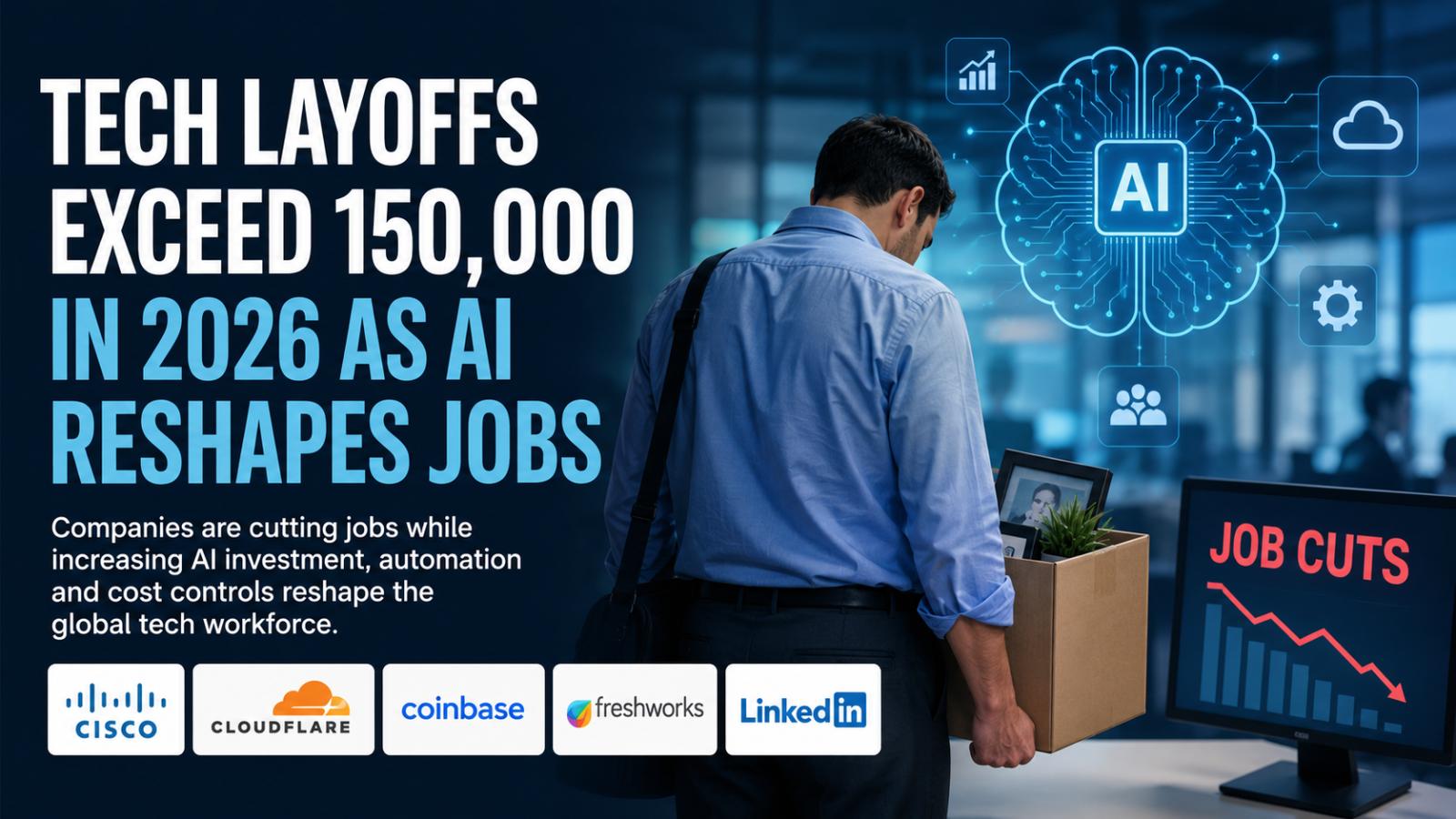
Meta to Lay Off Thousands as AI Spending Reaches New Highs
Meta is preparing to reduce its global workforce as part of a broader strategy to increase investment in artificial intelligence. In an internal communication to employees, the company outlined plans to cut approximately 10 percent of its workforce, affecting around 8,000 employees, while also pausing hiring for numerous open positions. The move reflects a shift in priorities as Meta accel
Meta to Lay Off Thousands as AI Spending Reaches New Highs
Meta is preparing to reduce its global workforce as part of a broader strategy to increase investment in artificial intelligence. In an internal communication to employees, the company outlined plans to cut approximately 10 percent of its workforce, affecting around 8,000 employees, while also pausing hiring for numerous open positions. The move reflects a shift in priorities as Meta accel
Why is Microsoft offering buyouts to U.S. employees? It aims to adapt to AI-driven industry changes
Voluntary buyouts introduced for U.S. workforce amid AI shift Microsoft is offering voluntary buyouts to a portion of its U.S. workforce, marking the first such initiative in the company’s 51-year history. The move comes as the broader technology sector adjusts to rapid changes driven by the rise of artificial intelligence. According to a person familiar with the plan,
Why is Microsoft offering buyouts to U.S. employees? It aims to adapt to AI-driven industry changes
Voluntary buyouts introduced for U.S. workforce amid AI shift Microsoft is offering voluntary buyouts to a portion of its U.S. workforce, marking the first such initiative in the company’s 51-year history. The move comes as the broader technology sector adjusts to rapid changes driven by the rise of artificial intelligence. According to a person familiar with the plan,
Digital Twin Job Loss Crisis: How AI “Superworkers” Are Reshaping the Future of Work
The rise of AI-powered digital twins is no longer just a tech trend—it’s quickly turning into a digital twin job loss crisis that could reshape how millions of people work. Companies are building AI versions of employees that can think, respond, and make decisions like humans. While this promises efficiency, it also raises a serious concern: are workers unknowingly training their own replacements? How Digital Twins Are Replacing Human Roles
Digital Twin Job Loss Crisis: How AI “Superworkers” Are Reshaping the Future of Work
The rise of AI-powered digital twins is no longer just a tech trend—it’s quickly turning into a digital twin job loss crisis that could reshape how millions of people work. Companies are building AI versions of employees that can think, respond, and make decisions like humans. While this promises efficiency, it also raises a serious concern: are workers unknowingly training their own replacements? How Digital Twins Are Replacing Human Roles
What is a digital twin in the workplace?
What is a digital twin? A digital twin is an AI-powered system that replicates a person’s knowledge, behavior, and decision-making using their data. It can assist with tasks, answer questions, and act as a virtual version of an employee. Digital twin in workplace: the rise of AI ‘superwo
What is a digital twin in the workplace?
What is a digital twin? A digital twin is an AI-powered system that replicates a person’s knowledge, behavior, and decision-making using their data. It can assist with tasks, answer questions, and act as a virtual version of an employee. Digital twin in workplace: the rise of AI ‘superwo
Sundar Pichai, Ranbir Kapoor named in TIME 100 list for 2026
TIME magazine released its 2026 list of the 100 most influential people in the world on Wednesday, highlighting individuals whose work has shaped global conversations across technology, entertainment, and culture. The annual TIME100 list recognizes leaders, innovators, and artists for their far-reaching impact, with Indian figures again earning international recognition. Among those featured is Sun
Sundar Pichai, Ranbir Kapoor named in TIME 100 list for 2026
TIME magazine released its 2026 list of the 100 most influential people in the world on Wednesday, highlighting individuals whose work has shaped global conversations across technology, entertainment, and culture. The annual TIME100 list recognizes leaders, innovators, and artists for their far-reaching impact, with Indian figures again earning international recognition. Among those featured is Sun
Software stocks rebound as Oracle leads gains amid AI concerns
Shares of major U.S. software companies moved sharply higher as investors returned to a sector that has faced sustained pressure amid concerns about artificial intelligence disrupting traditional business models. Oracle led the gains, with its stock rising 11%, helping drive a broader recovery across technology equities that had experienced steep declines earlier in the year. Other prominent
Software stocks rebound as Oracle leads gains amid AI concerns
Shares of major U.S. software companies moved sharply higher as investors returned to a sector that has faced sustained pressure amid concerns about artificial intelligence disrupting traditional business models. Oracle led the gains, with its stock rising 11%, helping drive a broader recovery across technology equities that had experienced steep declines earlier in the year. Other prominent