
































AI spending surge could top $1 trillion by 2027, analysts say
Wall Street analysts project AI spending could exceed $1 trillion by 2027 as major tech firms boost investments. Strong cloud demand and rising revenues support growth, though investor concerns remain over returns and rising infrastructure costs AI spending surge could top $1 trillion by 2027, analysts say is increasingly shaping expectations across the technology sector, as Wall Street analysts project unprecedented capital expenditures driven by artificial intelligence demand. Following recent tech earnings announcements on Wednesday, analysts at firms including Evercore and Bank of America estimate total AI-related capital spending could surpass $1 trillion by 2027, with 2026 projections already rising to between $800 billion and $900 billion. The surge reflects aggressive investment strategies by major technology companies, including Alphabet, Amazon, Meta, and Microsoft. According to analyst estimates, projected capital spending for 2026 includes approximately $200 billion from Amazon, $190 billion from Microsoft, $185 billion from Alphabet, and $135 billion from Meta, reflecting broad increases across the sector. Executives continue to signal confidence in long-term AI investments despite investor concerns about the scale of spending. Amazon CEO Andy Jassy emphasized the company’s commitment to infrastructure expansion, citing strong long-term returns. Similarly, Alphabet reported significant growth in its cloud segment, with revenue increasing sharply year over year, reinforcing expectations that AI-driven services are becoming a major revenue driver. Analysts note that while capital expenditures continue to rise, early signs of return on investment are emerging. Strong cloud demand, expanding contract backlogs, and increasing enterprise adoption of AI tools are contributing to revenue growth. Alphabet, in particular, has seen substantial backlog expansion tied to its cloud platform, with a large portion expected to convert into revenue over the next two years. However, not all companies are receiving equal investor confidence. Meta’s increased spending plans have raised concerns about near-term returns, particularly as its free cash flow has declined significantly compared to the previous year. CEO Mark Zuckerberg acknowledged higher infrastructure costs, including rising component prices, while maintaining confidence in the long-term value of AI investments. The rapid expansion of AI infrastructure is also benefiting semiconductor manufacturers and hardware suppliers. Companies such as Intel are seeing increased demand as AI workloads require a broader range of computing hardware beyond graphics processors. Analysts highlight growing demand for specialized chips and custom silicon solutions, suggesting that AI development could drive sustained growth across the semiconductor industry. Overall, analysts expect improving revenue and cash flow trends across the sector by 2026, supporting continued investment. While skepticism remains about the pace and scale of spending, the combination of strong demand, expanding cloud services, and technological advancements indicates that the AI-driven capital expenditure cycle is likely to continue shaping the global technology landscape.
AI spending surge could top $1 trillion by 2027, analysts say
Wall Street analysts project AI spending could exceed $1 trillion by 2027 as major tech firms boost investments. Strong cloud demand and rising revenues support growth, though investor concerns remain over returns and rising infrastructure costs AI spending surge could top $1 trillion by 2027, analysts say is increasingly shaping expectations across the technology sector, as Wall Street analysts project unprecedented capital expenditures driven by artificial intelligence demand. Following recent tech earnings announcements on Wednesday, analysts at firms including Evercore and Bank of America estimate total AI-related capital spending could surpass $1 trillion by 2027, with 2026 projections already rising to between $800 billion and $900 billion. The surge reflects aggressive investment strategies by major technology companies, including Alphabet, Amazon, Meta, and Microsoft. According to analyst estimates, projected capital spending for 2026 includes approximately $200 billion from Amazon, $190 billion from Microsoft, $185 billion from Alphabet, and $135 billion from Meta, reflecting broad increases across the sector. Executives continue to signal confidence in long-term AI investments despite investor concerns about the scale of spending. Amazon CEO Andy Jassy emphasized the company’s commitment to infrastructure expansion, citing strong long-term returns. Similarly, Alphabet reported significant growth in its cloud segment, with revenue increasing sharply year over year, reinforcing expectations that AI-driven services are becoming a major revenue driver. Analysts note that while capital expenditures continue to rise, early signs of return on investment are emerging. Strong cloud demand, expanding contract backlogs, and increasing enterprise adoption of AI tools are contributing to revenue growth. Alphabet, in particular, has seen substantial backlog expansion tied to its cloud platform, with a large portion expected to convert into revenue over the next two years. However, not all companies are receiving equal investor confidence. Meta’s increased spending plans have raised concerns about near-term returns, particularly as its free cash flow has declined significantly compared to the previous year. CEO Mark Zuckerberg acknowledged higher infrastructure costs, including rising component prices, while maintaining confidence in the long-term value of AI investments. The rapid expansion of AI infrastructure is also benefiting semiconductor manufacturers and hardware suppliers. Companies such as Intel are seeing increased demand as AI workloads require a broader range of computing hardware beyond graphics processors. Analysts highlight growing demand for specialized chips and custom silicon solutions, suggesting that AI development could drive sustained growth across the semiconductor industry. Overall, analysts expect improving revenue and cash flow trends across the sector by 2026, supporting continued investment. While skepticism remains about the pace and scale of spending, the combination of strong demand, expanding cloud services, and technological advancements indicates that the AI-driven capital expenditure cycle is likely to continue shaping the global technology landscape.
What is Manus AI and why did China block its sale to Meta? Strategic concerns explained
What is Manus AI and why did China block its sale to Meta? Strategic concerns explained Manus AI, a fast-rising artificial intelligence startup, has become the center of a geopolitical standoff after Chinese regulators blocked its proposed acquisition by Meta, underscoring intensifying competition in the global AI race between the United States and China. China intervenes to halt high-value AI acquisition deal Chinese authorities, led by the
What is Manus AI and why did China block its sale to Meta? Strategic concerns explained
What is Manus AI and why did China block its sale to Meta? Strategic concerns explained Manus AI, a fast-rising artificial intelligence startup, has become the center of a geopolitical standoff after Chinese regulators blocked its proposed acquisition by Meta, underscoring intensifying competition in the global AI race between the United States and China. China intervenes to halt high-value AI acquisition deal Chinese authorities, led by the
Did OpenAI miss growth targets? AI stocks fall as report raises concerns
Market reaction to OpenAI growth concerns Did OpenAI miss growth targets? AI stocks fall as report raises concerns, triggering a broad pullback across companies tied to artificial intelligence infrastructure on Tuesday. Shares of Oracle fell more than 4% amid its major partnership to provide computing power for OpenAI’s operations. Chipmakers including Nvidia, Broadcom, and Advanced Micro Devices declined between roughly 3% and 4%, while Qualcomm dropped 3.5%. Global impact reflects investor sensitivity Losses extended beyond the United States, with SoftBank Group, a major OpenAI investor, falling about 10% in Asian markets. The declines followed a report that OpenAI has not met internal projections for user growth and revenue, raising concerns about its ability to sustain the heavy spending required for data center expansion and long-term compute agreements. OpenAI response and financial outlook debate OpenAI pushed back against the claims, stating it remains aligned on expanding compute capacity. The company, which launched ChatGPT in 2022 and helped drive the current AI boom, recently secured a $122 billion funding round at an $852 billion valuation. However, internal discussions reportedly highlighted risks if revenue growth does not accelerate as expected. Competitive pressures reshape AI landscape At the same time, competition in enterprise AI continues to intensify. Rivals such as Anthropic and Google’s Gemini models are gaining traction, prompting companies to diversify across multiple providers. Some analysts interpret OpenAI’s slower growth as a shift in market share rather than a broader slowdown in AI adoption. Investors weigh long-term implications Despite the market reaction, several investors remain cautious about drawing firm conclusions. Industry experts note that forecasting revenue and capital expenditures in the rapidly evolving AI sector remains highly uncertain. While short-term volatility has affected tech stocks, many view the report as part of a broader adjustment rather than a fundamental change in the long-term trajectory of AI infrastructure spending.
Did OpenAI miss growth targets? AI stocks fall as report raises concerns
Market reaction to OpenAI growth concerns Did OpenAI miss growth targets? AI stocks fall as report raises concerns, triggering a broad pullback across companies tied to artificial intelligence infrastructure on Tuesday. Shares of Oracle fell more than 4% amid its major partnership to provide computing power for OpenAI’s operations. Chipmakers including Nvidia, Broadcom, and Advanced Micro Devices declined between roughly 3% and 4%, while Qualcomm dropped 3.5%. Global impact reflects investor sensitivity Losses extended beyond the United States, with SoftBank Group, a major OpenAI investor, falling about 10% in Asian markets. The declines followed a report that OpenAI has not met internal projections for user growth and revenue, raising concerns about its ability to sustain the heavy spending required for data center expansion and long-term compute agreements. OpenAI response and financial outlook debate OpenAI pushed back against the claims, stating it remains aligned on expanding compute capacity. The company, which launched ChatGPT in 2022 and helped drive the current AI boom, recently secured a $122 billion funding round at an $852 billion valuation. However, internal discussions reportedly highlighted risks if revenue growth does not accelerate as expected. Competitive pressures reshape AI landscape At the same time, competition in enterprise AI continues to intensify. Rivals such as Anthropic and Google’s Gemini models are gaining traction, prompting companies to diversify across multiple providers. Some analysts interpret OpenAI’s slower growth as a shift in market share rather than a broader slowdown in AI adoption. Investors weigh long-term implications Despite the market reaction, several investors remain cautious about drawing firm conclusions. Industry experts note that forecasting revenue and capital expenditures in the rapidly evolving AI sector remains highly uncertain. While short-term volatility has affected tech stocks, many view the report as part of a broader adjustment rather than a fundamental change in the long-term trajectory of AI infrastructure spending.
What is Elon Musk alleging against OpenAI? Lawsuit claims mission betrayal
The escalating legal dispute between Elon Musk and Sam Altman has entered a critical discovery phase, intensifying scrutiny over the direction of OpenAI. Musk’s lawsuit, initially filed in early 2024 and recent
What is Elon Musk alleging against OpenAI? Lawsuit claims mission betrayal
The escalating legal dispute between Elon Musk and Sam Altman has entered a critical discovery phase, intensifying scrutiny over the direction of OpenAI. Musk’s lawsuit, initially filed in early 2024 and recent
Nvidia stock hits record high, pushes market cap above $5 trillion
Shares of Nvidia hit a record $208.27 on Friday, April 24, 2026, pushing its value past $5 trillion amid strong AI demand. Gains followed upbeat results from Intel, lifting chipmakers broadly, even as Alphabet
Nvidia stock hits record high, pushes market cap above $5 trillion
Shares of Nvidia hit a record $208.27 on Friday, April 24, 2026, pushing its value past $5 trillion amid strong AI demand. Gains followed upbeat results from Intel, lifting chipmakers broadly, even as Alphabet
Why did Intel shares surge over 20%? AI demand and leadership changes drive rebound
Strong market reaction to earnings and AI momentum Shares of Intel surged more than 20% during trading hours on Friday, reflecting renewed investor confidence driven by rising artificial intelligence demand and stronger-than-expected financial results. By early afternoon, the stock had climbed approximately 22%, putting it on track for its best single-day performance in d
Why did Intel shares surge over 20%? AI demand and leadership changes drive rebound
Strong market reaction to earnings and AI momentum Shares of Intel surged more than 20% during trading hours on Friday, reflecting renewed investor confidence driven by rising artificial intelligence demand and stronger-than-expected financial results. By early afternoon, the stock had climbed approximately 22%, putting it on track for its best single-day performance in d
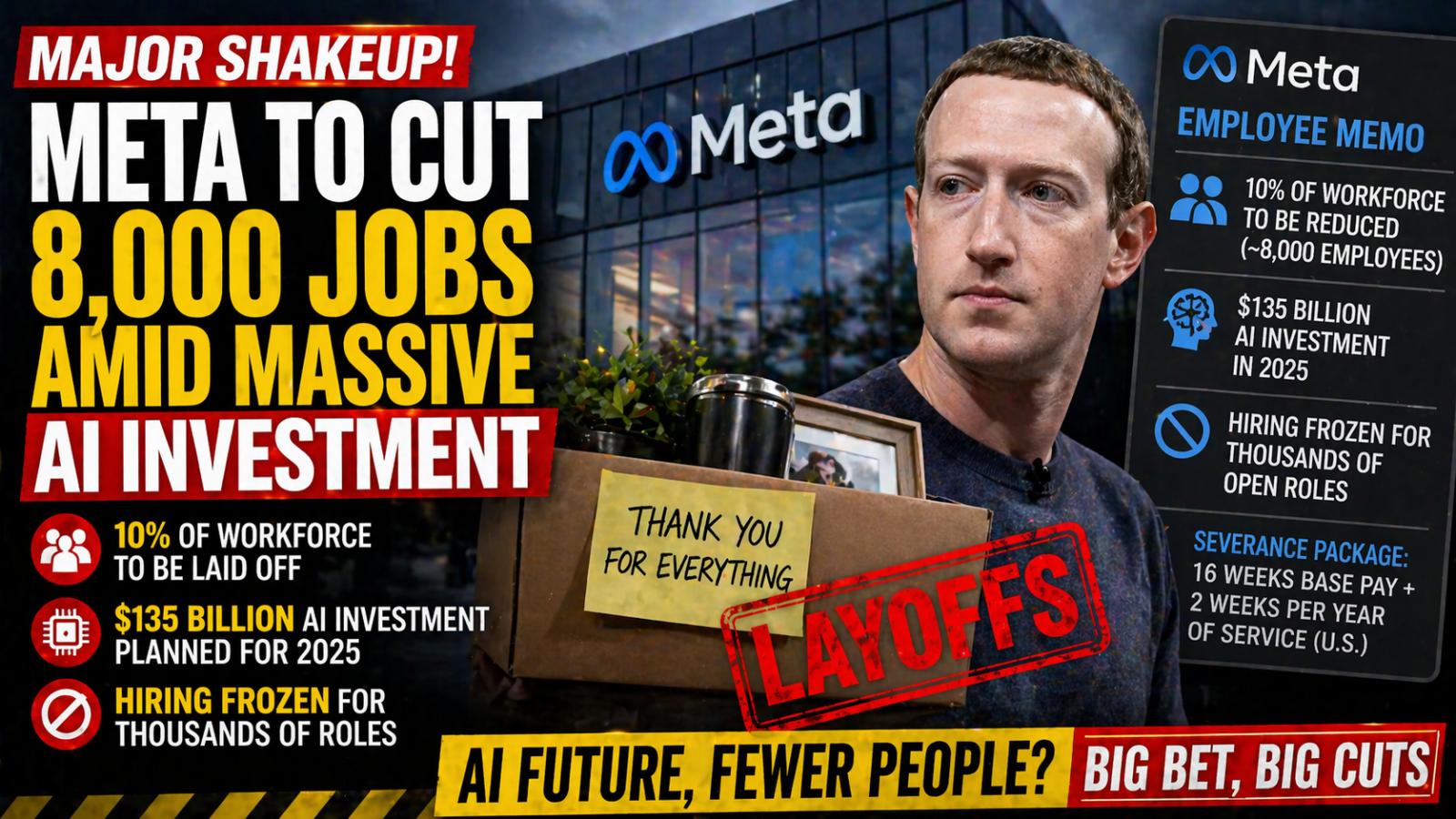
Meta to Lay Off Thousands as AI Spending Reaches New Highs
Meta is preparing to reduce its global workforce as part of a broader strategy to increase investment in artificial intelligence. In an internal communication to employees, the company outlined plans to cut approximately 10 percent of its workforce, affecting around 8,000 employees, while also pausing hiring for numerous open positions. The move reflects a shift in priorities as Meta accel
Meta to Lay Off Thousands as AI Spending Reaches New Highs
Meta is preparing to reduce its global workforce as part of a broader strategy to increase investment in artificial intelligence. In an internal communication to employees, the company outlined plans to cut approximately 10 percent of its workforce, affecting around 8,000 employees, while also pausing hiring for numerous open positions. The move reflects a shift in priorities as Meta accel
Why is Microsoft offering buyouts to U.S. employees? It aims to adapt to AI-driven industry changes
Voluntary buyouts introduced for U.S. workforce amid AI shift Microsoft is offering voluntary buyouts to a portion of its U.S. workforce, marking the first such initiative in the company’s 51-year history. The move comes as the broader technology sector adjusts to rapid changes driven by the rise of artificial intelligence. According to a person familiar with the plan,
Why is Microsoft offering buyouts to U.S. employees? It aims to adapt to AI-driven industry changes
Voluntary buyouts introduced for U.S. workforce amid AI shift Microsoft is offering voluntary buyouts to a portion of its U.S. workforce, marking the first such initiative in the company’s 51-year history. The move comes as the broader technology sector adjusts to rapid changes driven by the rise of artificial intelligence. According to a person familiar with the plan,
Digital Twin Job Loss Crisis: How AI “Superworkers” Are Reshaping the Future of Work
The rise of AI-powered digital twins is no longer just a tech trend—it’s quickly turning into a digital twin job loss crisis that could reshape how millions of people work. Companies are building AI versions of employees that can think, respond, and make decisions like humans. While this promises efficiency, it also raises a serious concern: are workers unknowingly training their own replacements? How Digital Twins Are Replacing Human Roles
Digital Twin Job Loss Crisis: How AI “Superworkers” Are Reshaping the Future of Work
The rise of AI-powered digital twins is no longer just a tech trend—it’s quickly turning into a digital twin job loss crisis that could reshape how millions of people work. Companies are building AI versions of employees that can think, respond, and make decisions like humans. While this promises efficiency, it also raises a serious concern: are workers unknowingly training their own replacements? How Digital Twins Are Replacing Human Roles
What is a digital twin in the workplace?
What is a digital twin? A digital twin is an AI-powered system that replicates a person’s knowledge, behavior, and decision-making using their data. It can assist with tasks, answer questions, and act as a virtual version of an employee. Digital twin in workplace: the rise of AI ‘superwo
What is a digital twin in the workplace?
What is a digital twin? A digital twin is an AI-powered system that replicates a person’s knowledge, behavior, and decision-making using their data. It can assist with tasks, answer questions, and act as a virtual version of an employee. Digital twin in workplace: the rise of AI ‘superwo
Sundar Pichai, Ranbir Kapoor named in TIME 100 list for 2026
TIME magazine released its 2026 list of the 100 most influential people in the world on Wednesday, highlighting individuals whose work has shaped global conversations across technology, entertainment, and culture. The annual TIME100 list recognizes leaders, innovators, and artists for their far-reaching impact, with Indian figures again earning international recognition. Among those featured is Sun
Sundar Pichai, Ranbir Kapoor named in TIME 100 list for 2026
TIME magazine released its 2026 list of the 100 most influential people in the world on Wednesday, highlighting individuals whose work has shaped global conversations across technology, entertainment, and culture. The annual TIME100 list recognizes leaders, innovators, and artists for their far-reaching impact, with Indian figures again earning international recognition. Among those featured is Sun
Software stocks rebound as Oracle leads gains amid AI concerns
Shares of major U.S. software companies moved sharply higher as investors returned to a sector that has faced sustained pressure amid concerns about artificial intelligence disrupting traditional business models. Oracle led the gains, with its stock rising 11%, helping drive a broader recovery across technology equities that had experienced steep declines earlier in the year. Other prominent
Software stocks rebound as Oracle leads gains amid AI concerns
Shares of major U.S. software companies moved sharply higher as investors returned to a sector that has faced sustained pressure amid concerns about artificial intelligence disrupting traditional business models. Oracle led the gains, with its stock rising 11%, helping drive a broader recovery across technology equities that had experienced steep declines earlier in the year. Other prominent
Maharashtra Cabinet Approves New IT-AI Department and Major Administrative Overhaul
In a significant development, the Maharashtra Cabinet, chaired by Chief Minister Devendra Fadnavis, has approved a series of administrative and infrastructural reforms, including the creation of a new department dedicated to Information Technology (IT) and Artificial Intelligence (AI). The decision, part of the state’s "Viksit Maharashtra" vision, aims to accelerate the integration of emerging technologies and streamline public services. A central part of this initiative is the fo
Maharashtra Cabinet Approves New IT-AI Department and Major Administrative Overhaul
In a significant development, the Maharashtra Cabinet, chaired by Chief Minister Devendra Fadnavis, has approved a series of administrative and infrastructural reforms, including the creation of a new department dedicated to Information Technology (IT) and Artificial Intelligence (AI). The decision, part of the state’s "Viksit Maharashtra" vision, aims to accelerate the integration of emerging technologies and streamline public services. A central part of this initiative is the fo
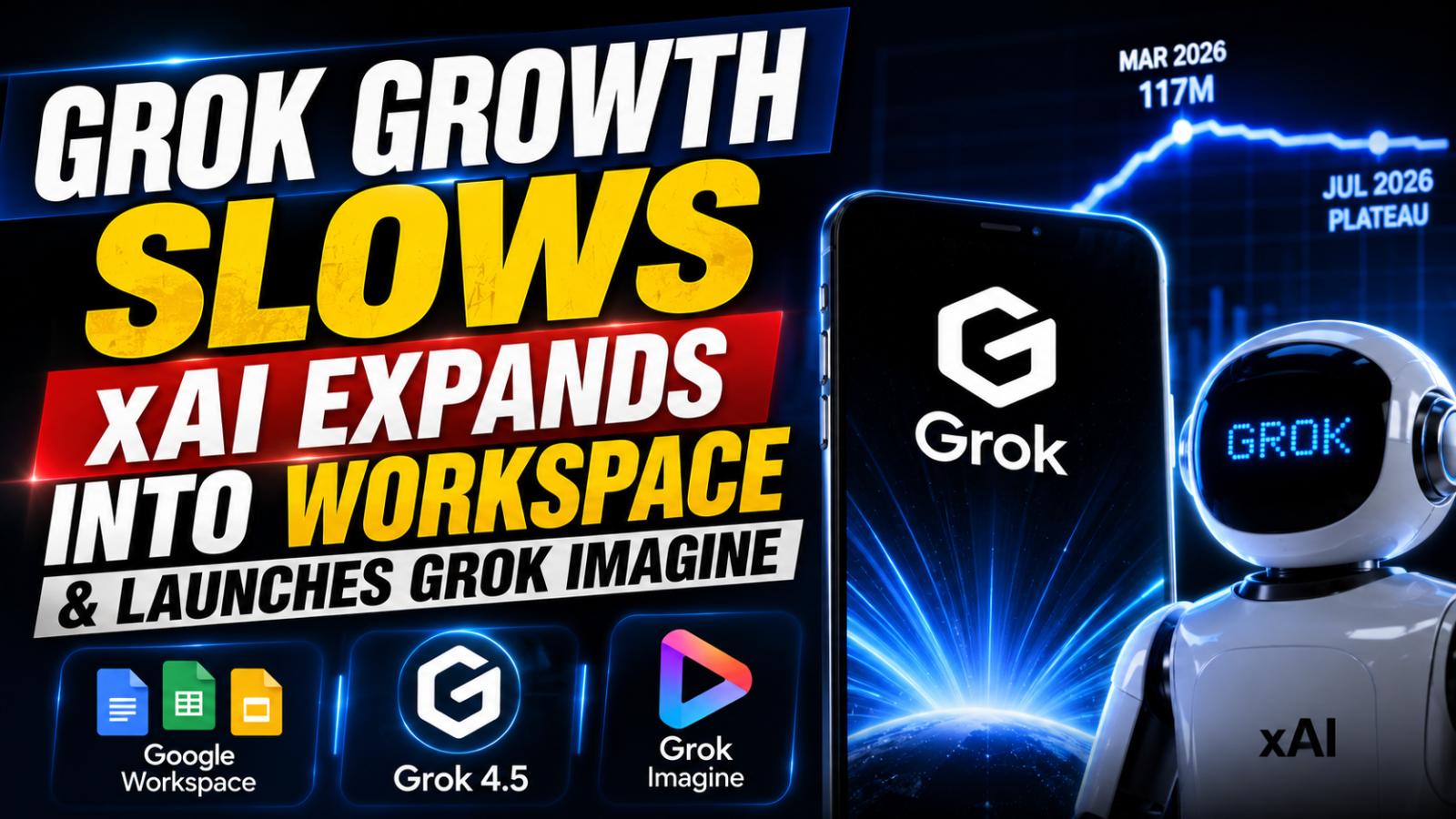
Elon Musk pushes SpaceX IPO banks to subscribe to Grok AI ahead of public listing
In a surprising development that has sparked debate across the tech and financial sectors, Elon Musk has reportedly asked banks involved in a potential SpaceX IPO to subscribe to Grok AI, the chatbot developed by his artificial intelligence venture xAI. The move is being seen as an unusual blending of financial negotiations with technology adoption, raising questions about influence, strategy, and ethics. According to reports, Musk has encouraged major financial institutions that are expected to play a role in SpaceX’s much-anticipated public offering to purchase subscriptions to Grok AI. Grok, integrated into the platform of X, is positioned as a competitor to other leading AI chatbots, aiming to provide real-time, conversational intelligence with a unique personality. By pushing Grok subscriptions, Musk appears to be leveraging his business relationships to expand the reach and adoption of his AI ecosystem. Industry analysts believe this strategy could serve multiple purposes. On one hand, it helps boost early enterprise adoption of Grok, potentially strengthening xAI’s valuation and credibility in the rapidly evolving artificial intelligence market. On the other hand, it may also create synergies between Musk’s ventures, aligning financial partners with his broader technological vision. Why this move is gaining attention The reported request has drawn scrutiny because it blurs the lines between separate business interests. While it is not uncommon for business leaders to promote their products, tying such expectations to high-stakes financial deals like an IPO is relatively rare. Experts suggest that this could raise concerns among regulators and investors, especially regarding fairness and transparency in financial negotiations. At the same time, some supporters argue that banks and institutions often adopt new technologies as part of strategic partnerships. If Grok AI proves to be a valuable tool for financial analysis, communication, or data processing, its adoption could be seen as a logical step rather than an obligation. Impact on SpaceX IPO and AI competition The potential SpaceX IPO is already one of the most anticipated events in global markets, given the company’s dominant position in private space exploration and satellite technology. Any additional layer of complexity, such as this reported push for AI subscriptions, could influence how investors and stakeholders perceive the deal. Meanwhile, the move highlights the intensifying competition in the AI space. With major players racing to capture market share, enterprise adoption is becoming a key battleground. By integrating Grok into financial institutions, Musk may be attempting to position xAI as a serious contender alongside other established AI platforms. As the story continues to unfold, it remains to be seen whether this strategy will accelerate Grok’s growth or invite regulatory attention. What is clear, however, is that Musk’s approach once again demonstrates his willingness to challenge conventional boundaries between industries, reshaping how technology and finance intersect in the modern era.
Elon Musk pushes SpaceX IPO banks to subscribe to Grok AI ahead of public listing
In a surprising development that has sparked debate across the tech and financial sectors, Elon Musk has reportedly asked banks involved in a potential SpaceX IPO to subscribe to Grok AI, the chatbot developed by his artificial intelligence venture xAI. The move is being seen as an unusual blending of financial negotiations with technology adoption, raising questions about influence, strategy, and ethics. According to reports, Musk has encouraged major financial institutions that are expected to play a role in SpaceX’s much-anticipated public offering to purchase subscriptions to Grok AI. Grok, integrated into the platform of X, is positioned as a competitor to other leading AI chatbots, aiming to provide real-time, conversational intelligence with a unique personality. By pushing Grok subscriptions, Musk appears to be leveraging his business relationships to expand the reach and adoption of his AI ecosystem. Industry analysts believe this strategy could serve multiple purposes. On one hand, it helps boost early enterprise adoption of Grok, potentially strengthening xAI’s valuation and credibility in the rapidly evolving artificial intelligence market. On the other hand, it may also create synergies between Musk’s ventures, aligning financial partners with his broader technological vision. Why this move is gaining attention The reported request has drawn scrutiny because it blurs the lines between separate business interests. While it is not uncommon for business leaders to promote their products, tying such expectations to high-stakes financial deals like an IPO is relatively rare. Experts suggest that this could raise concerns among regulators and investors, especially regarding fairness and transparency in financial negotiations. At the same time, some supporters argue that banks and institutions often adopt new technologies as part of strategic partnerships. If Grok AI proves to be a valuable tool for financial analysis, communication, or data processing, its adoption could be seen as a logical step rather than an obligation. Impact on SpaceX IPO and AI competition The potential SpaceX IPO is already one of the most anticipated events in global markets, given the company’s dominant position in private space exploration and satellite technology. Any additional layer of complexity, such as this reported push for AI subscriptions, could influence how investors and stakeholders perceive the deal. Meanwhile, the move highlights the intensifying competition in the AI space. With major players racing to capture market share, enterprise adoption is becoming a key battleground. By integrating Grok into financial institutions, Musk may be attempting to position xAI as a serious contender alongside other established AI platforms. As the story continues to unfold, it remains to be seen whether this strategy will accelerate Grok’s growth or invite regulatory attention. What is clear, however, is that Musk’s approach once again demonstrates his willingness to challenge conventional boundaries between industries, reshaping how technology and finance intersect in the modern era.
SpaceX plans $1 trillion IPO in historic public listing move
Elon Musk’s SpaceX has taken a major step toward becoming a publicly traded company, filing confidentially for an initial public offering on Wednesday, April 1, 2026. The move could position the aerospace and technology firm among the most valuable companies globally, with an expected valuation exceeding $1 trillion. The IPO filing allows SpaceX to begin discussions with regulators while keeping detailed financial disclosures private during the early stages. Reports indicate the c
SpaceX plans $1 trillion IPO in historic public listing move
Elon Musk’s SpaceX has taken a major step toward becoming a publicly traded company, filing confidentially for an initial public offering on Wednesday, April 1, 2026. The move could position the aerospace and technology firm among the most valuable companies globally, with an expected valuation exceeding $1 trillion. The IPO filing allows SpaceX to begin discussions with regulators while keeping detailed financial disclosures private during the early stages. Reports indicate the c
CBSE Expands Curriculum With Early AI Education From Class 3
The Central Board of Secondary Education (CBSE) has taken a significant step towards modernizing India’s education system by introducing artificial intelligence learning for students starting from Class 3. This move reflects the growing importance of digital literacy and emerging technologies in shaping the future workforce. By incorporating AI concepts at an early stage, CBSE aims to ensure that students are not just consumers of technology but also understand its fundamentals and applications. The initiative is part of a broader effort to align school education with global technological trends and prepare students for a rapidly evolving digital world. Under this new curriculum, young learners will be introduced to basic concepts of artificial intelligence through interactive and activity-based learning methods. Instead of complex coding, the focus will be on developing logical thinking, problem-solving skills, and an understanding of how AI impacts everyday life. Students will engage in simple exercises, games, and real-life examples to grasp how machines can learn and make decisions. This foundational approach ensures that children build curiosity and confidence in technology without feeling overwhelmed. Curriculum Focus and Implementation The AI curriculum for primary classes is designed to be age-appropriate and engaging. CBSE has collaborated with education experts and technology partners to create content that is both informative and easy to understand. Teachers will also receive specialized training to effectively deliver AI-related lessons in classrooms. The board plans to integrate AI topics with existing subjects, making learning more interdisciplinary and practical. This approach will help students connect theoretical knowledge with real-world applications, enhancing their overall learning experience. Impact on Students and Future Education Introducing AI learning at an early stage is expected to have a long-term impact on students’ academic and career paths. As industries increasingly rely on automation and data-driven technologies, early exposure to AI will give students a competitive edge. It will also encourage innovation and creativity among young minds, enabling them to think beyond traditional career options. Parents and educators have largely welcomed this move, seeing it as a progressive step toward building a tech-savvy generation. With this initiative, CBSE reinforces its commitment to evolving education standards and preparing students for the challenges of the future. The inclusion of artificial intelligence in the curriculum marks a shift from rote learning to skill-based education, ensuring that students are better equipped to navigate and contribute to a technology-driven world.
CBSE Expands Curriculum With Early AI Education From Class 3
The Central Board of Secondary Education (CBSE) has taken a significant step towards modernizing India’s education system by introducing artificial intelligence learning for students starting from Class 3. This move reflects the growing importance of digital literacy and emerging technologies in shaping the future workforce. By incorporating AI concepts at an early stage, CBSE aims to ensure that students are not just consumers of technology but also understand its fundamentals and applications. The initiative is part of a broader effort to align school education with global technological trends and prepare students for a rapidly evolving digital world. Under this new curriculum, young learners will be introduced to basic concepts of artificial intelligence through interactive and activity-based learning methods. Instead of complex coding, the focus will be on developing logical thinking, problem-solving skills, and an understanding of how AI impacts everyday life. Students will engage in simple exercises, games, and real-life examples to grasp how machines can learn and make decisions. This foundational approach ensures that children build curiosity and confidence in technology without feeling overwhelmed. Curriculum Focus and Implementation The AI curriculum for primary classes is designed to be age-appropriate and engaging. CBSE has collaborated with education experts and technology partners to create content that is both informative and easy to understand. Teachers will also receive specialized training to effectively deliver AI-related lessons in classrooms. The board plans to integrate AI topics with existing subjects, making learning more interdisciplinary and practical. This approach will help students connect theoretical knowledge with real-world applications, enhancing their overall learning experience. Impact on Students and Future Education Introducing AI learning at an early stage is expected to have a long-term impact on students’ academic and career paths. As industries increasingly rely on automation and data-driven technologies, early exposure to AI will give students a competitive edge. It will also encourage innovation and creativity among young minds, enabling them to think beyond traditional career options. Parents and educators have largely welcomed this move, seeing it as a progressive step toward building a tech-savvy generation. With this initiative, CBSE reinforces its commitment to evolving education standards and preparing students for the challenges of the future. The inclusion of artificial intelligence in the curriculum marks a shift from rote learning to skill-based education, ensuring that students are better equipped to navigate and contribute to a technology-driven world.
Tech-backed PACs shape Texas primaries amid AI regulation debate
WASHINGTON — A surge in political spending tied to artificial intelligence interests is reshaping congressional races in Texas, highlighting the growing influence of the tech industry on U.S. elections and policy debates. In the lead-up to the March 2026 primary elections, Republican candidate Chris Gober was promoted in a television ad as a “Trump conservative” and “MAGA warrior,” though the messaging avoided direct references to artificial intelligence despite backing from AI-link
Tech-backed PACs shape Texas primaries amid AI regulation debate
WASHINGTON — A surge in political spending tied to artificial intelligence interests is reshaping congressional races in Texas, highlighting the growing influence of the tech industry on U.S. elections and policy debates. In the lead-up to the March 2026 primary elections, Republican candidate Chris Gober was promoted in a television ad as a “Trump conservative” and “MAGA warrior,” though the messaging avoided direct references to artificial intelligence despite backing from AI-link
Reports of Oracle layoffs emerge amid shift toward AI investments
Reports circulating across online platforms indicate that Oracle Corporation may have initiated a fresh round of layoffs affecting employees in multiple regions, including India and Mexico, though the company has not issued an official confirmation regarding the scale or timing of these actions. Employees posting on professional forums such as Blind and Reddit described receiving early morning emails informing them that their positions had been eliminated with immediate effect. Several individuals reported that these notifications arrived as early as 5:00 AM or 6:00 AM local time, though the exact date of these communications has not been independently verified. Many said the messages were sent directly from company leadership without prior notice, formal HR discussions, or communication from direct managers. Accounts shared online suggest that access to internal systems was revoked shortly after the emails were delivered, leaving affected employees without a transition period. Some posts indicate that roles within cloud computing and engineering teams may have been impacted, although the full scope of departments involved remains unclear. Unverified claims circulating on social media suggest that between 20,000 and 30,000 employees could be affected, representing a significant portion of Oracle’s global workforce of approximately 162,000. However, these figures remain speculative and have not been confirmed by the company. The reported layoffs come at a time when Oracle continues to expand its investments in artificial intelligence infrastructure and data centers. Industry observers note that many technology companies are restructuring operations to prioritize AI-driven initiatives and cloud services, which may involve reallocating resources and reducing roles in other areas. Similar workforce reductions have been observed across the broader tech industry in recent months, as companies reassess hiring strategies following periods of rapid expansion. While some analysts link these layoffs to increased spending on AI, others suggest they reflect efforts to correct overhiring during earlier growth cycles. In the absence of an official statement, the full extent and impact of the reported layoffs at Oracle remain uncertain, with affected employees continuing to share their experiences across online platforms.
Reports of Oracle layoffs emerge amid shift toward AI investments
Reports circulating across online platforms indicate that Oracle Corporation may have initiated a fresh round of layoffs affecting employees in multiple regions, including India and Mexico, though the company has not issued an official confirmation regarding the scale or timing of these actions. Employees posting on professional forums such as Blind and Reddit described receiving early morning emails informing them that their positions had been eliminated with immediate effect. Several individuals reported that these notifications arrived as early as 5:00 AM or 6:00 AM local time, though the exact date of these communications has not been independently verified. Many said the messages were sent directly from company leadership without prior notice, formal HR discussions, or communication from direct managers. Accounts shared online suggest that access to internal systems was revoked shortly after the emails were delivered, leaving affected employees without a transition period. Some posts indicate that roles within cloud computing and engineering teams may have been impacted, although the full scope of departments involved remains unclear. Unverified claims circulating on social media suggest that between 20,000 and 30,000 employees could be affected, representing a significant portion of Oracle’s global workforce of approximately 162,000. However, these figures remain speculative and have not been confirmed by the company. The reported layoffs come at a time when Oracle continues to expand its investments in artificial intelligence infrastructure and data centers. Industry observers note that many technology companies are restructuring operations to prioritize AI-driven initiatives and cloud services, which may involve reallocating resources and reducing roles in other areas. Similar workforce reductions have been observed across the broader tech industry in recent months, as companies reassess hiring strategies following periods of rapid expansion. While some analysts link these layoffs to increased spending on AI, others suggest they reflect efforts to correct overhiring during earlier growth cycles. In the absence of an official statement, the full extent and impact of the reported layoffs at Oracle remain uncertain, with affected employees continuing to share their experiences across online platforms.
Claude Now Controls Your Computer, Anthropic Unveils New AI Feature for Automation
In a groundbreaking development, Anthropic has introduced a new feature for Claude, its powerful AI assistant, enabling it to gain full control of your computer. This update takes Claude beyond simply responding to commands—it now has the capability to operate your mouse, keyboard, and even access apps, effectively transforming it into a remote personal assistant capable of completing tasks on your behalf. The new functionality is designed to streamline productivity by allowing Claude to handle tasks like opening applications, managing spreadsheets, navigating browsers, and more—all without you needing to be present at your computer. With this feature, Anthropic envisions a future where you can rely on AI to do the work while you are away, with minimal interaction required on your part. Alex Albert, a researcher at Anthropic, shared on X (formerly Twitter), "The future where I never have to open up my laptop to get work done is becoming real very fast." The integration with the Dispatch feature, which allows users to remotely control Claude, enhances the AI’s capabilities, making it a versatile tool for both personal and professional use. Claude's access to your computer is seamless, initially starting with apps like Slack or Calendar. With permission, it can extend access to other applications needed for the task at hand. Once set up, you can prompt Claude remotely through its mobile or desktop app, and when you return, the AI will have completed your tasks. Currently, this feature is available only to paid users of Claude Cowork and Claude Code, and is limited to macOS users. Both the Claude desktop and mobile apps need to be updated and paired for the full functionality to work. This shift towards AI-powered automation, allowing AI agents like Claude to manage tasks and workflows independently, marks a significant step forward in the development of agentic AI, positioning Anthropic as a leader in this field. With competitors like Nvidia’s NemoClaw, OpenAI, and Meta developing similar AI systems, the race to bring seamless, autonomous task management to everyday users is gaining momentum.
Claude Now Controls Your Computer, Anthropic Unveils New AI Feature for Automation
In a groundbreaking development, Anthropic has introduced a new feature for Claude, its powerful AI assistant, enabling it to gain full control of your computer. This update takes Claude beyond simply responding to commands—it now has the capability to operate your mouse, keyboard, and even access apps, effectively transforming it into a remote personal assistant capable of completing tasks on your behalf. The new functionality is designed to streamline productivity by allowing Claude to handle tasks like opening applications, managing spreadsheets, navigating browsers, and more—all without you needing to be present at your computer. With this feature, Anthropic envisions a future where you can rely on AI to do the work while you are away, with minimal interaction required on your part. Alex Albert, a researcher at Anthropic, shared on X (formerly Twitter), "The future where I never have to open up my laptop to get work done is becoming real very fast." The integration with the Dispatch feature, which allows users to remotely control Claude, enhances the AI’s capabilities, making it a versatile tool for both personal and professional use. Claude's access to your computer is seamless, initially starting with apps like Slack or Calendar. With permission, it can extend access to other applications needed for the task at hand. Once set up, you can prompt Claude remotely through its mobile or desktop app, and when you return, the AI will have completed your tasks. Currently, this feature is available only to paid users of Claude Cowork and Claude Code, and is limited to macOS users. Both the Claude desktop and mobile apps need to be updated and paired for the full functionality to work. This shift towards AI-powered automation, allowing AI agents like Claude to manage tasks and workflows independently, marks a significant step forward in the development of agentic AI, positioning Anthropic as a leader in this field. With competitors like Nvidia’s NemoClaw, OpenAI, and Meta developing similar AI systems, the race to bring seamless, autonomous task management to everyday users is gaining momentum.
OpenAI flags Microsoft reliance as risk ahead of potential IPO
OpenAI has identified its close relationship with Microsoft as a potential business risk, according to a financial document shared with prospective investors as part of its latest funding round. The disclosure highlights the company’s reliance on Microsoft for a significant portion of its financing and computing infrastructure, raising concerns about concentration risk as it prepares for a possible initial public offering. The document, which includes detailed risk factors related to both
OpenAI flags Microsoft reliance as risk ahead of potential IPO
OpenAI has identified its close relationship with Microsoft as a potential business risk, according to a financial document shared with prospective investors as part of its latest funding round. The disclosure highlights the company’s reliance on Microsoft for a significant portion of its financing and computing infrastructure, raising concerns about concentration risk as it prepares for a possible initial public offering. The document, which includes detailed risk factors related to both


