









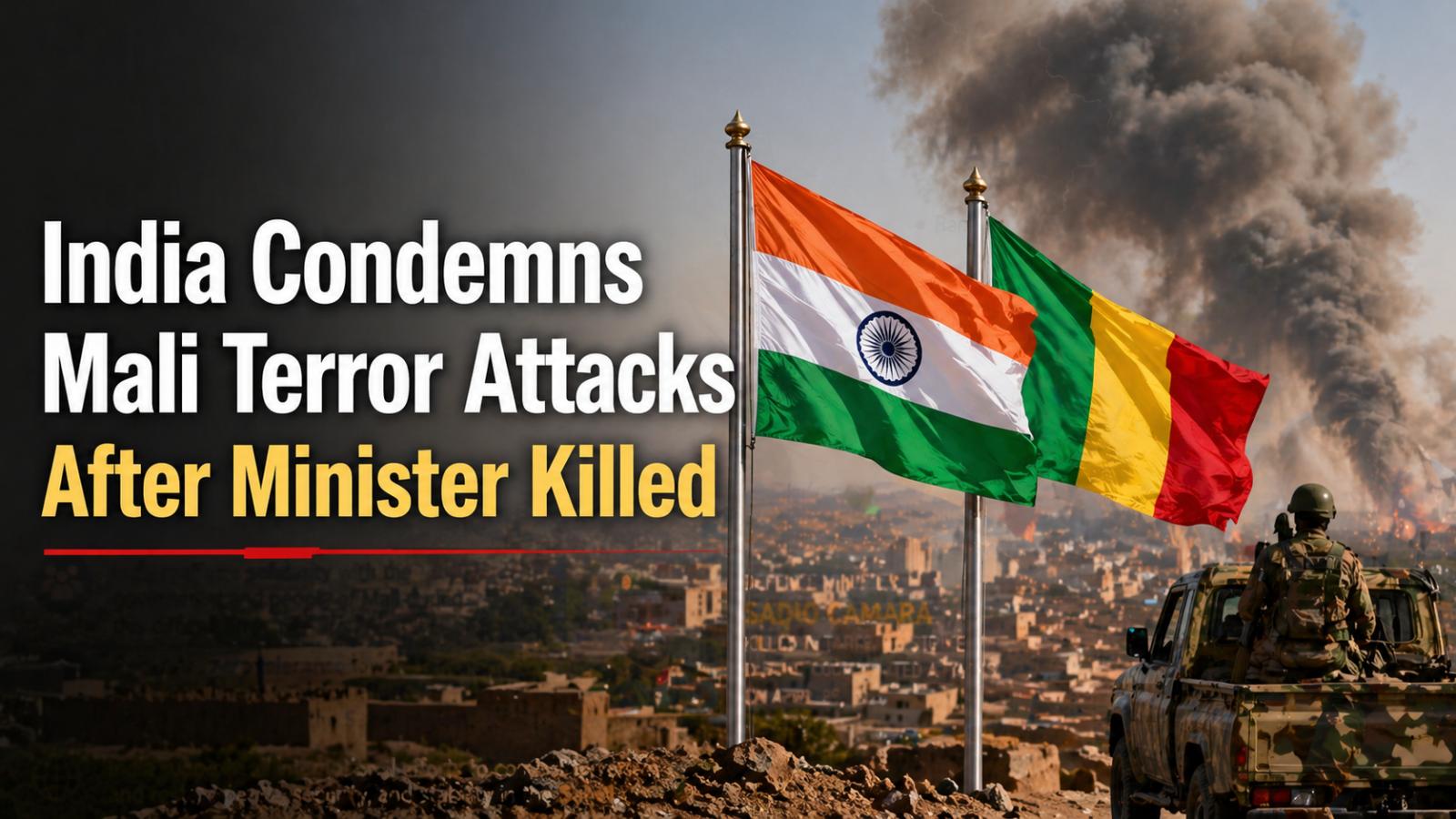
What triggered India’s response to Mali violence? Coordinated terror strikes and minister’s death
India condemns Mali terror attacks after minister killed, highlights global security risks and support for Sahel stability. The Government of India issued a strong condemnation on Tuesday, April 28, 2026 (IST), following a series of coordinated terrorist attacks across Mali that resulted in significant casualties and heightened regional instability. In an official statement, the Ministry of External Affairs expressed condolences to victims’ families and affirmed solidarity with Mali’s government and citizens. Coordinated assaults escalate violence across Mali The wave of violence began on Saturday, April 25, 2026, when militant group Jama'at Nusrat al-Islam wal-Muslimin joined forces with Tuareg separatists from the Front de libération de l'Azawad. Together, they launched synchronized attacks targeting key locations from the capital Bamako to northern regions. The coordinated nature of the assaults marked one of the most significant escalations of violence in the country in recent years. Death of defense minister shocks leadership Among those killed was Sadio Camara, Mali’s Minister of Defence and Veteran Affairs, who died in a targeted strike during the offensive. His death has sent shockwaves through Mali’s political and military leadership, raising concerns about the capacity of state institutions to counter increasingly sophisticated insurgent operations. India reiterates zero tolerance on terrorism In its statement, New Delhi emphasized its longstanding policy of zero tolerance toward terrorism. The government reaffirmed its commitment to combating extremist violence in all forms and voiced support for international efforts aimed at restoring peace and stability in the Sahel region. Officials in New Delhi indicated that the scale and coordination of the attacks reflect evolving threats posed by transnational militant networks. Broader implications for Sahel stability The attacks have intensified concerns within India’s strategic community that Mali could become a more entrenched base for global terror groups. While India has historically maintained a measured relationship with Bamako focused on development and capacity building, the latest violence underscores growing instability across the Sahel. Analysts warn that continued unrest may have wider implications for international security and counterterrorism efforts.
What triggered India’s response to Mali violence? Coordinated terror strikes and minister’s death
India condemns Mali terror attacks after minister killed, highlights global security risks and support for Sahel stability. The Government of India issued a strong condemnation on Tuesday, April 28, 2026 (IST), following a series of coordinated terrorist attacks across Mali that resulted in significant casualties and heightened regional instability. In an official statement, the Ministry of External Affairs expressed condolences to victims’ families and affirmed solidarity with Mali’s government and citizens. Coordinated assaults escalate violence across Mali The wave of violence began on Saturday, April 25, 2026, when militant group Jama'at Nusrat al-Islam wal-Muslimin joined forces with Tuareg separatists from the Front de libération de l'Azawad. Together, they launched synchronized attacks targeting key locations from the capital Bamako to northern regions. The coordinated nature of the assaults marked one of the most significant escalations of violence in the country in recent years. Death of defense minister shocks leadership Among those killed was Sadio Camara, Mali’s Minister of Defence and Veteran Affairs, who died in a targeted strike during the offensive. His death has sent shockwaves through Mali’s political and military leadership, raising concerns about the capacity of state institutions to counter increasingly sophisticated insurgent operations. India reiterates zero tolerance on terrorism In its statement, New Delhi emphasized its longstanding policy of zero tolerance toward terrorism. The government reaffirmed its commitment to combating extremist violence in all forms and voiced support for international efforts aimed at restoring peace and stability in the Sahel region. Officials in New Delhi indicated that the scale and coordination of the attacks reflect evolving threats posed by transnational militant networks. Broader implications for Sahel stability The attacks have intensified concerns within India’s strategic community that Mali could become a more entrenched base for global terror groups. While India has historically maintained a measured relationship with Bamako focused on development and capacity building, the latest violence underscores growing instability across the Sahel. Analysts warn that continued unrest may have wider implications for international security and counterterrorism efforts.
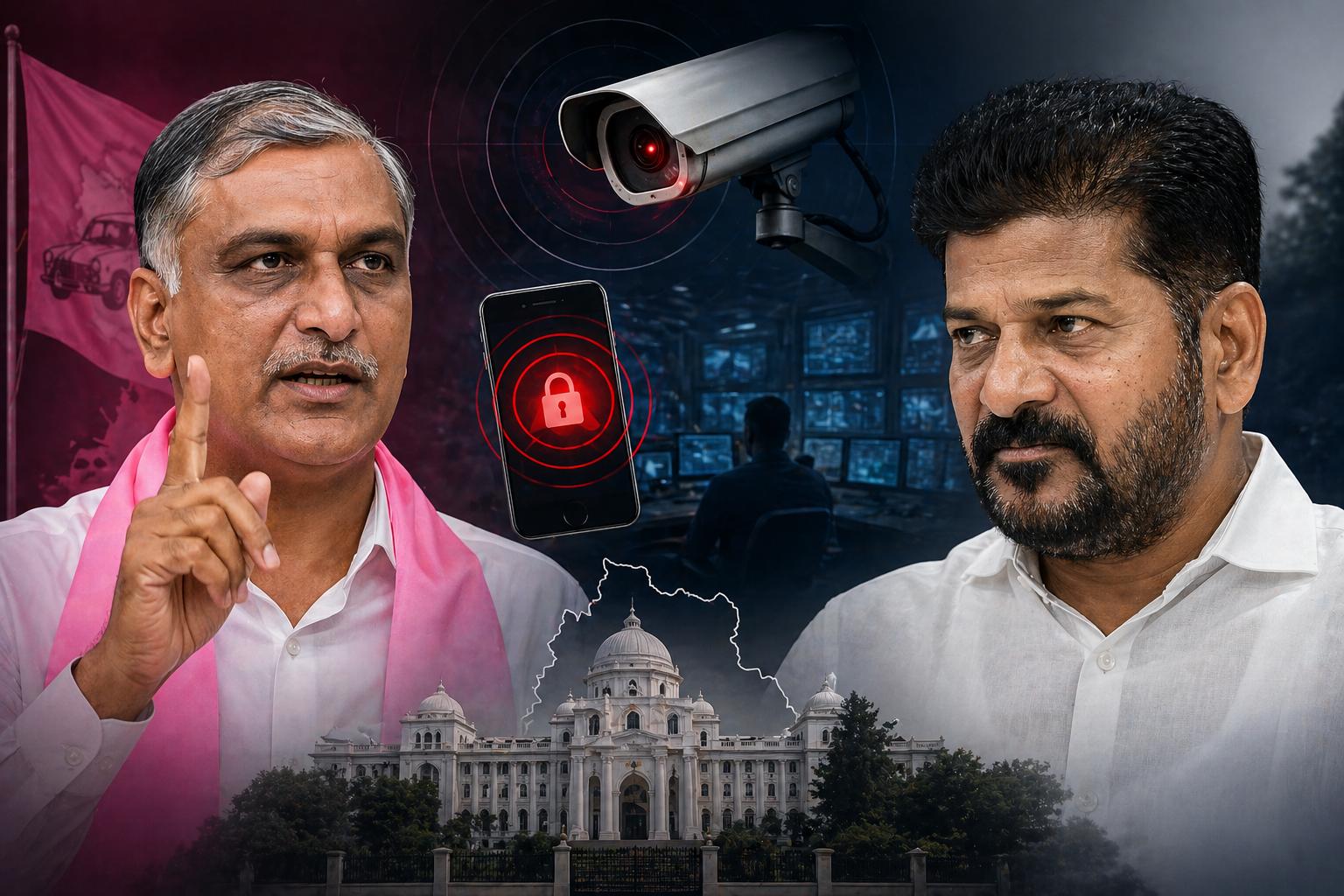
BRS Alleges CCTV and Phone Hacking by Revanth Reddy Government
April 28, 2026 | Hyderabad — BRS alleges CCTV and phone hacking by Revanth Reddy government. Harish Rao claims surveillance on leaders, says evidence will be revealed later Political tensions have surfaced in Telangana as leaders from the Bharat Rashtra Samithi have accused the
BRS Alleges CCTV and Phone Hacking by Revanth Reddy Government
April 28, 2026 | Hyderabad — BRS alleges CCTV and phone hacking by Revanth Reddy government. Harish Rao claims surveillance on leaders, says evidence will be revealed later Political tensions have surfaced in Telangana as leaders from the Bharat Rashtra Samithi have accused the

Google AI Hub Groundbreaking in Vizag Marks Major Tech Boost for Andhra Pradesh
April 28, 2026 | 9:37 AM | Visakhapatnam — Google AI Hub foundation ceremony held at Tarluvada The Andhra Pradesh government is taking a significant step toward strengthening its position in the technology and artificial intelligence space with the foundation stone laying ceremony of the Google Cloud India AI Hub in Tarluvada, Visakhapatnam district. The event, which
Google AI Hub Groundbreaking in Vizag Marks Major Tech Boost for Andhra Pradesh
April 28, 2026 | 9:37 AM | Visakhapatnam — Google AI Hub foundation ceremony held at Tarluvada The Andhra Pradesh government is taking a significant step toward strengthening its position in the technology and artificial intelligence space with the foundation stone laying ceremony of the Google Cloud India AI Hub in Tarluvada, Visakhapatnam district. The event, which
BJP Sweeps Gujarat Local Polls, Congress and AAP Suffer Major Defeat
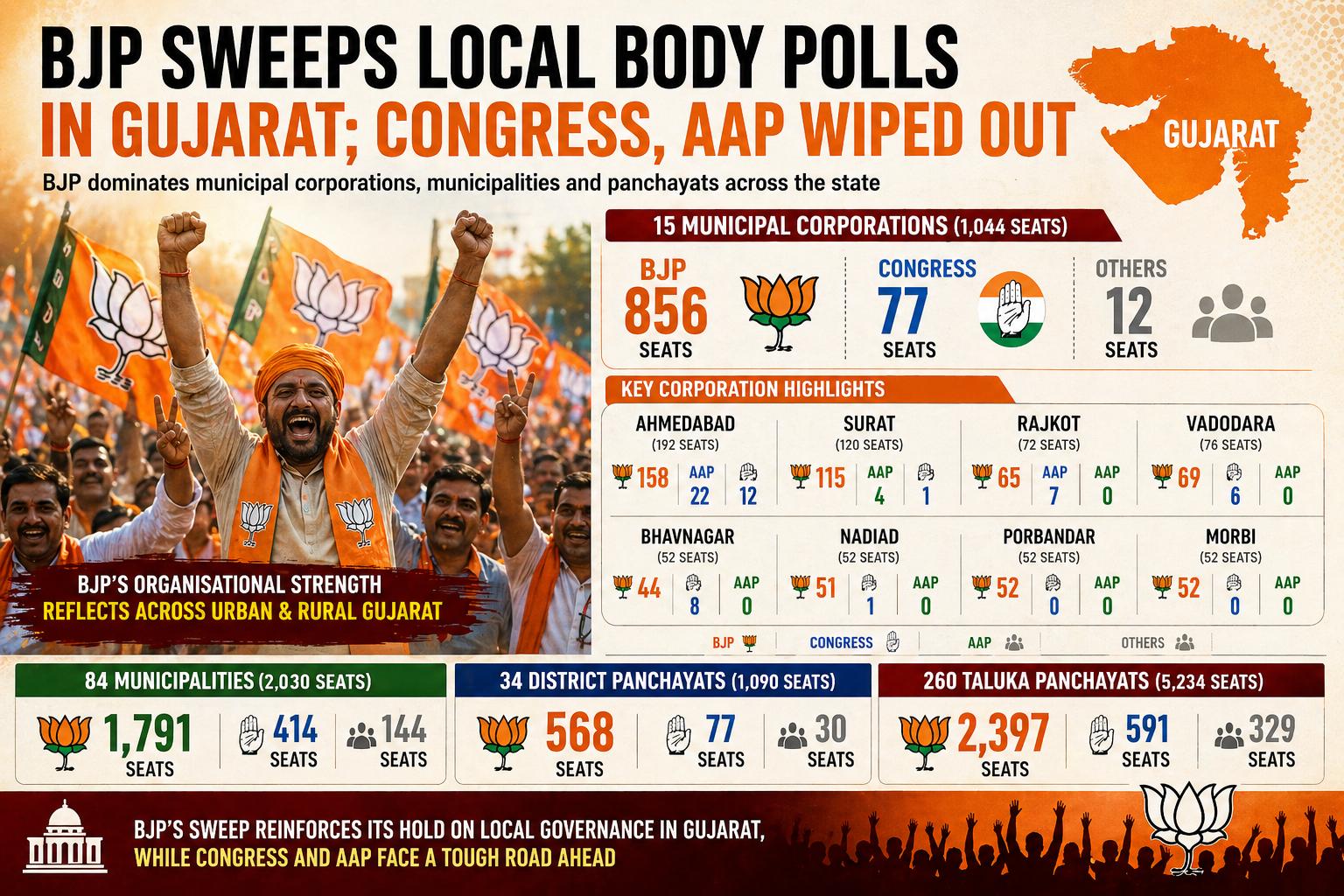
April 28, 2026 | Gujarat — BJP sweeps local body elections with massive wins across cities and panchayats. Congress and AAP trail far behind, highlighting BJP’s strong organisational dominance statewide The Bharatiya Janata Party has delivered a commanding performance in the Gujarat local body elections, securing an overwhelming majority across municipal corporation
BJP Sweeps Gujarat Local Polls, Congress and AAP Suffer Major Defeat
April 28, 2026 | Gujarat — BJP sweeps local body elections with massive wins across cities and panchayats. Congress and AAP trail far behind, highlighting BJP’s strong organisational dominance statewide The Bharatiya Janata Party has delivered a commanding performance in the Gujarat local body elections, securing an overwhelming majority across municipal corporation

Gujarat Local Body Election Result 2026 Live: BJP Wins Big Across Urban and Rural Areas
The results of the Gujarat Local Body Elections 2026 show a strong victory for the Bharatiya Janata Party (BJP). The party has secured a large number of seats across both urban and rural areas, clearly dominating the elections.In major cities and municipal corporations, BJP candidates won by comfortable margins. The party also performed very well in municipalities and panchayats, showing strong support from rural voters. Opposition parties like Congress and Aam Aadmi Party (AAP) str
Gujarat Local Body Election Result 2026 Live: BJP Wins Big Across Urban and Rural Areas
The results of the Gujarat Local Body Elections 2026 show a strong victory for the Bharatiya Janata Party (BJP). The party has secured a large number of seats across both urban and rural areas, clearly dominating the elections.In major cities and municipal corporations, BJP candidates won by comfortable margins. The party also performed very well in municipalities and panchayats, showing strong support from rural voters. Opposition parties like Congress and Aam Aadmi Party (AAP) str

IC 814 hijacking case: inside India’s high-stakes Kandahar negotiations
The IC 814 hijacking remains one of India’s most serious aviation crises, and the role of Ajit Doval in managing the situation from behind the scenes highlights the complexity of decisions taken under extreme pressure. The hijacking of Indian Airlines Flight IC-814 on December 24, 1999, forced India into a difficult choice between saving hostages and long-term security concerns. The flig
IC 814 hijacking case: inside India’s high-stakes Kandahar negotiations
The IC 814 hijacking remains one of India’s most serious aviation crises, and the role of Ajit Doval in managing the situation from behind the scenes highlights the complexity of decisions taken under extreme pressure. The hijacking of Indian Airlines Flight IC-814 on December 24, 1999, forced India into a difficult choice between saving hostages and long-term security concerns. The flig
India Enters Top Five as Global Defense Spending Surge
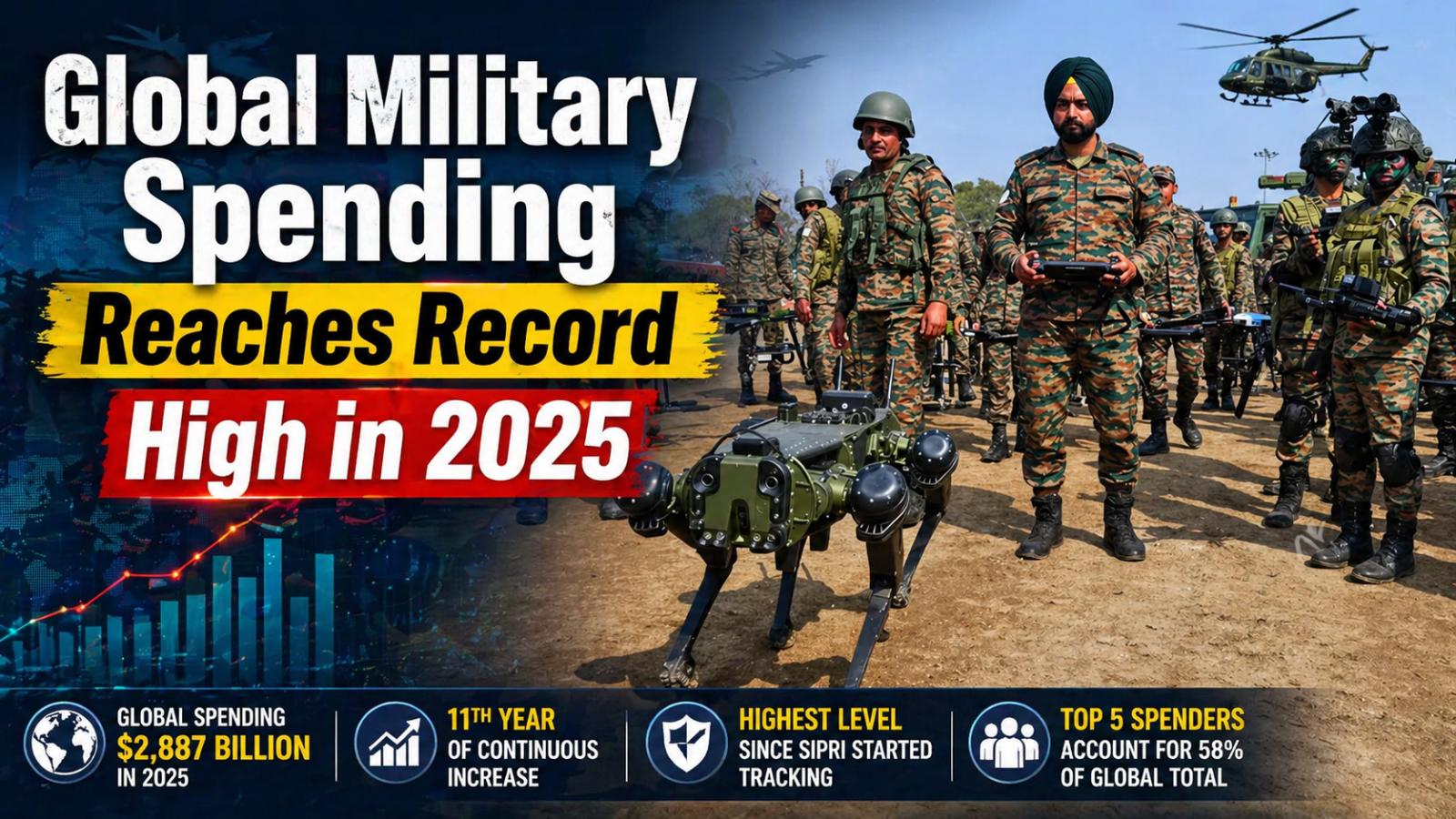
Global military spending reached a record $2,887 billion in 2025, marking the eleventh consecutive year of growth and the highest level ever recorded. According to the latest SIPRI report, the increase reflects rising geopolitical tensions, ongoing conflicts, and a shifting global security environment that has prompted governments to expand their defense budgets. India emerged as one of the world’s top military spenders, entering the top five for the first time with total expenditure of $92.1 billion. The country’s defense spending rose by 8.9 percent, reflecting heightened security concerns and operational demands. The report noted that this increase coincided with armed tensions involving Pakistan in May 2025, during which India deployed a range of military assets including aircraft, drones, and missile systems. The five largest spenders—the United States, China, Russia, Germany, and India—collectively accounted for 58 percent of global military expenditure, totaling $1,686 billion. Pakistan also increased its defense budget by 11 percent to $11.9 billion, driven largely by procurement activities and ongoing modernization efforts following regional tensions. Europe was identified as the primary contributor to the global rise in military spending, with a 14 percent increase bringing the region’s total to $864 billion. This marked the fastest growth in Central and Western Europe since the Cold War, as countries accelerated rearmament programs in response to security concerns, particularly the ongoing conflict involving Russia and Ukraine. The United States remained the largest military spender globally, allocating $954 billion in 2025. However, this represented a 7.5 percent decline compared to the previous year. The decrease was attributed mainly to reduced financial assistance to Ukraine, contrasting with higher levels of support in earlier years. Overall, the data highlights a continued global trend toward increased defense investment, driven by evolving security challenges and shifting geopolitical dynamics.
India Enters Top Five as Global Defense Spending Surge
Global military spending reached a record $2,887 billion in 2025, marking the eleventh consecutive year of growth and the highest level ever recorded. According to the latest SIPRI report, the increase reflects rising geopolitical tensions, ongoing conflicts, and a shifting global security environment that has prompted governments to expand their defense budgets. India emerged as one of the world’s top military spenders, entering the top five for the first time with total expenditure of $92.1 billion. The country’s defense spending rose by 8.9 percent, reflecting heightened security concerns and operational demands. The report noted that this increase coincided with armed tensions involving Pakistan in May 2025, during which India deployed a range of military assets including aircraft, drones, and missile systems. The five largest spenders—the United States, China, Russia, Germany, and India—collectively accounted for 58 percent of global military expenditure, totaling $1,686 billion. Pakistan also increased its defense budget by 11 percent to $11.9 billion, driven largely by procurement activities and ongoing modernization efforts following regional tensions. Europe was identified as the primary contributor to the global rise in military spending, with a 14 percent increase bringing the region’s total to $864 billion. This marked the fastest growth in Central and Western Europe since the Cold War, as countries accelerated rearmament programs in response to security concerns, particularly the ongoing conflict involving Russia and Ukraine. The United States remained the largest military spender globally, allocating $954 billion in 2025. However, this represented a 7.5 percent decline compared to the previous year. The decrease was attributed mainly to reduced financial assistance to Ukraine, contrasting with higher levels of support in earlier years. Overall, the data highlights a continued global trend toward increased defense investment, driven by evolving security challenges and shifting geopolitical dynamics.
Statewide Kerala Protest After Nithin Raj Death Affects Buses, Patients And Students
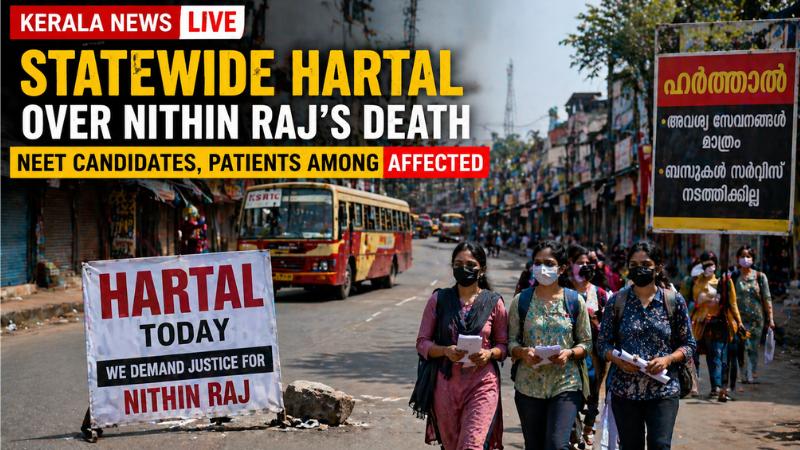
A statewide hartal called in Kerala on April 28, 2026, has significantly disrupted daily life, with public transport services coming to a near standstill and thousands of commuters stranded across the state. The protest was triggered by the death of Nithin Raj, which has sparked widespread outrage and led to demonstrations in multiple districts. According to reports, private buses, taxis, and auto-rickshaws largely stayed off the roads as protestors enforced the hartal. Shops, comme
Statewide Kerala Protest After Nithin Raj Death Affects Buses, Patients And Students
A statewide hartal called in Kerala on April 28, 2026, has significantly disrupted daily life, with public transport services coming to a near standstill and thousands of commuters stranded across the state. The protest was triggered by the death of Nithin Raj, which has sparked widespread outrage and led to demonstrations in multiple districts. According to reports, private buses, taxis, and auto-rickshaws largely stayed off the roads as protestors enforced the hartal. Shops, comme
Suspected Food Poisoning Kills Family of Four in Mumbai’s Pydhonie Area
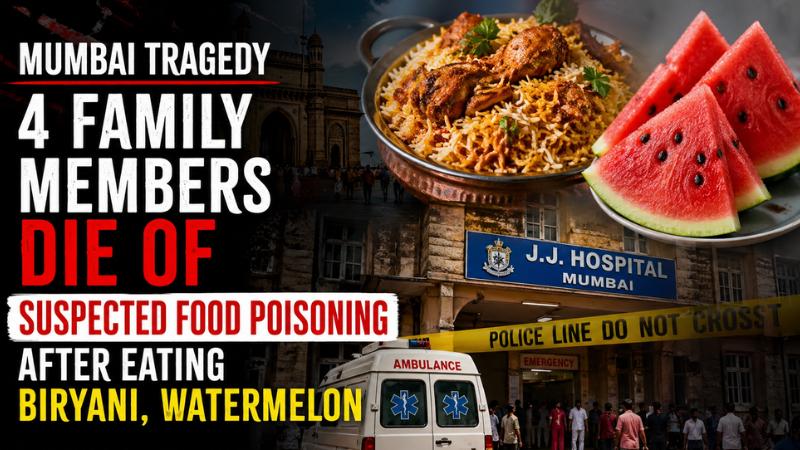
Mumbai Family Deaths Linked to Suspected Food Poisoning After Biryani, Watermelon A tragic incident in Mumbai has claimed the lives of four members of a family due to suspected food poisoning, with authorities still investigating the exact cause. According to Mumbai Police, the incident occurred on the night of April 25, 2026 in the Pydhonie area. A total of nine family members had gathered for dinner around 10:30 PM, where they consumed biryani. Later, between 1:00 AM and 1:30 AM, four members of the family reportedly ate watermelon after the relatives had left for their respective homes. By the early morning of April 26, between 5:30 AM and 6:00 AM, all four individuals began experiencing severe symptoms, including vomiting and loose motions. They were first treated by a local family doctor and were later shifted to Sir J. J. Hospital for advanced medical care.Despite treatment, the condition of the patients deteriorated rapidly. The younger daughter passed away at approximately 10:15 AM on April 26, followed by the father later that night at around 10:30 PM. The mother and elder daughter also succumbed during treatment. The deceased have been identified as Abdullah Dokadia (40), Nasreen Dokadia (35), and their daughters Aisha (16) and Zainab (13).Police have registered an Accidental Death (AD) case at JJ Marg Police Station. Post-mortem examinations have been conducted, but officials stated that the exact cause of death will only be confirmed after histopathological reports are received.Preliminary findings suggest the possibility of food contamination, but authorities have not yet confirmed whether the cause was linked to the biryani, the watermelon, or another factor. Investigations are ongoing. In a separate incident highlighting similar concerns, a seven-year-old child died and 18 others were hospitalised in Giridih district of Jharkhand after allegedly consuming contaminated street food, including golgappa and chaat. Health experts note that food poisoning is typically caused by consuming contaminated food or water and can result in symptoms such as nausea, vomiting, diarrhea, and abdominal pain. Authorities continue to urge the public to maintain strict food hygiene and safety practices.
Suspected Food Poisoning Kills Family of Four in Mumbai’s Pydhonie Area
Mumbai Family Deaths Linked to Suspected Food Poisoning After Biryani, Watermelon A tragic incident in Mumbai has claimed the lives of four members of a family due to suspected food poisoning, with authorities still investigating the exact cause. According to Mumbai Police, the incident occurred on the night of April 25, 2026 in the Pydhonie area. A total of nine family members had gathered for dinner around 10:30 PM, where they consumed biryani. Later, between 1:00 AM and 1:30 AM, four members of the family reportedly ate watermelon after the relatives had left for their respective homes. By the early morning of April 26, between 5:30 AM and 6:00 AM, all four individuals began experiencing severe symptoms, including vomiting and loose motions. They were first treated by a local family doctor and were later shifted to Sir J. J. Hospital for advanced medical care.Despite treatment, the condition of the patients deteriorated rapidly. The younger daughter passed away at approximately 10:15 AM on April 26, followed by the father later that night at around 10:30 PM. The mother and elder daughter also succumbed during treatment. The deceased have been identified as Abdullah Dokadia (40), Nasreen Dokadia (35), and their daughters Aisha (16) and Zainab (13).Police have registered an Accidental Death (AD) case at JJ Marg Police Station. Post-mortem examinations have been conducted, but officials stated that the exact cause of death will only be confirmed after histopathological reports are received.Preliminary findings suggest the possibility of food contamination, but authorities have not yet confirmed whether the cause was linked to the biryani, the watermelon, or another factor. Investigations are ongoing. In a separate incident highlighting similar concerns, a seven-year-old child died and 18 others were hospitalised in Giridih district of Jharkhand after allegedly consuming contaminated street food, including golgappa and chaat. Health experts note that food poisoning is typically caused by consuming contaminated food or water and can result in symptoms such as nausea, vomiting, diarrhea, and abdominal pain. Authorities continue to urge the public to maintain strict food hygiene and safety practices.
Indian-Origin Man Jailed in Singapore for Abuse of Minor Over Several Years
A Singapore court has sentenced a 33-year-old Indian-origin man to 19 months in jail after convicting him of molesting his friend’s younger sister over a prolonged period more than a decade ago. The offences occurred when the victim was between seven and nine years old, while the accused was in his late teens to early twenties. The court heard that the victim did not initially report the incidents, stating she feared that her account would not be believed. She later disclosed the
Indian-Origin Man Jailed in Singapore for Abuse of Minor Over Several Years
A Singapore court has sentenced a 33-year-old Indian-origin man to 19 months in jail after convicting him of molesting his friend’s younger sister over a prolonged period more than a decade ago. The offences occurred when the victim was between seven and nine years old, while the accused was in his late teens to early twenties. The court heard that the victim did not initially report the incidents, stating she feared that her account would not be believed. She later disclosed the

Q4FY26 Earnings Today: Over 40 Companies Including Maruti Suzuki, REC, Bandhan Bank Announce Results
More than 40 companies are scheduled to announce their fourth-quarter results for FY26 on April 28, marking a busy day in the earnings calendar. Major firms such as Maruti Suzuki India Ltd., REC Ltd., Bandhan Bank Ltd., Garden Reach Shipbuilders & Engineers Ltd., Piramal Pharma Ltd., Sanofi India Ltd., Castrol India Ltd., and Dalmia Bharat Ltd. are among the key names expected to release their financial performance. Investors will also be watching closely for potential dividend announcements, as several companies may declare payouts alongside their results. The list of companies reporting includes a mix of sectors such as banking, automotive, pharmaceuticals, cement, insurance, and infrastructure. Firms like Ceat Ltd., AWL Agri Business Ltd., Go Digit General Insurance Ltd., and Mahindra Lifespace Developers Ltd. add further breadth to the day’s announcements, reflecting the diverse representation across industries. Recent quarterly performance provides context for expectations. Garden Reach Shipbuilders & Engineers Ltd. reported strong growth in its third-quarter results, with total income rising significantly year-over-year and profits showing robust expansion. In contrast, REC Ltd. recorded moderate income growth but saw a slight decline in net profit, indicating mixed trends within the financial sector. Maruti Suzuki India Ltd. also posted steady growth in its previous quarter, reporting higher total income and a modest increase in net profit. Market participants will now evaluate whether this momentum has continued into the fourth quarter, particularly amid evolving demand conditions. With multiple companies hosting conference calls following their announcements, analysts and investors will gain deeper insights into sector trends, future outlooks, and management strategies. The concentration of earnings releases on a single day is expected to drive heightened market activity and could influence short-term stock movements across sectors.
Q4FY26 Earnings Today: Over 40 Companies Including Maruti Suzuki, REC, Bandhan Bank Announce Results
More than 40 companies are scheduled to announce their fourth-quarter results for FY26 on April 28, marking a busy day in the earnings calendar. Major firms such as Maruti Suzuki India Ltd., REC Ltd., Bandhan Bank Ltd., Garden Reach Shipbuilders & Engineers Ltd., Piramal Pharma Ltd., Sanofi India Ltd., Castrol India Ltd., and Dalmia Bharat Ltd. are among the key names expected to release their financial performance. Investors will also be watching closely for potential dividend announcements, as several companies may declare payouts alongside their results. The list of companies reporting includes a mix of sectors such as banking, automotive, pharmaceuticals, cement, insurance, and infrastructure. Firms like Ceat Ltd., AWL Agri Business Ltd., Go Digit General Insurance Ltd., and Mahindra Lifespace Developers Ltd. add further breadth to the day’s announcements, reflecting the diverse representation across industries. Recent quarterly performance provides context for expectations. Garden Reach Shipbuilders & Engineers Ltd. reported strong growth in its third-quarter results, with total income rising significantly year-over-year and profits showing robust expansion. In contrast, REC Ltd. recorded moderate income growth but saw a slight decline in net profit, indicating mixed trends within the financial sector. Maruti Suzuki India Ltd. also posted steady growth in its previous quarter, reporting higher total income and a modest increase in net profit. Market participants will now evaluate whether this momentum has continued into the fourth quarter, particularly amid evolving demand conditions. With multiple companies hosting conference calls following their announcements, analysts and investors will gain deeper insights into sector trends, future outlooks, and management strategies. The concentration of earnings releases on a single day is expected to drive heightened market activity and could influence short-term stock movements across sectors.

White House shooting sparks political blame and media backlash
Debate over rhetoric intensifies after Washington shooting White House shooting sparks political blame and media backlash as a weekend incident tied to threats against President Donald Trump fueled a sharp exchange between media figures and administration officials. The shooting occurred Saturday night, though authorities have not publicly released a precise time.
White House shooting sparks political blame and media backlash
Debate over rhetoric intensifies after Washington shooting White House shooting sparks political blame and media backlash as a weekend incident tied to threats against President Donald Trump fueled a sharp exchange between media figures and administration officials. The shooting occurred Saturday night, though authorities have not publicly released a precise time.
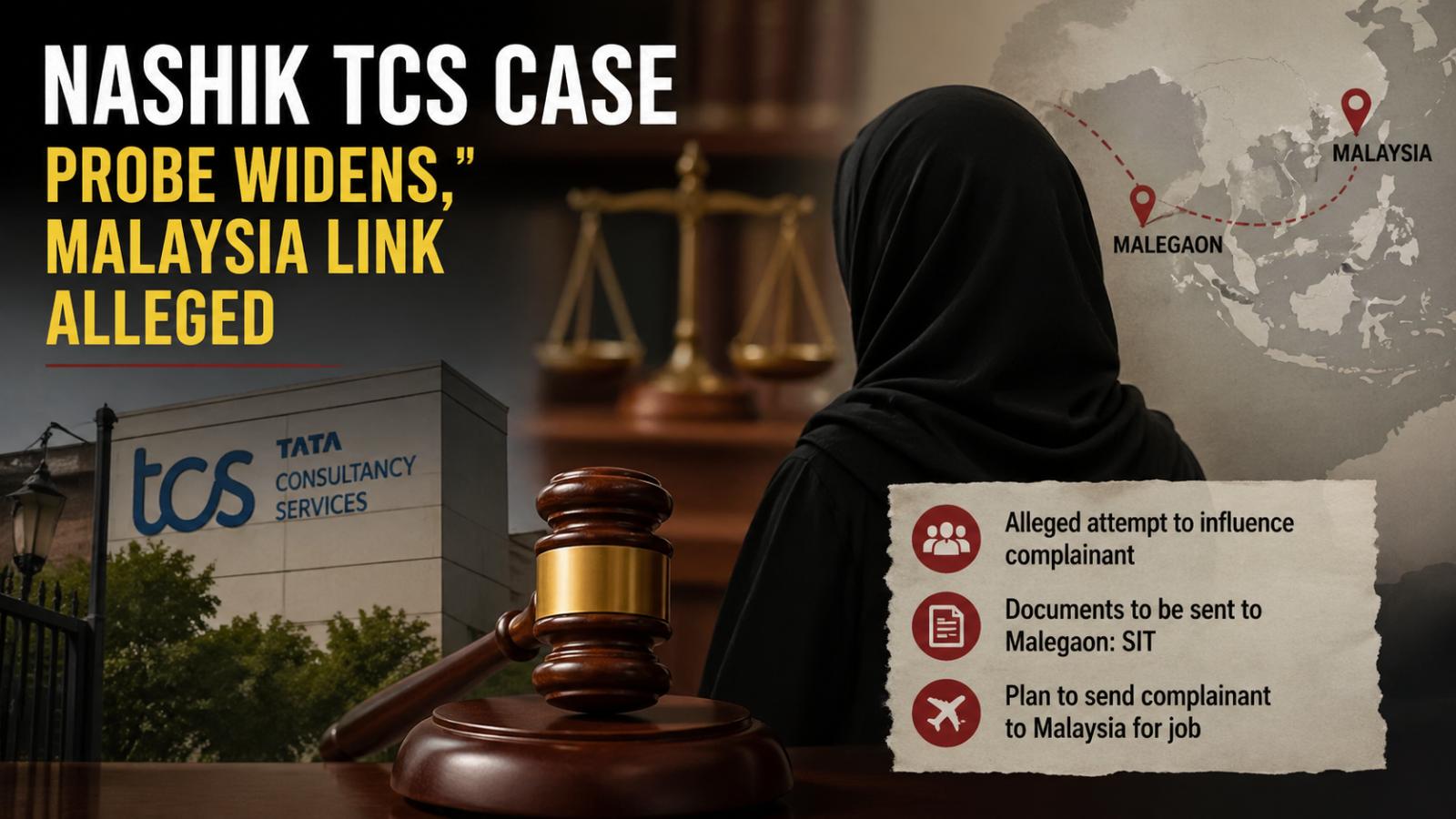
Nashik TCS case expands with new evidence and international links alleged
Prosecutors say new evidence links a Nashik TCS case to Malegaon and Malaysia. Court hears bail plea as police allege coercion, while defense denies wrongdoing. Nashik TCS case expands with new evidence and international links alleged as prosecutors told a court in Nashik that an ongoing investigation into allegations of hurting religious sentiments and attempted forced reli
Nashik TCS case expands with new evidence and international links alleged
Prosecutors say new evidence links a Nashik TCS case to Malegaon and Malaysia. Court hears bail plea as police allege coercion, while defense denies wrongdoing. Nashik TCS case expands with new evidence and international links alleged as prosecutors told a court in Nashik that an ongoing investigation into allegations of hurting religious sentiments and attempted forced reli

Melania Trump urges action over comedian’s ‘expectant widow’ joke
Melina Trump criticizes Jimmy Kimmel over a controversial joke, calling it harmful rhetoric and reigniting debate over satire, media responsibility, and free speech. The controversy surrounding remarks made by a late-night television host has intensified in the United States, drawing a sharp response from First Lady Melania Trump and
Melania Trump urges action over comedian’s ‘expectant widow’ joke
Melina Trump criticizes Jimmy Kimmel over a controversial joke, calling it harmful rhetoric and reigniting debate over satire, media responsibility, and free speech. The controversy surrounding remarks made by a late-night television host has intensified in the United States, drawing a sharp response from First Lady Melania Trump and

Are you visiting India? Digi Yatra could change your airport experience
Digi Yatra could change your airport experience India’s push toward seamless air travel is being led by Digi Yatra, a government-backed initiative that uses facial recognition to streamline passenger movement through airports. Developed under the Ministry of Civil Aviation, the system allows travelers to bypass repeated document checks by using biometric verification instead of physical boarding passes and identification. How Digi Yatra is transforming airport travel in India Digi Yatra enables passengers to create a digital identity through the Digi Yatra App by uploading ID credentials and flight details before arriving at the airport. Once enrolled, travelers can pass through entry gates, security checkpoints, and boarding areas using facial scans. The system is currently operational at major hubs such as Kempegowda International Airport and Indira Gandhi International Airport, with plans for wider adoption across the country. The initiative is voluntary and emphasizes speed, convenience, and reduced physical contact in crowded terminals. Biometric travel systems already in use across US airports In the United States, similar biometric technologies are already deployed, primarily for international travel. Agencies such as the Transportation Security Administration and U.S. Customs and Border Protection operate facial recognition systems that match a traveler’s live image with passport or visa databases. These systems are commonly used at immigration checkpoints and boarding gates for international flights, and in some cases at security screening through programs like TSA’s touchless identity verification. Unlike Digi Yatra, enrollment is not typically handled through a consumer-facing app, and the process is largely managed through government databases. Key differences between Digi Yatra and US biometric systems Feature Digi Yatra (India) United States Systems Control User-controlled via app Government-controlled databases Enrollment Voluntary, app-based Mostly automatic or backend Primary Use Domestic travel International travel focus Documents Replaced by facial ID Linked to passport/visa User Role Active participation required Passive participation Data Handling User uploads data Govt retrieves from records Experience Fully contactless journey Partial contactless process What global travelers should know about evolving airport technology As airports worldwide adopt digital identity solutions, the contrast between India’s Digi Yatra and US biometric programs highlights broader questions around privacy, convenience, and control. For US-based travelers heading to India, understanding how Digi Yatra works can help streamline the airport experience, while also offering insight into how biometric travel technology may continue to evolve globally.
Are you visiting India? Digi Yatra could change your airport experience
Digi Yatra could change your airport experience India’s push toward seamless air travel is being led by Digi Yatra, a government-backed initiative that uses facial recognition to streamline passenger movement through airports. Developed under the Ministry of Civil Aviation, the system allows travelers to bypass repeated document checks by using biometric verification instead of physical boarding passes and identification. How Digi Yatra is transforming airport travel in India Digi Yatra enables passengers to create a digital identity through the Digi Yatra App by uploading ID credentials and flight details before arriving at the airport. Once enrolled, travelers can pass through entry gates, security checkpoints, and boarding areas using facial scans. The system is currently operational at major hubs such as Kempegowda International Airport and Indira Gandhi International Airport, with plans for wider adoption across the country. The initiative is voluntary and emphasizes speed, convenience, and reduced physical contact in crowded terminals. Biometric travel systems already in use across US airports In the United States, similar biometric technologies are already deployed, primarily for international travel. Agencies such as the Transportation Security Administration and U.S. Customs and Border Protection operate facial recognition systems that match a traveler’s live image with passport or visa databases. These systems are commonly used at immigration checkpoints and boarding gates for international flights, and in some cases at security screening through programs like TSA’s touchless identity verification. Unlike Digi Yatra, enrollment is not typically handled through a consumer-facing app, and the process is largely managed through government databases. Key differences between Digi Yatra and US biometric systems Feature Digi Yatra (India) United States Systems Control User-controlled via app Government-controlled databases Enrollment Voluntary, app-based Mostly automatic or backend Primary Use Domestic travel International travel focus Documents Replaced by facial ID Linked to passport/visa User Role Active participation required Passive participation Data Handling User uploads data Govt retrieves from records Experience Fully contactless journey Partial contactless process What global travelers should know about evolving airport technology As airports worldwide adopt digital identity solutions, the contrast between India’s Digi Yatra and US biometric programs highlights broader questions around privacy, convenience, and control. For US-based travelers heading to India, understanding how Digi Yatra works can help streamline the airport experience, while also offering insight into how biometric travel technology may continue to evolve globally.

Ajit Doval’s covert operations reveal the discipline behind intelligence work
Ajit Doval’s reported deep-cover operations are widely regarded as a study in psychological resilience rather than physical confrontation. Operating within hostile environments, including extended periods in Pakistan, his work required a high degree of composure, adaptability, and continuous situational awareness. Public discussions often reference cities such as Lahore, though specific operational details remain classified. The available accounts suggest that Doval functioned under an assu
Ajit Doval’s covert operations reveal the discipline behind intelligence work
Ajit Doval’s reported deep-cover operations are widely regarded as a study in psychological resilience rather than physical confrontation. Operating within hostile environments, including extended periods in Pakistan, his work required a high degree of composure, adaptability, and continuous situational awareness. Public discussions often reference cities such as Lahore, though specific operational details remain classified. The available accounts suggest that Doval functioned under an assu
Global military spending hits $2.9 trillion in 2025 amid rising tensions
Global military spending 2025 overview Global military spending in 2025 has reached nearly $2.9 trillion, clearly showing how countries are increasing defence budgets as global tensions continue to rise. The total spending stood at $2887 billion in 2025, marking a 2.9 per cent increase from 2024, highlighting a steady rise in military expenditure trends worldwide. This reflects a world becoming less secure, with nations investing more in defence to protect themselves. The United States, Russia, and China remained the top three military spenders, with a combined total of $1.48 trillion. These nations continue to dominate global defence spending, shaping international security dynamics. Experts say this rise in defence budget growth shows that countries are preparing for both current conflicts and future uncertainties. Europe witnessed a major surge, with military spending increasing by 14 per cent to $864 billion in 2025. This sharp rise is mainly driven by the ongoing Russia-Ukraine war and reduced dependence on the United States for security. Countries like Germany increased spending by 24 per cent to $114 billion, while Spain recorded a significant 50 per cent jump to $40.2 billion, crossing two per cent of GDP for the first time in decades. The United States remained the largest spender despite a decline of 7.5 per cent, bringing its total to $954 billion in 2025. The decrease is linked to reduced financial aid approvals for Ukraine, although future budgets suggest spending could exceed $1 trillion in 2026, indicating a possible rebound. In Eastern Europe, Russia increased its military expenditure by 5.9 per cent to $190 billion, while Ukraine saw a sharp rise of 20 per cent to $84.1 billion. Ukraine’s defence spending now accounts for a large share of its GDP, showing the intensity of the ongoing conflict. Asia and Oceania recorded one of the fastest growth rates, with spending reaching $681 billion in 2025, an 8.5 per cent increase. China led the region with $336 billion, followed by Japan and India. India increased its defence budget by 8.9 per cent to $92.1 billion, making it the fifth-largest military spender globally. This growth highlights rising security concerns across the region. In the Middle East, spending patterns were mixed. Iran’s defence expenditure fell by 5.6 per cent to $7.4 billion, mainly due to high inflation. Israel also saw a decline of 4.9 per cent to $48.3 billion after reducing military operations following a ceasefire in early 2025, although its spending remains significantly higher compared to earlier years. Regional tensions continue to influence defence strategies across the Middle East. Overall, the SIPRI report shows that global military spending is steadily increasing as countries respond to rising geopolitical tensions and conflicts. The trend highlights a shift toward stronger military preparedness, reflecting uncertainty in the global security environment.
Global military spending hits $2.9 trillion in 2025 amid rising tensions
Global military spending 2025 overview Global military spending in 2025 has reached nearly $2.9 trillion, clearly showing how countries are increasing defence budgets as global tensions continue to rise. The total spending stood at $2887 billion in 2025, marking a 2.9 per cent increase from 2024, highlighting a steady rise in military expenditure trends worldwide. This reflects a world becoming less secure, with nations investing more in defence to protect themselves. The United States, Russia, and China remained the top three military spenders, with a combined total of $1.48 trillion. These nations continue to dominate global defence spending, shaping international security dynamics. Experts say this rise in defence budget growth shows that countries are preparing for both current conflicts and future uncertainties. Europe witnessed a major surge, with military spending increasing by 14 per cent to $864 billion in 2025. This sharp rise is mainly driven by the ongoing Russia-Ukraine war and reduced dependence on the United States for security. Countries like Germany increased spending by 24 per cent to $114 billion, while Spain recorded a significant 50 per cent jump to $40.2 billion, crossing two per cent of GDP for the first time in decades. The United States remained the largest spender despite a decline of 7.5 per cent, bringing its total to $954 billion in 2025. The decrease is linked to reduced financial aid approvals for Ukraine, although future budgets suggest spending could exceed $1 trillion in 2026, indicating a possible rebound. In Eastern Europe, Russia increased its military expenditure by 5.9 per cent to $190 billion, while Ukraine saw a sharp rise of 20 per cent to $84.1 billion. Ukraine’s defence spending now accounts for a large share of its GDP, showing the intensity of the ongoing conflict. Asia and Oceania recorded one of the fastest growth rates, with spending reaching $681 billion in 2025, an 8.5 per cent increase. China led the region with $336 billion, followed by Japan and India. India increased its defence budget by 8.9 per cent to $92.1 billion, making it the fifth-largest military spender globally. This growth highlights rising security concerns across the region. In the Middle East, spending patterns were mixed. Iran’s defence expenditure fell by 5.6 per cent to $7.4 billion, mainly due to high inflation. Israel also saw a decline of 4.9 per cent to $48.3 billion after reducing military operations following a ceasefire in early 2025, although its spending remains significantly higher compared to earlier years. Regional tensions continue to influence defence strategies across the Middle East. Overall, the SIPRI report shows that global military spending is steadily increasing as countries respond to rising geopolitical tensions and conflicts. The trend highlights a shift toward stronger military preparedness, reflecting uncertainty in the global security environment.
India economy faces slowdown risks amid rising crude oil prices
India growth slowdown: oil price surge impacts economy India growth slowdown has become a major concern after crude oil prices crossed $100 per barrel following tensions linked to the Iran conflict. The sharp increase in energy costs is already affecting corporate earnings and is expected to impact the FY27 outlook, according to analysts tracking the India economy slowdown. The rising oil price surge is not seen as a short-term issue. Higher crude oil prices are likely to continue putting pressure on multiple sectors including consumer, auto, and financial industries. JP Morgan has warned that supply disruptions and elevated energy costs India could persist for months, even after a ceasefire, delaying full normalization. The firm has reduced its FY27 earnings forecast by 2–10 percent across major sectors, highlighting the growing risks to corporate earnings India. Experts point out that the impact will be visible in different ways. Companies may face margin compression, reduced demand, and operational challenges, while consumers may experience the effects through higher prices and inflation India. These combined factors are expected to slow overall economic momentum. Market estimates show that Nifty EPS growth could drop sharply from earlier expectations of around 15 percent to nearly 7–8 percent if crude oil prices remain high. Key industries such as automobiles, oil and gas, and airlines are likely to be the most affected due to their heavy dependence on fuel. Despite these pressures, India Inc revenue growth remains stable, but the growth pattern is shifting from volume-driven to price-led expansion. This means companies are increasing prices to maintain revenues, a strategy that may not be sustainable if inflation continues to rise. West Asia continues to play a crucial role in India’s economy. The region accounts for a significant share of exports and remittances, making India highly sensitive to disruptions in West Asia trade and income flows. Any prolonged instability could further deepen the India growth slowdown. Investor sentiment has also weakened amid global uncertainty. Foreign portfolio investors have turned net sellers, with total FPI outflows reaching nearly ₹1.68 trillion since early 2026, reflecting concerns over geopolitical risks and economic stability.
India economy faces slowdown risks amid rising crude oil prices
India growth slowdown: oil price surge impacts economy India growth slowdown has become a major concern after crude oil prices crossed $100 per barrel following tensions linked to the Iran conflict. The sharp increase in energy costs is already affecting corporate earnings and is expected to impact the FY27 outlook, according to analysts tracking the India economy slowdown. The rising oil price surge is not seen as a short-term issue. Higher crude oil prices are likely to continue putting pressure on multiple sectors including consumer, auto, and financial industries. JP Morgan has warned that supply disruptions and elevated energy costs India could persist for months, even after a ceasefire, delaying full normalization. The firm has reduced its FY27 earnings forecast by 2–10 percent across major sectors, highlighting the growing risks to corporate earnings India. Experts point out that the impact will be visible in different ways. Companies may face margin compression, reduced demand, and operational challenges, while consumers may experience the effects through higher prices and inflation India. These combined factors are expected to slow overall economic momentum. Market estimates show that Nifty EPS growth could drop sharply from earlier expectations of around 15 percent to nearly 7–8 percent if crude oil prices remain high. Key industries such as automobiles, oil and gas, and airlines are likely to be the most affected due to their heavy dependence on fuel. Despite these pressures, India Inc revenue growth remains stable, but the growth pattern is shifting from volume-driven to price-led expansion. This means companies are increasing prices to maintain revenues, a strategy that may not be sustainable if inflation continues to rise. West Asia continues to play a crucial role in India’s economy. The region accounts for a significant share of exports and remittances, making India highly sensitive to disruptions in West Asia trade and income flows. Any prolonged instability could further deepen the India growth slowdown. Investor sentiment has also weakened amid global uncertainty. Foreign portfolio investors have turned net sellers, with total FPI outflows reaching nearly ₹1.68 trillion since early 2026, reflecting concerns over geopolitical risks and economic stability.
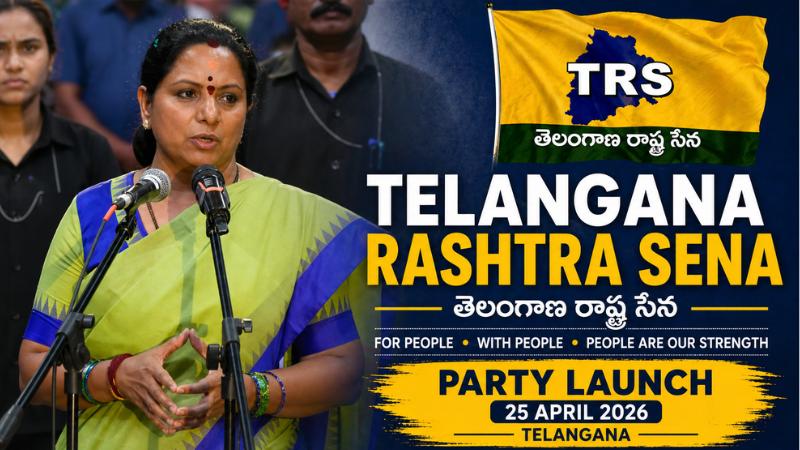
Kavitha Launches TRS Party Aiming Inclusive Development In Telangana
Kavitha launches Telangana Rashtra Sena, marking a new political chapter in Telangana after her exit from BRS. Former Bharat Rashtra Samithi (BRS) leader Kalvakuntla Kavitha, daughter of former Telangana Chief Minister K Chandrasekhar Rao (KCR), officially launched her own political party, Telangana Rashtra Sena (TRS), on Saturday, April 25, 2026. This development comes months after she was suspended from the BRS over alleged anti-party activities, marking a major
Kavitha Launches TRS Party Aiming Inclusive Development In Telangana
Kavitha launches Telangana Rashtra Sena, marking a new political chapter in Telangana after her exit from BRS. Former Bharat Rashtra Samithi (BRS) leader Kalvakuntla Kavitha, daughter of former Telangana Chief Minister K Chandrasekhar Rao (KCR), officially launched her own political party, Telangana Rashtra Sena (TRS), on Saturday, April 25, 2026. This development comes months after she was suspended from the BRS over alleged anti-party activities, marking a major

Madras HC Dismisses Plea Against Vijay Over ₹12.6 Crore Loan Disclosure
On April 27, 2026, the Madras High Court dismissed a petition challenging Vijay’s ₹12.6 crore loan disclosure, with no specific time of judgment disclosed. The Madras High Court
Madras HC Dismisses Plea Against Vijay Over ₹12.6 Crore Loan Disclosure
On April 27, 2026, the Madras High Court dismissed a petition challenging Vijay’s ₹12.6 crore loan disclosure, with no specific time of judgment disclosed. The Madras High Court










