Tamil Nadu Records 84.6% Polling, Highest Ever Turnout In Assembly Elections
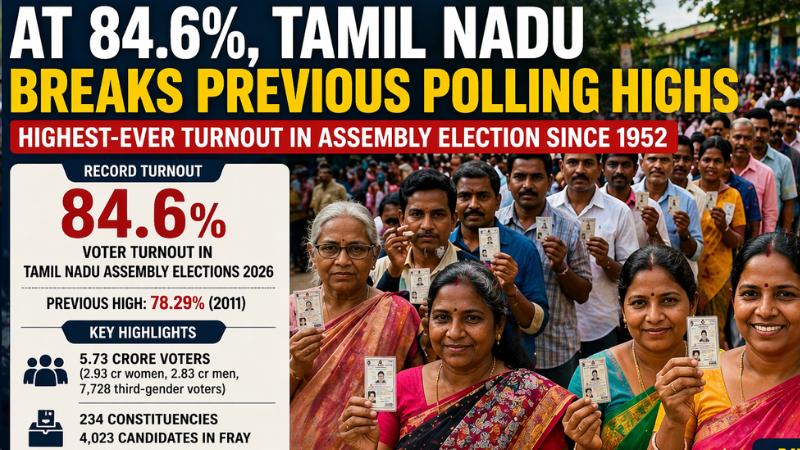
Tamil Nadu witnessed a historic voter turnout of 84.6% in the Assembly elections held on April 24, 2026, marking the highest polling percentage in the state since 1952. The Election Commission reported that the turnout surpassed the previous high of 78.29% recorded in 2011, reflecting strong electoral participation across all 234 constituencies. From early morning, polling booths across the state saw long queues of voters, including elderly citizens, first-time voters, and families, highlight
Tamil Nadu Records 84.6% Polling, Highest Ever Turnout In Assembly Elections
Tamil Nadu witnessed a historic voter turnout of 84.6% in the Assembly elections held on April 24, 2026, marking the highest polling percentage in the state since 1952. The Election Commission reported that the turnout surpassed the previous high of 78.29% recorded in 2011, reflecting strong electoral participation across all 234 constituencies. From early morning, polling booths across the state saw long queues of voters, including elderly citizens, first-time voters, and families, highlight
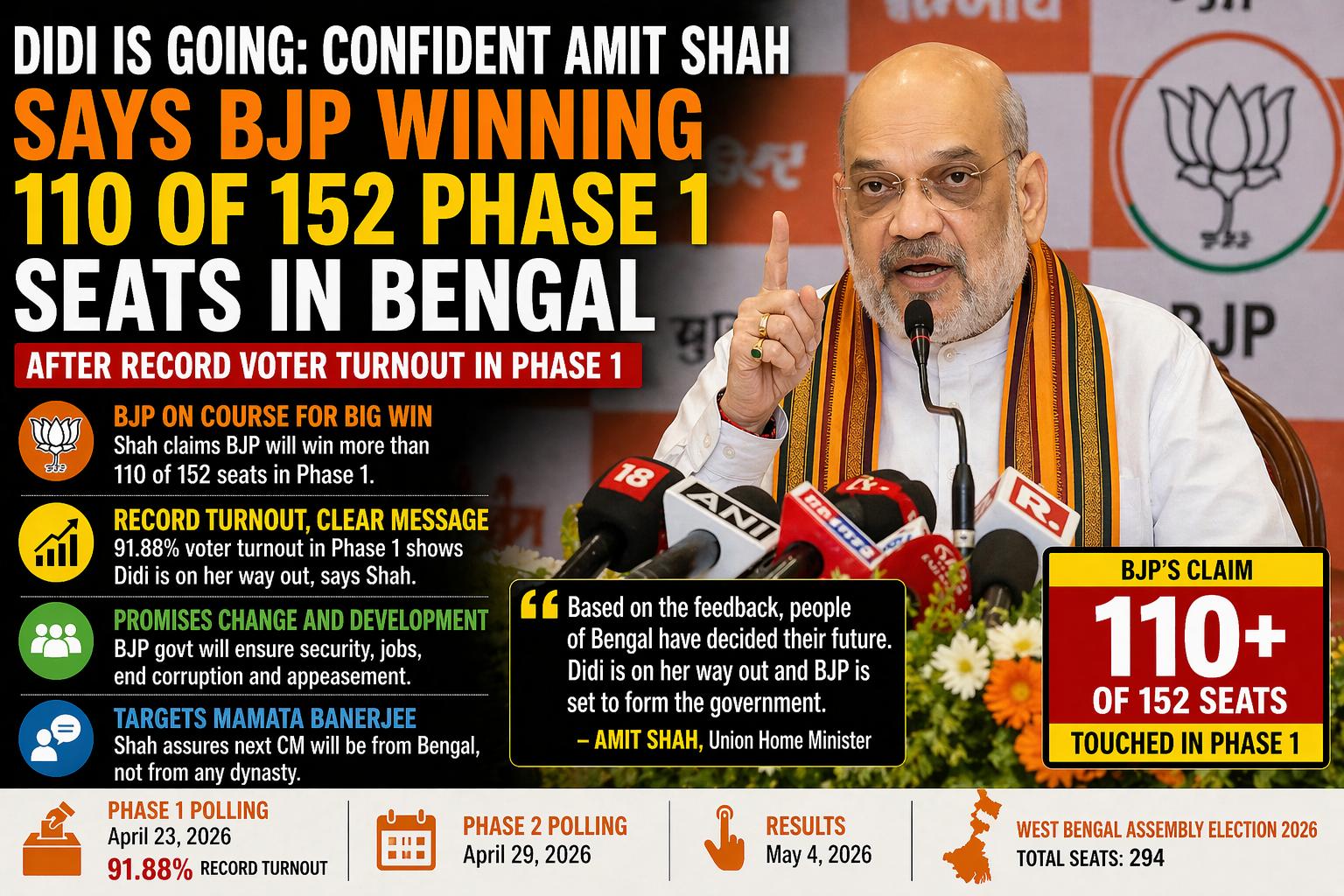
West Bengal Records 92.9% Voting: What Historic Turnout Reveals In 2026 Polls
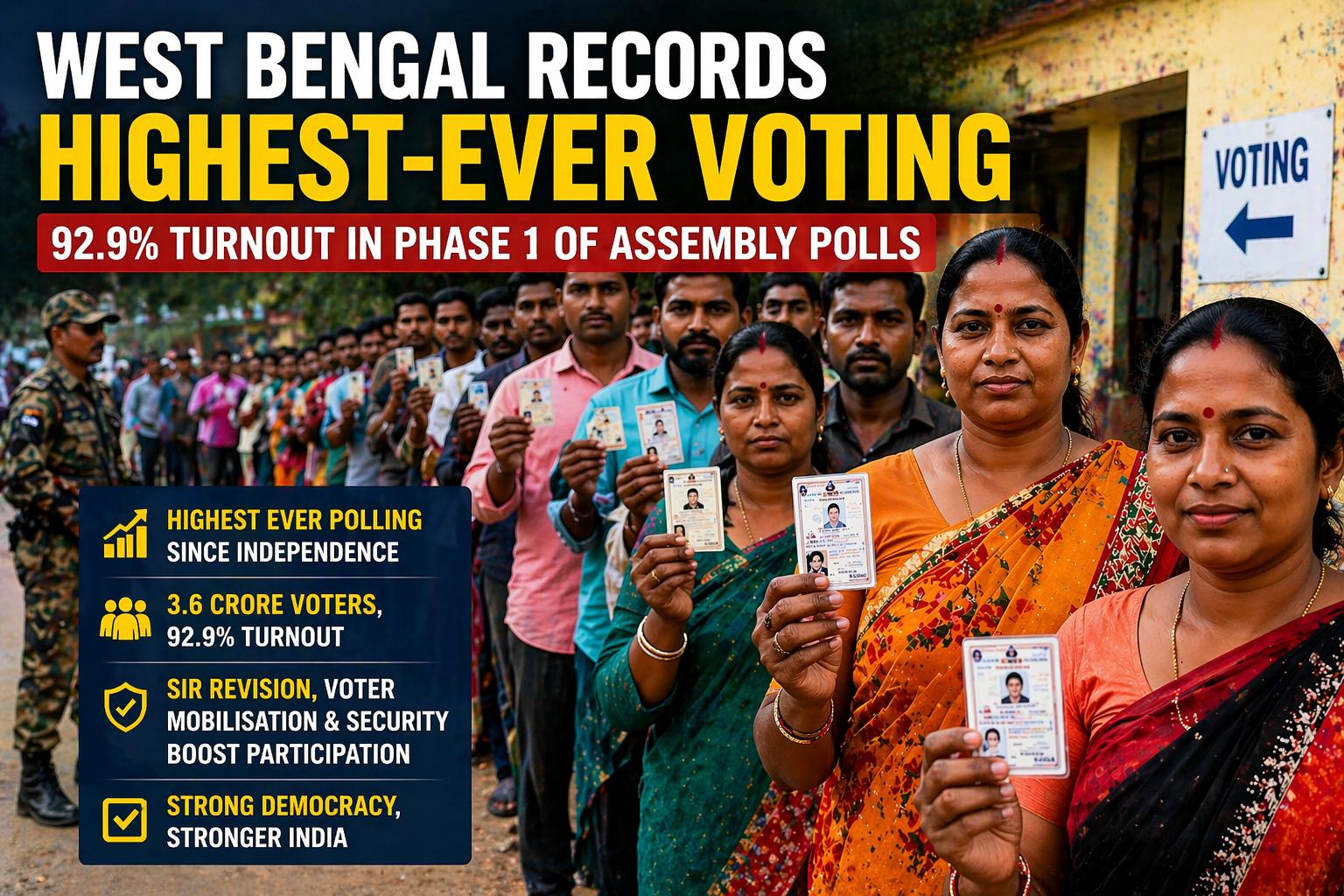
West Bengal recorded an unprecedented 92.9% voter turnout in Phase 1 of the Assembly elections held on Thursday, April 24, 2026, making it the highest polling percentage in the state since Independence. According to Chief Election Commissioner Gyanesh Kumar, this marks a historic milestone, reflecting extraordinary voter participation across constituencies. Out of approximately 3.6 crore registered
West Bengal Records 92.9% Voting: What Historic Turnout Reveals In 2026 Polls
West Bengal recorded an unprecedented 92.9% voter turnout in Phase 1 of the Assembly elections held on Thursday, April 24, 2026, making it the highest polling percentage in the state since Independence. According to Chief Election Commissioner Gyanesh Kumar, this marks a historic milestone, reflecting extraordinary voter participation across constituencies. Out of approximately 3.6 crore registered
Mamata Banerjee Claims Edge After High Turnout, Targets Modi And Shah In Bengal Polls
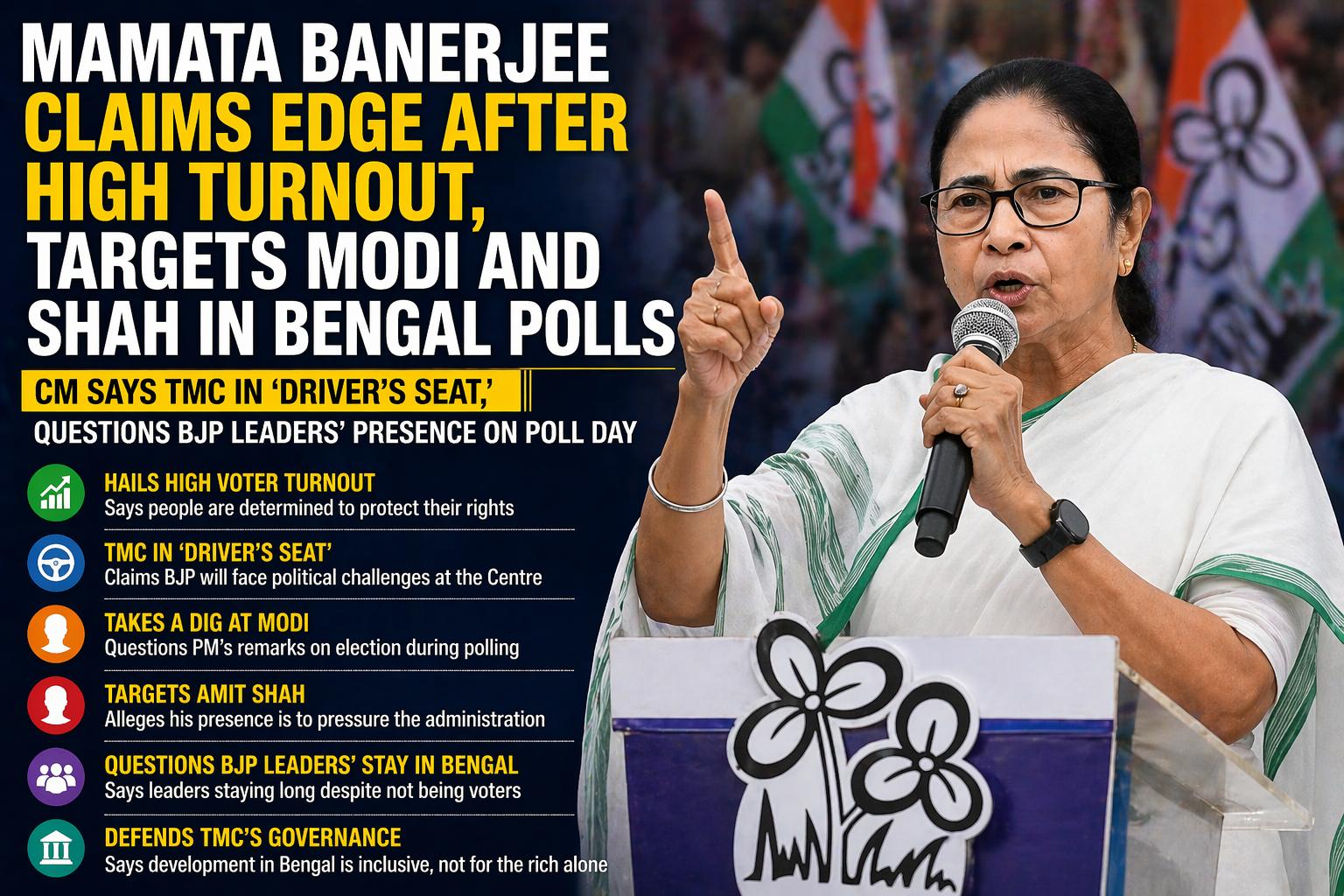
West Bengal Chief Minister Mamata Banerjee on April 23, 2026, expressed strong confidence in her party’s performance following a high voter turnout in the first phase of the Assembly elections. Addressing a rally in Chowringhee, central Kolkata, the Trinamool Congress (TMC) chief said the enthusiastic participation of voters indicated public support for her government and its policies. She stated
Mamata Banerjee Claims Edge After High Turnout, Targets Modi And Shah In Bengal Polls
West Bengal Chief Minister Mamata Banerjee on April 23, 2026, expressed strong confidence in her party’s performance following a high voter turnout in the first phase of the Assembly elections. Addressing a rally in Chowringhee, central Kolkata, the Trinamool Congress (TMC) chief said the enthusiastic participation of voters indicated public support for her government and its policies. She stated
Trump post on India sparks diplomatic pushback from US and India
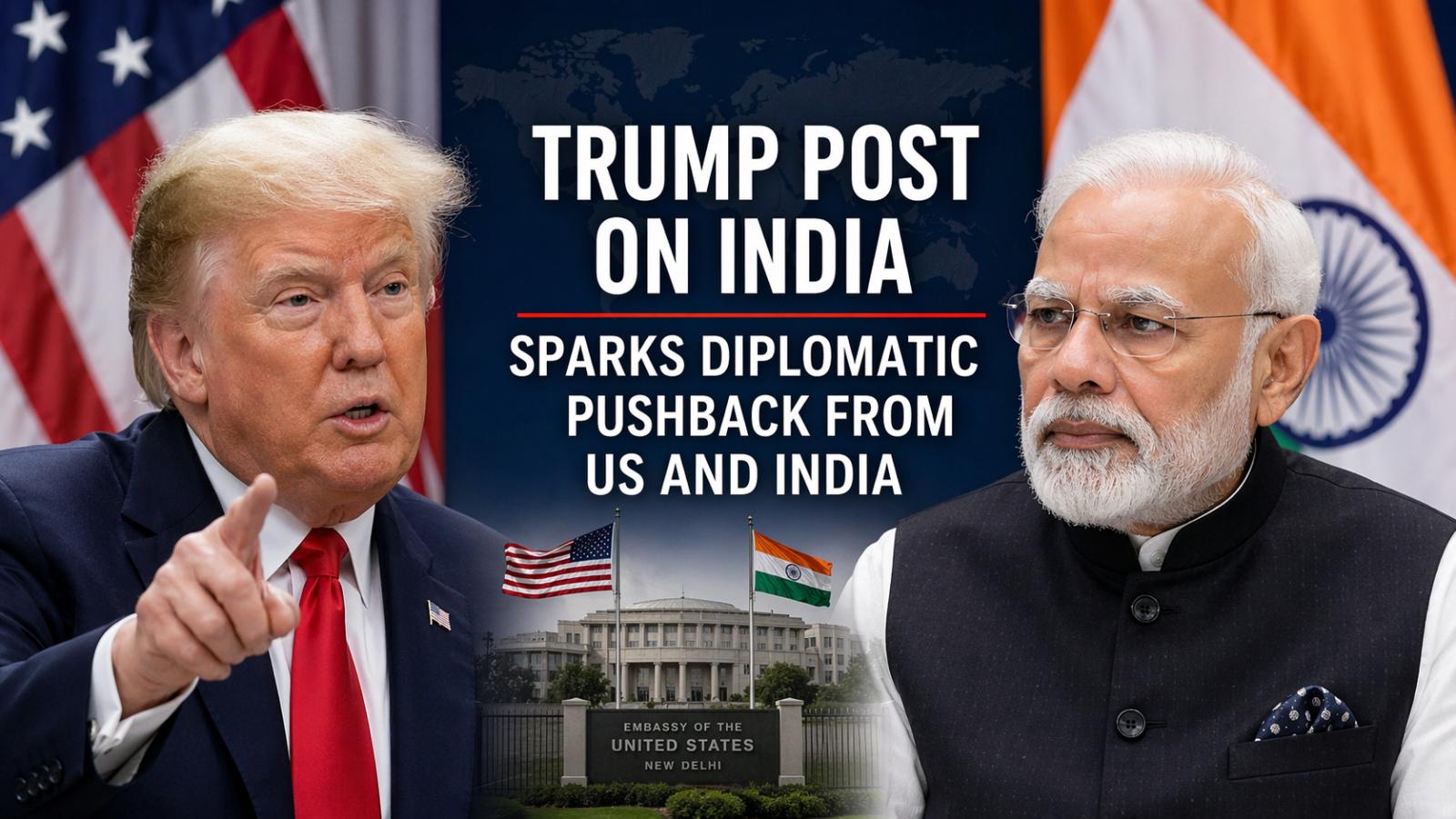
A controversial Trump post on India triggered diplomatic reactions from US and Indian officials, prompting efforts to reaffirm strong bilateral ties and address global political concerns. Trump post on India sparks diplomatic pushback from US and India — Hours after Donald Trump shared a social media post containing derogatory language about India, US officials moved sw
Trump post on India sparks diplomatic pushback from US and India
A controversial Trump post on India triggered diplomatic reactions from US and Indian officials, prompting efforts to reaffirm strong bilateral ties and address global political concerns. Trump post on India sparks diplomatic pushback from US and India — Hours after Donald Trump shared a social media post containing derogatory language about India, US officials moved sw
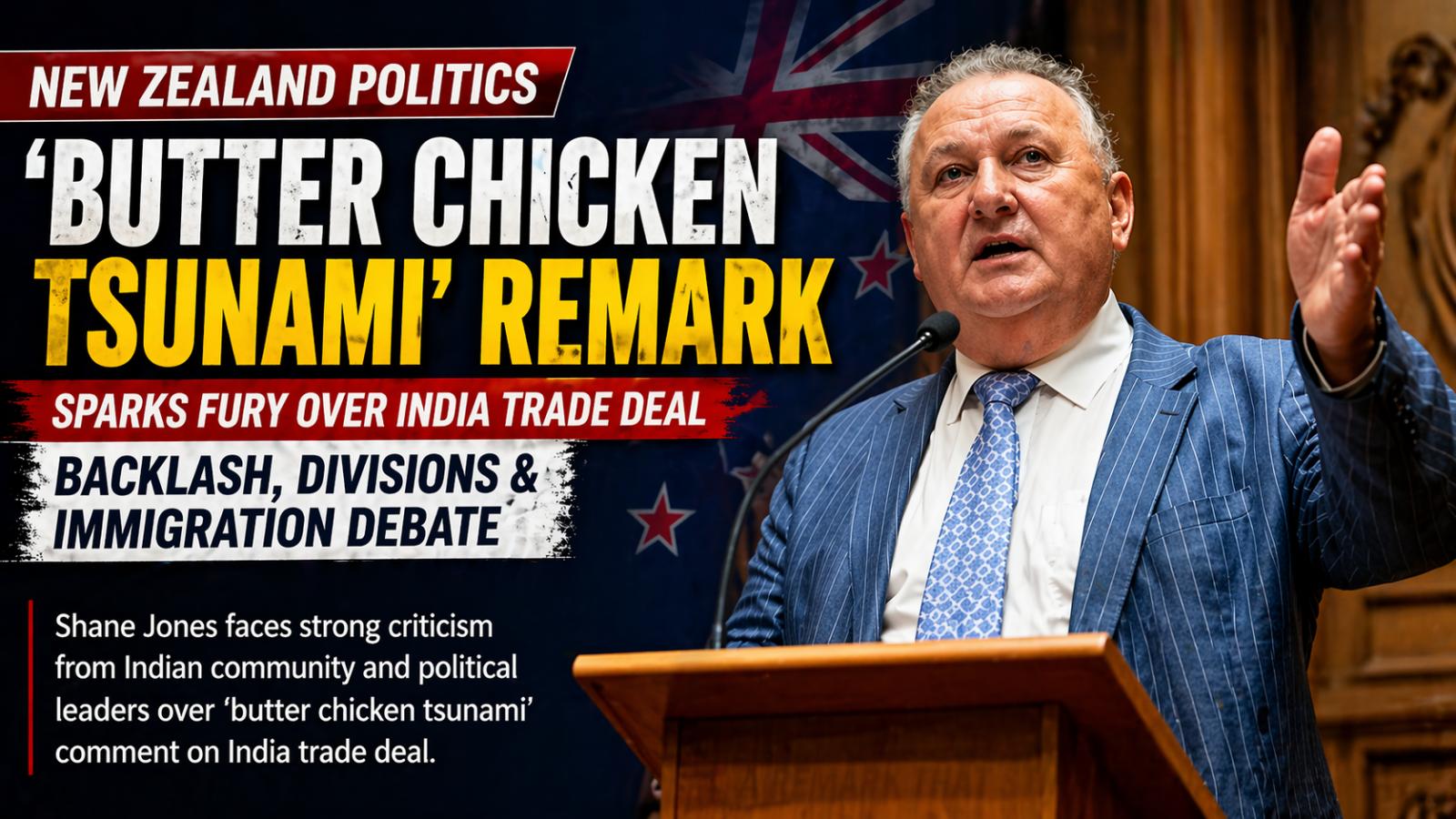
“Butter Chicken Tsunami” Comment Triggers Debate Over Immigration and Trade
Comments by New Zealand lawmaker Shane Jones have sparked criticism from the Indian community and political leaders, highlighting tensions within the ruling coalition over immigration and a proposed trade agreement with India. Jones referred to the potential deal as a “butter chicken tsunami” during a radio interview, a remark that quickly drew backlash across political and community circles. Prime Minister Christopher Luxon described the statement as unhelpful but stopped short of labeling it discriminatory. The proposed agreement between New Zealand and India is already facing political hurdles, as Jones’s party, New Zealand First, has voiced opposition. This stance could force the governing party to seek support from the opposition Labour Party to secure parliamentary approval. Jones defended his position by raising concerns about immigration, arguing that unrestricted inflows could impact wages, infrastructure, and public services. His remarks have reignited broader debates about immigration policy and economic priorities, especially as the country navigates its trade relationships. Community leaders expressed strong concern over the tone of the comments. Representatives from Indian associations emphasized the contributions of Indians, who form one of the largest ethnic groups in the country. They argued that such rhetoric risks undermining social cohesion and creating unnecessary divisions within a multicultural society. The controversy has also drawn reactions from political opponents. Labour leader Chris Hipkins criticized the remarks, calling for more responsible discourse from public officials. Business representatives echoed similar sentiments, suggesting that policymakers should focus on constructive dialogue rather than rhetoric that could damage bilateral ties. Jones later acknowledged that colleagues had advised him to moderate his language, though he maintained that his comments were intended to emphasize concerns. As debate continues, the episode underscores the challenges facing New Zealand’s leadership in balancing trade ambitions, immigration policy, and maintaining unity within a diverse population.
“Butter Chicken Tsunami” Comment Triggers Debate Over Immigration and Trade
Comments by New Zealand lawmaker Shane Jones have sparked criticism from the Indian community and political leaders, highlighting tensions within the ruling coalition over immigration and a proposed trade agreement with India. Jones referred to the potential deal as a “butter chicken tsunami” during a radio interview, a remark that quickly drew backlash across political and community circles. Prime Minister Christopher Luxon described the statement as unhelpful but stopped short of labeling it discriminatory. The proposed agreement between New Zealand and India is already facing political hurdles, as Jones’s party, New Zealand First, has voiced opposition. This stance could force the governing party to seek support from the opposition Labour Party to secure parliamentary approval. Jones defended his position by raising concerns about immigration, arguing that unrestricted inflows could impact wages, infrastructure, and public services. His remarks have reignited broader debates about immigration policy and economic priorities, especially as the country navigates its trade relationships. Community leaders expressed strong concern over the tone of the comments. Representatives from Indian associations emphasized the contributions of Indians, who form one of the largest ethnic groups in the country. They argued that such rhetoric risks undermining social cohesion and creating unnecessary divisions within a multicultural society. The controversy has also drawn reactions from political opponents. Labour leader Chris Hipkins criticized the remarks, calling for more responsible discourse from public officials. Business representatives echoed similar sentiments, suggesting that policymakers should focus on constructive dialogue rather than rhetoric that could damage bilateral ties. Jones later acknowledged that colleagues had advised him to moderate his language, though he maintained that his comments were intended to emphasize concerns. As debate continues, the episode underscores the challenges facing New Zealand’s leadership in balancing trade ambitions, immigration policy, and maintaining unity within a diverse population.
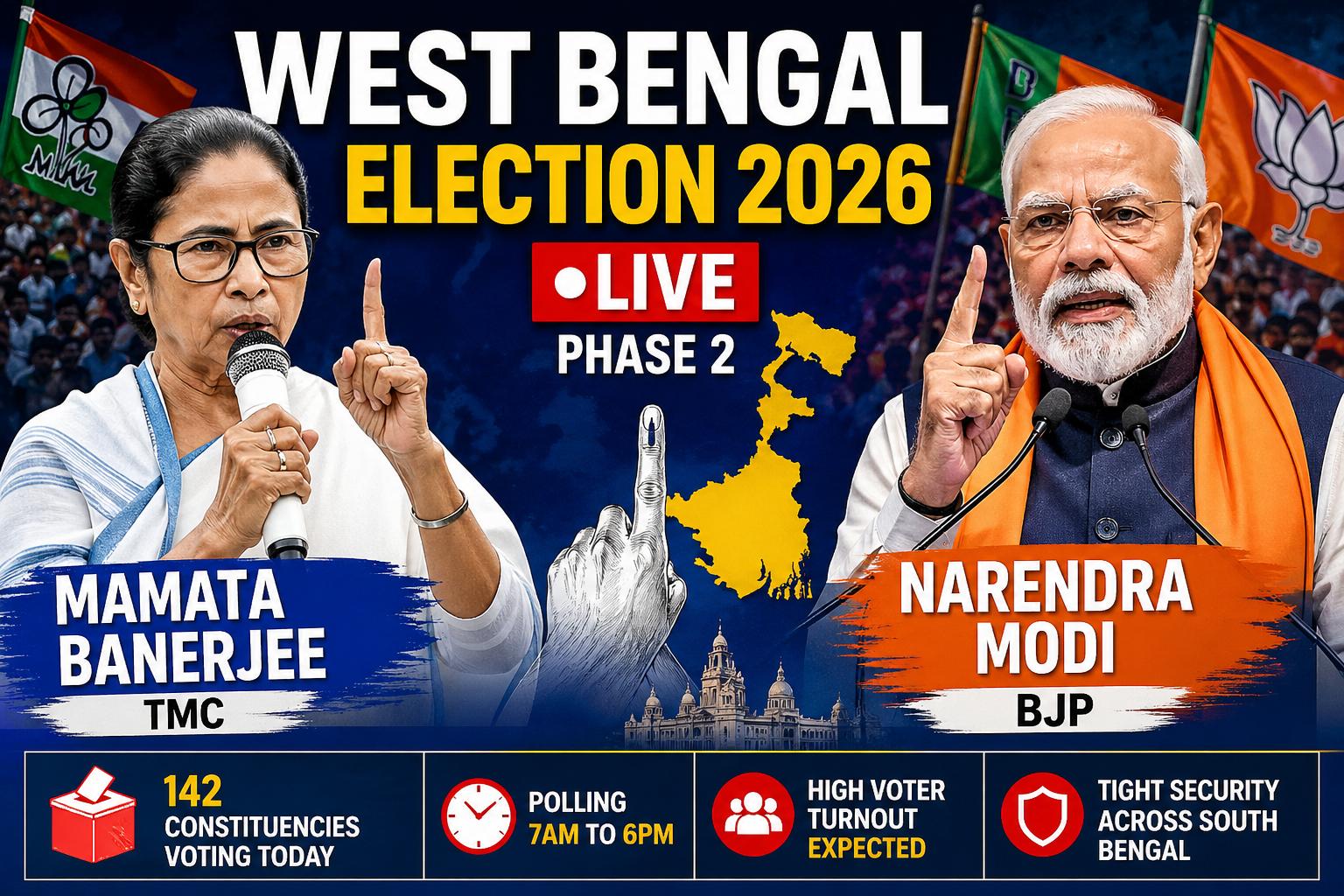
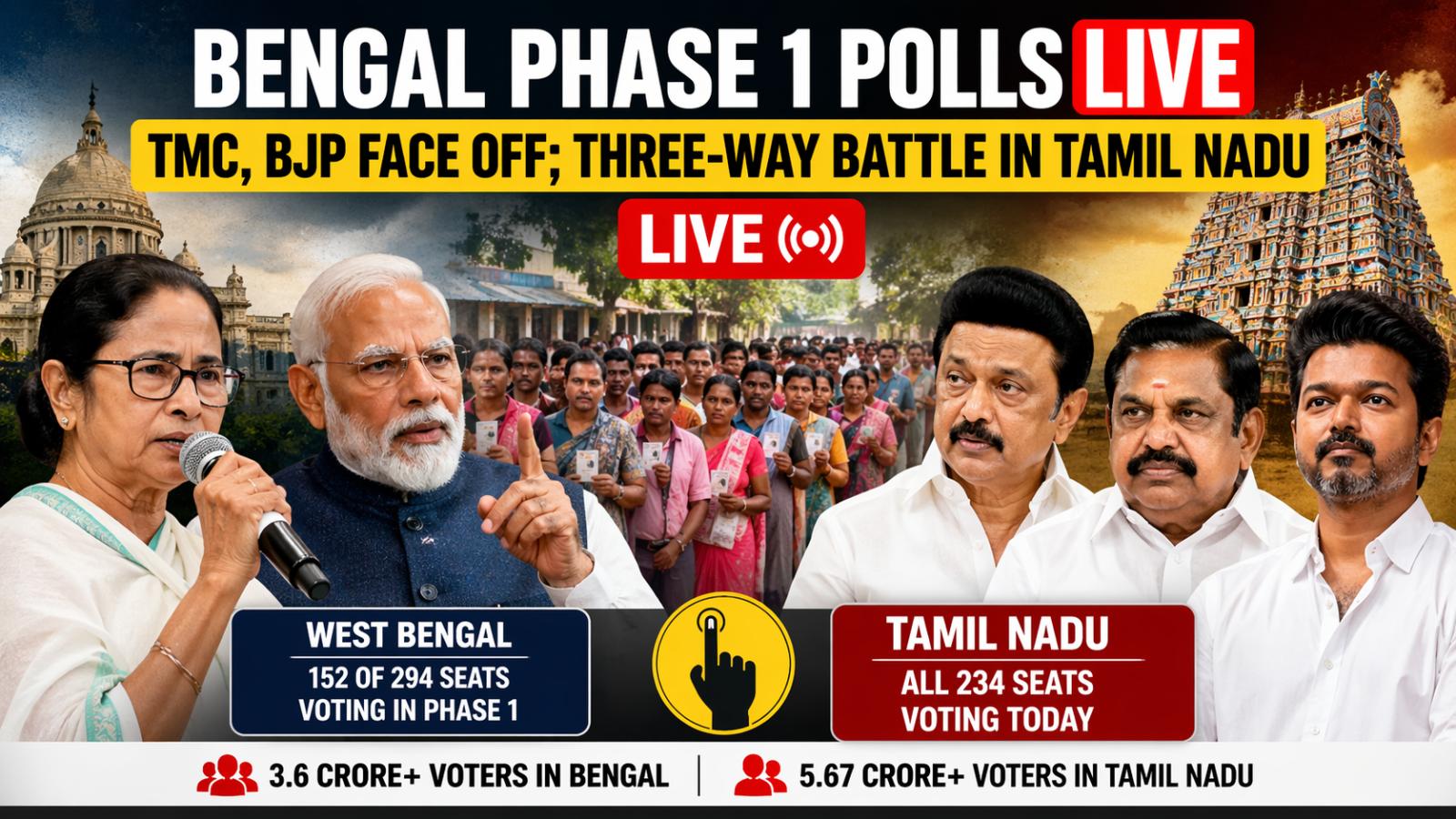
Assembly Elections Live: Bengal Voting Begins, Tamil Nadu Sees Triangular Contest
After weeks of intense campaigning, voting has begun in West Bengal and Tamil Nadu, marking a crucial phase in the 2026 Assembly elections. In West Bengal, polling started at 7 am across 152 constituencies in the first phase, covering more than half of the state’s total 294 seats. The contest in Bengal is largely seen as a direct and high-stakes face-off between the ruling Trinamool Congress led by Mamata Banerjee and the Bharatiya Janata Party. Early hours witnessed long queues at polling
Assembly Elections Live: Bengal Voting Begins, Tamil Nadu Sees Triangular Contest
After weeks of intense campaigning, voting has begun in West Bengal and Tamil Nadu, marking a crucial phase in the 2026 Assembly elections. In West Bengal, polling started at 7 am across 152 constituencies in the first phase, covering more than half of the state’s total 294 seats. The contest in Bengal is largely seen as a direct and high-stakes face-off between the ruling Trinamool Congress led by Mamata Banerjee and the Bharatiya Janata Party. Early hours witnessed long queues at polling
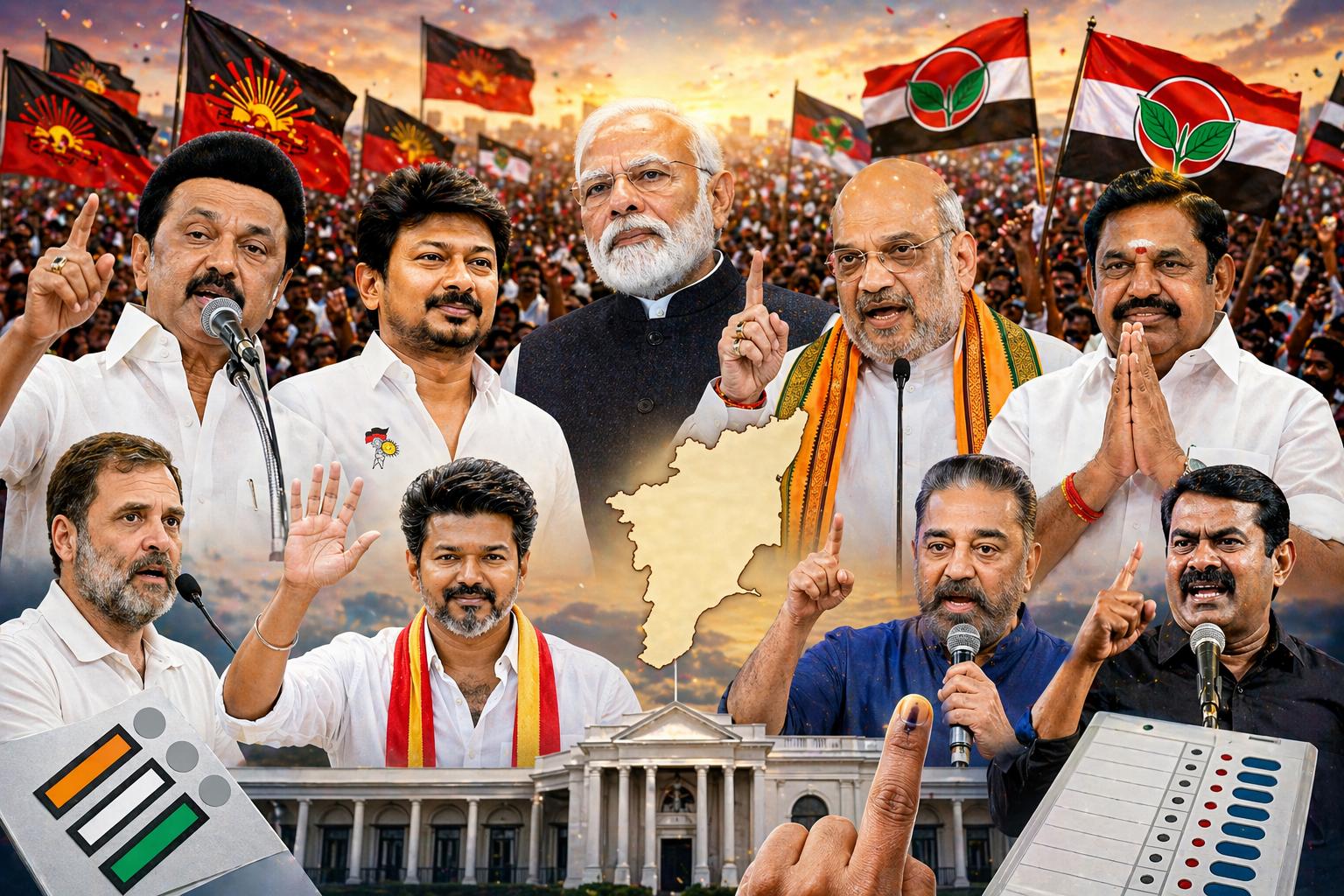
Tamil Nadu Poll Campaign Ends Today As DMK And AIADMK Alliances Face Off
Chennai: The intense campaign for the Tamil Nadu Assembly elections 2026 will come to an end today, marking the start of the mandatory silent period ahead of voting scheduled on April 23. Over the past few weeks, the state has witnessed a high-energy political battle, with top national and regional leaders holding rallies, roadshows, and public meetings across all 234 constituencies. Prominent leaders including Prime Minister Narendra Modi, Union Home Minister Amit Shah, Congress le
Tamil Nadu Poll Campaign Ends Today As DMK And AIADMK Alliances Face Off
Chennai: The intense campaign for the Tamil Nadu Assembly elections 2026 will come to an end today, marking the start of the mandatory silent period ahead of voting scheduled on April 23. Over the past few weeks, the state has witnessed a high-energy political battle, with top national and regional leaders holding rallies, roadshows, and public meetings across all 234 constituencies. Prominent leaders including Prime Minister Narendra Modi, Union Home Minister Amit Shah, Congress le
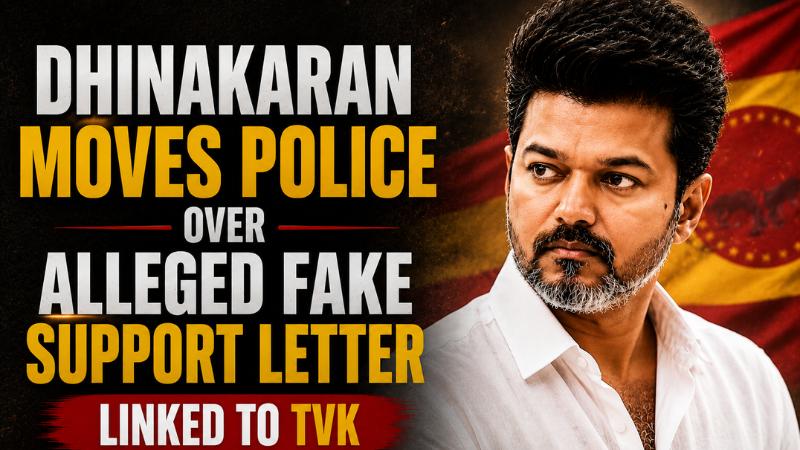
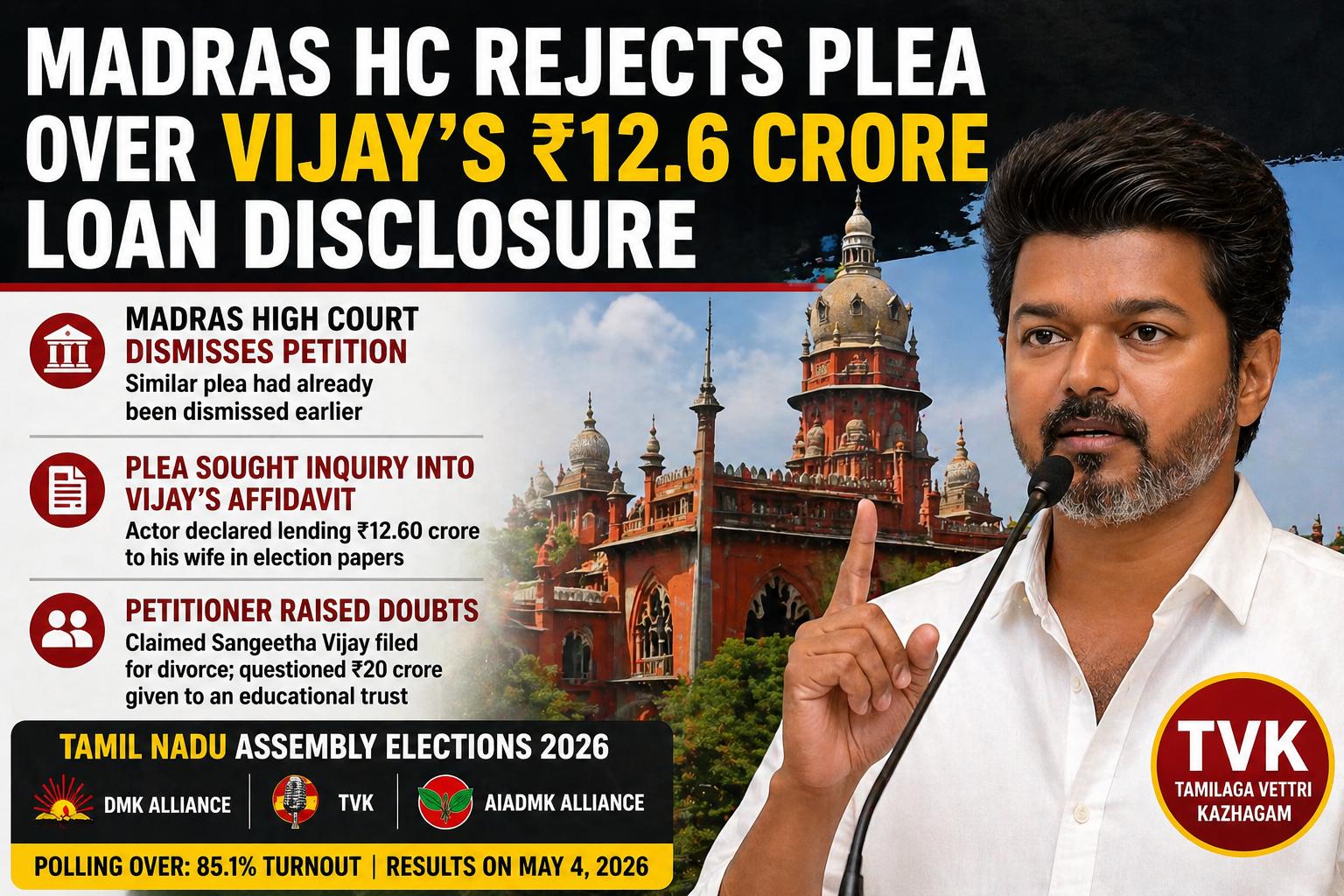
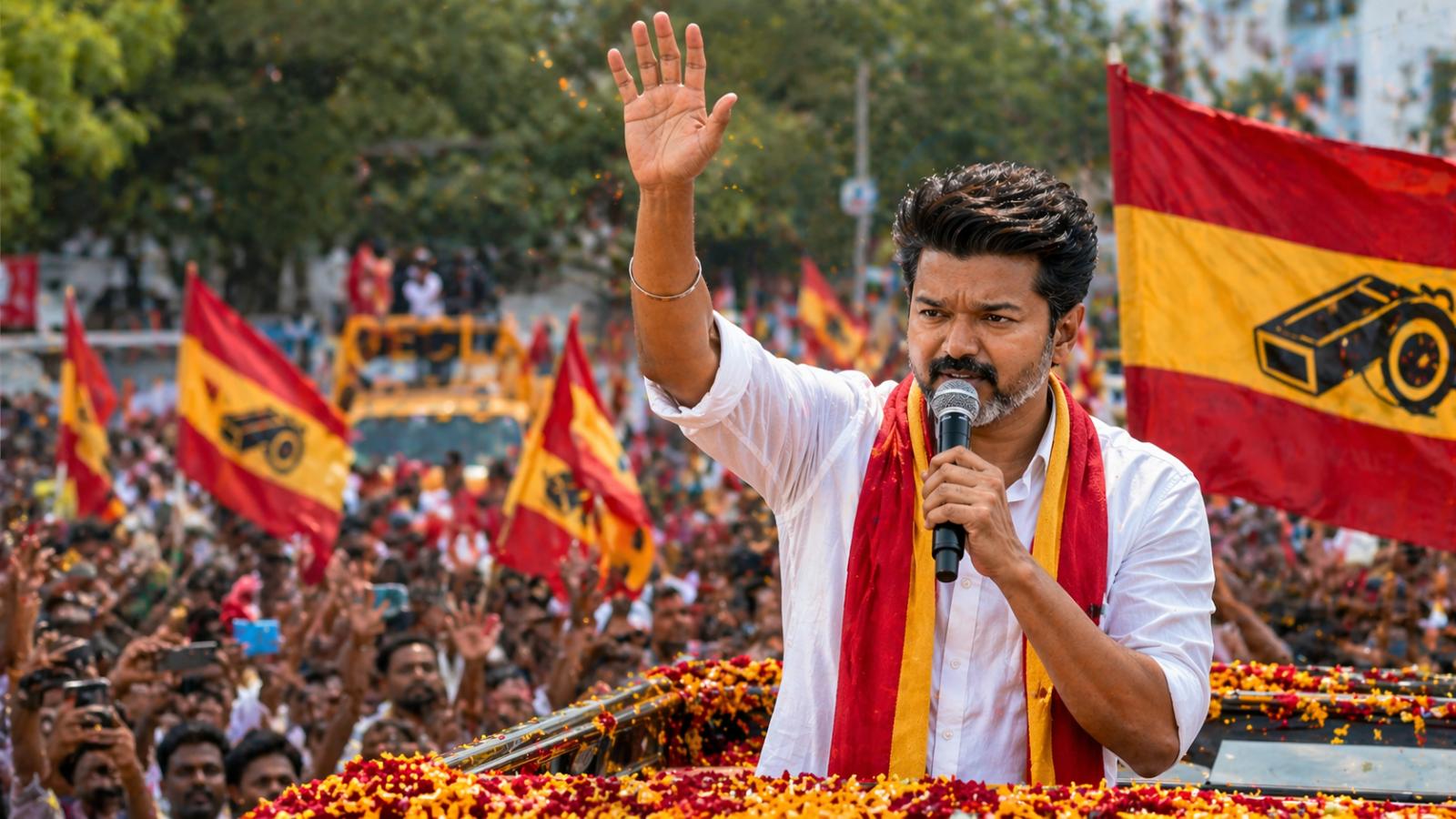
Vijay’s Final Push Before TN Polls: Vote For TVK, Reject Divisive Politics
Chennai: Vijay, chief of Tamilaga Vettri Kazhagam, made a strong final appeal to voters ahead of the Tamil Nadu Assembly Elections 2026, urging them to support his party’s “Whistle” symbol. Addres
Vijay’s Final Push Before TN Polls: Vote For TVK, Reject Divisive Politics
Chennai: Vijay, chief of Tamilaga Vettri Kazhagam, made a strong final appeal to voters ahead of the Tamil Nadu Assembly Elections 2026, urging them to support his party’s “Whistle” symbol. Addres
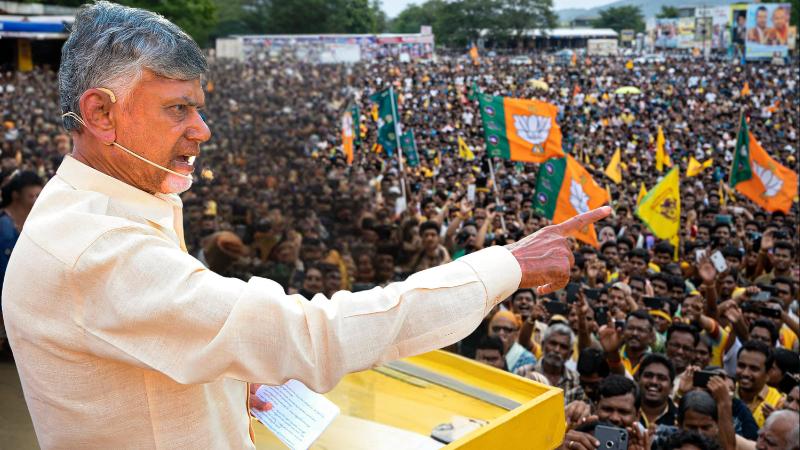
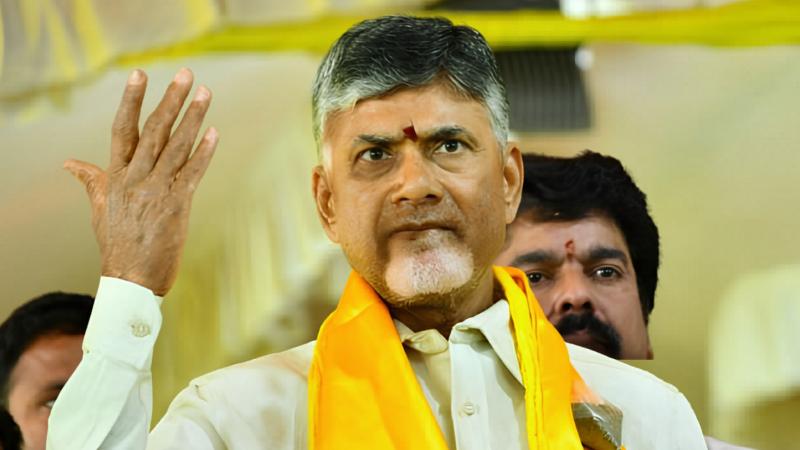
Chandrababu Naidu Hits Campaign Trail In Tamil Nadu On Birthday
N. Chandrababu Naidu marked his birthday with intense political activity, choosing to campaign in Tamil Nadu for the National Democratic Alliance instead of celebrating the occasion. The veteran leader arrived in Coimbatore, where he received a strong reception from supporters and members of the Telugu community, signaling the growing momentum of the NDA campaign ahead of the Assembly elections. Continuing his schedule, Naidu interacted with local leaders and key political figures, holding discussions on electoral strategy and regional issues. His visit reflects a broader push by the NDA to strengthen its presence in Tamil Nadu, with Naidu playing an active role in mobilizing support. His decision to campaign on his birthday highlights his commitment to political work and alliance responsibilities. During his address, Naidu criticized the ruling Dravida Munnetra Kazhagam for opposing the delimitation bill, stating that the move could negatively impact southern states in the future. He argued that the bill was intended to address concerns arising from population-based seat allocation and warned that resistance to it could harm the region’s political representation. Naidu’s remarks came as he took a firm stance in support of the delimitation proposal, even while speaking in a region where the issue remains politically sensitive. He emphasized that such reforms are necessary to ensure balanced representation and long-term benefits for states in South India. Following his engagements in Coimbatore, Naidu is expected to continue his campaign in Chennai, where he will participate in roadshows and public meetings. His active involvement underlines the NDA’s strategy to intensify outreach efforts in the state ahead of the polls. With his continued presence on the ground and focus on key political issues, Naidu’s campaign signals a determined push by the NDA to make inroads in Tamil Nadu. His efforts are likely to play a significant role in shaping the alliance’s performance in the upcoming elections.
Chandrababu Naidu Hits Campaign Trail In Tamil Nadu On Birthday
N. Chandrababu Naidu marked his birthday with intense political activity, choosing to campaign in Tamil Nadu for the National Democratic Alliance instead of celebrating the occasion. The veteran leader arrived in Coimbatore, where he received a strong reception from supporters and members of the Telugu community, signaling the growing momentum of the NDA campaign ahead of the Assembly elections. Continuing his schedule, Naidu interacted with local leaders and key political figures, holding discussions on electoral strategy and regional issues. His visit reflects a broader push by the NDA to strengthen its presence in Tamil Nadu, with Naidu playing an active role in mobilizing support. His decision to campaign on his birthday highlights his commitment to political work and alliance responsibilities. During his address, Naidu criticized the ruling Dravida Munnetra Kazhagam for opposing the delimitation bill, stating that the move could negatively impact southern states in the future. He argued that the bill was intended to address concerns arising from population-based seat allocation and warned that resistance to it could harm the region’s political representation. Naidu’s remarks came as he took a firm stance in support of the delimitation proposal, even while speaking in a region where the issue remains politically sensitive. He emphasized that such reforms are necessary to ensure balanced representation and long-term benefits for states in South India. Following his engagements in Coimbatore, Naidu is expected to continue his campaign in Chennai, where he will participate in roadshows and public meetings. His active involvement underlines the NDA’s strategy to intensify outreach efforts in the state ahead of the polls. With his continued presence on the ground and focus on key political issues, Naidu’s campaign signals a determined push by the NDA to make inroads in Tamil Nadu. His efforts are likely to play a significant role in shaping the alliance’s performance in the upcoming elections.
Chandrababu Naidu: Legacy, Leadership And Vision For Andhra Pradesh
N. Chandrababu Naidu, one of the most prominent and experienced leaders in Indian politics, celebrates his 76th birthday, marking a remarkable journey filled with leadership, resilience, and vision. Born on April 20, 1950, Naidu has played a crucial role in shaping the political and developmental landscape of Andhra Pradesh. As the national president of the Telugu Desam Party, he continues to remain an influential figure both at the state and national levels. Chandrababu Naidu’s political journey began during his college days, where he actively participated in student politics. He started his career with the Youth Congress in the 1970s and was elected as a Member of the Legislative Assembly (MLA) in 1978. Over the years, he steadily rose through the ranks, serving as Minister for Rural Development between 1983 and 1989. In 1995, he took over as Chief Minister of Andhra Pradesh, succeeding his father-in-law N. T. Rama Rao. He went on to serve consecutive terms from 1995 to 2004, becoming one of the longest-serving chief ministers in the state’s history. Known for his forward-thinking approach, Naidu gained recognition for transforming Andhra Pradesh into a hub for technology and investment. His tech-savvy governance style helped attract global investors and positioned the state as a key player in India’s IT growth story. Over the years, he has received several prestigious recognitions, including IT Indian of the Millennium, Business Person of the Year, and South Asian of the Year. His contributions also extended to national policy-making, where he chaired the National IT Panel under the NDA government. Even today, Chandrababu Naidu remains deeply committed to public service. His focus continues to be on large-scale development projects such as Amaravati capital city and the Polavaram irrigation project, along with attracting investments to boost the state’s economy. Known for his disciplined and work-driven lifestyle, he often prioritizes governance over personal celebrations, reflecting his dedication to progress and development. Beyond politics, Naidu’s personal life also reflects strong family ties. He is married to Nara Bhuvaneshwari and has a son, Nara Lokesh, who is also active in politics. With a legacy built on administrative strength and visionary leadership, Chandrababu Naidu continues to shape the future of Andhra Pradesh, reinforcing his status as one of India’s most impactful political leaders.
Chandrababu Naidu: Legacy, Leadership And Vision For Andhra Pradesh
N. Chandrababu Naidu, one of the most prominent and experienced leaders in Indian politics, celebrates his 76th birthday, marking a remarkable journey filled with leadership, resilience, and vision. Born on April 20, 1950, Naidu has played a crucial role in shaping the political and developmental landscape of Andhra Pradesh. As the national president of the Telugu Desam Party, he continues to remain an influential figure both at the state and national levels. Chandrababu Naidu’s political journey began during his college days, where he actively participated in student politics. He started his career with the Youth Congress in the 1970s and was elected as a Member of the Legislative Assembly (MLA) in 1978. Over the years, he steadily rose through the ranks, serving as Minister for Rural Development between 1983 and 1989. In 1995, he took over as Chief Minister of Andhra Pradesh, succeeding his father-in-law N. T. Rama Rao. He went on to serve consecutive terms from 1995 to 2004, becoming one of the longest-serving chief ministers in the state’s history. Known for his forward-thinking approach, Naidu gained recognition for transforming Andhra Pradesh into a hub for technology and investment. His tech-savvy governance style helped attract global investors and positioned the state as a key player in India’s IT growth story. Over the years, he has received several prestigious recognitions, including IT Indian of the Millennium, Business Person of the Year, and South Asian of the Year. His contributions also extended to national policy-making, where he chaired the National IT Panel under the NDA government. Even today, Chandrababu Naidu remains deeply committed to public service. His focus continues to be on large-scale development projects such as Amaravati capital city and the Polavaram irrigation project, along with attracting investments to boost the state’s economy. Known for his disciplined and work-driven lifestyle, he often prioritizes governance over personal celebrations, reflecting his dedication to progress and development. Beyond politics, Naidu’s personal life also reflects strong family ties. He is married to Nara Bhuvaneshwari and has a son, Nara Lokesh, who is also active in politics. With a legacy built on administrative strength and visionary leadership, Chandrababu Naidu continues to shape the future of Andhra Pradesh, reinforcing his status as one of India’s most impactful political leaders.
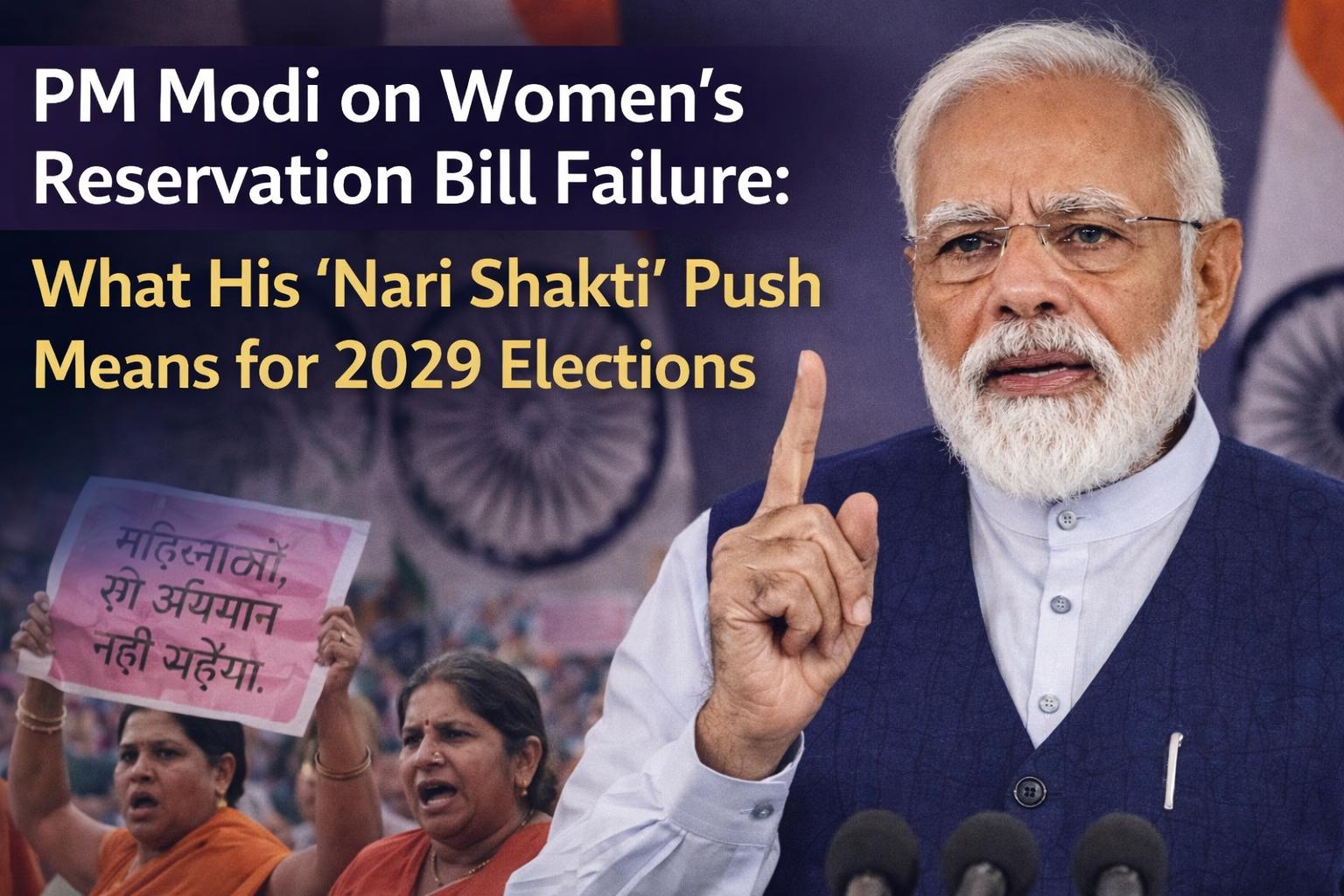
PM Modi on women’s reservation bill failure: What his ‘Nari Shakti’ push means for 2029 elections
PM Modi women reservation bill speech highlights ‘Nari Shakti’ push Prime Minister Narendra Modi’s women reservation bill speech on Saturday, April 18, 2026, has brought renewed focus on women’s representation in India’s political system. Calling the Nari Shakti initiative a “great yajna,” Modi emphasized that empowering women remains a central goal despite the recen
PM Modi on women’s reservation bill failure: What his ‘Nari Shakti’ push means for 2029 elections
PM Modi women reservation bill speech highlights ‘Nari Shakti’ push Prime Minister Narendra Modi’s women reservation bill speech on Saturday, April 18, 2026, has brought renewed focus on women’s representation in India’s political system. Calling the Nari Shakti initiative a “great yajna,” Modi emphasized that empowering women remains a central goal despite the recen
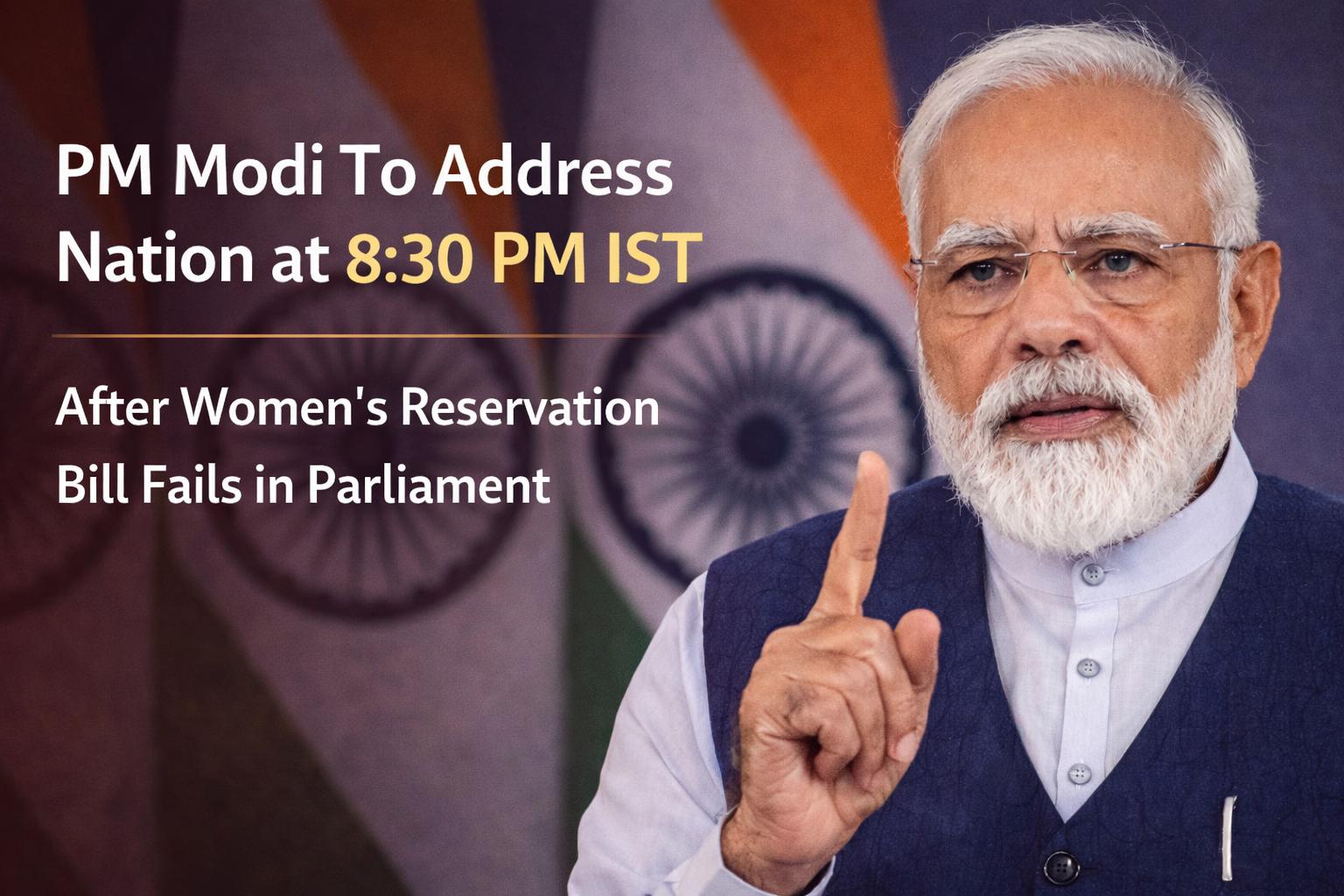
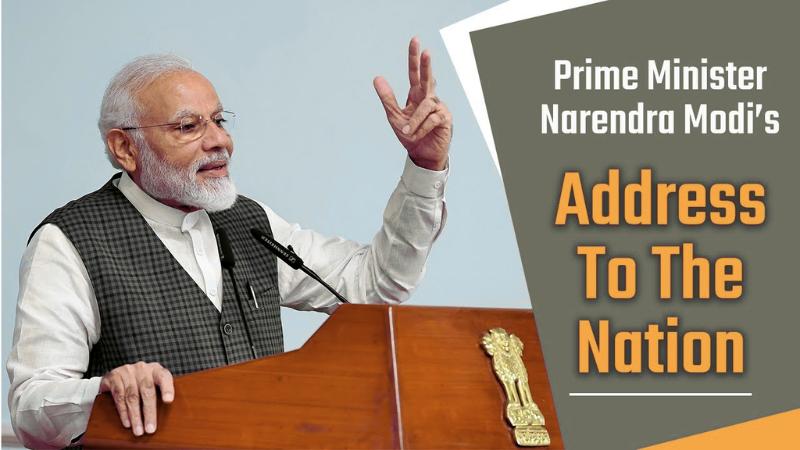
PM Modi will address the nation at 8:30 PM IST on Tuesday, April 18, 2026, fueling speculation after the women’s reservation bill failed in Parliament amid political tensions.
Prime Minister Narendra Modi is set to deliver a national address at 8:30 PM, prompting widespread speculation about the topic. The announcement comes at a politically sensitive moment, just a day after the women’s reservation bill failed to secure approval in Parliament. Why PM Modi is addressing the nation today While officials have not confirmed the subject of the speech, the timing has drawn attention. The Prime Minister reportedly di
PM Modi will address the nation at 8:30 PM IST on Tuesday, April 18, 2026, fueling speculation after the women’s reservation bill failed in Parliament amid political tensions.
Prime Minister Narendra Modi is set to deliver a national address at 8:30 PM, prompting widespread speculation about the topic. The announcement comes at a politically sensitive moment, just a day after the women’s reservation bill failed to secure approval in Parliament. Why PM Modi is addressing the nation today While officials have not confirmed the subject of the speech, the timing has drawn attention. The Prime Minister reportedly di
After Women’s Reservation Bill Setback, Narendra Modi to Address Nation on April 18 at 8:30 PM
Narendra Modi will address the nation at 8:30 PM on April 18, 2026, following the defeat of the Women’s Reservation Bill in the Lok Sabha. The Prime Minister’s Office confirmed the address, though the agenda has not been disclosed. The development follows the Constitution (131st Amendment) Bill, falling short of the required two-thirds majority in the
After Women’s Reservation Bill Setback, Narendra Modi to Address Nation on April 18 at 8:30 PM
Narendra Modi will address the nation at 8:30 PM on April 18, 2026, following the defeat of the Women’s Reservation Bill in the Lok Sabha. The Prime Minister’s Office confirmed the address, though the agenda has not been disclosed. The development follows the Constitution (131st Amendment) Bill, falling short of the required two-thirds majority in the
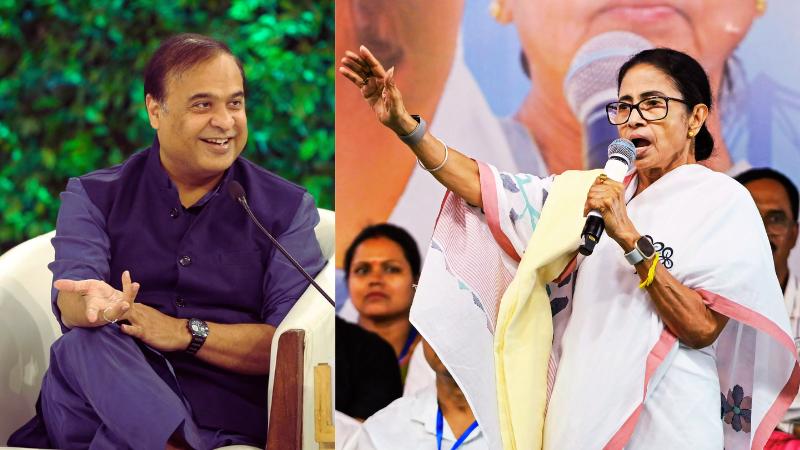
Assembly Elections 2026: Himanta Biswa Sarma’s Remarks on Mamata Banerjee Spark Political Row
Political tensions have intensified ahead of the 2026 Assembly elections as Himanta Biswa Sarma launched a sharp attack on Mamata Banerjee during a campaign rally in
Assembly Elections 2026: Himanta Biswa Sarma’s Remarks on Mamata Banerjee Spark Political Row
Political tensions have intensified ahead of the 2026 Assembly elections as Himanta Biswa Sarma launched a sharp attack on Mamata Banerjee during a campaign rally in
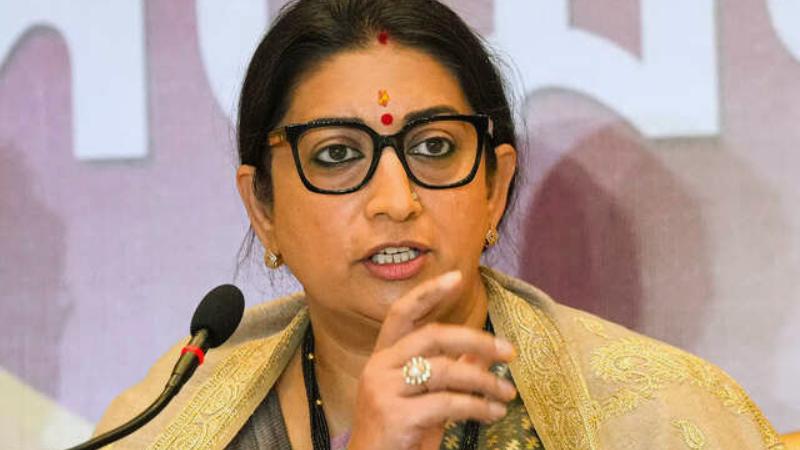
Women’s Quota Bill Row: Smriti Irani Accuses Indian National Congress of Denying Women Their Right
A political war of words erupted after the Women’s Reservation Bill failed to pass in the Lok Sabha, with Smriti Irani strongly criticising the Indian National Congress and other Opposition parties. She accused them of celebrat
Women’s Quota Bill Row: Smriti Irani Accuses Indian National Congress of Denying Women Their Right
A political war of words erupted after the Women’s Reservation Bill failed to pass in the Lok Sabha, with Smriti Irani strongly criticising the Indian National Congress and other Opposition parties. She accused them of celebrat
PM Modi Promises Fair Delimitation, Says All States Will Be Treated Equally
Prime Minister Narendra Modi addressed the Lok Sabha during the ongoing special Parliament session, offering a strong assurance that the proposed delimitation process will be conducted without bias toward any region. His statement comes at a time when the issue has triggered a major political confrontation between the ruling NDA and Opposition parties, especially leaders from southern states who fea
PM Modi Promises Fair Delimitation, Says All States Will Be Treated Equally
Prime Minister Narendra Modi addressed the Lok Sabha during the ongoing special Parliament session, offering a strong assurance that the proposed delimitation process will be conducted without bias toward any region. His statement comes at a time when the issue has triggered a major political confrontation between the ruling NDA and Opposition parties, especially leaders from southern states who fea
Special Parliament Session Live: Opposition Unites Against Delimitation, Supports Women’s Reservation
The Special Parliament Session, set to run from April 16 to 18, has kicked off with significant debates surrounding the government’s proposed amendments. One of the most anticipated legislative pieces is the operationalization of the Women’s Reservation Act, which aims to ensure 33% representation for women in both the Lok Sabha and state assemblies by 2029. Alongside this, a Constitution amendment bill will be presented on the first day of the session, marking the beginning of what promi


Special Parliament Session Live: Opposition Unites Against Delimitation, Supports Women’s Reservation
The Special Parliament Session, set to run from April 16 to 18, has kicked off with significant debates surrounding the government’s proposed amendments. One of the most anticipated legislative pieces is the operationalization of the Women’s Reservation Act, which aims to ensure 33% representation for women in both the Lok Sabha and state assemblies by 2029. Alongside this, a Constitution amendment bill will be presented on the first day of the session, marking the beginning of what promi
MK Stalin Burns Delimitation Bill, Launches Statewide Protest Against Centre’s Proposal
MK Stalin, the Chief Minister of Tamil Nadu, has intensified his protests against the Centre’s proposed delimitation move, burning a copy of the bill and hoisting a black flag. This move is part of a broader statewide agitation initiated by Stalin, who has termed the proposed delimitation as a direct attack on Tamil rights and federalism. In a symbolic gesture of defiance, Stalin called the bill a "black law" and urged widespread resistance across Tamil Nadu. The protest was spark
MK Stalin Burns Delimitation Bill, Launches Statewide Protest Against Centre’s Proposal
MK Stalin, the Chief Minister of Tamil Nadu, has intensified his protests against the Centre’s proposed delimitation move, burning a copy of the bill and hoisting a black flag. This move is part of a broader statewide agitation initiated by Stalin, who has termed the proposed delimitation as a direct attack on Tamil rights and federalism. In a symbolic gesture of defiance, Stalin called the bill a "black law" and urged widespread resistance across Tamil Nadu. The protest was spark
Tamil Nadu CM M.K. Stalin's Vision for a One-Trillion-Dollar Economy by 2030
Tamil Nadu Chief Minister M.K. Stalin laid out an ambitious roadmap for the state’s development, aiming to transform Tamil Nadu into a one-trillion-dollar economy by 2030. This vision is backed by the ‘Dravidian Model’ of governance, which has already set the state on a path of rapid industrial and economic growth. Tamil Nadu is expected to play a pivotal role in India’s economic future, with targets such as attracting investments worth ₹18 lakh crore, increasing exports t
Tamil Nadu CM M.K. Stalin's Vision for a One-Trillion-Dollar Economy by 2030
Tamil Nadu Chief Minister M.K. Stalin laid out an ambitious roadmap for the state’s development, aiming to transform Tamil Nadu into a one-trillion-dollar economy by 2030. This vision is backed by the ‘Dravidian Model’ of governance, which has already set the state on a path of rapid industrial and economic growth. Tamil Nadu is expected to play a pivotal role in India’s economic future, with targets such as attracting investments worth ₹18 lakh crore, increasing exports t
PM Modi Urges Early Rollout of Women's Reservation Act Before 2029 Elections
Prime Minister Narendra Modi has called for the early implementation of the Women’s Reservation Act, urging political parties to work together to ensure it is in place before the 2029 general elections. In a letter dated April 11 to leaders of all political parties in both Houses of Parliament, the Prime Minister emphasized the need to implement the law, officially known as the Nari Shakti Vandan Adhiniyam, 2023, in its true spirit. A special three-day session of Parliam
PM Modi Urges Early Rollout of Women's Reservation Act Before 2029 Elections
Prime Minister Narendra Modi has called for the early implementation of the Women’s Reservation Act, urging political parties to work together to ensure it is in place before the 2029 general elections. In a letter dated April 11 to leaders of all political parties in both Houses of Parliament, the Prime Minister emphasized the need to implement the law, officially known as the Nari Shakti Vandan Adhiniyam, 2023, in its true spirit. A special three-day session of Parliam