


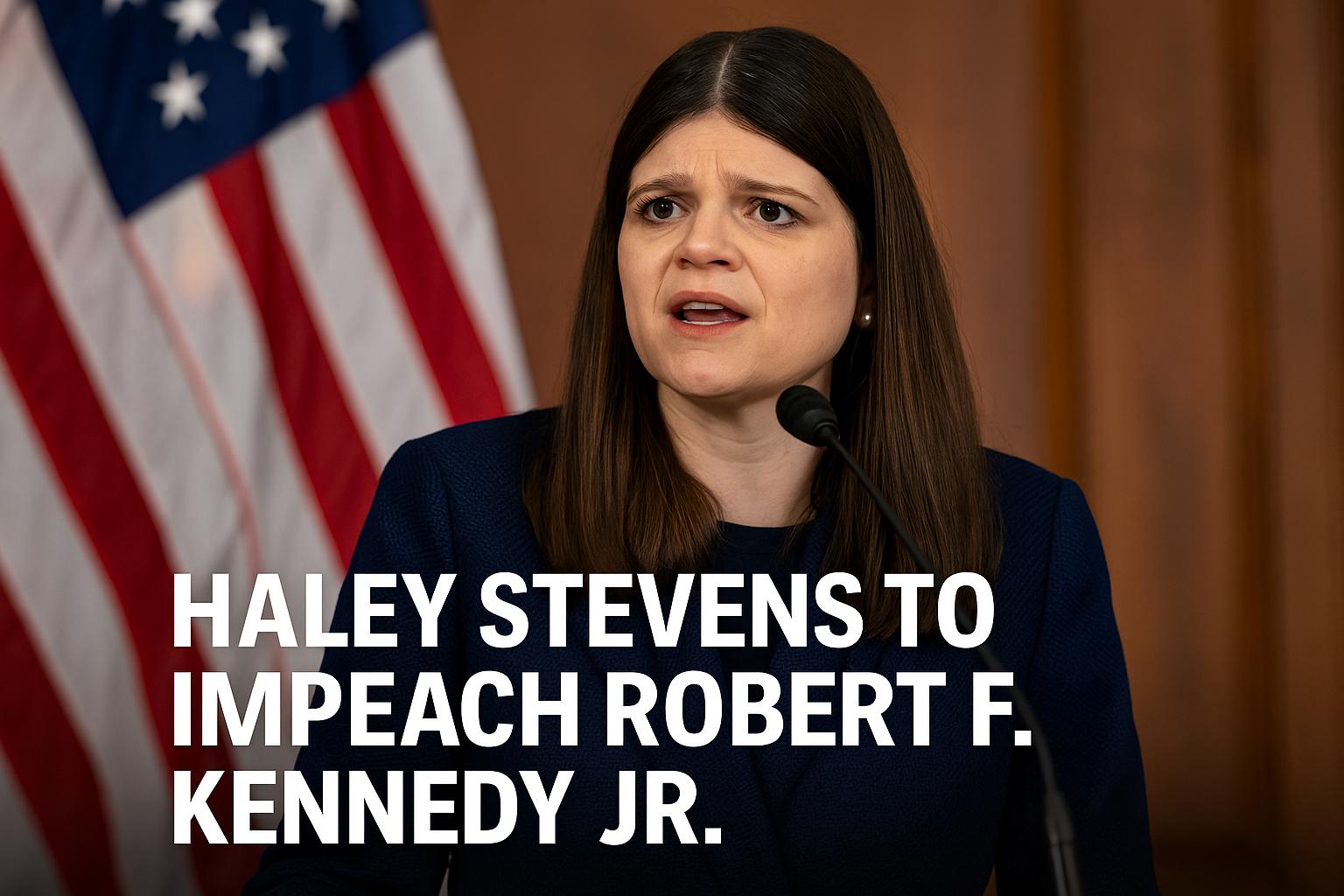




BJP Set to Win Bengal for First Time? Leads Big Over TMC in Election Trends
A major political shift appears to be unfolding in West Bengal as the Bharatiya Janata Party takes a commanding lead in the ongoing Assembly election trends. According to early counting figures, BJP is leading in around 174 constituencies, significantly ahead of the ruling All India Trinamool Congress, whi
BJP Set to Win Bengal for First Time? Leads Big Over TMC in Election Trends
A major political shift appears to be unfolding in West Bengal as the Bharatiya Janata Party takes a commanding lead in the ongoing Assembly election trends. According to early counting figures, BJP is leading in around 174 constituencies, significantly ahead of the ruling All India Trinamool Congress, whi
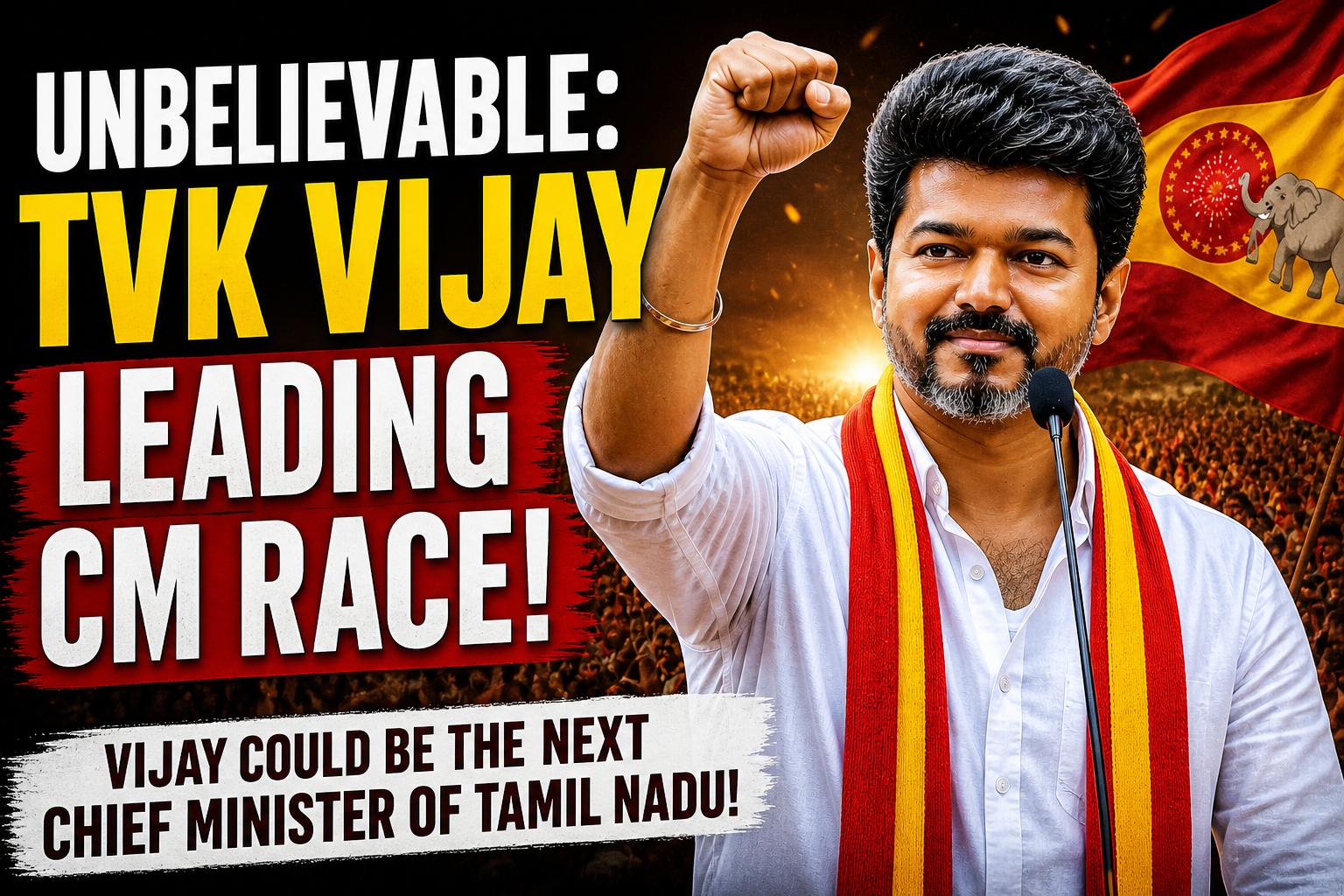
Thalapathy Vijay Leads CM Race as TVK Surges in Tamil Nadu
The Tamil Nadu Assembly elections are witnessing a surprising and dramatic shift as Thalapathy Vijay emerges as a leading contender in the race for Chief Minister. Entering politics for the first time with his party Tamilaga Vettri Kazhagam, Vijay was initially met with skepticism. Many questioned whether
Thalapathy Vijay Leads CM Race as TVK Surges in Tamil Nadu
The Tamil Nadu Assembly elections are witnessing a surprising and dramatic shift as Thalapathy Vijay emerges as a leading contender in the race for Chief Minister. Entering politics for the first time with his party Tamilaga Vettri Kazhagam, Vijay was initially met with skepticism. Many questioned whether
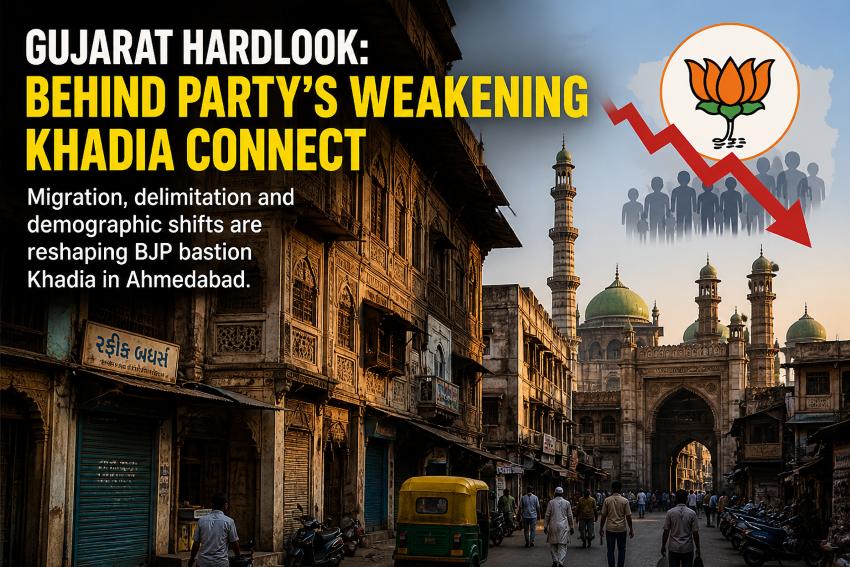
Khadia Political Shift Weakens BJP Hold As Demographic Changes Reshape Ahmedabad
Date: May 4, 2026 Time: 09:12 AM IST Place: Ahmedabad, Gujarat Khadia, once considered a stronghold of the Bharatiya Janata Party in Ahmedabad, is now witnessing a gradual but significant political transformation. The shift is largely attributed to long-term migration patterns, demographic changes, and the impact of delimitation, all of which have altered the region’s voter base and political dynamics. Situated in the heart of Ahmedabad’s historic walled city, Khadia reflects a blend of centuries-old heritage and evolving urban realities. However, as families moved out over the decades in search of better infrastructure and modern living conditions, the social and electoral composition of the area began to change. Historically, Khadia held immense importance in Gujarat’s political landscape, contributing significantly to the BJP’s rise in the region. The area’s narrow lanes, traditional pol houses, and strong community networks once ensured a stable voter base. However, the closure of textile mills in the late 20th century triggered large-scale migration, particularly among Hindu families who relocated to newer parts of the city. This outflow, combined with the addition of new areas during the delimitation process, reshaped the constituency into Jamalpur-Khadia, where demographic proportions shifted considerably. Changing Voter Dynamics And Political Impact The political consequences of these changes have become increasingly visible over the years. The inclusion of areas such as Jamalpur, Kalupur, and Behrampura brought in a different voter demographic, altering the electoral balance. What was once a BJP-dominated seat gradually turned into a competitive battleground, with Congress gaining ground due to the evolving population mix. Local leaders acknowledge that migration reduced the traditional voter base while new voters brought different political preferences, making the constituency more unpredictable. Despite these challenges, BJP leaders remain optimistic about regaining influence in the region. Internal strategies, including stronger grassroots engagement and addressing local issues, are being discussed to reconnect with voters. At the same time, residents highlight that Khadia continues to maintain its unique cultural identity, where community bonds and traditions still play a vital role in everyday life. The future of Khadia’s politics now depends on how effectively parties adapt to these demographic shifts while addressing the aspirations of a changing population.
Khadia Political Shift Weakens BJP Hold As Demographic Changes Reshape Ahmedabad
Date: May 4, 2026 Time: 09:12 AM IST Place: Ahmedabad, Gujarat Khadia, once considered a stronghold of the Bharatiya Janata Party in Ahmedabad, is now witnessing a gradual but significant political transformation. The shift is largely attributed to long-term migration patterns, demographic changes, and the impact of delimitation, all of which have altered the region’s voter base and political dynamics. Situated in the heart of Ahmedabad’s historic walled city, Khadia reflects a blend of centuries-old heritage and evolving urban realities. However, as families moved out over the decades in search of better infrastructure and modern living conditions, the social and electoral composition of the area began to change. Historically, Khadia held immense importance in Gujarat’s political landscape, contributing significantly to the BJP’s rise in the region. The area’s narrow lanes, traditional pol houses, and strong community networks once ensured a stable voter base. However, the closure of textile mills in the late 20th century triggered large-scale migration, particularly among Hindu families who relocated to newer parts of the city. This outflow, combined with the addition of new areas during the delimitation process, reshaped the constituency into Jamalpur-Khadia, where demographic proportions shifted considerably. Changing Voter Dynamics And Political Impact The political consequences of these changes have become increasingly visible over the years. The inclusion of areas such as Jamalpur, Kalupur, and Behrampura brought in a different voter demographic, altering the electoral balance. What was once a BJP-dominated seat gradually turned into a competitive battleground, with Congress gaining ground due to the evolving population mix. Local leaders acknowledge that migration reduced the traditional voter base while new voters brought different political preferences, making the constituency more unpredictable. Despite these challenges, BJP leaders remain optimistic about regaining influence in the region. Internal strategies, including stronger grassroots engagement and addressing local issues, are being discussed to reconnect with voters. At the same time, residents highlight that Khadia continues to maintain its unique cultural identity, where community bonds and traditions still play a vital role in everyday life. The future of Khadia’s politics now depends on how effectively parties adapt to these demographic shifts while addressing the aspirations of a changing population.
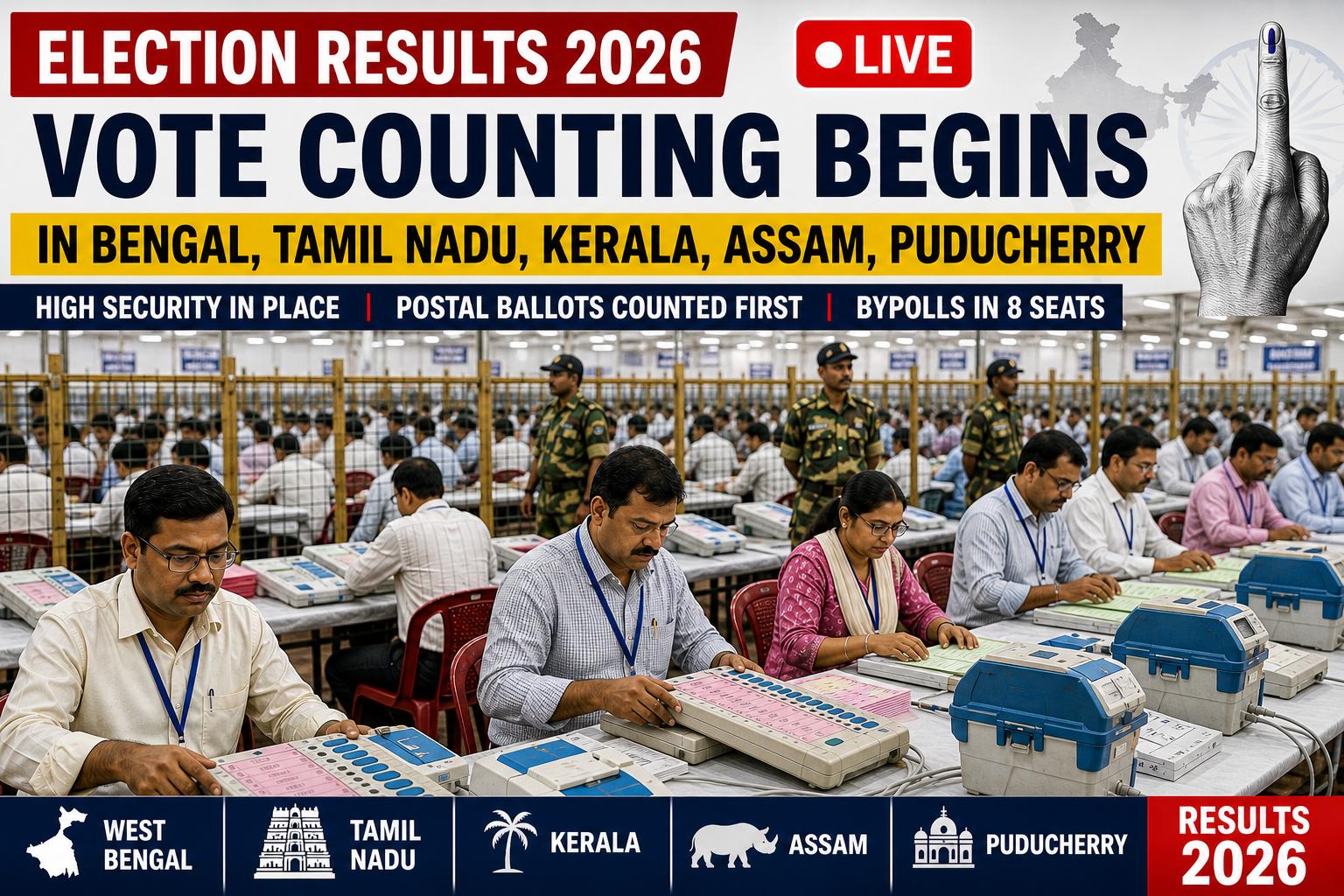
Election Results 2026 Live Updates: Vote Counting Begins Across 5 States
The much-anticipated counting of votes for the Assembly Election Results 2026 has officially begun across five crucial states in India – West Bengal, Tamil Nadu, Kerala, Assam, and Puducherry. This election cycle has drawn nationwide attention due to intense campaigning, shifting alliances, and the presence of both established political giants and emerging challengers. With a three-tier security system in place, election officials initiated the counting process early in the morning, startin
Election Results 2026 Live Updates: Vote Counting Begins Across 5 States
The much-anticipated counting of votes for the Assembly Election Results 2026 has officially begun across five crucial states in India – West Bengal, Tamil Nadu, Kerala, Assam, and Puducherry. This election cycle has drawn nationwide attention due to intense campaigning, shifting alliances, and the presence of both established political giants and emerging challengers. With a three-tier security system in place, election officials initiated the counting process early in the morning, startin

Pawan Kalyan Surgery Details Out As Chandrababu Visits Him In Hyderabad
May 2, 2026, Pawan Kalyan revealed details of his sinus surgery while N. Chandrababu Naidu visited him in Hyderabad, showing support during his recovery. A significant development in Andhra Pradesh politics and public life has drawn attention as
Pawan Kalyan Surgery Details Out As Chandrababu Visits Him In Hyderabad
May 2, 2026, Pawan Kalyan revealed details of his sinus surgery while N. Chandrababu Naidu visited him in Hyderabad, showing support during his recovery. A significant development in Andhra Pradesh politics and public life has drawn attention as
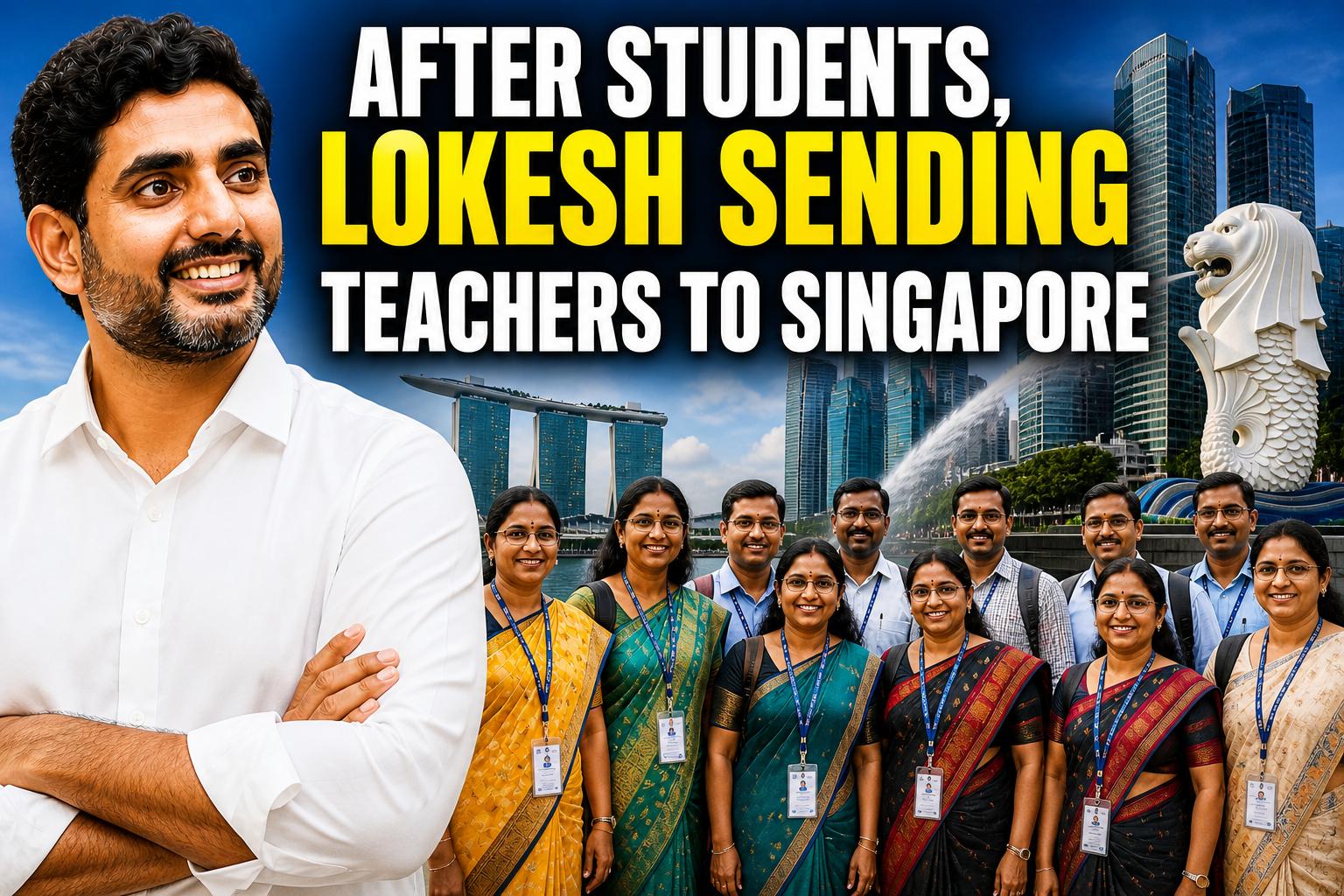
AP Govt Sends Teachers to Singapore for Training After Student Tours Initiative
Andhra Pradesh’s education system is undergoing a noticeable shift under the leadership of Nara Lokesh, with the government now focusing not just on students but also on strengthening teachers. In a new initiative, the state has selected 37 high-performing teachers from government schools and is sending them to Singapore for a one-week intensive training program aimed at upgrading teaching standards. Until recently, the government’s reforms were largely centered around students, including exposure visits and learning enhancement programs. One such initiative involved taking students from government schools to New Delhi, where they explored science institutions and gained practical learning experiences beyond textbooks. Now, the attention has shifted toward teachers, recognizing that improving teaching quality directly impacts student outcomes. The selected educators will observe and learn advanced teaching practices widely adopted in Singapore, including digital learning systems, smart classroom integration, project-based teaching models, and modern evaluation techniques. These methods are known for making learning more interactive and effective. The expectation is straightforward but ambitious. After completing their training, these teachers will return and implement what they have learned across government schools in Andhra Pradesh. The goal is not just incremental improvement but a broader transformation in how education is delivered. However, the real test lies in execution. Sending 37 teachers abroad makes for a good headline, but unless there is a structured plan to scale these learnings across thousands of schools, the impact could remain limited. If the government ensures proper follow-up, training replication, and accountability, this initiative could genuinely improve classroom standards. Otherwise, it risks becoming another isolated reform without long-term effect. This move signals a more balanced approach to education reform—one that acknowledges that strong teachers are just as critical as motivated students in building a future-ready education system.
AP Govt Sends Teachers to Singapore for Training After Student Tours Initiative
Andhra Pradesh’s education system is undergoing a noticeable shift under the leadership of Nara Lokesh, with the government now focusing not just on students but also on strengthening teachers. In a new initiative, the state has selected 37 high-performing teachers from government schools and is sending them to Singapore for a one-week intensive training program aimed at upgrading teaching standards. Until recently, the government’s reforms were largely centered around students, including exposure visits and learning enhancement programs. One such initiative involved taking students from government schools to New Delhi, where they explored science institutions and gained practical learning experiences beyond textbooks. Now, the attention has shifted toward teachers, recognizing that improving teaching quality directly impacts student outcomes. The selected educators will observe and learn advanced teaching practices widely adopted in Singapore, including digital learning systems, smart classroom integration, project-based teaching models, and modern evaluation techniques. These methods are known for making learning more interactive and effective. The expectation is straightforward but ambitious. After completing their training, these teachers will return and implement what they have learned across government schools in Andhra Pradesh. The goal is not just incremental improvement but a broader transformation in how education is delivered. However, the real test lies in execution. Sending 37 teachers abroad makes for a good headline, but unless there is a structured plan to scale these learnings across thousands of schools, the impact could remain limited. If the government ensures proper follow-up, training replication, and accountability, this initiative could genuinely improve classroom standards. Otherwise, it risks becoming another isolated reform without long-term effect. This move signals a more balanced approach to education reform—one that acknowledges that strong teachers are just as critical as motivated students in building a future-ready education system.
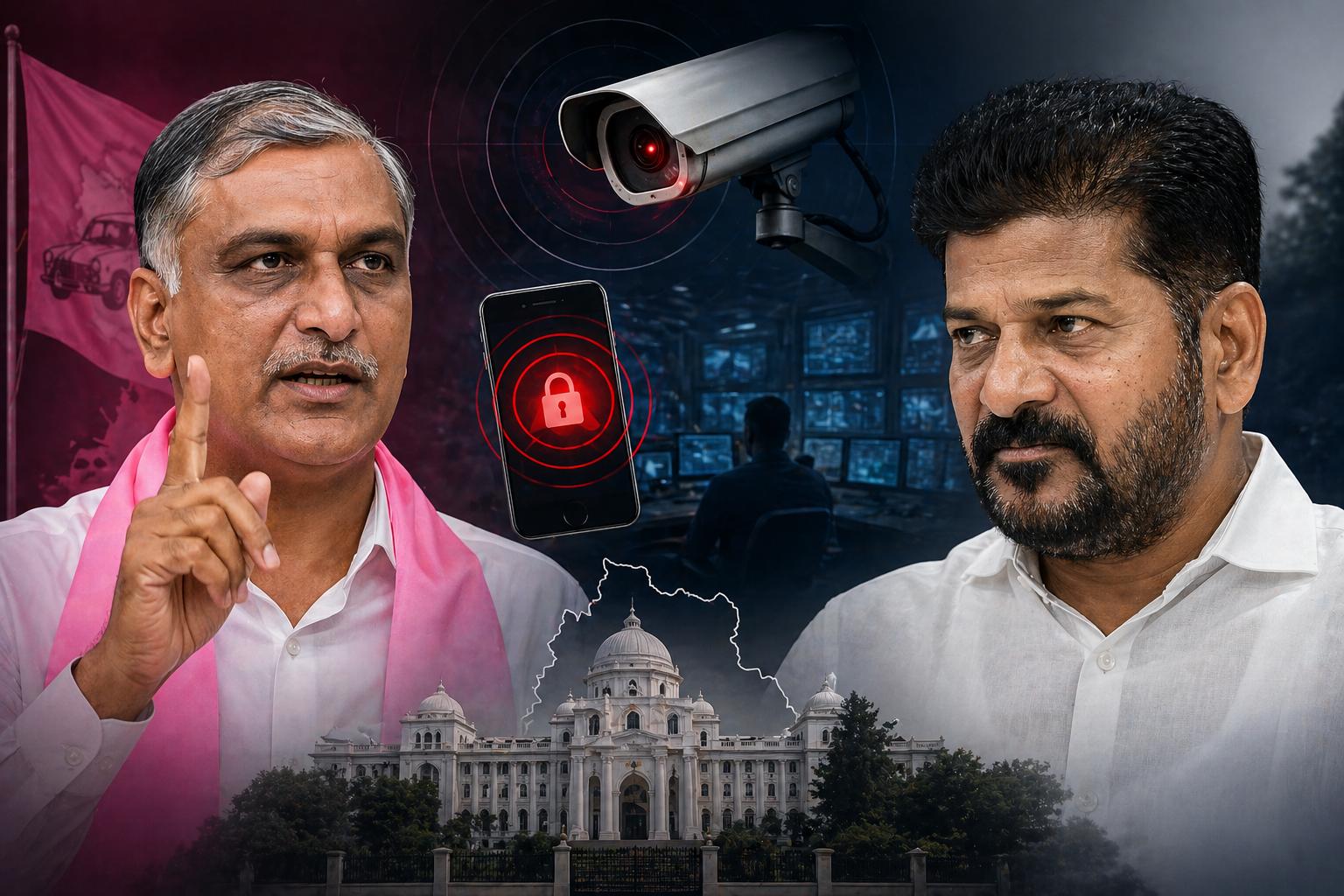
BRS Alleges CCTV and Phone Hacking by Revanth Reddy Government
April 28, 2026 | Hyderabad — BRS alleges CCTV and phone hacking by Revanth Reddy government. Harish Rao claims surveillance on leaders, says evidence will be revealed later Political tensions have surfaced in Telangana as leaders from the Bharat Rashtra Samithi have accused the
BRS Alleges CCTV and Phone Hacking by Revanth Reddy Government
April 28, 2026 | Hyderabad — BRS alleges CCTV and phone hacking by Revanth Reddy government. Harish Rao claims surveillance on leaders, says evidence will be revealed later Political tensions have surfaced in Telangana as leaders from the Bharat Rashtra Samithi have accused the
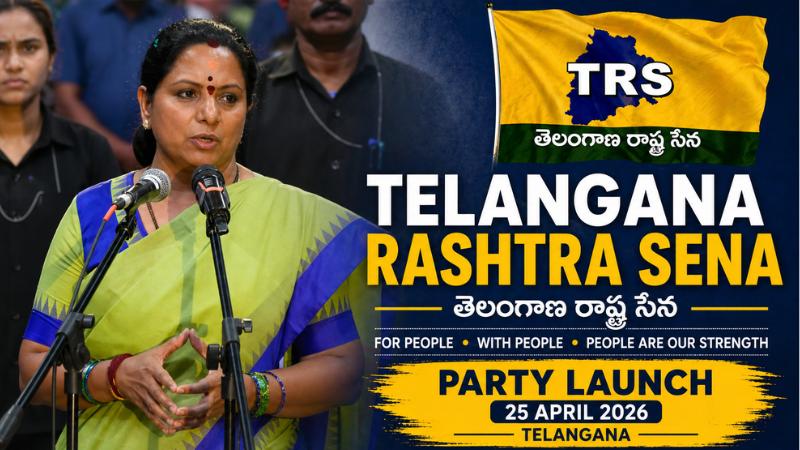
Kavitha Launches TRS Party Aiming Inclusive Development In Telangana
Kavitha launches Telangana Rashtra Sena, marking a new political chapter in Telangana after her exit from BRS. Former Bharat Rashtra Samithi (BRS) leader Kalvakuntla Kavitha, daughter of former Telangana Chief Minister K Chandrasekhar Rao (KCR), officially launched her own political party, Telangana Rashtra Sena (TRS), on Saturday, April 25, 2026. This development comes months after she was suspended from the BRS over alleged anti-party activities, marking a major
Kavitha Launches TRS Party Aiming Inclusive Development In Telangana
Kavitha launches Telangana Rashtra Sena, marking a new political chapter in Telangana after her exit from BRS. Former Bharat Rashtra Samithi (BRS) leader Kalvakuntla Kavitha, daughter of former Telangana Chief Minister K Chandrasekhar Rao (KCR), officially launched her own political party, Telangana Rashtra Sena (TRS), on Saturday, April 25, 2026. This development comes months after she was suspended from the BRS over alleged anti-party activities, marking a major

West Bengal Assembly Elections 2026 Latest Updates Campaign Ends Phase 2
With only a few hours left before campaigning ends for the second phase of the 2026 West Bengal Assembly elections, political leaders have intensified their efforts to reach voters across the state. Prime Minister Narendra Modi addressed key concerns of the Matua community, promising that the Bharatiya Janata Party (BJP) would ensure citizenship for Hindu refugees who migrated from Banglad
West Bengal Assembly Elections 2026 Latest Updates Campaign Ends Phase 2
With only a few hours left before campaigning ends for the second phase of the 2026 West Bengal Assembly elections, political leaders have intensified their efforts to reach voters across the state. Prime Minister Narendra Modi addressed key concerns of the Matua community, promising that the Bharatiya Janata Party (BJP) would ensure citizenship for Hindu refugees who migrated from Banglad

Did Raghav Chadha’s switch expose ideology as strategy in politics? Yes, it raises serious questions
Did Raghav Chadha’s switch expose ideology as strategy in Indian politics? Yes, it raises serious questions as the recent political move by Raghav Chadha has triggered a wider debate about whether ideology in Indian politics is truly stable or simply a matter of strategy. The development, reported on Thursday, April 24, 2026, in India Standard Time, comes as Chadha, once a vocal critic of the Bharatiya Janata Party (BJP), aligned himself with the same political force he had publicly opposed. From vocal opposition to alignment with former rivals For years, Chadha built his political identity within the Aam Aadmi Party (AAP) by criticizing the BJP’s governance style, raising concerns about institutional independence and democratic functioning. His speeches positioned AAP as a clear alternative, emphasizing transparency and accountability. This consistent messaging helped shape public perception and earned him credibility among urban and educated voters. The sudden shift, however, has led to questions about whether those earlier positions were rooted in firm ideological belief or were part of a broader political strategy that evolved over time. BJP’s acceptance raises questions about ideological consistency The BJP, which has maintained political dominance at the national level for over a decade, has consistently emphasized strong ideological foundations and governance continuity. Its decision to accept a leader who had openly challenged its policies now brings attention to the balance between ideological commitment and political expansion. In parliamentary systems, numbers often determine legislative outcomes. Strategic decisions to strengthen representation can override past disagreements, reflecting a pragmatic approach to governance and policy-making. A recurring pattern across political systems This development is not isolated. Political realignments, shifting alliances, and evolving narratives are common across democratic systems worldwide. Leaders frequently transition between parties, and parties themselves adapt to changing political landscapes. Such shifts suggest that while ideology is presented as a guiding principle, strategy often plays a decisive role in shaping political actions. Public trust, consistency, and the shifting foundation of politics For the public, these developments can create uncertainty. Strong statements made in one phase of a political career may not align with actions taken later. This gap between words and actions raises broader concerns about consistency, accountability, and long-term trust in political institutions. What emerges from this pattern is not just a question about one leader or one party, but about the direction of politics itself. When positions can shift so sharply and be accepted just as quickly, it becomes harder to separate belief from convenience. The debate is no longer limited to whether one individual changed sides, but whether such changes are now an accepted norm across the political spectrum. In that context, the latest move involving Raghav Chadha reinforces a broader concern: political systems that emphasize ideology in public messaging may increasingly rely on strategy in practice. In that reality, one conclusion is becoming difficult to ignore. Adapting strategy to suit the moment is no longer just a political tool; it is increasingly becoming the most consistent ideology across political parties.
Did Raghav Chadha’s switch expose ideology as strategy in politics? Yes, it raises serious questions
Did Raghav Chadha’s switch expose ideology as strategy in Indian politics? Yes, it raises serious questions as the recent political move by Raghav Chadha has triggered a wider debate about whether ideology in Indian politics is truly stable or simply a matter of strategy. The development, reported on Thursday, April 24, 2026, in India Standard Time, comes as Chadha, once a vocal critic of the Bharatiya Janata Party (BJP), aligned himself with the same political force he had publicly opposed. From vocal opposition to alignment with former rivals For years, Chadha built his political identity within the Aam Aadmi Party (AAP) by criticizing the BJP’s governance style, raising concerns about institutional independence and democratic functioning. His speeches positioned AAP as a clear alternative, emphasizing transparency and accountability. This consistent messaging helped shape public perception and earned him credibility among urban and educated voters. The sudden shift, however, has led to questions about whether those earlier positions were rooted in firm ideological belief or were part of a broader political strategy that evolved over time. BJP’s acceptance raises questions about ideological consistency The BJP, which has maintained political dominance at the national level for over a decade, has consistently emphasized strong ideological foundations and governance continuity. Its decision to accept a leader who had openly challenged its policies now brings attention to the balance between ideological commitment and political expansion. In parliamentary systems, numbers often determine legislative outcomes. Strategic decisions to strengthen representation can override past disagreements, reflecting a pragmatic approach to governance and policy-making. A recurring pattern across political systems This development is not isolated. Political realignments, shifting alliances, and evolving narratives are common across democratic systems worldwide. Leaders frequently transition between parties, and parties themselves adapt to changing political landscapes. Such shifts suggest that while ideology is presented as a guiding principle, strategy often plays a decisive role in shaping political actions. Public trust, consistency, and the shifting foundation of politics For the public, these developments can create uncertainty. Strong statements made in one phase of a political career may not align with actions taken later. This gap between words and actions raises broader concerns about consistency, accountability, and long-term trust in political institutions. What emerges from this pattern is not just a question about one leader or one party, but about the direction of politics itself. When positions can shift so sharply and be accepted just as quickly, it becomes harder to separate belief from convenience. The debate is no longer limited to whether one individual changed sides, but whether such changes are now an accepted norm across the political spectrum. In that context, the latest move involving Raghav Chadha reinforces a broader concern: political systems that emphasize ideology in public messaging may increasingly rely on strategy in practice. In that reality, one conclusion is becoming difficult to ignore. Adapting strategy to suit the moment is no longer just a political tool; it is increasingly becoming the most consistent ideology across political parties.
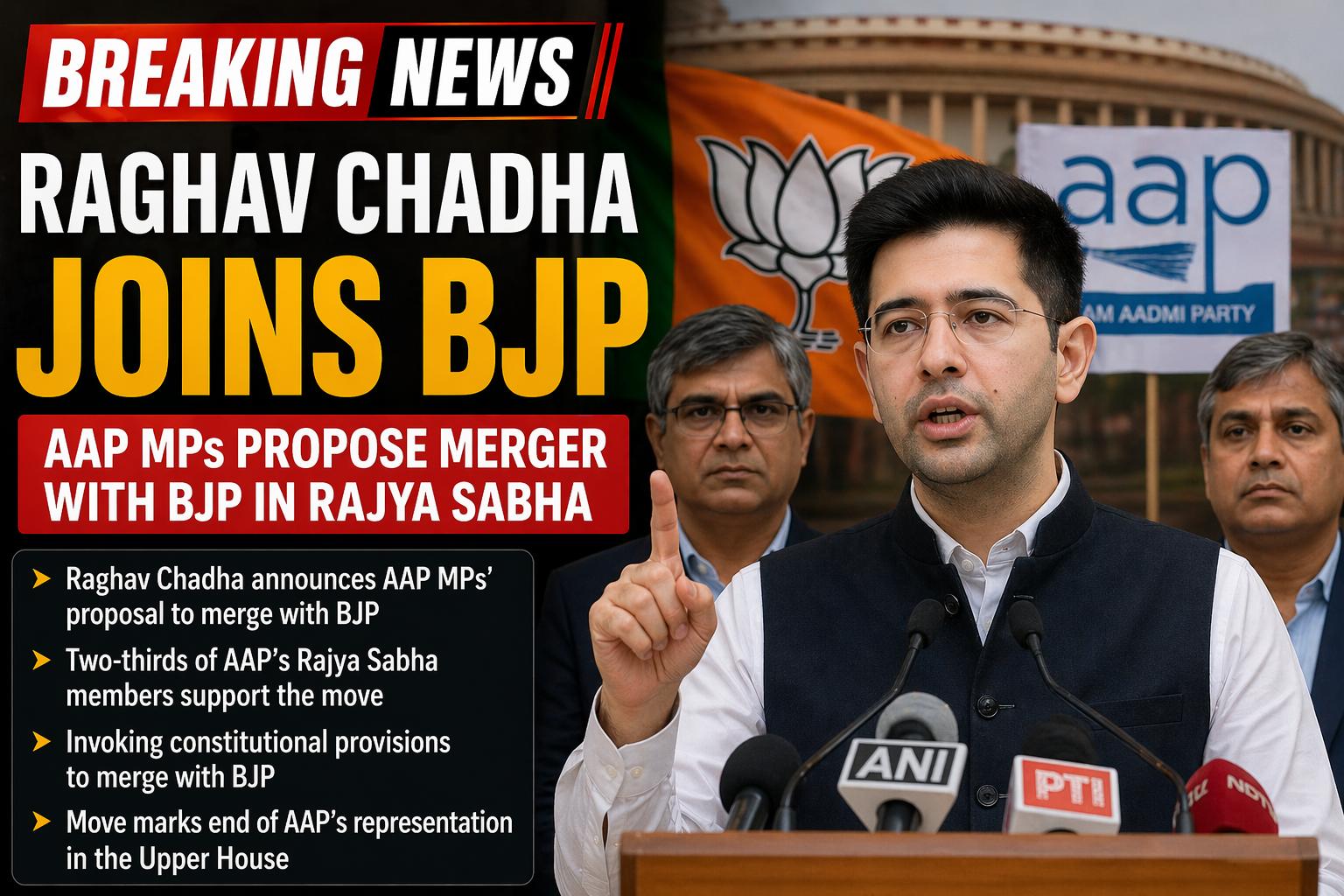
Raghav Chadha Joins BJP, Sparks Major Shift In Rajya Sabha Numbers
A major political shift unfolded in New Delhi on Friday, April 24, 2026, as Raghav Chadha, along with fellow Rajya Sabha MPs Ashok Mittal and Sandeep Pathak, officially joined the Bharatiya Janata Party after resigning from the Aam Aadmi Party. The leaders were inducted into the BJP in the presence of party chief Nitin Nabin at the party office in Delhi, where they were welcomed with bouquets and greeted senior party members. Earlier in the day, Chadha, aged 37, announced his resignation from AAP along with six other MPs, stating their intention to merge with the BJP by invoking constitutional provisions that allow such a move when two-thirds of a party’s members agree. The group submitted a formal letter along with required documents to Rajya Sabha Chairman C. P. Radhakrishnan. With seven out of ten AAP MPs in the Rajya Sabha switching sides, the anti-defection law is unlikely to apply. As a result, only three AAP MPs—Sanjay Singh, Sant Balbir Singh Seechewal, and N. D. Gupta—remain in the Upper House. Chadha explained that his decision was driven by growing dissatisfaction with the party’s direction, stating that he increasingly felt like “the right person in the wrong party.” His exit comes after a series of developments, including his removal as Deputy Leader in the Rajya Sabha and replacement by Ashok Mittal. Reports also highlighted his absence from key opposition actions, refusal to sign certain notices, and exclusion from the party’s star campaigner list in multiple state elections. Meanwhile, Sandeep Pathak expressed emotional difficulty over leaving the party after a decade-long association. The move has triggered sharp reactions from AAP leadership. Senior leader Sanjay Singh accused the BJP of orchestrating defections through what he described as “Operation Lotus,” alleging misuse of state machinery and investigative agencies to weaken opposition parties. Arvind Kejriwal also reacted, stating that the development represents a betrayal of public trust, particularly ahead of the Punjab elections scheduled for early 2027, where AAP currently holds power. This high-profile political realignment is expected to significantly alter the balance of power in the Rajya Sabha, strengthening the BJP’s position while dealing a major setback to AAP’s parliamentary presence.
Raghav Chadha Joins BJP, Sparks Major Shift In Rajya Sabha Numbers
A major political shift unfolded in New Delhi on Friday, April 24, 2026, as Raghav Chadha, along with fellow Rajya Sabha MPs Ashok Mittal and Sandeep Pathak, officially joined the Bharatiya Janata Party after resigning from the Aam Aadmi Party. The leaders were inducted into the BJP in the presence of party chief Nitin Nabin at the party office in Delhi, where they were welcomed with bouquets and greeted senior party members. Earlier in the day, Chadha, aged 37, announced his resignation from AAP along with six other MPs, stating their intention to merge with the BJP by invoking constitutional provisions that allow such a move when two-thirds of a party’s members agree. The group submitted a formal letter along with required documents to Rajya Sabha Chairman C. P. Radhakrishnan. With seven out of ten AAP MPs in the Rajya Sabha switching sides, the anti-defection law is unlikely to apply. As a result, only three AAP MPs—Sanjay Singh, Sant Balbir Singh Seechewal, and N. D. Gupta—remain in the Upper House. Chadha explained that his decision was driven by growing dissatisfaction with the party’s direction, stating that he increasingly felt like “the right person in the wrong party.” His exit comes after a series of developments, including his removal as Deputy Leader in the Rajya Sabha and replacement by Ashok Mittal. Reports also highlighted his absence from key opposition actions, refusal to sign certain notices, and exclusion from the party’s star campaigner list in multiple state elections. Meanwhile, Sandeep Pathak expressed emotional difficulty over leaving the party after a decade-long association. The move has triggered sharp reactions from AAP leadership. Senior leader Sanjay Singh accused the BJP of orchestrating defections through what he described as “Operation Lotus,” alleging misuse of state machinery and investigative agencies to weaken opposition parties. Arvind Kejriwal also reacted, stating that the development represents a betrayal of public trust, particularly ahead of the Punjab elections scheduled for early 2027, where AAP currently holds power. This high-profile political realignment is expected to significantly alter the balance of power in the Rajya Sabha, strengthening the BJP’s position while dealing a major setback to AAP’s parliamentary presence.
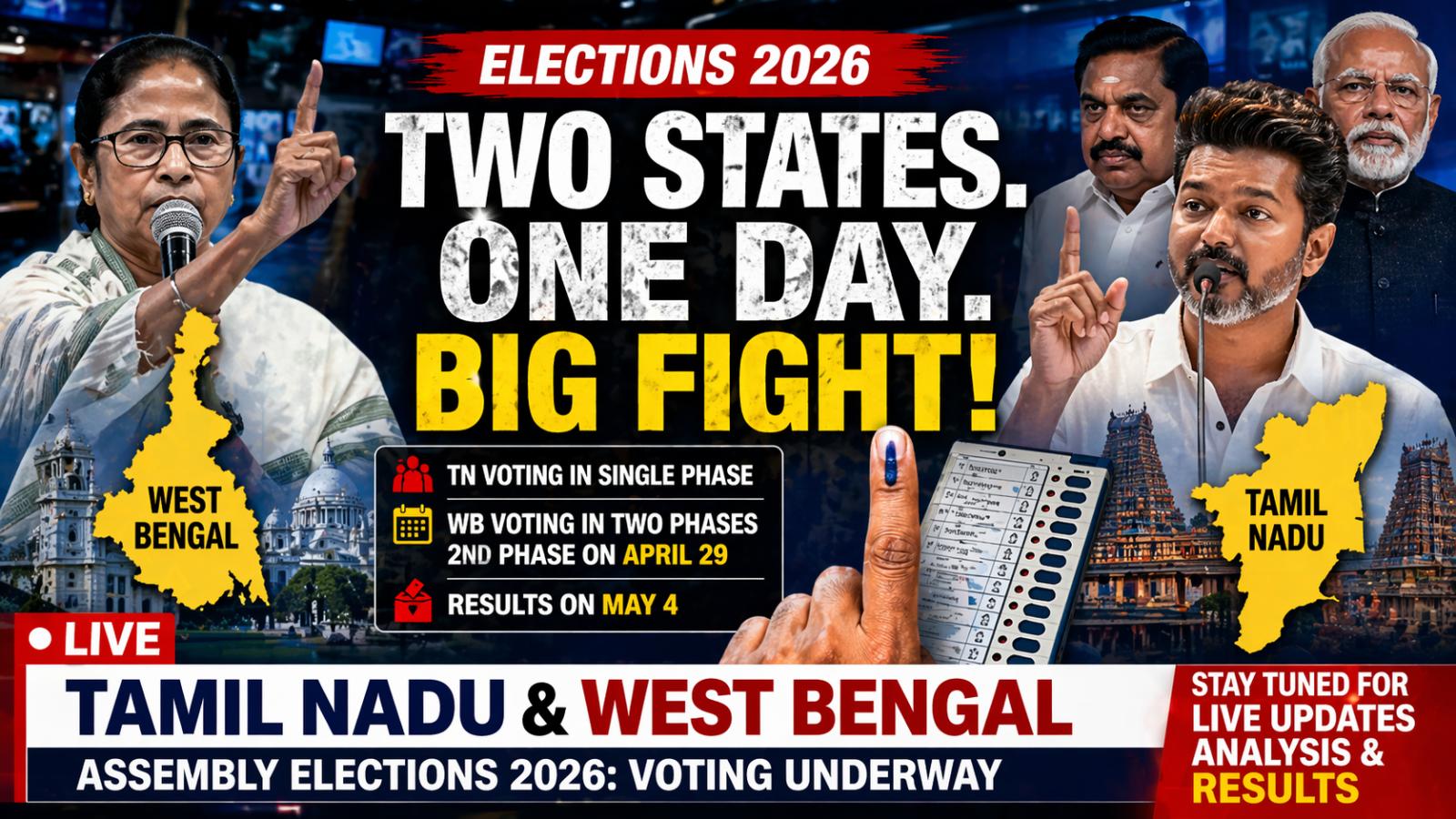
High-Stakes Voting Begins in Tamil Nadu and West Bengal
Voting is currently underway in two of India’s most politically significant states, Tamil Nadu and West Bengal, as part of the 2026 Assembly elections. Polling began today at 7:00 am and is scheduled to continue until 6:00 pm, following early mock polling exercises conducted at select locations such as Chennai and Siliguri to ensure the readiness of voting systems. Officials have reported smooth initial operations, with voter turnout expected to build steadily throughout the day. The electoral process differs between the two states. Tamil Nadu is conducting voting in a single phase, meaning voters across the state will determine the next government simultaneously. In contrast, West Bengal is following a two-phase format, with the second phase scheduled for April 29. Results for both states, along with ongoing bypolls in other regions, will be declared on May 4. In Tamil Nadu, the contest is primarily between the DMK-led Secular Progressive Alliance and the NDA bloc led by AIADMK. The DMK alliance includes Congress, DMDK, and VCK, while AIADMK is aligned with BJP and PMK. However, this election cycle introduces a notable shift with the political entry of Vijay and his party TVK. His debut adds a third dimension to what has traditionally been a two-front contest, potentially altering voting patterns and outcomes. West Bengal presents an equally intense political environment. The ruling Trinamool Congress, led by Chief Minister Mamata Banerjee, is seeking a fourth consecutive term in power. The BJP, which significantly expanded its presence in the previous election by securing 77 seats, is aiming to build on that momentum and challenge the incumbent leadership more aggressively. Beyond these two major states, bypolls are also being conducted in Gujarat’s Umreth and Maharashtra’s Baramati and Rahuri constituencies. These results will be announced alongside the main election outcomes, adding further political significance to the day’s voting activity.
High-Stakes Voting Begins in Tamil Nadu and West Bengal
Voting is currently underway in two of India’s most politically significant states, Tamil Nadu and West Bengal, as part of the 2026 Assembly elections. Polling began today at 7:00 am and is scheduled to continue until 6:00 pm, following early mock polling exercises conducted at select locations such as Chennai and Siliguri to ensure the readiness of voting systems. Officials have reported smooth initial operations, with voter turnout expected to build steadily throughout the day. The electoral process differs between the two states. Tamil Nadu is conducting voting in a single phase, meaning voters across the state will determine the next government simultaneously. In contrast, West Bengal is following a two-phase format, with the second phase scheduled for April 29. Results for both states, along with ongoing bypolls in other regions, will be declared on May 4. In Tamil Nadu, the contest is primarily between the DMK-led Secular Progressive Alliance and the NDA bloc led by AIADMK. The DMK alliance includes Congress, DMDK, and VCK, while AIADMK is aligned with BJP and PMK. However, this election cycle introduces a notable shift with the political entry of Vijay and his party TVK. His debut adds a third dimension to what has traditionally been a two-front contest, potentially altering voting patterns and outcomes. West Bengal presents an equally intense political environment. The ruling Trinamool Congress, led by Chief Minister Mamata Banerjee, is seeking a fourth consecutive term in power. The BJP, which significantly expanded its presence in the previous election by securing 77 seats, is aiming to build on that momentum and challenge the incumbent leadership more aggressively. Beyond these two major states, bypolls are also being conducted in Gujarat’s Umreth and Maharashtra’s Baramati and Rahuri constituencies. These results will be announced alongside the main election outcomes, adding further political significance to the day’s voting activity.
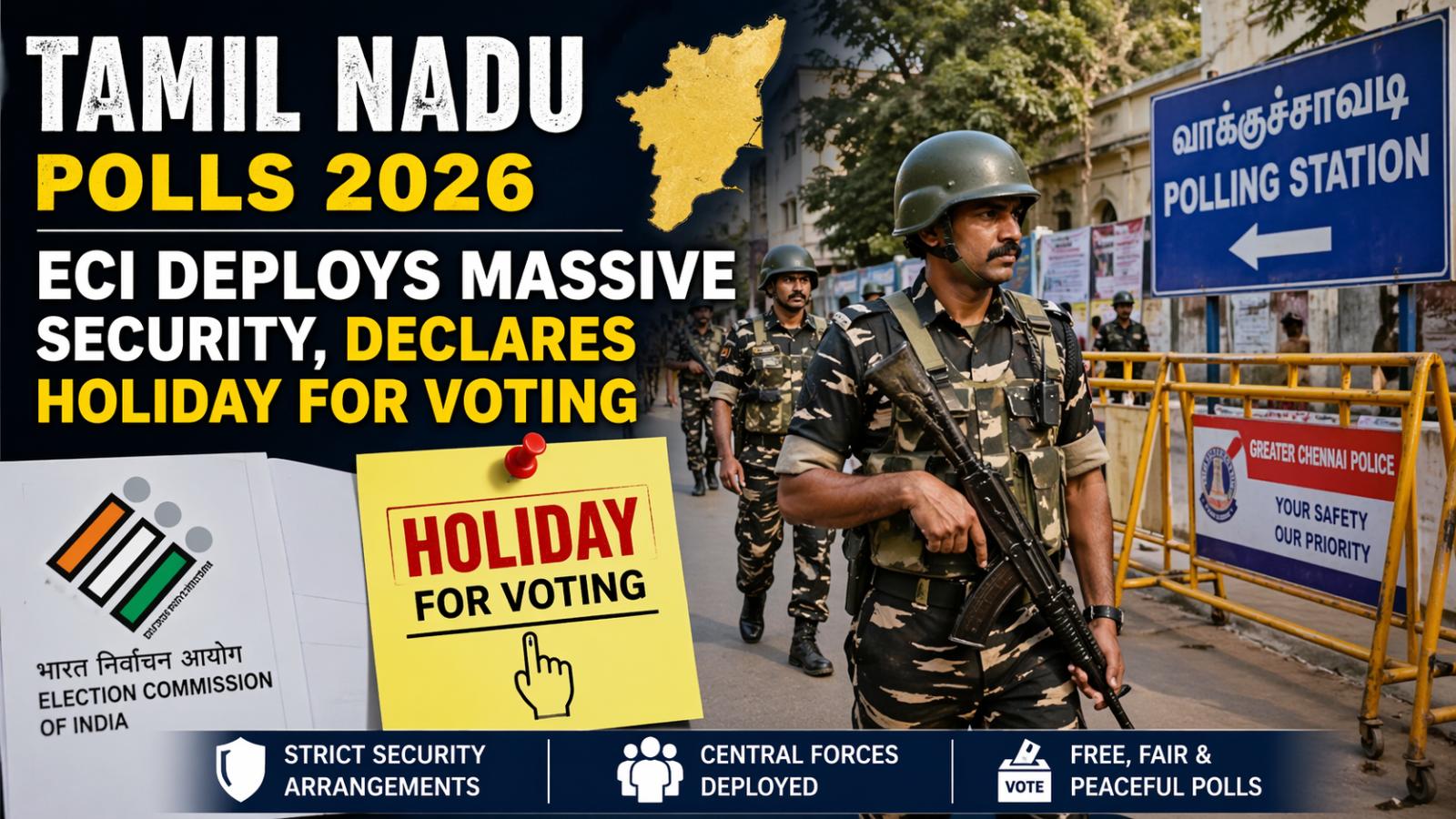
Tamil Nadu Polls 2026: ECI Deploys Massive Security, Declares Holiday For Voting
The Election Commission of India has completed extensive preparations for the Tamil Nadu Assembly elections scheduled for April 23, ensuring strict monitoring and security across the state. Surveillance teams have been deployed in all constituencies and are working round the clock to maintain law and order. Authorities have seized cash, liquor, narcotics and gift items worth Rs 1212.74 crore during the enforcement drive, although a portion of the seized cash was later returned after verification. The final electoral rolls show over 5.73 crore voters, including more than 2.93 crore women, who are expected to cast their votes at over 75,000 polling stations across the state. A public holiday has been declared on polling day to encourage voter participation. Employers have been directed to grant leave even to shift-based and casual workers, including those working outside their constituencies, so they can exercise their franchise. Liquor outlets across the state and bordering regions will remain closed from April 21 to April 23, and again on the counting day, May 4, as part of measures to ensure free and fair elections. To strengthen election integrity, over 7,000 micro observers have been deployed at sensitive polling stations. These teams will function under the supervision of general, police and expenditure observers appointed for all 234 constituencies. Additionally, nearly 84,000 police personnel and more than 40,000 non-police staff have been assigned election duties. The Union Home Ministry has also provided 300 companies of CAPF personnel to enhance security coverage across districts. Officials have emphasized that these arrangements are aimed at ensuring a transparent and peaceful voting process. With strict enforcement, widespread monitoring and administrative readiness, authorities expect a smooth polling day with strong voter participation across Tamil Nadu.
Tamil Nadu Polls 2026: ECI Deploys Massive Security, Declares Holiday For Voting
The Election Commission of India has completed extensive preparations for the Tamil Nadu Assembly elections scheduled for April 23, ensuring strict monitoring and security across the state. Surveillance teams have been deployed in all constituencies and are working round the clock to maintain law and order. Authorities have seized cash, liquor, narcotics and gift items worth Rs 1212.74 crore during the enforcement drive, although a portion of the seized cash was later returned after verification. The final electoral rolls show over 5.73 crore voters, including more than 2.93 crore women, who are expected to cast their votes at over 75,000 polling stations across the state. A public holiday has been declared on polling day to encourage voter participation. Employers have been directed to grant leave even to shift-based and casual workers, including those working outside their constituencies, so they can exercise their franchise. Liquor outlets across the state and bordering regions will remain closed from April 21 to April 23, and again on the counting day, May 4, as part of measures to ensure free and fair elections. To strengthen election integrity, over 7,000 micro observers have been deployed at sensitive polling stations. These teams will function under the supervision of general, police and expenditure observers appointed for all 234 constituencies. Additionally, nearly 84,000 police personnel and more than 40,000 non-police staff have been assigned election duties. The Union Home Ministry has also provided 300 companies of CAPF personnel to enhance security coverage across districts. Officials have emphasized that these arrangements are aimed at ensuring a transparent and peaceful voting process. With strict enforcement, widespread monitoring and administrative readiness, authorities expect a smooth polling day with strong voter participation across Tamil Nadu.
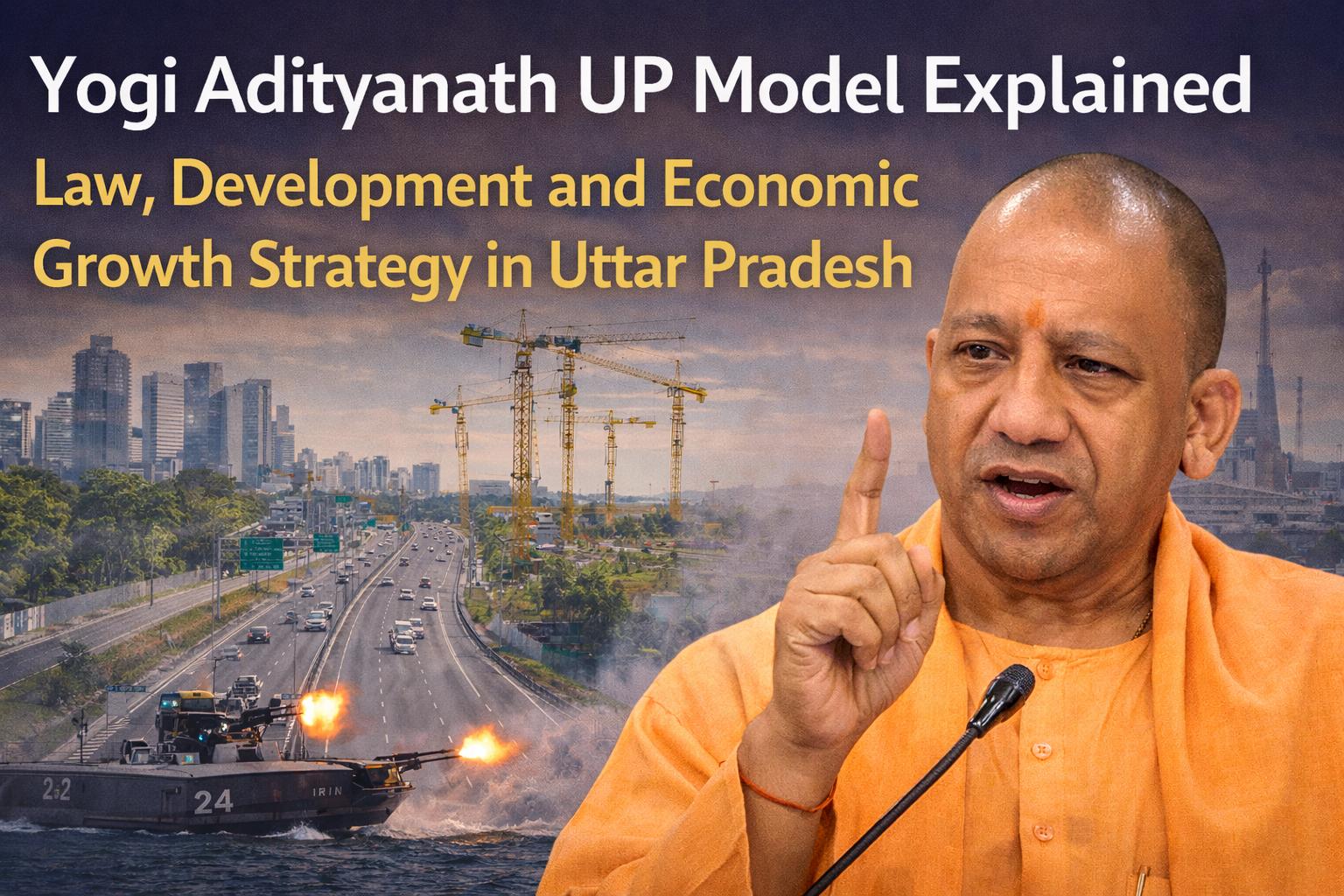
Yogi Adityanath UP Model Explained: Law, Development and Economic Growth Strategy in Uttar Pradesh
Yogi Adityanath UP model explained: A transformation strategy for India’s largest state The Yogi Adityanath UP model has emerged as a major topic in India’s political and economic discussions. Focused on law and order, infrastructure expansion, and investment growth, the model aims to transform Uttar Pradesh into a key economic hub. Since taking office, Yogi Adityanath has posi
Yogi Adityanath UP Model Explained: Law, Development and Economic Growth Strategy in Uttar Pradesh
Yogi Adityanath UP model explained: A transformation strategy for India’s largest state The Yogi Adityanath UP model has emerged as a major topic in India’s political and economic discussions. Focused on law and order, infrastructure expansion, and investment growth, the model aims to transform Uttar Pradesh into a key economic hub. Since taking office, Yogi Adityanath has posi
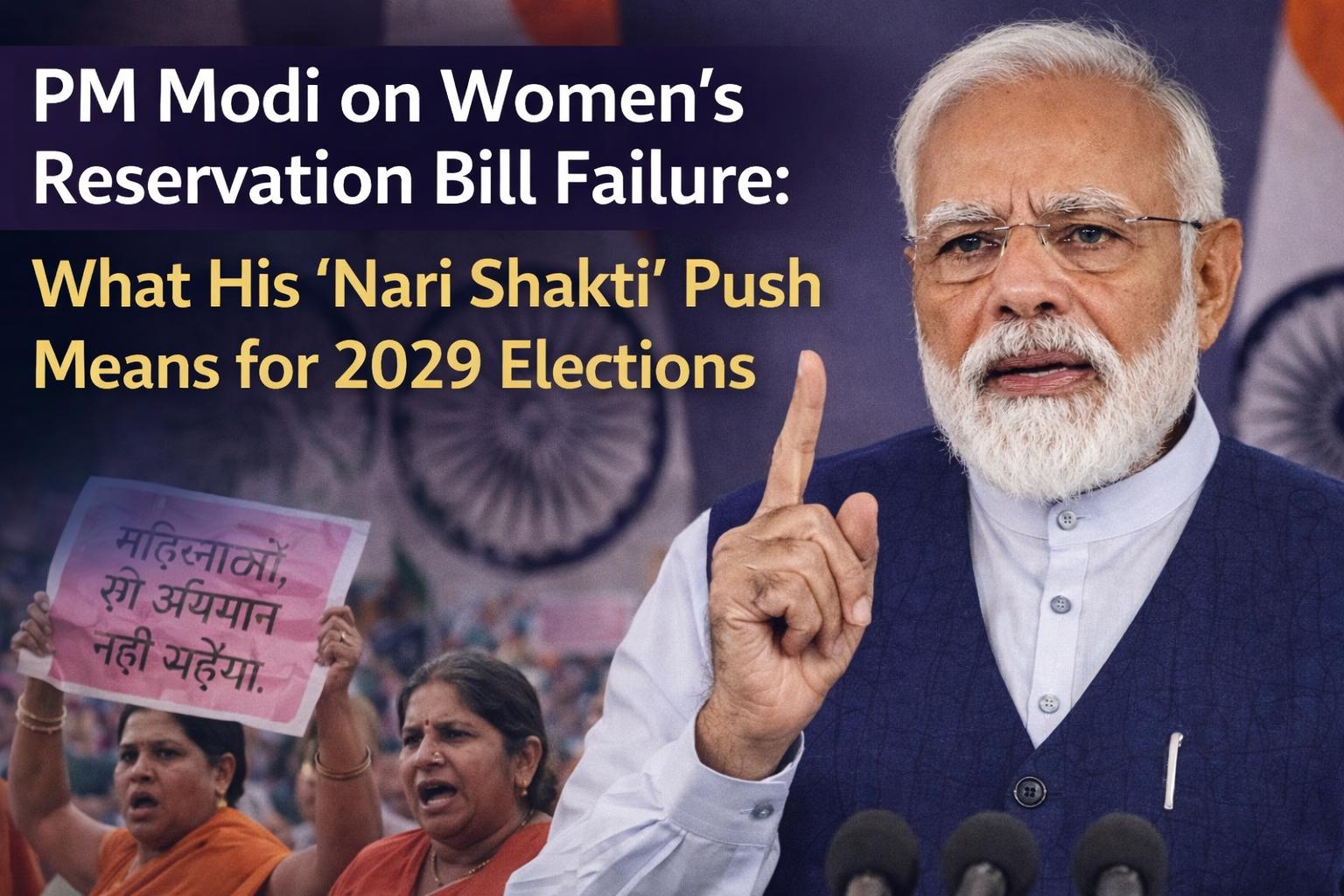
PM Modi on women’s reservation bill failure: What his ‘Nari Shakti’ push means for 2029 elections
PM Modi women reservation bill speech highlights ‘Nari Shakti’ push Prime Minister Narendra Modi’s women reservation bill speech on Saturday, April 18, 2026, has brought renewed focus on women’s representation in India’s political system. Calling the Nari Shakti initiative a “great yajna,” Modi emphasized that empowering women remains a central goal despite the recen
PM Modi on women’s reservation bill failure: What his ‘Nari Shakti’ push means for 2029 elections
PM Modi women reservation bill speech highlights ‘Nari Shakti’ push Prime Minister Narendra Modi’s women reservation bill speech on Saturday, April 18, 2026, has brought renewed focus on women’s representation in India’s political system. Calling the Nari Shakti initiative a “great yajna,” Modi emphasized that empowering women remains a central goal despite the recen
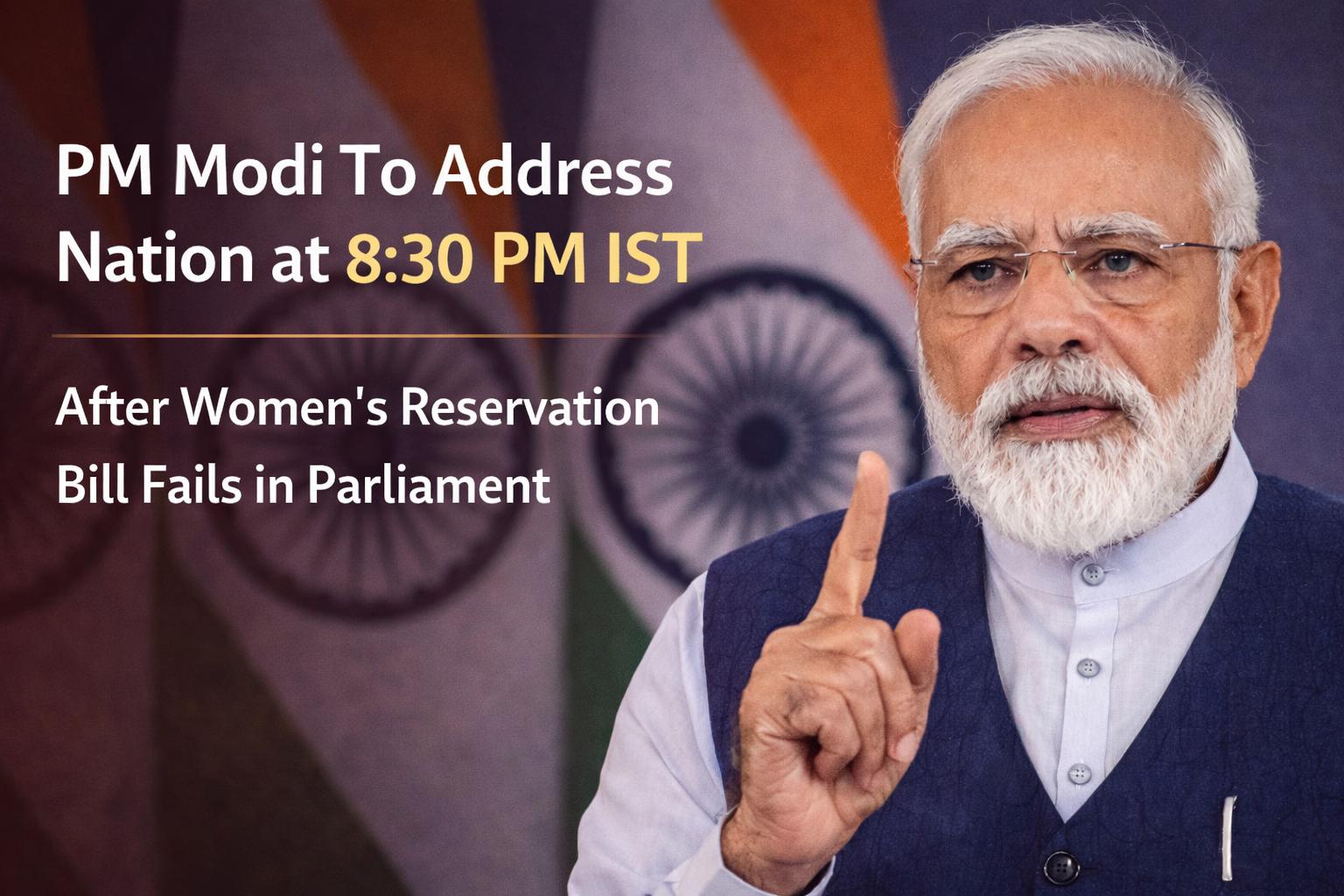
PM Modi will address the nation at 8:30 PM IST on Tuesday, April 18, 2026, fueling speculation after the women’s reservation bill failed in Parliament amid political tensions.
Prime Minister Narendra Modi is set to deliver a national address at 8:30 PM, prompting widespread speculation about the topic. The announcement comes at a politically sensitive moment, just a day after the women’s reservation bill failed to secure approval in Parliament. Why PM Modi is addressing the nation today While officials have not confirmed the subject of the speech, the timing has drawn attention. The Prime Minister reportedly di
PM Modi will address the nation at 8:30 PM IST on Tuesday, April 18, 2026, fueling speculation after the women’s reservation bill failed in Parliament amid political tensions.
Prime Minister Narendra Modi is set to deliver a national address at 8:30 PM, prompting widespread speculation about the topic. The announcement comes at a politically sensitive moment, just a day after the women’s reservation bill failed to secure approval in Parliament. Why PM Modi is addressing the nation today While officials have not confirmed the subject of the speech, the timing has drawn attention. The Prime Minister reportedly di
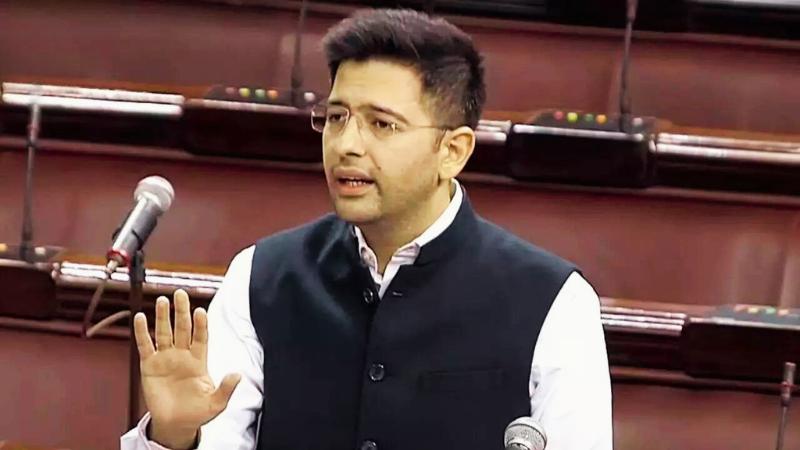
Raghav Chadha Targets AAP Leadership In Rajya Sabha Over Absence Row
Raghav Chadha sparked fresh political buzz after taking a pointed dig at his own party, Aam Aadmi Party, during a Rajya Sabha session. Highlighting the absence of senior leadership, Chadha remarked that neither the party’s leader nor the newly appointed deputy leader was present in the House, even as he himself attended despite recently being removed from the deputy leader position. In h
Raghav Chadha Targets AAP Leadership In Rajya Sabha Over Absence Row
Raghav Chadha sparked fresh political buzz after taking a pointed dig at his own party, Aam Aadmi Party, during a Rajya Sabha session. Highlighting the absence of senior leadership, Chadha remarked that neither the party’s leader nor the newly appointed deputy leader was present in the House, even as he himself attended despite recently being removed from the deputy leader position. In h
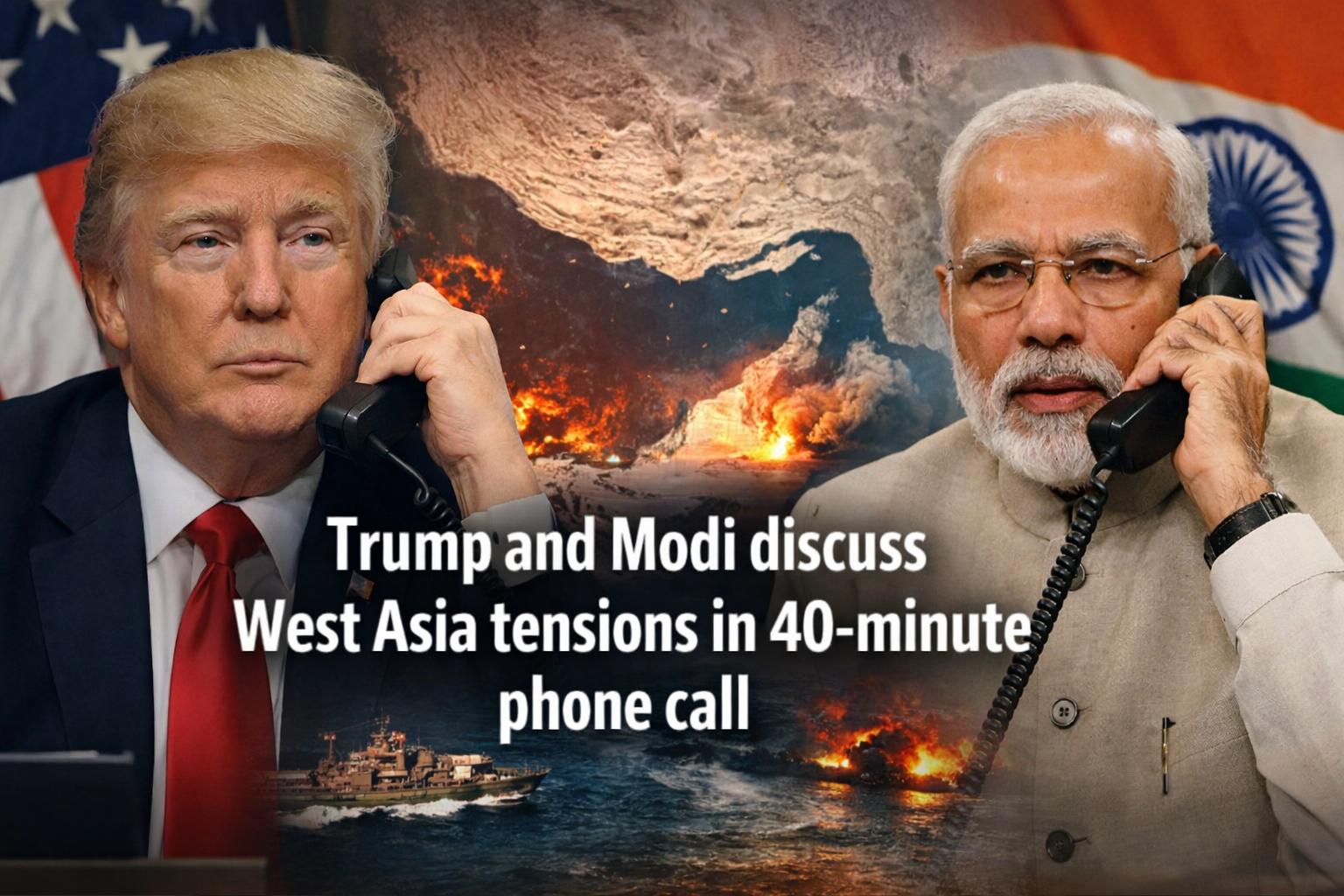
India-US leaders review strategic ties amid Strait of Hormuz concerns
United States President Donald Trump on Thursday said he had a “very good conversation” with Indian Prime Minister Narendra Modi, describing the discussion as constructive and reaffirming strong ties between the two nations. The leaders spoke for approximately 40 minutes, focusing on regional security
India-US leaders review strategic ties amid Strait of Hormuz concerns
United States President Donald Trump on Thursday said he had a “very good conversation” with Indian Prime Minister Narendra Modi, describing the discussion as constructive and reaffirming strong ties between the two nations. The leaders spoke for approximately 40 minutes, focusing on regional security
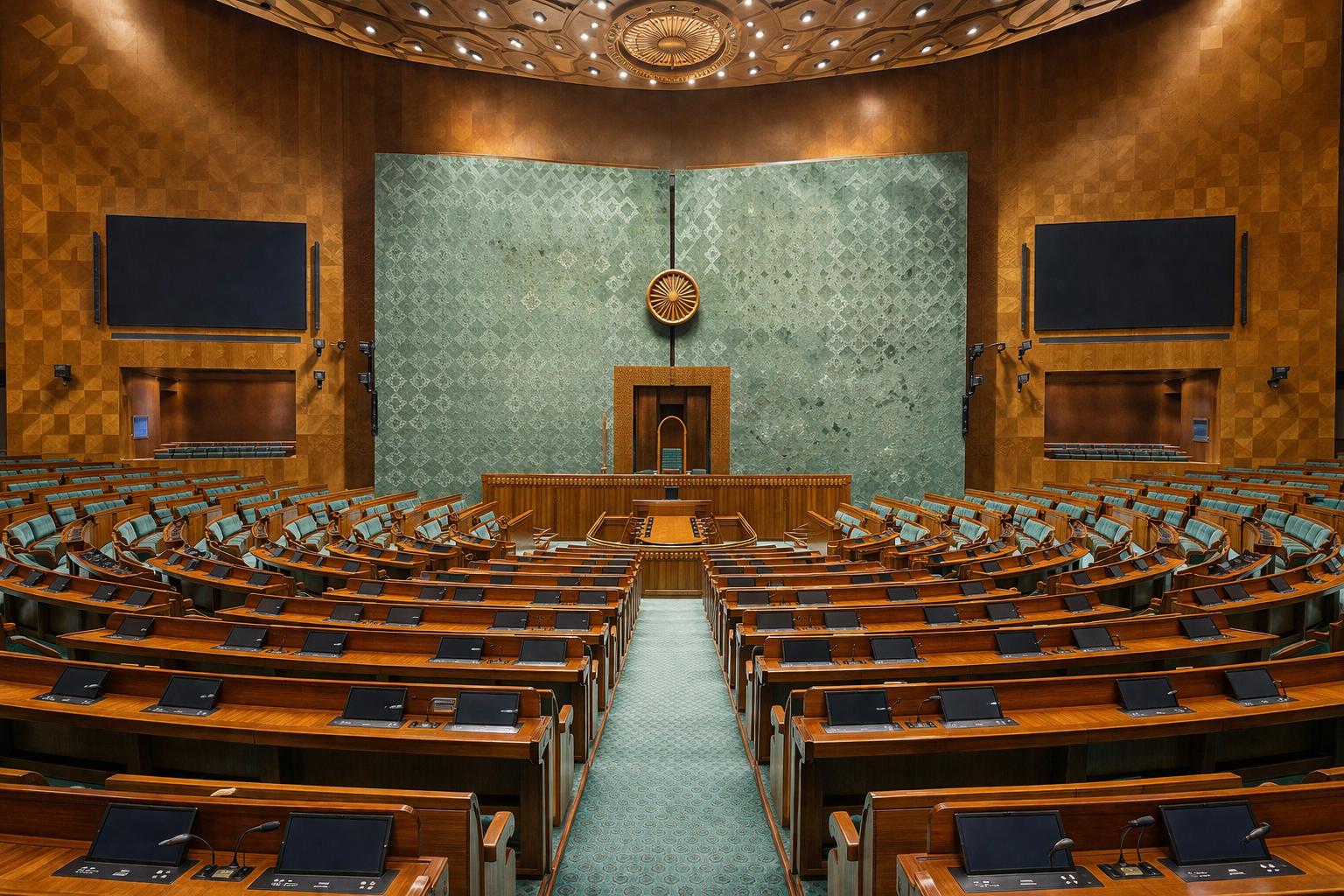
Parliament Live: Opposition Targets Delimitation Plan Amid Women’s Quota Debate
India’s Parliament witnessed intense exchanges and high political drama during the special session as debates around the delimitation bill and women’s reservation took centre stage. The discussions brought out sharp ideological differences between the ruling government and the Opposition, with leaders raising concerns about fairness, representation, and timing of reforms. Congress leader Karti Chidambaram sparked fresh controversy by likening the delimitation exercise to an “i
Parliament Live: Opposition Targets Delimitation Plan Amid Women’s Quota Debate
India’s Parliament witnessed intense exchanges and high political drama during the special session as debates around the delimitation bill and women’s reservation took centre stage. The discussions brought out sharp ideological differences between the ruling government and the Opposition, with leaders raising concerns about fairness, representation, and timing of reforms. Congress leader Karti Chidambaram sparked fresh controversy by likening the delimitation exercise to an “i
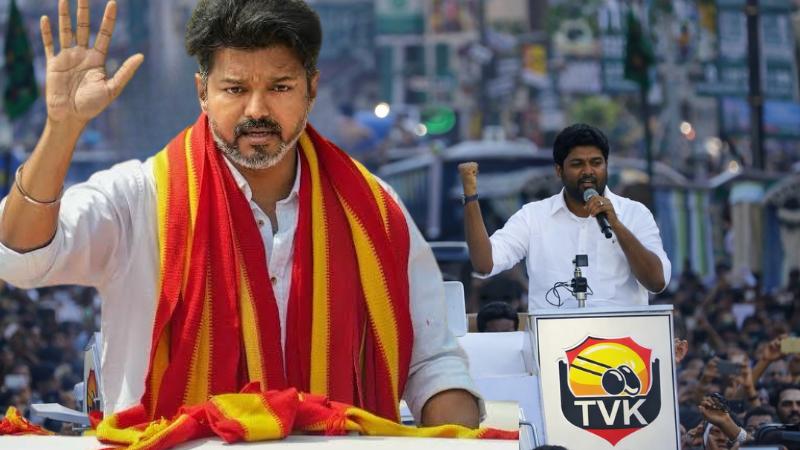
Tamil Nadu Polls 2026: TVK Uses Hologram Vijay to Reach Every Voter
In a major technological twist to election campaigning, actor-turned-politician Vijay and his party Tamizhaga Vetri Kazhagam have introduced hologram-based outreach to connect with voters across Tamil Nadu. With elections approaching, the party is using life-sized 3D projections of Vijay to overcome the ch
Tamil Nadu Polls 2026: TVK Uses Hologram Vijay to Reach Every Voter
In a major technological twist to election campaigning, actor-turned-politician Vijay and his party Tamizhaga Vetri Kazhagam have introduced hologram-based outreach to connect with voters across Tamil Nadu. With elections approaching, the party is using life-sized 3D projections of Vijay to overcome the ch










