Oil Markets Fall After US-Iran Interim Agreement
Global oil prices slipped in early trading on Thursday,June 18,2026 following the announcement of an interim agreement between the United States and Iran aimed at ending the conflict in the Middle East. The development has eased immediate concerns over supply disruptions through one of the world’s most critical energy corridors, the Strait of Hormuz.
Oil Markets Fall After US-Iran Interim Agreement
Global oil prices slipped in early trading on Thursday,June 18,2026 following the announcement of an interim agreement between the United States and Iran aimed at ending the conflict in the Middle East. The development has eased immediate concerns over supply disruptions through one of the world’s most critical energy corridors, the Strait of Hormuz.
US-Iran Memorandum Sets Framework to End Conflict
A new US-Iran memorandum of understanding aimed at ending the Middle East conflict will lead to the immediate reopening of the Strait of Hormuz and the lifting of the US blockade on Iranian ports, according to Pakistan Prime Minister Shehbaz Sharif. The announcement was made in a post on social media, where he confirmed that the agreement had entered into force with immediate effect.
Sharif Says Agreement Signed at Highest Level
Sharif stated that the memorandum was signed by the presidents of both the United States and Iran and formally endorsed through mediation efforts led by Pakistan. He described the development as a significant diplomatic breakthrough, emphasizing that both sides had committed to resolving tensions through negotiation rather than continued military confrontation.
According to Sharif, the agreement outlines immediate steps that include reopening critical maritime routes and easing restrictions on Iranian shipping access. He added that the signing reflects a mutual intent to stabilize regional security and restore trade flows through key waterways.
Role of Mediation and International Support
The Pakistani prime minister also highlighted the role of mediators and international stakeholders involved in facilitating the agreement. He thanked officials from both negotiating teams, noting contributions from US political figures as well as Iranian leadership representatives involved in the talks. Qatar is also expected to support follow-up diplomatic processes as implementation discussions progress.
Sharif further confirmed that a formal ceremony is planned in Switzerland, where participating parties will mark the agreement and initiate technical-level discussions on its execution. The meeting is expected to focus on practical mechanisms for reopening maritime routes and ensuring compliance with the memorandum’s provisions.
Strait of Hormuz Central to Agreement
At the center of the agreement is the Strait of Hormuz, one of the world’s most strategic energy corridors. The memorandum reportedly includes provisions ensuring its immediate reopening, which would restore oil and commercial shipping movement across the Gulf region. The US is also expected to begin lifting its blockade on Iranian ports in line with the phased implementation of the deal.
Diplomatic Phase of Conflict Resolution Begins
Officials involved in the process described the agreement as the beginning of a broader diplomatic phase aimed at reducing tensions and preventing future escalation. The next stage will focus on technical implementation, verification measures, and continued dialogue between the two sides.
While details of enforcement and long-term guarantees remain limited, the memorandum signals a shift from military confrontation toward structured negotiation, with regional and international actors playing a key role in maintaining stability.
US-Iran Memorandum Sets Framework to End Conflict
A new US-Iran memorandum of understanding aimed at ending the Middle East conflict will lead to the immediate reopening of the Strait of Hormuz and the lifting of the US blockade on Iranian ports, according to Pakistan Prime Minister Shehbaz Sharif. The announcement was made in a post on social media, where he confirmed that the agreement had entered into force with immediate effect.
Sharif Says Agreement Signed at Highest Level
Sharif stated that the memorandum was signed by the presidents of both the United States and Iran and formally endorsed through mediation efforts led by Pakistan. He described the development as a significant diplomatic breakthrough, emphasizing that both sides had committed to resolving tensions through negotiation rather than continued military confrontation.
According to Sharif, the agreement outlines immediate steps that include reopening critical maritime routes and easing restrictions on Iranian shipping access. He added that the signing reflects a mutual intent to stabilize regional security and restore trade flows through key waterways.
Role of Mediation and International Support
The Pakistani prime minister also highlighted the role of mediators and international stakeholders involved in facilitating the agreement. He thanked officials from both negotiating teams, noting contributions from US political figures as well as Iranian leadership representatives involved in the talks. Qatar is also expected to support follow-up diplomatic processes as implementation discussions progress.
Sharif further confirmed that a formal ceremony is planned in Switzerland, where participating parties will mark the agreement and initiate technical-level discussions on its execution. The meeting is expected to focus on practical mechanisms for reopening maritime routes and ensuring compliance with the memorandum’s provisions.
Strait of Hormuz Central to Agreement
At the center of the agreement is the Strait of Hormuz, one of the world’s most strategic energy corridors. The memorandum reportedly includes provisions ensuring its immediate reopening, which would restore oil and commercial shipping movement across the Gulf region. The US is also expected to begin lifting its blockade on Iranian ports in line with the phased implementation of the deal.
Diplomatic Phase of Conflict Resolution Begins
Officials involved in the process described the agreement as the beginning of a broader diplomatic phase aimed at reducing tensions and preventing future escalation. The next stage will focus on technical implementation, verification measures, and continued dialogue between the two sides.
While details of enforcement and long-term guarantees remain limited, the memorandum signals a shift from military confrontation toward structured negotiation, with regional and international actors playing a key role in maintaining stability.
US-Iran Agreement Marks Shift Toward Diplomatic Resolution
US President Donald Trump and Iranian President Masoud Pezeshkian have signed a memorandum of understanding aimed at ending months of conflict between Washington and Tehran. The agreement is designed to ease tensions across the Middle East and establish a structured pathway toward renewed diplomatic engagement between the two nations.
US-Iran Agreement Marks Shift Toward Diplomatic Resolution
US President Donald Trump and Iranian President Masoud Pezeshkian have signed a memorandum of understanding aimed at ending months of conflict between Washington and Tehran. The agreement is designed to ease tensions across the Middle East and establish a structured pathway toward renewed diplomatic engagement between the two nations.
Trump Signals Imminent US–Iran Agreement
US President Donald Trump has stated that Washington and Tehran could finalize and sign an agreement within the next 48 hours, signaling that negotiations aimed at ending nearly four months of conflict are approaching a critical conclusion. Speaking to reporters in Paris during the G7 summit in France, Trump said the deal could be signed “tomorrow, maybe the next
Trump Signals Imminent US–Iran Agreement
US President Donald Trump has stated that Washington and Tehran could finalize and sign an agreement within the next 48 hours, signaling that negotiations aimed at ending nearly four months of conflict are approaching a critical conclusion. Speaking to reporters in Paris during the G7 summit in France, Trump said the deal could be signed “tomorrow, maybe the next
Iran Reaffirms Post-Deal Position on Strait of Hormuz
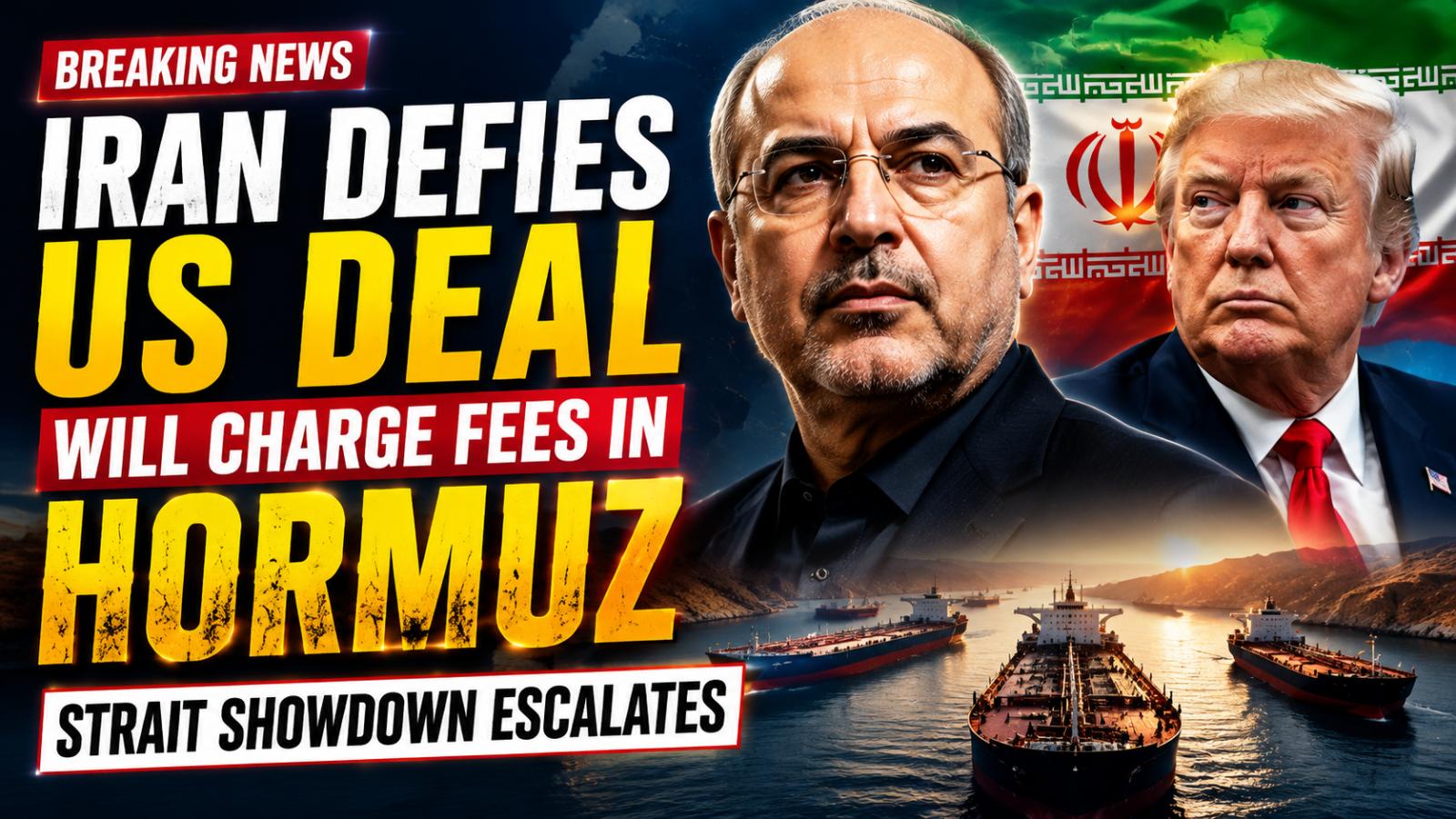
Iran has indicated that it will proceed with plans to impose charges on vessels passing through the Strait of Hormuz after the 60-day fee-free period outlined in its memorandum of understanding with the United States. The announcement comes amid growing uncertainty over the interpretation of the recently signed agreement aimed at stabilising maritime mov
Iran Reaffirms Post-Deal Position on Strait of Hormuz
Iran has indicated that it will proceed with plans to impose charges on vessels passing through the Strait of Hormuz after the 60-day fee-free period outlined in its memorandum of understanding with the United States. The announcement comes amid growing uncertainty over the interpretation of the recently signed agreement aimed at stabilising maritime mov
A draft 14-point US-Iran agreement would introduce an immediate ceasefire, restore commercial shipping and temporarily waive sanctions affecting Iranian oil exports while negotiations toward a final settlement continue.
Reuters published the draft on Wednesday, June 17, 2026, but reported that the United States had not publicly released the complete official text. The document establishes a proposed 60-day negotiating period and postpones several difficult nuclear and sanctions ques
A draft 14-point US-Iran agreement would introduce an immediate ceasefire, restore commercial shipping and temporarily waive sanctions affecting Iranian oil exports while negotiations toward a final settlement continue.
Reuters published the draft on Wednesday, June 17, 2026, but reported that the United States had not publicly released the complete official text. The document establishes a proposed 60-day negotiating period and postpones several difficult nuclear and sanctions ques
US Intelligence Flags Iran’s Strategic Leverage in Strait of Hormuz
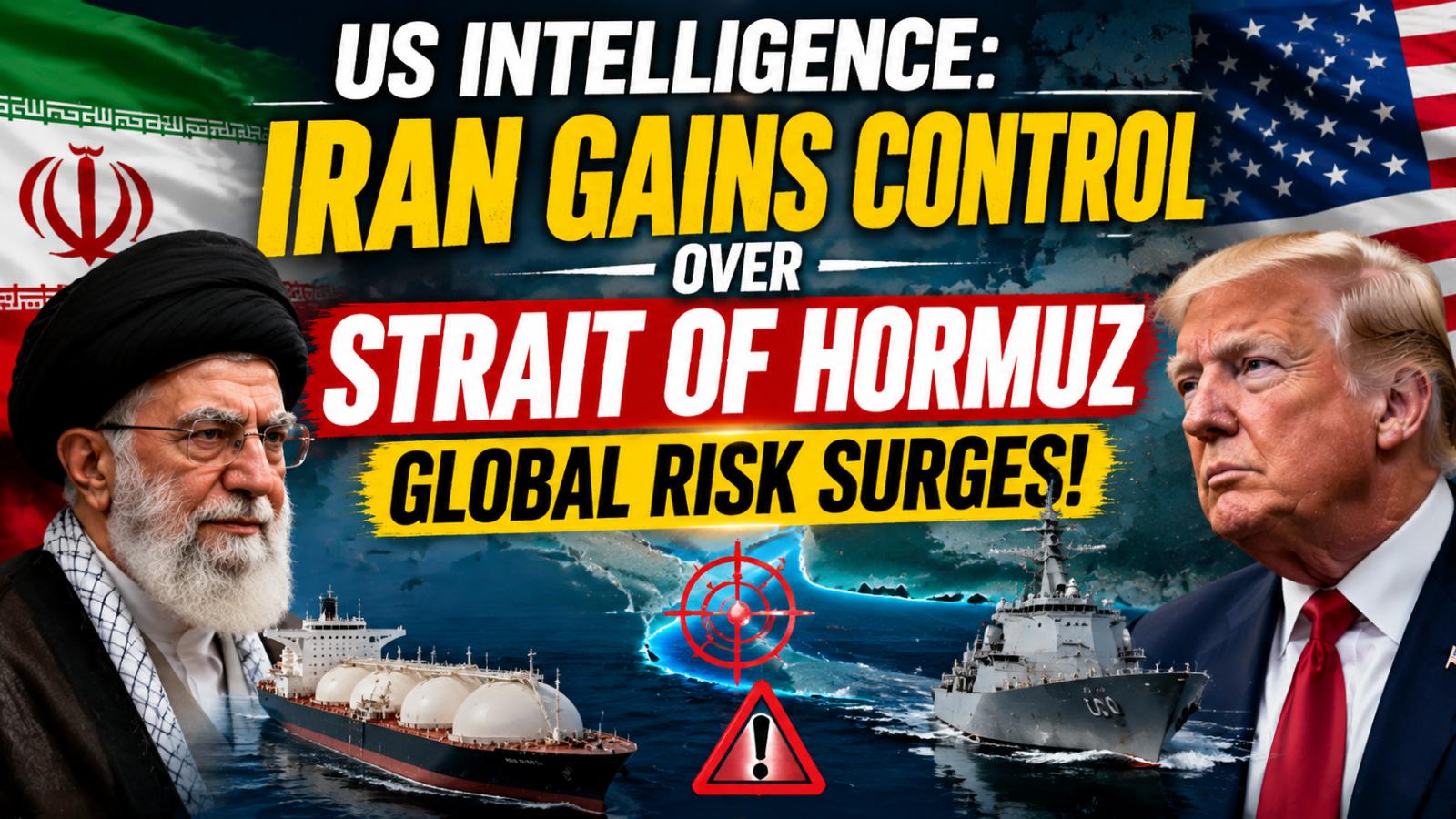
US intelligence agencies have assessed that Iran has gained significant leverage over the Strait of Hormuz following the recent conflict involving the United States and Israel, according to reports citing multiple sources. The assessment suggests that Tehran now holds the capability to disrupt or restrict movement through one of the world??
US Intelligence Flags Iran’s Strategic Leverage in Strait of Hormuz
US intelligence agencies have assessed that Iran has gained significant leverage over the Strait of Hormuz following the recent conflict involving the United States and Israel, according to reports citing multiple sources. The assessment suggests that Tehran now holds the capability to disrupt or restrict movement through one of the world??
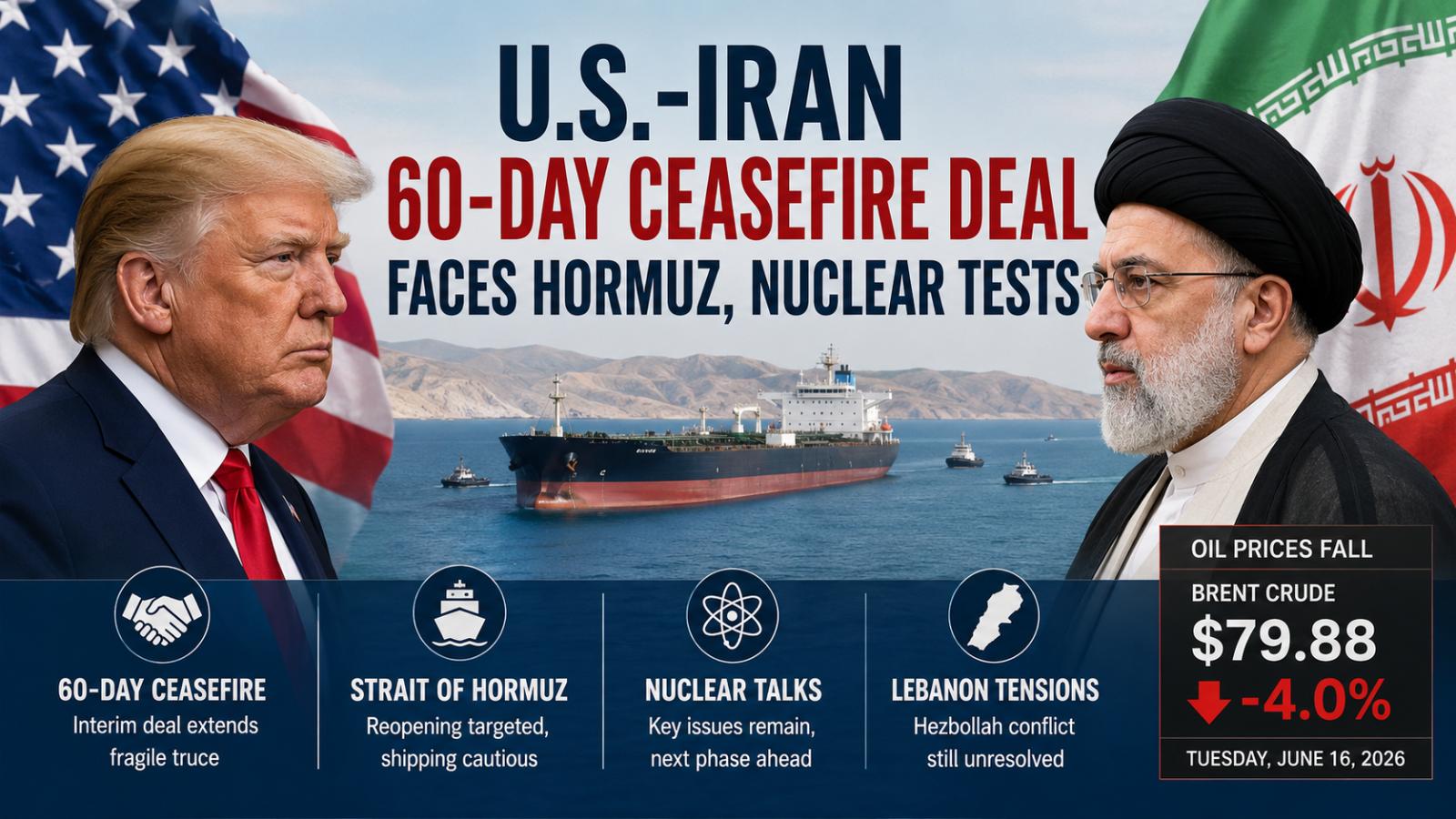
EVIAN-LES-BAINS, France — The U.S.-Iran 60-day ceasefire deal is designed to extend April’s fragile truce and reopen the Strait of Hormuz, but key questions remain over Iran’s nuclear program, shipping security and the conflict in Lebanon.
President Donald Trump said at the Group of Seven summit on Tuesday, June 16, 2026, that the interim agreement would be released publicly and would bar Tehran from obtaining a nuclear weapon. A formal signing is expected in Switzerland on Fr
EVIAN-LES-BAINS, France — The U.S.-Iran 60-day ceasefire deal is designed to extend April’s fragile truce and reopen the Strait of Hormuz, but key questions remain over Iran’s nuclear program, shipping security and the conflict in Lebanon.
President Donald Trump said at the Group of Seven summit on Tuesday, June 16, 2026, that the interim agreement would be released publicly and would bar Tehran from obtaining a nuclear weapon. A formal signing is expected in Switzerland on Fr
Recent reports indicate a shift in Iran’s diplomatic approach toward negotiations with the United States, with a stronger emphasis on how messages are framed during high-stakes discussions. The change is linked to efforts to improve clarity, control perception, and reduce misinterpretation during sensitive exchanges tied to long-running geopolitical tensions.
Inclusion of behavioral expertise in advisory setup
Recent reports indicate a shift in Iran’s diplomatic approach toward negotiations with the United States, with a stronger emphasis on how messages are framed during high-stakes discussions. The change is linked to efforts to improve clarity, control perception, and reduce misinterpretation during sensitive exchanges tied to long-running geopolitical tensions.
Inclusion of behavioral expertise in advisory setup
Peace in the Strait of Hormuz
Following a peace agreement between the United States and Iran, hostilities that lasted over 100 days have officially paused. The memorandum of understanding, signed electronically on Sunday by US President Donald Trump, Vice President JD Vance, and Iranian Parliament Speaker Mohammad Bagher Ghalibaf, created a temporary framework for reopening negotiations.
While Washington maintains that ves
Peace in the Strait of Hormuz
Following a peace agreement between the United States and Iran, hostilities that lasted over 100 days have officially paused. The memorandum of understanding, signed electronically on Sunday by US President Donald Trump, Vice President JD Vance, and Iranian Parliament Speaker Mohammad Bagher Ghalibaf, created a temporary framework for reopening negotiations.
While Washington maintains that ves
Netanyahu Defends Iran Campaign
Israeli Prime Minister Benjamin Netanyahu said the joint US-Israeli military campaign against Iran had protected Israel from what he described as the danger of nuclear annihilation. Speaking after Washington and Tehran announced a preliminary agreement to halt the regional war, Netanyahu said Israel and the United States had removed an immediate Iranian nuclear threat and created a credible military deterrent for future negotiations. He said Iran would not be allowed to obtain nuclear weapons “with or without a deal,” while insisting that Israel would retain the ability to act if it judged the threat unresolved.
Security Zones To Remain
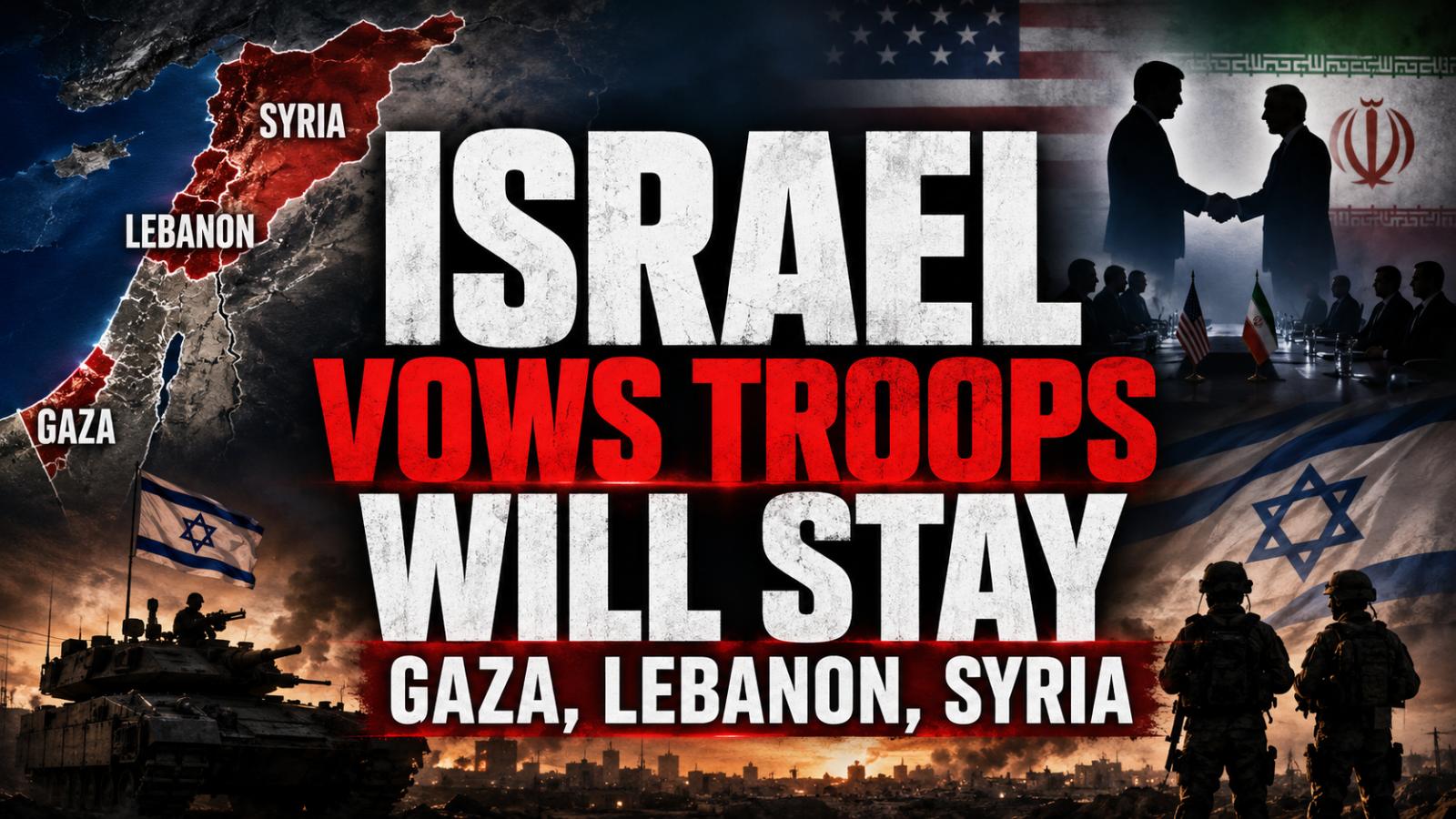
Netanyahu also said Israeli forces would remain in security zones in Gaza, Lebanon and Syria for as long as his government considered necessary. He argued that those buffer areas were created to protect Israel’s borders after years of threats from Iran-backed groups and other armed factions. His position comes as the US-Iran agreement seeks to reduce fighting across the region, including in Lebanon, where Hezbollah and Israeli forces have been involved in continued hostilities. The statement signals that Israel may not automatically withdraw from territory it currently controls even if broader diplomacy moves forward.
Iran Deal Raises Tensions
The US-Iran agreement has created political pressure inside Israel, with critics warning that the deal may leave major issues unresolved, including Iran’s missile program and support for regional armed groups. Netanyahu has avoided directly rejecting the diplomatic track, but he has stressed that Israel is not bound to accept security risks it considers unacceptable. The gap between Washington’s push for de-escalation and Israel’s insistence on military freedom of action could become a major test for future Middle East diplomacy.
Netanyahu Confirms Election Run
Netanyahu also confirmed that he plans to run in Israel’s upcoming elections. His announcement comes as he faces criticism from opposition parties over the handling of the war, the fate of hostages, continued military operations and the political cost of the Iran campaign. Despite domestic pressure and a continuing corruption trial, Netanyahu said he intends to seek another term. His remarks show that the Iran campaign, the US-Iran deal and Israel’s security zones are likely to become central issues in the election debate.
Netanyahu Defends Iran Campaign
Israeli Prime Minister Benjamin Netanyahu said the joint US-Israeli military campaign against Iran had protected Israel from what he described as the danger of nuclear annihilation. Speaking after Washington and Tehran announced a preliminary agreement to halt the regional war, Netanyahu said Israel and the United States had removed an immediate Iranian nuclear threat and created a credible military deterrent for future negotiations. He said Iran would not be allowed to obtain nuclear weapons “with or without a deal,” while insisting that Israel would retain the ability to act if it judged the threat unresolved.
Security Zones To Remain
Netanyahu also said Israeli forces would remain in security zones in Gaza, Lebanon and Syria for as long as his government considered necessary. He argued that those buffer areas were created to protect Israel’s borders after years of threats from Iran-backed groups and other armed factions. His position comes as the US-Iran agreement seeks to reduce fighting across the region, including in Lebanon, where Hezbollah and Israeli forces have been involved in continued hostilities. The statement signals that Israel may not automatically withdraw from territory it currently controls even if broader diplomacy moves forward.
Iran Deal Raises Tensions
The US-Iran agreement has created political pressure inside Israel, with critics warning that the deal may leave major issues unresolved, including Iran’s missile program and support for regional armed groups. Netanyahu has avoided directly rejecting the diplomatic track, but he has stressed that Israel is not bound to accept security risks it considers unacceptable. The gap between Washington’s push for de-escalation and Israel’s insistence on military freedom of action could become a major test for future Middle East diplomacy.
Netanyahu Confirms Election Run
Netanyahu also confirmed that he plans to run in Israel’s upcoming elections. His announcement comes as he faces criticism from opposition parties over the handling of the war, the fate of hostages, continued military operations and the political cost of the Iran campaign. Despite domestic pressure and a continuing corruption trial, Netanyahu said he intends to seek another term. His remarks show that the Iran campaign, the US-Iran deal and Israel’s security zones are likely to become central issues in the election debate.
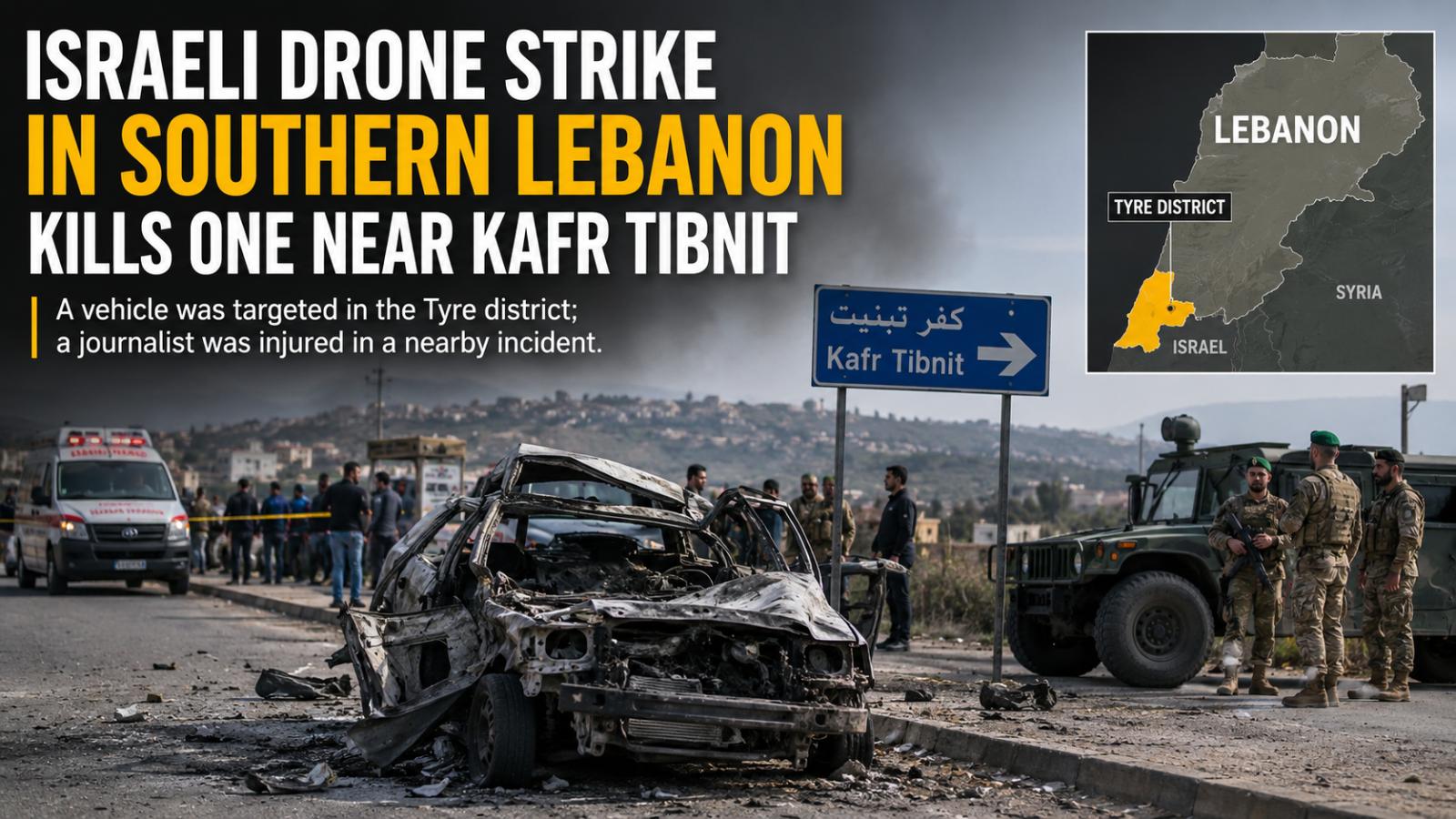
An Israeli drone strike in southern Lebanon hit a vehicle near the Kafr Tibnit roundabout in the Tyre district, killing one person, according to local reports.
What Is Known About the Israeli Drone Strike in Southern Lebanon
The supplied material said the incident occurred on a Monday but did not include a full calendar date or time. Those details have therefore not been added.
A journalist was also injured in the area after a drone reportedly dr
An Israeli drone strike in southern Lebanon hit a vehicle near the Kafr Tibnit roundabout in the Tyre district, killing one person, according to local reports.
What Is Known About the Israeli Drone Strike in Southern Lebanon
The supplied material said the incident occurred on a Monday but did not include a full calendar date or time. Those details have therefore not been added.
A journalist was also injured in the area after a drone reportedly dr
The United States will release $12 billion in frozen Iranian assets before negotiations begin on a final agreement, according to Iranian reports citing details of a proposed memorandum of understanding between Washington and Tehran. Iran said talks with the United States would take place within two months of the immediate halt to hostilities announced on Monday, June 15. The reported asset release is being framed as an early confidence-building step before both sides move toward a broader set
The United States will release $12 billion in frozen Iranian assets before negotiations begin on a final agreement, according to Iranian reports citing details of a proposed memorandum of understanding between Washington and Tehran. Iran said talks with the United States would take place within two months of the immediate halt to hostilities announced on Monday, June 15. The reported asset release is being framed as an early confidence-building step before both sides move toward a broader set
Iran’s military declared victory over the United States and Israel on Monday after Washington and Tehran announced a peace agreement intended to end more than three months of conflict across the Middle East. In a statement broadcast by Iranian state television, Iran’s armed forces claimed that their campaign had forced their adversaries to accept defeat, framing the agreement as proof of Tehran’s strength rather than a compromise. The declaration came as both sides moved to present the
Iran’s military declared victory over the United States and Israel on Monday after Washington and Tehran announced a peace agreement intended to end more than three months of conflict across the Middle East. In a statement broadcast by Iranian state television, Iran’s armed forces claimed that their campaign had forced their adversaries to accept defeat, framing the agreement as proof of Tehran’s strength rather than a compromise. The declaration came as both sides moved to present the
Israel Reaffirms Security Zone Policy
Israeli Defence Minister Israel Katz said Israel will not withdraw from security zones it currently controls in Gaza, Lebanon and Syria, signaling that any future regional agreement involving Iran and the United States may not automatically lead to Israeli troop pullbacks. In a statement posted Friday, June 13,2026 Katz said Israel’s security doctrine remains focused o
Israel Reaffirms Security Zone Policy
Israeli Defence Minister Israel Katz said Israel will not withdraw from security zones it currently controls in Gaza, Lebanon and Syria, signaling that any future regional agreement involving Iran and the United States may not automatically lead to Israeli troop pullbacks. In a statement posted Friday, June 13,2026 Katz said Israel’s security doctrine remains focused o
US Forces Intercept Iranian Drones
The United States said its forces intercepted and destroyed multiple Iranian one-way attack drones launched toward commercial ships moving through the Strait of Hormuz, one of the world’s most closely watched maritime routes. US Central Command said the drones were aimed at vessels transiting the waterway and that American forces downed them in recent hours. CENTCOM also sa
US Forces Intercept Iranian Drones
The United States said its forces intercepted and destroyed multiple Iranian one-way attack drones launched toward commercial ships moving through the Strait of Hormuz, one of the world’s most closely watched maritime routes. US Central Command said the drones were aimed at vessels transiting the waterway and that American forces downed them in recent hours. CENTCOM also sa
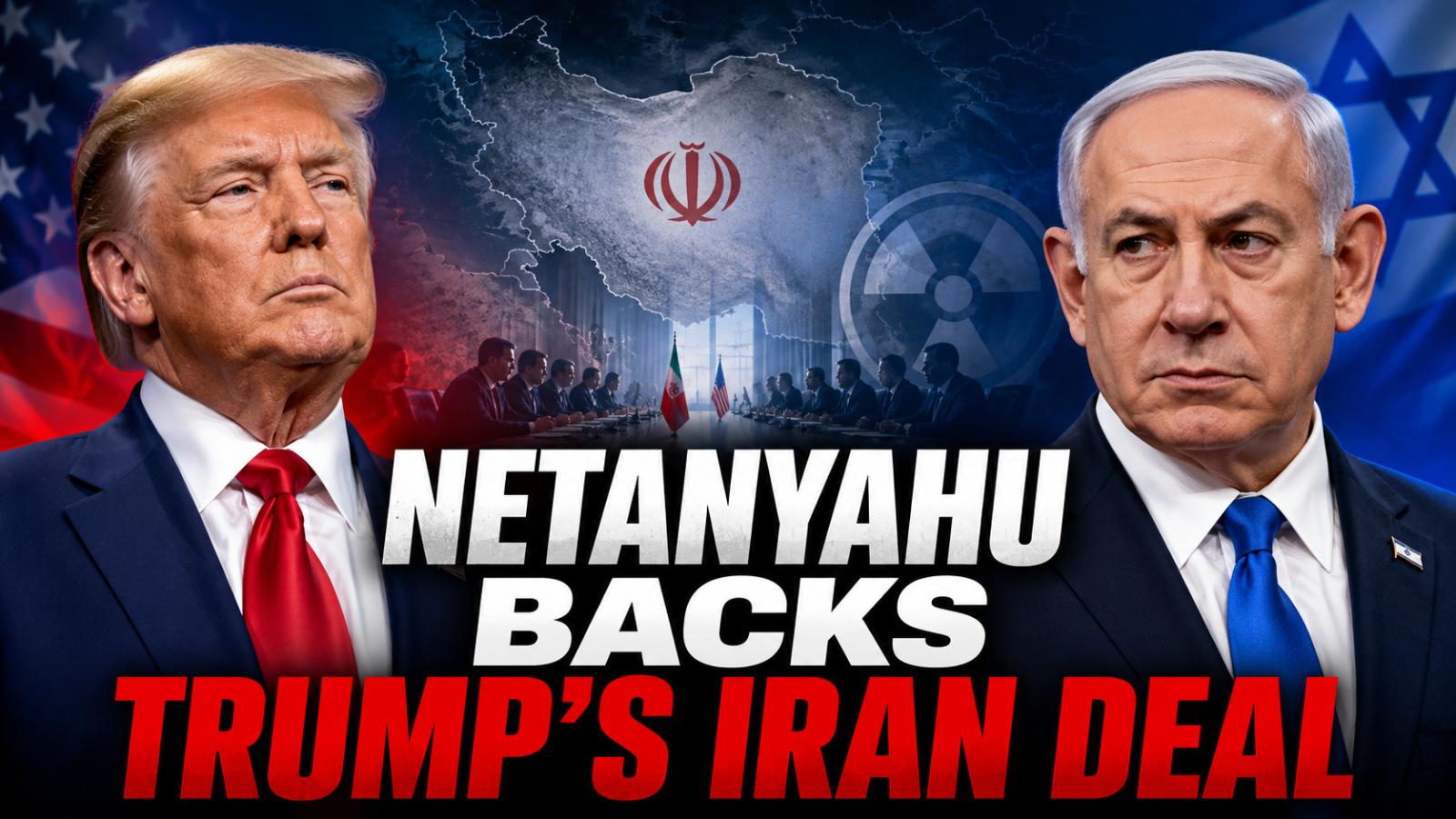
Netanyahu welcomes US assurances
Israeli Prime Minister Benjamin Netanyahu has welcomed assurances from U.S. President Donald Trump that any final agreement with Iran would include strict limits on Tehran’s nuclear and missile programs. Netanyahu’s office said the two leaders discussed the proposed framework and that Israel appreciated Washington’s commitment to addressing Iran’s enriched nuclear material, enrichment infrastructure, m
Netanyahu welcomes US assurances
Israeli Prime Minister Benjamin Netanyahu has welcomed assurances from U.S. President Donald Trump that any final agreement with Iran would include strict limits on Tehran’s nuclear and missile programs. Netanyahu’s office said the two leaders discussed the proposed framework and that Israel appreciated Washington’s commitment to addressing Iran’s enriched nuclear material, enrichment infrastructure, m
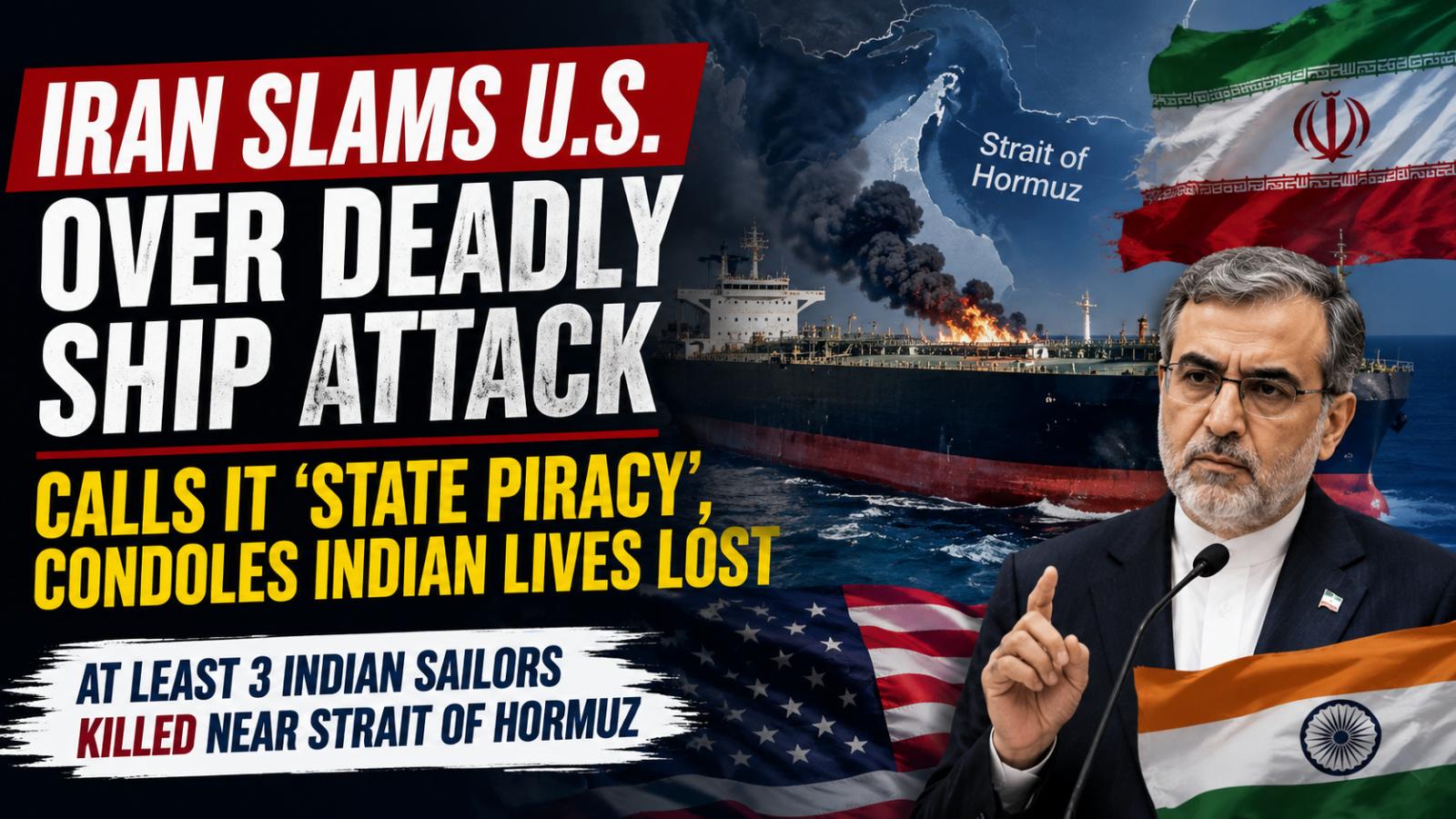
Iran Condemns U.S. Attack on Indian Commercial Vessel
Iran strongly condemned Friday’s, June 11, 2026 attack on a commercial ship near the Strait of Hormuz, which killed at least three Indian nationals. The Iranian Foreign Ministry described the incident as “armed robbery and State piracy” and extended condolences to the families of the deceased sailors.
Iran Condemns U.S. Attack on Indian Commercial Vessel
Iran strongly condemned Friday’s, June 11, 2026 attack on a commercial ship near the Strait of Hormuz, which killed at least three Indian nationals. The Iranian Foreign Ministry described the incident as “armed robbery and State piracy” and extended condolences to the families of the deceased sailors.
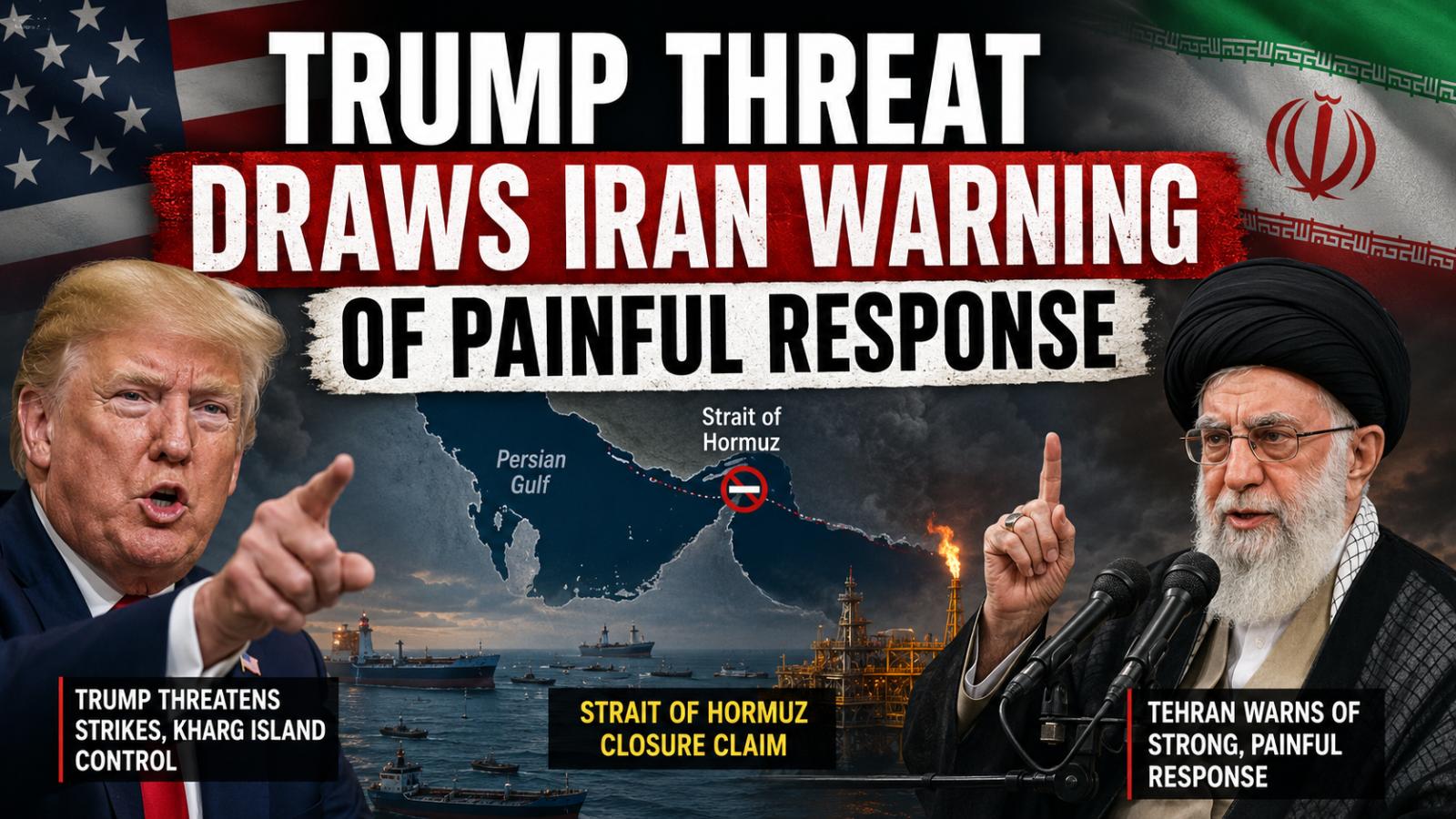
Iran warned of a “painful response” after President Donald Trump threatened new U.S. strikes and suggested Washington could move to control key Iranian oil infrastructure.
The latest Trump Iran threat added pressure to an already volatile Gulf crisis on Thursday, June 11, 2026, as Tehran also claimed the Strait of Hormuz would be closed until further notice.
Trump threatens new strikes on Iran
Trump said in a Truth Social post that the Unit
Iran warned of a “painful response” after President Donald Trump threatened new U.S. strikes and suggested Washington could move to control key Iranian oil infrastructure.
The latest Trump Iran threat added pressure to an already volatile Gulf crisis on Thursday, June 11, 2026, as Tehran also claimed the Strait of Hormuz would be closed until further notice.
Trump threatens new strikes on Iran
Trump said in a Truth Social post that the Unit
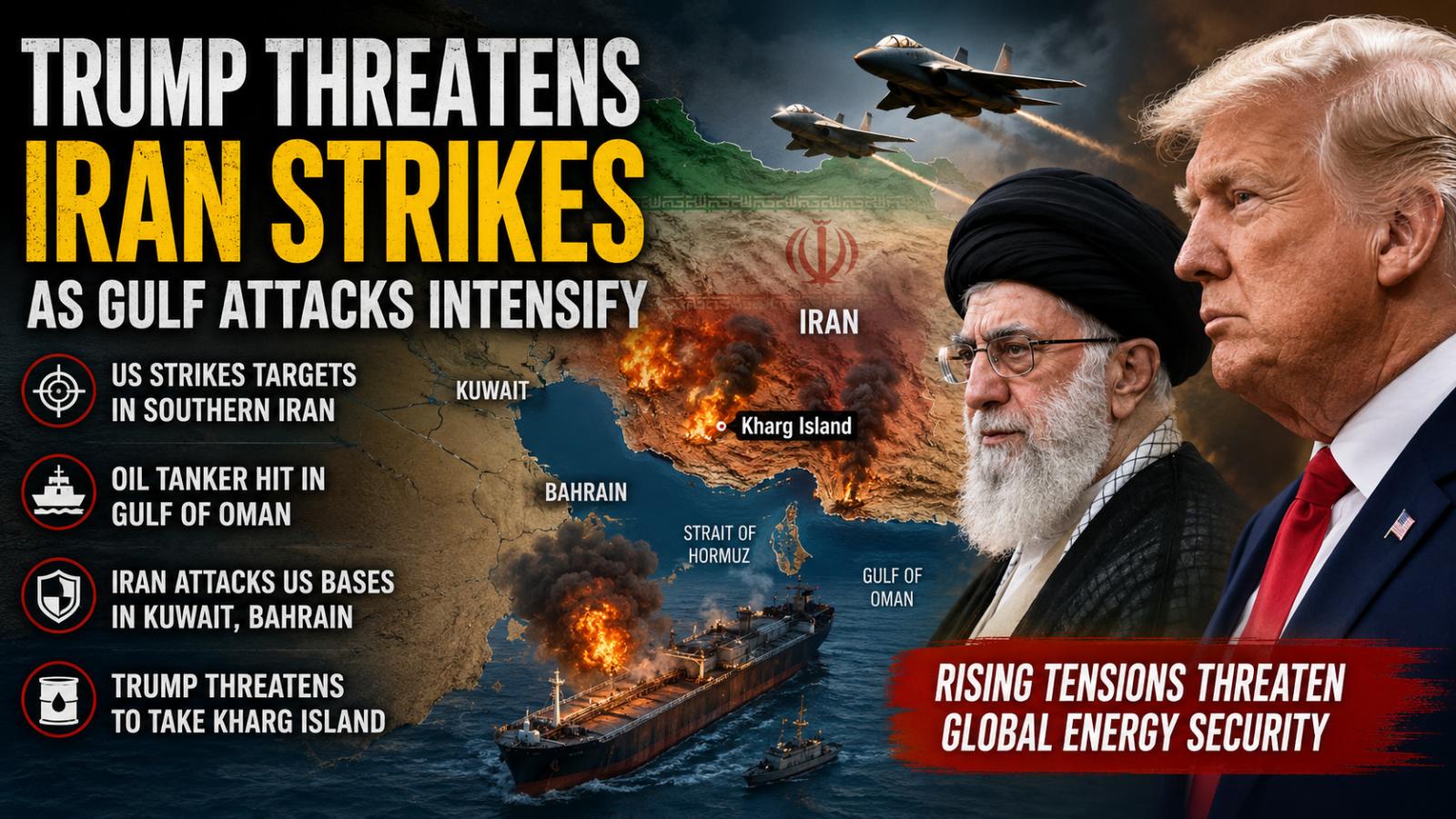
Trump threatened Iran’s Kharg Island as US-Iran Gulf attacks intensified across oil routes, tankers and military targets, raising new risks for regional security and global energy markets.
President Donald Trump said the United States would hit Iran “very hard” and threatened to take Kharg Island, a key hub in Iran’s oil economy, as Washington increased pressure on Tehran to shut down its nuclear program and accept a peace deal.
US-Iran Gu
Trump threatened Iran’s Kharg Island as US-Iran Gulf attacks intensified across oil routes, tankers and military targets, raising new risks for regional security and global energy markets.
President Donald Trump said the United States would hit Iran “very hard” and threatened to take Kharg Island, a key hub in Iran’s oil economy, as Washington increased pressure on Tehran to shut down its nuclear program and accept a peace deal.
US-Iran Gu