





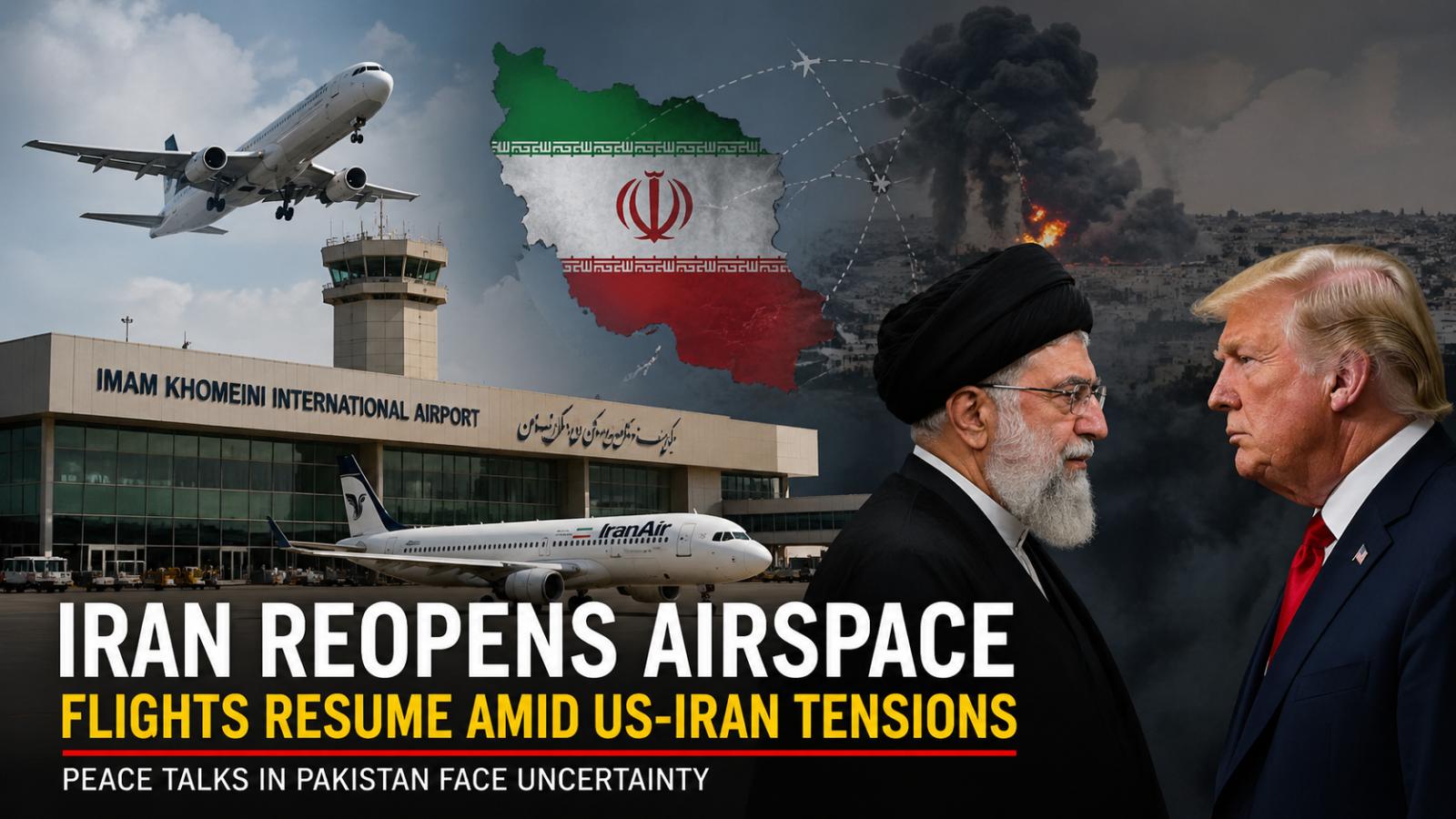
Iran airspace resumes operations amid ongoing US-Iran conflict tensions
Iran airspace has resumed operations nearly two months after being shut down following joint airstrikes by the United States and Israel, marking a cautious step toward normalcy amid ongoing regional tensions. The reopening of Imam Khomeini International Airport on April 25 signals a gradual recovery in Iran’s aviation sector, even as diplomatic uncertainty continues to cloud the broader US-Iran conflict. The airspace closure was enforced on February 28 after coordinated military action escalated into a wider confrontation, forcing Iran to halt civilian aviation across the country. With security assessments and operational preparations now underway, authorities have begun restoring flight services in phases. Initial departures from Tehran include routes to Medina, Muscat, and Istanbul, reflecting limited but significant progress in reconnecting international travel corridors. Iran’s Civil Aviation Authority has indicated that full restoration of aviation services will depend on continued coordination between military and civilian agencies. Earlier, on April 18, Iran reopened its eastern airspace to international flights, allowing transit operations to resume and easing pressure on regional air traffic routes. Officials emphasize that passenger safety remains the top priority during this phased reopening. At the same time, diplomatic efforts to de-escalate the US-Iran war have encountered fresh complications. A delegation linked to former US President Donald Trump, including envoy Steve Witkoff and adviser Jared Kushner, is currently in Pakistan for a second round of peace talks. However, Iran has clearly denied any direct engagement with US representatives during this visit, raising doubts about the progress of negotiations. Iran’s Foreign Ministry has clarified that its position will be conveyed through Pakistani intermediaries, with Foreign Minister Abbas Araghchi actively involved in discussions aimed at reducing tensions. Tehran continues to describe the conflict as “an externally imposed war of aggression”, stressing the importance of restoring regional stability and easing sanctions pressure. Previous negotiations collapsed after Iran strongly objected to US demands to maintain sanctions and naval restrictions during talks. As both sides remain firm in their positions, the reopening of Iran airspace stands as a significant operational step, even as broader geopolitical challenges remain unresolved.
Iran airspace resumes operations amid ongoing US-Iran conflict tensions
Iran airspace has resumed operations nearly two months after being shut down following joint airstrikes by the United States and Israel, marking a cautious step toward normalcy amid ongoing regional tensions. The reopening of Imam Khomeini International Airport on April 25 signals a gradual recovery in Iran’s aviation sector, even as diplomatic uncertainty continues to cloud the broader US-Iran conflict. The airspace closure was enforced on February 28 after coordinated military action escalated into a wider confrontation, forcing Iran to halt civilian aviation across the country. With security assessments and operational preparations now underway, authorities have begun restoring flight services in phases. Initial departures from Tehran include routes to Medina, Muscat, and Istanbul, reflecting limited but significant progress in reconnecting international travel corridors. Iran’s Civil Aviation Authority has indicated that full restoration of aviation services will depend on continued coordination between military and civilian agencies. Earlier, on April 18, Iran reopened its eastern airspace to international flights, allowing transit operations to resume and easing pressure on regional air traffic routes. Officials emphasize that passenger safety remains the top priority during this phased reopening. At the same time, diplomatic efforts to de-escalate the US-Iran war have encountered fresh complications. A delegation linked to former US President Donald Trump, including envoy Steve Witkoff and adviser Jared Kushner, is currently in Pakistan for a second round of peace talks. However, Iran has clearly denied any direct engagement with US representatives during this visit, raising doubts about the progress of negotiations. Iran’s Foreign Ministry has clarified that its position will be conveyed through Pakistani intermediaries, with Foreign Minister Abbas Araghchi actively involved in discussions aimed at reducing tensions. Tehran continues to describe the conflict as “an externally imposed war of aggression”, stressing the importance of restoring regional stability and easing sanctions pressure. Previous negotiations collapsed after Iran strongly objected to US demands to maintain sanctions and naval restrictions during talks. As both sides remain firm in their positions, the reopening of Iran airspace stands as a significant operational step, even as broader geopolitical challenges remain unresolved.
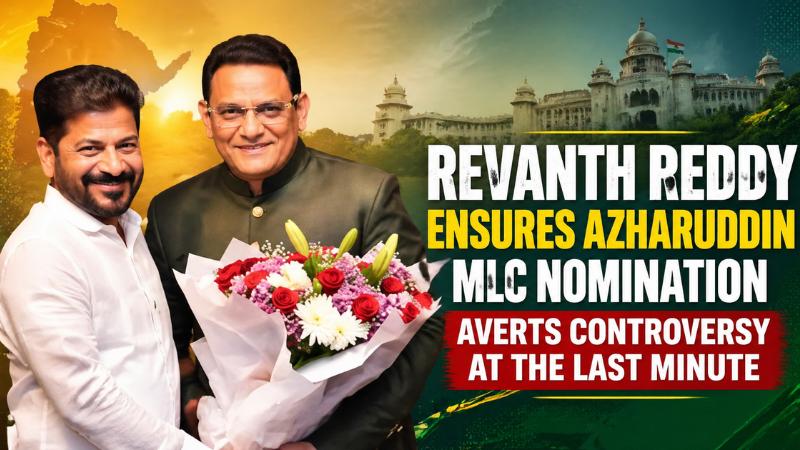
Revanth Reddy’s Strategic Move to Avoid Backlash and Secure Azharuddin's Position as MLC
Revanth Reddy Prevents Backlash with Last-Minute MLC Appointment for Azharuddin On April 25, 2026, Telangana Chief Minister Revanth Reddy averted a major political backlash by ensuring that Congress leader Azharuddin, who had been appointed to the state cabinet six months ago, was legislated as an MLC before his time ran out. Under the law, a cabinet minister must hold a legislative position within six months of appointment if they are not already a sitting represen
Revanth Reddy’s Strategic Move to Avoid Backlash and Secure Azharuddin's Position as MLC
Revanth Reddy Prevents Backlash with Last-Minute MLC Appointment for Azharuddin On April 25, 2026, Telangana Chief Minister Revanth Reddy averted a major political backlash by ensuring that Congress leader Azharuddin, who had been appointed to the state cabinet six months ago, was legislated as an MLC before his time ran out. Under the law, a cabinet minister must hold a legislative position within six months of appointment if they are not already a sitting represen
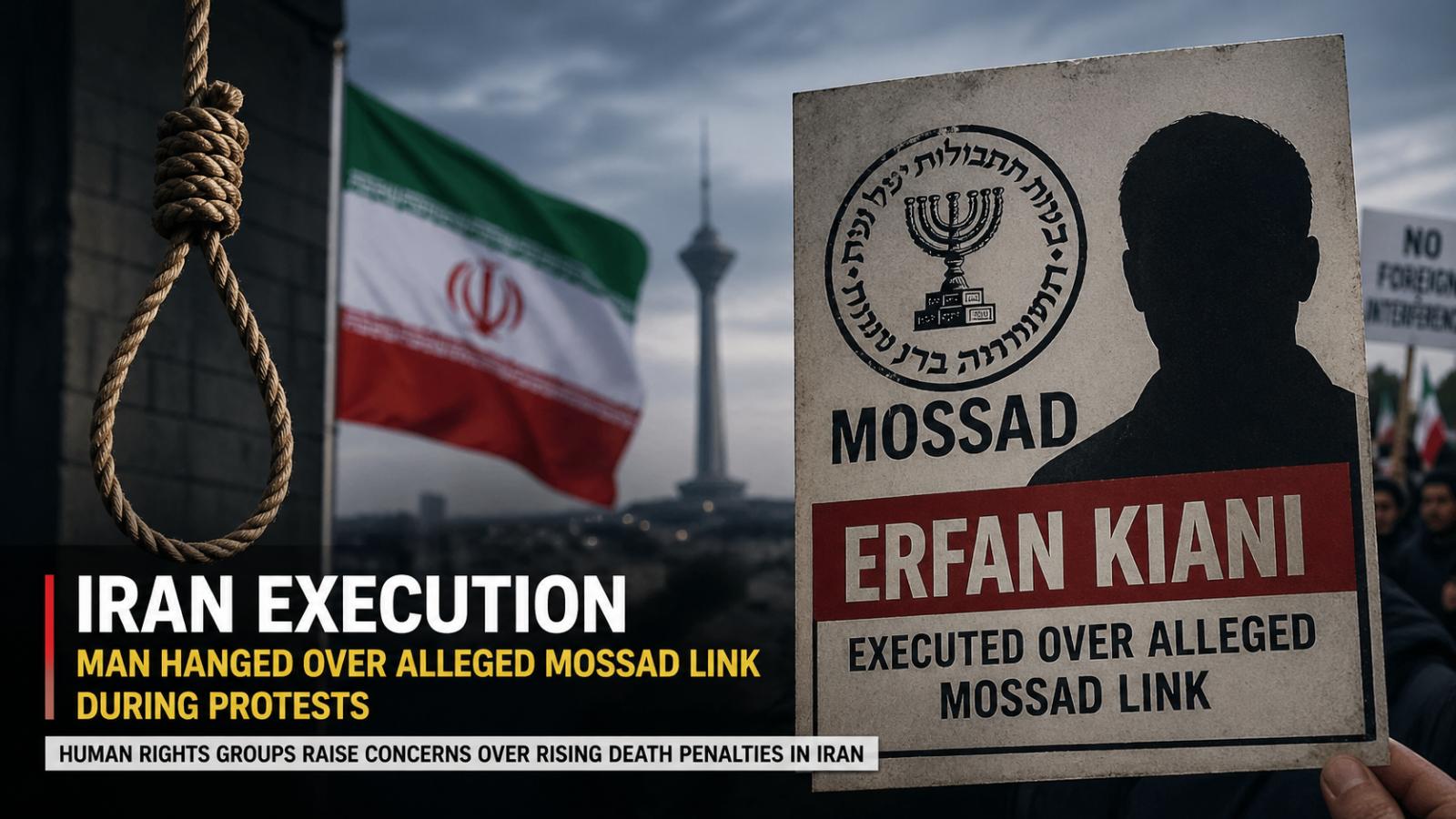
Iran executes man over alleged Mossad link during protests
Iran execution of a protest-linked man accused of working with Mossad has drawn global attention, as authorities continue to enforce strict measures following unrest earlier this year. Officials confirmed on Saturday that Erfan Kiani was executed after being convicted of carrying out activities linked to Israeli intelligence during January protests, highlighting the country’s ongoing crackdown amid rising regional tensions. According to Iran’s j
Iran executes man over alleged Mossad link during protests
Iran execution of a protest-linked man accused of working with Mossad has drawn global attention, as authorities continue to enforce strict measures following unrest earlier this year. Officials confirmed on Saturday that Erfan Kiani was executed after being convicted of carrying out activities linked to Israeli intelligence during January protests, highlighting the country’s ongoing crackdown amid rising regional tensions. According to Iran’s j

Khumbu icefall threat disrupts Everest climbing season
A massive ice block on the Mount Everest route has disrupted climbing operations, forcing around 410 climbers and Sherpas to delay their movements between camps. The obstruction, identified as a dangerous serac in the Khumbu Icefall, has raised serious safety concerns and halted acclimatisation rotations during a crucial phase of the Everest climbing season. The ice block was first identified on April 10 by experienced Sherpas, who warned that the structure is highly unstable and could collapse without warning. Positioned along the southern route in Nepal, the serac hangs directly above a narrow passage between Everest Base Camp and Camp One, an area already known for its unpredictable and hazardous conditions. The formation of this ice block is linked to the natural movement of the Khumbu Glacier. As the glacier slowly descends down the mountain, the rigid ice fractures and forms towering blocks. In this case, a giant section about 30 metres tall remains suspended over the climbing route. As the glacier continues to shift, the risk of further instability increases significantly, making the route unsafe for climbers. The location of the serac adds to the danger. Situated at an altitude of approximately 5,300 to 5,500 metres, the Khumbu Icefall is often described as one of the most dangerous parts of the Everest climb. A sudden collapse could trigger a deadly avalanche, sending massive volumes of ice down the slope and putting lives at immediate risk. This delay is critical because the Everest climbing season runs from April to May, offering only a short window of favorable weather. With expeditions already behind schedule, climbers now face the possibility of overcrowding, delays, or even cancellation if conditions do not improve. The disruption also impacts Nepal’s economy, where mountaineering remains a major source of income. Expedition leaders have expressed concern about the growing uncertainty. With teams waiting at base camp, the situation has created a serious bottleneck in climbing operations. Until the route is declared safe, climbers have little choice but to remain on standby, highlighting the unpredictable risks of glacier movement and high-altitude climbing.
Khumbu icefall threat disrupts Everest climbing season
A massive ice block on the Mount Everest route has disrupted climbing operations, forcing around 410 climbers and Sherpas to delay their movements between camps. The obstruction, identified as a dangerous serac in the Khumbu Icefall, has raised serious safety concerns and halted acclimatisation rotations during a crucial phase of the Everest climbing season. The ice block was first identified on April 10 by experienced Sherpas, who warned that the structure is highly unstable and could collapse without warning. Positioned along the southern route in Nepal, the serac hangs directly above a narrow passage between Everest Base Camp and Camp One, an area already known for its unpredictable and hazardous conditions. The formation of this ice block is linked to the natural movement of the Khumbu Glacier. As the glacier slowly descends down the mountain, the rigid ice fractures and forms towering blocks. In this case, a giant section about 30 metres tall remains suspended over the climbing route. As the glacier continues to shift, the risk of further instability increases significantly, making the route unsafe for climbers. The location of the serac adds to the danger. Situated at an altitude of approximately 5,300 to 5,500 metres, the Khumbu Icefall is often described as one of the most dangerous parts of the Everest climb. A sudden collapse could trigger a deadly avalanche, sending massive volumes of ice down the slope and putting lives at immediate risk. This delay is critical because the Everest climbing season runs from April to May, offering only a short window of favorable weather. With expeditions already behind schedule, climbers now face the possibility of overcrowding, delays, or even cancellation if conditions do not improve. The disruption also impacts Nepal’s economy, where mountaineering remains a major source of income. Expedition leaders have expressed concern about the growing uncertainty. With teams waiting at base camp, the situation has created a serious bottleneck in climbing operations. Until the route is declared safe, climbers have little choice but to remain on standby, highlighting the unpredictable risks of glacier movement and high-altitude climbing.
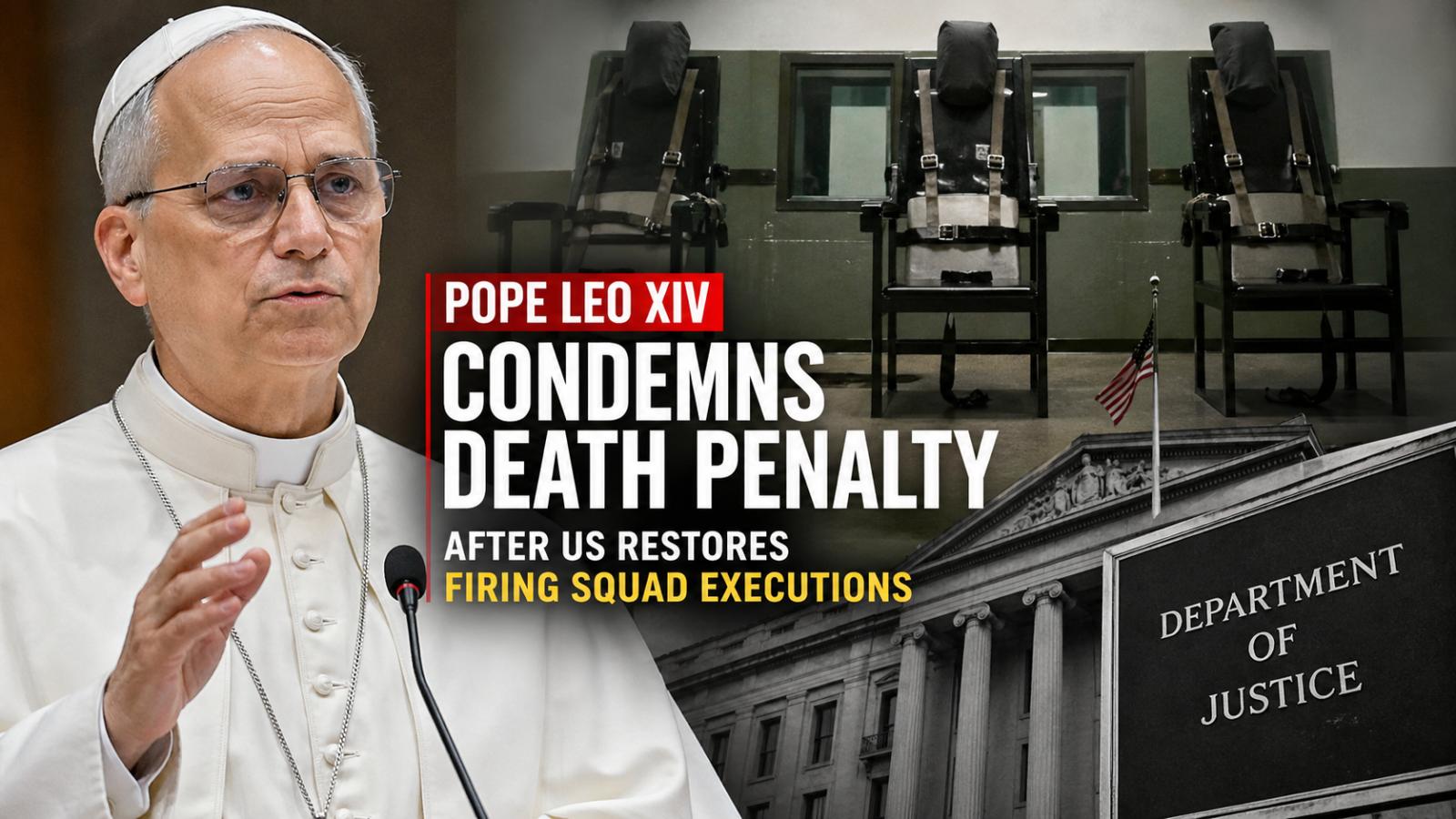
Pope Leo XIV condemns death penalty as US restores firing squad executions
Hours after the US Justice Department announced the lifting of the federal moratorium on capital punishment and the reinstatement of firing squad executions, Pope Leo XIV issued a strongly worded message condemning the death penalty. Delivered through a video address to DePaul University in Chicago, the Pope’s remarks coincided with the 15th anniversary of Illinois abolishing capital punishment, underscoring the significance of the moment. In his message, Pope Leo XIV emphasized t
Pope Leo XIV condemns death penalty as US restores firing squad executions
Hours after the US Justice Department announced the lifting of the federal moratorium on capital punishment and the reinstatement of firing squad executions, Pope Leo XIV issued a strongly worded message condemning the death penalty. Delivered through a video address to DePaul University in Chicago, the Pope’s remarks coincided with the 15th anniversary of Illinois abolishing capital punishment, underscoring the significance of the moment. In his message, Pope Leo XIV emphasized t
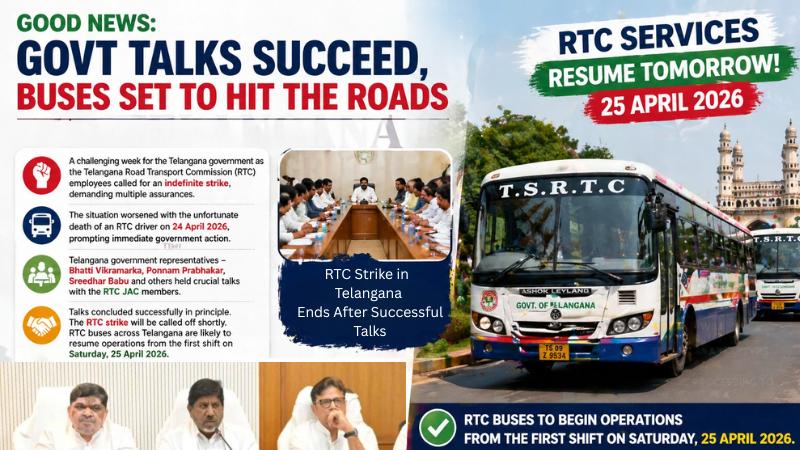
Govt. Successfully Resolves RTC Crisis: Buses Ready to Operate Again
RTC Strike in Telangana Resolved: Buses Set to Resume Operations After Successful Government Talks After several days of tension and a growing crisis in Telangana, the ongoing strike by the Telangana Road Transport Corporation (RTC) employees is finally coming to an end. The strike, which started earlier this week, intensified following the tragic death of an RTC driver. The employees had been demanding bette
Govt. Successfully Resolves RTC Crisis: Buses Ready to Operate Again
RTC Strike in Telangana Resolved: Buses Set to Resume Operations After Successful Government Talks After several days of tension and a growing crisis in Telangana, the ongoing strike by the Telangana Road Transport Corporation (RTC) employees is finally coming to an end. The strike, which started earlier this week, intensified following the tragic death of an RTC driver. The employees had been demanding bette

Kalvakuntla Kavitha Launches Telangana Praja Jagruthi, Paying Tribute to Telangana Icons
All preparations are in place for the launch of a new political party by Kalvakuntla Kavitha, daughter of former Telangana Chief Minister and BRS president K Chandrasekhar Rao. The event will take place on April 25, 2026, at 10:00 AM at Prof Jayashankar Grounds in Muneerabad, Medchal-Malkajgiri district. Kavitha’s new political party has been named “Telangana Praja Jagruthi”, a name that was registered two months ago. Kavitha, who resigned from the BRS and her Legislative Coun
Kalvakuntla Kavitha Launches Telangana Praja Jagruthi, Paying Tribute to Telangana Icons
All preparations are in place for the launch of a new political party by Kalvakuntla Kavitha, daughter of former Telangana Chief Minister and BRS president K Chandrasekhar Rao. The event will take place on April 25, 2026, at 10:00 AM at Prof Jayashankar Grounds in Muneerabad, Medchal-Malkajgiri district. Kavitha’s new political party has been named “Telangana Praja Jagruthi”, a name that was registered two months ago. Kavitha, who resigned from the BRS and her Legislative Coun
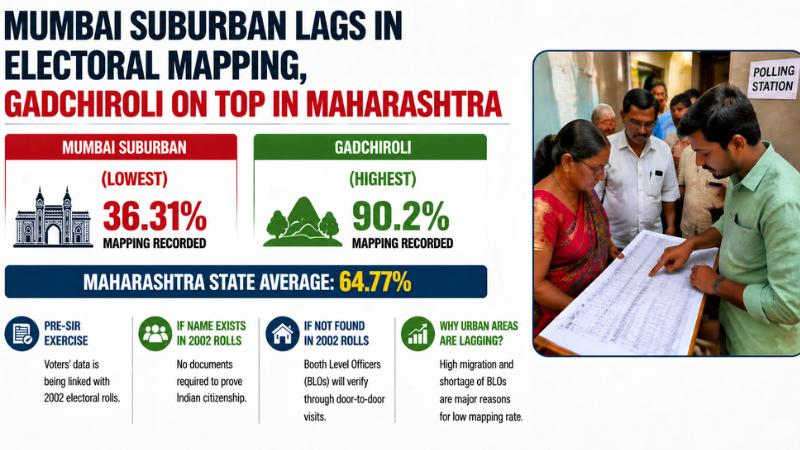
Mumbai Suburban Faces Low Voter Mapping; Gadchiroli Leads Maharashtra's Electoral Revision
Mumbai: The ongoing Special Intensive Revision (SIR) of electoral mapping in Maharashtra has shown disappointing results in urban areas, particularly in Mumbai, Thane, and Pune, while the tribal district of Gadchiroli has seen the highest participation. As per the Maharashtra State Election Commission (SEC) data, the Mumbai Suburban district recorded only 36.31% of electoral mapping, the lowest in the state and far below the state average of 64.77%. On the other hand, Gadchiroli has achieved
Mumbai Suburban Faces Low Voter Mapping; Gadchiroli Leads Maharashtra's Electoral Revision
Mumbai: The ongoing Special Intensive Revision (SIR) of electoral mapping in Maharashtra has shown disappointing results in urban areas, particularly in Mumbai, Thane, and Pune, while the tribal district of Gadchiroli has seen the highest participation. As per the Maharashtra State Election Commission (SEC) data, the Mumbai Suburban district recorded only 36.31% of electoral mapping, the lowest in the state and far below the state average of 64.77%. On the other hand, Gadchiroli has achieved

Regulators eye prediction markets after suspicious betting activity
Prediction markets, digital platforms that allow users to wager on future events, are drawing increasing scrutiny amid concerns over suspicious trading activity and the potential misuse of sensitive information. The issue has gained prominence following a case involving a US Army special forces soldier accused of leveraging classified intelligence to place bets linked to a mission targeting Venezuelan President Nicolas Maduro. What are prediction markets? Prediction markets such as Polymarket and Kalshi operate in a manner similar to gambling platforms, but instead of sports, they focus on real-world events. Users place wagers on outcomes ranging from political developments and economic shifts to weather patterns and online activity. Participants earn profits if their predictions are accurate, while platforms generate revenue through transaction fees. With millions of users globally, these platforms now facilitate billions of dollars in wagers across diverse subjects including elections, tariffs, and commodity prices. Are these markets legal? The legal status of prediction markets varies by region. Globally, many jurisdictions permit such platforms, but the regulatory framework in the United States remains complex. Polymarket had been restricted domestically for several years before resuming limited operations, while Kalshi operates under oversight from the Commodity Futures Trading Commission. Some users attempt to bypass restrictions through virtual private networks, raising additional compliance concerns. Unlike traditional bookmakers, these platforms position themselves as exchanges that enable trading rather than setting odds. Can prediction markets accurately forecast events? Research suggests that collective forecasting, often described as the “wisdom of crowds,” can provide valuable insights. By aggregating diverse opinions, prediction markets can sometimes outperform individual experts in anticipating political, economic, and global outcomes. What are the risks involved? Concerns have intensified regarding the potential use of insider information. In the recent case, the US soldier allegedly earned more than $400,000 by betting on outcomes tied to a military operation. Similar patterns have been observed before major geopolitical and entertainment events, where unusual betting activity accurately predicted outcomes. Such incidents have raised questions about whether privileged information is influencing market behavior. Regulatory response and growing oversight Authorities are responding to these developments with increased vigilance. Several US states have initiated measures to restrict or ban prediction markets, while platforms like Kalshi and Polymarket have introduced safeguards to prevent misuse. Kalshi has prohibited political candidates from betting on their own elections, and government agencies have cautioned officials against using insider knowledge for financial gain. A concept with historical roots Despite recent attention, prediction markets are not a new phenomenon. Early models such as the Iowa Electronic Markets, established in 1988, focused on political forecasting. In 2003, the Pentagon explored launching a platform to predict geopolitical events, including potential security threats, but the initiative was abandoned following public criticism. As scrutiny intensifies, the future of prediction markets will likely depend on how effectively regulators and platforms address concerns surrounding transparency, legality, and the ethical use of information.
Regulators eye prediction markets after suspicious betting activity
Prediction markets, digital platforms that allow users to wager on future events, are drawing increasing scrutiny amid concerns over suspicious trading activity and the potential misuse of sensitive information. The issue has gained prominence following a case involving a US Army special forces soldier accused of leveraging classified intelligence to place bets linked to a mission targeting Venezuelan President Nicolas Maduro. What are prediction markets? Prediction markets such as Polymarket and Kalshi operate in a manner similar to gambling platforms, but instead of sports, they focus on real-world events. Users place wagers on outcomes ranging from political developments and economic shifts to weather patterns and online activity. Participants earn profits if their predictions are accurate, while platforms generate revenue through transaction fees. With millions of users globally, these platforms now facilitate billions of dollars in wagers across diverse subjects including elections, tariffs, and commodity prices. Are these markets legal? The legal status of prediction markets varies by region. Globally, many jurisdictions permit such platforms, but the regulatory framework in the United States remains complex. Polymarket had been restricted domestically for several years before resuming limited operations, while Kalshi operates under oversight from the Commodity Futures Trading Commission. Some users attempt to bypass restrictions through virtual private networks, raising additional compliance concerns. Unlike traditional bookmakers, these platforms position themselves as exchanges that enable trading rather than setting odds. Can prediction markets accurately forecast events? Research suggests that collective forecasting, often described as the “wisdom of crowds,” can provide valuable insights. By aggregating diverse opinions, prediction markets can sometimes outperform individual experts in anticipating political, economic, and global outcomes. What are the risks involved? Concerns have intensified regarding the potential use of insider information. In the recent case, the US soldier allegedly earned more than $400,000 by betting on outcomes tied to a military operation. Similar patterns have been observed before major geopolitical and entertainment events, where unusual betting activity accurately predicted outcomes. Such incidents have raised questions about whether privileged information is influencing market behavior. Regulatory response and growing oversight Authorities are responding to these developments with increased vigilance. Several US states have initiated measures to restrict or ban prediction markets, while platforms like Kalshi and Polymarket have introduced safeguards to prevent misuse. Kalshi has prohibited political candidates from betting on their own elections, and government agencies have cautioned officials against using insider knowledge for financial gain. A concept with historical roots Despite recent attention, prediction markets are not a new phenomenon. Early models such as the Iowa Electronic Markets, established in 1988, focused on political forecasting. In 2003, the Pentagon explored launching a platform to predict geopolitical events, including potential security threats, but the initiative was abandoned following public criticism. As scrutiny intensifies, the future of prediction markets will likely depend on how effectively regulators and platforms address concerns surrounding transparency, legality, and the ethical use of information.
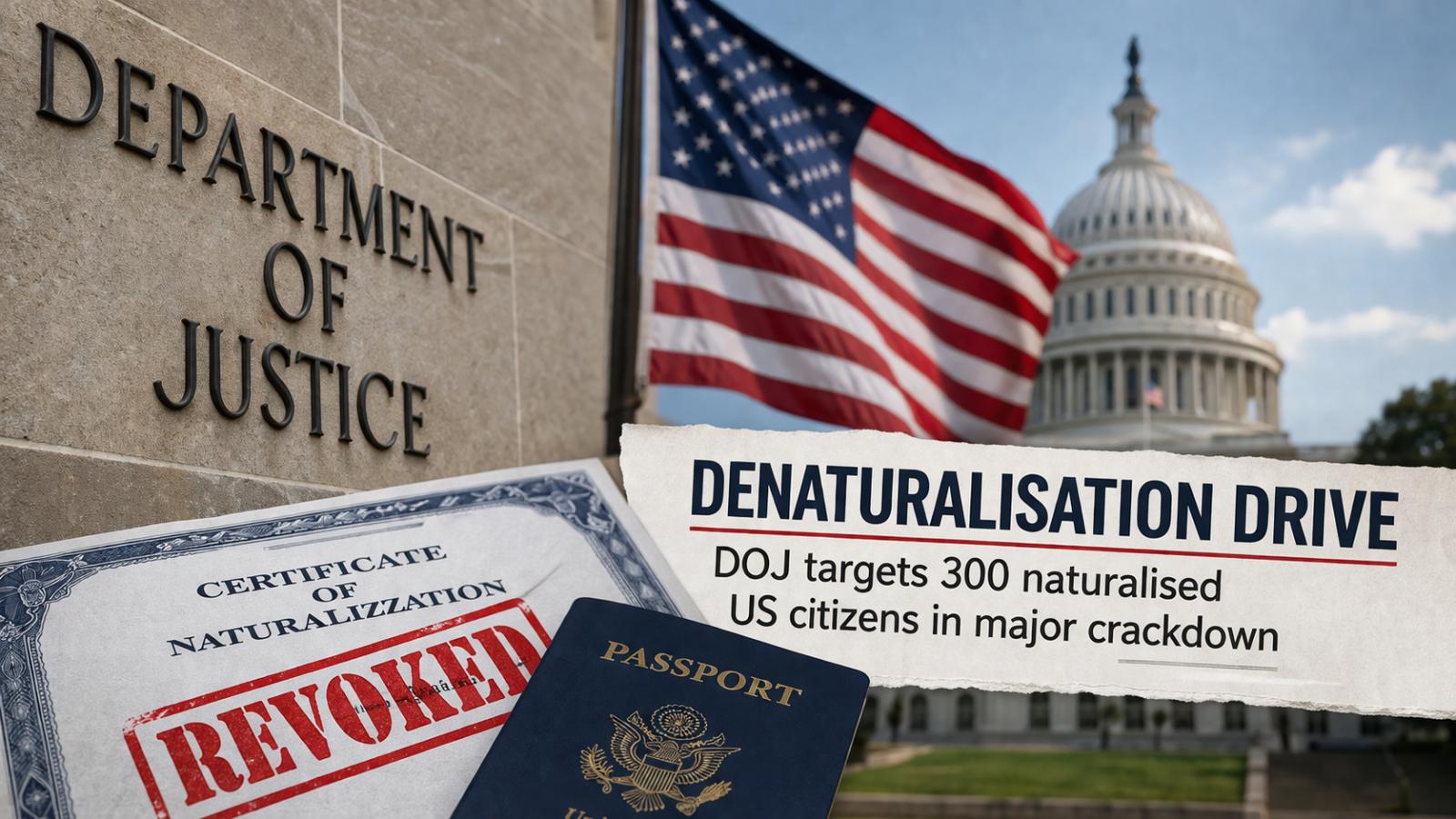
Trump administration accelerates denaturalisation cases across the US
The United States Justice Department is currently pursuing at least 300 foreign-born American citizens as part of an intensified denaturalisation effort, marking what officials describe as the largest such initiative in the country’s history. The legal process, which allows authorities to revoke citizenship obtained through fraud or concealment, has traditionally been used sparingly but is now being applied on an unprecedented scale. A senior offi
Trump administration accelerates denaturalisation cases across the US
The United States Justice Department is currently pursuing at least 300 foreign-born American citizens as part of an intensified denaturalisation effort, marking what officials describe as the largest such initiative in the country’s history. The legal process, which allows authorities to revoke citizenship obtained through fraud or concealment, has traditionally been used sparingly but is now being applied on an unprecedented scale. A senior offi

Álvaro Fidalgo Returns to Start for Betis vs Real Madrid After 4-Game Absence
Álvaro Fidalgo Returns to Start for Real Betis vs Real Madrid After 4-Game Absence Real Betis have received a timely boost ahead of their clash against Real Madrid, with Mexican midfielder Álvaro Fidalgo returning to the starting lineup after a four-match absence in LaLiga. The 27-year-old, who joined Betis in January, had been out of league action in recent weeks but now gets an opportunity to make an impact in one of the biggest fixtures of the season. What Happened
Álvaro Fidalgo Returns to Start for Betis vs Real Madrid After 4-Game Absence
Álvaro Fidalgo Returns to Start for Real Betis vs Real Madrid After 4-Game Absence Real Betis have received a timely boost ahead of their clash against Real Madrid, with Mexican midfielder Álvaro Fidalgo returning to the starting lineup after a four-match absence in LaLiga. The 27-year-old, who joined Betis in January, had been out of league action in recent weeks but now gets an opportunity to make an impact in one of the biggest fixtures of the season. What Happened

Fire engulfs historic Queens church after blaze spreads from rectory
A five-alarm fire in Queens severely damaged a historic church after spreading from a nearby rectory Thursday evening. Six firefighters were injured as crews battled the blaze for hours. Fire engulfs historic Queens church after blaze spreads from rectory as a massive fire tore through a historic house of worship in New York City, sending flames through the structure and prompting a large-scale emergency response. The New York City Fire Department said the blaze be
Fire engulfs historic Queens church after blaze spreads from rectory
A five-alarm fire in Queens severely damaged a historic church after spreading from a nearby rectory Thursday evening. Six firefighters were injured as crews battled the blaze for hours. Fire engulfs historic Queens church after blaze spreads from rectory as a massive fire tore through a historic house of worship in New York City, sending flames through the structure and prompting a large-scale emergency response. The New York City Fire Department said the blaze be
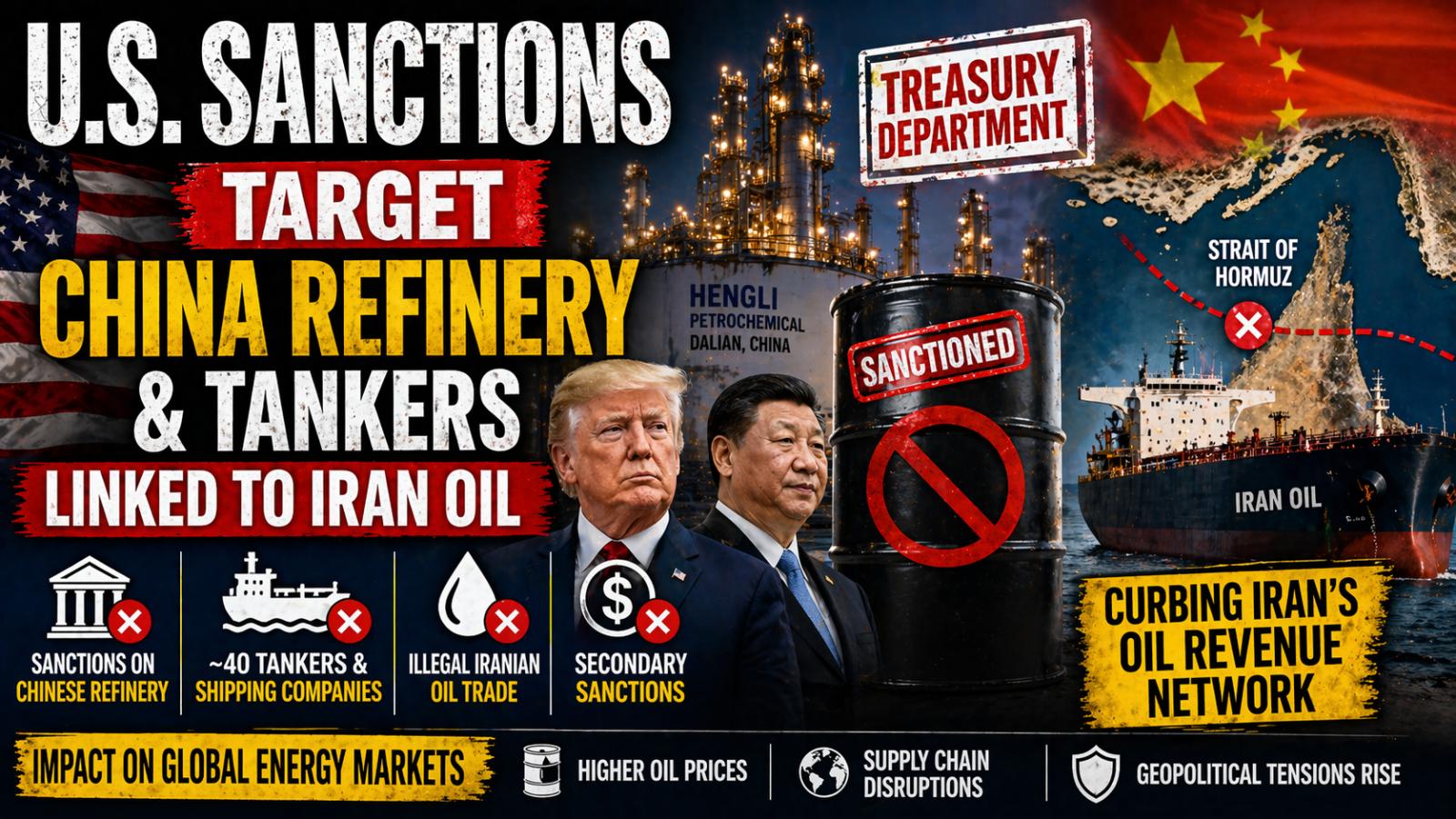
What sanctions did the U.S. impose on China-linked oil trade? The move targets refinery and tankers tied to Iran
The United States has imposed sweeping new sanctions targeting a China-linked oil trade network tied to Iran, focusing on a major refinery and dozens of shipping entities. Announced on Friday, April 25, 2026, the measures aim to disrupt Tehran’s oil revenue streams by penalizing companies involved in transporting and processing Iranian crude, reinforcing Washington’s broader use of secondary sanctions. Targeting key nodes in Iran’s oil supply chain Among those sanctioned is Hengli Petrochemical’s large refinery in Dalian, China, which has the capacity to process about 400,000 barrels of crude oil per day. The U.S. Treasury Department said the facility has accepted Iranian crude shipments since 2023, generating substantial revenue that allegedly supports Iran’s military. Officials indicated the action is part of a wider strategy to dismantle networks of vessels, intermediaries, and buyers enabling Iranian oil exports. Escalating pressure amid geopolitical tensions The sanctions come just weeks before a planned meeting between U.S. President Donald Trump and Chinese President Xi Jinping in China, adding strain to an already complex economic relationship. Earlier in April 2026, U.S. officials issued warnings to financial institutions in China, Hong Kong, the United Arab Emirates, and Oman about potential penalties for facilitating Iranian transactions. Treasury Secretary Scott Bessent said the administration is prepared to apply stringent secondary sanctions to entities involved in such dealings. Impact on global energy flows and shipping routes These developments coincide with broader disruptions in global energy markets. Earlier in April 2026, the U.S. implemented a physical blockade of the Strait of Hormuz, a critical passage for oil shipments from the Persian Gulf. The move has contributed to rising oil prices and heightened uncertainty across energy markets, though U.S. authorities have issued limited waivers to ease immediate supply concerns. China’s response and global compliance concerns China remains the largest importer of Iranian oil and has consistently opposed U.S. sanctions, arguing they undermine international trade rules. Despite this position, many Chinese firms and banks continue to comply due to their reliance on the U.S.-dominated financial system. Chinese officials have previously criticized such sanctions as disruptive to legitimate economic activity, highlighting ongoing tensions over trade enforcement and global energy flows.
What sanctions did the U.S. impose on China-linked oil trade? The move targets refinery and tankers tied to Iran
The United States has imposed sweeping new sanctions targeting a China-linked oil trade network tied to Iran, focusing on a major refinery and dozens of shipping entities. Announced on Friday, April 25, 2026, the measures aim to disrupt Tehran’s oil revenue streams by penalizing companies involved in transporting and processing Iranian crude, reinforcing Washington’s broader use of secondary sanctions. Targeting key nodes in Iran’s oil supply chain Among those sanctioned is Hengli Petrochemical’s large refinery in Dalian, China, which has the capacity to process about 400,000 barrels of crude oil per day. The U.S. Treasury Department said the facility has accepted Iranian crude shipments since 2023, generating substantial revenue that allegedly supports Iran’s military. Officials indicated the action is part of a wider strategy to dismantle networks of vessels, intermediaries, and buyers enabling Iranian oil exports. Escalating pressure amid geopolitical tensions The sanctions come just weeks before a planned meeting between U.S. President Donald Trump and Chinese President Xi Jinping in China, adding strain to an already complex economic relationship. Earlier in April 2026, U.S. officials issued warnings to financial institutions in China, Hong Kong, the United Arab Emirates, and Oman about potential penalties for facilitating Iranian transactions. Treasury Secretary Scott Bessent said the administration is prepared to apply stringent secondary sanctions to entities involved in such dealings. Impact on global energy flows and shipping routes These developments coincide with broader disruptions in global energy markets. Earlier in April 2026, the U.S. implemented a physical blockade of the Strait of Hormuz, a critical passage for oil shipments from the Persian Gulf. The move has contributed to rising oil prices and heightened uncertainty across energy markets, though U.S. authorities have issued limited waivers to ease immediate supply concerns. China’s response and global compliance concerns China remains the largest importer of Iranian oil and has consistently opposed U.S. sanctions, arguing they undermine international trade rules. Despite this position, many Chinese firms and banks continue to comply due to their reliance on the U.S.-dominated financial system. Chinese officials have previously criticized such sanctions as disruptive to legitimate economic activity, highlighting ongoing tensions over trade enforcement and global energy flows.

Bus crash near Pentagon leaves 23 injured including defense personnel
Bus collision near Pentagon on April 24, 2026 injures 23 people, including defense personnel, triggering emergency response, hospital treatment, and an ongoing investigation. Bus crash near Pentagon leaves 23 injured, including Department of War personnel after a collision involving two commuter buses during the morning rush hour on Friday. Officials said the incident involved a Fairfax County Connector bus and a Prince William County OmniRide bus that collided near the Pentagon complex shortly before 7:30 a.m. local time. According to authorities, the crash occurred at approximately 7:20 a.m. on the Metro Access Road near the Pentagon South parking area. The collision resulted in 23 passengers being injured, including 10 individuals identified as Department of War personnel. Emergency teams were immediately dispatched to the location following reports of the crash. Officials confirmed that 18 injured passengers were transported to nearby hospitals for further medical evaluation and treatment. Five additional passengers received first aid at the scene and were released after on-site assessment by emergency responders. The extent of injuries has not been fully disclosed, but authorities stated that all injured individuals are receiving appropriate care. Multiple law enforcement and fire department units from surrounding areas assisted in managing the emergency response and supported the initial investigation into the cause of the collision. The crash led to temporary disruptions in transit operations near the Pentagon, with emergency crews working to clear the scene and assess the damage. For a short period after the incident, the Pentagon Metro station and adjacent transit center were closed to allow for investigation and emergency operations. Authorities continue to examine the circumstances surrounding the collision, with further details expected as the investigation moves forward.
Bus crash near Pentagon leaves 23 injured including defense personnel
Bus collision near Pentagon on April 24, 2026 injures 23 people, including defense personnel, triggering emergency response, hospital treatment, and an ongoing investigation. Bus crash near Pentagon leaves 23 injured, including Department of War personnel after a collision involving two commuter buses during the morning rush hour on Friday. Officials said the incident involved a Fairfax County Connector bus and a Prince William County OmniRide bus that collided near the Pentagon complex shortly before 7:30 a.m. local time. According to authorities, the crash occurred at approximately 7:20 a.m. on the Metro Access Road near the Pentagon South parking area. The collision resulted in 23 passengers being injured, including 10 individuals identified as Department of War personnel. Emergency teams were immediately dispatched to the location following reports of the crash. Officials confirmed that 18 injured passengers were transported to nearby hospitals for further medical evaluation and treatment. Five additional passengers received first aid at the scene and were released after on-site assessment by emergency responders. The extent of injuries has not been fully disclosed, but authorities stated that all injured individuals are receiving appropriate care. Multiple law enforcement and fire department units from surrounding areas assisted in managing the emergency response and supported the initial investigation into the cause of the collision. The crash led to temporary disruptions in transit operations near the Pentagon, with emergency crews working to clear the scene and assess the damage. For a short period after the incident, the Pentagon Metro station and adjacent transit center were closed to allow for investigation and emergency operations. Authorities continue to examine the circumstances surrounding the collision, with further details expected as the investigation moves forward.
What does Tehran airport reopening signal? It marks easing regional tensions
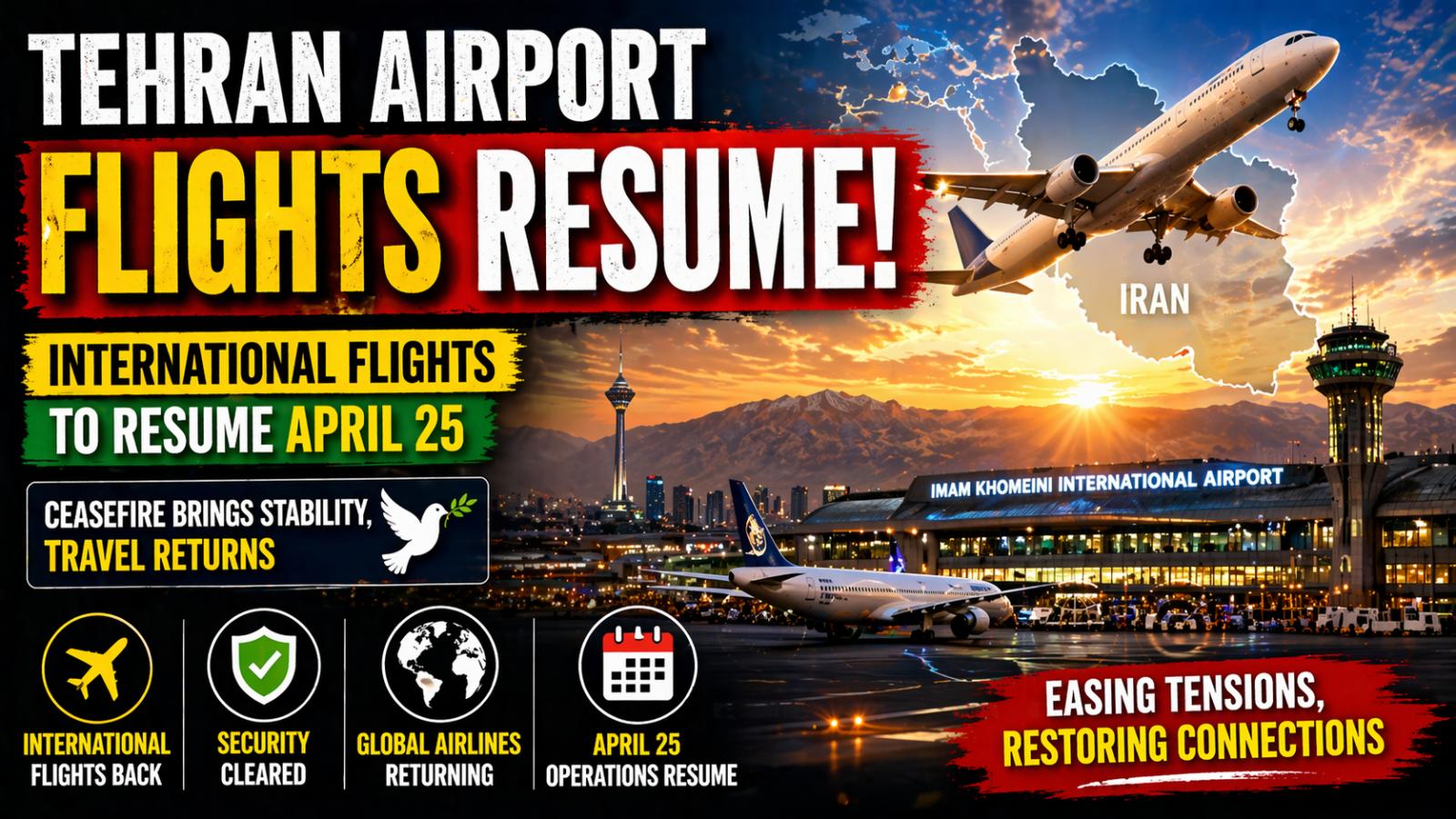
What does Tehran airport reopening signal? It marks easing regional tensions, Tehran’s primary international gateway is preparing to resume global flight operations on Saturday, April 25, 2026, according to Iranian aviation authorities, marking a significant step toward restoring stability after a week-long suspension tied to heightened regional tensions. Airport reopening follows week-long aviation shutdown Imam Khomeini International
What does Tehran airport reopening signal? It marks easing regional tensions
What does Tehran airport reopening signal? It marks easing regional tensions, Tehran’s primary international gateway is preparing to resume global flight operations on Saturday, April 25, 2026, according to Iranian aviation authorities, marking a significant step toward restoring stability after a week-long suspension tied to heightened regional tensions. Airport reopening follows week-long aviation shutdown Imam Khomeini International
What did Kenneth Juster say about India’s global role? He called it a rising civilisational power
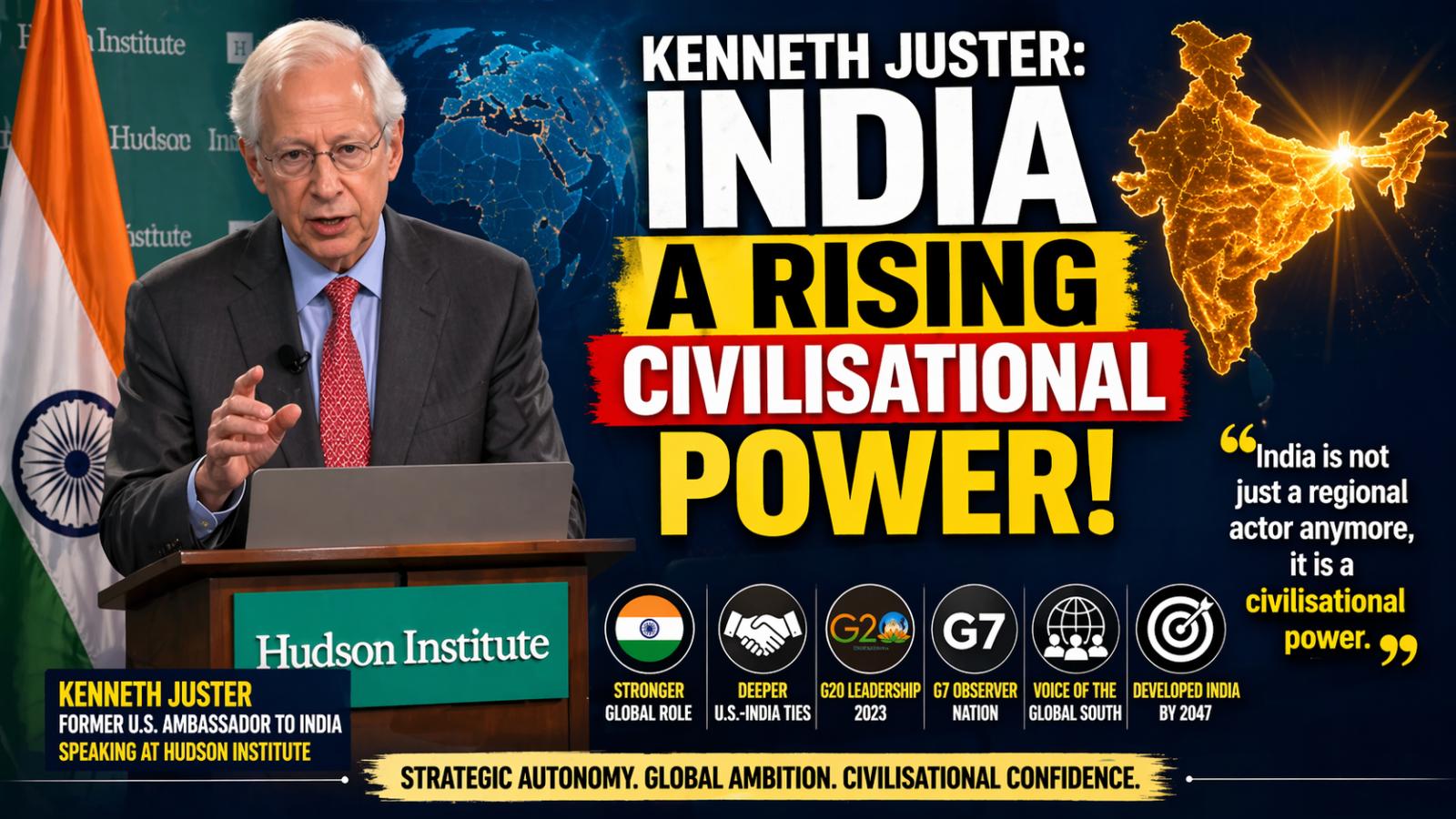
India’s emergence as a civilisational power in global affairs What did Kenneth Juster say about India’s global role? He called it a rising civilisational power, underscoring a major shift in how the country positions itself internationally. Former U.S. Ambassador to India Kenneth Juster said on Thursday, April 23, 2026, that India has evolved into a “civilisational power” under Prime Minister Narendra Modi, reflecting a more assertive and confident global posture. Speaking at an event hosted by the Hudson Institute, Juster identified Modi’s 2014 election as a turning point that accelerated India’s transformation in foreign policy and international engagement. Expanding diplomatic reach and global engagement Juster emphasized that India’s approach to global affairs has shifted significantly over the past decade, with New Delhi demonstrating greater confidence and a willingness to engage broadly with countries across regions. He noted that India no longer views itself as limited to a regional role but instead positions itself as a major global force with a distinct civilizational identity. This evolution has enabled India to expand its diplomatic outreach and pursue strategic ambitions with increased clarity and purpose. Navigating U.S.-China competition with strategic autonomy According to Juster, India’s foreign policy reflects a careful balance between deeper global engagement and maintaining strategic autonomy, particularly in the context of U.S.-China competition. While India shares concerns with other middle powers about preserving independence in decision-making, it has simultaneously strengthened ties with the United States. This dual approach allows India to navigate geopolitical tensions while safeguarding its national interests. Growing influence in global governance platforms Juster also highlighted India’s increasing role in global governance, including its active participation in G7 discussions as a regular observer and its leadership during the G20 presidency in 2023. He pointed to India’s ambition of becoming a developed nation by 2047 as a key driver of its international strategy. Additionally, India has sought to position itself as a leading voice for the Global South, shaping conversations on development, equity, and governance. Washington’s perspective on India’s rising global role Juster’s remarks reflect a broader consensus in Washington that India is emerging as a confident and influential actor on the world stage. By combining strategic independence with proactive diplomacy, India is increasingly seen as a country intent on shaping the global order in the 21st century while advancing its long-term national objectives.
What did Kenneth Juster say about India’s global role? He called it a rising civilisational power
India’s emergence as a civilisational power in global affairs What did Kenneth Juster say about India’s global role? He called it a rising civilisational power, underscoring a major shift in how the country positions itself internationally. Former U.S. Ambassador to India Kenneth Juster said on Thursday, April 23, 2026, that India has evolved into a “civilisational power” under Prime Minister Narendra Modi, reflecting a more assertive and confident global posture. Speaking at an event hosted by the Hudson Institute, Juster identified Modi’s 2014 election as a turning point that accelerated India’s transformation in foreign policy and international engagement. Expanding diplomatic reach and global engagement Juster emphasized that India’s approach to global affairs has shifted significantly over the past decade, with New Delhi demonstrating greater confidence and a willingness to engage broadly with countries across regions. He noted that India no longer views itself as limited to a regional role but instead positions itself as a major global force with a distinct civilizational identity. This evolution has enabled India to expand its diplomatic outreach and pursue strategic ambitions with increased clarity and purpose. Navigating U.S.-China competition with strategic autonomy According to Juster, India’s foreign policy reflects a careful balance between deeper global engagement and maintaining strategic autonomy, particularly in the context of U.S.-China competition. While India shares concerns with other middle powers about preserving independence in decision-making, it has simultaneously strengthened ties with the United States. This dual approach allows India to navigate geopolitical tensions while safeguarding its national interests. Growing influence in global governance platforms Juster also highlighted India’s increasing role in global governance, including its active participation in G7 discussions as a regular observer and its leadership during the G20 presidency in 2023. He pointed to India’s ambition of becoming a developed nation by 2047 as a key driver of its international strategy. Additionally, India has sought to position itself as a leading voice for the Global South, shaping conversations on development, equity, and governance. Washington’s perspective on India’s rising global role Juster’s remarks reflect a broader consensus in Washington that India is emerging as a confident and influential actor on the world stage. By combining strategic independence with proactive diplomacy, India is increasingly seen as a country intent on shaping the global order in the 21st century while advancing its long-term national objectives.
Why is India exiting Chabahar port? Government plans divestment amid US sanctions
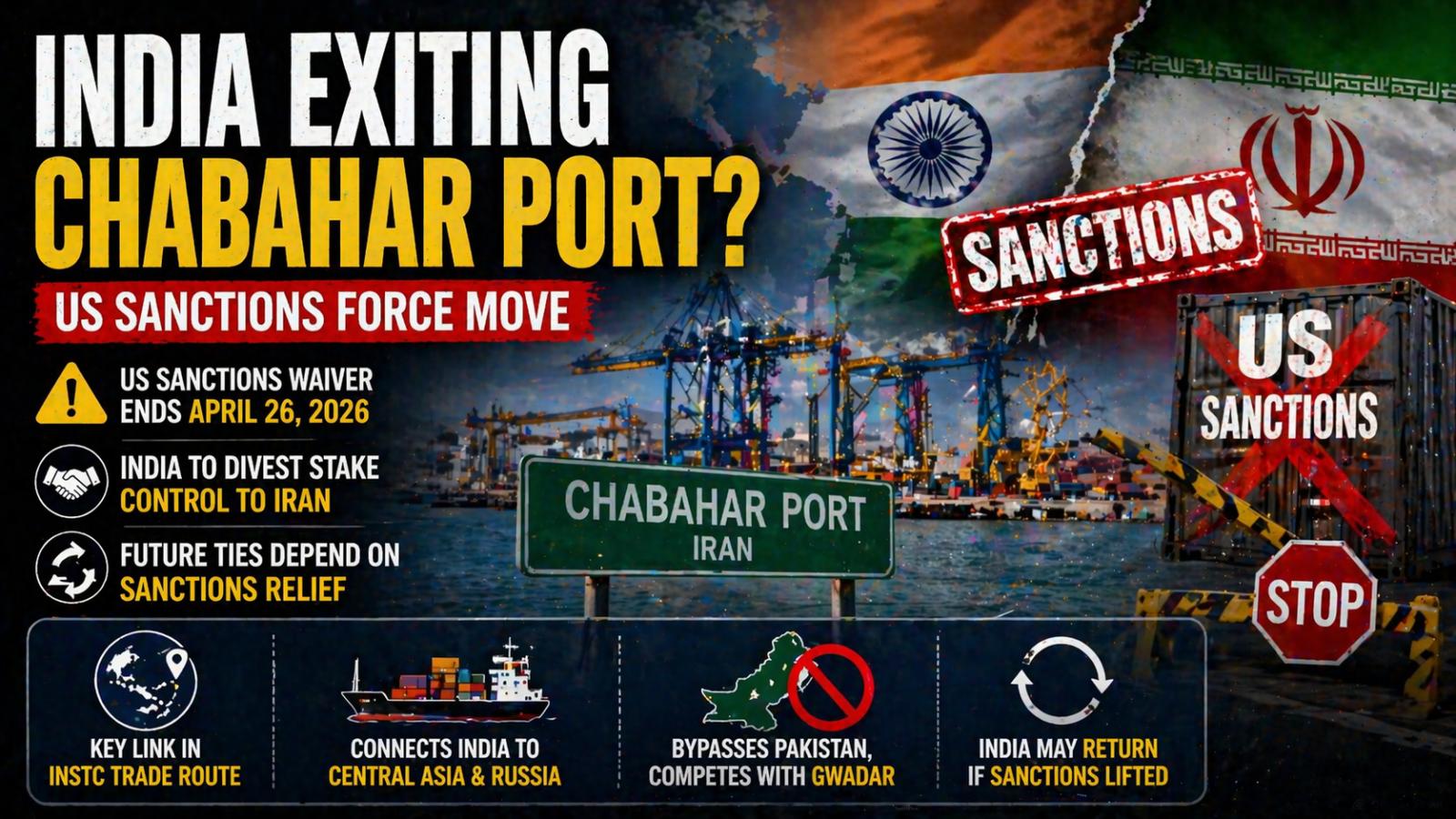
Sanctions pressure drives India’s planned exit from Chabahar port Why is India exiting Chabahar port? Government plans divestment amid US sanctions as New Delhi prepares to step back from the strategic Iranian port ahead of the expiration of a US sanctions waiver on Sunday, April 26, 2026. The move is expected to transfer operational control to a local Iranian entity while preserving the possibility of India’s return if sanctions are lifted or a new waiver is g
Why is India exiting Chabahar port? Government plans divestment amid US sanctions
Sanctions pressure drives India’s planned exit from Chabahar port Why is India exiting Chabahar port? Government plans divestment amid US sanctions as New Delhi prepares to step back from the strategic Iranian port ahead of the expiration of a US sanctions waiver on Sunday, April 26, 2026. The move is expected to transfer operational control to a local Iranian entity while preserving the possibility of India’s return if sanctions are lifted or a new waiver is g
Raghav Chadha Joins BJP, Sparks Major Shift In Rajya Sabha Numbers
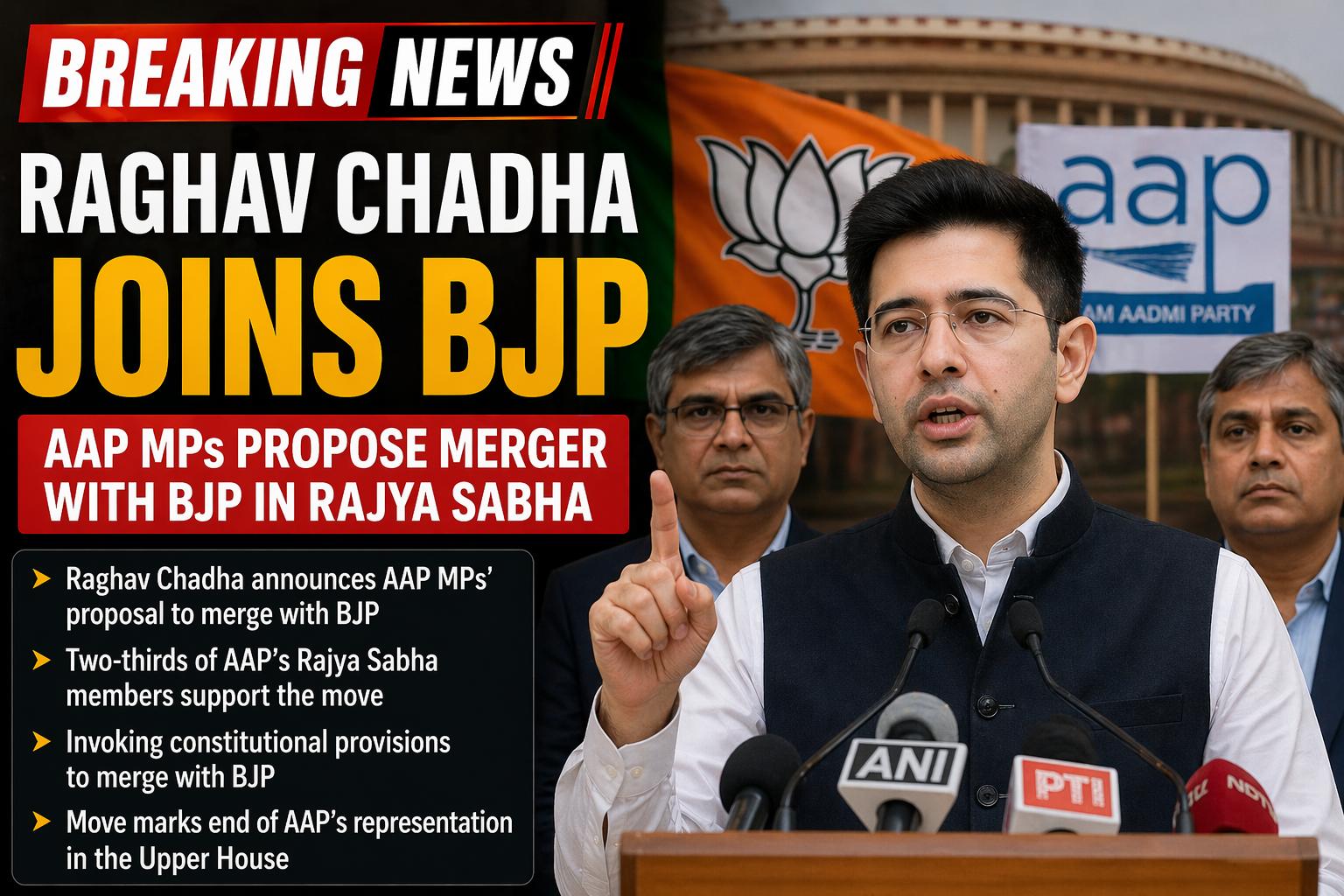
A major political shift unfolded in New Delhi on Friday, April 24, 2026, as Raghav Chadha, along with fellow Rajya Sabha MPs Ashok Mittal and Sandeep Pathak, officially joined the Bharatiya Janata Party after resigning from the Aam Aadmi Party. The leaders were inducted into the BJP in the presence of party chief Nitin Nabin at the party office in Delhi, where they were welcomed with bouquets and greeted senior party members. Earlier in the day, Chadha, aged 37, announced his resignation from AAP along with six other MPs, stating their intention to merge with the BJP by invoking constitutional provisions that allow such a move when two-thirds of a party’s members agree. The group submitted a formal letter along with required documents to Rajya Sabha Chairman C. P. Radhakrishnan. With seven out of ten AAP MPs in the Rajya Sabha switching sides, the anti-defection law is unlikely to apply. As a result, only three AAP MPs—Sanjay Singh, Sant Balbir Singh Seechewal, and N. D. Gupta—remain in the Upper House. Chadha explained that his decision was driven by growing dissatisfaction with the party’s direction, stating that he increasingly felt like “the right person in the wrong party.” His exit comes after a series of developments, including his removal as Deputy Leader in the Rajya Sabha and replacement by Ashok Mittal. Reports also highlighted his absence from key opposition actions, refusal to sign certain notices, and exclusion from the party’s star campaigner list in multiple state elections. Meanwhile, Sandeep Pathak expressed emotional difficulty over leaving the party after a decade-long association. The move has triggered sharp reactions from AAP leadership. Senior leader Sanjay Singh accused the BJP of orchestrating defections through what he described as “Operation Lotus,” alleging misuse of state machinery and investigative agencies to weaken opposition parties. Arvind Kejriwal also reacted, stating that the development represents a betrayal of public trust, particularly ahead of the Punjab elections scheduled for early 2027, where AAP currently holds power. This high-profile political realignment is expected to significantly alter the balance of power in the Rajya Sabha, strengthening the BJP’s position while dealing a major setback to AAP’s parliamentary presence.
Raghav Chadha Joins BJP, Sparks Major Shift In Rajya Sabha Numbers
A major political shift unfolded in New Delhi on Friday, April 24, 2026, as Raghav Chadha, along with fellow Rajya Sabha MPs Ashok Mittal and Sandeep Pathak, officially joined the Bharatiya Janata Party after resigning from the Aam Aadmi Party. The leaders were inducted into the BJP in the presence of party chief Nitin Nabin at the party office in Delhi, where they were welcomed with bouquets and greeted senior party members. Earlier in the day, Chadha, aged 37, announced his resignation from AAP along with six other MPs, stating their intention to merge with the BJP by invoking constitutional provisions that allow such a move when two-thirds of a party’s members agree. The group submitted a formal letter along with required documents to Rajya Sabha Chairman C. P. Radhakrishnan. With seven out of ten AAP MPs in the Rajya Sabha switching sides, the anti-defection law is unlikely to apply. As a result, only three AAP MPs—Sanjay Singh, Sant Balbir Singh Seechewal, and N. D. Gupta—remain in the Upper House. Chadha explained that his decision was driven by growing dissatisfaction with the party’s direction, stating that he increasingly felt like “the right person in the wrong party.” His exit comes after a series of developments, including his removal as Deputy Leader in the Rajya Sabha and replacement by Ashok Mittal. Reports also highlighted his absence from key opposition actions, refusal to sign certain notices, and exclusion from the party’s star campaigner list in multiple state elections. Meanwhile, Sandeep Pathak expressed emotional difficulty over leaving the party after a decade-long association. The move has triggered sharp reactions from AAP leadership. Senior leader Sanjay Singh accused the BJP of orchestrating defections through what he described as “Operation Lotus,” alleging misuse of state machinery and investigative agencies to weaken opposition parties. Arvind Kejriwal also reacted, stating that the development represents a betrayal of public trust, particularly ahead of the Punjab elections scheduled for early 2027, where AAP currently holds power. This high-profile political realignment is expected to significantly alter the balance of power in the Rajya Sabha, strengthening the BJP’s position while dealing a major setback to AAP’s parliamentary presence.
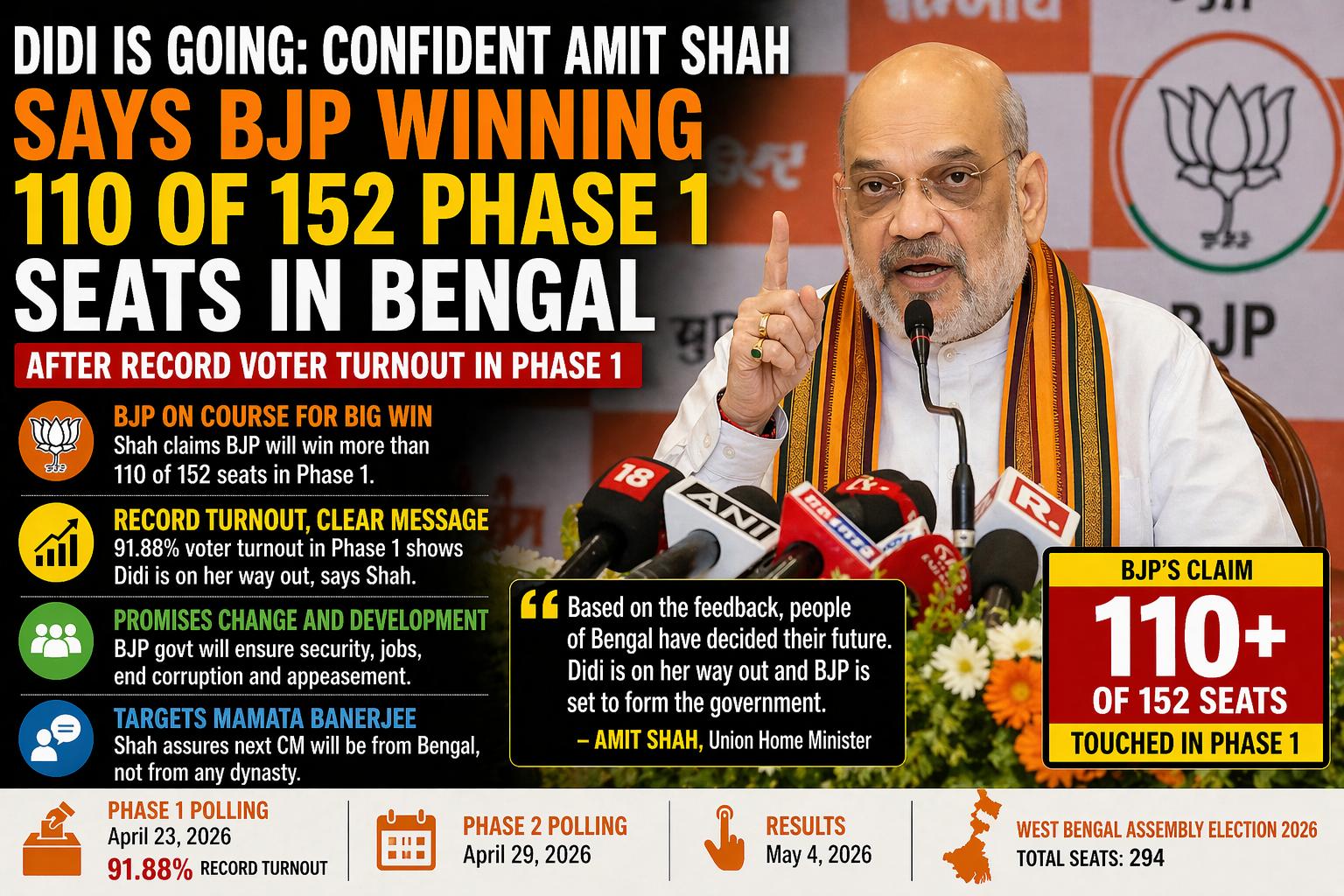
Amit Shah Predicts BJP Sweep In Bengal, Claims 110 Of 152 Phase 1 Seats
Union Home Minister Amit Shah on April 24, 2026, expressed strong confidence in the Bharatiya Janata Party’s prospects in the West Bengal Assembly elections, asserting that the surge in voter turnout signals a decisive shift in favour of the party. Addressing a press conference in Kolkata a day after Phase 1 polling, Shah claimed that the BJP is on track to win more than 110 of the 152 seats that
Amit Shah Predicts BJP Sweep In Bengal, Claims 110 Of 152 Phase 1 Seats
Union Home Minister Amit Shah on April 24, 2026, expressed strong confidence in the Bharatiya Janata Party’s prospects in the West Bengal Assembly elections, asserting that the surge in voter turnout signals a decisive shift in favour of the party. Addressing a press conference in Kolkata a day after Phase 1 polling, Shah claimed that the BJP is on track to win more than 110 of the 152 seats that
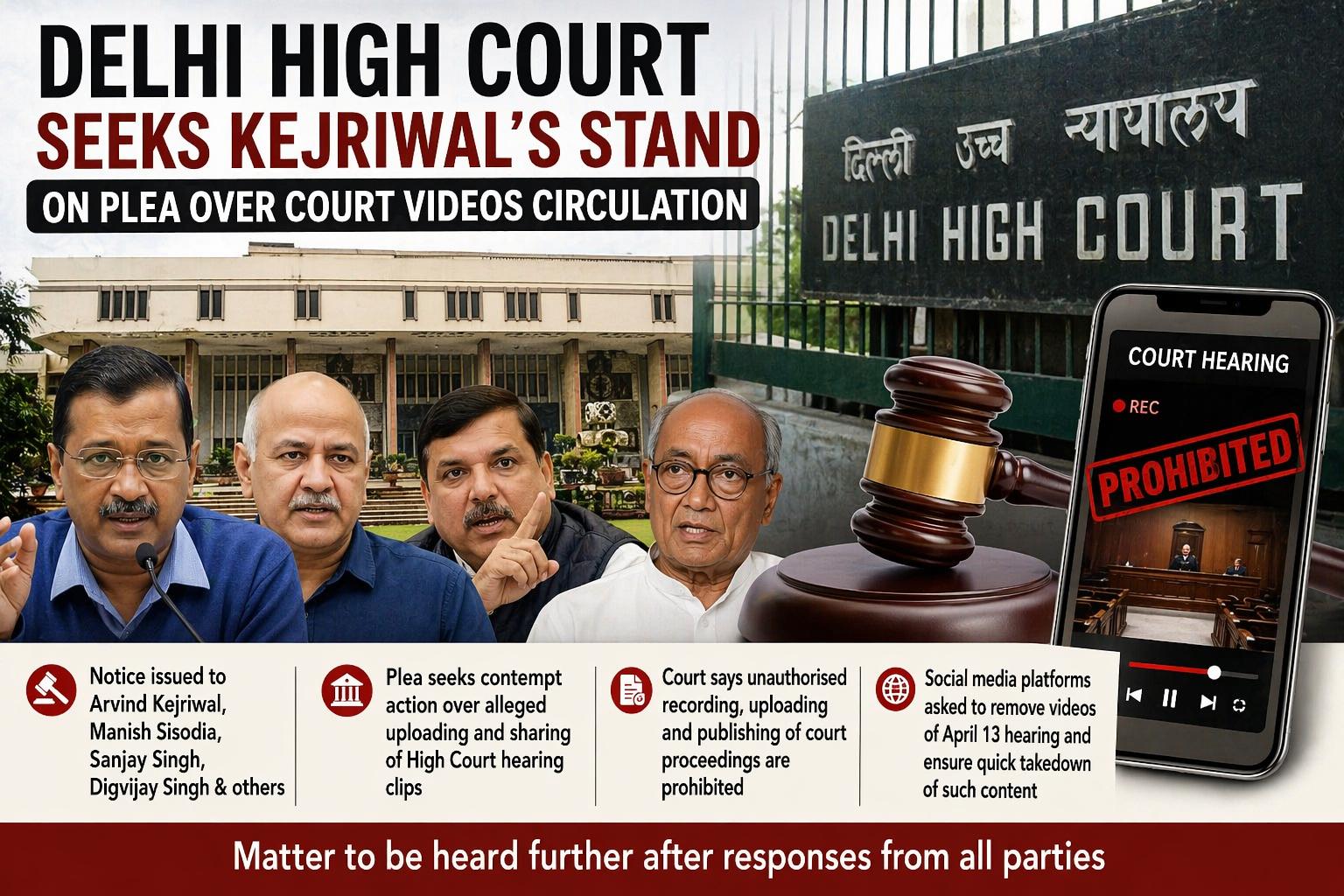
Delhi High Court Issues Notice to Kejriwal, Sisodia Over Court Video Sharing Case
The Delhi High Court has asked AAP leaders Arvind Kejriwal, Manish Sisodia, and Sanjay Singh, along with Congress leader Digvijay Singh and others, to respond to a petition related to the circulation of court hearing videos.The plea seeks contempt action against them for allegedly recording and sharing video clips of a High Court hearing on social media. The case is being heard by a bench of Justice V. Kameswar Rao and Justice Manmeet P.S. Arora. During the hearing, the Court made i
Delhi High Court Issues Notice to Kejriwal, Sisodia Over Court Video Sharing Case
The Delhi High Court has asked AAP leaders Arvind Kejriwal, Manish Sisodia, and Sanjay Singh, along with Congress leader Digvijay Singh and others, to respond to a petition related to the circulation of court hearing videos.The plea seeks contempt action against them for allegedly recording and sharing video clips of a High Court hearing on social media. The case is being heard by a bench of Justice V. Kameswar Rao and Justice Manmeet P.S. Arora. During the hearing, the Court made i