











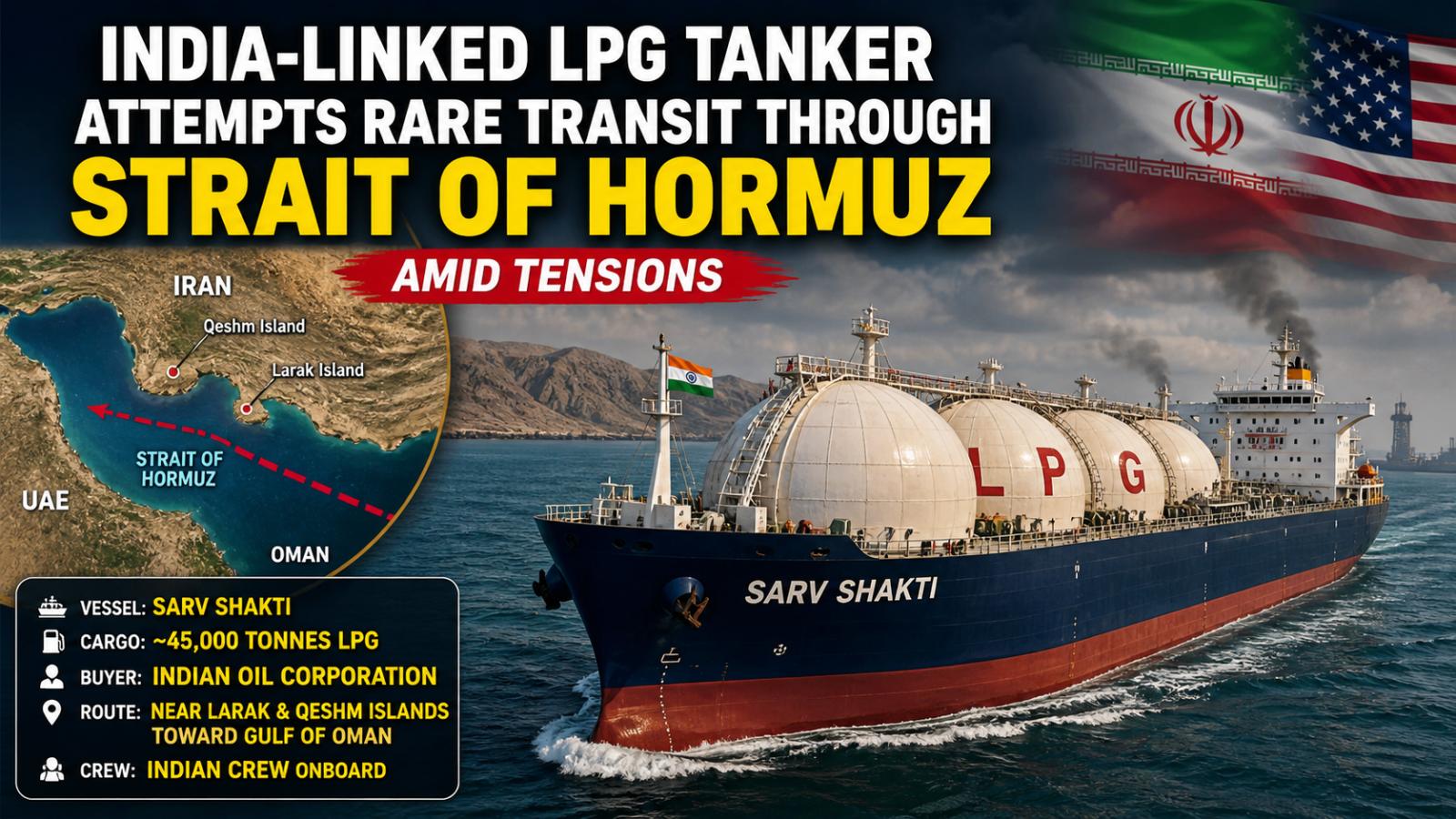
India’s High-Risk Energy Move: LPG Tanker Braces for Dangerous Strait of Hormuz Crossing
In a moment that could quietly shape global energy markets, an India-linked LPG tanker is attempting something most ships are now avoiding. The vessel, Sarv Shakti, loaded with nearly 45,000 tonnes of liquefied petroleum gas, is moving toward the tense waters of the Strait of Hormuz — a route that has suddenly become one of the world’s most dangerous maritime
India’s High-Risk Energy Move: LPG Tanker Braces for Dangerous Strait of Hormuz Crossing
In a moment that could quietly shape global energy markets, an India-linked LPG tanker is attempting something most ships are now avoiding. The vessel, Sarv Shakti, loaded with nearly 45,000 tonnes of liquefied petroleum gas, is moving toward the tense waters of the Strait of Hormuz — a route that has suddenly become one of the world’s most dangerous maritime
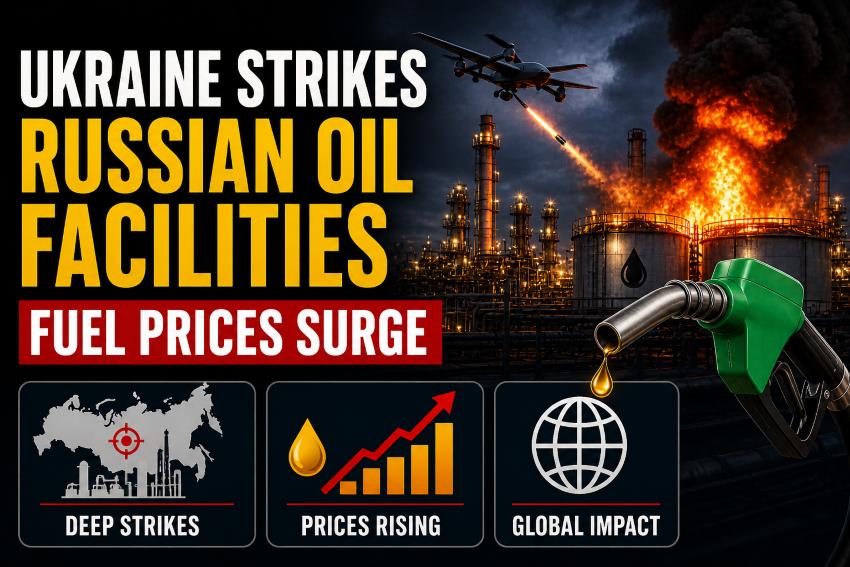
Ukraine Strikes Russian Oil Facilities As Fuel Prices Surge Globally
Ukraine has intensified its long-range strikes on energy infrastructure located deep inside Russia, targeting oil refineries, storage depots, and supply routes. These attacks mark a significant escalation in the ongoing
Ukraine Strikes Russian Oil Facilities As Fuel Prices Surge Globally
Ukraine has intensified its long-range strikes on energy infrastructure located deep inside Russia, targeting oil refineries, storage depots, and supply routes. These attacks mark a significant escalation in the ongoing
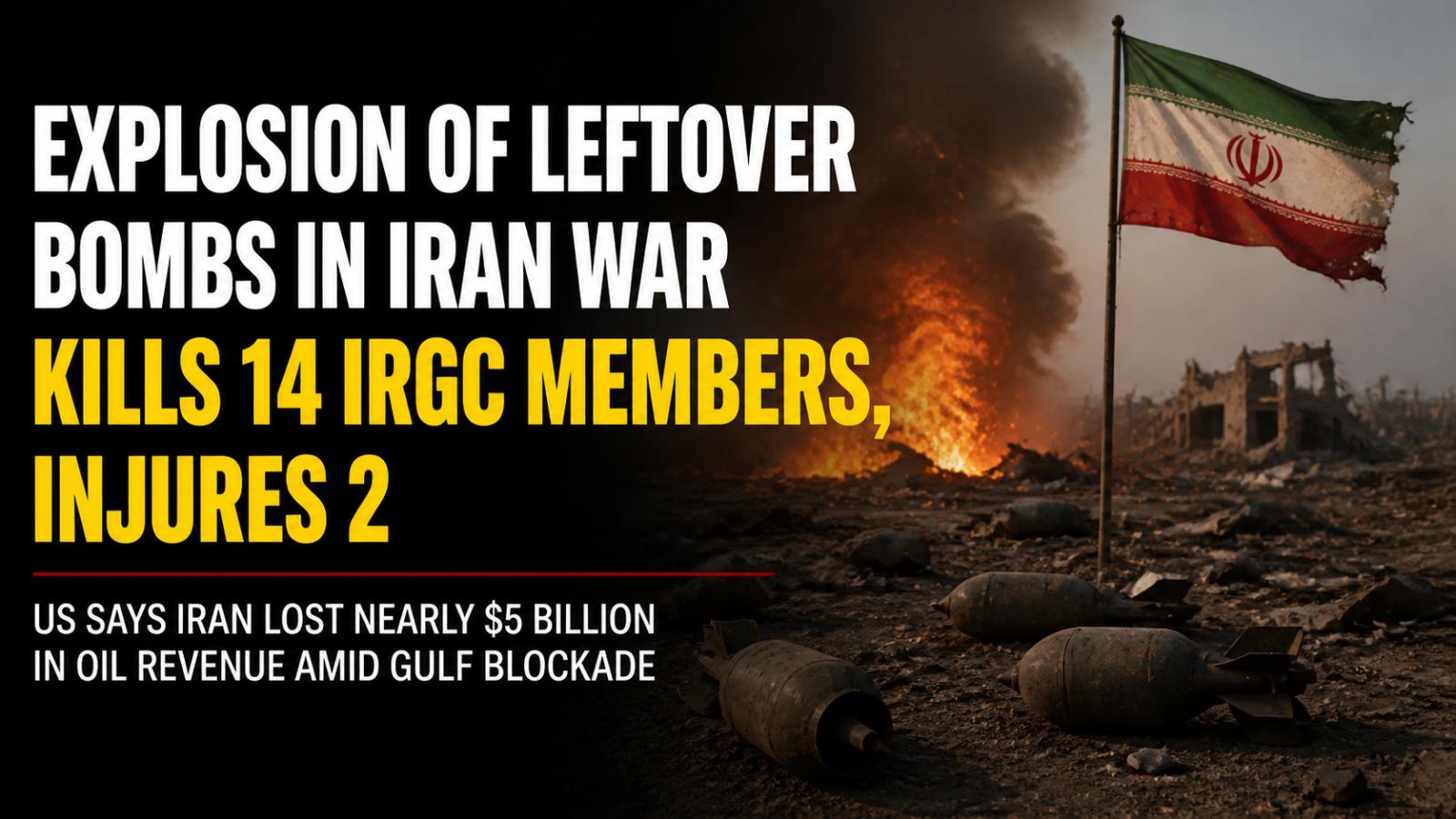
Explosion of leftover bombs kills 14 IRGC members in northwestern Iran
Explosion kills 14 IRGC members in northwestern Iran On Friday, May 1, 14 members of Iran's Islamic Revolutionary Guard Corps (IRGC) were killed in an explosion caused by leftover bombs from the ongoing war. The explosion took place in Zanjan Province, a region in northwestern Iran. This incident marks the largest number of casualties for the IRGC since the US-Iran ceasefi
Explosion of leftover bombs kills 14 IRGC members in northwestern Iran
Explosion kills 14 IRGC members in northwestern Iran On Friday, May 1, 14 members of Iran's Islamic Revolutionary Guard Corps (IRGC) were killed in an explosion caused by leftover bombs from the ongoing war. The explosion took place in Zanjan Province, a region in northwestern Iran. This incident marks the largest number of casualties for the IRGC since the US-Iran ceasefi
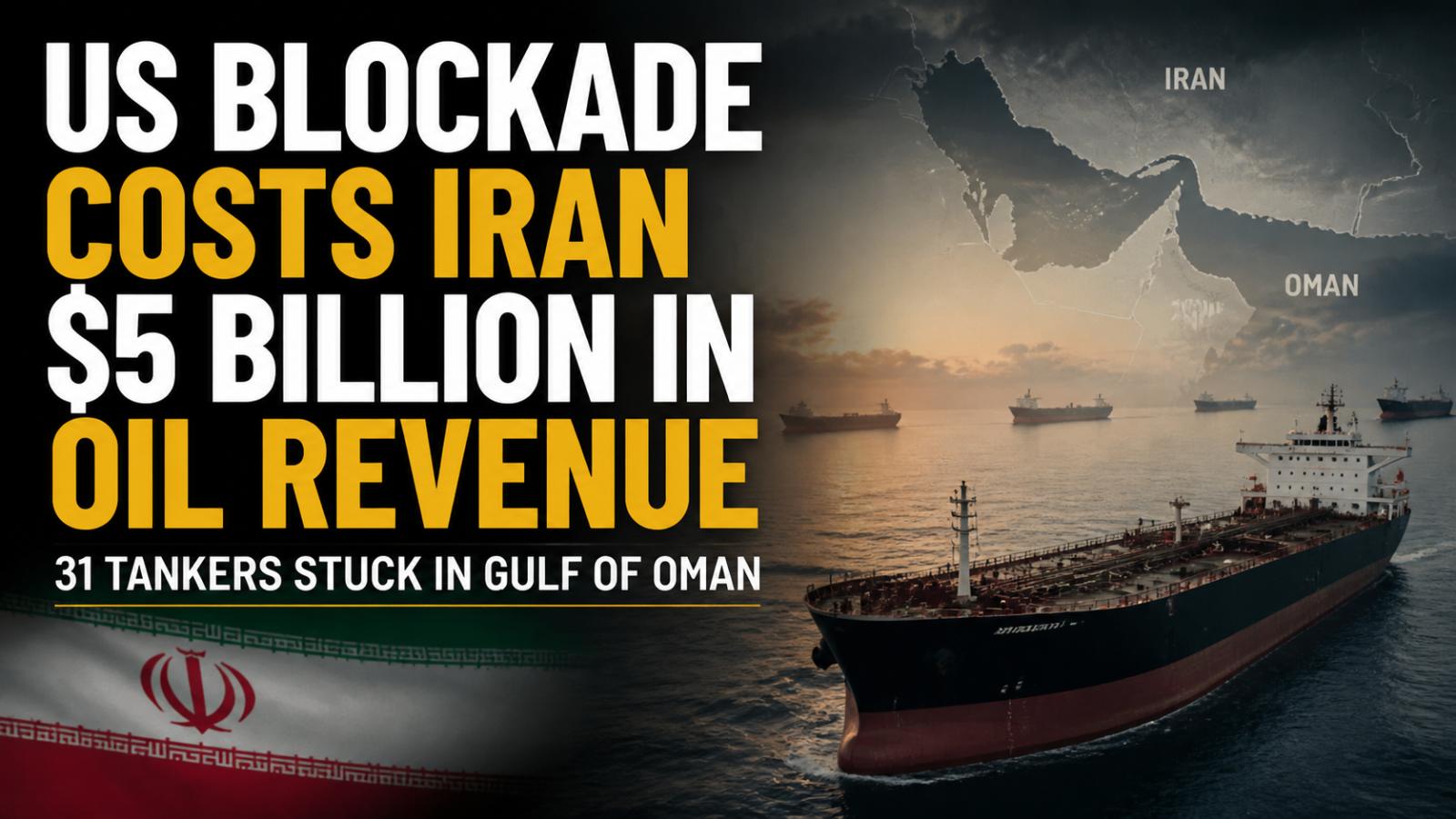
US blockade in Gulf of Oman halts $5 billion in Iranian oil revenue
The ongoing US blockade in the Gulf of Oman has forced Iran to face a massive loss, with the US Defense Department estimating that Tehran has lost nearly $5 billion in oil revenue. This economic setback is the result of a blockade imposed by the US military in an effort to increase pressure on Iran’s economy. The blockade, which began on April 13, 2025, has been described as one of President Donald Trump’s most powerful tools to drive Iran into negotiations that aim to resolve the ongoing conflict. However, diplomatic talks have been repeatedly stalling and restarting, leaving both parties in a stalemate. According to Pentagon officials, more than 40 vessels have been redirected since the operation’s start, as they attempted to smuggle oil and other contraband through the region. In total, 31 tankers carrying approximately 53 million barrels of Iranian crude are now stuck in the Gulf of Oman, and these shipments are valued at around $4.8 billion. Of these, two vessels have already been seized by US forces. With storage capacity on land reaching its limits, Iran has resorted to using older tankers as floating storage units, as reported by analysts. These tankers, which are no longer fit for regular commercial routes, have become temporary storage sites for Iran’s oil. Some shipments are being rerouted along longer and more expensive paths, primarily to avoid interception by US forces. To achieve this, Iranian ships have been following coastlines near Pakistan and India and using safer maritime corridors towards the Strait of Malacca, a key transit point for oil bound for China. Tanker tracking analysts such as Samir Madani, co-founder of TankerTrackers.com, have noted a shift in Iranian shipping patterns. He explained how one Iranian tanker, called “HUGE,” cleverly demonstrated how ships are using stealth routes to evade detection. According to Madani, ships are increasingly relying on hidden paths through regional waters to avoid the US military blockade. Madani also predicted that, in the future, Iran might attempt a large-scale breakout of its tankers. "I think the Iranians will wait for an opportunity to launch an overnight 'Great Escape' once they have built up further storage near the border with Pakistan,” Madani told Axios. This situation is part of a broader economic struggle between Iran and the United States, with both countries resorting to maritime pressure tactics. Iran has previously restricted access to the Strait of Hormuz, a critical shipping route, in retaliation. Meanwhile, the US has been tightening its control over the Gulf of Oman, an entry point to key waterways. According to Gregory Brew, an analyst at Eurasia Group, Iran is just weeks away from running out of storage space for its oil, which could collapse its oil production capacity. "They're probably several weeks, or perhaps as much as a month, away from running out of storage," Brew said. The Pentagon’s spokesperson, Joel Valdez, emphasized the severity of the situation, stating that the blockade is fully active and that the US military is delivering a devastating blow to Iran’s ability to fund terrorism and regional destabilization. “Our armed forces in the region will continue to maintain this unrelenting pressure,” Valdez said. This strategy, although harsh, seems designed to wear down Iran’s ability to sustain itself economically, and possibly force a change in its approach to negotiations.
US blockade in Gulf of Oman halts $5 billion in Iranian oil revenue
The ongoing US blockade in the Gulf of Oman has forced Iran to face a massive loss, with the US Defense Department estimating that Tehran has lost nearly $5 billion in oil revenue. This economic setback is the result of a blockade imposed by the US military in an effort to increase pressure on Iran’s economy. The blockade, which began on April 13, 2025, has been described as one of President Donald Trump’s most powerful tools to drive Iran into negotiations that aim to resolve the ongoing conflict. However, diplomatic talks have been repeatedly stalling and restarting, leaving both parties in a stalemate. According to Pentagon officials, more than 40 vessels have been redirected since the operation’s start, as they attempted to smuggle oil and other contraband through the region. In total, 31 tankers carrying approximately 53 million barrels of Iranian crude are now stuck in the Gulf of Oman, and these shipments are valued at around $4.8 billion. Of these, two vessels have already been seized by US forces. With storage capacity on land reaching its limits, Iran has resorted to using older tankers as floating storage units, as reported by analysts. These tankers, which are no longer fit for regular commercial routes, have become temporary storage sites for Iran’s oil. Some shipments are being rerouted along longer and more expensive paths, primarily to avoid interception by US forces. To achieve this, Iranian ships have been following coastlines near Pakistan and India and using safer maritime corridors towards the Strait of Malacca, a key transit point for oil bound for China. Tanker tracking analysts such as Samir Madani, co-founder of TankerTrackers.com, have noted a shift in Iranian shipping patterns. He explained how one Iranian tanker, called “HUGE,” cleverly demonstrated how ships are using stealth routes to evade detection. According to Madani, ships are increasingly relying on hidden paths through regional waters to avoid the US military blockade. Madani also predicted that, in the future, Iran might attempt a large-scale breakout of its tankers. "I think the Iranians will wait for an opportunity to launch an overnight 'Great Escape' once they have built up further storage near the border with Pakistan,” Madani told Axios. This situation is part of a broader economic struggle between Iran and the United States, with both countries resorting to maritime pressure tactics. Iran has previously restricted access to the Strait of Hormuz, a critical shipping route, in retaliation. Meanwhile, the US has been tightening its control over the Gulf of Oman, an entry point to key waterways. According to Gregory Brew, an analyst at Eurasia Group, Iran is just weeks away from running out of storage space for its oil, which could collapse its oil production capacity. "They're probably several weeks, or perhaps as much as a month, away from running out of storage," Brew said. The Pentagon’s spokesperson, Joel Valdez, emphasized the severity of the situation, stating that the blockade is fully active and that the US military is delivering a devastating blow to Iran’s ability to fund terrorism and regional destabilization. “Our armed forces in the region will continue to maintain this unrelenting pressure,” Valdez said. This strategy, although harsh, seems designed to wear down Iran’s ability to sustain itself economically, and possibly force a change in its approach to negotiations.
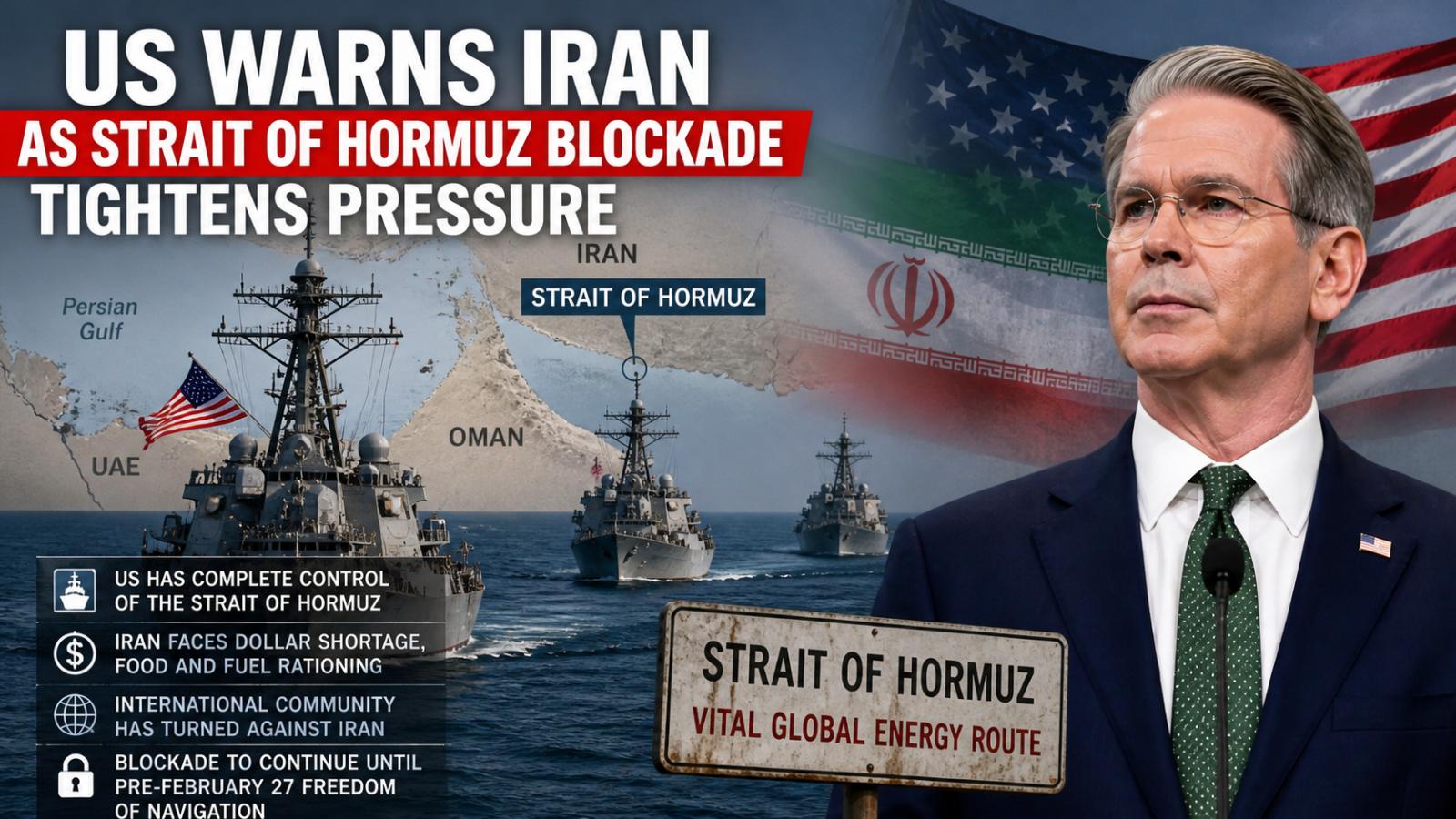
US warns Iran as Strait of Hormuz blockade tightens pressure
The US tightened pressure on Iran with a Strait of Hormuz blockade, disrupting oil trade and worsening Iran’s economic crisis, while internal political divisions grow and tensions with Washington escalate. US warns Iran as Strait of Hormuz blockade tightens pressure as tensions escalated following a sharply worded statement by U.S. Treasury Secretary Scott Bessent on Friday, in which he criticized Iran’s leadership and outlined the United States’ strategic position in the ongoing standoff. In a public post, Bessent asserted that the United States maintains full control over the Strait of Hormuz, a critical global energy transit route, and emphasized that a naval blockade would remain in effect until freedom of navigation conditions are restored to levels seen before February 27. The remarks come amid heightened geopolitical tensions involving Iran and the United States, with Bessent also pointing to economic strain within Iran, including a shortage of U.S. dollars and the implementation of food and gasoline rationing. He further stated that international sentiment has increasingly turned against Tehran, underscoring Washington’s broader diplomatic stance. The blockade represents a significant shift in pressure tactics. For years, Iran had managed to navigate sanctions by exporting oil through informal channels, particularly to China, using a network of so-called shadow vessels. However, U.S. naval operations have disrupted these routes, preventing tankers from bypassing enforcement measures and, in some cases, pursuing them beyond the Persian Gulf into the Indian Ocean. The situation escalated after Iran targeted commercial vessels and restricted maritime traffic through the Hormuz corridor, a move that disrupted global oil and liquefied natural gas shipments. In response, the United States deployed naval forces to secure the passage, effectively limiting Iran’s ability to continue its covert export operations. Internally, the crisis has exposed divisions within Iran’s leadership. President Masoud Pezeshkian is reportedly aligned with moderate factions seeking negotiations, while hardline figures such as Saeed Jalili advocate a more confrontational approach. The divergence reflects broader concerns about the sustainability of the conflict, particularly as economic conditions deteriorate. President Donald Trump has indicated support for maintaining the blockade, describing it as highly effective and signaling preparedness for a prolonged standoff. According to statements made to reporters, the administration is considering extending the measure until Iran meets specific nuclear-related demands. The economic impact on Iran has been severe. Reports indicate that unemployment has surged, food prices have risen sharply, and widespread internet disruptions have affected digital commerce. The national currency has weakened significantly over the past year, with the exchange rate reaching approximately 1.81 million rials per U.S. dollar, intensifying concerns about potential economic collapse.
US warns Iran as Strait of Hormuz blockade tightens pressure
The US tightened pressure on Iran with a Strait of Hormuz blockade, disrupting oil trade and worsening Iran’s economic crisis, while internal political divisions grow and tensions with Washington escalate. US warns Iran as Strait of Hormuz blockade tightens pressure as tensions escalated following a sharply worded statement by U.S. Treasury Secretary Scott Bessent on Friday, in which he criticized Iran’s leadership and outlined the United States’ strategic position in the ongoing standoff. In a public post, Bessent asserted that the United States maintains full control over the Strait of Hormuz, a critical global energy transit route, and emphasized that a naval blockade would remain in effect until freedom of navigation conditions are restored to levels seen before February 27. The remarks come amid heightened geopolitical tensions involving Iran and the United States, with Bessent also pointing to economic strain within Iran, including a shortage of U.S. dollars and the implementation of food and gasoline rationing. He further stated that international sentiment has increasingly turned against Tehran, underscoring Washington’s broader diplomatic stance. The blockade represents a significant shift in pressure tactics. For years, Iran had managed to navigate sanctions by exporting oil through informal channels, particularly to China, using a network of so-called shadow vessels. However, U.S. naval operations have disrupted these routes, preventing tankers from bypassing enforcement measures and, in some cases, pursuing them beyond the Persian Gulf into the Indian Ocean. The situation escalated after Iran targeted commercial vessels and restricted maritime traffic through the Hormuz corridor, a move that disrupted global oil and liquefied natural gas shipments. In response, the United States deployed naval forces to secure the passage, effectively limiting Iran’s ability to continue its covert export operations. Internally, the crisis has exposed divisions within Iran’s leadership. President Masoud Pezeshkian is reportedly aligned with moderate factions seeking negotiations, while hardline figures such as Saeed Jalili advocate a more confrontational approach. The divergence reflects broader concerns about the sustainability of the conflict, particularly as economic conditions deteriorate. President Donald Trump has indicated support for maintaining the blockade, describing it as highly effective and signaling preparedness for a prolonged standoff. According to statements made to reporters, the administration is considering extending the measure until Iran meets specific nuclear-related demands. The economic impact on Iran has been severe. Reports indicate that unemployment has surged, food prices have risen sharply, and widespread internet disruptions have affected digital commerce. The national currency has weakened significantly over the past year, with the exchange rate reaching approximately 1.81 million rials per U.S. dollar, intensifying concerns about potential economic collapse.
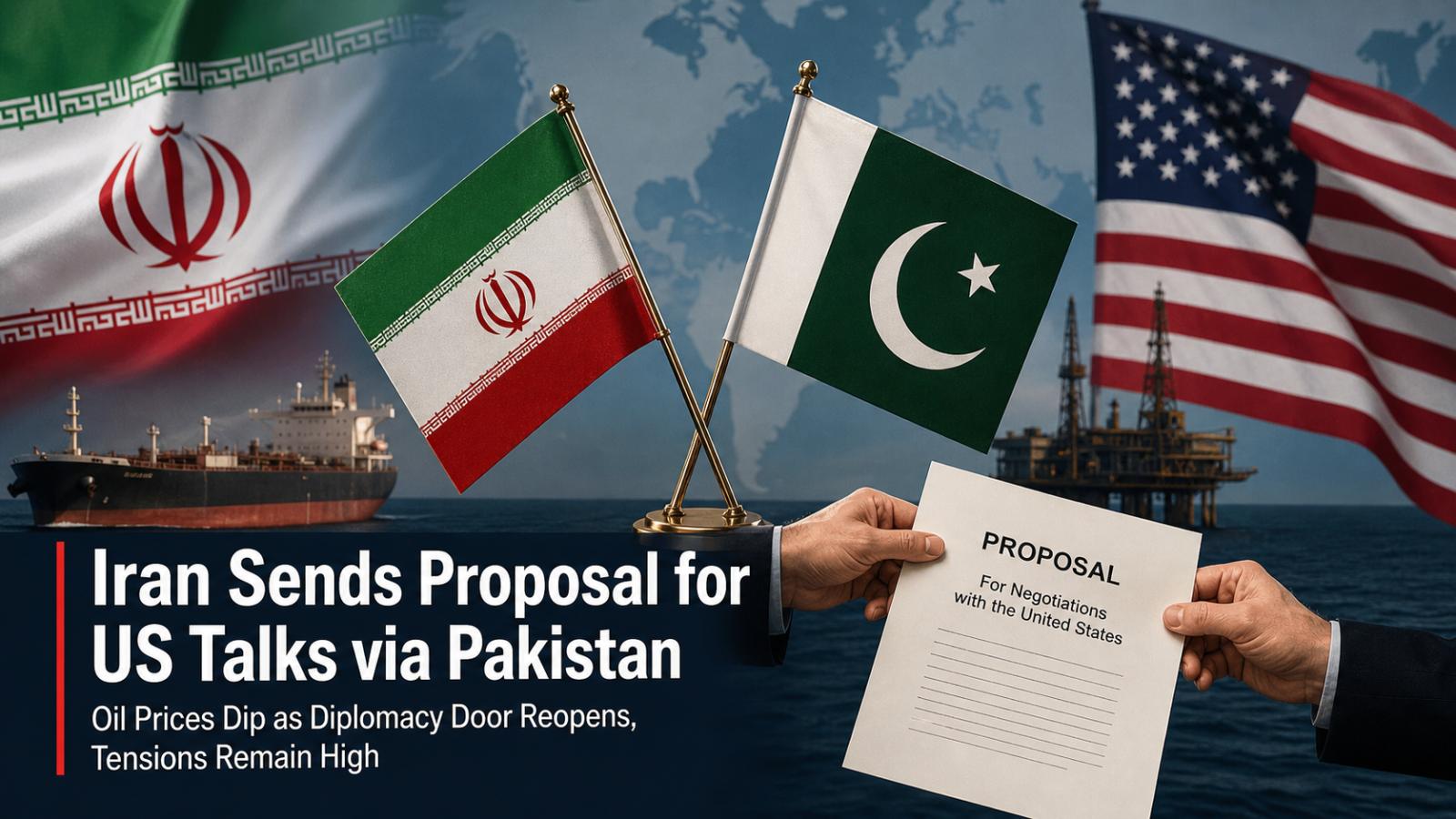
What did Iran propose to the U.S.? New talks plan sent via Pakistan signals diplomacy
Iran has delivered a new proposal for negotiations with the United States through Pakistan, signaling a potential diplomatic opening amid heightened regional tensions. According to IRNA, the proposal was formally
What did Iran propose to the U.S.? New talks plan sent via Pakistan signals diplomacy
Iran has delivered a new proposal for negotiations with the United States through Pakistan, signaling a potential diplomatic opening amid heightened regional tensions. According to IRNA, the proposal was formally
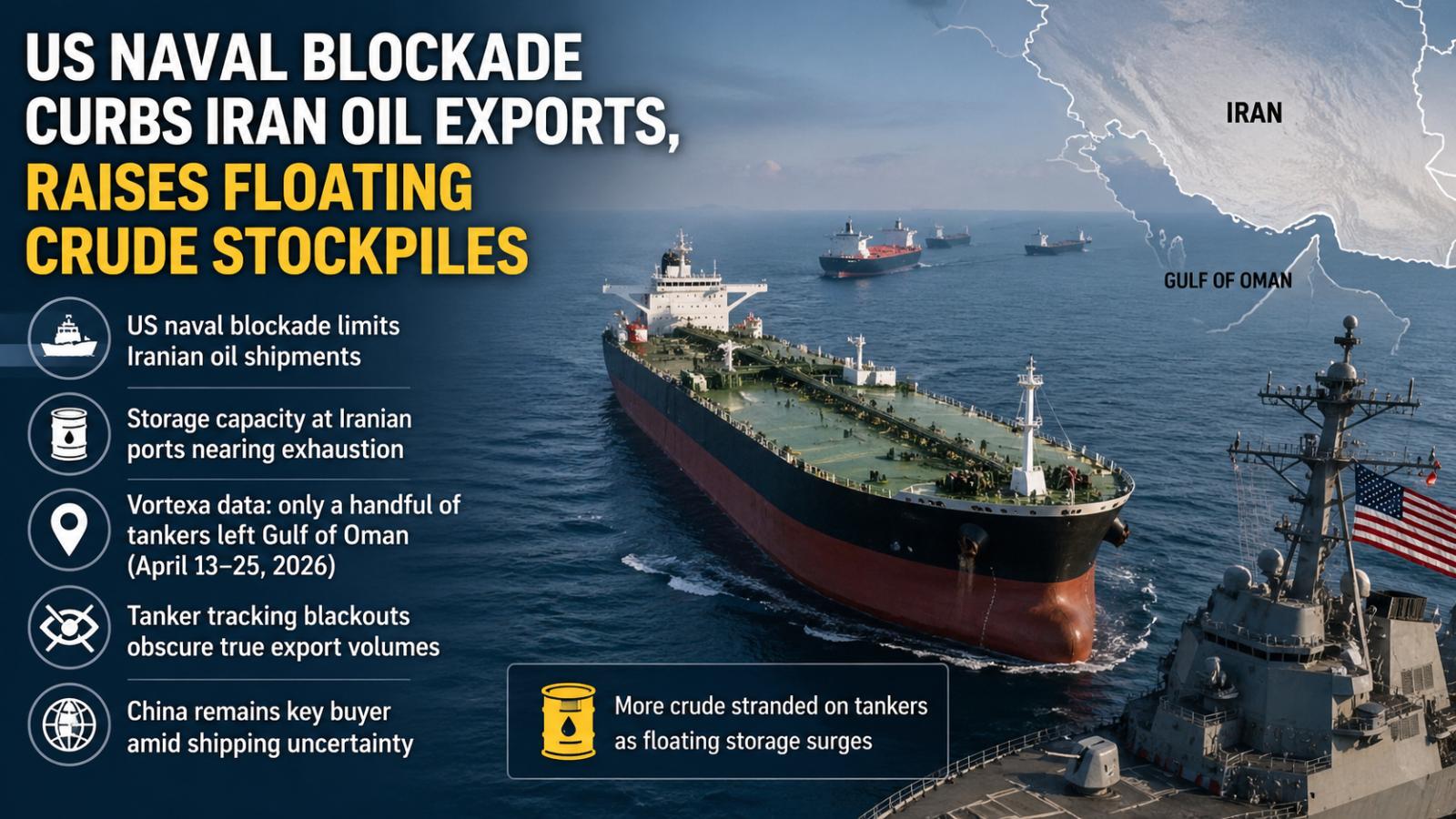
US naval blockade curbs Iran oil exports, raises floating crude stockpiles
The US naval blockade has sharply reduced Iran’s oil exports, forcing crude into floating storage as onshore capacity fills. Limited tanker movement and tracking blackouts obscure shipments, raising concerns over global supply transparency and market stability US naval blockade curbs Iran oil exports, raises floating crude stockpiles has significantly reduced Tehran’s oil shipments, leaving large volumes stranded at sea as storage capacity tightens. Analysts citing shipping data report that Iranian crude exports have dropped sharply due to heightened maritime restrictions and operational risks in key transit routes. According to data from oil analytics firm Vortexa, only a limited number of tankers carrying Iranian crude departed the Gulf of Oman between Sunday, April 13, 2026, and Friday, April 25, 2026. This decline underscores the growing impact of the blockade, which has disrupted traditional export channels and created uncertainty across global energy markets. The situation is further complicated by tanker operators switching off tracking systems to avoid detection, making it difficult to accurately measure export volumes. China remains Iran’s primary buyer, but the opacity surrounding shipments has increased as vessels attempt to evade monitoring systems. Analysts note that this lack of transparency could distort global supply assessments and complicate pricing trends in international oil markets. As Iranian onshore storage facilities reach capacity, more crude is being held on tankers, effectively turning them into floating storage units. The blockade’s ripple effects extend beyond oil logistics. Broader policy measures tied to the maritime restrictions have contributed to operational challenges within U.S. federal systems. Since Friday, February 14, 2026, certain agencies have faced funding interruptions, leading to disruptions including extended wait times at major U.S. airports. While a recent measure supported by President Donald Trump has reopened the Department of Homeland Security, it does not allocate additional funding for Immigration and Customs Enforcement or the U.S. Border Patrol. The evolving situation highlights the intersection of geopolitical strategy and global energy flows, with analysts warning that prolonged disruptions could tighten supply chains and influence oil prices worldwide.
US naval blockade curbs Iran oil exports, raises floating crude stockpiles
The US naval blockade has sharply reduced Iran’s oil exports, forcing crude into floating storage as onshore capacity fills. Limited tanker movement and tracking blackouts obscure shipments, raising concerns over global supply transparency and market stability US naval blockade curbs Iran oil exports, raises floating crude stockpiles has significantly reduced Tehran’s oil shipments, leaving large volumes stranded at sea as storage capacity tightens. Analysts citing shipping data report that Iranian crude exports have dropped sharply due to heightened maritime restrictions and operational risks in key transit routes. According to data from oil analytics firm Vortexa, only a limited number of tankers carrying Iranian crude departed the Gulf of Oman between Sunday, April 13, 2026, and Friday, April 25, 2026. This decline underscores the growing impact of the blockade, which has disrupted traditional export channels and created uncertainty across global energy markets. The situation is further complicated by tanker operators switching off tracking systems to avoid detection, making it difficult to accurately measure export volumes. China remains Iran’s primary buyer, but the opacity surrounding shipments has increased as vessels attempt to evade monitoring systems. Analysts note that this lack of transparency could distort global supply assessments and complicate pricing trends in international oil markets. As Iranian onshore storage facilities reach capacity, more crude is being held on tankers, effectively turning them into floating storage units. The blockade’s ripple effects extend beyond oil logistics. Broader policy measures tied to the maritime restrictions have contributed to operational challenges within U.S. federal systems. Since Friday, February 14, 2026, certain agencies have faced funding interruptions, leading to disruptions including extended wait times at major U.S. airports. While a recent measure supported by President Donald Trump has reopened the Department of Homeland Security, it does not allocate additional funding for Immigration and Customs Enforcement or the U.S. Border Patrol. The evolving situation highlights the intersection of geopolitical strategy and global energy flows, with analysts warning that prolonged disruptions could tighten supply chains and influence oil prices worldwide.
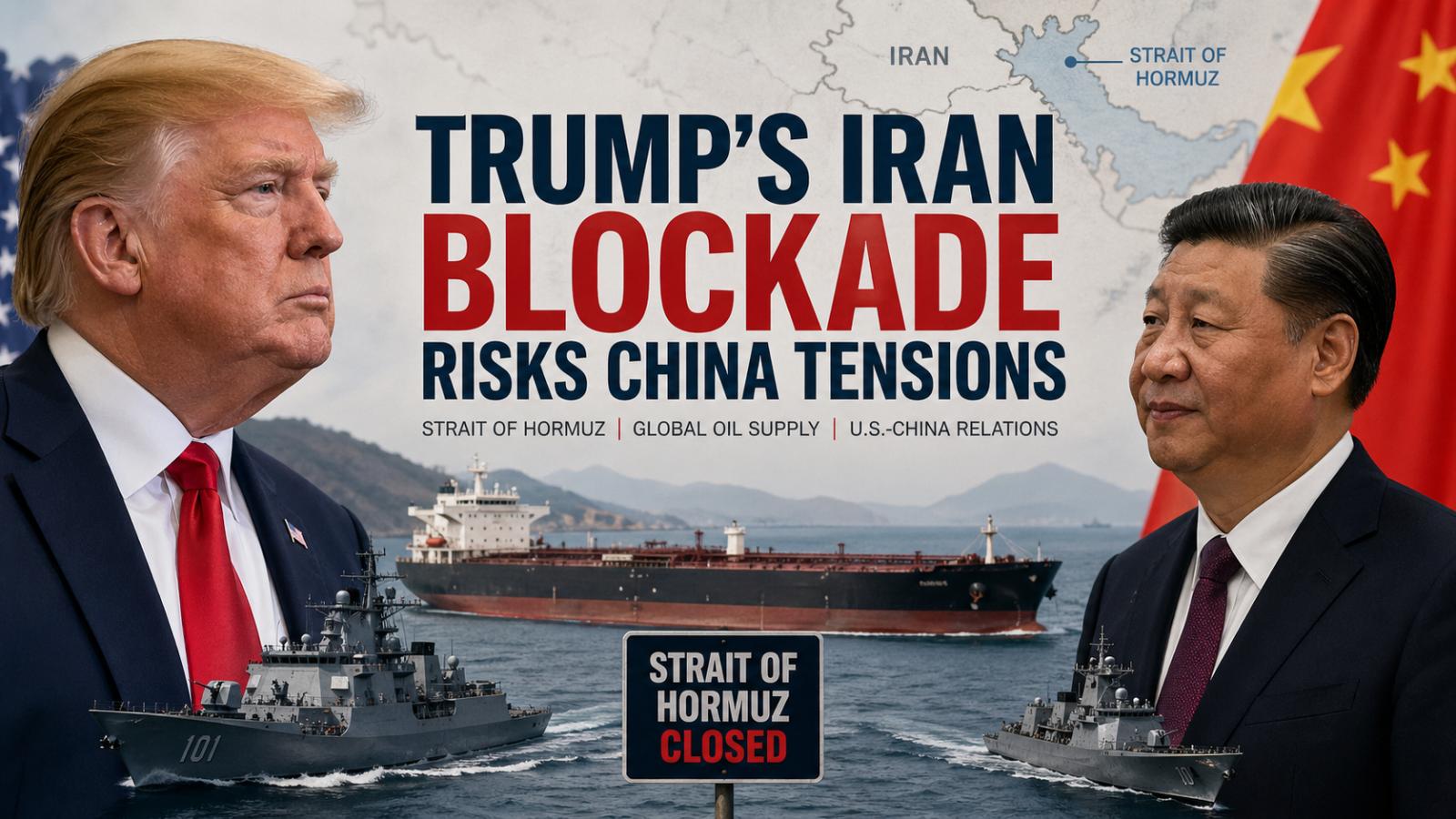
Is Trump’s Iran blockade complicating China talks? Yes, tensions rise
President Donald Trump has signaled his intention to maintain a naval blockade on Iranian shipping until Tehran meets U.S. demands, a move that is expected to keep the Strait of Hormuz effectively closed ahead of his planned visit to China. The decision introduces new complications for upcoming diplomatic
Is Trump’s Iran blockade complicating China talks? Yes, tensions rise
President Donald Trump has signaled his intention to maintain a naval blockade on Iranian shipping until Tehran meets U.S. demands, a move that is expected to keep the Strait of Hormuz effectively closed ahead of his planned visit to China. The decision introduces new complications for upcoming diplomatic
US pushes global coalition for Strait of Hormuz as Iran conflict disrupts oil trade
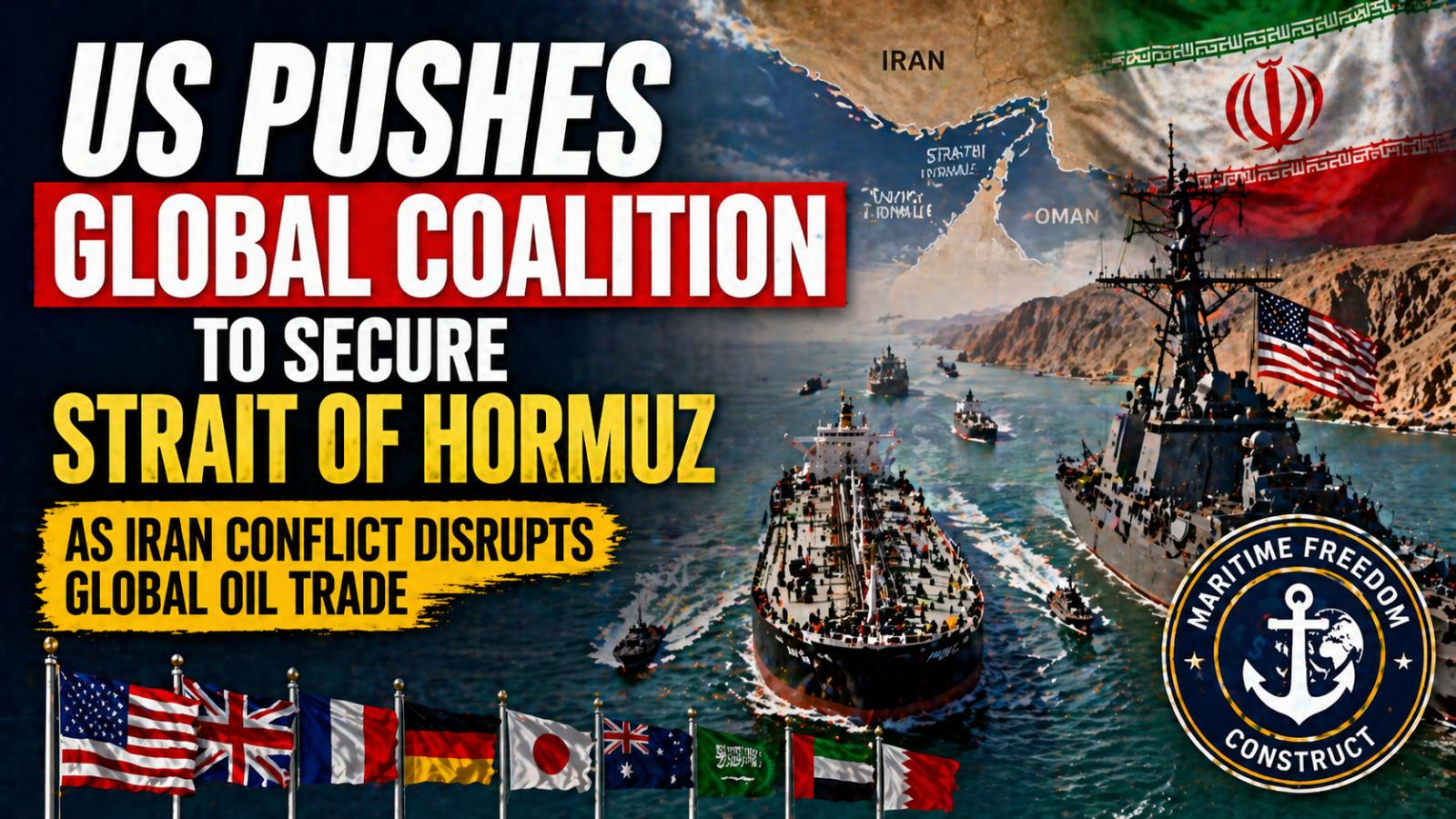
The United States is accelerating efforts to form a global coalition to secure the Strait of Hormuz, as the ongoing US-Iran conflict continues to disrupt critical shipping routes and drive volatility in global oil trade. The initiative, known as the Maritime Freedom Construct, aims to coordinate international maritime security, sanctions policy, and intelligence sharing to ensure safe navigation through one of the world’s most strategic waterways. The Strait of Hormuz, a narrow pa
US pushes global coalition for Strait of Hormuz as Iran conflict disrupts oil trade
The United States is accelerating efforts to form a global coalition to secure the Strait of Hormuz, as the ongoing US-Iran conflict continues to disrupt critical shipping routes and drive volatility in global oil trade. The initiative, known as the Maritime Freedom Construct, aims to coordinate international maritime security, sanctions policy, and intelligence sharing to ensure safe navigation through one of the world’s most strategic waterways. The Strait of Hormuz, a narrow pa
Texas Fuel Prices Jump, Squeezing Household Budgets
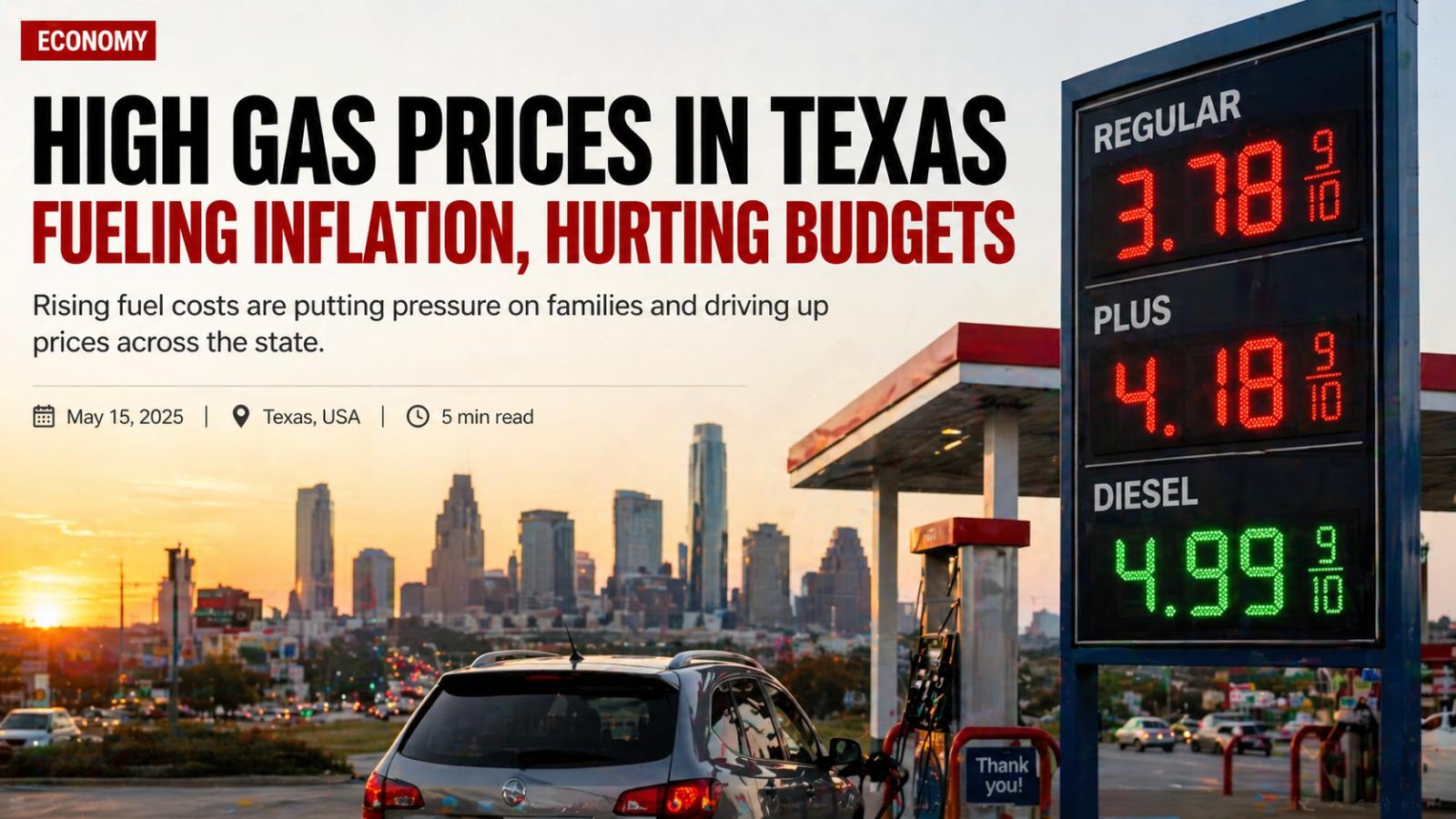
The numbers on gas station signs across Texas are rising fast—and for many drivers, so is the stress. What used to be a routine fill-up is now a moment of hesitation, as fuel costs eat deeper into already stretched budgets. High gas prices in Texas have surged in recent weeks, climbing from about $2.55 per gallon in early February to nearly $3.78. The sharp increase is being driven by global tensions that have disrupted oil supply routes, sending ripple effects through loca
Texas Fuel Prices Jump, Squeezing Household Budgets
The numbers on gas station signs across Texas are rising fast—and for many drivers, so is the stress. What used to be a routine fill-up is now a moment of hesitation, as fuel costs eat deeper into already stretched budgets. High gas prices in Texas have surged in recent weeks, climbing from about $2.55 per gallon in early February to nearly $3.78. The sharp increase is being driven by global tensions that have disrupted oil supply routes, sending ripple effects through loca
Trump Renames Strait of Hormuz Amid Rising US-Iran Tensions
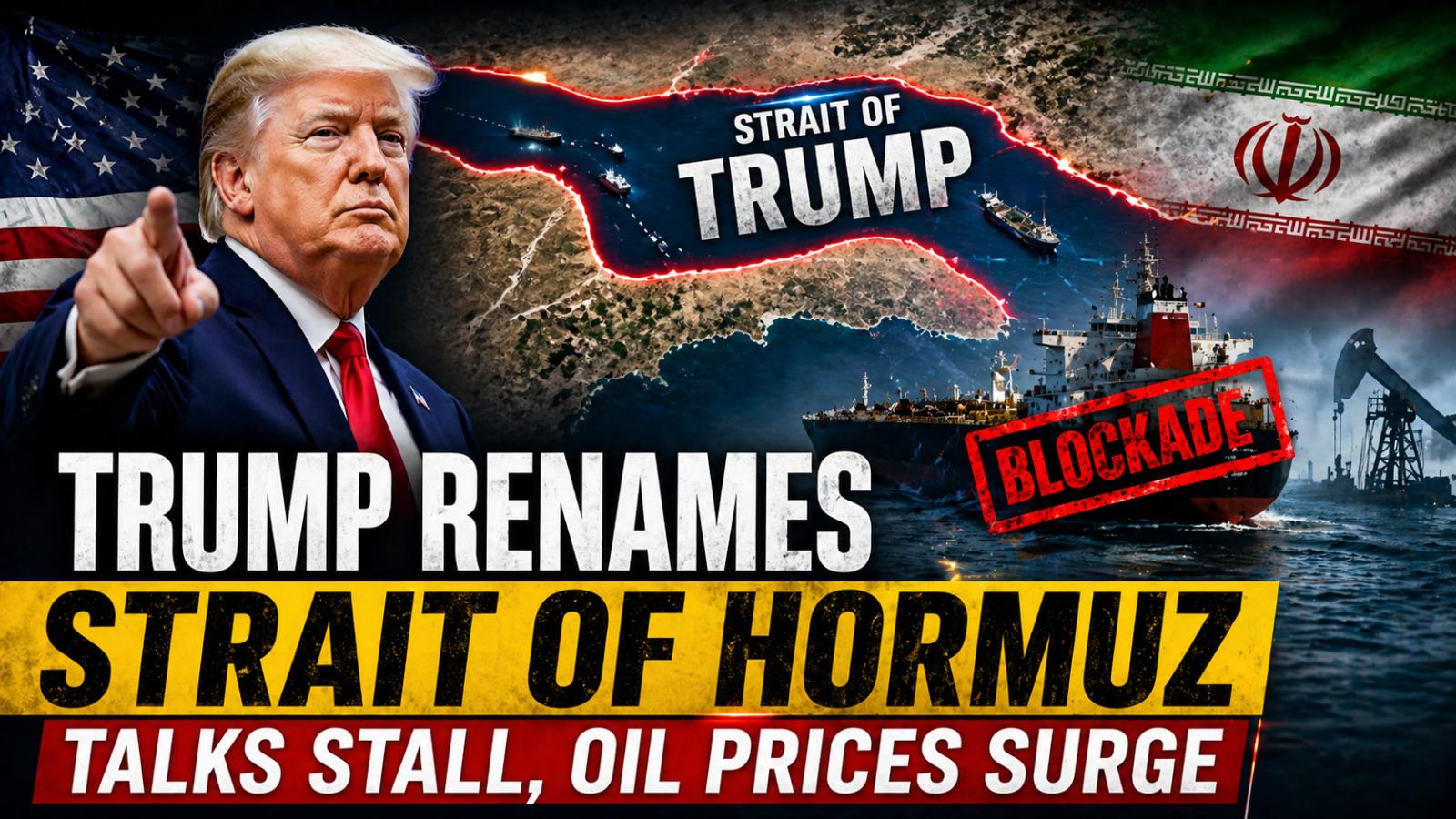
US President Donald Trump has drawn attention after sharing a modified map referring to the Strait of Hormuz as the “Strait of Trump,” a move that comes amid escalating tensions and stalled negotiations with Iran. The strategic waterway remains a focal point in the ongoing standoff, with both sides maintaining a blockade despite a previously agreed ceasefire. Trump indicated that discussions to end the conflict are continuing remotely, describing them as telephonic due to logistical challenges. At the same time, Iran has attempted to revive dialogue by sending a proposal through Pakistan, facilitated by Foreign Minister Abbas Araghchi. However, indications suggest that the US administration is dissatisfied with the terms and is unlikely to accept the framework presented. The proposal reportedly outlined a three-stage approach, beginning with a complete cessation of hostilities, followed by lifting the naval blockade and restoring maritime traffic through the Strait of Hormuz. The final stage involved renewed negotiations over Iran’s nuclear program. Despite these efforts, talks remain at an impasse, with both sides maintaining firm positions. Trump defended the blockade, describing it as effective and emphasizing its economic impact on Iran. He stated that the pressure strategy would continue until Iran concedes. Meanwhile, energy markets reacted sharply, with Brent crude prices rising significantly, reflecting concerns over supply disruptions linked to the strategic route. The Strait of Hormuz remains critical to global oil flows, and its continued closure by both US and Iranian forces underscores the fragile state of the ceasefire. Diplomatic efforts have yet to regain momentum, leaving the situation uncertain as geopolitical and economic pressures continue to build.
Trump Renames Strait of Hormuz Amid Rising US-Iran Tensions
US President Donald Trump has drawn attention after sharing a modified map referring to the Strait of Hormuz as the “Strait of Trump,” a move that comes amid escalating tensions and stalled negotiations with Iran. The strategic waterway remains a focal point in the ongoing standoff, with both sides maintaining a blockade despite a previously agreed ceasefire. Trump indicated that discussions to end the conflict are continuing remotely, describing them as telephonic due to logistical challenges. At the same time, Iran has attempted to revive dialogue by sending a proposal through Pakistan, facilitated by Foreign Minister Abbas Araghchi. However, indications suggest that the US administration is dissatisfied with the terms and is unlikely to accept the framework presented. The proposal reportedly outlined a three-stage approach, beginning with a complete cessation of hostilities, followed by lifting the naval blockade and restoring maritime traffic through the Strait of Hormuz. The final stage involved renewed negotiations over Iran’s nuclear program. Despite these efforts, talks remain at an impasse, with both sides maintaining firm positions. Trump defended the blockade, describing it as effective and emphasizing its economic impact on Iran. He stated that the pressure strategy would continue until Iran concedes. Meanwhile, energy markets reacted sharply, with Brent crude prices rising significantly, reflecting concerns over supply disruptions linked to the strategic route. The Strait of Hormuz remains critical to global oil flows, and its continued closure by both US and Iranian forces underscores the fragile state of the ceasefire. Diplomatic efforts have yet to regain momentum, leaving the situation uncertain as geopolitical and economic pressures continue to build.
USS Gerald R. Ford Set to Leave Middle East After Record Deployment
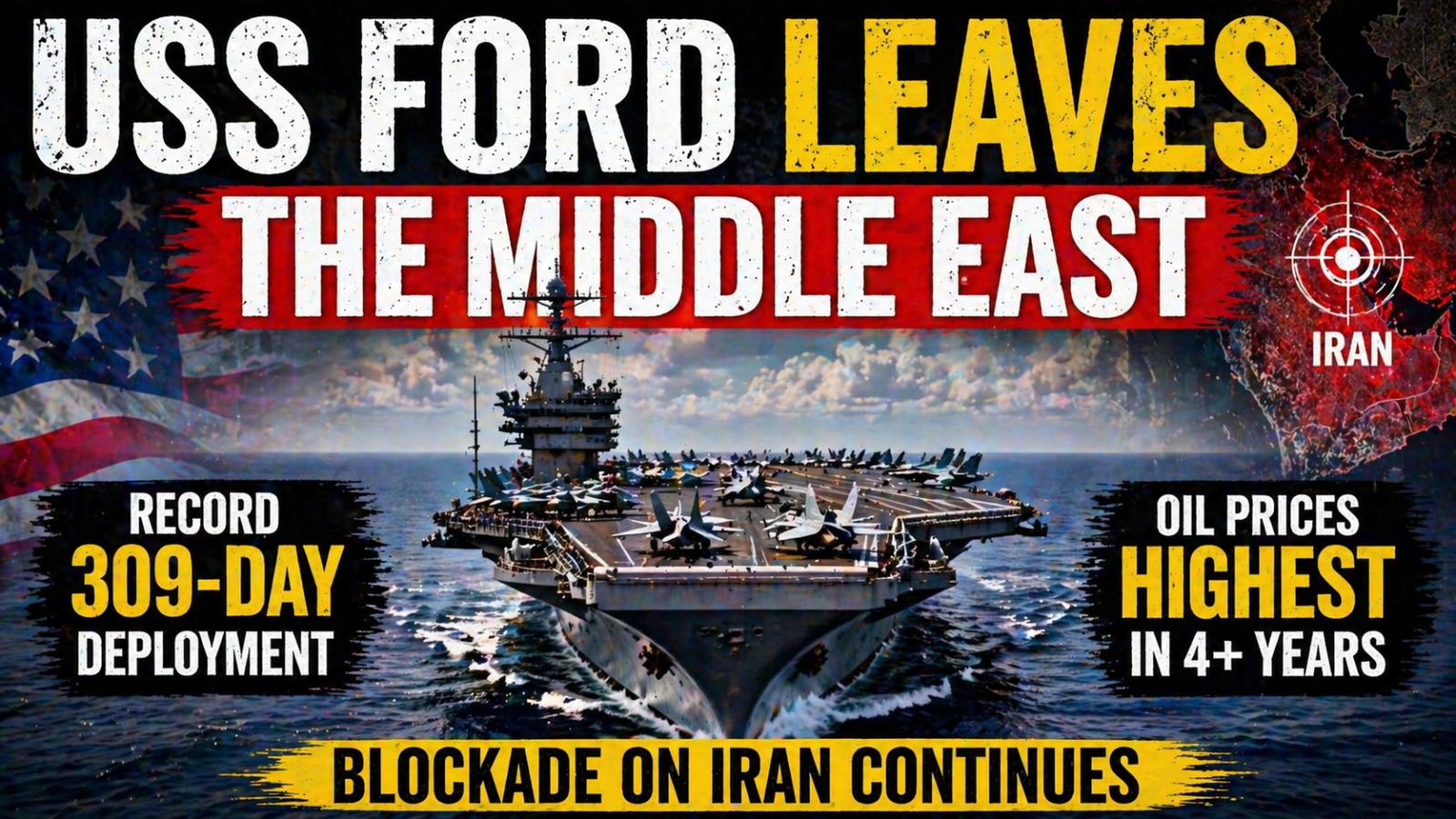
The USS Gerald R. Ford, the US Navy’s newest aircraft carrier, is preparing to leave the Middle East after completing a record 309-day deployment, marking the longest continuous mission for a modern American carrier. The vessel is expected to return to its home port at Naval Station Norfolk, Virginia, around mid-May, concluding an extended operational period that has drawn attention from lawmakers and defense officials. The decision to bring the USS Ford back follows a demanding d
USS Gerald R. Ford Set to Leave Middle East After Record Deployment
The USS Gerald R. Ford, the US Navy’s newest aircraft carrier, is preparing to leave the Middle East after completing a record 309-day deployment, marking the longest continuous mission for a modern American carrier. The vessel is expected to return to its home port at Naval Station Norfolk, Virginia, around mid-May, concluding an extended operational period that has drawn attention from lawmakers and defense officials. The decision to bring the USS Ford back follows a demanding d
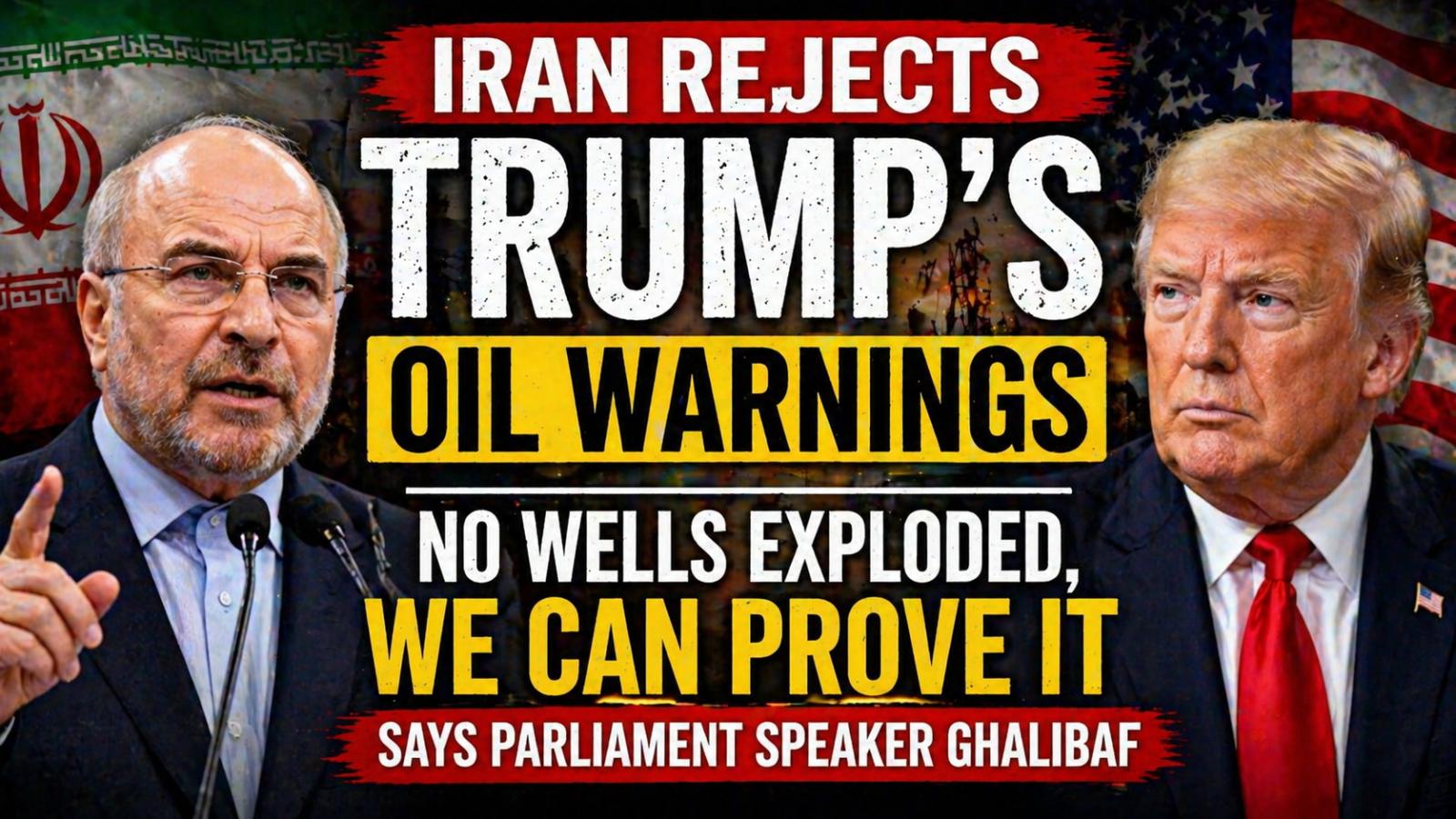
Iran Pushes Back on Trump’s Oil Warnings, Defends Export Capacity
The Speaker of Iran’s Parliament, Mohammad Bagher Ghalibaf, has rejected recent claims made by US President Donald Trump regarding the stability of Iran’s oil infrastructure. Responding to warnings that Iran’s oil facilities were nearing critical failure, Ghalibaf dismissed the remarks as inaccurate and politically motivated, stating that conditions on the ground do not support such assessments. He emphasized that several days have passed without any reported incidents and suggested that extended monitoring could further demonstrate the resilience of Iran’s oil sector. Ghalibaf also criticized the broader economic reasoning behind US policy measures, arguing that sanctions-based strategies have produced unintended consequences. He stated that approaches centered on economic pressure have contributed to rising oil prices rather than stabilizing global markets. According to his remarks, such policies reflect not only flawed strategies but also a deeper issue in decision-making. The exchange follows recent developments in US policy toward Iranian oil exports. Washington moved to temporarily ease restrictions on a significant volume of Iranian crude already stored on tankers, allowing limited transactions involving existing shipments. US officials described the move as a calculated effort to influence oil markets while maintaining restrictions on new production or expanded trade. Earlier, Trump had suggested that storage limitations and sanctions pressure could lead to disruptions in Iran’s oil infrastructure. However, Iranian officials have consistently maintained that both land-based and offshore storage capacities remain sufficient to manage production and exports. They argue that the country’s energy sector continues to operate within manageable limits despite ongoing sanctions. The situation highlights continuing tensions between Tehran and Washington over energy policy and economic measures. As both sides present differing assessments, the broader impact on global oil markets and geopolitical stability remains closely watched.
Iran Pushes Back on Trump’s Oil Warnings, Defends Export Capacity
The Speaker of Iran’s Parliament, Mohammad Bagher Ghalibaf, has rejected recent claims made by US President Donald Trump regarding the stability of Iran’s oil infrastructure. Responding to warnings that Iran’s oil facilities were nearing critical failure, Ghalibaf dismissed the remarks as inaccurate and politically motivated, stating that conditions on the ground do not support such assessments. He emphasized that several days have passed without any reported incidents and suggested that extended monitoring could further demonstrate the resilience of Iran’s oil sector. Ghalibaf also criticized the broader economic reasoning behind US policy measures, arguing that sanctions-based strategies have produced unintended consequences. He stated that approaches centered on economic pressure have contributed to rising oil prices rather than stabilizing global markets. According to his remarks, such policies reflect not only flawed strategies but also a deeper issue in decision-making. The exchange follows recent developments in US policy toward Iranian oil exports. Washington moved to temporarily ease restrictions on a significant volume of Iranian crude already stored on tankers, allowing limited transactions involving existing shipments. US officials described the move as a calculated effort to influence oil markets while maintaining restrictions on new production or expanded trade. Earlier, Trump had suggested that storage limitations and sanctions pressure could lead to disruptions in Iran’s oil infrastructure. However, Iranian officials have consistently maintained that both land-based and offshore storage capacities remain sufficient to manage production and exports. They argue that the country’s energy sector continues to operate within manageable limits despite ongoing sanctions. The situation highlights continuing tensions between Tehran and Washington over energy policy and economic measures. As both sides present differing assessments, the broader impact on global oil markets and geopolitical stability remains closely watched.
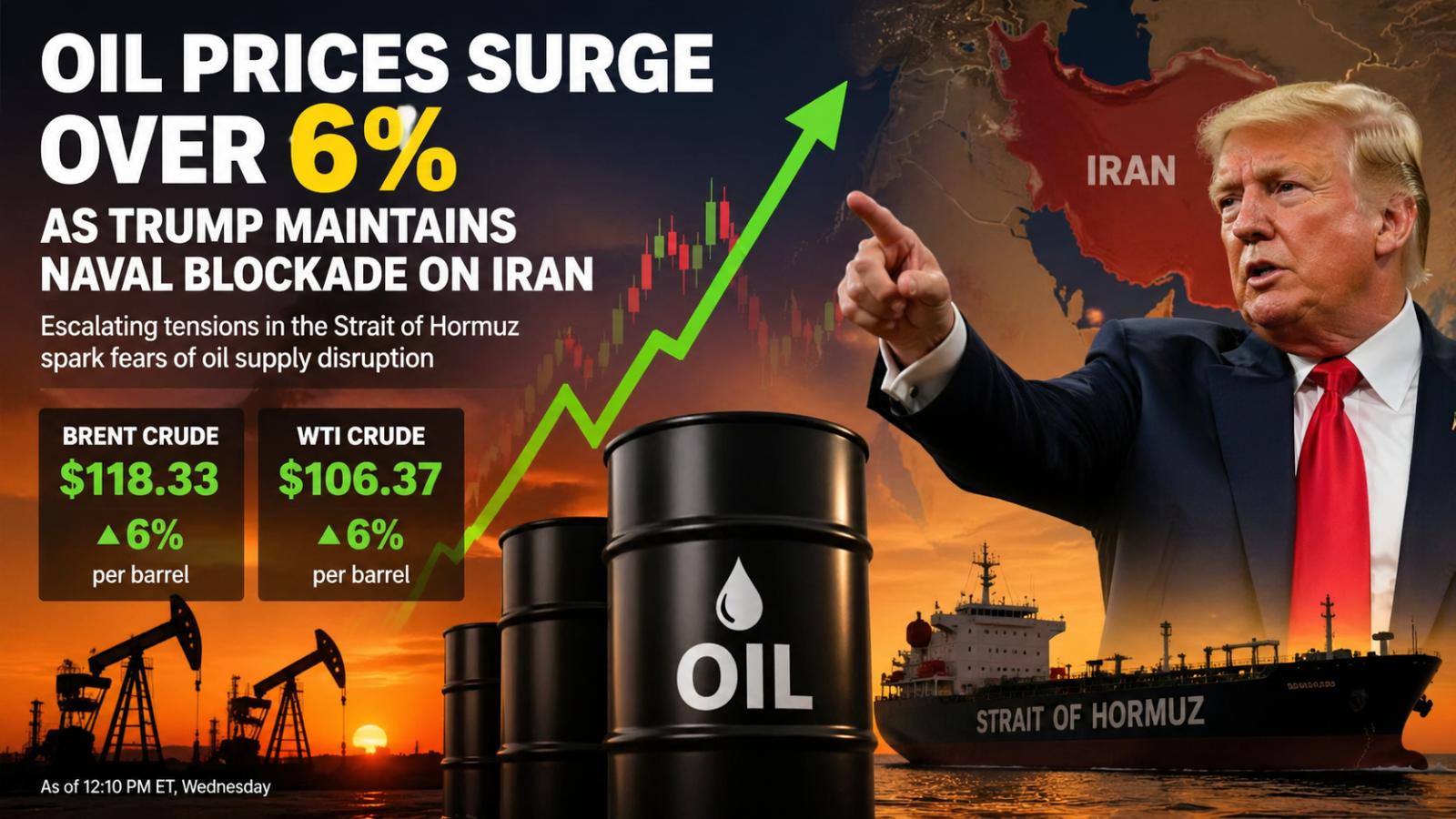
Oil prices surge over 6% as Trump maintains naval blockade on Iran
Oil prices jumped over 6% after President Donald Trump confirmed the U.S. will maintain its blockade on Iran, raising concerns over disrupted supply and escalating tensions in the Strait of Hormuz. Oil prices surge over 6% as Trump maintains naval blockade on Iran, sending shockwaves through global energy markets and intensifying concerns about supply disruptions in the Middle East. By 12:10 PM Eastern Time on Wednesday April 29, 2026, international benchmark Brent crude futures climbed more than 6% to $118.33 per barrel, while U.S. West Texas Intermediate futures rose over 6% to $106.37 per barrel. The sharp increase followed comments from Donald Trump, who confirmed that the United States would continue its naval blockade against Iran until a nuclear agreement is reached. Trump described the blockade as highly effective, signaling a firm stance amid stalled diplomatic efforts. Negotiations aimed at easing tensions have made little progress in recent days, further escalating uncertainty in global markets. Iran has refused to reopen the Strait of Hormuz—a critical passage for global oil shipments—unless the United States lifts its blockade. Tehran’s control over the strait has significantly restricted oil exports from the region, tightening supply and driving prices higher. Market analysts note that developments in the Persian Gulf remain the dominant factor influencing oil price volatility. Adding to market complexity, the United Arab Emirates recently announced its decision to exit OPEC. While strategists at ING described the move as a substantial setback for the producer alliance, they indicated its immediate impact on prices would likely be limited compared to ongoing geopolitical tensions. Analysts suggest that while the UAE’s departure could weaken OPEC’s long-term influence, the near-term trajectory of oil markets will depend largely on whether oil flows resume through the Strait of Hormuz. Until then, geopolitical risks and supply constraints are expected to keep prices elevated and markets volatile.
Oil prices surge over 6% as Trump maintains naval blockade on Iran
Oil prices jumped over 6% after President Donald Trump confirmed the U.S. will maintain its blockade on Iran, raising concerns over disrupted supply and escalating tensions in the Strait of Hormuz. Oil prices surge over 6% as Trump maintains naval blockade on Iran, sending shockwaves through global energy markets and intensifying concerns about supply disruptions in the Middle East. By 12:10 PM Eastern Time on Wednesday April 29, 2026, international benchmark Brent crude futures climbed more than 6% to $118.33 per barrel, while U.S. West Texas Intermediate futures rose over 6% to $106.37 per barrel. The sharp increase followed comments from Donald Trump, who confirmed that the United States would continue its naval blockade against Iran until a nuclear agreement is reached. Trump described the blockade as highly effective, signaling a firm stance amid stalled diplomatic efforts. Negotiations aimed at easing tensions have made little progress in recent days, further escalating uncertainty in global markets. Iran has refused to reopen the Strait of Hormuz—a critical passage for global oil shipments—unless the United States lifts its blockade. Tehran’s control over the strait has significantly restricted oil exports from the region, tightening supply and driving prices higher. Market analysts note that developments in the Persian Gulf remain the dominant factor influencing oil price volatility. Adding to market complexity, the United Arab Emirates recently announced its decision to exit OPEC. While strategists at ING described the move as a substantial setback for the producer alliance, they indicated its immediate impact on prices would likely be limited compared to ongoing geopolitical tensions. Analysts suggest that while the UAE’s departure could weaken OPEC’s long-term influence, the near-term trajectory of oil markets will depend largely on whether oil flows resume through the Strait of Hormuz. Until then, geopolitical risks and supply constraints are expected to keep prices elevated and markets volatile.
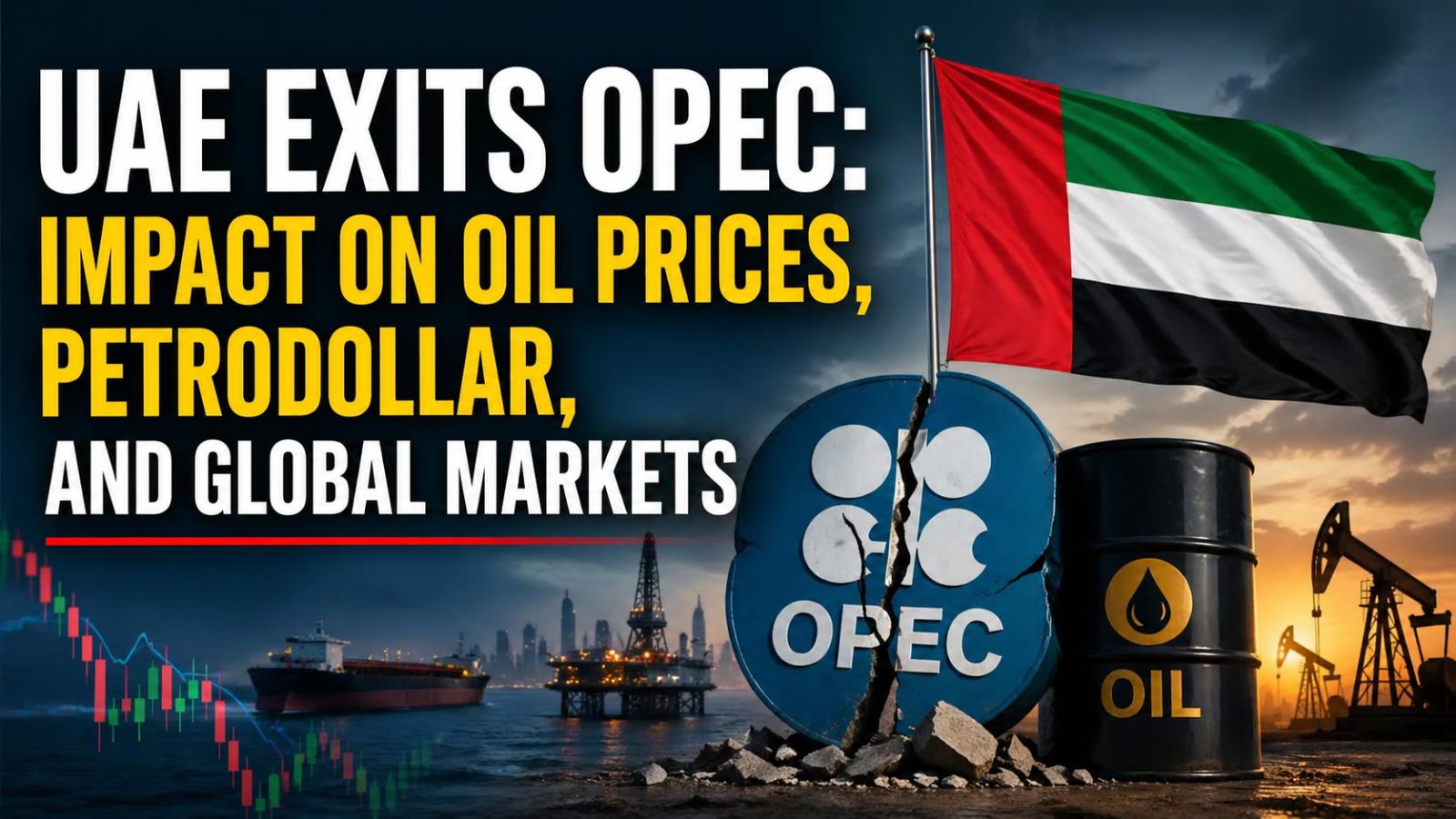
UAE leaves OPEC bloc amid Gulf tensions and shifting global currency trends
UAE exits OPEC and reshapes global oil and currency dynamics The decision by the United Arab Emirates to exit OPEC and OPEC+ marks a major shift in global energy markets. This move could increase oil price volatility, weaken OPEC’s control, and challenge the dominance of the US dollar in global oil trade. The timing is critical, coming amid rising oil prices, a growing dollar shortage in Gulf countries, and escalating tensions around the Strait of Hormuz. What does thi
UAE leaves OPEC bloc amid Gulf tensions and shifting global currency trends
UAE exits OPEC and reshapes global oil and currency dynamics The decision by the United Arab Emirates to exit OPEC and OPEC+ marks a major shift in global energy markets. This move could increase oil price volatility, weaken OPEC’s control, and challenge the dominance of the US dollar in global oil trade. The timing is critical, coming amid rising oil prices, a growing dollar shortage in Gulf countries, and escalating tensions around the Strait of Hormuz. What does thi
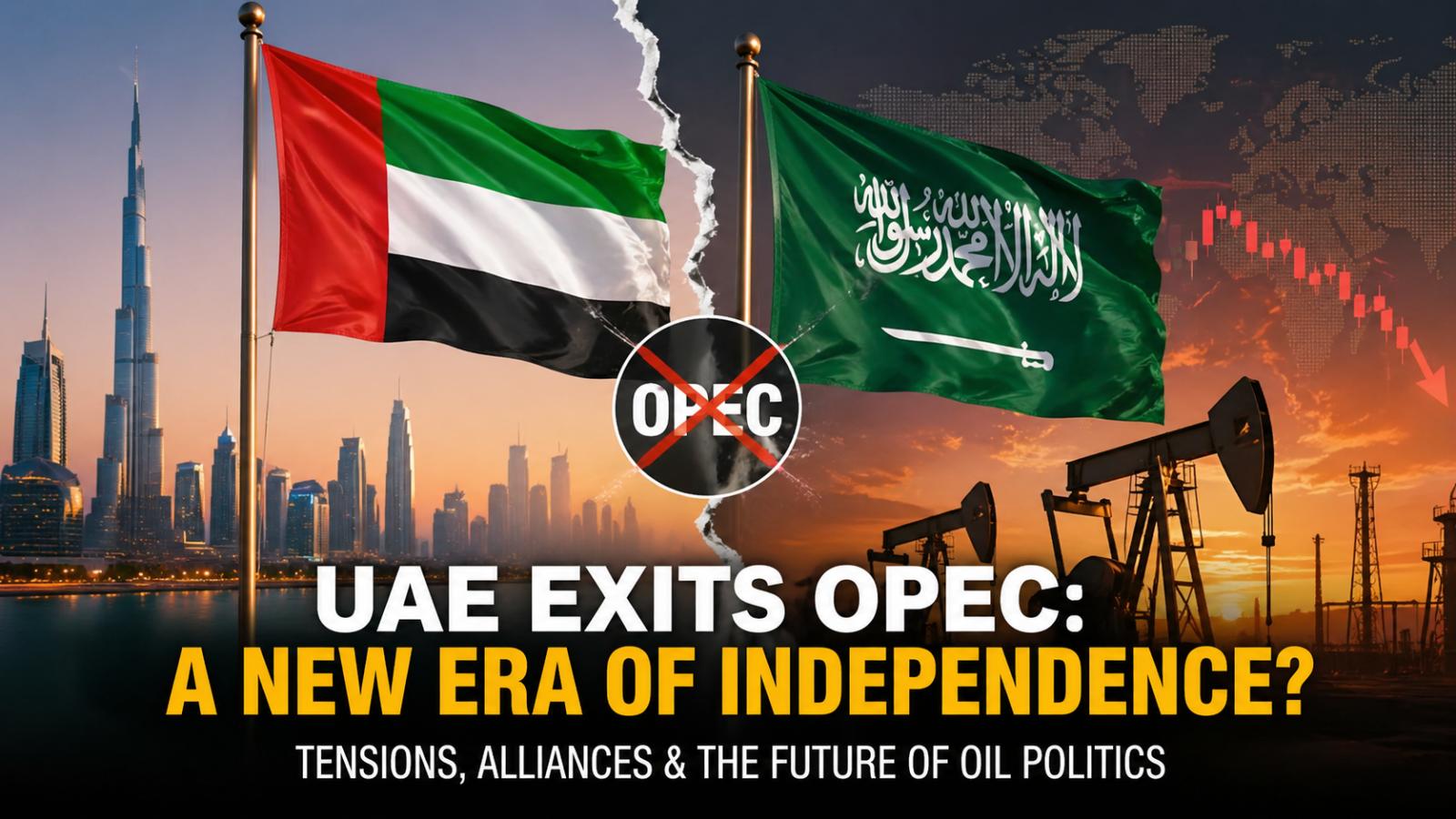
Is UAE leaving OPEC to counter Saudi influence? Yes, it signals strategic independence
Is UAE leaving OPEC to counter Saudi influence? Yes, it signals strategic independence. The United Arab Emirates’ decision to exit the Organization of the Petroleum Exporting Countries marks a pivotal shift in Gulf geopolitics, reflecting rising tensions with Saudi Arabia and broader regional realignments. Escalating tensions following Iran strikes on UAE infrastructure As of Tuesday, April 8, 2026, the UAE reported intercepting 537 ballistic missiles,
Is UAE leaving OPEC to counter Saudi influence? Yes, it signals strategic independence
Is UAE leaving OPEC to counter Saudi influence? Yes, it signals strategic independence. The United Arab Emirates’ decision to exit the Organization of the Petroleum Exporting Countries marks a pivotal shift in Gulf geopolitics, reflecting rising tensions with Saudi Arabia and broader regional realignments. Escalating tensions following Iran strikes on UAE infrastructure As of Tuesday, April 8, 2026, the UAE reported intercepting 537 ballistic missiles,
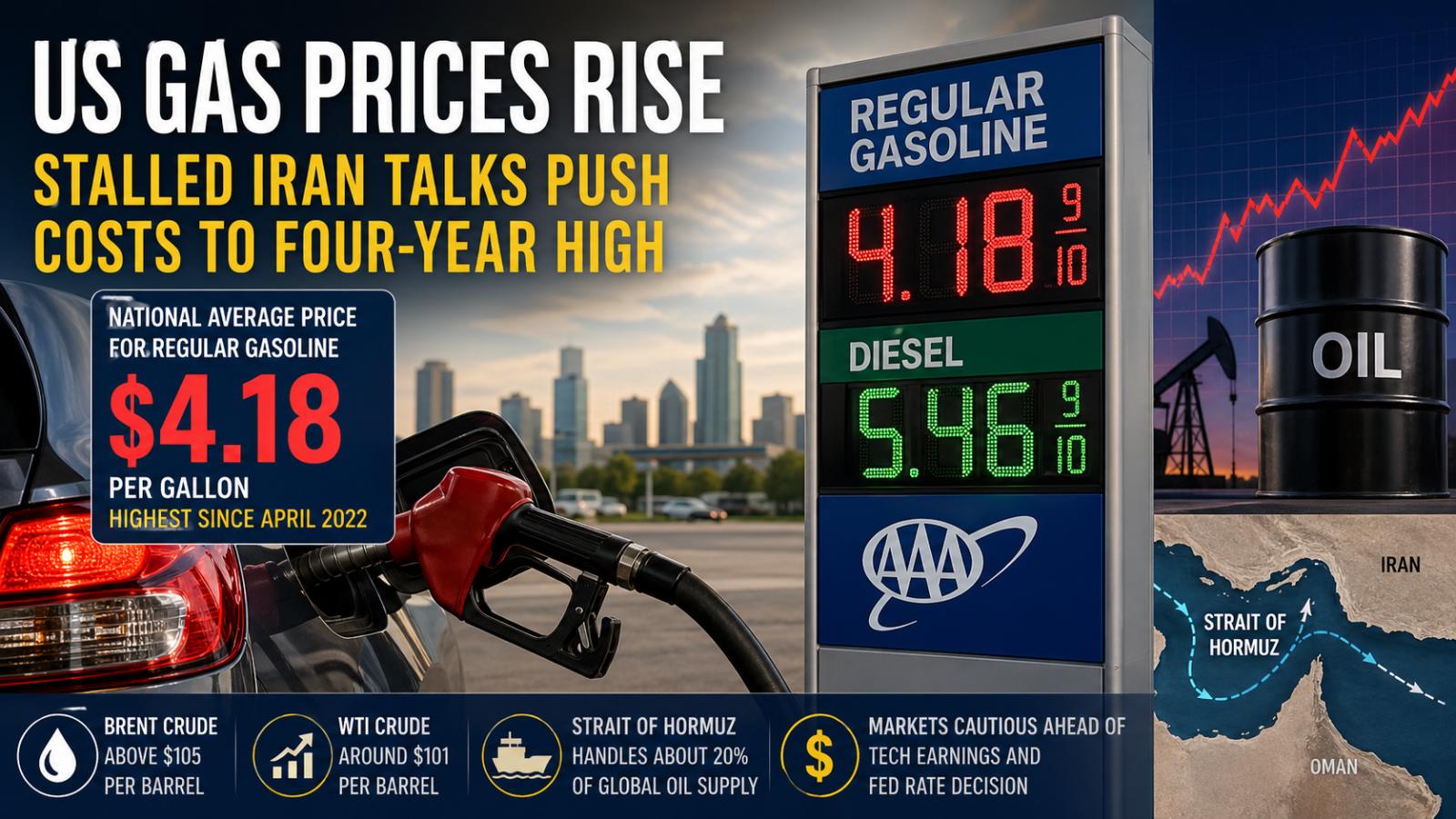
Why are US gas prices rising? Stalled Iran talks push costs to four-year high
Stalled Iran talks push costs to four-year high Gasoline prices across the United States climbed sharply on Tuesday, April 28, 2026, reaching their highest level in four years as stalled negotiations between Washington and Tehran fueled a surge in global oil markets. According to AAA, the national average price for a gallon of regular gasoline rose to $4.18, marking the h
Why are US gas prices rising? Stalled Iran talks push costs to four-year high
Stalled Iran talks push costs to four-year high Gasoline prices across the United States climbed sharply on Tuesday, April 28, 2026, reaching their highest level in four years as stalled negotiations between Washington and Tehran fueled a surge in global oil markets. According to AAA, the national average price for a gallon of regular gasoline rose to $4.18, marking the h
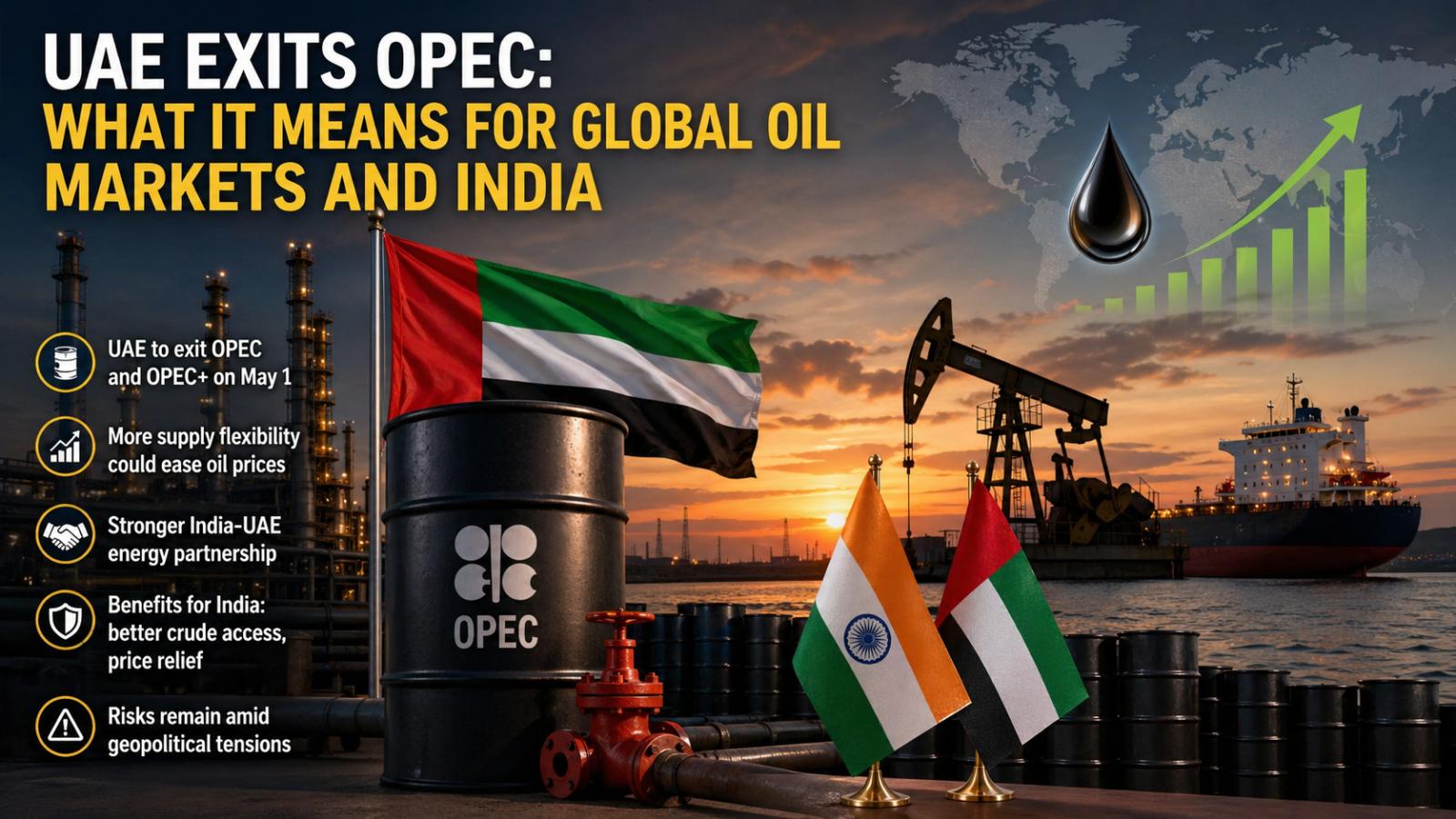
Can India benefit from UAE exiting OPEC? Yes, through better crude access and pricing
UAE’s exit from OPEC may boost oil supply, ease prices, and strengthen India energy ties, while raising volatility risks in global markets amid geopolitical tensions. Will UAE leaving OPEC lower oil prices? Yes, it could ease global supply pressure as the United Arab Emirates prepares to formally exit Organization of the Petroleum Exporting Countries and OPEC+ on May 1,
Can India benefit from UAE exiting OPEC? Yes, through better crude access and pricing
UAE’s exit from OPEC may boost oil supply, ease prices, and strengthen India energy ties, while raising volatility risks in global markets amid geopolitical tensions. Will UAE leaving OPEC lower oil prices? Yes, it could ease global supply pressure as the United Arab Emirates prepares to formally exit Organization of the Petroleum Exporting Countries and OPEC+ on May 1,
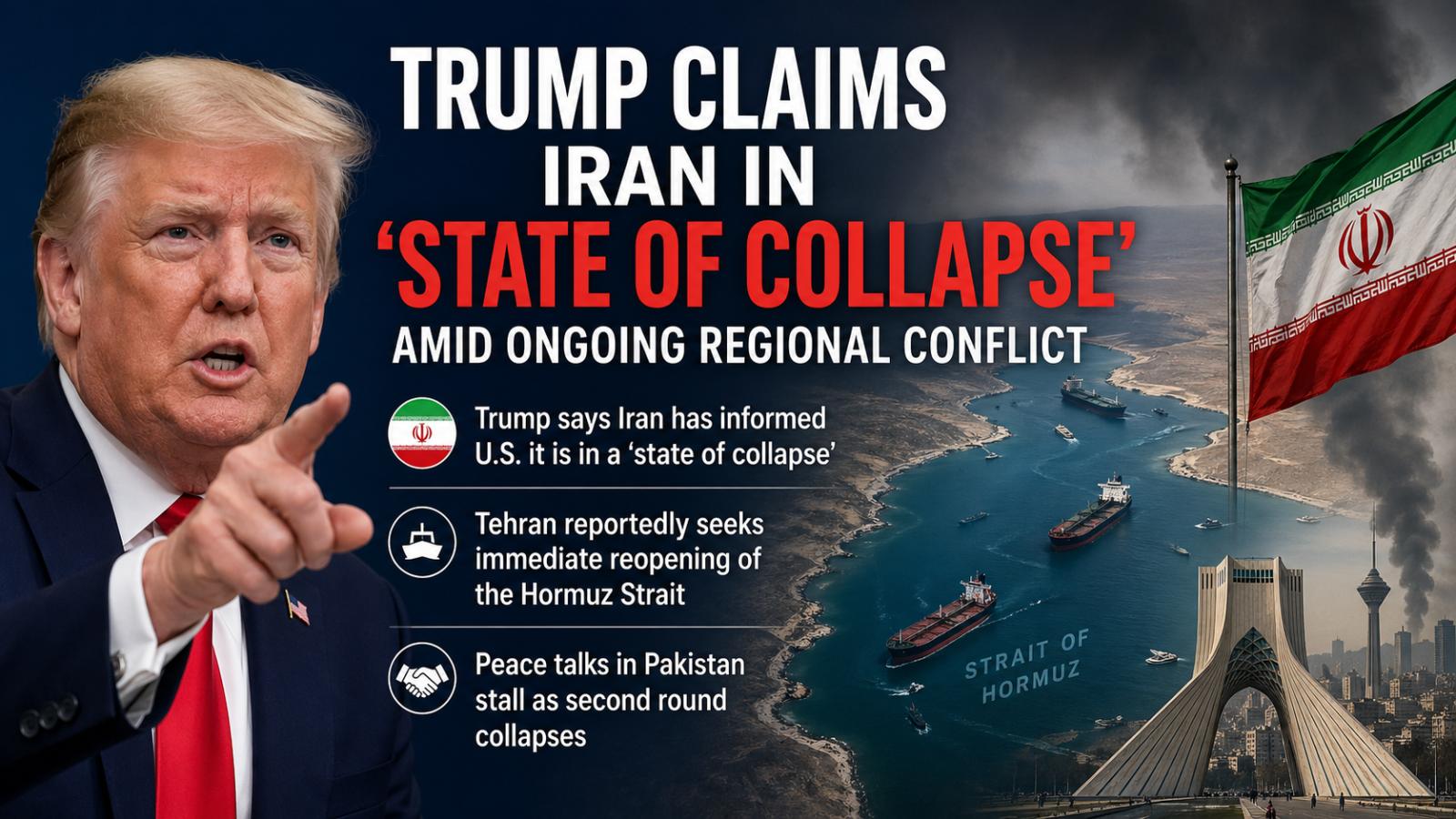
Trump claims Iran in ‘state of collapse’ amid ongoing regional conflict
Trump says Iran is in “collapse” and seeks reopening of the Hormuz Strait as conflict continues. Peace talks in Pakistan stalled, leaving regional tensions unresolved. Trump claims Iran in ‘state of collapse’ amid ongoing regional conflict as former U.S. President Donald Trump said the Iranian government has informed Washington it is facing a severe breakdown in l
Trump claims Iran in ‘state of collapse’ amid ongoing regional conflict
Trump says Iran is in “collapse” and seeks reopening of the Hormuz Strait as conflict continues. Peace talks in Pakistan stalled, leaving regional tensions unresolved. Trump claims Iran in ‘state of collapse’ amid ongoing regional conflict as former U.S. President Donald Trump said the Iranian government has informed Washington it is facing a severe breakdown in l
UAE to exit OPEC, signaling shift in global oil power balance
The UAE will exit OPEC on May 1 after nearly six decades, aiming for greater control over oil production and energy strategy. The move may weaken OPEC’s influence, raise concerns about supply coordination, and reshape global oil market dynamics. UAE to exit OPEC, signaling shift in global oil power balance is set to take effect May 1, marking a major change in the structure of global energy coordination. The decision reflects Abu Dhabi’s broader strategy to gai
UAE to exit OPEC, signaling shift in global oil power balance
The UAE will exit OPEC on May 1 after nearly six decades, aiming for greater control over oil production and energy strategy. The move may weaken OPEC’s influence, raise concerns about supply coordination, and reshape global oil market dynamics. UAE to exit OPEC, signaling shift in global oil power balance is set to take effect May 1, marking a major change in the structure of global energy coordination. The decision reflects Abu Dhabi’s broader strategy to gai










