US Closes Consulate in Peshawar, Prioritizes Diplomatic Safety in Pakistan
The United States announced on May 6 that it will close its consulate in Peshawar, Pakistan, citing safety concerns for its diplomats. The U.S. State Department released a notice explaining that the decision was made in response to the region's security conditions. The embassy in Islamabad will now handle all diplomatic engagements with Khyber Pakhtunkhwa province, where Peshawar is the capital. This shift reflects the United States' commitment to the safety of its diplomatic personnel while optimizing resources. The State Department clarified that the closure is only related to the physical presence in Peshawar. U.S. policy priorities in Pakistan, however, remain unchanged. The U.S. will continue to engage with the people and officials of Khyber Pakhtunkhwa to enhance economic ties, promote regional security, and advance American interests in the region. Despite the consulate closure, the U.S. Mission to Pakistan will maintain a strong presence and continue to foster relations through its remaining diplomatic posts in Islamabad, Karachi, and Lahore. Khyber Pakhtunkhwa, which borders Afghanistan, has seen numerous security incidents due to ongoing conflicts between Pakistan's military forces and Afghan-backed militants. These tensions have heightened security concerns in the area. Additionally, protests occurred outside the U.S. consulate in Karachi following the death of Iranian Supreme Leader Ayatollah Ali Khamenei in U.S.-Israeli airstrikes. The incident led to the deaths of at least ten people in Pakistan, prompting President Asif Ali Zardari to express Pakistan's solidarity with Iran in this time of grief. Despite this, Pakistan has taken on the role of mediator in the ongoing conflict between Iran and the United States. The shift in U.S. diplomatic presence in Pakistan is part of a broader strategy to ensure safety while continuing to support strategic relationships in the region.

US Closes Consulate in Peshawar, Prioritizes Diplomatic Safety in Pakistan
The United States announced on May 6 that it will close its consulate in Peshawar, Pakistan, citing safety concerns for its diplomats. The U.S. State Department released a notice explaining that the decision was made in response to the region's security conditions. The embassy in Islamabad will now handle all diplomatic engagements with Khyber Pakhtunkhwa province, where Peshawar is the capital. This shift reflects the United States' commitment to the safety of its diplomatic personnel while optimizing resources. The State Department clarified that the closure is only related to the physical presence in Peshawar. U.S. policy priorities in Pakistan, however, remain unchanged. The U.S. will continue to engage with the people and officials of Khyber Pakhtunkhwa to enhance economic ties, promote regional security, and advance American interests in the region. Despite the consulate closure, the U.S. Mission to Pakistan will maintain a strong presence and continue to foster relations through its remaining diplomatic posts in Islamabad, Karachi, and Lahore. Khyber Pakhtunkhwa, which borders Afghanistan, has seen numerous security incidents due to ongoing conflicts between Pakistan's military forces and Afghan-backed militants. These tensions have heightened security concerns in the area. Additionally, protests occurred outside the U.S. consulate in Karachi following the death of Iranian Supreme Leader Ayatollah Ali Khamenei in U.S.-Israeli airstrikes. The incident led to the deaths of at least ten people in Pakistan, prompting President Asif Ali Zardari to express Pakistan's solidarity with Iran in this time of grief. Despite this, Pakistan has taken on the role of mediator in the ongoing conflict between Iran and the United States. The shift in U.S. diplomatic presence in Pakistan is part of a broader strategy to ensure safety while continuing to support strategic relationships in the region.

Vijay Calls for Unity and Rejects CM Convoy, Will Accept Security After Government Formation
In a notable move, Vijay, the leader of the Tamilaga Vettri Kazhagam (TVK), rejected the police convoy vehicles assigned to him after his party secured 108 seats in the Tamil Nadu Assembly elections. Despite the official protocol, which typically provides the Chief Minister-elect with security convoy vehicles, Vijay made a personal request to return the convoy vehicles until after his swearing-in ceremony. His party clarified that Vijay would accept the official chief minister-level security

Vijay Calls for Unity and Rejects CM Convoy, Will Accept Security After Government Formation
In a notable move, Vijay, the leader of the Tamilaga Vettri Kazhagam (TVK), rejected the police convoy vehicles assigned to him after his party secured 108 seats in the Tamil Nadu Assembly elections. Despite the official protocol, which typically provides the Chief Minister-elect with security convoy vehicles, Vijay made a personal request to return the convoy vehicles until after his swearing-in ceremony. His party clarified that Vijay would accept the official chief minister-level security

SunRisers Hyderabad beat Punjab Kings by 33 runs in IPL 2026
SunRisers Hyderabad (SRH) defeated Punjab Kings (PBKS) by 33 runs in an exciting IPL 2026 match on Wednesday, May 6, at Hyderabad. Batting first, SRH posted an impressive total of 235/4, with contributions from their top-order batsmen. In response, PBKS could only manage 202/7 despite a valiant knock by Cooper Connolly, who remained unbeaten on 107 off 59 balls. With this victory, SRH climbed to the top of the IPL 2026 points table. The team now has 14 points from 7 wins and 4 losses in 11 matches. On the other hand, PBKS, who had been leading the table for a majority of the season, now sits in second place with 13 points from 6 wins, 1 no result, and 3 losses in 10 matches. This marks PBKS's third consecutive loss, which is concerning as the playoffs approach. The team will need to regroup and find their winning form once again. SRH Dominates With Batting Prowess Batting first, SRH showed why they are a formidable team in the 2026 season of the IPL. The team's openers gave them a strong start, and with middle-order contributions, they were able to set a daunting target of 236 runs. The top-order batsmen played with aggression and precision, ensuring the team could capitalize on the early momentum. The SRH batting unit's depth proved crucial in posting such a competitive total. Cooper Connolly's Heroic Knock Falls Short In response, PBKS needed a solid partnership to chase down the target, and it seemed like Connolly could be the one to lead his team to victory. His brilliant 107 not out was the highlight of PBKS’s chase, but it wasn’t enough to take them over the line. Despite Connolly’s resilience and power hitting, PBKS fell short, ultimately ending their innings at 202/7. The team’s inability to find support for Connolly in the latter stages of the game was a significant factor in their defeat. SRH's Continued Push for Playoff Spot SRH's win not only put them at the top of the IPL 2026 table but also demonstrated their strength heading into the playoff stage. The team has now become a serious contender for the title. Their all-round performance, with both bat and ball, has been consistent and dominant in the tournament so far. As the playoffs approach, SRH will look to maintain their form and push for a strong finish to the league phase. PBKS Faces Growing Challenges For PBKS, the loss is a blow to their playoff aspirations. With three consecutive losses now, the team must quickly analyze their weaknesses and find solutions before the crucial matches that could determine their fate. The team's early season dominance has been overshadowed by their recent slump, and they will need to turn things around to stay in the top half of the table and secure a playoff spot. As the IPL 2026 season progresses, both SRH and PBKS will be looking to fine-tune their strategies and finish strong in the race for the playoffs. With intense competition and tight matches ahead, every point matters as teams battle for a spot in the final stages of the tournament.


SunRisers Hyderabad beat Punjab Kings by 33 runs in IPL 2026
SunRisers Hyderabad (SRH) defeated Punjab Kings (PBKS) by 33 runs in an exciting IPL 2026 match on Wednesday, May 6, at Hyderabad. Batting first, SRH posted an impressive total of 235/4, with contributions from their top-order batsmen. In response, PBKS could only manage 202/7 despite a valiant knock by Cooper Connolly, who remained unbeaten on 107 off 59 balls. With this victory, SRH climbed to the top of the IPL 2026 points table. The team now has 14 points from 7 wins and 4 losses in 11 matches. On the other hand, PBKS, who had been leading the table for a majority of the season, now sits in second place with 13 points from 6 wins, 1 no result, and 3 losses in 10 matches. This marks PBKS's third consecutive loss, which is concerning as the playoffs approach. The team will need to regroup and find their winning form once again. SRH Dominates With Batting Prowess Batting first, SRH showed why they are a formidable team in the 2026 season of the IPL. The team's openers gave them a strong start, and with middle-order contributions, they were able to set a daunting target of 236 runs. The top-order batsmen played with aggression and precision, ensuring the team could capitalize on the early momentum. The SRH batting unit's depth proved crucial in posting such a competitive total. Cooper Connolly's Heroic Knock Falls Short In response, PBKS needed a solid partnership to chase down the target, and it seemed like Connolly could be the one to lead his team to victory. His brilliant 107 not out was the highlight of PBKS’s chase, but it wasn’t enough to take them over the line. Despite Connolly’s resilience and power hitting, PBKS fell short, ultimately ending their innings at 202/7. The team’s inability to find support for Connolly in the latter stages of the game was a significant factor in their defeat. SRH's Continued Push for Playoff Spot SRH's win not only put them at the top of the IPL 2026 table but also demonstrated their strength heading into the playoff stage. The team has now become a serious contender for the title. Their all-round performance, with both bat and ball, has been consistent and dominant in the tournament so far. As the playoffs approach, SRH will look to maintain their form and push for a strong finish to the league phase. PBKS Faces Growing Challenges For PBKS, the loss is a blow to their playoff aspirations. With three consecutive losses now, the team must quickly analyze their weaknesses and find solutions before the crucial matches that could determine their fate. The team's early season dominance has been overshadowed by their recent slump, and they will need to turn things around to stay in the top half of the table and secure a playoff spot. As the IPL 2026 season progresses, both SRH and PBKS will be looking to fine-tune their strategies and finish strong in the race for the playoffs. With intense competition and tight matches ahead, every point matters as teams battle for a spot in the final stages of the tournament.
Israeli soldier filmed desecrating Virgin Mary statue in southern Lebanon
A photo circulating on social media has sparked outrage after it reportedly shows an Israeli soldier placing a cigarette into the mouth of a Virgin Mary statue in the Christian village of Debel, located in southern Lebanon. This shocking image comes just a month after another soldier was photographed in the same village, smashing a statue of Jesus, which had already triggered widespread condemnation, especially among Christian communities. The Israeli military, known as the IDF, has
Israeli soldier filmed desecrating Virgin Mary statue in southern Lebanon
A photo circulating on social media has sparked outrage after it reportedly shows an Israeli soldier placing a cigarette into the mouth of a Virgin Mary statue in the Christian village of Debel, located in southern Lebanon. This shocking image comes just a month after another soldier was photographed in the same village, smashing a statue of Jesus, which had already triggered widespread condemnation, especially among Christian communities. The Israeli military, known as the IDF, has
Trump Announces Pause in Maritime Escort Operations in the Strait of Hormuz
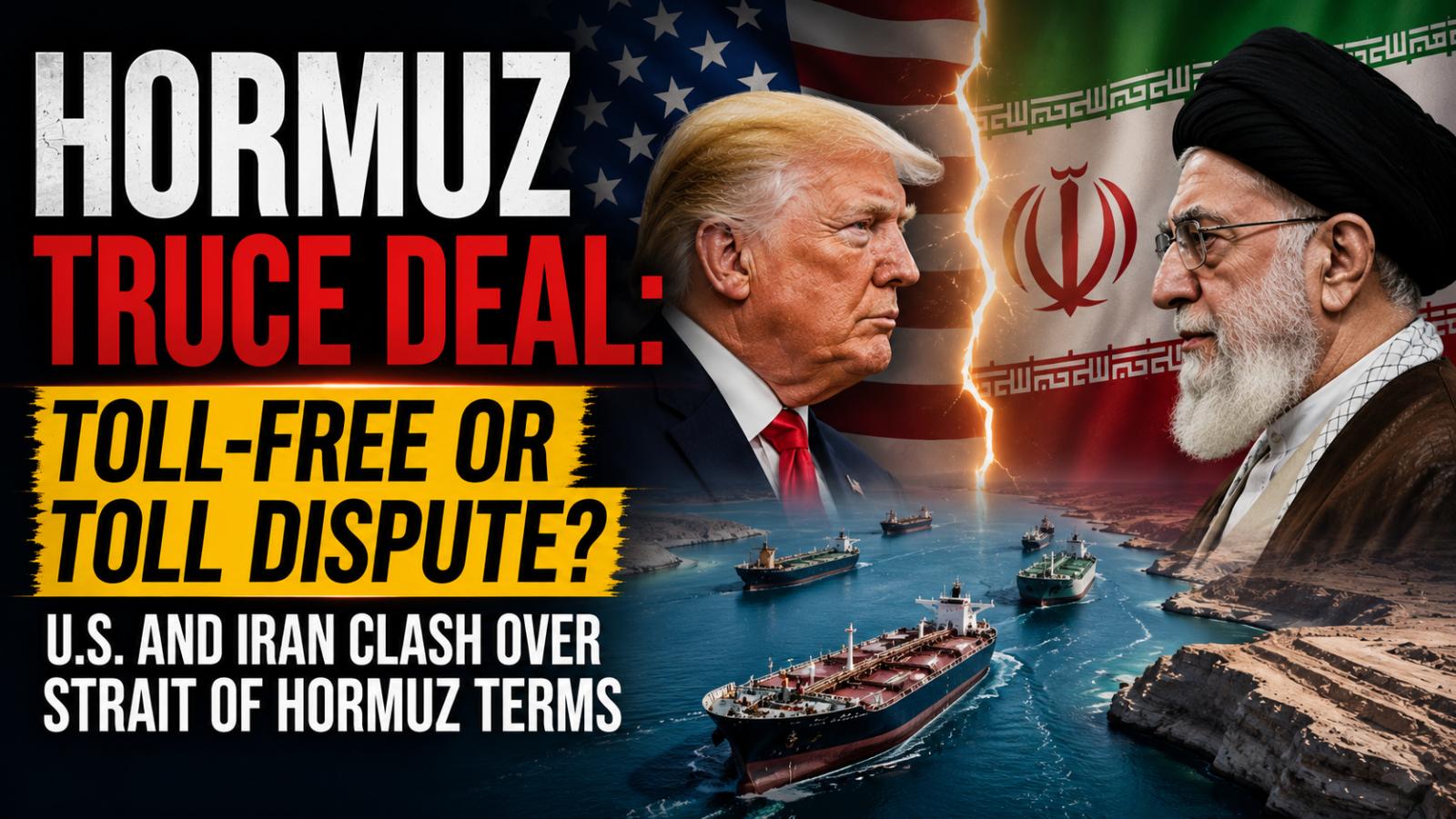
In a recent update, President Donald Trump announced a temporary pause in the United States’ maritime escort operation in the Strait of Hormuz, while confirming the continuation of a blockade. The decision follows progress in diplomatic discussions with Iran, aimed at finalizing an agreement. Trump explained on Truth Social that the blockade would remain active, but the project known as “Project Freedom,” which involves the movement of ships through the Strait of Hormuz, would be paused
Trump Announces Pause in Maritime Escort Operations in the Strait of Hormuz
In a recent update, President Donald Trump announced a temporary pause in the United States’ maritime escort operation in the Strait of Hormuz, while confirming the continuation of a blockade. The decision follows progress in diplomatic discussions with Iran, aimed at finalizing an agreement. Trump explained on Truth Social that the blockade would remain active, but the project known as “Project Freedom,” which involves the movement of ships through the Strait of Hormuz, would be paused
UK Twins Discover They Have Different Fathers in Rare DNA Case
In an extraordinary genetic discovery, twins Michelle and Lavinia Osbourne, aged 49, learned that they have different fathers, a rare phenomenon known as heteropaternal superfecundation. The twins, born minutes apart in Nottingham, UK, in 1976, underwent at-home DNA tests decades later, uncovering the shocking truth that they were not full sisters but half-sisters, sharing the same mother but having different fathers. Heteropaternal superfecundation is an extremely rare occurrence w
UK Twins Discover They Have Different Fathers in Rare DNA Case
In an extraordinary genetic discovery, twins Michelle and Lavinia Osbourne, aged 49, learned that they have different fathers, a rare phenomenon known as heteropaternal superfecundation. The twins, born minutes apart in Nottingham, UK, in 1976, underwent at-home DNA tests decades later, uncovering the shocking truth that they were not full sisters but half-sisters, sharing the same mother but having different fathers. Heteropaternal superfecundation is an extremely rare occurrence w
Met Gala 2026: Bizarre Rules on Garlic, Phones, and Seating Stir Attention
The Met Gala 2026, one of the most exclusive events in the fashion world, has not only drawn attention for its stunning celebrity appearances but also for the strict rules governing the evening. The event, overseen by Vogue's Anna Wintour, is a meticulously curated affair where every detail, from food to seating arrangements, is planned with precision. The evening operates on a set of protocols that guests must follow, with any misstep potentially earning them a permanent spot on the blacklis
Met Gala 2026: Bizarre Rules on Garlic, Phones, and Seating Stir Attention
The Met Gala 2026, one of the most exclusive events in the fashion world, has not only drawn attention for its stunning celebrity appearances but also for the strict rules governing the evening. The event, overseen by Vogue's Anna Wintour, is a meticulously curated affair where every detail, from food to seating arrangements, is planned with precision. The evening operates on a set of protocols that guests must follow, with any misstep potentially earning them a permanent spot on the blacklis
Russia, Ukraine Announce Separate May Cease-fires
Russia said it will observe a cease-fire from May 8 to May 9 to mark Victory Day, while Ukraine has already declared a separate truce for May 5 to May 6, underscoring a lack of coordination between the two sides. The Kremlin said President Vladimir Putin ordered the pause as a humanitarian gesture tied to World War Two commemorations. Russian officials warned that any violations could trigger a strong military response. Russia’s Defense Ministry said the capital, Kyiv, could face significant strikes if the truce is breached, urging civilians and foreign diplomatic staff to leave as a precaution, according to official statements. Ukraine’s President Volodymyr Zelensky announced an earlier two-day cease-fire beginning May 5, describing it as an independent move without coordination with Moscow. Zelensky said Ukraine could consider extending its pause if Russia demonstrates a genuine commitment to de-escalation. He added that further steps would depend on Moscow’s actions during its own declared truce. The overlapping but uncoordinated cease-fires highlight continued mistrust between the two sides, with no indication of broader negotiations to end the conflict. Victory Day on May 9 is one of Russia’s most significant national observances, marking the Soviet Union’s role in defeating Nazi Germany.
Russia, Ukraine Announce Separate May Cease-fires
Russia said it will observe a cease-fire from May 8 to May 9 to mark Victory Day, while Ukraine has already declared a separate truce for May 5 to May 6, underscoring a lack of coordination between the two sides. The Kremlin said President Vladimir Putin ordered the pause as a humanitarian gesture tied to World War Two commemorations. Russian officials warned that any violations could trigger a strong military response. Russia’s Defense Ministry said the capital, Kyiv, could face significant strikes if the truce is breached, urging civilians and foreign diplomatic staff to leave as a precaution, according to official statements. Ukraine’s President Volodymyr Zelensky announced an earlier two-day cease-fire beginning May 5, describing it as an independent move without coordination with Moscow. Zelensky said Ukraine could consider extending its pause if Russia demonstrates a genuine commitment to de-escalation. He added that further steps would depend on Moscow’s actions during its own declared truce. The overlapping but uncoordinated cease-fires highlight continued mistrust between the two sides, with no indication of broader negotiations to end the conflict. Victory Day on May 9 is one of Russia’s most significant national observances, marking the Soviet Union’s role in defeating Nazi Germany.
Interstellar comet 3I/ATLAS reveals origins in an alien solar system
Interstellar comet 3I/ATLAS reveals origins in an alien solar system as astronomers analyzing the rare celestial object have uncovered evidence suggesting it formed in conditions vastly different from those that shaped our own planetary system. The comet, known as 3I/ATLAS, was first detected passing through our solar system in July and is only the third known interstellar object ever observed in such a trajectory. New findings, published on Wednesday, April 23, 2026, in the journal Nature Astronomy, indicate that the comet likely originated in an extremely cold and distant region of another planetary system. Researchers used the Atacama Large Millimeter/submillimeter Array (ALMA) in Chile to observe the comet in early November, shortly after it made its closest approach to the sun. The study marks the first time scientists have detected deuterium, a heavier isotope of hydrogen, in an interstellar object. This form of hydrogen is typically found in deuterated water, also known as semi-heavy water. According to lead researcher Luis Eduardo Salazar Manzano of the University of Michigan, the concentration of deuterium in 3I/ATLAS is more than 40 times higher than levels found in Earth’s oceans and over 30 times higher than in comets within our solar system. Such unusually high levels suggest that the comet formed in an environment with extremely low temperatures—below 30 Kelvin, or approximately minus 405 degrees Fahrenheit. Scientists believe this indicates formation in the outer regions of a protoplanetary disk, far from its host star, where icy materials can preserve their original chemical signatures for billions of years. Further analysis suggests that 3I/ATLAS may be up to 11 billion years old, making it significantly older than our solar system, which formed about 4.5 billion years ago. The preserved water within the comet likely dates back to the early stages of the Milky Way, offering a rare glimpse into the galaxy’s ancient conditions. Researchers also noted that standard water (H₂O) was not directly detected during observations, likely due to instrument sensitivity limits. However, the clear detection of deuterated water underscores the comet’s unusual composition and reinforces its value as a scientific “time capsule.” Experts say interstellar objects like 3I/ATLAS provide unique insights into how planetary systems form and evolve across the universe. Future observations from facilities such as the Vera C. Rubin Observatory are expected to identify more such objects, potentially helping scientists determine whether 3I/ATLAS is an anomaly or part of a broader population of chemically distinct comets. By studying these rare visitors, astronomers hope to better understand how the composition of planets—and even the building blocks of life—may differ across the galaxy, offering new perspectives on the origins of planetary systems beyond our own.
Interstellar comet 3I/ATLAS reveals origins in an alien solar system
Interstellar comet 3I/ATLAS reveals origins in an alien solar system as astronomers analyzing the rare celestial object have uncovered evidence suggesting it formed in conditions vastly different from those that shaped our own planetary system. The comet, known as 3I/ATLAS, was first detected passing through our solar system in July and is only the third known interstellar object ever observed in such a trajectory. New findings, published on Wednesday, April 23, 2026, in the journal Nature Astronomy, indicate that the comet likely originated in an extremely cold and distant region of another planetary system. Researchers used the Atacama Large Millimeter/submillimeter Array (ALMA) in Chile to observe the comet in early November, shortly after it made its closest approach to the sun. The study marks the first time scientists have detected deuterium, a heavier isotope of hydrogen, in an interstellar object. This form of hydrogen is typically found in deuterated water, also known as semi-heavy water. According to lead researcher Luis Eduardo Salazar Manzano of the University of Michigan, the concentration of deuterium in 3I/ATLAS is more than 40 times higher than levels found in Earth’s oceans and over 30 times higher than in comets within our solar system. Such unusually high levels suggest that the comet formed in an environment with extremely low temperatures—below 30 Kelvin, or approximately minus 405 degrees Fahrenheit. Scientists believe this indicates formation in the outer regions of a protoplanetary disk, far from its host star, where icy materials can preserve their original chemical signatures for billions of years. Further analysis suggests that 3I/ATLAS may be up to 11 billion years old, making it significantly older than our solar system, which formed about 4.5 billion years ago. The preserved water within the comet likely dates back to the early stages of the Milky Way, offering a rare glimpse into the galaxy’s ancient conditions. Researchers also noted that standard water (H₂O) was not directly detected during observations, likely due to instrument sensitivity limits. However, the clear detection of deuterated water underscores the comet’s unusual composition and reinforces its value as a scientific “time capsule.” Experts say interstellar objects like 3I/ATLAS provide unique insights into how planetary systems form and evolve across the universe. Future observations from facilities such as the Vera C. Rubin Observatory are expected to identify more such objects, potentially helping scientists determine whether 3I/ATLAS is an anomaly or part of a broader population of chemically distinct comets. By studying these rare visitors, astronomers hope to better understand how the composition of planets—and even the building blocks of life—may differ across the galaxy, offering new perspectives on the origins of planetary systems beyond our own.
What caused U.K. exports to the U.S. to fall? Tariffs cut goods by nearly 25%
Tariffs trigger sharp decline in U.K. exports to the U.S. What caused U.K. exports to the U.S. to fall? Tariffs cut goods by nearly 25% as official data shows a steep decline in trade flows following sweeping tariff measures. According to figures released Friday by the Office for National Statistics, goods exports from the United Kingdom to the United States dropped by £1.5 billion, marking a 24.7% decrease after tariffs were introduced. The data, which excludes precious metals, highlights the immediate and sustained impact of trade policy changes initiated under Donald Trump. The tariffs, introduced as part of a broader “liberation day” strategy, disrupted established trading patterns between the two countries, which had previously benefited from largely tariff-free exchanges. Automotive and key sectors remain below pre-tariff levels The downturn has been particularly evident in the automotive sector, where U.K. car exports to the U.S. have remained below pre-tariff levels for the 12 months since April 2025. Analysts note that the continued weakness reflects both higher costs and reduced competitiveness in the American market. While exports have struggled, imports from the United States into the U.K. increased at the beginning of 2026. This imbalance has resulted in a trade deficit for three consecutive months, underscoring the broader economic consequences of the tariff regime on bilateral trade. Trade deal reshapes transatlantic economic ties The United Kingdom was the first nation to secure a post-tariff trade agreement with the U.S., following the introduction of the new measures. The deal included a 10% blanket tariff on goods entering the American market, effectively ending the previous zero-tariff environment that had benefited exporters on both sides. The new framework also imposed duties on key British exports, including Scotch whisky and other spirits. However, in a recent development, Trump announced plans to remove tariffs on Scotch whisky “in honor” of King Charles III and Queen Camilla following their state visit. Despite this move, industry experts caution that relief in one sector is unlikely to offset broader trade declines. Economic pressures weigh on exporters and growth outlook Economists warn that the sustained drop in exports could have wider implications for the U.K. economy. The United States remains the country’s largest export market, making the scale of the downturn particularly significant. Samuel Edwards, head of client portfolio management at Ebury, said exporters are facing mounting challenges. He pointed to a combination of higher trading costs from tariffs, increased employment expenses, and rising input prices, all of which are squeezing profit margins. These overlapping pressures are making it more difficult for U.K. businesses to remain competitive internationally, raising concerns about long-term growth and stability in the evolving global trade environment.
What caused U.K. exports to the U.S. to fall? Tariffs cut goods by nearly 25%
Tariffs trigger sharp decline in U.K. exports to the U.S. What caused U.K. exports to the U.S. to fall? Tariffs cut goods by nearly 25% as official data shows a steep decline in trade flows following sweeping tariff measures. According to figures released Friday by the Office for National Statistics, goods exports from the United Kingdom to the United States dropped by £1.5 billion, marking a 24.7% decrease after tariffs were introduced. The data, which excludes precious metals, highlights the immediate and sustained impact of trade policy changes initiated under Donald Trump. The tariffs, introduced as part of a broader “liberation day” strategy, disrupted established trading patterns between the two countries, which had previously benefited from largely tariff-free exchanges. Automotive and key sectors remain below pre-tariff levels The downturn has been particularly evident in the automotive sector, where U.K. car exports to the U.S. have remained below pre-tariff levels for the 12 months since April 2025. Analysts note that the continued weakness reflects both higher costs and reduced competitiveness in the American market. While exports have struggled, imports from the United States into the U.K. increased at the beginning of 2026. This imbalance has resulted in a trade deficit for three consecutive months, underscoring the broader economic consequences of the tariff regime on bilateral trade. Trade deal reshapes transatlantic economic ties The United Kingdom was the first nation to secure a post-tariff trade agreement with the U.S., following the introduction of the new measures. The deal included a 10% blanket tariff on goods entering the American market, effectively ending the previous zero-tariff environment that had benefited exporters on both sides. The new framework also imposed duties on key British exports, including Scotch whisky and other spirits. However, in a recent development, Trump announced plans to remove tariffs on Scotch whisky “in honor” of King Charles III and Queen Camilla following their state visit. Despite this move, industry experts caution that relief in one sector is unlikely to offset broader trade declines. Economic pressures weigh on exporters and growth outlook Economists warn that the sustained drop in exports could have wider implications for the U.K. economy. The United States remains the country’s largest export market, making the scale of the downturn particularly significant. Samuel Edwards, head of client portfolio management at Ebury, said exporters are facing mounting challenges. He pointed to a combination of higher trading costs from tariffs, increased employment expenses, and rising input prices, all of which are squeezing profit margins. These overlapping pressures are making it more difficult for U.K. businesses to remain competitive internationally, raising concerns about long-term growth and stability in the evolving global trade environment.
Hegseth says Iran ceasefire pauses war powers clock amid congressional concerns
The Trump war powers debate took center stage in Washington as Defense Secretary Pete Hegseth told lawmakers that a ceasefire with Iran pauses the legal clock under the War Powers Resolution, a claim that has triggered strong political and legal reactions. The dispute comes just before the 60-day deadline that typically requires the president to seek approval from Congress to continue military action, raising questions about how the law should be applied during a ceasefire. Speaking before the Senate Armed Services Committee, Hegseth argued that ongoing ceasefire conditions mean the countdown does not apply in the usual way. Under the War Powers Resolution, introduced in 1973, presidents must inform Congress within 48 hours of military action and must withdraw troops within 60 days unless lawmakers approve continued engagement. Lawmakers had expected this deadline to expire on May 1, but Hegseth’s interpretation suggests otherwise. Hegseth avoided giving a clear answer when asked if the administration of Donald Trump would seek formal authorization. Instead, he defended the administration’s actions and criticized opponents, saying that internal political disagreements weaken the country’s position. His remarks came during discussions on the Pentagon’s proposed $1.45 trillion budget, though much of the focus shifted to the Iran conflict and its legal implications. Several lawmakers from both parties expressed concern. Senator Tim Kaine warned that the situation raises serious constitutional questions, while some Republicans also indicated they may oppose continuing military operations without approval. Others supported a more flexible interpretation, especially during active negotiations or ceasefire periods. Legal experts, however, strongly rejected the argument that a ceasefire pauses the law. Analysts pointed out that US naval forces remain active in the region, including operations in the Strait of Hormuz, suggesting that hostilities have not fully stopped. Scholars emphasized that the law does not include any provision for pausing the timeline. The conflict has already had wider consequences, including rising energy prices and increased tensions in the region. Critics have also accused the administration of starting the conflict without a clear immediate threat. During the hearing, Senator Elissa Slotkin questioned whether the administration could truly claim progress while key trade routes remain unstable. The exchange grew tense at times, reflecting deep divisions over the handling of the situation. While military officials maintained a more measured tone, political leaders continued to clash over strategy, legality, and communication with the public. As the deadline passes, the debate over war powers, presidential authority, and congressional oversight is expected to intensify further.
Hegseth says Iran ceasefire pauses war powers clock amid congressional concerns
The Trump war powers debate took center stage in Washington as Defense Secretary Pete Hegseth told lawmakers that a ceasefire with Iran pauses the legal clock under the War Powers Resolution, a claim that has triggered strong political and legal reactions. The dispute comes just before the 60-day deadline that typically requires the president to seek approval from Congress to continue military action, raising questions about how the law should be applied during a ceasefire. Speaking before the Senate Armed Services Committee, Hegseth argued that ongoing ceasefire conditions mean the countdown does not apply in the usual way. Under the War Powers Resolution, introduced in 1973, presidents must inform Congress within 48 hours of military action and must withdraw troops within 60 days unless lawmakers approve continued engagement. Lawmakers had expected this deadline to expire on May 1, but Hegseth’s interpretation suggests otherwise. Hegseth avoided giving a clear answer when asked if the administration of Donald Trump would seek formal authorization. Instead, he defended the administration’s actions and criticized opponents, saying that internal political disagreements weaken the country’s position. His remarks came during discussions on the Pentagon’s proposed $1.45 trillion budget, though much of the focus shifted to the Iran conflict and its legal implications. Several lawmakers from both parties expressed concern. Senator Tim Kaine warned that the situation raises serious constitutional questions, while some Republicans also indicated they may oppose continuing military operations without approval. Others supported a more flexible interpretation, especially during active negotiations or ceasefire periods. Legal experts, however, strongly rejected the argument that a ceasefire pauses the law. Analysts pointed out that US naval forces remain active in the region, including operations in the Strait of Hormuz, suggesting that hostilities have not fully stopped. Scholars emphasized that the law does not include any provision for pausing the timeline. The conflict has already had wider consequences, including rising energy prices and increased tensions in the region. Critics have also accused the administration of starting the conflict without a clear immediate threat. During the hearing, Senator Elissa Slotkin questioned whether the administration could truly claim progress while key trade routes remain unstable. The exchange grew tense at times, reflecting deep divisions over the handling of the situation. While military officials maintained a more measured tone, political leaders continued to clash over strategy, legality, and communication with the public. As the deadline passes, the debate over war powers, presidential authority, and congressional oversight is expected to intensify further.
Trump signals tariff rollback to boost Scotland–Kentucky whiskey trade
President Donald Trump announced plans on Thursday, April 30, 2026, to remove tariffs affecting whiskey trade between Scotland and Kentucky, aiming to boost US-UK trade ties and support the Scotch whisky and bourbon industries. Trump signals tariff rollback to boost Scotland–Kentucky whiskey trade — Donald Trump announced on Thursday, April 30, 2026, that he intends t
Trump signals tariff rollback to boost Scotland–Kentucky whiskey trade
President Donald Trump announced plans on Thursday, April 30, 2026, to remove tariffs affecting whiskey trade between Scotland and Kentucky, aiming to boost US-UK trade ties and support the Scotch whisky and bourbon industries. Trump signals tariff rollback to boost Scotland–Kentucky whiskey trade — Donald Trump announced on Thursday, April 30, 2026, that he intends t
Pacific Café faces possible closure without buyer after decades of service
Historic Pacific Café may close as owners retire after 51 years. A well-known San Francisco seafood restaurant recognized for its classic menu and complimentary wine service may soon shut its doors as its longtime owners prepare to retire. Pacific Café, located on Geary Boulevard, has been listed for sale for $195,000, raising concerns about the future of the decades-old establishment if a buyer is not secured. Co-owners Frank Gundry and Ross Warren, who have operated the restaur
Pacific Café faces possible closure without buyer after decades of service
Historic Pacific Café may close as owners retire after 51 years. A well-known San Francisco seafood restaurant recognized for its classic menu and complimentary wine service may soon shut its doors as its longtime owners prepare to retire. Pacific Café, located on Geary Boulevard, has been listed for sale for $195,000, raising concerns about the future of the decades-old establishment if a buyer is not secured. Co-owners Frank Gundry and Ross Warren, who have operated the restaur
Trump Comments on Ukraine and Iran Wars Spark Confusion
US President Donald Trump drew attention during a recent press interaction after appearing to confuse details while discussing two major international conflicts. The exchange took place as Trump addressed reporters during an event linked to the Artemis II mission crew, where he was asked which conflict might conclude first: the prolonged Russia-Ukraine war or the ongoing tensions involving Iran and Israel. In response, Trump suggested that both situations could follow a similar timeline, stating that he was uncertain which would end sooner. However, his subsequent remarks raised questions as he began describing military conditions that appeared inconsistent or unclear in context. He claimed that Ukraine was militarily defeated, referencing significant naval and air losses, including statements about ships being destroyed and aircraft being eliminated. Trump also cited reductions in missile and drone capabilities, though his comments did not clearly distinguish whether he was referring to Ukraine or Iran at various points. This lack of clarity led to widespread attention, with observers noting the difficulty in separating his analysis of the two conflicts. The Russia-Ukraine war has continued for years with ongoing military engagements, while tensions involving Iran, Israel, and US involvement have added another layer of complexity to global security dynamics. Trump’s remarks came at a time when both conflicts remain active and under close international observation. The moment quickly gained traction due to the ambiguity in the president’s statements, highlighting the challenges of addressing multiple geopolitical crises simultaneously in public forums.
Trump Comments on Ukraine and Iran Wars Spark Confusion
US President Donald Trump drew attention during a recent press interaction after appearing to confuse details while discussing two major international conflicts. The exchange took place as Trump addressed reporters during an event linked to the Artemis II mission crew, where he was asked which conflict might conclude first: the prolonged Russia-Ukraine war or the ongoing tensions involving Iran and Israel. In response, Trump suggested that both situations could follow a similar timeline, stating that he was uncertain which would end sooner. However, his subsequent remarks raised questions as he began describing military conditions that appeared inconsistent or unclear in context. He claimed that Ukraine was militarily defeated, referencing significant naval and air losses, including statements about ships being destroyed and aircraft being eliminated. Trump also cited reductions in missile and drone capabilities, though his comments did not clearly distinguish whether he was referring to Ukraine or Iran at various points. This lack of clarity led to widespread attention, with observers noting the difficulty in separating his analysis of the two conflicts. The Russia-Ukraine war has continued for years with ongoing military engagements, while tensions involving Iran, Israel, and US involvement have added another layer of complexity to global security dynamics. Trump’s remarks came at a time when both conflicts remain active and under close international observation. The moment quickly gained traction due to the ambiguity in the president’s statements, highlighting the challenges of addressing multiple geopolitical crises simultaneously in public forums.
What did the Supreme Court decide on Louisiana’s voting map? A 6–3 ruling limits race-based districts
Supreme Court redefines limits on race in redistricting The Supreme Court of the United States issued a 6–3 ruling on Wednesday, April 29, 2026, striking down Louisiana’s congressional voting map and finding that lawmakers had improperly used race in drawing a second majority-Black district. In the majority opinion, Justice
What did the Supreme Court decide on Louisiana’s voting map? A 6–3 ruling limits race-based districts
Supreme Court redefines limits on race in redistricting The Supreme Court of the United States issued a 6–3 ruling on Wednesday, April 29, 2026, striking down Louisiana’s congressional voting map and finding that lawmakers had improperly used race in drawing a second majority-Black district. In the majority opinion, Justice
Iran-US tensions rise as Tehran rejects pressure and asserts military strength
Iran missile stockpile and war readiness Iran missile stockpile has become a major focus as tensions with the United States intensify, with Tehran claiming it can sustain several years of war using its missile and drone reserves. A senior Iranian lawmaker said the country is fully prepared for prolonged conflict while continuing negotiations with Washington under the direction of its top leadership. The statement highlights both Iran’s military confidence and its refusal to yield under pressure. Alaeddin Boroujerdi, a senior member of Iran’s parliament, said the country’s defense capacity remains strong and capable of long-term engagement. He emphasized that Iran’s missile and drone arsenal is sufficient to maintain sustained operations if required. He made it clear that negotiations with the United States are not a sign of weakness but part of a calculated strategy directed by the Supreme Leader. According to him, experienced leadership is handling the talks, ensuring that national interests are protected at all times. Boroujerdi stressed that Iran does not view the negotiating table as a place for surrender. He stated that discussions would not lead to compromise or humiliation, reinforcing Tehran’s firm diplomatic stance. His comments come at a time of rising Iran-US tensions, particularly following statements by Donald Trump, which he dismissed as ineffective. He also pointed out that a recently extended ceasefire period has not resulted in any significant actions from the opposing side. The Iranian lawmaker also criticized the US-led maritime blockade, describing it as lacking global legitimacy. He noted that no major European or NATO countries have joined the effort, suggesting limited international support for Washington’s position. This, he argued, weakens the overall impact of the blockade. Strategically, Iran continues to emphasize its control over the Strait of Hormuz, a crucial global oil route. Officials maintain that Iran will never lose control over this vital waterway, underlining its importance in the broader geopolitical landscape. The statement reinforces Tehran’s confidence in its regional influence and defense strategy. Overall, Iran’s position reflects a dual approach of negotiation and strength. While talks with the United States continue, Tehran is signaling that it is fully prepared for extended conflict if necessary, maintaining both diplomatic engagement and military readiness.
Iran-US tensions rise as Tehran rejects pressure and asserts military strength
Iran missile stockpile and war readiness Iran missile stockpile has become a major focus as tensions with the United States intensify, with Tehran claiming it can sustain several years of war using its missile and drone reserves. A senior Iranian lawmaker said the country is fully prepared for prolonged conflict while continuing negotiations with Washington under the direction of its top leadership. The statement highlights both Iran’s military confidence and its refusal to yield under pressure. Alaeddin Boroujerdi, a senior member of Iran’s parliament, said the country’s defense capacity remains strong and capable of long-term engagement. He emphasized that Iran’s missile and drone arsenal is sufficient to maintain sustained operations if required. He made it clear that negotiations with the United States are not a sign of weakness but part of a calculated strategy directed by the Supreme Leader. According to him, experienced leadership is handling the talks, ensuring that national interests are protected at all times. Boroujerdi stressed that Iran does not view the negotiating table as a place for surrender. He stated that discussions would not lead to compromise or humiliation, reinforcing Tehran’s firm diplomatic stance. His comments come at a time of rising Iran-US tensions, particularly following statements by Donald Trump, which he dismissed as ineffective. He also pointed out that a recently extended ceasefire period has not resulted in any significant actions from the opposing side. The Iranian lawmaker also criticized the US-led maritime blockade, describing it as lacking global legitimacy. He noted that no major European or NATO countries have joined the effort, suggesting limited international support for Washington’s position. This, he argued, weakens the overall impact of the blockade. Strategically, Iran continues to emphasize its control over the Strait of Hormuz, a crucial global oil route. Officials maintain that Iran will never lose control over this vital waterway, underlining its importance in the broader geopolitical landscape. The statement reinforces Tehran’s confidence in its regional influence and defense strategy. Overall, Iran’s position reflects a dual approach of negotiation and strength. While talks with the United States continue, Tehran is signaling that it is fully prepared for extended conflict if necessary, maintaining both diplomatic engagement and military readiness.
What did King Charles III say in Congress? He honored history and condemned violence
What did King Charles III say in Congress? He honored history and condemned violence— King Charles III opened his address to the United States Congress with a deeply personal tribute to his late mother, Queen Elizabeth II, recalling her historic 1991 speech delivered in the same chamber beneath the Statue of Freedom. Speaking with respect for the institution, he described Congress as a “citadel of democracy” representing the voices and rights of the American people, emphasizing the signifi
What did King Charles III say in Congress? He honored history and condemned violence
What did King Charles III say in Congress? He honored history and condemned violence— King Charles III opened his address to the United States Congress with a deeply personal tribute to his late mother, Queen Elizabeth II, recalling her historic 1991 speech delivered in the same chamber beneath the Statue of Freedom. Speaking with respect for the institution, he described Congress as a “citadel of democracy” representing the voices and rights of the American people, emphasizing the signifi
Why did the UN grant Iran a leadership role? It reflects procedural voting dynamics despite criticism
It reflects procedural voting dynamics despite criticism The United States, joined by the United Arab Emirates and supported by several European governments, condemned a United Nations decision made on Monday, April 28, 2026, to appoint Iran as one of the vice presidents at a major nuclear treaty conference in New York. Iran’s appointment through Non-Aligned Movement voting bloc The controversy emerged as the 11th Review Conference of
Why did the UN grant Iran a leadership role? It reflects procedural voting dynamics despite criticism
It reflects procedural voting dynamics despite criticism The United States, joined by the United Arab Emirates and supported by several European governments, condemned a United Nations decision made on Monday, April 28, 2026, to appoint Iran as one of the vice presidents at a major nuclear treaty conference in New York. Iran’s appointment through Non-Aligned Movement voting bloc The controversy emerged as the 11th Review Conference of
Florida suspect’s chilling AI searches reveal clues in USF double murder case
Investigators cite suspicious AI-related querie Florida suspect’s chilling AI searches reveal clues in USF double murder case as authorities in Florida say a suspect in the killings of two University of South Florida graduate students conducted alarming online searches about disposing of human remains days before the crimes, according to court filings. Prosecutors allege that Hisham Abugharbieh, 26, used an artificial intelligence chatbot to ask about placing human remains in a dumpster and how such actions could be detected. The exchanges, detailed in a bail filing submitted on Saturday, April 19, 2026, included follow-up questions that raised concerns among investigators. Additional searches reportedly involved altering a vehicle identification number, firearm legality, and whether gunshots could be heard by neighbors. Evidence recovered from apartment and nearby locations Law enforcement officials say physical evidence linked to the case was recovered from multiple locations near Tampa, Florida. Items belonging to 27-year-old Zamil Limon, including identification and personal effects, were found in a dumpster near the apartment he shared with the suspect. Authorities also recovered cleaning supplies, trash bags, and clothing with blood traces. Investigators later located human remains in a black plastic bag near the Howard Frankland Bridge. Court documents state that digital data placed the suspect at the bridge around 1:30 AM on Thursday, April 17, 2026, where he allegedly stopped for several minutes. Missing person report and discovery of second victim Limon and his girlfriend, Nahida Bristy, also 27, were reported missing on Thursday, April 17, 2026, after a friend was unable to reach them. While Bristy’s whereabouts were initially unknown, authorities later recovered additional human remains on Sunday, April 20, 2026. Identification efforts were ongoing at the time of the filing. Arrest, prior history, and charges filed Authorities said the suspect provided inconsistent statements before a search warrant was obtained for his phone. He later surrendered to police after barricading himself inside a residence for more than an hour on Friday, April 18, 2026. Court records indicate a history of violent incidents involving the suspect, including prior charges of battery and burglary. He is currently held without bail at a detention facility near Tampa and faces multiple charges, including two counts of first-degree murder. Prosecutors have indicated he could face the death penalty if convicted.
Florida suspect’s chilling AI searches reveal clues in USF double murder case
Investigators cite suspicious AI-related querie Florida suspect’s chilling AI searches reveal clues in USF double murder case as authorities in Florida say a suspect in the killings of two University of South Florida graduate students conducted alarming online searches about disposing of human remains days before the crimes, according to court filings. Prosecutors allege that Hisham Abugharbieh, 26, used an artificial intelligence chatbot to ask about placing human remains in a dumpster and how such actions could be detected. The exchanges, detailed in a bail filing submitted on Saturday, April 19, 2026, included follow-up questions that raised concerns among investigators. Additional searches reportedly involved altering a vehicle identification number, firearm legality, and whether gunshots could be heard by neighbors. Evidence recovered from apartment and nearby locations Law enforcement officials say physical evidence linked to the case was recovered from multiple locations near Tampa, Florida. Items belonging to 27-year-old Zamil Limon, including identification and personal effects, were found in a dumpster near the apartment he shared with the suspect. Authorities also recovered cleaning supplies, trash bags, and clothing with blood traces. Investigators later located human remains in a black plastic bag near the Howard Frankland Bridge. Court documents state that digital data placed the suspect at the bridge around 1:30 AM on Thursday, April 17, 2026, where he allegedly stopped for several minutes. Missing person report and discovery of second victim Limon and his girlfriend, Nahida Bristy, also 27, were reported missing on Thursday, April 17, 2026, after a friend was unable to reach them. While Bristy’s whereabouts were initially unknown, authorities later recovered additional human remains on Sunday, April 20, 2026. Identification efforts were ongoing at the time of the filing. Arrest, prior history, and charges filed Authorities said the suspect provided inconsistent statements before a search warrant was obtained for his phone. He later surrendered to police after barricading himself inside a residence for more than an hour on Friday, April 18, 2026. Court records indicate a history of violent incidents involving the suspect, including prior charges of battery and burglary. He is currently held without bail at a detention facility near Tampa and faces multiple charges, including two counts of first-degree murder. Prosecutors have indicated he could face the death penalty if convicted.
Nashik TCS case expands with new evidence and international links alleged
Prosecutors say new evidence links a Nashik TCS case to Malegaon and Malaysia. Court hears bail plea as police allege coercion, while defense denies wrongdoing. Nashik TCS case expands with new evidence and international links alleged as prosecutors told a court in Nashik that an ongoing investigation into allegations of hurting religious sentiments and attempted forced reli
Nashik TCS case expands with new evidence and international links alleged
Prosecutors say new evidence links a Nashik TCS case to Malegaon and Malaysia. Court hears bail plea as police allege coercion, while defense denies wrongdoing. Nashik TCS case expands with new evidence and international links alleged as prosecutors told a court in Nashik that an ongoing investigation into allegations of hurting religious sentiments and attempted forced reli