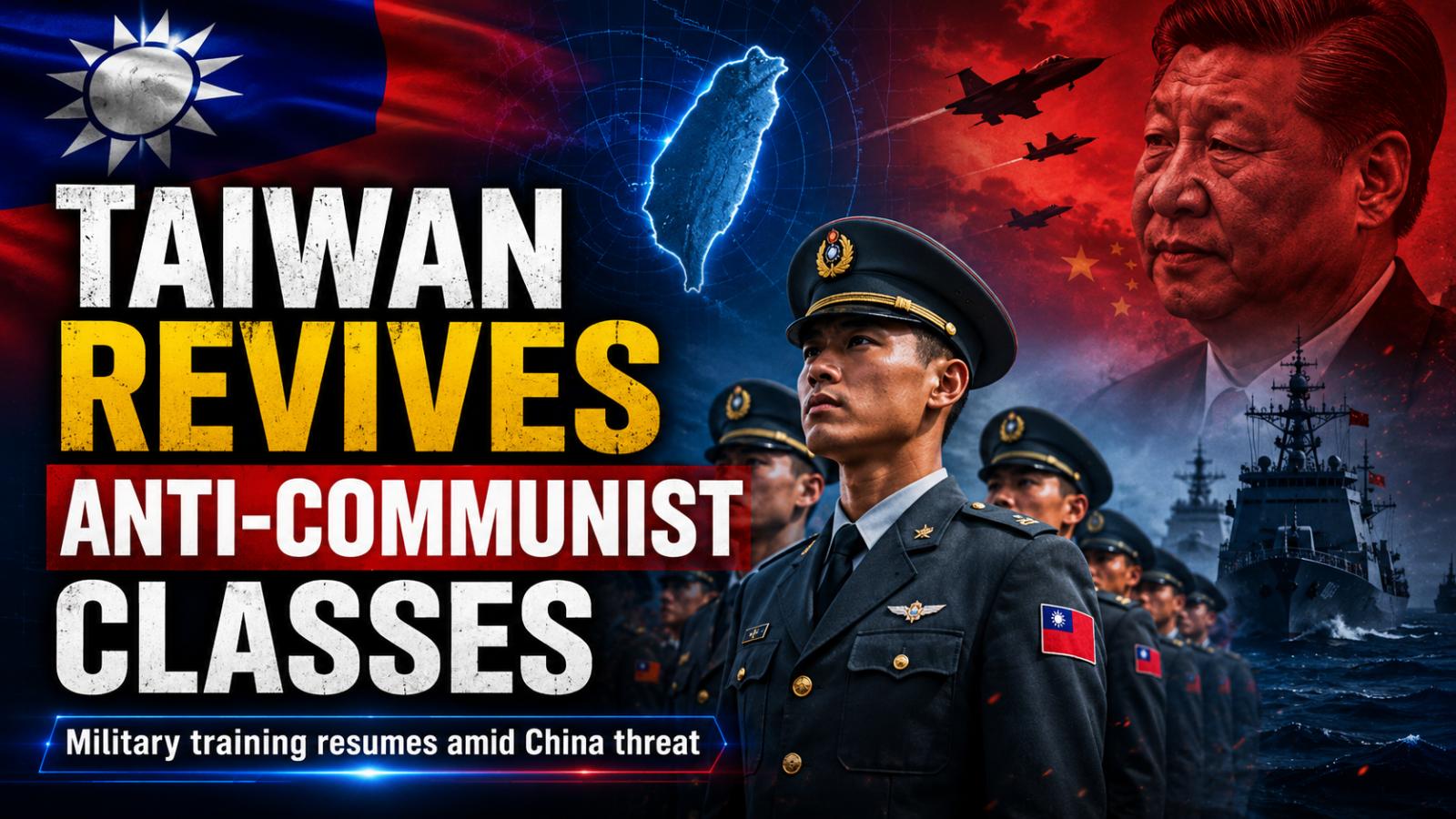
Taiwan revives anti-communist classes amid China threat
Taiwan revives Cold War-era military education Taiwan’s defence ministry has announced the return of “anti-communist” patriotic classes for military graduates after a gap of nearly 25 years, citing growing security concerns linked to China. The programme marks a notable shift in Taiwan military education, as formal anti-communist patriotic instruction had ended i
Taiwan revives anti-communist classes amid China threat
Taiwan revives Cold War-era military education Taiwan’s defence ministry has announced the return of “anti-communist” patriotic classes for military graduates after a gap of nearly 25 years, citing growing security concerns linked to China. The programme marks a notable shift in Taiwan military education, as formal anti-communist patriotic instruction had ended i
Hyderabad Twin Elevated Corridor Work Speeds Up
Hyderabad twin elevated corridor work speeds up Work on Hyderabad’s Rs 5,750-crore twin elevated corridor project has gained momentum, with the Hyderabad Metropolitan Development Authority pushing to complete the major road upgrade within 18 months. The project is expected to improve daily travel between Paradise Junction, Dairy Farm Road, Shamirpet ORR, Bowenpally, Suchitra and Secunderabad. The two elevated
Hyderabad Twin Elevated Corridor Work Speeds Up
Hyderabad twin elevated corridor work speeds up Work on Hyderabad’s Rs 5,750-crore twin elevated corridor project has gained momentum, with the Hyderabad Metropolitan Development Authority pushing to complete the major road upgrade within 18 months. The project is expected to improve daily travel between Paradise Junction, Dairy Farm Road, Shamirpet ORR, Bowenpally, Suchitra and Secunderabad. The two elevated
Shopian orchard operation traps two Lashkar-linked terrorists
Shopian orchard operation traps two Lashkar-linked terrorists Security forces launched a major counter-terror operation in Jammu and Kashmir’s Shopian district after cameras detected two suspected Lashkar-e-Taiba terrorists inside an orchard. The operation began after surveillance inputs confirmed movement in the area, prompting a joint team of the Indian Army, Jammu and Kashmir Police and the CRPF to seal the surrounding villages and block
Shopian orchard operation traps two Lashkar-linked terrorists
Shopian orchard operation traps two Lashkar-linked terrorists Security forces launched a major counter-terror operation in Jammu and Kashmir’s Shopian district after cameras detected two suspected Lashkar-e-Taiba terrorists inside an orchard. The operation began after surveillance inputs confirmed movement in the area, prompting a joint team of the Indian Army, Jammu and Kashmir Police and the CRPF to seal the surrounding villages and block
India names 23 LeT and JeM operatives under UAPA
India names 23 LeT and JeM operatives under UAPA India has designated 23 operatives linked to Pakistan-based Lashkar-e-Tayyeba and Jaish-e-Mohammed under the Unlawful Activities Prevention Act, strengthening its legal and security response to cross-border terrorism. The move is part of the government’s Prahar strategy, which focuses on disrupting terror recruitment, propaganda, training networks, arms movement and infiltration routes used a
India names 23 LeT and JeM operatives under UAPA
India names 23 LeT and JeM operatives under UAPA India has designated 23 operatives linked to Pakistan-based Lashkar-e-Tayyeba and Jaish-e-Mohammed under the Unlawful Activities Prevention Act, strengthening its legal and security response to cross-border terrorism. The move is part of the government’s Prahar strategy, which focuses on disrupting terror recruitment, propaganda, training networks, arms movement and infiltration routes used a
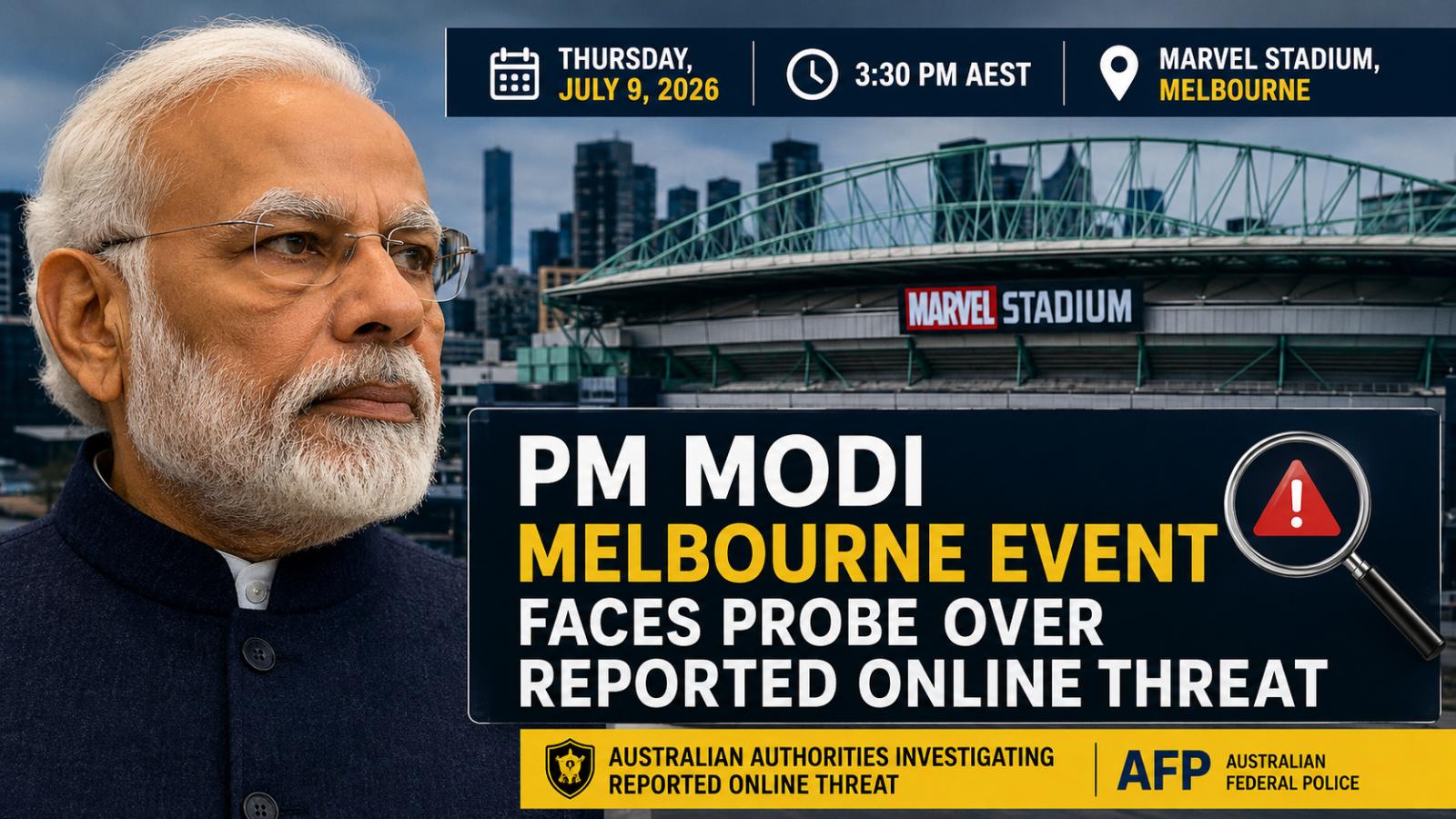
PM Modi Melbourne Event Faces Probe Over Reported Online Threat
Australian authorities are investigating a reported online threat aimed at Indian Prime Minister Narendra Modi before a planned community event in Melbourne, according to media reports. The event, titled “Melbourne Meets Modi,” is scheduled for 3:30 p.m. AEST on Thursday, July 9, 2026, at Marvel Stadium, based on the event details provided. PM Modi Melbourne Event Under Security Review The reported threat appeared in a comment under a Faceb
PM Modi Melbourne Event Faces Probe Over Reported Online Threat
Australian authorities are investigating a reported online threat aimed at Indian Prime Minister Narendra Modi before a planned community event in Melbourne, according to media reports. The event, titled “Melbourne Meets Modi,” is scheduled for 3:30 p.m. AEST on Thursday, July 9, 2026, at Marvel Stadium, based on the event details provided. PM Modi Melbourne Event Under Security Review The reported threat appeared in a comment under a Faceb
Who wrote the Declaration of Independence?
A founding document shaped by debate The United States Declaration of Independence is one of the most important political documents in American history. While Thomas Jefferson is widely known as its primary author, the declaration was not the work of one person alone. It was shaped through committee review, congressional debate and approval by representatives of the thirteen colonies. In June 1776, the Second Continental Congress appointed a
Who wrote the Declaration of Independence?
A founding document shaped by debate The United States Declaration of Independence is one of the most important political documents in American history. While Thomas Jefferson is widely known as its primary author, the declaration was not the work of one person alone. It was shaped through committee review, congressional debate and approval by representatives of the thirteen colonies. In June 1776, the Second Continental Congress appointed a
France deploys mine assets to support Hormuz security
France adjusts regional maritime deployment France has deployed mine countermeasures assets to West Asia as part of efforts to support safe navigation through the Strait of Hormuz, one of the world’s most important maritime routes. President Emmanuel Macron said the deployment includes two minehunters, supported by two frigates and a maritime patrol aircraft, with t
France deploys mine assets to support Hormuz security
France adjusts regional maritime deployment France has deployed mine countermeasures assets to West Asia as part of efforts to support safe navigation through the Strait of Hormuz, one of the world’s most important maritime routes. President Emmanuel Macron said the deployment includes two minehunters, supported by two frigates and a maritime patrol aircraft, with t
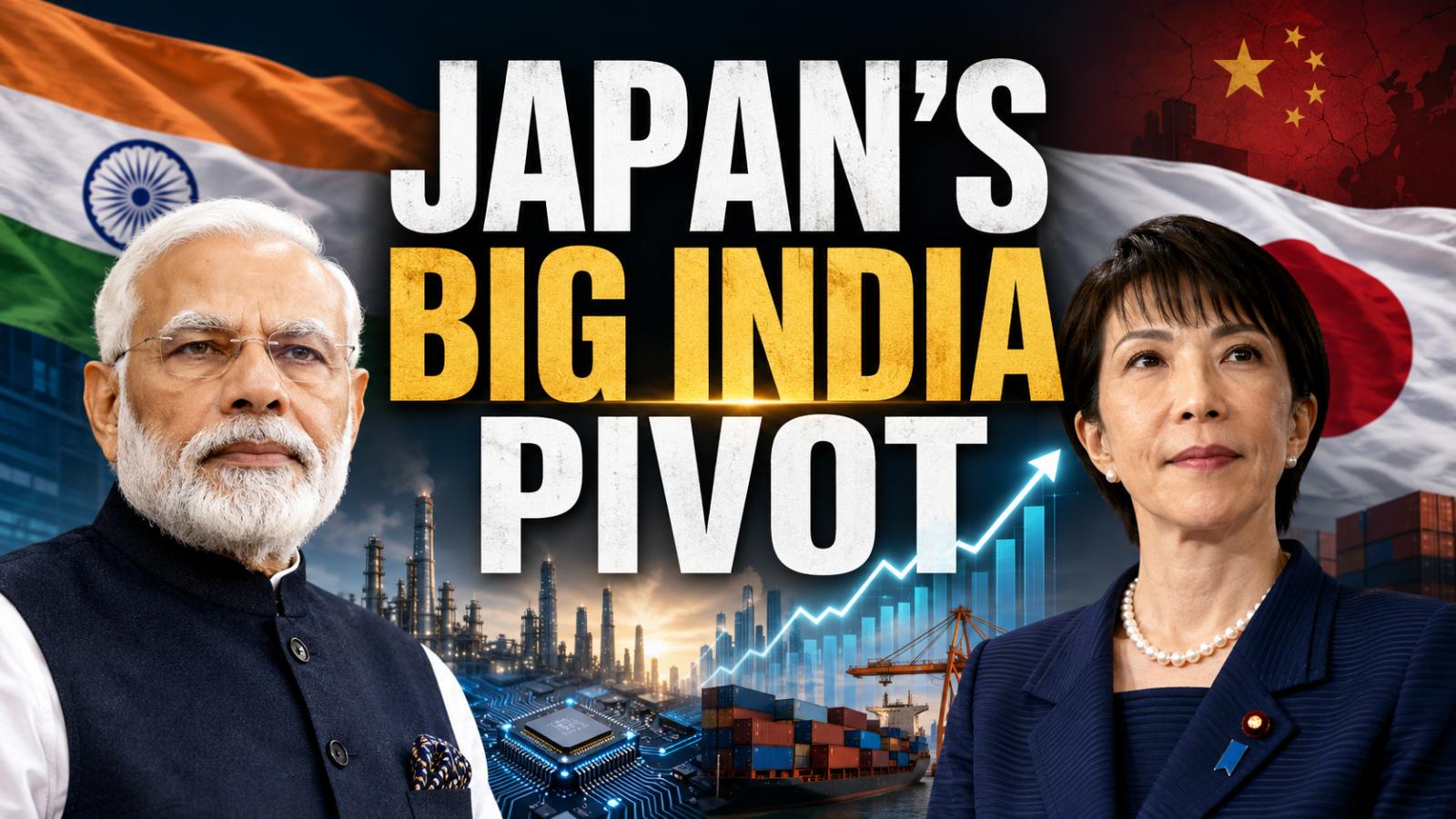
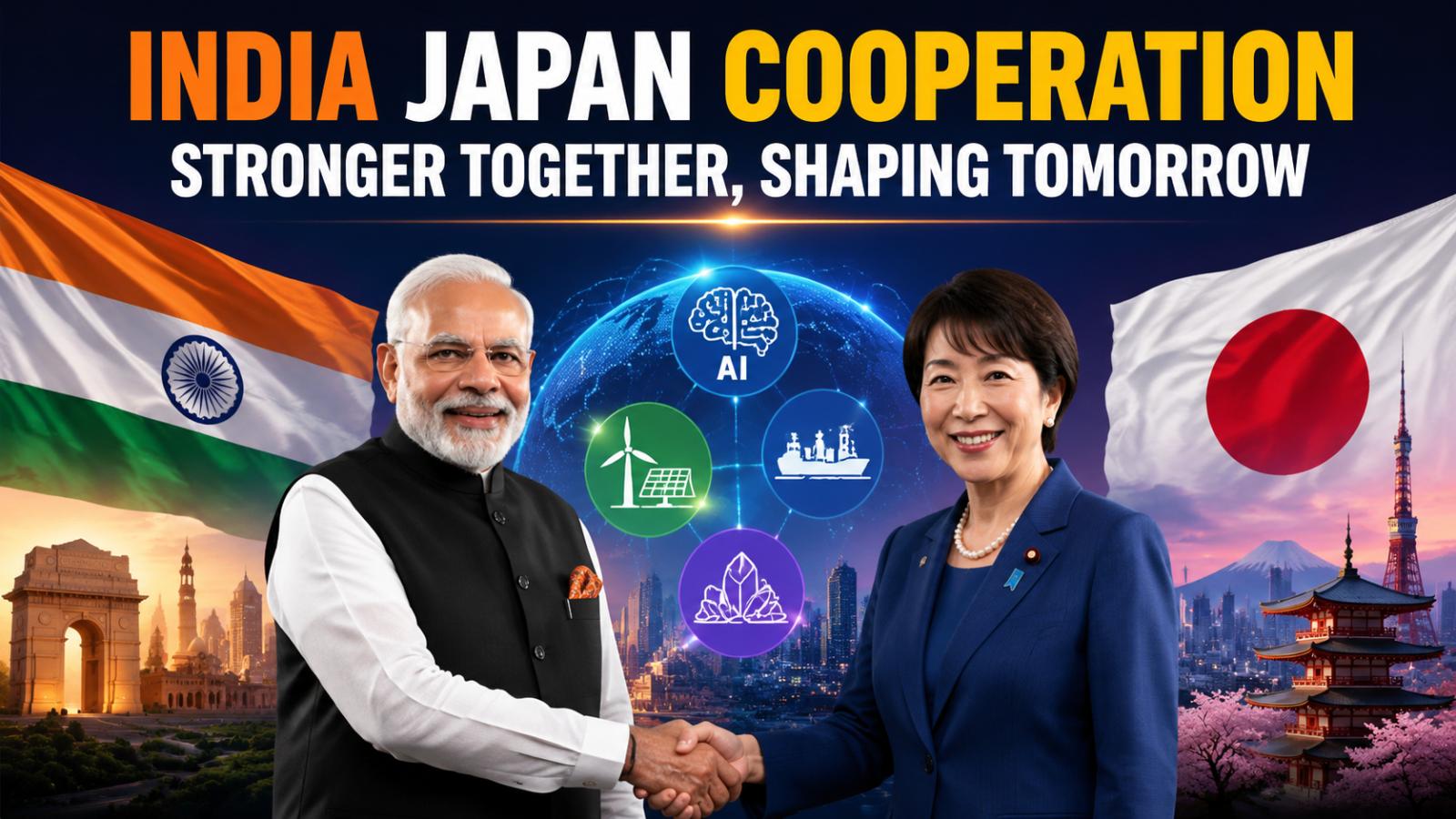
India-Japan summit signals strategic shift beyond China
India-Japan summit reflects a broader strategic shift The India-Japan summit has drawn attention beyond New Delhi and Tokyo because its outcomes point to a wider realignment in Asia’s economic and security order. Japan’s plan to invest more than $61 billion in India over the next decade is the headline, but the deeper issue is why Tokyo is seeking stronger options outside China. Prime Minister Sanae Takai
India-Japan summit signals strategic shift beyond China
India-Japan summit reflects a broader strategic shift The India-Japan summit has drawn attention beyond New Delhi and Tokyo because its outcomes point to a wider realignment in Asia’s economic and security order. Japan’s plan to invest more than $61 billion in India over the next decade is the headline, but the deeper issue is why Tokyo is seeking stronger options outside China. Prime Minister Sanae Takai
Strait of Hormuz tensions rise after renewed ship attacks
Tensions around the Strait of Hormuz have increased again after a mix of political remarks and renewed security incidents in the Gulf region. The strategic waterway, which carries a significant share of global oil shipments, has once again become a focal point as diplomatic relations between the United States and Iran remain unstable. Recent political commentary from US circles, including remarks linked to Hunter Biden on social media, has add
Strait of Hormuz tensions rise after renewed ship attacks
Tensions around the Strait of Hormuz have increased again after a mix of political remarks and renewed security incidents in the Gulf region. The strategic waterway, which carries a significant share of global oil shipments, has once again become a focal point as diplomatic relations between the United States and Iran remain unstable. Recent political commentary from US circles, including remarks linked to Hunter Biden on social media, has add
India Japan unveil 16 point roadmap to expand strategic partnership
India Japan expand strategic partnership framework India and Japan have announced a 16-point roadmap aimed at significantly expanding their Special Strategic and Global Partnership, marking a shift toward deeper cooperation in economic security, advanced technology and energy resilience. The initiative was unveiled following the 16th India-Japan Annual Summit held in
India Japan unveil 16 point roadmap to expand strategic partnership
India Japan expand strategic partnership framework India and Japan have announced a 16-point roadmap aimed at significantly expanding their Special Strategic and Global Partnership, marking a shift toward deeper cooperation in economic security, advanced technology and energy resilience. The initiative was unveiled following the 16th India-Japan Annual Summit held in
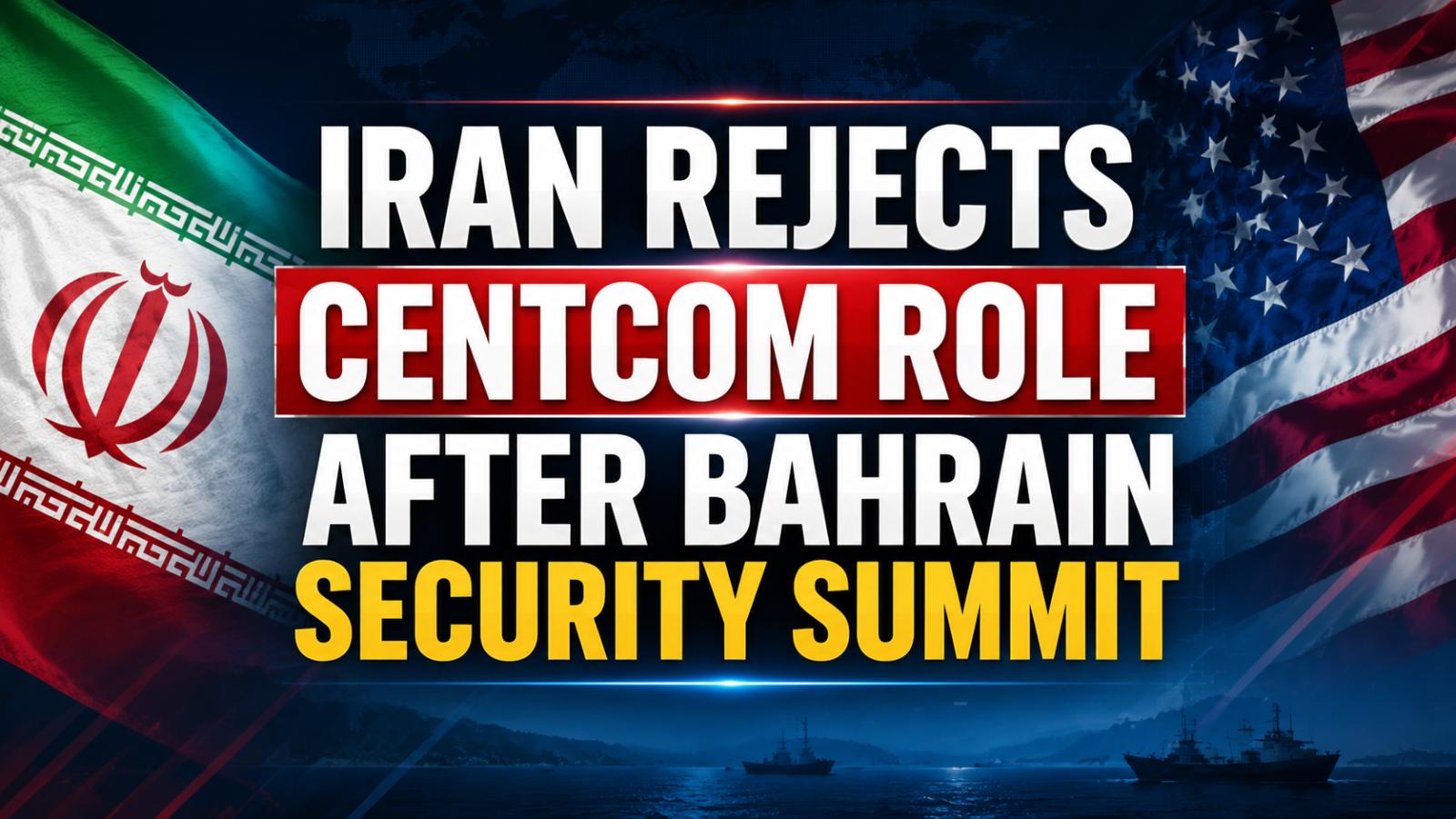
Iran rejects CENTCOM role after Bahrain security summit
Iran challenges US CENTCOM role in West Asia security framework Iran has criticised the role of the United States Central Command in West Asia after a regional security conference in Bahrain brought together senior military officials from 12 countries to discuss air defence cooperation and maritime security. Iranian Foreign Minister Abbas Araghchi said peace in the region
Iran rejects CENTCOM role after Bahrain security summit
Iran challenges US CENTCOM role in West Asia security framework Iran has criticised the role of the United States Central Command in West Asia after a regional security conference in Bahrain brought together senior military officials from 12 countries to discuss air defence cooperation and maritime security. Iranian Foreign Minister Abbas Araghchi said peace in the region
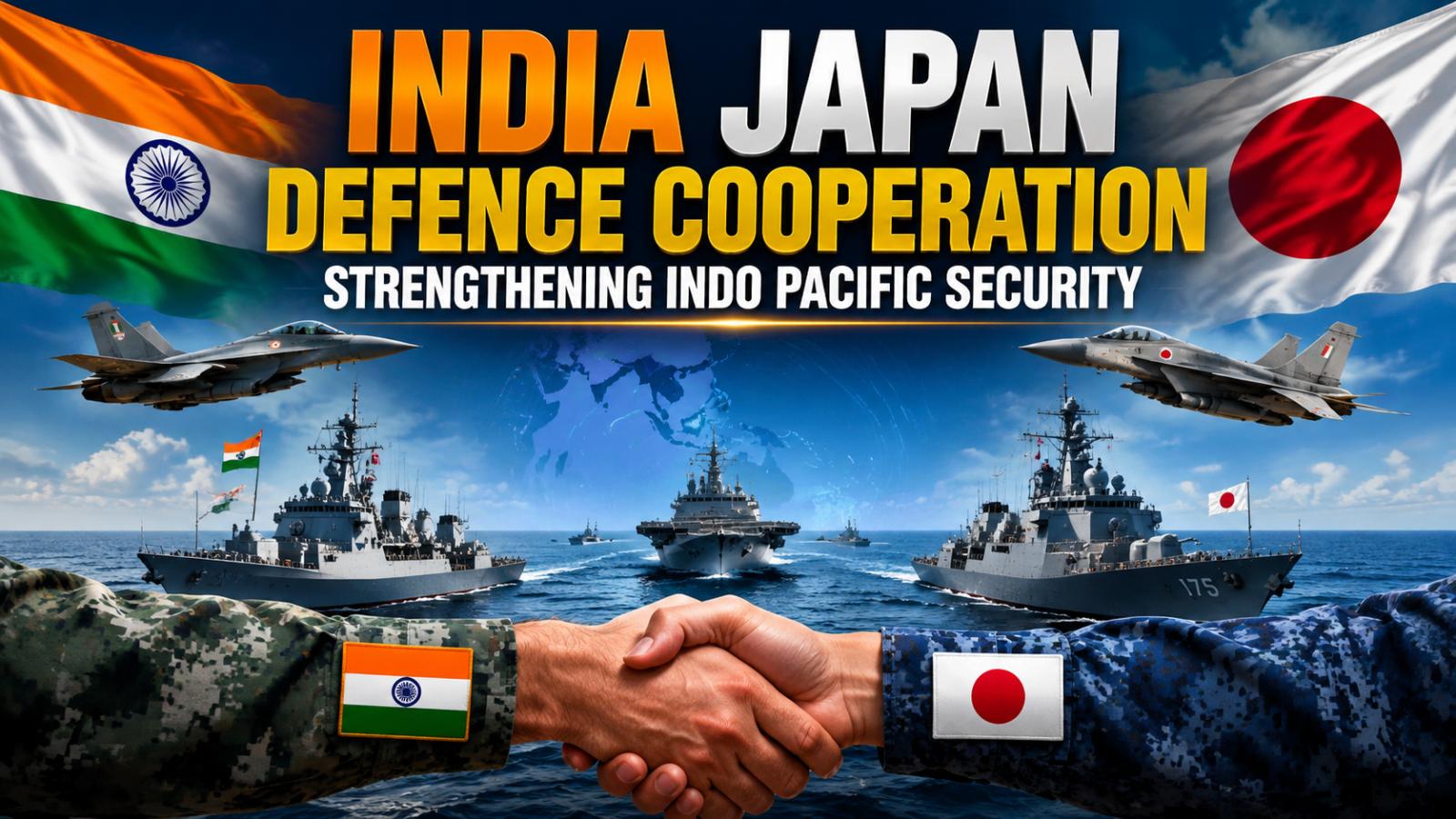
India Japan expand military drills across land sea air
India and Japan are steadily widening their defence partnership with a stronger focus on Indo Pacific stability. The cooperation is no longer limited to symbolic diplomacy and now includes structured military coordination, regular exercises and operational level engagement between the armed forces of both countries. The shared objective is improving readiness and ensuring secure maritime routes across a region that is becoming increasingly contested. Defence dialogue moves into operational coordination High level defence talks between the two countries have evolved into practical coordination mechanisms. Regular 2+2 ministerial meetings have helped align security priorities, especially around regional stability, maritime surveillance and disaster response readiness. This structured engagement has created a foundation for long term interoperability between Indian and Japanese defence forces. Army level training under Dharma Guardian framework The joint Army exercise Dharma Guardian has become a key pillar of land based cooperation. It focuses on counter insurgency operations, jungle warfare and high altitude combat readiness. These drills are designed to improve tactical coordination between the Indian Army and the Japan Ground Self Defence Force, especially in complex terrain scenarios where joint response capability is critical. Naval cooperation through Malabar, JIMEX and MILAN Maritime collaboration remains the strongest pillar of this partnership. Exercises like Malabar, JIMEX and MILAN bring together naval forces to train in anti submarine warfare, sea lane protection and coordinated fleet operations. These drills improve communication and operational compatibility between navies, while also strengthening surveillance across key Indo Pacific shipping routes. Air force integration under Veer Guardian exercises Air cooperation has also expanded through joint training activities such as Veer Guardian. These exercises involve fighter aircraft operations, tactical missions and coordinated aerial drills between the Indian Air Force and the Japan Air Self Defence Force. The focus is on improving mission readiness and developing shared operational understanding in air combat scenarios. Defence technology and industrial cooperation Beyond field exercises, both countries are deepening collaboration in defence technology. Areas such as maritime surveillance systems, sensors and advanced naval equipment are gaining attention. Technology transfer initiatives and joint development discussions are gradually shaping a more integrated defence industrial partnership. Long term Indo Pacific security outlook The India Japan defence partnership is expected to grow further as regional security dynamics continue to evolve. Both countries are increasingly aligned on maintaining freedom of navigation, securing trade routes and responding to emerging maritime threats. This cooperation is positioning them as important contributors to Indo Pacific stability rather than passive regional players.
India Japan expand military drills across land sea air
India and Japan are steadily widening their defence partnership with a stronger focus on Indo Pacific stability. The cooperation is no longer limited to symbolic diplomacy and now includes structured military coordination, regular exercises and operational level engagement between the armed forces of both countries. The shared objective is improving readiness and ensuring secure maritime routes across a region that is becoming increasingly contested. Defence dialogue moves into operational coordination High level defence talks between the two countries have evolved into practical coordination mechanisms. Regular 2+2 ministerial meetings have helped align security priorities, especially around regional stability, maritime surveillance and disaster response readiness. This structured engagement has created a foundation for long term interoperability between Indian and Japanese defence forces. Army level training under Dharma Guardian framework The joint Army exercise Dharma Guardian has become a key pillar of land based cooperation. It focuses on counter insurgency operations, jungle warfare and high altitude combat readiness. These drills are designed to improve tactical coordination between the Indian Army and the Japan Ground Self Defence Force, especially in complex terrain scenarios where joint response capability is critical. Naval cooperation through Malabar, JIMEX and MILAN Maritime collaboration remains the strongest pillar of this partnership. Exercises like Malabar, JIMEX and MILAN bring together naval forces to train in anti submarine warfare, sea lane protection and coordinated fleet operations. These drills improve communication and operational compatibility between navies, while also strengthening surveillance across key Indo Pacific shipping routes. Air force integration under Veer Guardian exercises Air cooperation has also expanded through joint training activities such as Veer Guardian. These exercises involve fighter aircraft operations, tactical missions and coordinated aerial drills between the Indian Air Force and the Japan Air Self Defence Force. The focus is on improving mission readiness and developing shared operational understanding in air combat scenarios. Defence technology and industrial cooperation Beyond field exercises, both countries are deepening collaboration in defence technology. Areas such as maritime surveillance systems, sensors and advanced naval equipment are gaining attention. Technology transfer initiatives and joint development discussions are gradually shaping a more integrated defence industrial partnership. Long term Indo Pacific security outlook The India Japan defence partnership is expected to grow further as regional security dynamics continue to evolve. Both countries are increasingly aligned on maintaining freedom of navigation, securing trade routes and responding to emerging maritime threats. This cooperation is positioning them as important contributors to Indo Pacific stability rather than passive regional players.
India Japan cooperation expands into AI and energy pact
India and Japan have moved to broaden their strategic cooperation with a new framework focused on technology, energy security and resilient supply chains. The latest engagement signals a shift from traditional diplomatic alignment toward deeper economic and innovation-driven collaboration aimed at long-term stability in the Indo-Pacific region. Focus shifts toward AI and digit
India Japan cooperation expands into AI and energy pact
India and Japan have moved to broaden their strategic cooperation with a new framework focused on technology, energy security and resilient supply chains. The latest engagement signals a shift from traditional diplomatic alignment toward deeper economic and innovation-driven collaboration aimed at long-term stability in the Indo-Pacific region. Focus shifts toward AI and digit
WhatsApp usernames rollout: privacy boost or new cyber risk in India
WhatsApp usernames and how the system changes WhatsApp is introducing usernames that allow users to connect without sharing their phone number directly. This is a major shift for India, where mobile numbers are deeply tied to UPI payments, Aadhaar-linked verification, banking access, and other digital identity systems. The feature does not remove phone numbers from acc
WhatsApp usernames rollout: privacy boost or new cyber risk in India
WhatsApp usernames and how the system changes WhatsApp is introducing usernames that allow users to connect without sharing their phone number directly. This is a major shift for India, where mobile numbers are deeply tied to UPI payments, Aadhaar-linked verification, banking access, and other digital identity systems. The feature does not remove phone numbers from acc
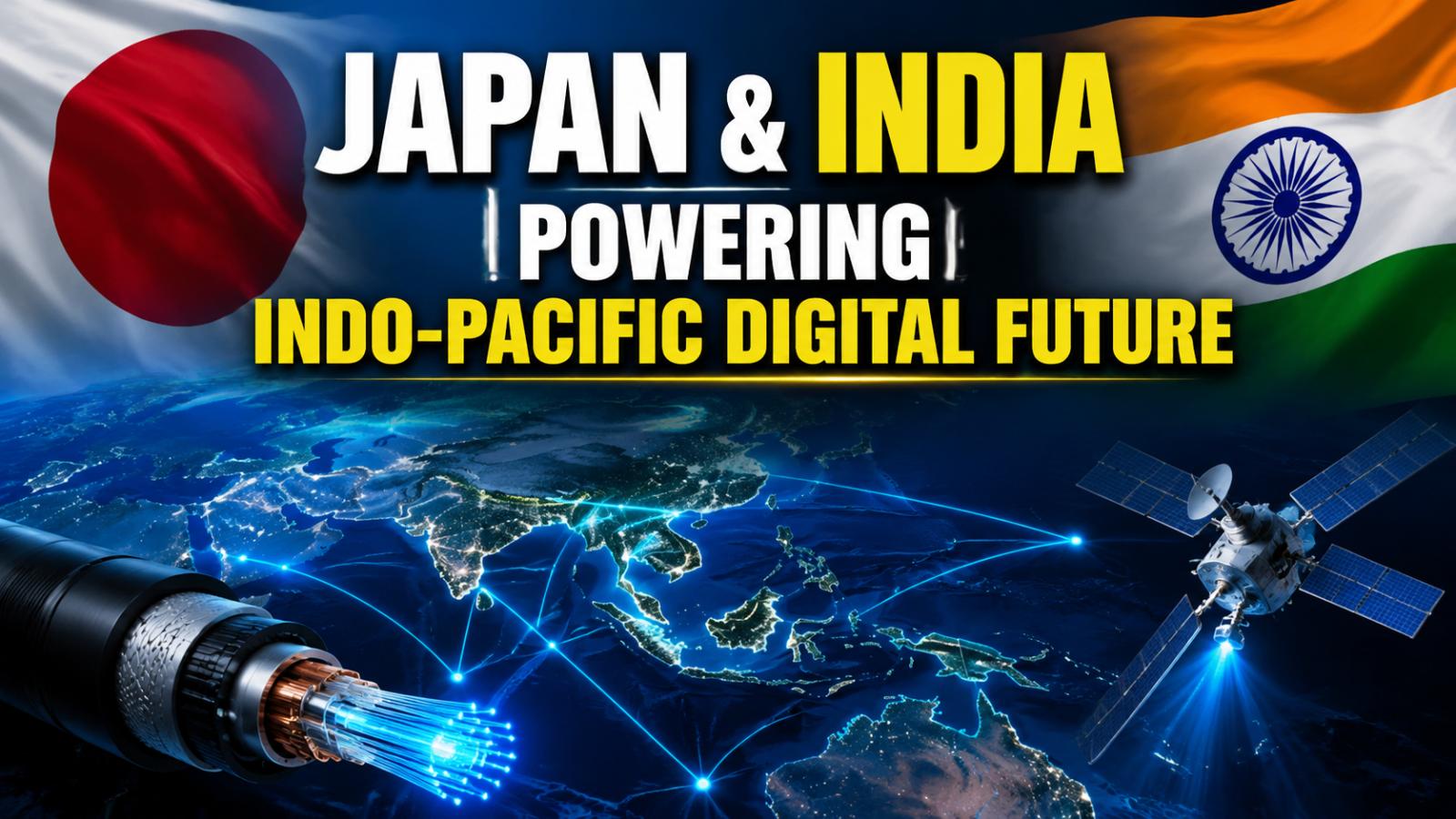
Japan India digital pact reshapes Indo Pacific tech routes
The Indo-Pacific strategy is increasingly moving away from traditional security frameworks toward digital infrastructure control. Japan and India are emerging as key drivers in this transition, focusing on secure data movement, resilient communication systems, and long-term technological independence from concentrated global networks. The shift reflects a broader attempt to reduce vulnerabilities in cross-border data flows and critical digital assets.
Japan India digital pact reshapes Indo Pacific tech routes
The Indo-Pacific strategy is increasingly moving away from traditional security frameworks toward digital infrastructure control. Japan and India are emerging as key drivers in this transition, focusing on secure data movement, resilient communication systems, and long-term technological independence from concentrated global networks. The shift reflects a broader attempt to reduce vulnerabilities in cross-border data flows and critical digital assets.
India Japan summit 2026 boosts FOIP rare earth strategy
The India Japan Summit 2026 is emerging as more than diplomatic engagement, shifting toward a structured economic alignment under the Free and Open Indo-Pacific (FOIP) framework. Japan is positioning India as a long-term partner in building alternative production networks outside China’s dominant supply ecosystem. The focus is no longer symbolic cooperation but measurable industrial integration across energy, technology, and critical materials. Rare Earth Dependency and Strategic Diversification A major driver of the summit is global concern over rare earth concentration in China. These materials are essential for electric vehicles, defence systems, and semiconductor manufacturing. Japan has been actively seeking diversification, and India is being viewed as a viable partner due to its untapped mineral reserves and growing extraction capability. However, this shift is not immediate. India still faces infrastructure gaps in refining and processing, which limits its ability to fully replace existing supply chains. The partnership therefore focuses on joint development rather than replacement. Northeast India as an Emerging Industrial Bridge Northeast India is increasingly being integrated into strategic planning as a logistics and manufacturing connector between South Asia and Southeast Asia. Its geographical position near the Bay of Bengal makes it relevant for regional trade routes, especially under Japan-backed connectivity initiatives. The long-term expectation is the development of corridors linking manufacturing zones, ports, and resource hubs. But execution remains a challenge due to terrain, infrastructure bottlenecks, and slow industrial scaling. EV Batteries and Semiconductor Collaboration Expands The summit is expected to accelerate cooperation in electric mobility and chip production. Japan’s technology strength in precision manufacturing complements India’s expanding industrial base and domestic demand growth. Instead of simple export-import trade, both countries are moving toward localized production ecosystems. This includes battery supply chains, semiconductor assembly, and joint research in advanced materials. The real shift here is from consumption-driven trade to production-sharing models. Investment Flow and Industrial Integration Japanese investment in India continues to grow steadily, with a strong presence in automobiles, electronics, and infrastructure. The partnership now appears to be entering a deeper phase where investment is tied to strategic supply chain redesign rather than isolated projects. This creates a long-term dependency loop where both economies benefit from shared manufacturing ecosystems, but also become more structurally linked to global market fluctuations. Strategic Outcome: A Competing Supply Chain Bloc The broader outcome of the India Japan Summit 2026 is the gradual formation of an alternative industrial network in Asia. It does not replace existing systems overnight but creates parallel pathways in critical sectors like energy storage, semiconductors, and defence manufacturing. The key question going forward is execution speed. Policy alignment is strong, but infrastructure readiness and capital deployment will decide how quickly this partnership moves from strategy to reality.
India Japan summit 2026 boosts FOIP rare earth strategy
The India Japan Summit 2026 is emerging as more than diplomatic engagement, shifting toward a structured economic alignment under the Free and Open Indo-Pacific (FOIP) framework. Japan is positioning India as a long-term partner in building alternative production networks outside China’s dominant supply ecosystem. The focus is no longer symbolic cooperation but measurable industrial integration across energy, technology, and critical materials. Rare Earth Dependency and Strategic Diversification A major driver of the summit is global concern over rare earth concentration in China. These materials are essential for electric vehicles, defence systems, and semiconductor manufacturing. Japan has been actively seeking diversification, and India is being viewed as a viable partner due to its untapped mineral reserves and growing extraction capability. However, this shift is not immediate. India still faces infrastructure gaps in refining and processing, which limits its ability to fully replace existing supply chains. The partnership therefore focuses on joint development rather than replacement. Northeast India as an Emerging Industrial Bridge Northeast India is increasingly being integrated into strategic planning as a logistics and manufacturing connector between South Asia and Southeast Asia. Its geographical position near the Bay of Bengal makes it relevant for regional trade routes, especially under Japan-backed connectivity initiatives. The long-term expectation is the development of corridors linking manufacturing zones, ports, and resource hubs. But execution remains a challenge due to terrain, infrastructure bottlenecks, and slow industrial scaling. EV Batteries and Semiconductor Collaboration Expands The summit is expected to accelerate cooperation in electric mobility and chip production. Japan’s technology strength in precision manufacturing complements India’s expanding industrial base and domestic demand growth. Instead of simple export-import trade, both countries are moving toward localized production ecosystems. This includes battery supply chains, semiconductor assembly, and joint research in advanced materials. The real shift here is from consumption-driven trade to production-sharing models. Investment Flow and Industrial Integration Japanese investment in India continues to grow steadily, with a strong presence in automobiles, electronics, and infrastructure. The partnership now appears to be entering a deeper phase where investment is tied to strategic supply chain redesign rather than isolated projects. This creates a long-term dependency loop where both economies benefit from shared manufacturing ecosystems, but also become more structurally linked to global market fluctuations. Strategic Outcome: A Competing Supply Chain Bloc The broader outcome of the India Japan Summit 2026 is the gradual formation of an alternative industrial network in Asia. It does not replace existing systems overnight but creates parallel pathways in critical sectors like energy storage, semiconductors, and defence manufacturing. The key question going forward is execution speed. Policy alignment is strong, but infrastructure readiness and capital deployment will decide how quickly this partnership moves from strategy to reality.
New reel trend highlights risks of sharing gestures in social media photos
Social Media Privacy Concerns Gain Attention Through Viral Content A new social media reel concept is drawing attention to how everyday photo habits may expose more information than users realize. The content focuses on common posing gestures, particularly hand signs used in selfies, and raises broader questions about digital privacy awareness in online sharing culture
New reel trend highlights risks of sharing gestures in social media photos
Social Media Privacy Concerns Gain Attention Through Viral Content A new social media reel concept is drawing attention to how everyday photo habits may expose more information than users realize. The content focuses on common posing gestures, particularly hand signs used in selfies, and raises broader questions about digital privacy awareness in online sharing culture
US lifts restrictions on Anthropic advanced AI models after security review
US Eases Restrictions on Advanced AI Models The United States government has lifted export restrictions on Anthropic’s most advanced artificial intelligence systems, reversing limitations imposed just weeks earlier over national security concerns. The decision allows the company to restore global access to its flagship AI models, Fable 5 and Mythos 5, marking a nota
US lifts restrictions on Anthropic advanced AI models after security review
US Eases Restrictions on Advanced AI Models The United States government has lifted export restrictions on Anthropic’s most advanced artificial intelligence systems, reversing limitations imposed just weeks earlier over national security concerns. The decision allows the company to restore global access to its flagship AI models, Fable 5 and Mythos 5, marking a nota
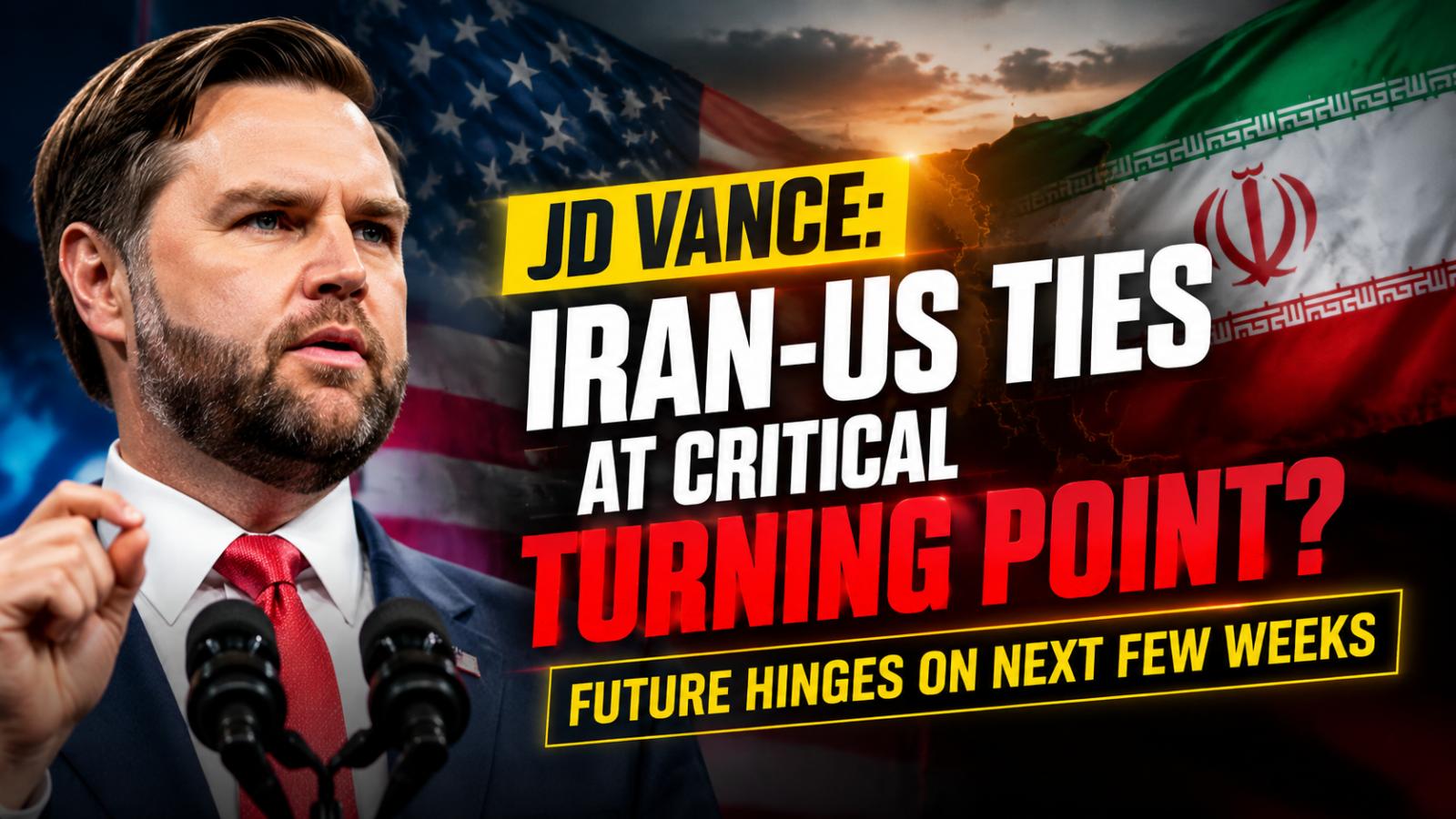
JD Vance says Iran-US relations at critical turning point
Washington Signals Uncertain Phase in Iran Relations US Vice President JD Vance has suggested that the coming weeks could play a decisive role in shaping future relations between Washington and Tehran, while emphasizing that outcomes remain highly uncertain. Speaking on a media program, he described the current situation as a potentially significant turning point in l
JD Vance says Iran-US relations at critical turning point
Washington Signals Uncertain Phase in Iran Relations US Vice President JD Vance has suggested that the coming weeks could play a decisive role in shaping future relations between Washington and Tehran, while emphasizing that outcomes remain highly uncertain. Speaking on a media program, he described the current situation as a potentially significant turning point in l
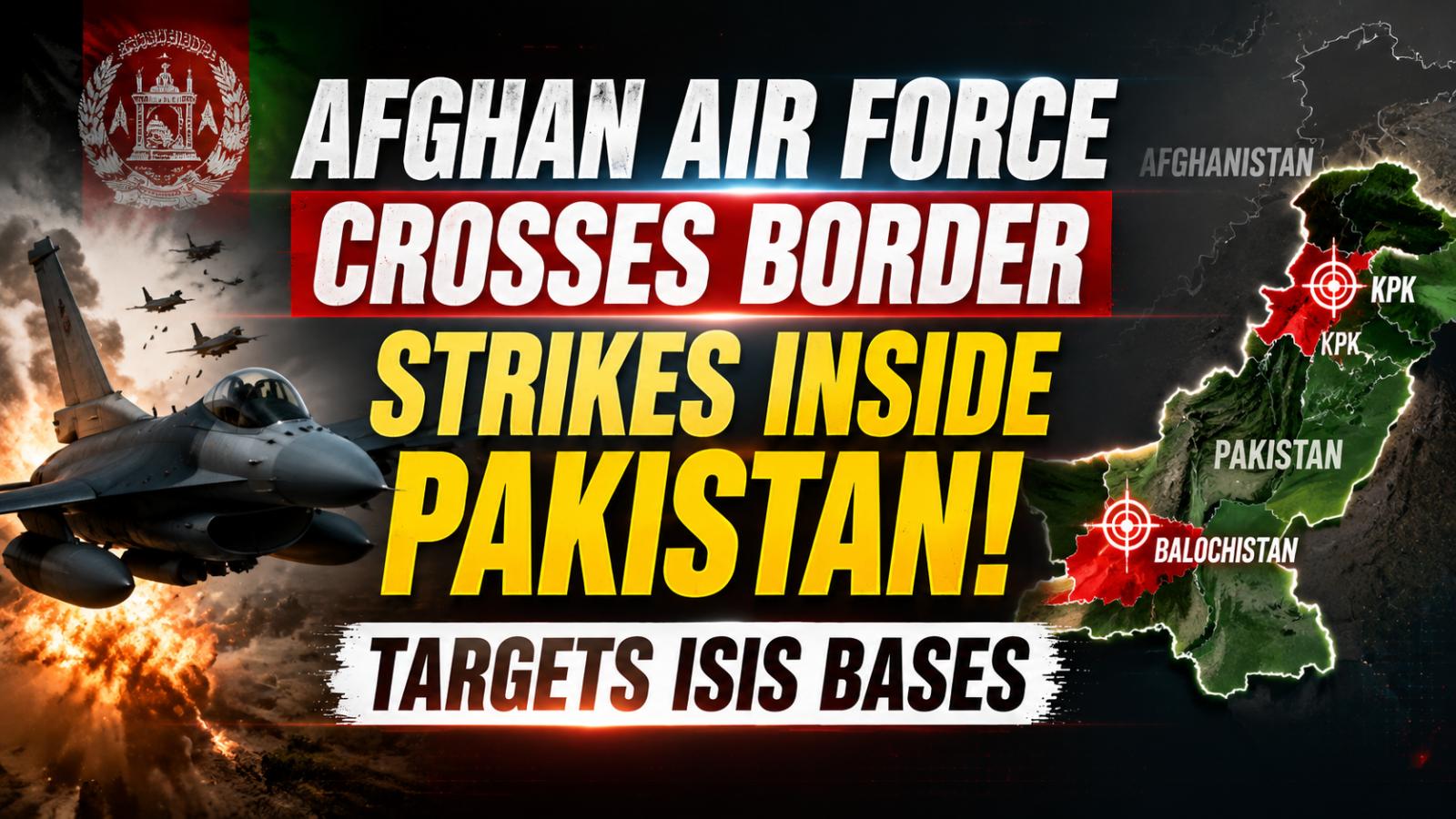
Afghan Air Force conducts strikes inside Pakistan targeting ISIS bases
Cross-border military strikes reported The Afghan Air Force has carried out airstrikes inside Pakistan, targeting what it described as ISIS-linked centres allegedly used to plan and coordinate attacks against civilians in Afghanistan. According to the Taliban-run Defence Ministry and reports cited by Tolo News, the strikes were aimed at dismantling operational hubs connected to cross-border militant activity. T

Afghan Air Force conducts strikes inside Pakistan targeting ISIS bases
Cross-border military strikes reported The Afghan Air Force has carried out airstrikes inside Pakistan, targeting what it described as ISIS-linked centres allegedly used to plan and coordinate attacks against civilians in Afghanistan. According to the Taliban-run Defence Ministry and reports cited by Tolo News, the strikes were aimed at dismantling operational hubs connected to cross-border militant activity. T