Alibaba challenges Pentagon designation in US court
Alibaba Group has filed a federal lawsuit in San Jose challenging its inclusion on a US Defense Department blacklist that labels it as a “Chinese military company.” The company argues that the designation is unfounded, lacks proper legal basis, and was issued without adequate due process. The case adds further pressure to already strained relations betw
Meta will invest $900 million in Bengaluru-based fintech company CRED, while founder Kunal Shah prepares to take charge of WhatsApp globally. The linked announcements place one of India’s best-known startup founders at the center of Meta’s next phase in messaging, business services and digital payments.
Watch: Why did Meta choose Kunal Shah to lead WhatsApp? See o
Undersea cables are the hidden reason most of the world stays connected online. The internet does not mainly travel through satellites. It travels through submarine fiber cables placed deep under the ocean. These ocean internet cables connect countries, data centers, banks, cloud services, stock markets and normal users. When you send a message, watch a video or open a foreign website, your data often travels through undersea internet cables in seconds.
What are undersea in
The United States is stepping up its focus on quantum computing as governments and private companies race to control the next major shift in computing power. The strategy combines research funding, national security planning, and stronger digital defense systems designed to prepare for future computational threats.
Rather than treating quantum computing as a distant research topic, policymakers are now positioning it as a strategic infrastructure priority. The direction signals a broader effort to maintain technological leadership in areas where classical computing is approaching its limits.
Big tech and government alignment
Federal agencies are increasingly coordinating with major technology companies including IBM, Microsoft, and Google, all of which are actively building experimental quantum systems. These companies are exploring how quantum processors could eventually solve complex optimization, material science, and cryptography-related problems that are currently impractical for classical machines.
The collaboration is not just scientific. It reflects a competitive global environment where control over advanced computing could influence national security, economic strength, and cybersecurity resilience.
Why qubits change the computing model
Unlike traditional computers that process data in binary form, quantum systems rely on qubits. These units can exist in multiple states simultaneously, enabling different types of computation through principles such as superposition and entanglement.
In theory, this allows quantum systems to evaluate a vast number of possibilities at once. However, real-world systems remain extremely fragile, expensive, and difficult to scale. Most current machines operate in controlled laboratory environments rather than practical deployment settings.
Cybersecurity pressure is rising
One of the biggest drivers behind quantum investment is its impact on encryption. Modern security systems depend on mathematical problems that are extremely difficult for classical computers to solve. Quantum algorithms, in the long term, could potentially break some of these systems.
This risk is pushing governments toward post-quantum cryptography standards developed by research bodies such as NIST. These new encryption models are designed to remain secure even against quantum-level computational attacks.
Long road to practical systems
Despite rapid progress, fully functional large-scale quantum computers are still years away. Challenges include error correction, stability, and hardware scaling. Researchers agree that meaningful commercial use is still in early stages.
Even so, the strategic push continues because early leadership in quantum infrastructure could determine future advantages in defense, intelligence, and advanced science applications.
The current phase is less about immediate transformation and more about positioning for a technological shift that could redefine computing over the next decade.
Meta will invest about $900 million in Indian fintech company CRED as founder Kunal Shah prepares to step away from day-to-day leadership and become WhatsApp’s next leader. The investment and leadership changes were announced on Monday, June 22, 2026.
CRED said the financing values the company at $4.5 billion after the investment. The round includes primary and secondary capital and gives Meta an approximately 20% minority stake. Shah will remain a CRED shareholder, while Meta wil
Qatar factory blast triggers search operation
An explosion at a factory in Qatar’s Ras Laffan industrial zone injured 54 people and left 18 others missing, the country’s interior ministry said Monday, June 22. Authorities described the blast as the result of a technical incident and said emergency teams were continuing search and response operations at the site. The ministry did not immediately provide further details on the condition of
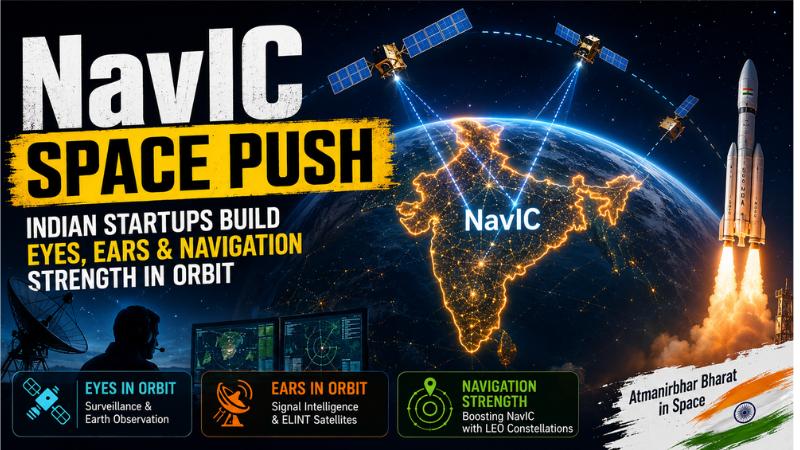
Indian Space Startups Strengthen NavIC Push With Eyes And Ears In Orbit
India’s private space companies are no longer just supporting Isro — they are building satellites that could help the country watch borders, track signals, and strengthen NavIC.
At the India Space Congress 2026 in New Delhi, several Indian firms showcased satellite technologies focused on surveillance, si
The United Arab Emirates has announced new restrictions preventing children under the age of 15 from creating, using or operating personal accounts on social media platforms. The measure is part of a broader effort to strengthen online safety and reduce children’s exposure to cyberbullying, harmful material, privacy risks and contact with unknown users.
Under the cabinet resolution, social media companies operating in the UAE will receive a 12-month compliance period. Platforms th
Massive AI Deal Reshapes Silicon Valley Wealth Landscape
A high-value acquisition involving Elon Musk’s SpaceX has triggered a major wealth shift in the global tech ecosystem. The company has reportedly acquired Anysphere, the parent of AI coding platform Cursor, in a $60 billion all-stock transaction. The deal has instantly pushed key founders and early stakeholders into billionaire status, marking one of
SpaceX’s $60 billion Cursor deal could value each Anysphere co-founder’s estimated stake at about $2.7 billion. However, that figure represents the estimated value of stock, not a confirmed cash payout.
SpaceX agreed on Tuesday, June 16, 2026, to acquire San Francisco-based Anysphere, the company behind the AI coding platform Cursor, in an all-stock transaction. The deal is expected to close in the third quarter of 2026, subject to regulatory approval and other customary conditi
Tragic skydiving crash claims 12 lives in Missouri
A devastating aviation accident in Missouri on Sunday, June 15, 2026, in the United States, has claimed the lives of 12 people, including a 24-year-old Indian tech professional identified as Sai Karthik Varma Datla. The crash occurred shortly after takeoff from Butler Memorial Airport in Bates County, approximately 80 miles south of Kansas City, when a skyd
AI gene editing is rapidly changing how scientists understand and treat human diseases. Artificial intelligence now helps researchers study DNA faster, identify harmful mutations, and design improved therapies. By analyzing large sets of genetic data, AI reduces the time needed for discovery and supports more accurate medical research. This progress is helping scientists explore treatments for diseases that were once considered difficult or impossible to cure, making gene-based medicine more practical and efficient.
AI accelerates genome research
Artificial intelligence systems process huge volumes of genomic data and detect patterns that are too complex for traditional methods. These systems predict how gene changes may affect the human body and help researchers test ideas digitally before real lab experiments. This reduces cost, saves time, and increases accuracy in genetic research. It also allows scientists to better understand rare diseases and develop targeted treatment strategies.
Advanced gene editing tools
New AI-powered tools such as OpenCRISPR, DeepGenomics, and predictive editing models are improving precision in DNA modification. These systems help reduce errors during gene editing and improve safety by predicting off-target effects. They also allow researchers to simulate genetic changes before applying them in real biological systems, making experiments more controlled and reliable.
Ethical and safety concerns
Despite its benefits, AI gene editing raises serious concerns about misuse and safety. Easy access to synthetic DNA and limited oversight in some research environments can increase risks. The same technology that helps cure diseases could also be misused if not properly regulated. This makes strong monitoring and responsible use essential for protecting public health.
Need for global regulation
Experts recommend strict global rules for AI-driven gene editing. These include screening synthetic DNA orders, maintaining detailed lab records, and ensuring transparency in research. International cooperation is also necessary to prevent misuse and strengthen biosecurity systems. Ethical guidelines must guide research, especially in sensitive areas like embryo editing and human genetic modification.
Balancing progress and responsibility
AI gene editing offers major benefits in medicine, including faster drug development, precision treatments, and better understanding of human genetics. However, these advances must be balanced with strong safety measures. Responsible use of technology, combined with global cooperation, will ensure that AI improves healthcare without creating new biological risks.
In 2026, agentic ai is changing how people use technology in daily life. It is a system where AI does not only answer questions but also completes full tasks. This means users can give one simple goal, and the AI handles everything needed to finish it. From booking flights to managing emails and schedules, agentic ai works like a digital worker instead of a simple chatbot.
How Agentic AI works
Un
Telegram restriction ahead of NEET raises WhatsApp question
India’s decision to restrict Telegram ahead of the NEET re-test scheduled for June 21 has triggered a wider debate on digital platform regulation and why similar action has not been taken against WhatsApp. The move, taken on the recommendation of the National Testing Agency (NTA), is linked to concerns over exam-related fraud and the circulation o
Reports emerging from Chinese security authorities have triggered discussion over the growing use of advanced underwater monitoring systems along coastal regions. The claims suggest that various marine-based platforms, including sensor-equipped aquatic life and autonomous devices, may be collecting detailed ocean data near sensitive shoreline zones. This includes measurements such as temperature shifts, salinity levels, and underwater current behavior, which can collectively reveal patterns of coastal activity.
How ocean data becomes strategically sensitive
Even basic environmental data, when collected continuously and processed at scale, can create highly detailed digital maps of underwater geography. These maps may outline seabed structures, shipping lanes, and depth variations close to ports. Security analysts note that such information, if accessed by external actors, could potentially be used to study movement patterns of naval or commercial vessels and identify infrastructure vulnerabilities without direct physical intrusion.
Expanding role of autonomous maritime technology
Modern ocean monitoring has moved far beyond traditional ship-based surveys. Technologies such as wave gliders, drifting sensor buoys, and autonomous underwater vehicles are now widely used for scientific research and environmental tracking. However, the same systems can also be adapted for intelligence collection, depending on their configuration and intent. This overlap between civilian research tools and security applications is creating growing uncertainty in how maritime technology is regulated and interpreted.
Security implications and policy response
Authorities have reportedly increased attention toward unusual devices and foreign-operated equipment in coastal waters. Guidance has been issued to local maritime workers to report unidentified floating or submerged objects that appear out of place. The situation reflects a broader global trend where environmental monitoring technologies are increasingly viewed through a security lens. As multiple nations expand their ocean data capabilities, the line between scientific exploration and strategic surveillance continues to blur, raising new challenges for coastal defense planning and international maritime trust.
Claude Fable 5 is unavailable worldwide after Anthropic disabled it and Mythos 5 in response to a U.S. export-control directive. The company said the order barred foreign nationals from accessing the two models and effectively required a shutdown for every customer. Other Anthropic models remain available.
Why Claude Fable 5 Is Unavailable Worldwide
Anthropic said it received the directive on Friday, June 12, 2026. The restriction applies to foreign nati
Prime Minister Narendra Modi arrived in Bratislava on a landmark visit to Slovakia, becoming the first Indian prime minister to travel to the country since it became independent in 1993. The visit is part of his three-nation European tour and comes at a time when India is working to deepen its political, economic and technology partnerships across Europe.
During his two-day stay, Modi is scheduled to hold bilateral meetings with Slovak Pre
A federal judge has ordered the Trump administration to restore altered national park exhibits and temporarily halt further removals while a lawsuit challenging the changes proceeds.
U.S. District Judge Angel Kelley in Massachusetts issued a preliminary injunction requiring the administration to reverse changes made under a presidential directive on how federal museums, parks and landmarks present American history. The order also requires weekly reports detailing restoration work.
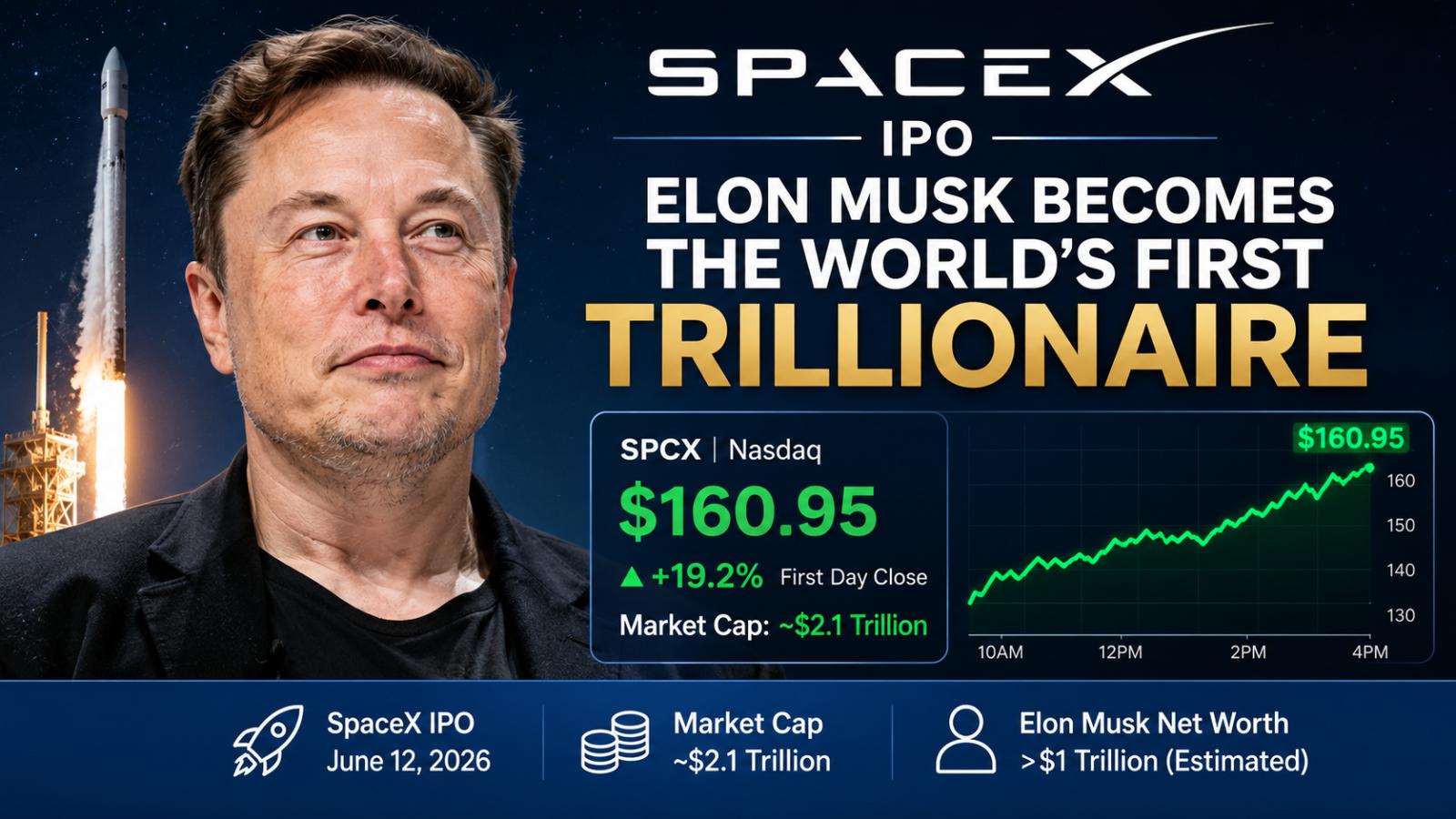
Elon Musk became the world’s first trillionaire on paper after SpaceX completed its record-setting stock-market debut on Friday, June 12, 2026. The milestone also renewed attention on the modest South Texas home Musk has described as his primary residence.
SpaceX IPO Makes Elon Musk the First Trillionaire
SpaceX priced its initial public offering at $135 per share, valuing the company at approximately $1.77 trillion before trading began. Shares, listed