






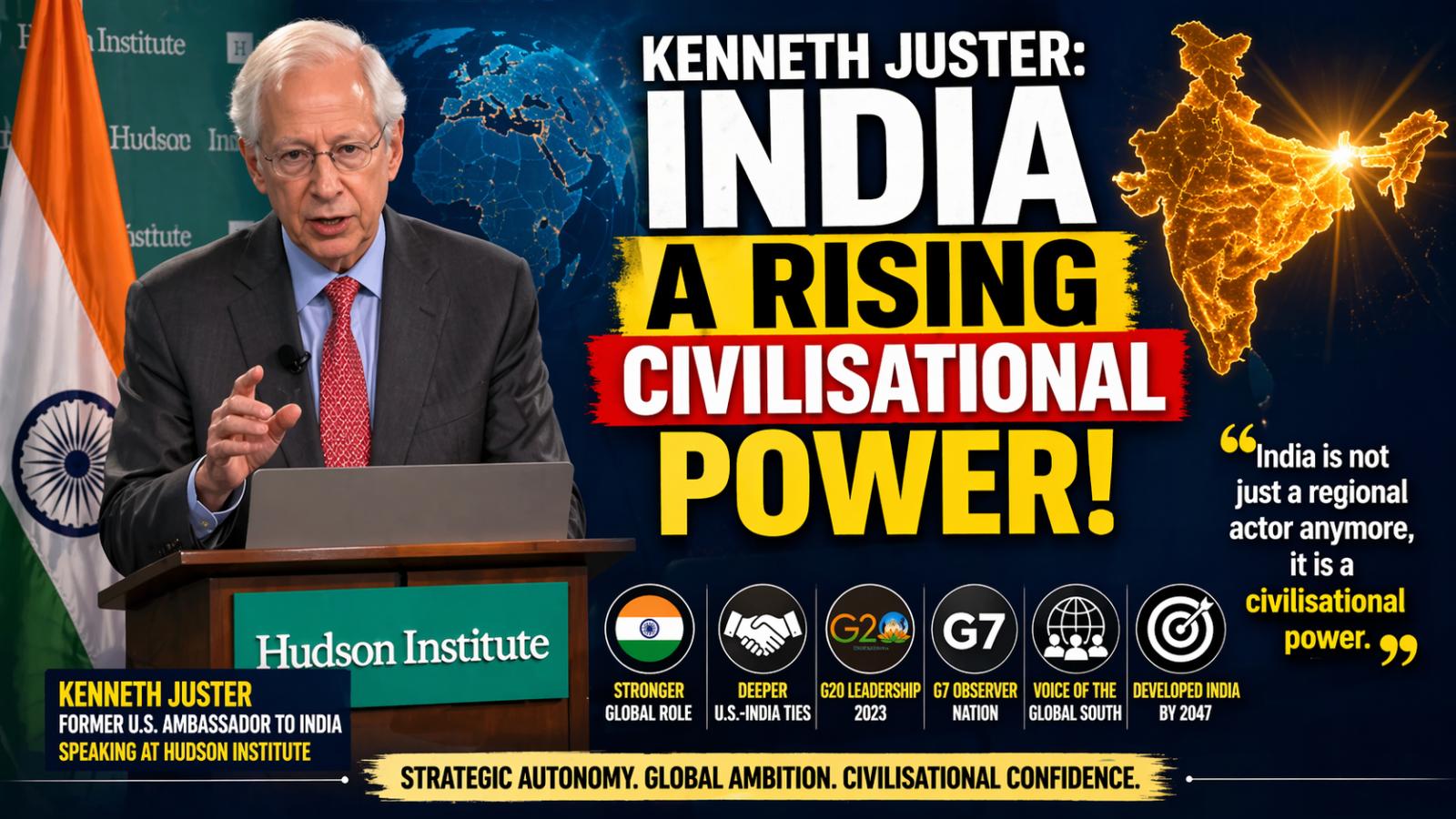
What did Kenneth Juster say about India’s global role? He called it a rising civilisational power
India’s emergence as a civilisational power in global affairs What did Kenneth Juster say about India’s global role? He called it a rising civilisational power, underscoring a major shift in how the country positions itself internationally. Former U.S. Ambassador to India Kenneth Juster said on Thursday, April 23, 2026, that India has evolved into a “civilisational power” under Prime Minister Narendra Modi, reflecting a more assertive and confident global posture. Speaking at an event hosted by the Hudson Institute, Juster identified Modi’s 2014 election as a turning point that accelerated India’s transformation in foreign policy and international engagement. Expanding diplomatic reach and global engagement Juster emphasized that India’s approach to global affairs has shifted significantly over the past decade, with New Delhi demonstrating greater confidence and a willingness to engage broadly with countries across regions. He noted that India no longer views itself as limited to a regional role but instead positions itself as a major global force with a distinct civilizational identity. This evolution has enabled India to expand its diplomatic outreach and pursue strategic ambitions with increased clarity and purpose. Navigating U.S.-China competition with strategic autonomy According to Juster, India’s foreign policy reflects a careful balance between deeper global engagement and maintaining strategic autonomy, particularly in the context of U.S.-China competition. While India shares concerns with other middle powers about preserving independence in decision-making, it has simultaneously strengthened ties with the United States. This dual approach allows India to navigate geopolitical tensions while safeguarding its national interests. Growing influence in global governance platforms Juster also highlighted India’s increasing role in global governance, including its active participation in G7 discussions as a regular observer and its leadership during the G20 presidency in 2023. He pointed to India’s ambition of becoming a developed nation by 2047 as a key driver of its international strategy. Additionally, India has sought to position itself as a leading voice for the Global South, shaping conversations on development, equity, and governance. Washington’s perspective on India’s rising global role Juster’s remarks reflect a broader consensus in Washington that India is emerging as a confident and influential actor on the world stage. By combining strategic independence with proactive diplomacy, India is increasingly seen as a country intent on shaping the global order in the 21st century while advancing its long-term national objectives.
What did Kenneth Juster say about India’s global role? He called it a rising civilisational power
India’s emergence as a civilisational power in global affairs What did Kenneth Juster say about India’s global role? He called it a rising civilisational power, underscoring a major shift in how the country positions itself internationally. Former U.S. Ambassador to India Kenneth Juster said on Thursday, April 23, 2026, that India has evolved into a “civilisational power” under Prime Minister Narendra Modi, reflecting a more assertive and confident global posture. Speaking at an event hosted by the Hudson Institute, Juster identified Modi’s 2014 election as a turning point that accelerated India’s transformation in foreign policy and international engagement. Expanding diplomatic reach and global engagement Juster emphasized that India’s approach to global affairs has shifted significantly over the past decade, with New Delhi demonstrating greater confidence and a willingness to engage broadly with countries across regions. He noted that India no longer views itself as limited to a regional role but instead positions itself as a major global force with a distinct civilizational identity. This evolution has enabled India to expand its diplomatic outreach and pursue strategic ambitions with increased clarity and purpose. Navigating U.S.-China competition with strategic autonomy According to Juster, India’s foreign policy reflects a careful balance between deeper global engagement and maintaining strategic autonomy, particularly in the context of U.S.-China competition. While India shares concerns with other middle powers about preserving independence in decision-making, it has simultaneously strengthened ties with the United States. This dual approach allows India to navigate geopolitical tensions while safeguarding its national interests. Growing influence in global governance platforms Juster also highlighted India’s increasing role in global governance, including its active participation in G7 discussions as a regular observer and its leadership during the G20 presidency in 2023. He pointed to India’s ambition of becoming a developed nation by 2047 as a key driver of its international strategy. Additionally, India has sought to position itself as a leading voice for the Global South, shaping conversations on development, equity, and governance. Washington’s perspective on India’s rising global role Juster’s remarks reflect a broader consensus in Washington that India is emerging as a confident and influential actor on the world stage. By combining strategic independence with proactive diplomacy, India is increasingly seen as a country intent on shaping the global order in the 21st century while advancing its long-term national objectives.
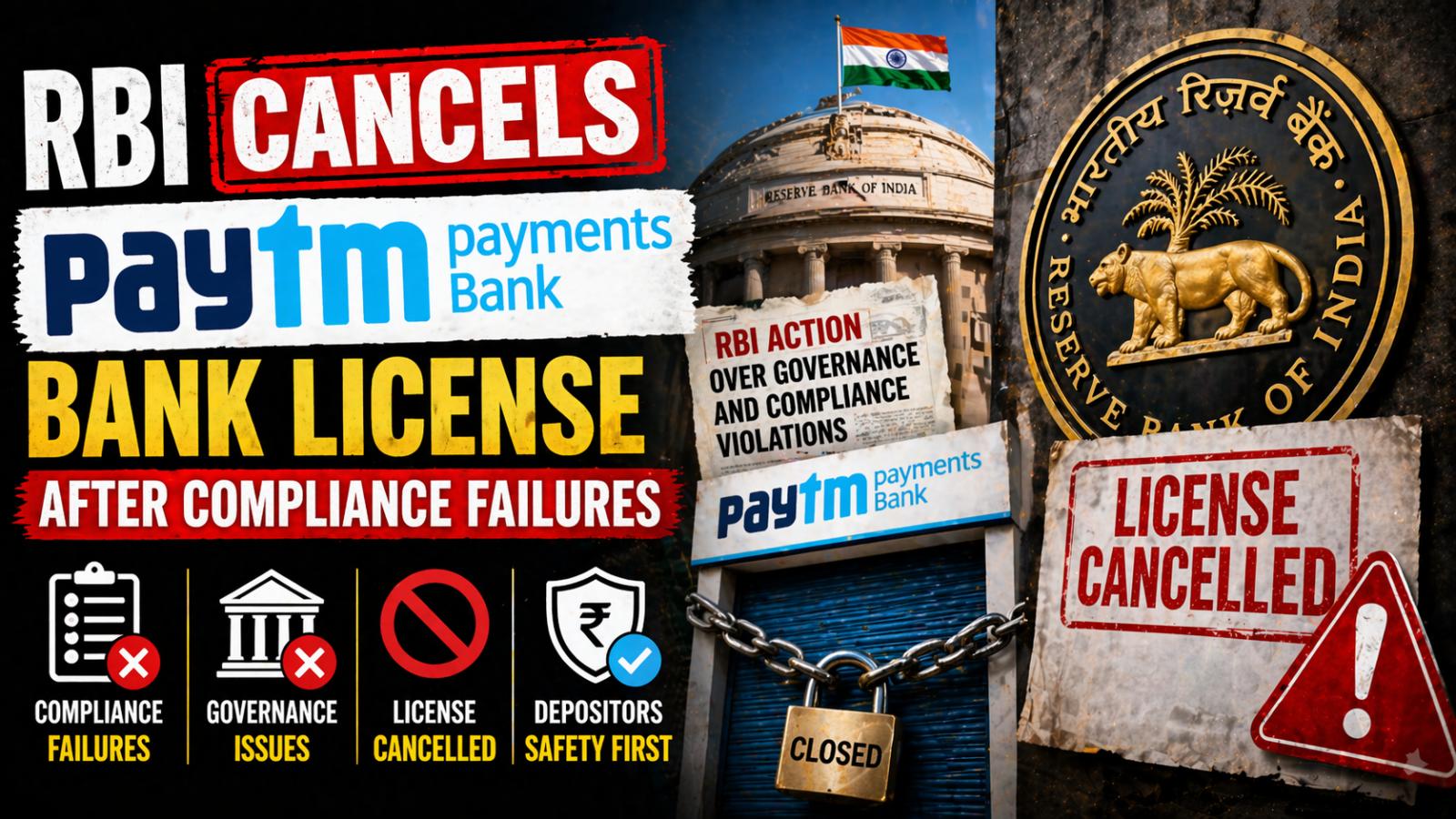
What happened to Paytm Payments Bank? RBI cancels its license after violations
Regulatory action culminates in license cancellation What happened to Paytm Payments Bank? RBI cancels its license after violations forms the central development in India’s financial sector, as the Reserve Bank of India revoked the banking license of Paytm Payments Bank Ltd wi
What happened to Paytm Payments Bank? RBI cancels its license after violations
Regulatory action culminates in license cancellation What happened to Paytm Payments Bank? RBI cancels its license after violations forms the central development in India’s financial sector, as the Reserve Bank of India revoked the banking license of Paytm Payments Bank Ltd wi

How did Dr. Rajkumar influence Kannada cinema and earn top honors?
How did Dr. Rajkumar influence Kannada cinema and earn top honors? remains a defining question in understanding Indian cinema, particularly in southern India. Dr. Rajkumar, born on April 24, 1929, in Karnataka, India, rose from a theater background to become one of the most respected actors in Kannada cinema. Raised in a family of stage performers, his early exposure to acting shaped a disciplined and values-driven career that spanned decades. Early life and rise in Kannada cinema Rajkumar’s upbringing in rural Karnataka and his work in traveling theater troupes laid the foundation for his entry into films. He made his cinematic debut in the 1950s with Bedara Kannappa, a mythological film where he portrayed a devoted follower of Lord Shiva. The film marked a turning point in Kannada cinema and established him as a leading actor. Over time, he went on to act in more than 200 films, earning widespread recognition Film career success and lasting impact Over the course of his career, Rajkumar became synonymous with Kannada cinema, often referred to as “Annavru.” His films consistently performed well at the box office and carried strong social messages. One of his most influential works, Bangarada Manushya, portrayed a man returning to agriculture, inspiring many toward rural development and farming. Decades later, Jeevana Chaitra highlighted his enduring appeal, where he played an elderly villager reflecting on changing societal values. Contributions as a playback singer In addition to acting, Rajkumar was an accomplished playback singer. His songs, often rooted in classical traditions, gained widespread popularity. His performance in “Nadamaya” from Jeevana Chaitra earned him national recognition, further establishing his versatility in Indian cinema. Awards, honors, and public recognition Rajkumar received numerous prestigious honors for his contributions to cinema and culture. He was awarded the Dadasaheb Phalke Award in 1995, India’s highest recognition in film. He also received the Padma Bhushan in 1983, one of the country’s top civilian honors. In 1992, he was conferred the Karnataka Ratna, recognizing his profound influence on the state’s cultural identity. Role in Gokak protest and personal principles During the Gokak agitation in the 1980s, Rajkumar played an active role in advocating for the primacy of the Kannada language in education. His involvement brought widespread attention to the movement and reinforced his position as a cultural leader. Strict on-screen rule against smoking and alcohol portrayal One of his most defining personal principles was his conscious decision to never smoke or consume alcohol in his on-screen roles. Given his immense popularity and influence, he believed audiences—especially younger fans—might imitate his behavior. This deliberate choice reflected his sense of responsibility as a public figure and strengthened his reputation as a disciplined and value-driven icon. Rajkumar’s legacy continues to influence Indian cinema and cultural identity, making his life and career a lasting point of reference for artists and audiences alike.
How did Dr. Rajkumar influence Kannada cinema and earn top honors?
How did Dr. Rajkumar influence Kannada cinema and earn top honors? remains a defining question in understanding Indian cinema, particularly in southern India. Dr. Rajkumar, born on April 24, 1929, in Karnataka, India, rose from a theater background to become one of the most respected actors in Kannada cinema. Raised in a family of stage performers, his early exposure to acting shaped a disciplined and values-driven career that spanned decades. Early life and rise in Kannada cinema Rajkumar’s upbringing in rural Karnataka and his work in traveling theater troupes laid the foundation for his entry into films. He made his cinematic debut in the 1950s with Bedara Kannappa, a mythological film where he portrayed a devoted follower of Lord Shiva. The film marked a turning point in Kannada cinema and established him as a leading actor. Over time, he went on to act in more than 200 films, earning widespread recognition Film career success and lasting impact Over the course of his career, Rajkumar became synonymous with Kannada cinema, often referred to as “Annavru.” His films consistently performed well at the box office and carried strong social messages. One of his most influential works, Bangarada Manushya, portrayed a man returning to agriculture, inspiring many toward rural development and farming. Decades later, Jeevana Chaitra highlighted his enduring appeal, where he played an elderly villager reflecting on changing societal values. Contributions as a playback singer In addition to acting, Rajkumar was an accomplished playback singer. His songs, often rooted in classical traditions, gained widespread popularity. His performance in “Nadamaya” from Jeevana Chaitra earned him national recognition, further establishing his versatility in Indian cinema. Awards, honors, and public recognition Rajkumar received numerous prestigious honors for his contributions to cinema and culture. He was awarded the Dadasaheb Phalke Award in 1995, India’s highest recognition in film. He also received the Padma Bhushan in 1983, one of the country’s top civilian honors. In 1992, he was conferred the Karnataka Ratna, recognizing his profound influence on the state’s cultural identity. Role in Gokak protest and personal principles During the Gokak agitation in the 1980s, Rajkumar played an active role in advocating for the primacy of the Kannada language in education. His involvement brought widespread attention to the movement and reinforced his position as a cultural leader. Strict on-screen rule against smoking and alcohol portrayal One of his most defining personal principles was his conscious decision to never smoke or consume alcohol in his on-screen roles. Given his immense popularity and influence, he believed audiences—especially younger fans—might imitate his behavior. This deliberate choice reflected his sense of responsibility as a public figure and strengthened his reputation as a disciplined and value-driven icon. Rajkumar’s legacy continues to influence Indian cinema and cultural identity, making his life and career a lasting point of reference for artists and audiences alike.
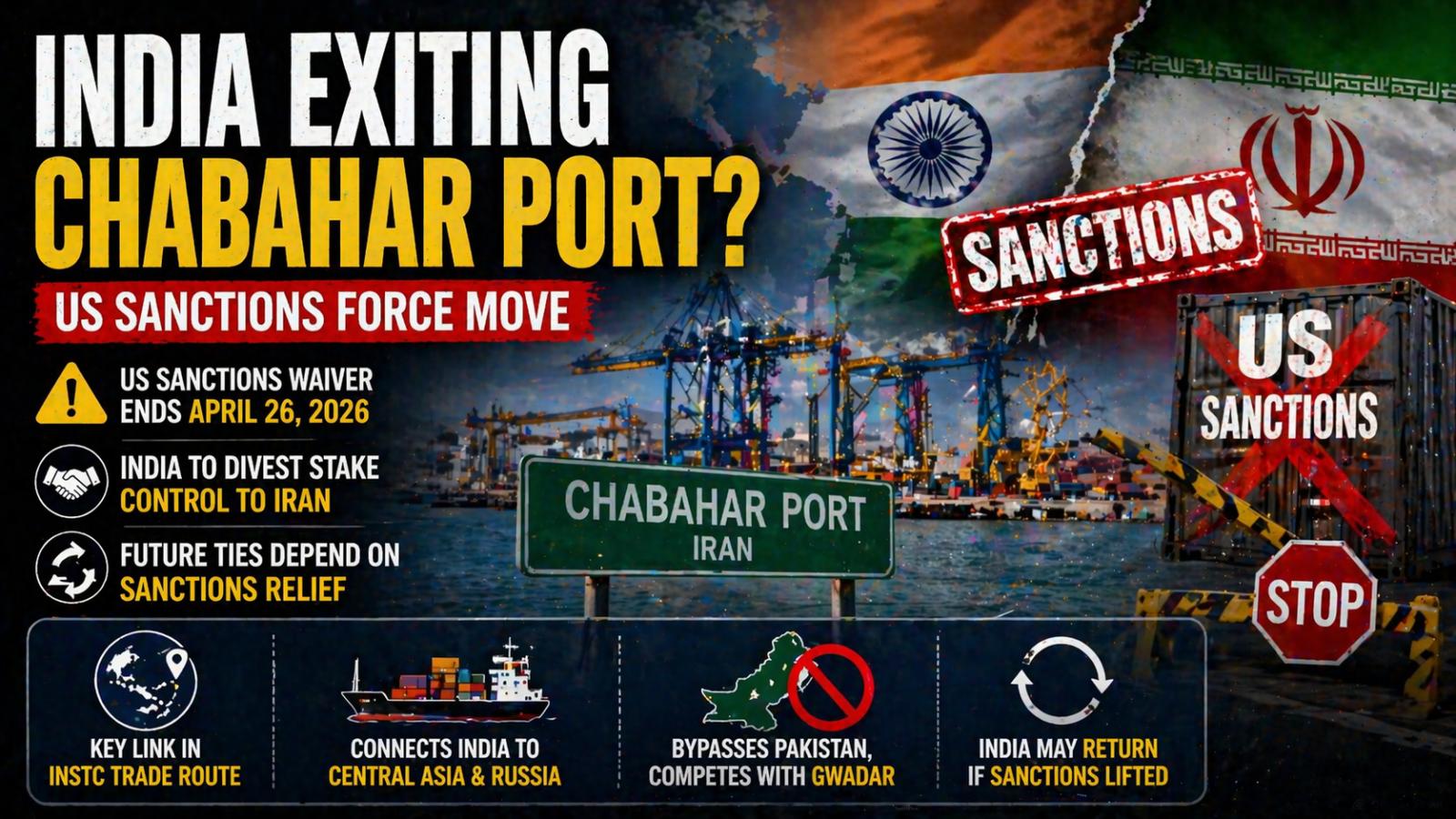
Why is India exiting Chabahar port? Government plans divestment amid US sanctions
Sanctions pressure drives India’s planned exit from Chabahar port Why is India exiting Chabahar port? Government plans divestment amid US sanctions as New Delhi prepares to step back from the strategic Iranian port ahead of the expiration of a US sanctions waiver on Sunday, April 26, 2026. The move is expected to transfer operational control to a local Iranian entity while preserving the possibility of India’s return if sanctions are lifted or a new waiver is g
Why is India exiting Chabahar port? Government plans divestment amid US sanctions
Sanctions pressure drives India’s planned exit from Chabahar port Why is India exiting Chabahar port? Government plans divestment amid US sanctions as New Delhi prepares to step back from the strategic Iranian port ahead of the expiration of a US sanctions waiver on Sunday, April 26, 2026. The move is expected to transfer operational control to a local Iranian entity while preserving the possibility of India’s return if sanctions are lifted or a new waiver is g
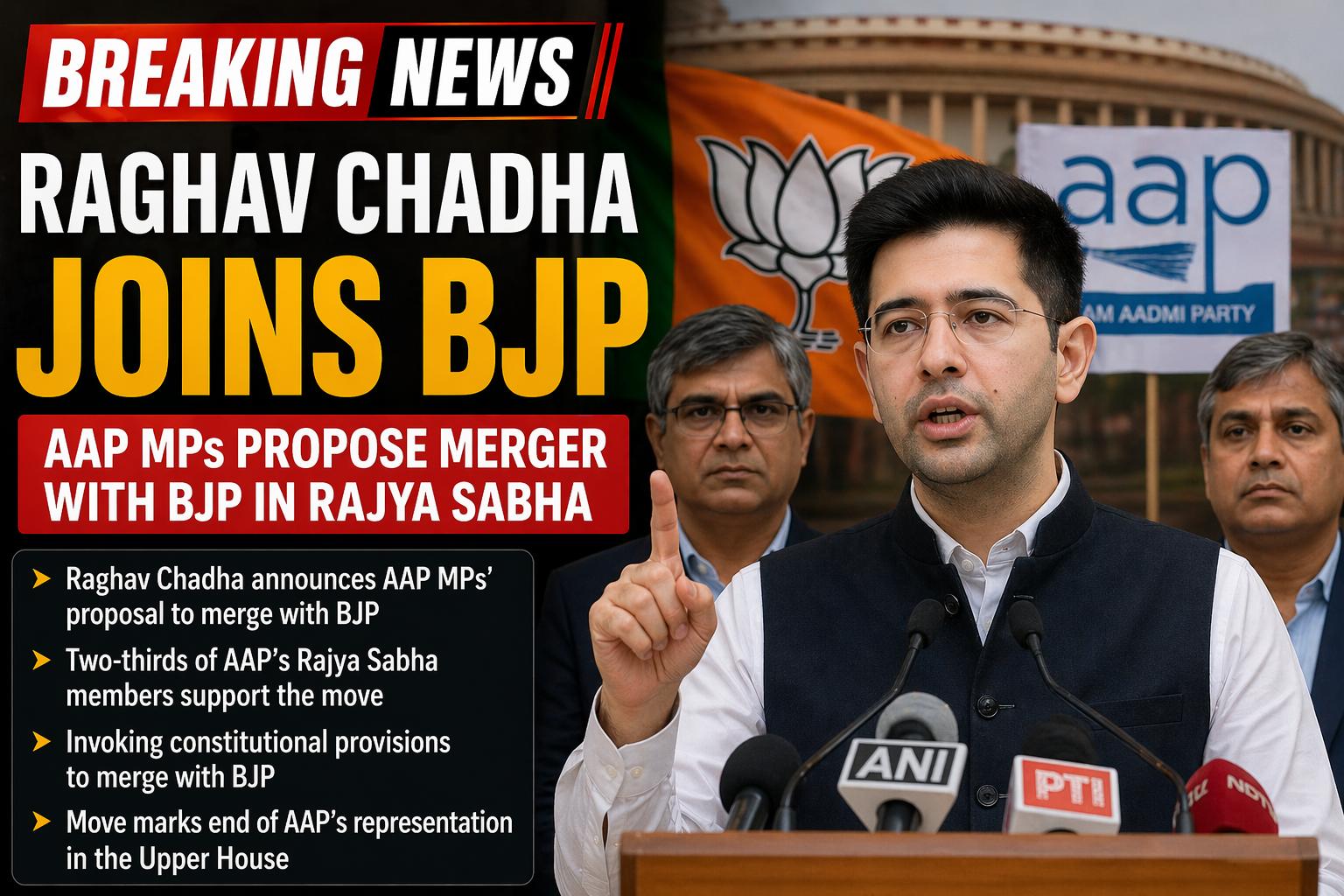
Raghav Chadha Joins BJP, Sparks Major Shift In Rajya Sabha Numbers
A major political shift unfolded in New Delhi on Friday, April 24, 2026, as Raghav Chadha, along with fellow Rajya Sabha MPs Ashok Mittal and Sandeep Pathak, officially joined the Bharatiya Janata Party after resigning from the Aam Aadmi Party. The leaders were inducted into the BJP in the presence of party chief Nitin Nabin at the party office in Delhi, where they were welcomed with bouquets and greeted senior party members. Earlier in the day, Chadha, aged 37, announced his resignation from AAP along with six other MPs, stating their intention to merge with the BJP by invoking constitutional provisions that allow such a move when two-thirds of a party’s members agree. The group submitted a formal letter along with required documents to Rajya Sabha Chairman C. P. Radhakrishnan. With seven out of ten AAP MPs in the Rajya Sabha switching sides, the anti-defection law is unlikely to apply. As a result, only three AAP MPs—Sanjay Singh, Sant Balbir Singh Seechewal, and N. D. Gupta—remain in the Upper House. Chadha explained that his decision was driven by growing dissatisfaction with the party’s direction, stating that he increasingly felt like “the right person in the wrong party.” His exit comes after a series of developments, including his removal as Deputy Leader in the Rajya Sabha and replacement by Ashok Mittal. Reports also highlighted his absence from key opposition actions, refusal to sign certain notices, and exclusion from the party’s star campaigner list in multiple state elections. Meanwhile, Sandeep Pathak expressed emotional difficulty over leaving the party after a decade-long association. The move has triggered sharp reactions from AAP leadership. Senior leader Sanjay Singh accused the BJP of orchestrating defections through what he described as “Operation Lotus,” alleging misuse of state machinery and investigative agencies to weaken opposition parties. Arvind Kejriwal also reacted, stating that the development represents a betrayal of public trust, particularly ahead of the Punjab elections scheduled for early 2027, where AAP currently holds power. This high-profile political realignment is expected to significantly alter the balance of power in the Rajya Sabha, strengthening the BJP’s position while dealing a major setback to AAP’s parliamentary presence.
Raghav Chadha Joins BJP, Sparks Major Shift In Rajya Sabha Numbers
A major political shift unfolded in New Delhi on Friday, April 24, 2026, as Raghav Chadha, along with fellow Rajya Sabha MPs Ashok Mittal and Sandeep Pathak, officially joined the Bharatiya Janata Party after resigning from the Aam Aadmi Party. The leaders were inducted into the BJP in the presence of party chief Nitin Nabin at the party office in Delhi, where they were welcomed with bouquets and greeted senior party members. Earlier in the day, Chadha, aged 37, announced his resignation from AAP along with six other MPs, stating their intention to merge with the BJP by invoking constitutional provisions that allow such a move when two-thirds of a party’s members agree. The group submitted a formal letter along with required documents to Rajya Sabha Chairman C. P. Radhakrishnan. With seven out of ten AAP MPs in the Rajya Sabha switching sides, the anti-defection law is unlikely to apply. As a result, only three AAP MPs—Sanjay Singh, Sant Balbir Singh Seechewal, and N. D. Gupta—remain in the Upper House. Chadha explained that his decision was driven by growing dissatisfaction with the party’s direction, stating that he increasingly felt like “the right person in the wrong party.” His exit comes after a series of developments, including his removal as Deputy Leader in the Rajya Sabha and replacement by Ashok Mittal. Reports also highlighted his absence from key opposition actions, refusal to sign certain notices, and exclusion from the party’s star campaigner list in multiple state elections. Meanwhile, Sandeep Pathak expressed emotional difficulty over leaving the party after a decade-long association. The move has triggered sharp reactions from AAP leadership. Senior leader Sanjay Singh accused the BJP of orchestrating defections through what he described as “Operation Lotus,” alleging misuse of state machinery and investigative agencies to weaken opposition parties. Arvind Kejriwal also reacted, stating that the development represents a betrayal of public trust, particularly ahead of the Punjab elections scheduled for early 2027, where AAP currently holds power. This high-profile political realignment is expected to significantly alter the balance of power in the Rajya Sabha, strengthening the BJP’s position while dealing a major setback to AAP’s parliamentary presence.
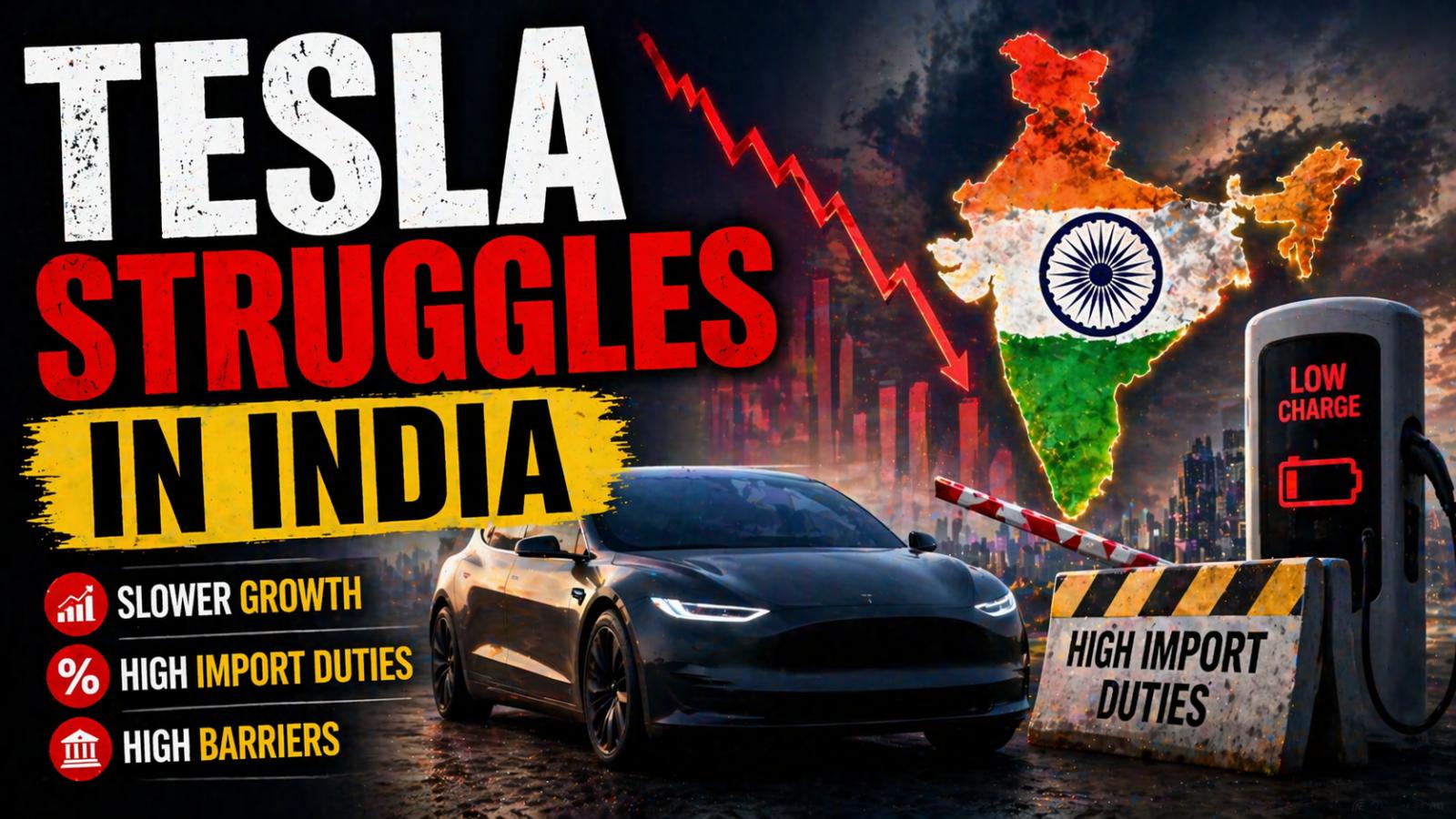
What challenges is Tesla facing in India? Market hurdles limit EV expansion
What challenges is Tesla facing in India? Market hurdles limit EV expansion India has emerged as the weakest new market globally for Tesla Inc, underscoring the structural and policy challenges facing the automaker led by Elon Musk despite rising demand for electric vehicles in
What challenges is Tesla facing in India? Market hurdles limit EV expansion
What challenges is Tesla facing in India? Market hurdles limit EV expansion India has emerged as the weakest new market globally for Tesla Inc, underscoring the structural and policy challenges facing the automaker led by Elon Musk despite rising demand for electric vehicles in
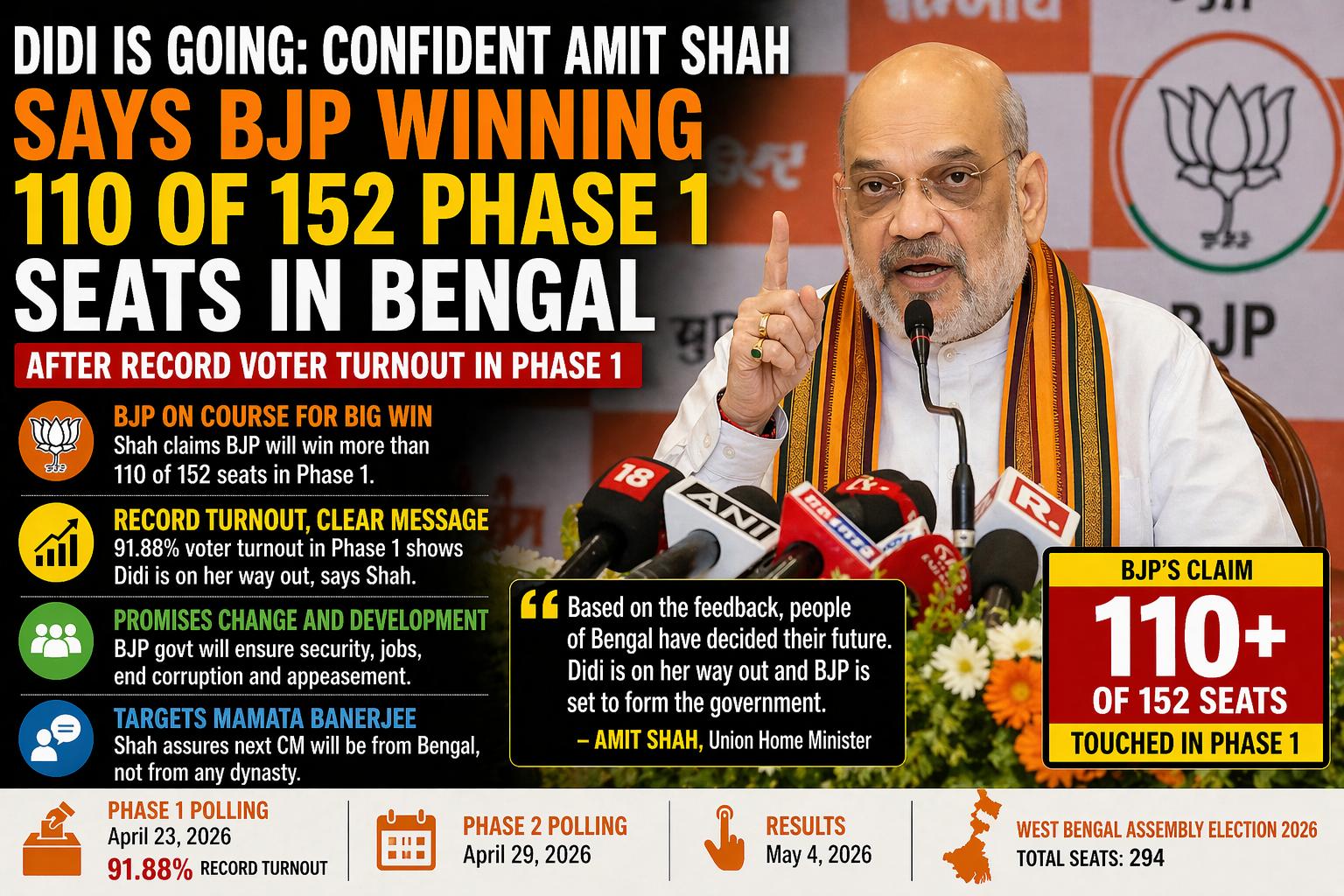
Amit Shah Predicts BJP Sweep In Bengal, Claims 110 Of 152 Phase 1 Seats
Union Home Minister Amit Shah on April 24, 2026, expressed strong confidence in the Bharatiya Janata Party’s prospects in the West Bengal Assembly elections, asserting that the surge in voter turnout signals a decisive shift in favour of the party. Addressing a press conference in Kolkata a day after Phase 1 polling, Shah claimed that the BJP is on track to win more than 110 of the 152 seats that
Amit Shah Predicts BJP Sweep In Bengal, Claims 110 Of 152 Phase 1 Seats
Union Home Minister Amit Shah on April 24, 2026, expressed strong confidence in the Bharatiya Janata Party’s prospects in the West Bengal Assembly elections, asserting that the surge in voter turnout signals a decisive shift in favour of the party. Addressing a press conference in Kolkata a day after Phase 1 polling, Shah claimed that the BJP is on track to win more than 110 of the 152 seats that
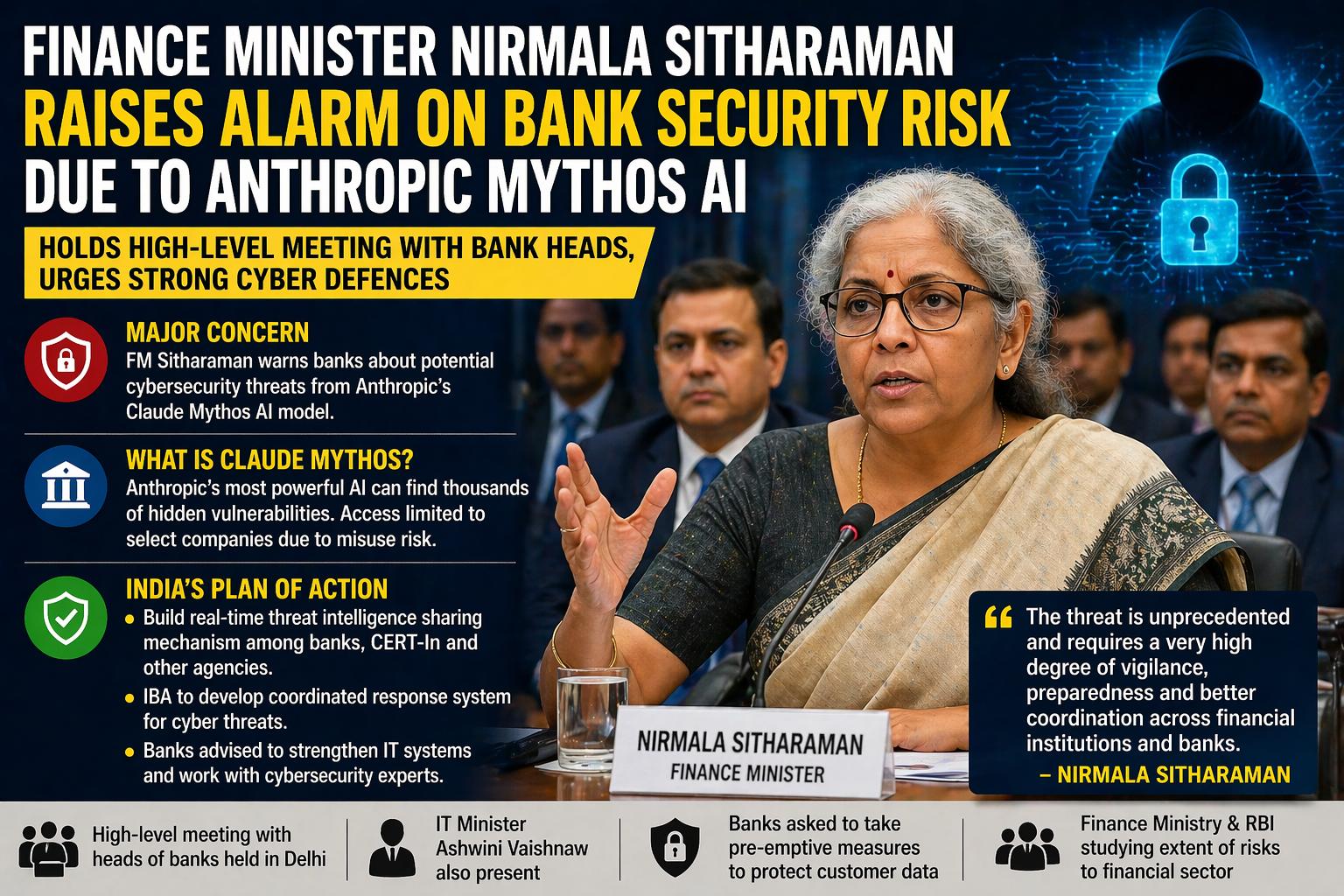
Nirmala Sitharaman Warns Banks On AI Threat From Anthropic Claude Mythos
Union Finance Minister Nirmala Sitharaman on Thursday, April 24, 2026, raised serious concerns over emerging cybersecurity risks posed by advanced artificial intelligence systems, particularly Claude Mythos developed by
Nirmala Sitharaman Warns Banks On AI Threat From Anthropic Claude Mythos
Union Finance Minister Nirmala Sitharaman on Thursday, April 24, 2026, raised serious concerns over emerging cybersecurity risks posed by advanced artificial intelligence systems, particularly Claude Mythos developed by
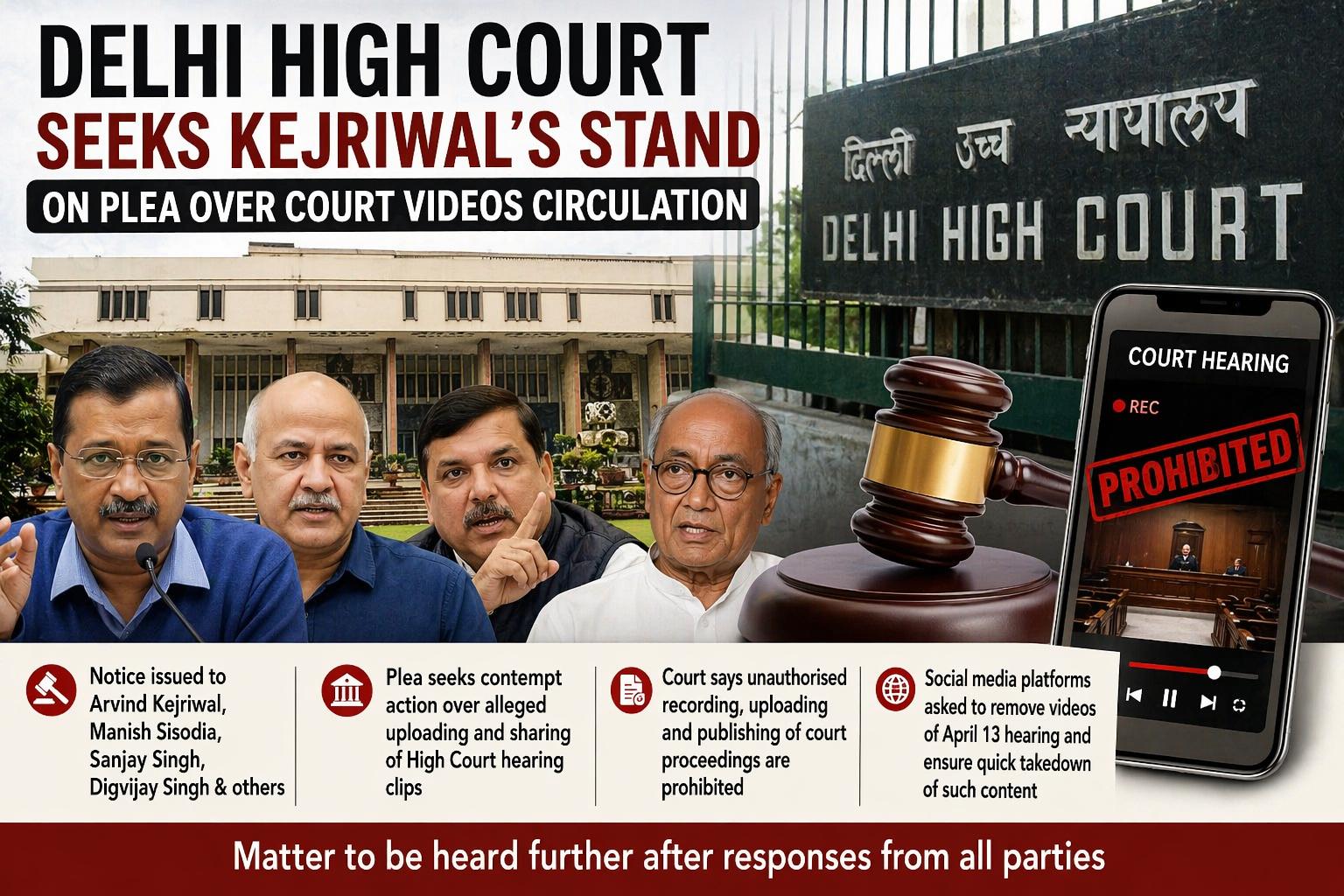
Delhi High Court Issues Notice to Kejriwal, Sisodia Over Court Video Sharing Case
The Delhi High Court has asked AAP leaders Arvind Kejriwal, Manish Sisodia, and Sanjay Singh, along with Congress leader Digvijay Singh and others, to respond to a petition related to the circulation of court hearing videos.The plea seeks contempt action against them for allegedly recording and sharing video clips of a High Court hearing on social media. The case is being heard by a bench of Justice V. Kameswar Rao and Justice Manmeet P.S. Arora. During the hearing, the Court made i
Delhi High Court Issues Notice to Kejriwal, Sisodia Over Court Video Sharing Case
The Delhi High Court has asked AAP leaders Arvind Kejriwal, Manish Sisodia, and Sanjay Singh, along with Congress leader Digvijay Singh and others, to respond to a petition related to the circulation of court hearing videos.The plea seeks contempt action against them for allegedly recording and sharing video clips of a High Court hearing on social media. The case is being heard by a bench of Justice V. Kameswar Rao and Justice Manmeet P.S. Arora. During the hearing, the Court made i

Kerala Heatwave Alert: Orange Warning In 3 Districts, Schools Closed Amid Rising Heat
Kerala is currently facing a sharp rise in temperatures, prompting authorities to issue an orange alert in three districts—Kollam, Thrissur, and Palakkad—on April 24, 2026, at around 09:00 AM IST. The warning by the India Meteorological Department indicates that temperatures are likely to remain significantly above normal, increasing the risk of heat-related illnesses such as dehydration, heat exhaustion, and heatstroke. The sudden spike in heat has been linked to dry weather conditions and reduced cloud cover, making the situation more intense across these regions. In response, district administrations have declared holidays for educational institutions to protect students from extreme heat exposure during peak hours. Children are among the most vulnerable groups, and this precautionary move aims to ensure their safety. Authorities have also advised the public to avoid stepping out between 11 AM and 3 PM, when temperatures are at their highest, and to stay hydrated by consuming adequate fluids. Palakkad, which is already known for higher temperatures, is expected to experience more severe heat conditions, while Kollam and Thrissur are also witnessing unusual temperature spikes. Health departments have issued advisories urging people to wear light clothing, avoid strenuous activities, and recognize early symptoms of heat stress such as dizziness and fatigue. Hospitals and health centers have been put on alert to handle potential cases. Local bodies have been directed to ensure the availability of drinking water in public places, while employers are encouraged to provide shaded rest areas for outdoor workers. With temperatures continuing to rise, authorities are closely monitoring the situation and may extend safety measures if needed.
Kerala Heatwave Alert: Orange Warning In 3 Districts, Schools Closed Amid Rising Heat
Kerala is currently facing a sharp rise in temperatures, prompting authorities to issue an orange alert in three districts—Kollam, Thrissur, and Palakkad—on April 24, 2026, at around 09:00 AM IST. The warning by the India Meteorological Department indicates that temperatures are likely to remain significantly above normal, increasing the risk of heat-related illnesses such as dehydration, heat exhaustion, and heatstroke. The sudden spike in heat has been linked to dry weather conditions and reduced cloud cover, making the situation more intense across these regions. In response, district administrations have declared holidays for educational institutions to protect students from extreme heat exposure during peak hours. Children are among the most vulnerable groups, and this precautionary move aims to ensure their safety. Authorities have also advised the public to avoid stepping out between 11 AM and 3 PM, when temperatures are at their highest, and to stay hydrated by consuming adequate fluids. Palakkad, which is already known for higher temperatures, is expected to experience more severe heat conditions, while Kollam and Thrissur are also witnessing unusual temperature spikes. Health departments have issued advisories urging people to wear light clothing, avoid strenuous activities, and recognize early symptoms of heat stress such as dizziness and fatigue. Hospitals and health centers have been put on alert to handle potential cases. Local bodies have been directed to ensure the availability of drinking water in public places, while employers are encouraged to provide shaded rest areas for outdoor workers. With temperatures continuing to rise, authorities are closely monitoring the situation and may extend safety measures if needed.
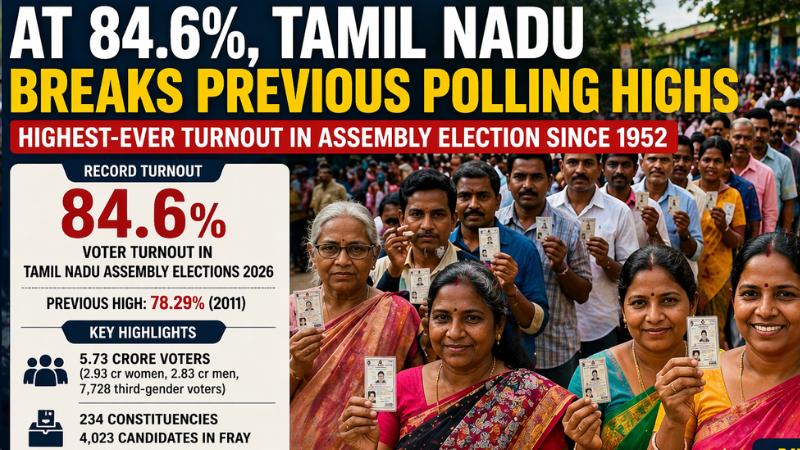
Tamil Nadu Records 84.6% Polling, Highest Ever Turnout In Assembly Elections
Tamil Nadu witnessed a historic voter turnout of 84.6% in the Assembly elections held on April 24, 2026, marking the highest polling percentage in the state since 1952. The Election Commission reported that the turnout surpassed the previous high of 78.29% recorded in 2011, reflecting strong electoral participation across all 234 constituencies. From early morning, polling booths across the state saw long queues of voters, including elderly citizens, first-time voters, and families, highlight
Tamil Nadu Records 84.6% Polling, Highest Ever Turnout In Assembly Elections
Tamil Nadu witnessed a historic voter turnout of 84.6% in the Assembly elections held on April 24, 2026, marking the highest polling percentage in the state since 1952. The Election Commission reported that the turnout surpassed the previous high of 78.29% recorded in 2011, reflecting strong electoral participation across all 234 constituencies. From early morning, polling booths across the state saw long queues of voters, including elderly citizens, first-time voters, and families, highlight
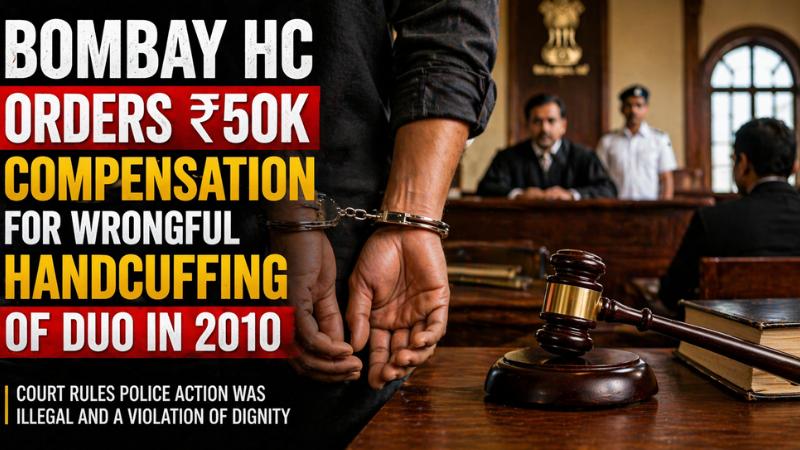
Wrongful Handcuffing Case: Bombay HC Directs State To Pay ₹50K Each
The Bombay High Court has directed the Maharashtra government to pay ₹50,000 each as compensation to advocate Yogeshwar Kawade and former serviceman Avinash Date for wrongful handcuffing by police in a 2010 case. A division bench comprising Justices Urmila Joshi-Phalke and Nivedita Mehta observed that the act amounted to “unwarranted humiliation and in
Wrongful Handcuffing Case: Bombay HC Directs State To Pay ₹50K Each
The Bombay High Court has directed the Maharashtra government to pay ₹50,000 each as compensation to advocate Yogeshwar Kawade and former serviceman Avinash Date for wrongful handcuffing by police in a 2010 case. A division bench comprising Justices Urmila Joshi-Phalke and Nivedita Mehta observed that the act amounted to “unwarranted humiliation and in
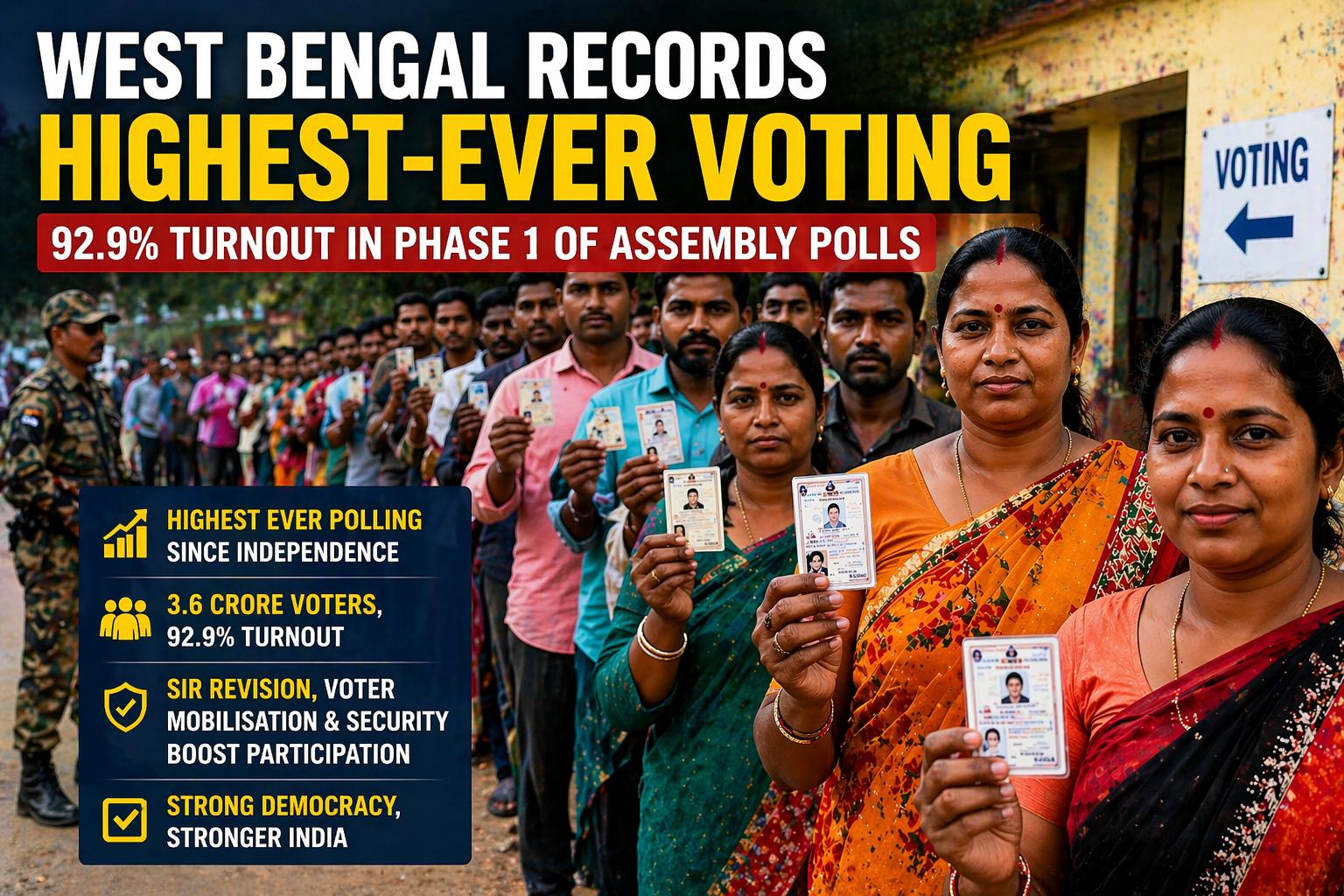
West Bengal Records 92.9% Voting: What Historic Turnout Reveals In 2026 Polls
West Bengal recorded an unprecedented 92.9% voter turnout in Phase 1 of the Assembly elections held on Thursday, April 24, 2026, making it the highest polling percentage in the state since Independence. According to Chief Election Commissioner Gyanesh Kumar, this marks a historic milestone, reflecting extraordinary voter participation across constituencies. Out of approximately 3.6 crore registered
West Bengal Records 92.9% Voting: What Historic Turnout Reveals In 2026 Polls
West Bengal recorded an unprecedented 92.9% voter turnout in Phase 1 of the Assembly elections held on Thursday, April 24, 2026, making it the highest polling percentage in the state since Independence. According to Chief Election Commissioner Gyanesh Kumar, this marks a historic milestone, reflecting extraordinary voter participation across constituencies. Out of approximately 3.6 crore registered
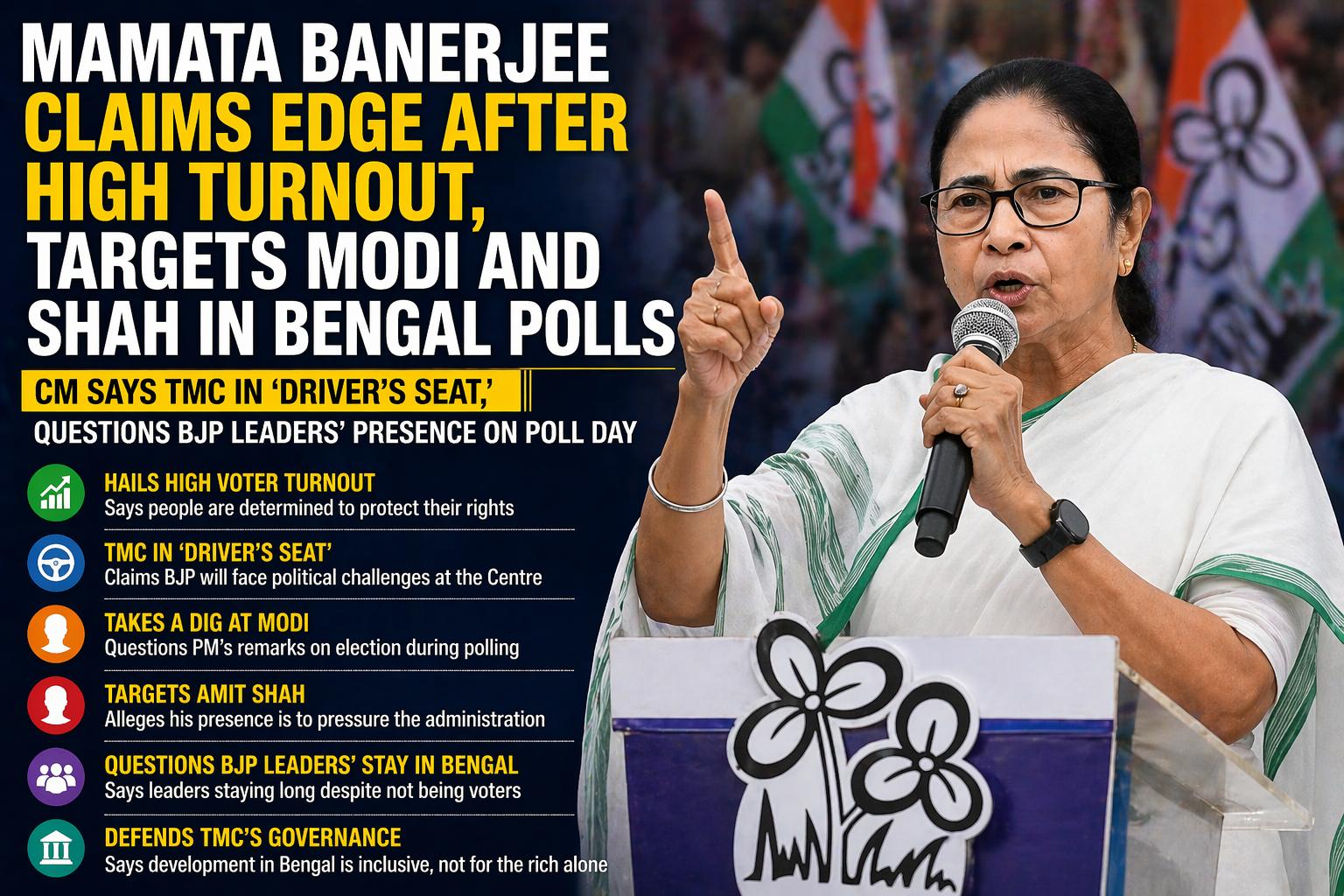
Mamata Banerjee Claims Edge After High Turnout, Targets Modi And Shah In Bengal Polls
West Bengal Chief Minister Mamata Banerjee on April 23, 2026, expressed strong confidence in her party’s performance following a high voter turnout in the first phase of the Assembly elections. Addressing a rally in Chowringhee, central Kolkata, the Trinamool Congress (TMC) chief said the enthusiastic participation of voters indicated public support for her government and its policies. She stated
Mamata Banerjee Claims Edge After High Turnout, Targets Modi And Shah In Bengal Polls
West Bengal Chief Minister Mamata Banerjee on April 23, 2026, expressed strong confidence in her party’s performance following a high voter turnout in the first phase of the Assembly elections. Addressing a rally in Chowringhee, central Kolkata, the Trinamool Congress (TMC) chief said the enthusiastic participation of voters indicated public support for her government and its policies. She stated
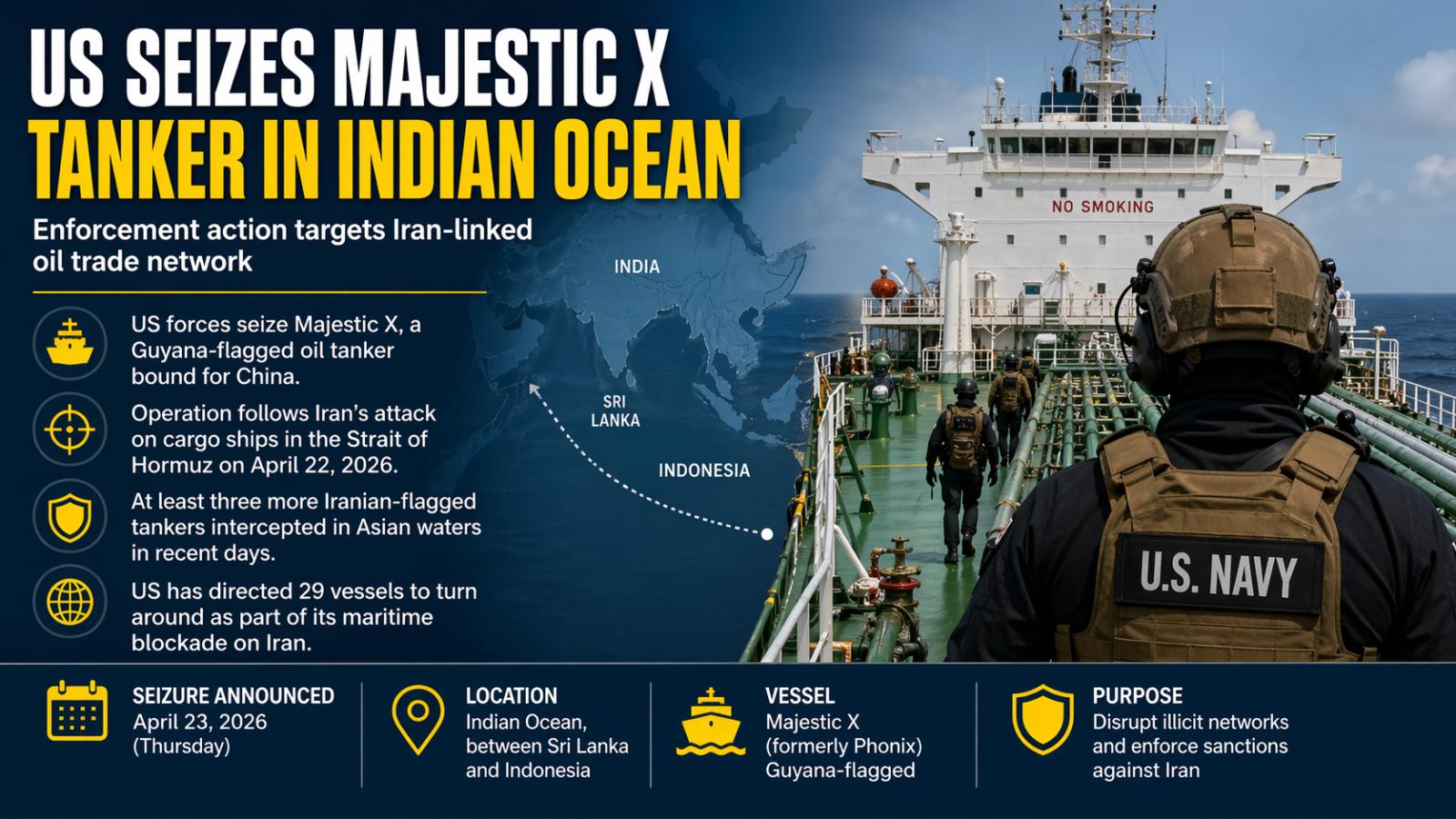
Why did the US intercept oil tankers? Enforcement targets Iran-linked shipping network
Seizure of Majestic X in Indian Ocean amid rising tensions The U.S. Department of Defense announced on Thursday, April 23, 2026, that it seized the oil tanker Majestic X in the Indian Ocean while it was en route to Zhoushan, China. Officials said the operation is part of ongoing maritime enforcement aimed at disrupting networks linked to Iranian oil exports in violation of U.S. sanctions. The Pentagon released video footage showing U.S. troops boarding a
Why did the US intercept oil tankers? Enforcement targets Iran-linked shipping network
Seizure of Majestic X in Indian Ocean amid rising tensions The U.S. Department of Defense announced on Thursday, April 23, 2026, that it seized the oil tanker Majestic X in the Indian Ocean while it was en route to Zhoushan, China. Officials said the operation is part of ongoing maritime enforcement aimed at disrupting networks linked to Iranian oil exports in violation of U.S. sanctions. The Pentagon released video footage showing U.S. troops boarding a
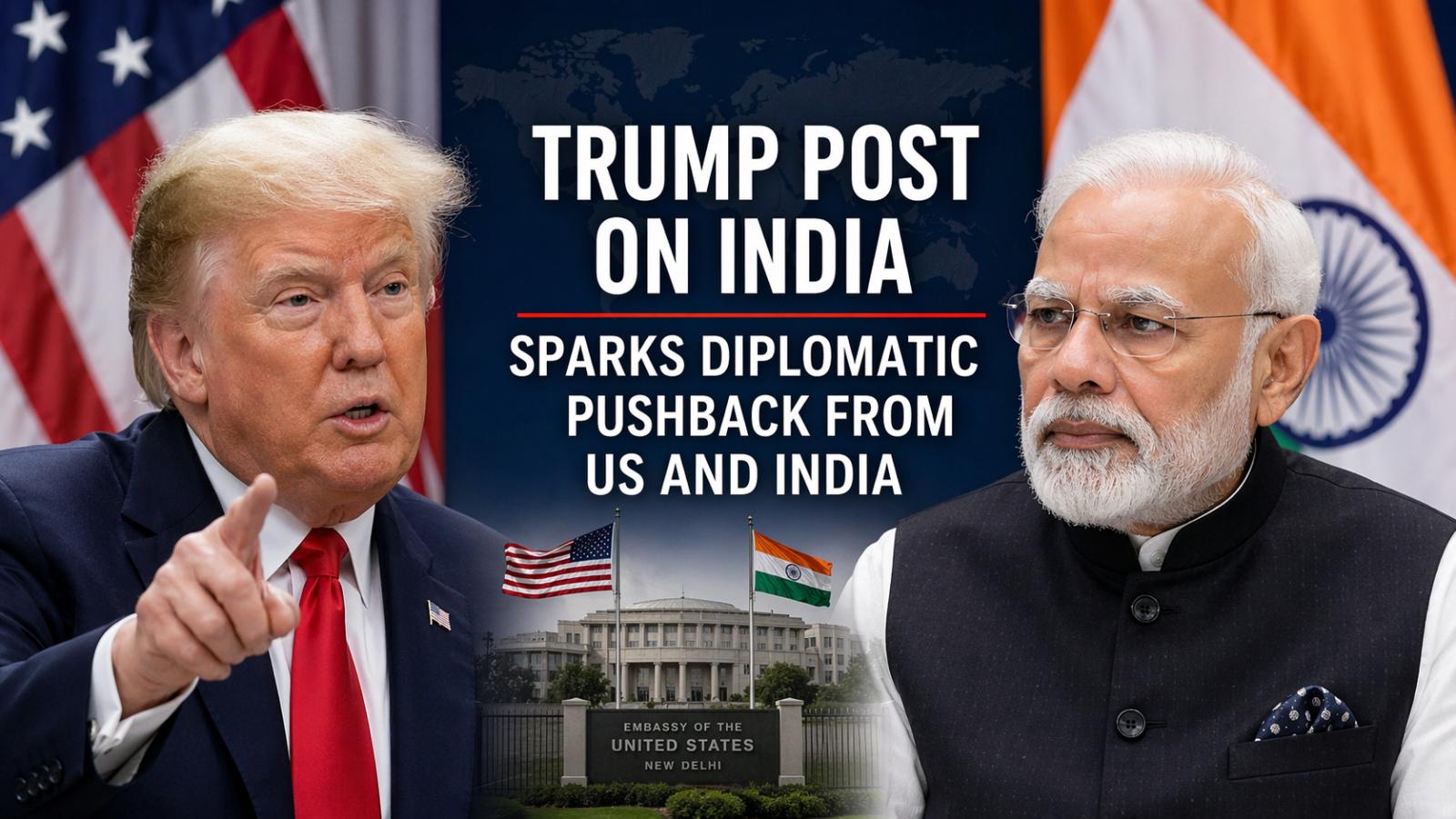
Trump post on India sparks diplomatic pushback from US and India
A controversial Trump post on India triggered diplomatic reactions from US and Indian officials, prompting efforts to reaffirm strong bilateral ties and address global political concerns. Trump post on India sparks diplomatic pushback from US and India — Hours after Donald Trump shared a social media post containing derogatory language about India, US officials moved sw
Trump post on India sparks diplomatic pushback from US and India
A controversial Trump post on India triggered diplomatic reactions from US and Indian officials, prompting efforts to reaffirm strong bilateral ties and address global political concerns. Trump post on India sparks diplomatic pushback from US and India — Hours after Donald Trump shared a social media post containing derogatory language about India, US officials moved sw
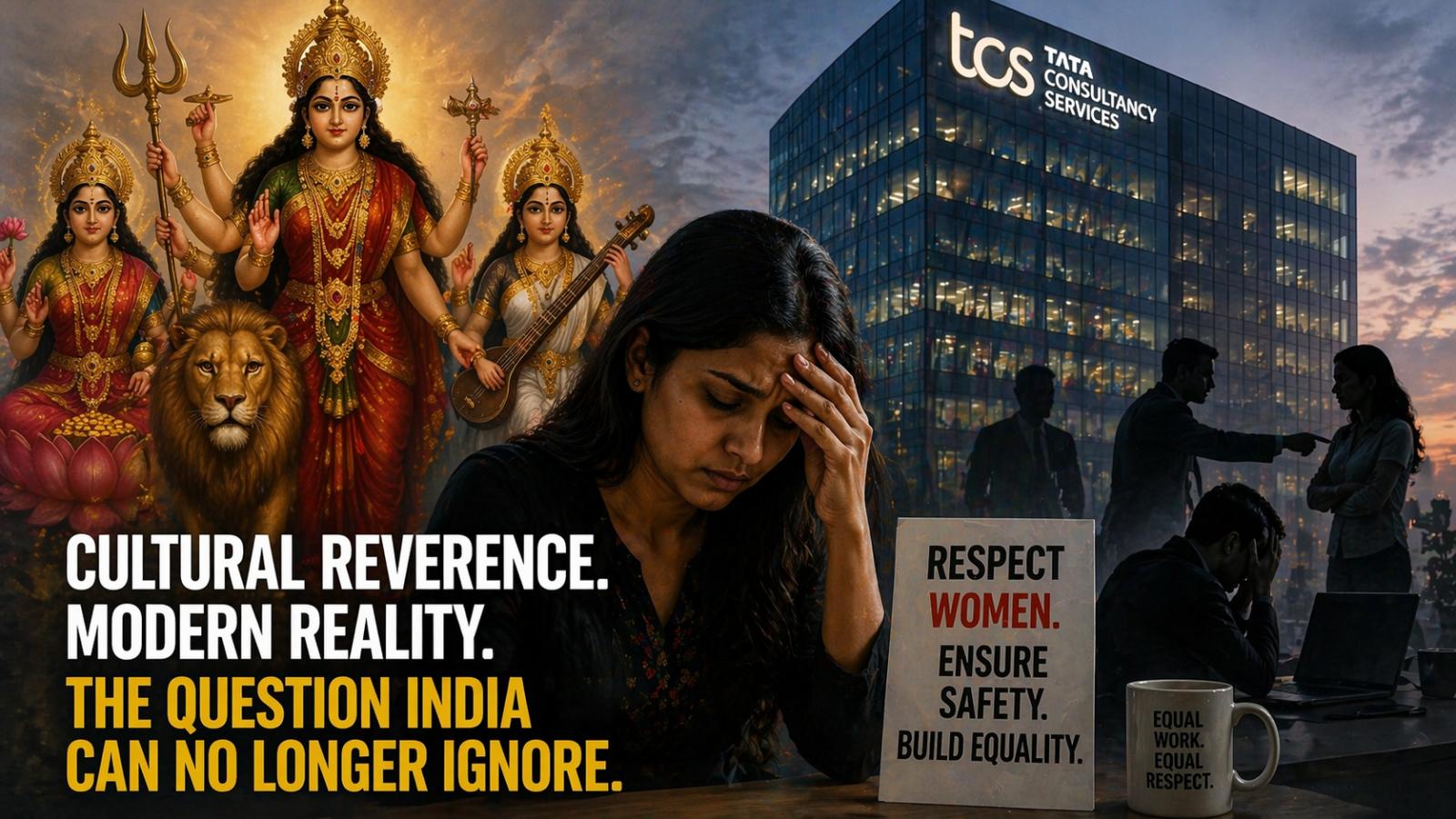
TCS enters broader discussion on workplace conduct and women’s treatment in India
India’s reverence for goddesses contrasts with rising concerns over women’s safety, workplace conduct, and equality, as discussions around TCS highlight broader systemic and cultural gaps A growing public conversation in India is highlighting a stark contrast between longstanding cultural values and contemporary realities surrounding the treatment of women. In a country where the Earth is often revered as a mother figure and rivers such as the Ganges are consid
TCS enters broader discussion on workplace conduct and women’s treatment in India
India’s reverence for goddesses contrasts with rising concerns over women’s safety, workplace conduct, and equality, as discussions around TCS highlight broader systemic and cultural gaps A growing public conversation in India is highlighting a stark contrast between longstanding cultural values and contemporary realities surrounding the treatment of women. In a country where the Earth is often revered as a mother figure and rivers such as the Ganges are consid

Iran releases dramatic video of ship seizures in Strait of Hormuz
Iran released footage of naval forces seizing two merchant ships in the Strait of Hormuz, including an India-bound vessel, intensifying regional tensions and raising global shipping concerns. Iranian authorities released a dramatic video on Thursday, April 23, 2026, a day after naval forces seized two merchant vessels in the strategically critical Strait of Hormuz, including one ship bound for India. The footage shows masked commandos in speedboats pursuing the vessels, boarding them, and taking control in an operation that underscores escalating tensions in the region. The seizures occurred on Wednesday, April 22, 2026, shortly after U.S. President Donald Trump announced an extension of a ceasefire. Iranian naval units intercepted the Panama-flagged MSC Francesca and the Liberia-flagged Epaminondas, the latter traveling from Dubai to Mundra Port in Gujarat, India. Both ships were escorted to Iranian waters, marking Tehran’s first such action since the latest conflict began. The released footage shows fast-moving boats approaching the vessels, with armed personnel boarding and conducting searches. U.S. officials attributed the operation to Iran’s “mosquito fleet,” small, agile craft associated with the Islamic Revolutionary Guard Corps. Commandos are seen climbing ladders, sweeping through decks, and entering critical areas such as engine rooms to secure control. The Epaminondas sustained damage to its bridge after Iranian forces reportedly opened fire and used grenades during the boarding. Despite the intensity of the operation, no crew injuries were reported. The MSC Francesca, located about six miles off Iran’s coast, also came under heavy fire during the seizure. Iranian officials stated the vessels lacked proper authorization and had interfered with navigation systems, posing a threat to maritime safety in the Strait of Hormuz. Authorities warned that disruptions in the waterway would be treated as a serious violation.The incident follows a recent U.S. operation targeting an Iranian-linked vessel accused of breaching a maritime blockade. Analysts view the seizures as a potential retaliatory move, raising concerns about further escalation in one of the world’s most vital shipping corridors. The involvement of an India-bound vessel may also complicate diplomatic relations between Tehran and New Delhi as tensions continue to rise.
Iran releases dramatic video of ship seizures in Strait of Hormuz
Iran released footage of naval forces seizing two merchant ships in the Strait of Hormuz, including an India-bound vessel, intensifying regional tensions and raising global shipping concerns. Iranian authorities released a dramatic video on Thursday, April 23, 2026, a day after naval forces seized two merchant vessels in the strategically critical Strait of Hormuz, including one ship bound for India. The footage shows masked commandos in speedboats pursuing the vessels, boarding them, and taking control in an operation that underscores escalating tensions in the region. The seizures occurred on Wednesday, April 22, 2026, shortly after U.S. President Donald Trump announced an extension of a ceasefire. Iranian naval units intercepted the Panama-flagged MSC Francesca and the Liberia-flagged Epaminondas, the latter traveling from Dubai to Mundra Port in Gujarat, India. Both ships were escorted to Iranian waters, marking Tehran’s first such action since the latest conflict began. The released footage shows fast-moving boats approaching the vessels, with armed personnel boarding and conducting searches. U.S. officials attributed the operation to Iran’s “mosquito fleet,” small, agile craft associated with the Islamic Revolutionary Guard Corps. Commandos are seen climbing ladders, sweeping through decks, and entering critical areas such as engine rooms to secure control. The Epaminondas sustained damage to its bridge after Iranian forces reportedly opened fire and used grenades during the boarding. Despite the intensity of the operation, no crew injuries were reported. The MSC Francesca, located about six miles off Iran’s coast, also came under heavy fire during the seizure. Iranian officials stated the vessels lacked proper authorization and had interfered with navigation systems, posing a threat to maritime safety in the Strait of Hormuz. Authorities warned that disruptions in the waterway would be treated as a serious violation.The incident follows a recent U.S. operation targeting an Iranian-linked vessel accused of breaching a maritime blockade. Analysts view the seizures as a potential retaliatory move, raising concerns about further escalation in one of the world’s most vital shipping corridors. The involvement of an India-bound vessel may also complicate diplomatic relations between Tehran and New Delhi as tensions continue to rise.
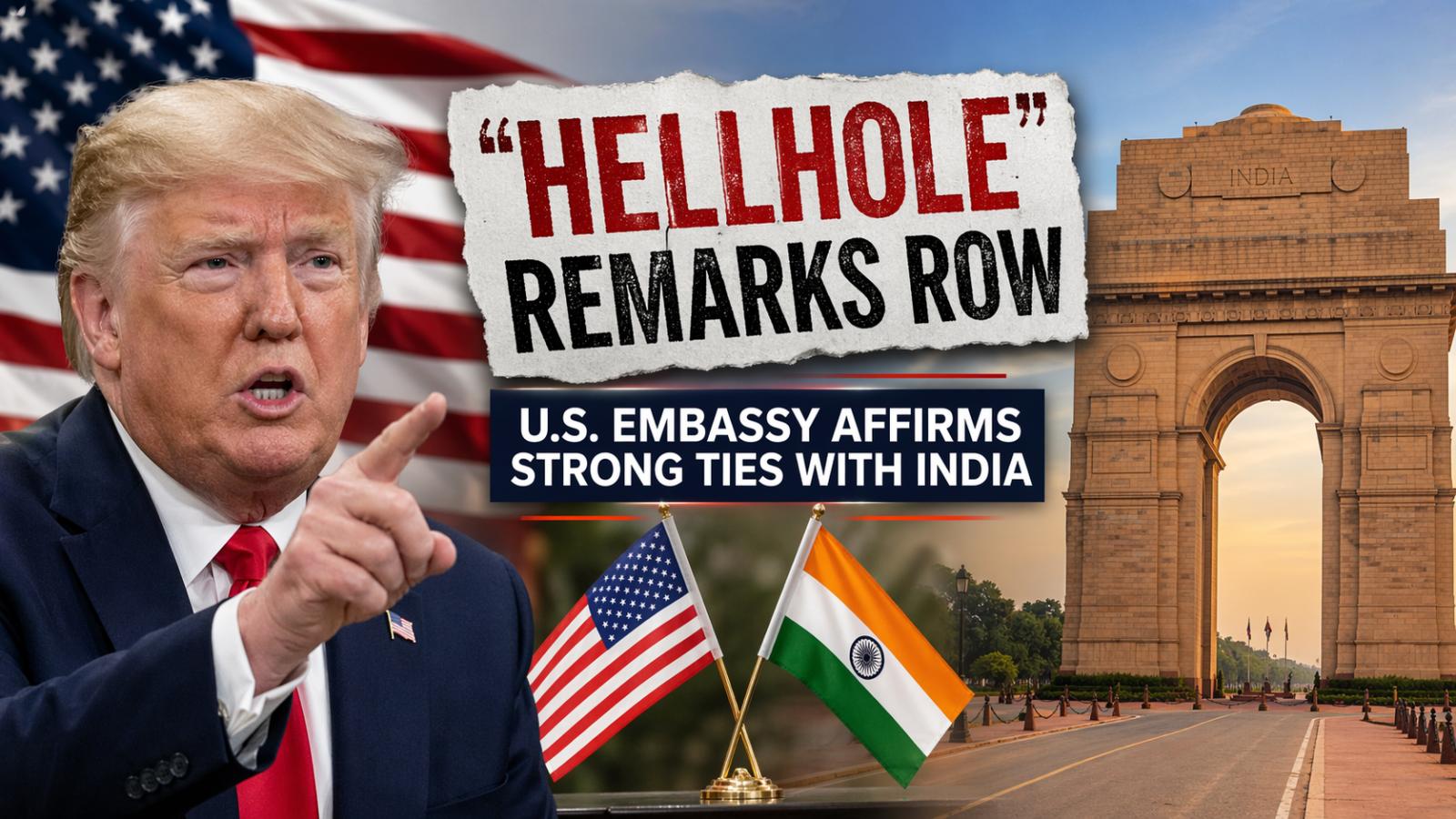
How did Washington respond to Trump controversy? Embassy reaffirmed India ties
Trump repost triggers diplomatic unease between US and India A social media post by Donald Trump has drawn criticism in India after he amplified remarks from a podcast that described the country in derogatory terms. The controversy prompted a swift response from U.S. officials seeking to stabilize diplomatic messaging and reaffirm bilateral ties. Podcast remarks by Michael Savage ignite backlash The controversy stems from comments made by American radio host Michael Savage, who, during an episode of his “Savage Nation” podcast, criticized U.S. birthright citizenship policies. In his remarks, Savage grouped India and China among nations he labeled negatively while arguing that immigration policies are being exploited. Trump reposted both a transcript and video clip of the segment, bringing wider attention to the remarks. The repost quickly circulated online, triggering criticism in India and raising concerns about its potential impact on U.S.-India relations. US Embassy reiterates strong bilateral partnership In response, the U.S. Embassy in India issued a statement emphasizing the strength of ties between Washington and New Delhi. A spokesperson clarified that Trump has previously described India as “a great country” and referred to its leadership in positive terms, signaling an effort to contain diplomatic fallout. India responds cautiously through official channels India’s Ministry of External Affairs reacted with measured restraint. Spokesperson Randhir Jaiswal acknowledged awareness of the reports but declined to elaborate further, reflecting a cautious diplomatic approach while avoiding escalation. Broader debate on immigration fuels controversy Savage’s podcast remarks were part of a broader critique of U.S. immigration law, particularly the principle of granting citizenship to children born in the country regardless of parental status. He argued that the system is vulnerable to misuse, specifically referencing immigrants from Asian countries. The episode also included criticism of the U.S. Supreme Court’s role in shaping birthright citizenship policy and called for a national referendum on the issue. However, the language used in describing immigrants and foreign nations drew widespread condemnation, shifting focus from policy debate to diplomatic sensitivity. The incident highlights how political messaging and media amplification can quickly influence international relations, particularly between longstanding partners like the United States and India.
How did Washington respond to Trump controversy? Embassy reaffirmed India ties
Trump repost triggers diplomatic unease between US and India A social media post by Donald Trump has drawn criticism in India after he amplified remarks from a podcast that described the country in derogatory terms. The controversy prompted a swift response from U.S. officials seeking to stabilize diplomatic messaging and reaffirm bilateral ties. Podcast remarks by Michael Savage ignite backlash The controversy stems from comments made by American radio host Michael Savage, who, during an episode of his “Savage Nation” podcast, criticized U.S. birthright citizenship policies. In his remarks, Savage grouped India and China among nations he labeled negatively while arguing that immigration policies are being exploited. Trump reposted both a transcript and video clip of the segment, bringing wider attention to the remarks. The repost quickly circulated online, triggering criticism in India and raising concerns about its potential impact on U.S.-India relations. US Embassy reiterates strong bilateral partnership In response, the U.S. Embassy in India issued a statement emphasizing the strength of ties between Washington and New Delhi. A spokesperson clarified that Trump has previously described India as “a great country” and referred to its leadership in positive terms, signaling an effort to contain diplomatic fallout. India responds cautiously through official channels India’s Ministry of External Affairs reacted with measured restraint. Spokesperson Randhir Jaiswal acknowledged awareness of the reports but declined to elaborate further, reflecting a cautious diplomatic approach while avoiding escalation. Broader debate on immigration fuels controversy Savage’s podcast remarks were part of a broader critique of U.S. immigration law, particularly the principle of granting citizenship to children born in the country regardless of parental status. He argued that the system is vulnerable to misuse, specifically referencing immigrants from Asian countries. The episode also included criticism of the U.S. Supreme Court’s role in shaping birthright citizenship policy and called for a national referendum on the issue. However, the language used in describing immigrants and foreign nations drew widespread condemnation, shifting focus from policy debate to diplomatic sensitivity. The incident highlights how political messaging and media amplification can quickly influence international relations, particularly between longstanding partners like the United States and India.
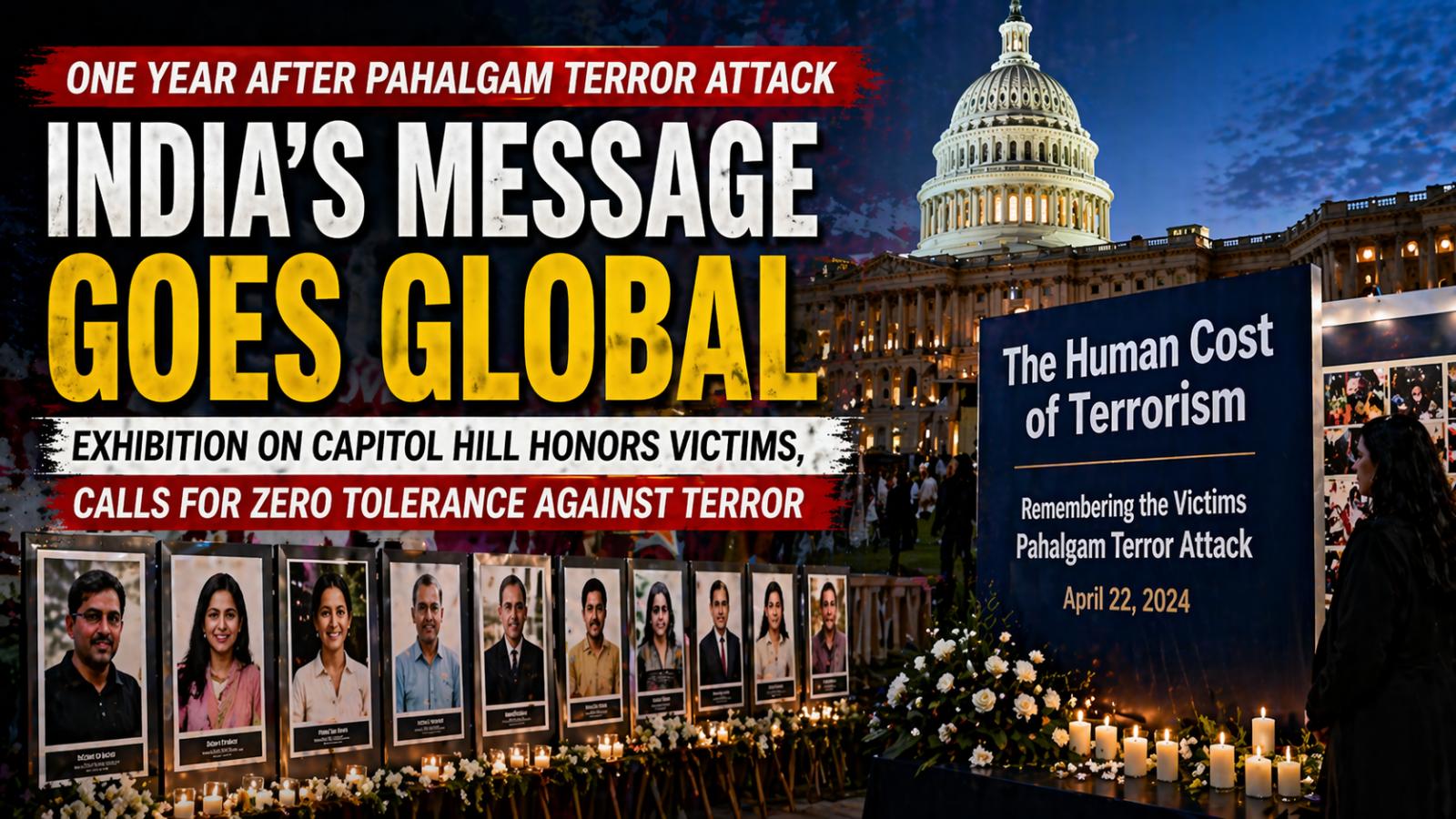
Pahalgam Victims Honored at Capitol Hill Exhibition on Terror Impact
One year after the deadly attack in Pahalgam, India has taken its message on terrorism to a global stage through an exhibition at Capitol Hill in Washington, organized by the Embassy of India, Washington, D.C.. The event, titled “The Human Cost of Terrorism,” was held to commemorate the victims and highlight the lasting impact of violence on civilians. The attack, which took place on Ap
Pahalgam Victims Honored at Capitol Hill Exhibition on Terror Impact
One year after the deadly attack in Pahalgam, India has taken its message on terrorism to a global stage through an exhibition at Capitol Hill in Washington, organized by the Embassy of India, Washington, D.C.. The event, titled “The Human Cost of Terrorism,” was held to commemorate the victims and highlight the lasting impact of violence on civilians. The attack, which took place on Ap










