







Indian-Origin Man Jailed in Singapore for Abuse of Minor Over Several Years
A Singapore court has sentenced a 33-year-old Indian-origin man to 19 months in jail after convicting him of molesting his friend’s younger sister over a prolonged period more than a decade ago. The offences occurred when the victim was between seven and nine years old, while the accused was in his late teens to early twenties. The court heard that the victim did not initially report the incidents, stating she feared that her account would not be believed. She later disclosed the
Indian-Origin Man Jailed in Singapore for Abuse of Minor Over Several Years
A Singapore court has sentenced a 33-year-old Indian-origin man to 19 months in jail after convicting him of molesting his friend’s younger sister over a prolonged period more than a decade ago. The offences occurred when the victim was between seven and nine years old, while the accused was in his late teens to early twenties. The court heard that the victim did not initially report the incidents, stating she feared that her account would not be believed. She later disclosed the
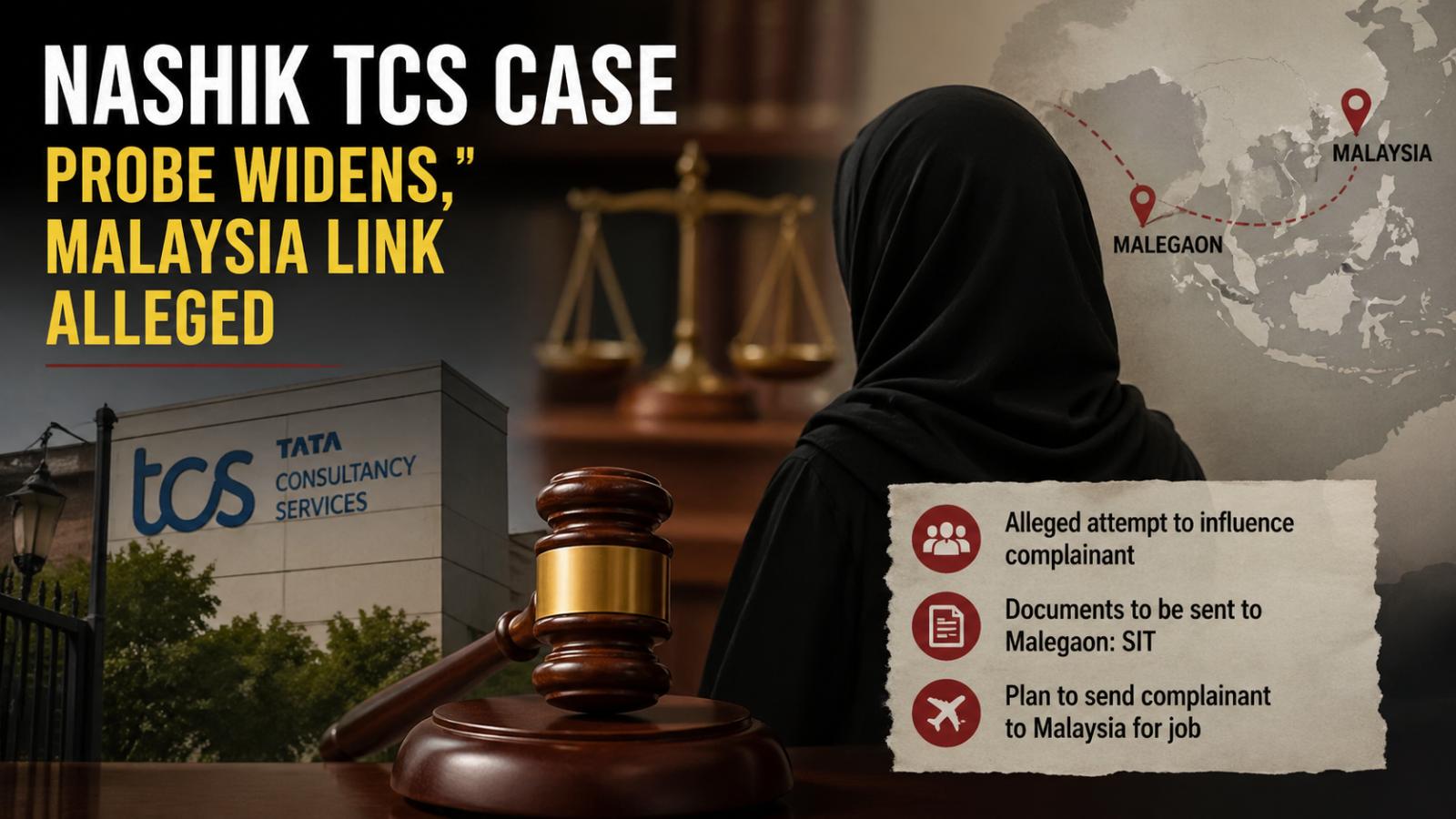
Nashik TCS case expands with new evidence and international links alleged
Prosecutors say new evidence links a Nashik TCS case to Malegaon and Malaysia. Court hears bail plea as police allege coercion, while defense denies wrongdoing. Nashik TCS case expands with new evidence and international links alleged as prosecutors told a court in Nashik that an ongoing investigation into allegations of hurting religious sentiments and attempted forced reli
Nashik TCS case expands with new evidence and international links alleged
Prosecutors say new evidence links a Nashik TCS case to Malegaon and Malaysia. Court hears bail plea as police allege coercion, while defense denies wrongdoing. Nashik TCS case expands with new evidence and international links alleged as prosecutors told a court in Nashik that an ongoing investigation into allegations of hurting religious sentiments and attempted forced reli
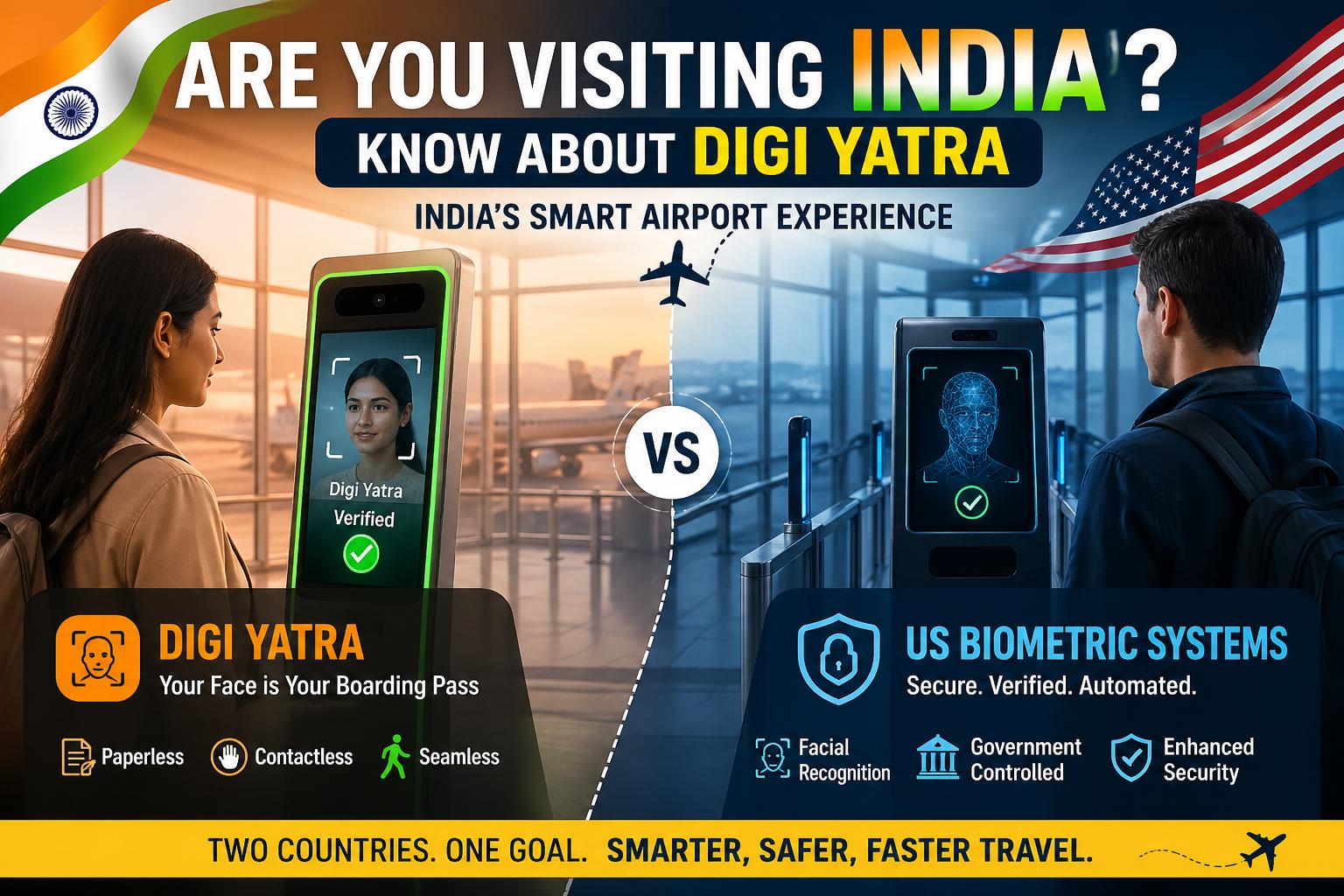
Are you visiting India? Digi Yatra could change your airport experience
Digi Yatra could change your airport experience India’s push toward seamless air travel is being led by Digi Yatra, a government-backed initiative that uses facial recognition to streamline passenger movement through airports. Developed under the Ministry of Civil Aviation, the system allows travelers to bypass repeated document checks by using biometric verification instead of physical boarding passes and identification. How Digi Yatra is transforming airport travel in India Digi Yatra enables passengers to create a digital identity through the Digi Yatra App by uploading ID credentials and flight details before arriving at the airport. Once enrolled, travelers can pass through entry gates, security checkpoints, and boarding areas using facial scans. The system is currently operational at major hubs such as Kempegowda International Airport and Indira Gandhi International Airport, with plans for wider adoption across the country. The initiative is voluntary and emphasizes speed, convenience, and reduced physical contact in crowded terminals. Biometric travel systems already in use across US airports In the United States, similar biometric technologies are already deployed, primarily for international travel. Agencies such as the Transportation Security Administration and U.S. Customs and Border Protection operate facial recognition systems that match a traveler’s live image with passport or visa databases. These systems are commonly used at immigration checkpoints and boarding gates for international flights, and in some cases at security screening through programs like TSA’s touchless identity verification. Unlike Digi Yatra, enrollment is not typically handled through a consumer-facing app, and the process is largely managed through government databases. Key differences between Digi Yatra and US biometric systems Feature Digi Yatra (India) United States Systems Control User-controlled via app Government-controlled databases Enrollment Voluntary, app-based Mostly automatic or backend Primary Use Domestic travel International travel focus Documents Replaced by facial ID Linked to passport/visa User Role Active participation required Passive participation Data Handling User uploads data Govt retrieves from records Experience Fully contactless journey Partial contactless process What global travelers should know about evolving airport technology As airports worldwide adopt digital identity solutions, the contrast between India’s Digi Yatra and US biometric programs highlights broader questions around privacy, convenience, and control. For US-based travelers heading to India, understanding how Digi Yatra works can help streamline the airport experience, while also offering insight into how biometric travel technology may continue to evolve globally.
Are you visiting India? Digi Yatra could change your airport experience
Digi Yatra could change your airport experience India’s push toward seamless air travel is being led by Digi Yatra, a government-backed initiative that uses facial recognition to streamline passenger movement through airports. Developed under the Ministry of Civil Aviation, the system allows travelers to bypass repeated document checks by using biometric verification instead of physical boarding passes and identification. How Digi Yatra is transforming airport travel in India Digi Yatra enables passengers to create a digital identity through the Digi Yatra App by uploading ID credentials and flight details before arriving at the airport. Once enrolled, travelers can pass through entry gates, security checkpoints, and boarding areas using facial scans. The system is currently operational at major hubs such as Kempegowda International Airport and Indira Gandhi International Airport, with plans for wider adoption across the country. The initiative is voluntary and emphasizes speed, convenience, and reduced physical contact in crowded terminals. Biometric travel systems already in use across US airports In the United States, similar biometric technologies are already deployed, primarily for international travel. Agencies such as the Transportation Security Administration and U.S. Customs and Border Protection operate facial recognition systems that match a traveler’s live image with passport or visa databases. These systems are commonly used at immigration checkpoints and boarding gates for international flights, and in some cases at security screening through programs like TSA’s touchless identity verification. Unlike Digi Yatra, enrollment is not typically handled through a consumer-facing app, and the process is largely managed through government databases. Key differences between Digi Yatra and US biometric systems Feature Digi Yatra (India) United States Systems Control User-controlled via app Government-controlled databases Enrollment Voluntary, app-based Mostly automatic or backend Primary Use Domestic travel International travel focus Documents Replaced by facial ID Linked to passport/visa User Role Active participation required Passive participation Data Handling User uploads data Govt retrieves from records Experience Fully contactless journey Partial contactless process What global travelers should know about evolving airport technology As airports worldwide adopt digital identity solutions, the contrast between India’s Digi Yatra and US biometric programs highlights broader questions around privacy, convenience, and control. For US-based travelers heading to India, understanding how Digi Yatra works can help streamline the airport experience, while also offering insight into how biometric travel technology may continue to evolve globally.
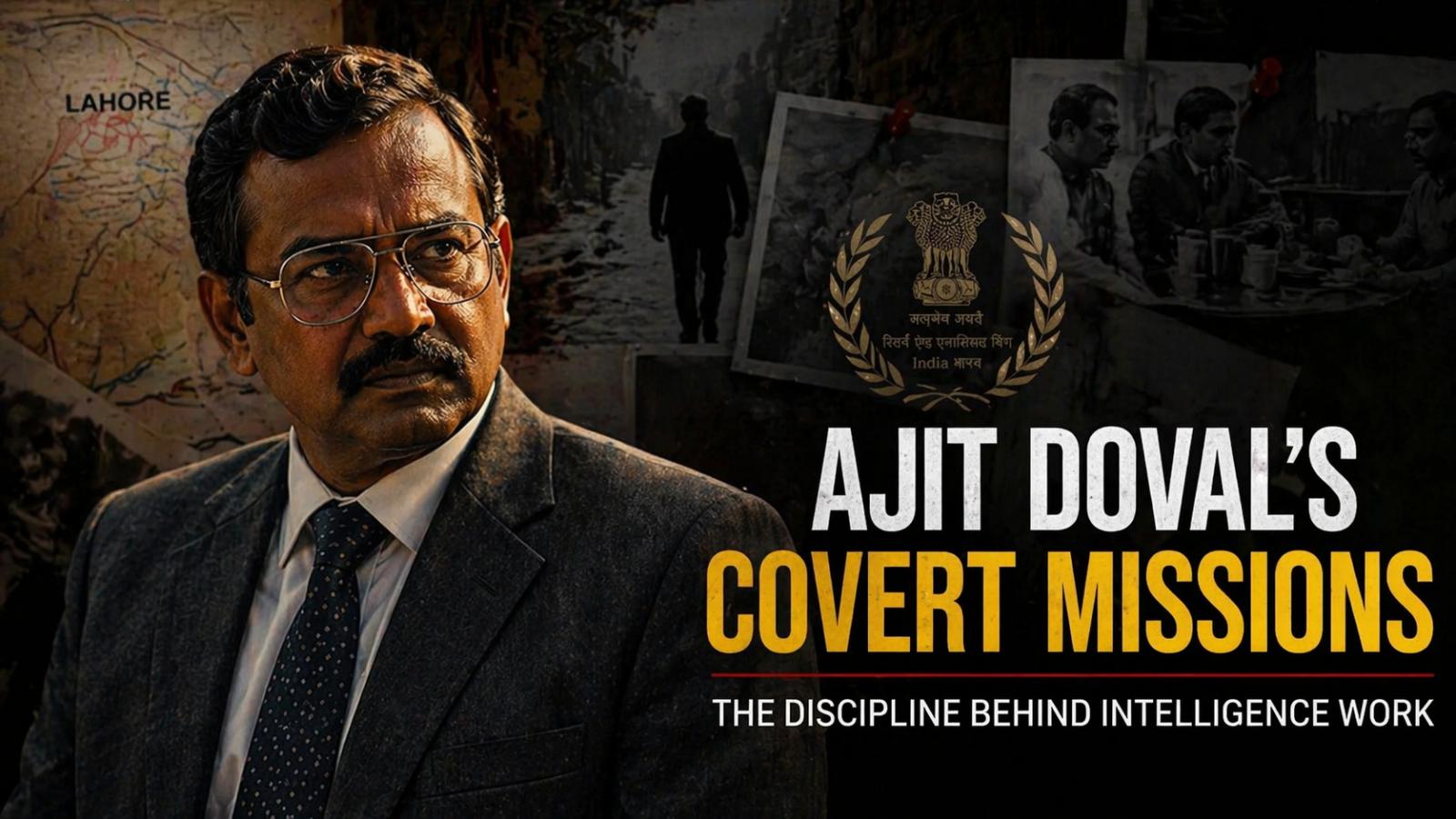
Ajit Doval’s covert operations reveal the discipline behind intelligence work
Ajit Doval’s reported deep-cover operations are widely regarded as a study in psychological resilience rather than physical confrontation. Operating within hostile environments, including extended periods in Pakistan, his work required a high degree of composure, adaptability, and continuous situational awareness. Public discussions often reference cities such as Lahore, though specific operational details remain classified. The available accounts suggest that Doval functioned under an assu
Ajit Doval’s covert operations reveal the discipline behind intelligence work
Ajit Doval’s reported deep-cover operations are widely regarded as a study in psychological resilience rather than physical confrontation. Operating within hostile environments, including extended periods in Pakistan, his work required a high degree of composure, adaptability, and continuous situational awareness. Public discussions often reference cities such as Lahore, though specific operational details remain classified. The available accounts suggest that Doval functioned under an assu
Global military spending hits $2.9 trillion in 2025 amid rising tensions
Global military spending 2025 overview Global military spending in 2025 has reached nearly $2.9 trillion, clearly showing how countries are increasing defence budgets as global tensions continue to rise. The total spending stood at $2887 billion in 2025, marking a 2.9 per cent increase from 2024, highlighting a steady rise in military expenditure trends worldwide. This reflects a world becoming less secure, with nations investing more in defence to protect themselves. The United States, Russia, and China remained the top three military spenders, with a combined total of $1.48 trillion. These nations continue to dominate global defence spending, shaping international security dynamics. Experts say this rise in defence budget growth shows that countries are preparing for both current conflicts and future uncertainties. Europe witnessed a major surge, with military spending increasing by 14 per cent to $864 billion in 2025. This sharp rise is mainly driven by the ongoing Russia-Ukraine war and reduced dependence on the United States for security. Countries like Germany increased spending by 24 per cent to $114 billion, while Spain recorded a significant 50 per cent jump to $40.2 billion, crossing two per cent of GDP for the first time in decades. The United States remained the largest spender despite a decline of 7.5 per cent, bringing its total to $954 billion in 2025. The decrease is linked to reduced financial aid approvals for Ukraine, although future budgets suggest spending could exceed $1 trillion in 2026, indicating a possible rebound. In Eastern Europe, Russia increased its military expenditure by 5.9 per cent to $190 billion, while Ukraine saw a sharp rise of 20 per cent to $84.1 billion. Ukraine’s defence spending now accounts for a large share of its GDP, showing the intensity of the ongoing conflict. Asia and Oceania recorded one of the fastest growth rates, with spending reaching $681 billion in 2025, an 8.5 per cent increase. China led the region with $336 billion, followed by Japan and India. India increased its defence budget by 8.9 per cent to $92.1 billion, making it the fifth-largest military spender globally. This growth highlights rising security concerns across the region. In the Middle East, spending patterns were mixed. Iran’s defence expenditure fell by 5.6 per cent to $7.4 billion, mainly due to high inflation. Israel also saw a decline of 4.9 per cent to $48.3 billion after reducing military operations following a ceasefire in early 2025, although its spending remains significantly higher compared to earlier years. Regional tensions continue to influence defence strategies across the Middle East. Overall, the SIPRI report shows that global military spending is steadily increasing as countries respond to rising geopolitical tensions and conflicts. The trend highlights a shift toward stronger military preparedness, reflecting uncertainty in the global security environment.
Global military spending hits $2.9 trillion in 2025 amid rising tensions
Global military spending 2025 overview Global military spending in 2025 has reached nearly $2.9 trillion, clearly showing how countries are increasing defence budgets as global tensions continue to rise. The total spending stood at $2887 billion in 2025, marking a 2.9 per cent increase from 2024, highlighting a steady rise in military expenditure trends worldwide. This reflects a world becoming less secure, with nations investing more in defence to protect themselves. The United States, Russia, and China remained the top three military spenders, with a combined total of $1.48 trillion. These nations continue to dominate global defence spending, shaping international security dynamics. Experts say this rise in defence budget growth shows that countries are preparing for both current conflicts and future uncertainties. Europe witnessed a major surge, with military spending increasing by 14 per cent to $864 billion in 2025. This sharp rise is mainly driven by the ongoing Russia-Ukraine war and reduced dependence on the United States for security. Countries like Germany increased spending by 24 per cent to $114 billion, while Spain recorded a significant 50 per cent jump to $40.2 billion, crossing two per cent of GDP for the first time in decades. The United States remained the largest spender despite a decline of 7.5 per cent, bringing its total to $954 billion in 2025. The decrease is linked to reduced financial aid approvals for Ukraine, although future budgets suggest spending could exceed $1 trillion in 2026, indicating a possible rebound. In Eastern Europe, Russia increased its military expenditure by 5.9 per cent to $190 billion, while Ukraine saw a sharp rise of 20 per cent to $84.1 billion. Ukraine’s defence spending now accounts for a large share of its GDP, showing the intensity of the ongoing conflict. Asia and Oceania recorded one of the fastest growth rates, with spending reaching $681 billion in 2025, an 8.5 per cent increase. China led the region with $336 billion, followed by Japan and India. India increased its defence budget by 8.9 per cent to $92.1 billion, making it the fifth-largest military spender globally. This growth highlights rising security concerns across the region. In the Middle East, spending patterns were mixed. Iran’s defence expenditure fell by 5.6 per cent to $7.4 billion, mainly due to high inflation. Israel also saw a decline of 4.9 per cent to $48.3 billion after reducing military operations following a ceasefire in early 2025, although its spending remains significantly higher compared to earlier years. Regional tensions continue to influence defence strategies across the Middle East. Overall, the SIPRI report shows that global military spending is steadily increasing as countries respond to rising geopolitical tensions and conflicts. The trend highlights a shift toward stronger military preparedness, reflecting uncertainty in the global security environment.
India economy faces slowdown risks amid rising crude oil prices
India growth slowdown: oil price surge impacts economy India growth slowdown has become a major concern after crude oil prices crossed $100 per barrel following tensions linked to the Iran conflict. The sharp increase in energy costs is already affecting corporate earnings and is expected to impact the FY27 outlook, according to analysts tracking the India economy slowdown. The rising oil price surge is not seen as a short-term issue. Higher crude oil prices are likely to continue putting pressure on multiple sectors including consumer, auto, and financial industries. JP Morgan has warned that supply disruptions and elevated energy costs India could persist for months, even after a ceasefire, delaying full normalization. The firm has reduced its FY27 earnings forecast by 2–10 percent across major sectors, highlighting the growing risks to corporate earnings India. Experts point out that the impact will be visible in different ways. Companies may face margin compression, reduced demand, and operational challenges, while consumers may experience the effects through higher prices and inflation India. These combined factors are expected to slow overall economic momentum. Market estimates show that Nifty EPS growth could drop sharply from earlier expectations of around 15 percent to nearly 7–8 percent if crude oil prices remain high. Key industries such as automobiles, oil and gas, and airlines are likely to be the most affected due to their heavy dependence on fuel. Despite these pressures, India Inc revenue growth remains stable, but the growth pattern is shifting from volume-driven to price-led expansion. This means companies are increasing prices to maintain revenues, a strategy that may not be sustainable if inflation continues to rise. West Asia continues to play a crucial role in India’s economy. The region accounts for a significant share of exports and remittances, making India highly sensitive to disruptions in West Asia trade and income flows. Any prolonged instability could further deepen the India growth slowdown. Investor sentiment has also weakened amid global uncertainty. Foreign portfolio investors have turned net sellers, with total FPI outflows reaching nearly ₹1.68 trillion since early 2026, reflecting concerns over geopolitical risks and economic stability.
India economy faces slowdown risks amid rising crude oil prices
India growth slowdown: oil price surge impacts economy India growth slowdown has become a major concern after crude oil prices crossed $100 per barrel following tensions linked to the Iran conflict. The sharp increase in energy costs is already affecting corporate earnings and is expected to impact the FY27 outlook, according to analysts tracking the India economy slowdown. The rising oil price surge is not seen as a short-term issue. Higher crude oil prices are likely to continue putting pressure on multiple sectors including consumer, auto, and financial industries. JP Morgan has warned that supply disruptions and elevated energy costs India could persist for months, even after a ceasefire, delaying full normalization. The firm has reduced its FY27 earnings forecast by 2–10 percent across major sectors, highlighting the growing risks to corporate earnings India. Experts point out that the impact will be visible in different ways. Companies may face margin compression, reduced demand, and operational challenges, while consumers may experience the effects through higher prices and inflation India. These combined factors are expected to slow overall economic momentum. Market estimates show that Nifty EPS growth could drop sharply from earlier expectations of around 15 percent to nearly 7–8 percent if crude oil prices remain high. Key industries such as automobiles, oil and gas, and airlines are likely to be the most affected due to their heavy dependence on fuel. Despite these pressures, India Inc revenue growth remains stable, but the growth pattern is shifting from volume-driven to price-led expansion. This means companies are increasing prices to maintain revenues, a strategy that may not be sustainable if inflation continues to rise. West Asia continues to play a crucial role in India’s economy. The region accounts for a significant share of exports and remittances, making India highly sensitive to disruptions in West Asia trade and income flows. Any prolonged instability could further deepen the India growth slowdown. Investor sentiment has also weakened amid global uncertainty. Foreign portfolio investors have turned net sellers, with total FPI outflows reaching nearly ₹1.68 trillion since early 2026, reflecting concerns over geopolitical risks and economic stability.
Kavitha Launches TRS Party Aiming Inclusive Development In Telangana
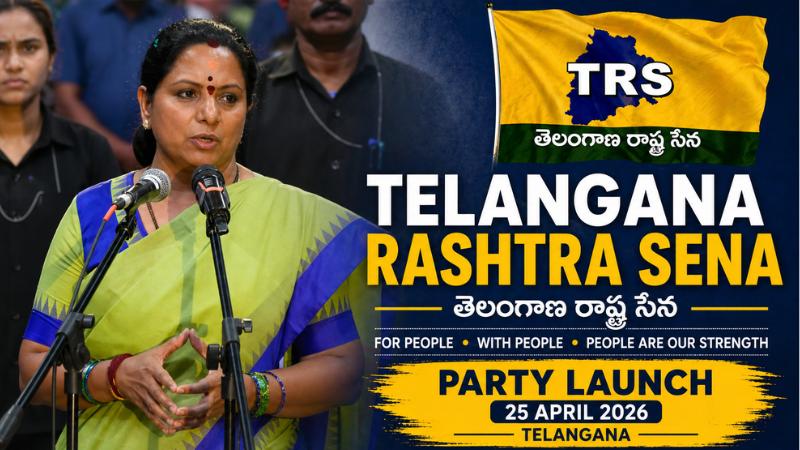
Kavitha launches Telangana Rashtra Sena, marking a new political chapter in Telangana after her exit from BRS. Former Bharat Rashtra Samithi (BRS) leader Kalvakuntla Kavitha, daughter of former Telangana Chief Minister K Chandrasekhar Rao (KCR), officially launched her own political party, Telangana Rashtra Sena (TRS), on Saturday, April 25, 2026. This development comes months after she was suspended from the BRS over alleged anti-party activities, marking a major
Kavitha Launches TRS Party Aiming Inclusive Development In Telangana
Kavitha launches Telangana Rashtra Sena, marking a new political chapter in Telangana after her exit from BRS. Former Bharat Rashtra Samithi (BRS) leader Kalvakuntla Kavitha, daughter of former Telangana Chief Minister K Chandrasekhar Rao (KCR), officially launched her own political party, Telangana Rashtra Sena (TRS), on Saturday, April 25, 2026. This development comes months after she was suspended from the BRS over alleged anti-party activities, marking a major
Madras HC Dismisses Plea Against Vijay Over ₹12.6 Crore Loan Disclosure
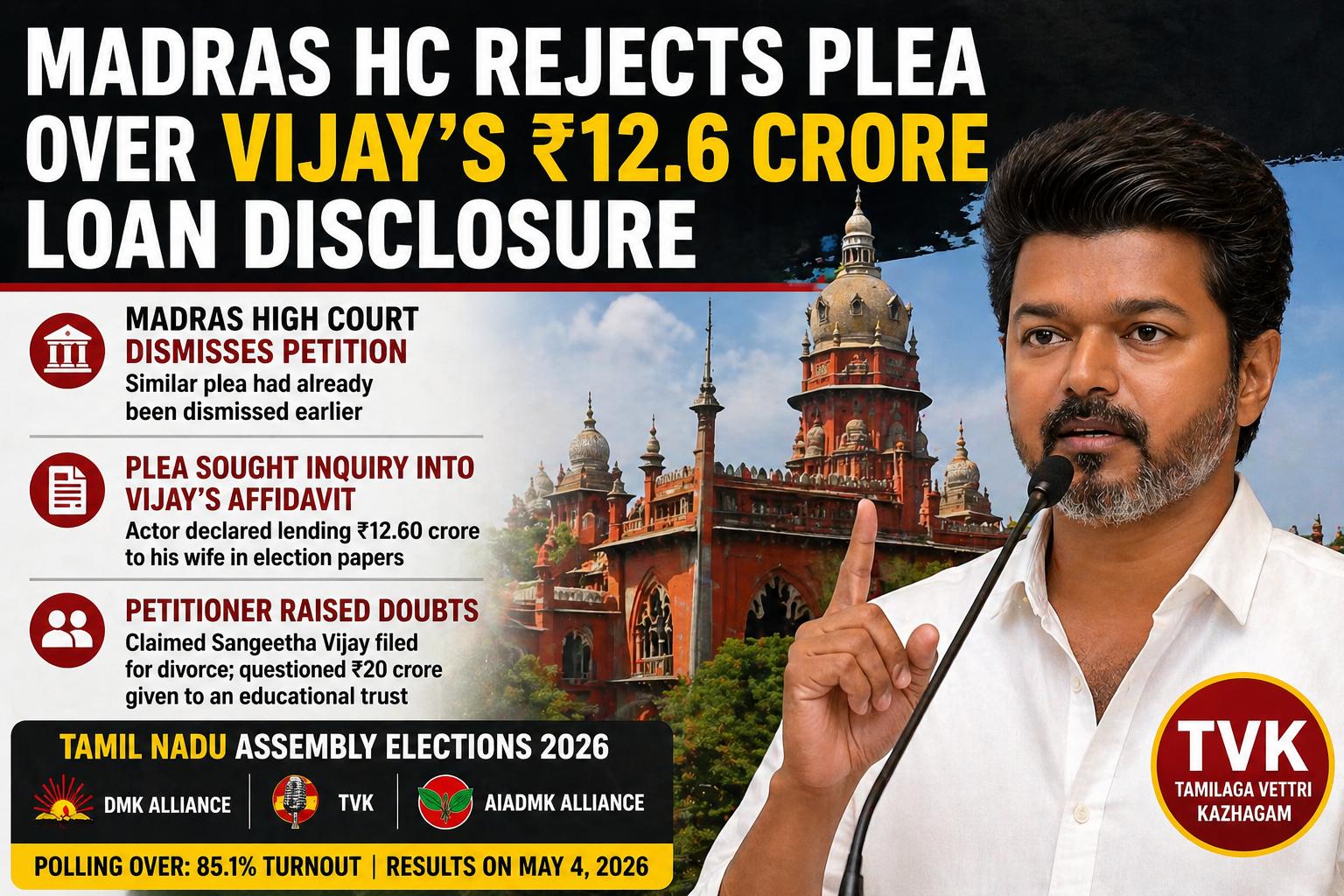
On April 27, 2026, the Madras High Court dismissed a petition challenging Vijay’s ₹12.6 crore loan disclosure, with no specific time of judgment disclosed. The Madras High Court
Madras HC Dismisses Plea Against Vijay Over ₹12.6 Crore Loan Disclosure
On April 27, 2026, the Madras High Court dismissed a petition challenging Vijay’s ₹12.6 crore loan disclosure, with no specific time of judgment disclosed. The Madras High Court

NIA Probes 79 Crude Bombs Found in Bengal, Terror Angle Suspected
On April 25, 2026, 79 crude bombs were recovered from an abandoned house in South 24 Parganas, West Bengal, prompting the National Investigation Agency to register a case on April 26, 2026; the exact time of recovery was not disclosed. The
NIA Probes 79 Crude Bombs Found in Bengal, Terror Angle Suspected
On April 25, 2026, 79 crude bombs were recovered from an abandoned house in South 24 Parganas, West Bengal, prompting the National Investigation Agency to register a case on April 26, 2026; the exact time of recovery was not disclosed. The
2 Birthday Parties Turn Deadly in Delhi and UP, Four Killed
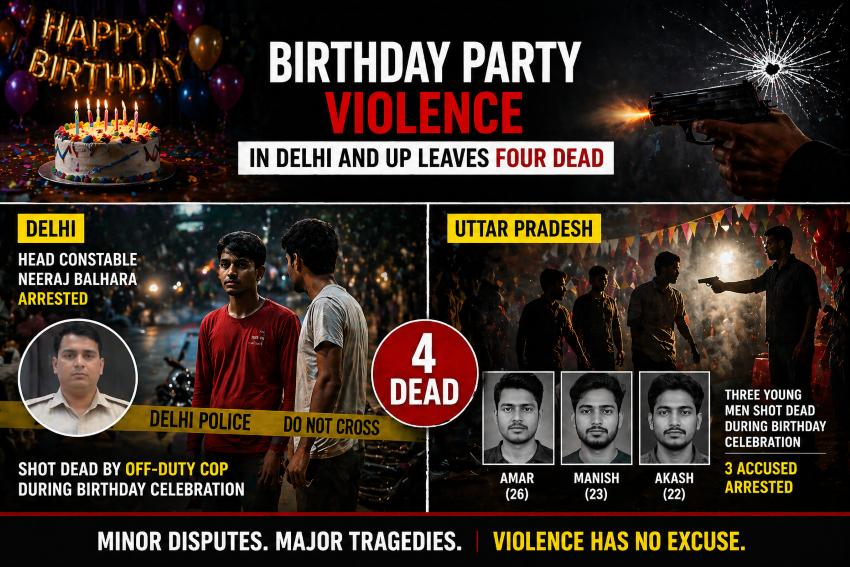
Two separate birthday celebrations in Delhi and Uttar Pradesh ended in tragedy, leaving four people dead after small arguments turned violent. In Delhi, a 21-year-old delivery executive named Pandav Kumar was shot dead during a birthday celebration at his friend’s house. The incident happened when Pandav and his friend were leaving for work late at night. A Delhi Police head constable, Neeraj Balhara, who was off duty, stopped them and questioned them. According to reports, an arg
2 Birthday Parties Turn Deadly in Delhi and UP, Four Killed
Two separate birthday celebrations in Delhi and Uttar Pradesh ended in tragedy, leaving four people dead after small arguments turned violent. In Delhi, a 21-year-old delivery executive named Pandav Kumar was shot dead during a birthday celebration at his friend’s house. The incident happened when Pandav and his friend were leaving for work late at night. A Delhi Police head constable, Neeraj Balhara, who was off duty, stopped them and questioned them. According to reports, an arg

How One Indian Monk Won the World in 1893!
Swami Vivekananda’s visit to Chicago in 1893 remains a defining moment in the global exchange of spiritual and cultural ideas. He traveled to the United States to participate in the World’s Parliament of Religions, an international gathering held as part of the Columbian Exposition. His address on September 11, 1893, is widely remembered for its message of unity and universal acceptance. Opening his speech with the now-famous greeting, “Brothers and Sisters of America,” Vivekananda immediately connected with the audience, receiving a prolonged standing ovation. His remarks emphasized the shared essence of all religions and advocated for tolerance, mutual respect, and compassion. He presented the principles of Vedanta and Yoga as paths toward understanding humanity’s deeper spiritual nature, highlighting that true religion transcends rigid doctrines. The impact of his speech extended far beyond the event itself. Vivekananda’s ideas resonated strongly with American audiences, introducing many to Indian philosophical traditions for the first time. His teachings contributed to a broader awareness of Hinduism and helped establish a foundation for ongoing cultural and intellectual dialogue between India and the West. In India, his legacy continues to inspire generations, particularly through the observance of National Youth Day on January 12, his birth anniversary. Declared by the Government of India in 1984, the day is marked by educational and cultural activities across schools and institutions. These events reflect Vivekananda’s enduring message of self-confidence, service, and the transformative power of knowledge. Through his writings and lectures, inspired by his guru Ramakrishna Paramahansa, Vivekananda encouraged young people to pursue both personal growth and social responsibility. His influence remains significant today, as his vision of harmony and spiritual awareness continues to shape conversations on global unity and cultural understanding.
How One Indian Monk Won the World in 1893!
Swami Vivekananda’s visit to Chicago in 1893 remains a defining moment in the global exchange of spiritual and cultural ideas. He traveled to the United States to participate in the World’s Parliament of Religions, an international gathering held as part of the Columbian Exposition. His address on September 11, 1893, is widely remembered for its message of unity and universal acceptance. Opening his speech with the now-famous greeting, “Brothers and Sisters of America,” Vivekananda immediately connected with the audience, receiving a prolonged standing ovation. His remarks emphasized the shared essence of all religions and advocated for tolerance, mutual respect, and compassion. He presented the principles of Vedanta and Yoga as paths toward understanding humanity’s deeper spiritual nature, highlighting that true religion transcends rigid doctrines. The impact of his speech extended far beyond the event itself. Vivekananda’s ideas resonated strongly with American audiences, introducing many to Indian philosophical traditions for the first time. His teachings contributed to a broader awareness of Hinduism and helped establish a foundation for ongoing cultural and intellectual dialogue between India and the West. In India, his legacy continues to inspire generations, particularly through the observance of National Youth Day on January 12, his birth anniversary. Declared by the Government of India in 1984, the day is marked by educational and cultural activities across schools and institutions. These events reflect Vivekananda’s enduring message of self-confidence, service, and the transformative power of knowledge. Through his writings and lectures, inspired by his guru Ramakrishna Paramahansa, Vivekananda encouraged young people to pursue both personal growth and social responsibility. His influence remains significant today, as his vision of harmony and spiritual awareness continues to shape conversations on global unity and cultural understanding.
West Bengal Assembly Elections 2026 Latest Updates Campaign Ends Phase 2
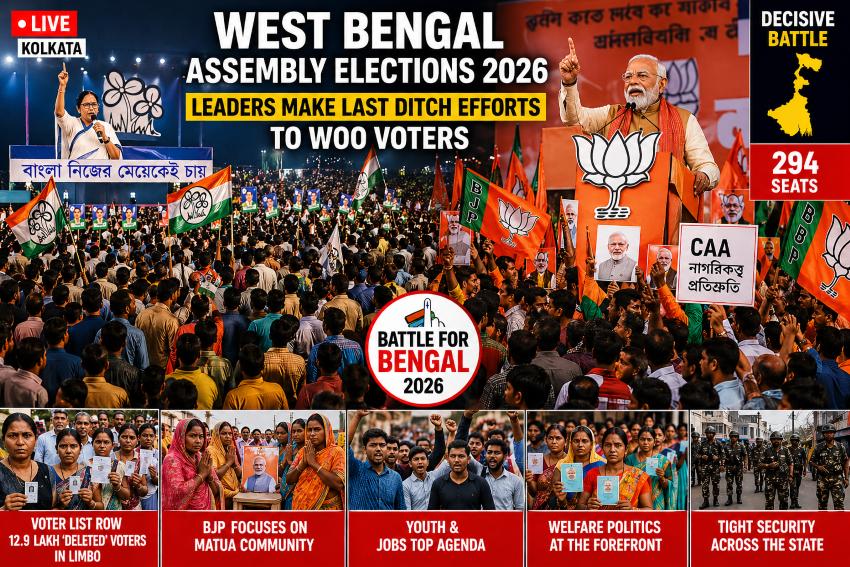
With only a few hours left before campaigning ends for the second phase of the 2026 West Bengal Assembly elections, political leaders have intensified their efforts to reach voters across the state. Prime Minister Narendra Modi addressed key concerns of the Matua community, promising that the Bharatiya Janata Party (BJP) would ensure citizenship for Hindu refugees who migrated from Banglad
West Bengal Assembly Elections 2026 Latest Updates Campaign Ends Phase 2
With only a few hours left before campaigning ends for the second phase of the 2026 West Bengal Assembly elections, political leaders have intensified their efforts to reach voters across the state. Prime Minister Narendra Modi addressed key concerns of the Matua community, promising that the Bharatiya Janata Party (BJP) would ensure citizenship for Hindu refugees who migrated from Banglad

Bengaluru Gets Rail Boost with New Mumbai Services, Vande Bharat Route
Big Rail Boost: Bengaluru to Get Vande Bharat to Mangaluru, 2 New Mumbai Trains Soon In a major step to strengthen railway connectivity across Karnataka and neighbouring states, Union Railway Minister Ashwini Vaishnaw has announced the launch of three new train services from
Bengaluru Gets Rail Boost with New Mumbai Services, Vande Bharat Route
Big Rail Boost: Bengaluru to Get Vande Bharat to Mangaluru, 2 New Mumbai Trains Soon In a major step to strengthen railway connectivity across Karnataka and neighbouring states, Union Railway Minister Ashwini Vaishnaw has announced the launch of three new train services from
Raghu Rai’s Lens Preserved Bengal’s Cultural Icons, Kolkata Pays Tribute
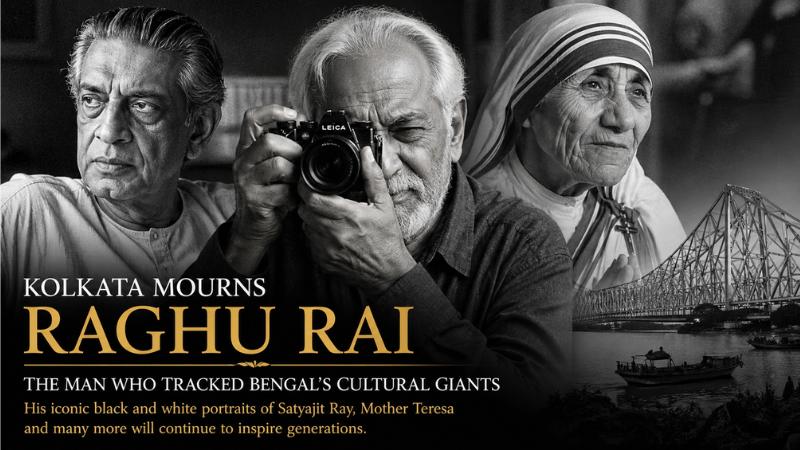
Raghu Rai’s photography stands as a timeless tribute to Bengal’s rich cultural and intellectual heritage, capturing a remarkable spectrum of personalities and moments that shaped the region’s identity. Widely regarded as one of India’s most influential photographers, Raghu Rai used his lens to document not just events, but the deeper emotions and stories behind them. His iconic black and white portraits of legends such as Satyajit Ray and Mother Teresa remain some of the most powerful visual records of their lives and work. Through subtle expressions, light, and composition, Rai was able to reveal the humanity, depth, and quiet strength of his subjects, turning simple photographs into lasting narratives. Kolkata, often considered the cultural capital of India, played a central role in Rai’s photographic journey. The city’s streets, intellectual circles, and artistic traditions frequently appeared in his work, giving audiences a glimpse into its vibrant soul. His images went beyond famous figures to include everyday life, traditions, and social realities, creating a layered and authentic portrayal of Bengal. Over the years, his work has not only preserved history but also inspired generations of photographers and art lovers. As tributes continue to pour in, his legacy endures through images that still speak with emotional clarity and cultural significance, ensuring that the spirit of Bengal’s icons and people lives on through his extraordinary vision.
Raghu Rai’s Lens Preserved Bengal’s Cultural Icons, Kolkata Pays Tribute
Raghu Rai’s photography stands as a timeless tribute to Bengal’s rich cultural and intellectual heritage, capturing a remarkable spectrum of personalities and moments that shaped the region’s identity. Widely regarded as one of India’s most influential photographers, Raghu Rai used his lens to document not just events, but the deeper emotions and stories behind them. His iconic black and white portraits of legends such as Satyajit Ray and Mother Teresa remain some of the most powerful visual records of their lives and work. Through subtle expressions, light, and composition, Rai was able to reveal the humanity, depth, and quiet strength of his subjects, turning simple photographs into lasting narratives. Kolkata, often considered the cultural capital of India, played a central role in Rai’s photographic journey. The city’s streets, intellectual circles, and artistic traditions frequently appeared in his work, giving audiences a glimpse into its vibrant soul. His images went beyond famous figures to include everyday life, traditions, and social realities, creating a layered and authentic portrayal of Bengal. Over the years, his work has not only preserved history but also inspired generations of photographers and art lovers. As tributes continue to pour in, his legacy endures through images that still speak with emotional clarity and cultural significance, ensuring that the spirit of Bengal’s icons and people lives on through his extraordinary vision.

Google Data Centre in Vizag: $15 Billion Investment, Launch Date, Key Details
Google will invest $15 billion to set up a data centre and AI hub in Visakhapatnam, marking one of the biggest investments in Andhra Pradesh. One of the largest investments in Andhra Pradesh’s history is set to take shape as
Google Data Centre in Vizag: $15 Billion Investment, Launch Date, Key Details
Google will invest $15 billion to set up a data centre and AI hub in Visakhapatnam, marking one of the biggest investments in Andhra Pradesh. One of the largest investments in Andhra Pradesh’s history is set to take shape as

Who gives more death sentences, India or the U.S.? India ranks much higher
Global death penalty data shows executions remain concentrated in a few countries, while India issues far more death sentences than the U.S. The global death penalty remains in force in a limited number of countries, but recent figures show that its use is still concentrated in a small group of states. In 2024, Amnesty International recorded 2,087 new death sentences across 46 countries and 1,518 executions in 15 countries, the highest execution total since 2015. The
Who gives more death sentences, India or the U.S.? India ranks much higher
Global death penalty data shows executions remain concentrated in a few countries, while India issues far more death sentences than the U.S. The global death penalty remains in force in a limited number of countries, but recent figures show that its use is still concentrated in a small group of states. In 2024, Amnesty International recorded 2,087 new death sentences across 46 countries and 1,518 executions in 15 countries, the highest execution total since 2015. The

What led to the Louisiana store shooting? Husband arrested after accidental discharge injures wife
A meeting inside a convenience store in Bossier City, Louisiana, turned into a life-threatening emergency on Friday, April 4, 2026, when a firearm discharged at close range, leaving a 30-year-old woman critically injured and prompting the arrest of her husband weeks later. Gun discharge during store meeting under investigation Authorities said the incident occurred inside Mezo Grocery and Deli, where Jigisha, also known as Soniya Gajera, and her husband
What led to the Louisiana store shooting? Husband arrested after accidental discharge injures wife
A meeting inside a convenience store in Bossier City, Louisiana, turned into a life-threatening emergency on Friday, April 4, 2026, when a firearm discharged at close range, leaving a 30-year-old woman critically injured and prompting the arrest of her husband weeks later. Gun discharge during store meeting under investigation Authorities said the incident occurred inside Mezo Grocery and Deli, where Jigisha, also known as Soniya Gajera, and her husband

Did Raghav Chadha’s switch expose ideology as strategy in politics? Yes, it raises serious questions
Did Raghav Chadha’s switch expose ideology as strategy in Indian politics? Yes, it raises serious questions as the recent political move by Raghav Chadha has triggered a wider debate about whether ideology in Indian politics is truly stable or simply a matter of strategy. The development, reported on Thursday, April 24, 2026, in India Standard Time, comes as Chadha, once a vocal critic of the Bharatiya Janata Party (BJP), aligned himself with the same political force he had publicly opposed. From vocal opposition to alignment with former rivals For years, Chadha built his political identity within the Aam Aadmi Party (AAP) by criticizing the BJP’s governance style, raising concerns about institutional independence and democratic functioning. His speeches positioned AAP as a clear alternative, emphasizing transparency and accountability. This consistent messaging helped shape public perception and earned him credibility among urban and educated voters. The sudden shift, however, has led to questions about whether those earlier positions were rooted in firm ideological belief or were part of a broader political strategy that evolved over time. BJP’s acceptance raises questions about ideological consistency The BJP, which has maintained political dominance at the national level for over a decade, has consistently emphasized strong ideological foundations and governance continuity. Its decision to accept a leader who had openly challenged its policies now brings attention to the balance between ideological commitment and political expansion. In parliamentary systems, numbers often determine legislative outcomes. Strategic decisions to strengthen representation can override past disagreements, reflecting a pragmatic approach to governance and policy-making. A recurring pattern across political systems This development is not isolated. Political realignments, shifting alliances, and evolving narratives are common across democratic systems worldwide. Leaders frequently transition between parties, and parties themselves adapt to changing political landscapes. Such shifts suggest that while ideology is presented as a guiding principle, strategy often plays a decisive role in shaping political actions. Public trust, consistency, and the shifting foundation of politics For the public, these developments can create uncertainty. Strong statements made in one phase of a political career may not align with actions taken later. This gap between words and actions raises broader concerns about consistency, accountability, and long-term trust in political institutions. What emerges from this pattern is not just a question about one leader or one party, but about the direction of politics itself. When positions can shift so sharply and be accepted just as quickly, it becomes harder to separate belief from convenience. The debate is no longer limited to whether one individual changed sides, but whether such changes are now an accepted norm across the political spectrum. In that context, the latest move involving Raghav Chadha reinforces a broader concern: political systems that emphasize ideology in public messaging may increasingly rely on strategy in practice. In that reality, one conclusion is becoming difficult to ignore. Adapting strategy to suit the moment is no longer just a political tool; it is increasingly becoming the most consistent ideology across political parties.
Did Raghav Chadha’s switch expose ideology as strategy in politics? Yes, it raises serious questions
Did Raghav Chadha’s switch expose ideology as strategy in Indian politics? Yes, it raises serious questions as the recent political move by Raghav Chadha has triggered a wider debate about whether ideology in Indian politics is truly stable or simply a matter of strategy. The development, reported on Thursday, April 24, 2026, in India Standard Time, comes as Chadha, once a vocal critic of the Bharatiya Janata Party (BJP), aligned himself with the same political force he had publicly opposed. From vocal opposition to alignment with former rivals For years, Chadha built his political identity within the Aam Aadmi Party (AAP) by criticizing the BJP’s governance style, raising concerns about institutional independence and democratic functioning. His speeches positioned AAP as a clear alternative, emphasizing transparency and accountability. This consistent messaging helped shape public perception and earned him credibility among urban and educated voters. The sudden shift, however, has led to questions about whether those earlier positions were rooted in firm ideological belief or were part of a broader political strategy that evolved over time. BJP’s acceptance raises questions about ideological consistency The BJP, which has maintained political dominance at the national level for over a decade, has consistently emphasized strong ideological foundations and governance continuity. Its decision to accept a leader who had openly challenged its policies now brings attention to the balance between ideological commitment and political expansion. In parliamentary systems, numbers often determine legislative outcomes. Strategic decisions to strengthen representation can override past disagreements, reflecting a pragmatic approach to governance and policy-making. A recurring pattern across political systems This development is not isolated. Political realignments, shifting alliances, and evolving narratives are common across democratic systems worldwide. Leaders frequently transition between parties, and parties themselves adapt to changing political landscapes. Such shifts suggest that while ideology is presented as a guiding principle, strategy often plays a decisive role in shaping political actions. Public trust, consistency, and the shifting foundation of politics For the public, these developments can create uncertainty. Strong statements made in one phase of a political career may not align with actions taken later. This gap between words and actions raises broader concerns about consistency, accountability, and long-term trust in political institutions. What emerges from this pattern is not just a question about one leader or one party, but about the direction of politics itself. When positions can shift so sharply and be accepted just as quickly, it becomes harder to separate belief from convenience. The debate is no longer limited to whether one individual changed sides, but whether such changes are now an accepted norm across the political spectrum. In that context, the latest move involving Raghav Chadha reinforces a broader concern: political systems that emphasize ideology in public messaging may increasingly rely on strategy in practice. In that reality, one conclusion is becoming difficult to ignore. Adapting strategy to suit the moment is no longer just a political tool; it is increasingly becoming the most consistent ideology across political parties.
Ranveer Singh apologises for Kantara mimicry remarks, court to close case
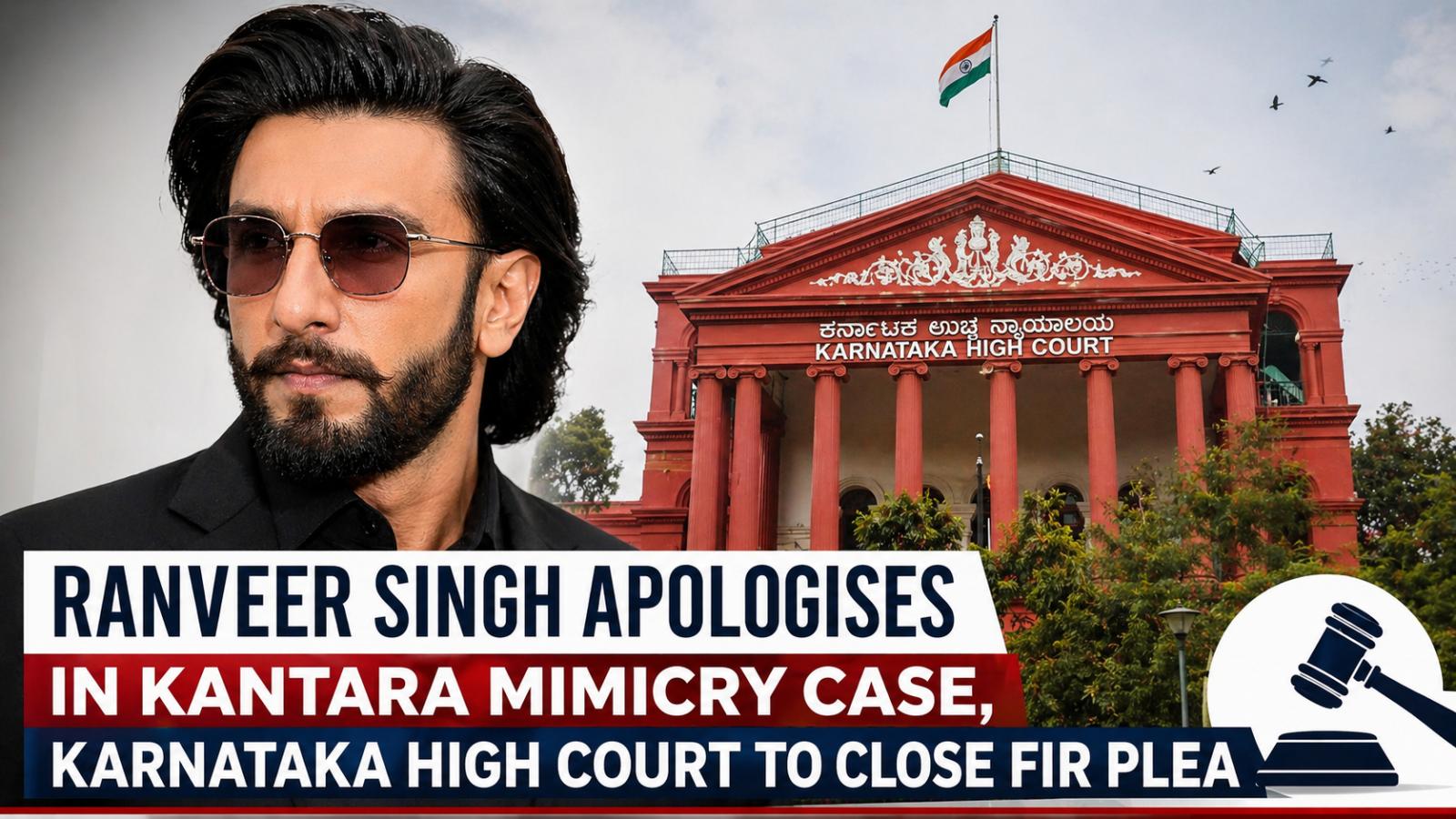
Ranveer Singh submitted a revised affidavit before the Karnataka High Court on Saturday (April 25) during a hearing, expressing his unconditional apology over his mimicry of a character from Kantara: Chapter 1 at a public event last year. The court, after taking note of the affidavit, indicated that it is likely to dispose of the matter by recording the actor’s undertaking and closing the proceedings. The hearing pertained to Singh’s plea seeking to quash an FIR registered against him following remarks made during the International Film Festival of India in Goa. At the event, the actor had mimicked a role portrayed by Rishab Shetty and allegedly made references that hurt religious sentiments associated with a temple deity. The FIR invoked provisions under the Bharatiya Nyaya Sanhita, 2023, relating to promoting enmity and outraging religious beliefs. During the proceedings, counsel representing Singh informed the court that the affidavit had been revised to include an unconditional apology and an acknowledgment of the sentiments involved. The bench noted that the actor had also undertaken to visit the concerned temple within a specified period, and this assurance would be recorded while disposing of the case. The complainant, however, argued before the court that the matter involved a larger issue of faith and should not be treated as a routine legal dispute. The court responded by stating that it would issue an admonition, emphasizing that public figures must remain mindful of their words and actions, especially in matters linked to religious sensitivities. Earlier, the court had declined to stay the FIR, observing that celebrity status does not grant immunity from accountability. With the submission of the revised affidavit during the hearing and the acknowledgment of concerns raised, the court signaled that it would formally conclude the matter without engaging in a detailed legal examination.
Ranveer Singh apologises for Kantara mimicry remarks, court to close case
Ranveer Singh submitted a revised affidavit before the Karnataka High Court on Saturday (April 25) during a hearing, expressing his unconditional apology over his mimicry of a character from Kantara: Chapter 1 at a public event last year. The court, after taking note of the affidavit, indicated that it is likely to dispose of the matter by recording the actor’s undertaking and closing the proceedings. The hearing pertained to Singh’s plea seeking to quash an FIR registered against him following remarks made during the International Film Festival of India in Goa. At the event, the actor had mimicked a role portrayed by Rishab Shetty and allegedly made references that hurt religious sentiments associated with a temple deity. The FIR invoked provisions under the Bharatiya Nyaya Sanhita, 2023, relating to promoting enmity and outraging religious beliefs. During the proceedings, counsel representing Singh informed the court that the affidavit had been revised to include an unconditional apology and an acknowledgment of the sentiments involved. The bench noted that the actor had also undertaken to visit the concerned temple within a specified period, and this assurance would be recorded while disposing of the case. The complainant, however, argued before the court that the matter involved a larger issue of faith and should not be treated as a routine legal dispute. The court responded by stating that it would issue an admonition, emphasizing that public figures must remain mindful of their words and actions, especially in matters linked to religious sensitivities. Earlier, the court had declined to stay the FIR, observing that celebrity status does not grant immunity from accountability. With the submission of the revised affidavit during the hearing and the acknowledgment of concerns raised, the court signaled that it would formally conclude the matter without engaging in a detailed legal examination.
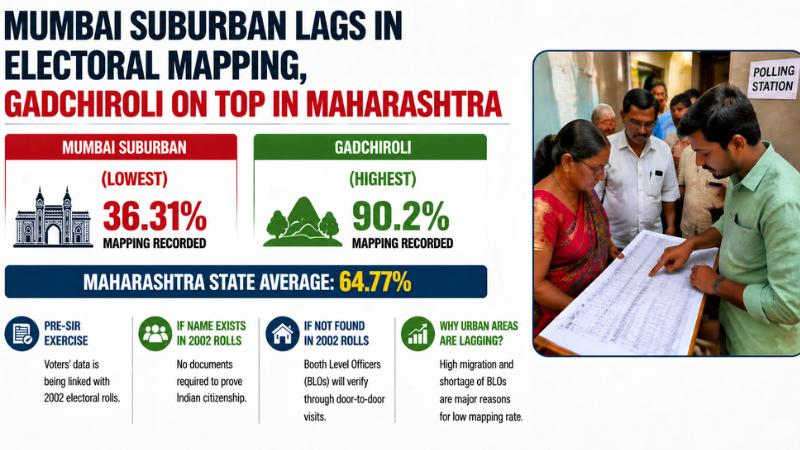
Mumbai Suburban Faces Low Voter Mapping; Gadchiroli Leads Maharashtra's Electoral Revision
Mumbai: The ongoing Special Intensive Revision (SIR) of electoral mapping in Maharashtra has shown disappointing results in urban areas, particularly in Mumbai, Thane, and Pune, while the tribal district of Gadchiroli has seen the highest participation. As per the Maharashtra State Election Commission (SEC) data, the Mumbai Suburban district recorded only 36.31% of electoral mapping, the lowest in the state and far below the state average of 64.77%. On the other hand, Gadchiroli has achieved
Mumbai Suburban Faces Low Voter Mapping; Gadchiroli Leads Maharashtra's Electoral Revision
Mumbai: The ongoing Special Intensive Revision (SIR) of electoral mapping in Maharashtra has shown disappointing results in urban areas, particularly in Mumbai, Thane, and Pune, while the tribal district of Gadchiroli has seen the highest participation. As per the Maharashtra State Election Commission (SEC) data, the Mumbai Suburban district recorded only 36.31% of electoral mapping, the lowest in the state and far below the state average of 64.77%. On the other hand, Gadchiroli has achieved










