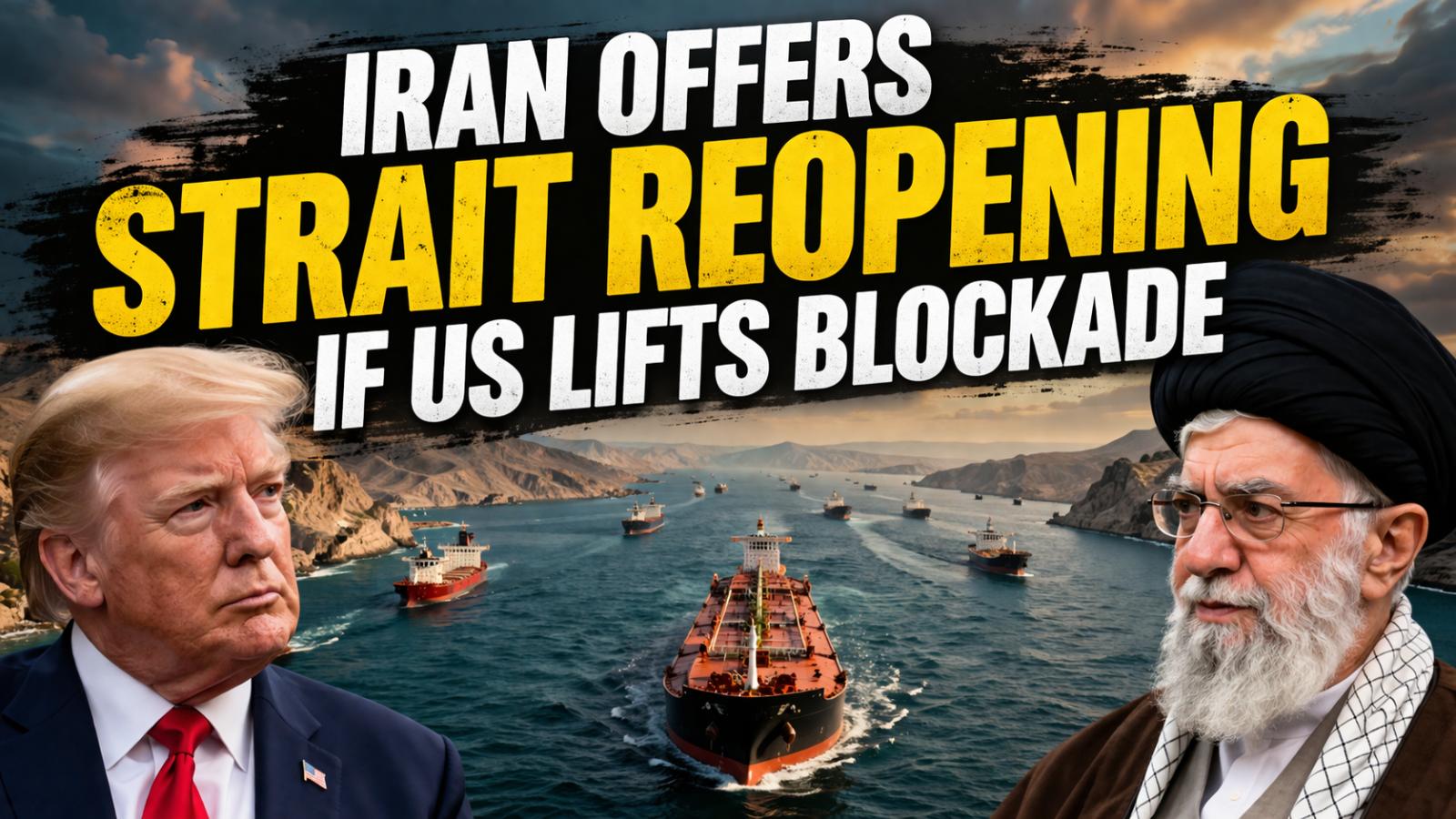
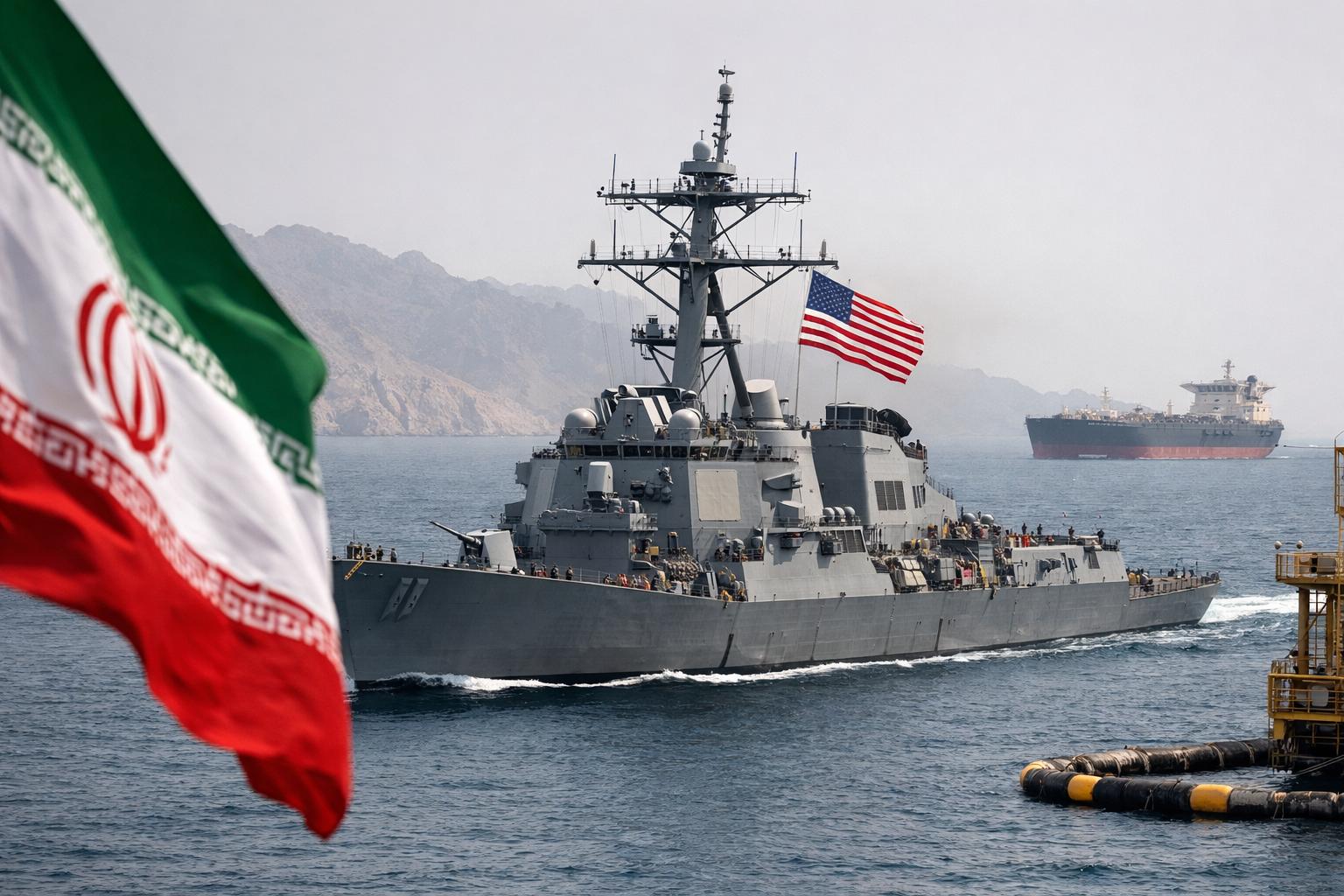
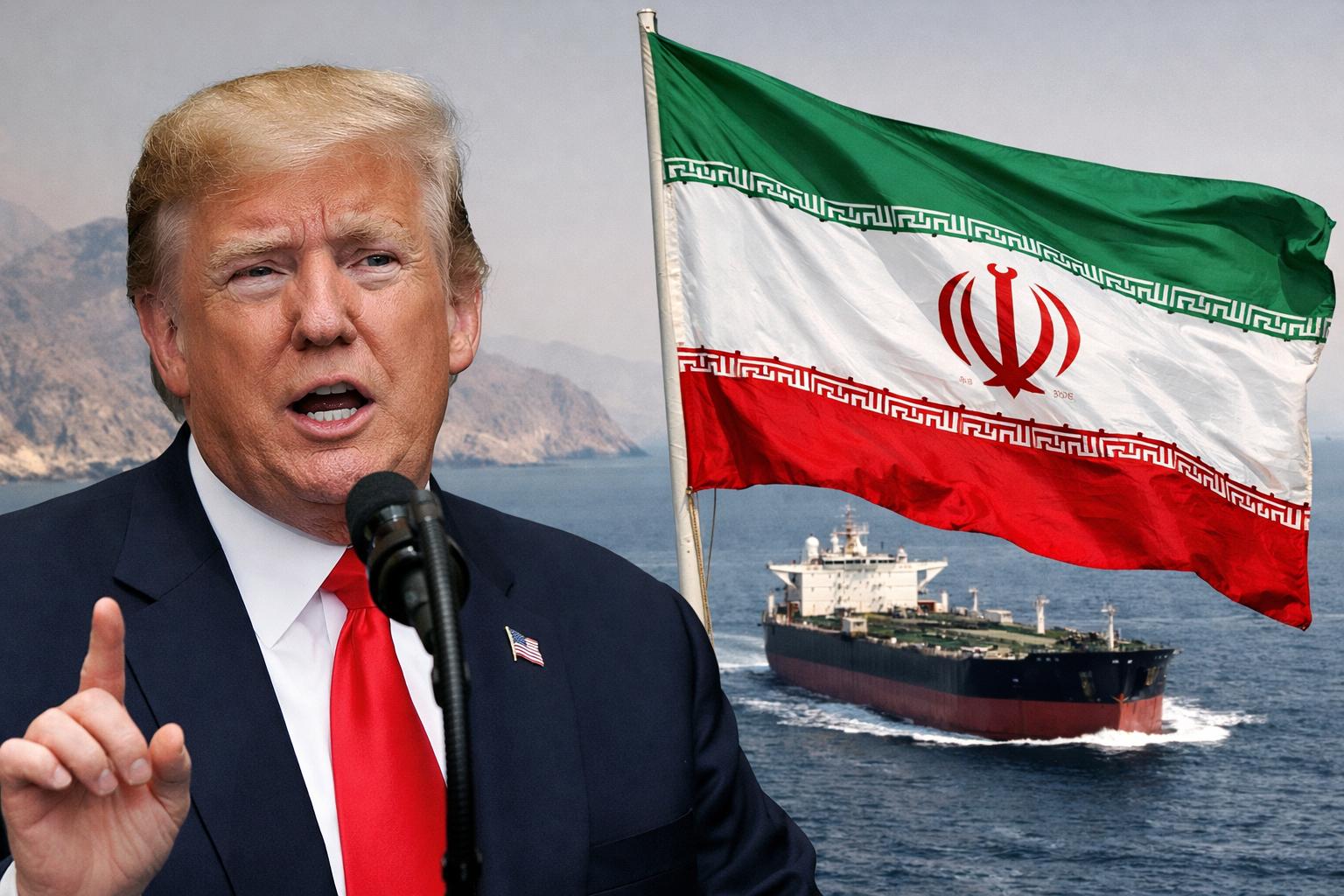
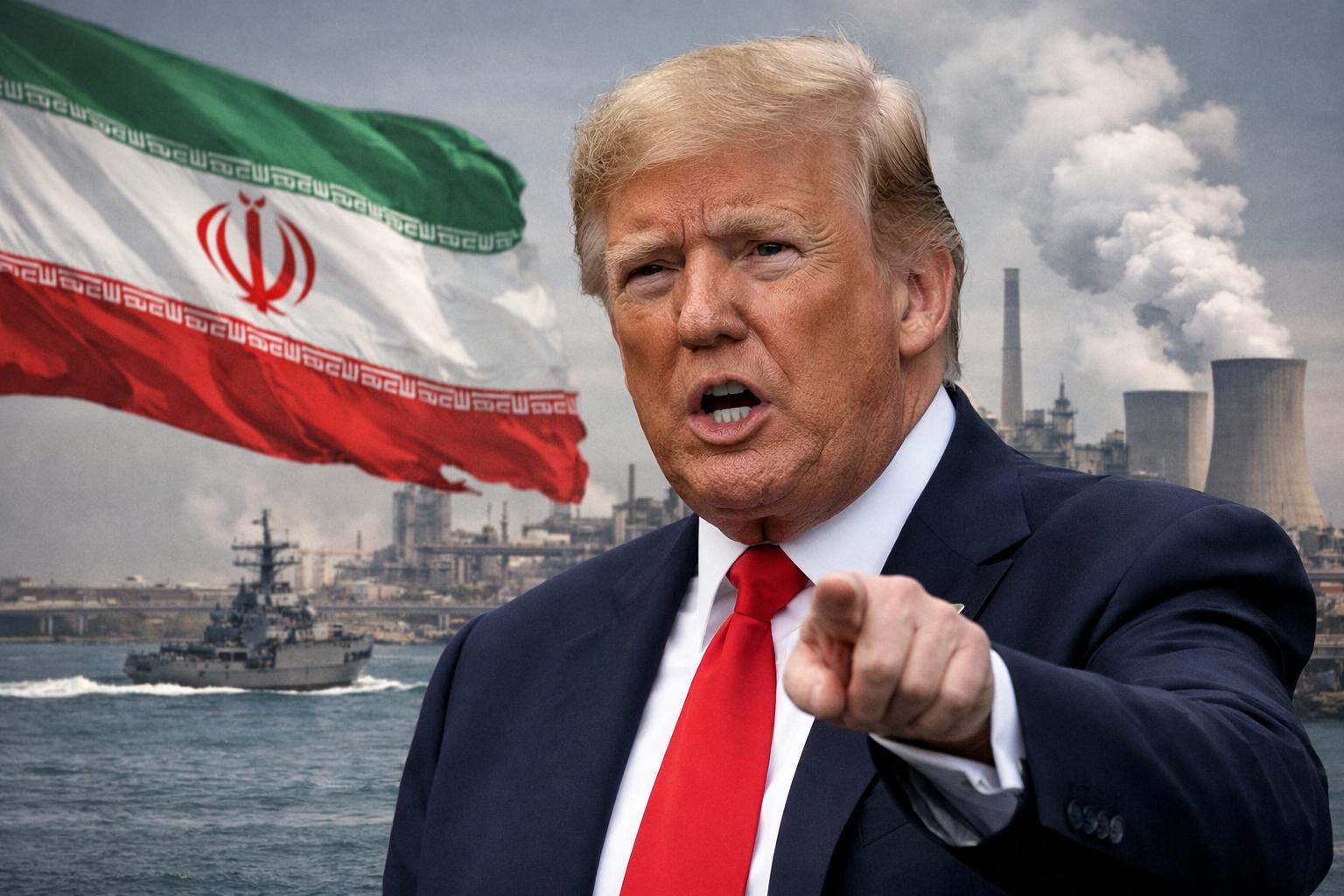
Iran offered to reopen the Strait of Hormuz if the U.S. lifts its blockade and ends hostilities, but Washington insists any deal must address Tehran’s nuclear program, leaving tensions high and global energy markets under strain.
Iran has proposed reopening the Strait of Hormuz if the United States lifts its blockade and agrees to end hostilities, according to regional officials familiar with negotiations disclosed on Monday, April 28, 2026. The proposal, deliver
Iran offered to reopen the Strait of Hormuz if the U.S. lifts its blockade and ends hostilities, but Washington insists any deal must address Tehran’s nuclear program, leaving tensions high and global energy markets under strain.
Iran has proposed reopening the Strait of Hormuz if the United States lifts its blockade and agrees to end hostilities, according to regional officials familiar with negotiations disclosed on Monday, April 28, 2026. The proposal, deliver
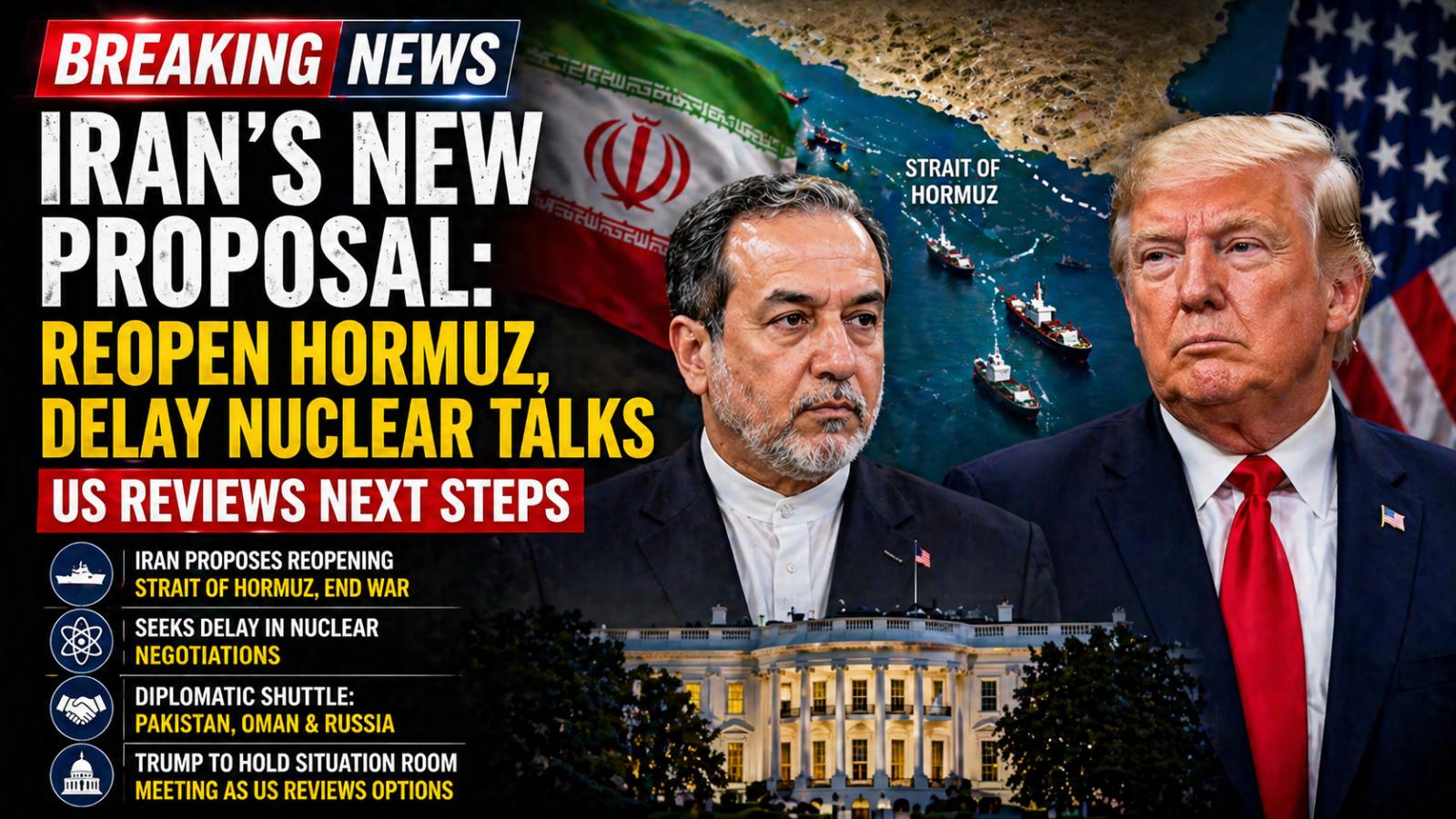
Iran has reportedly put forward a new proposal aimed at reopening the Strait of Hormuz and easing ongoing tensions, while suggesting that nuclear negotiations be postponed. The development comes as US officials review the offer, with President Donald Trump expected to meet with senior national security advisers to assess the situation and determine next steps.
According to sources familiar with the discussions, the proposal was conveyed through intermediaries and focuses on de-escalation measures tied to maritime security and regional stability. However, Iranian officials have indicated that broader nuclear negotiations should be deferred until key issues, including economic restrictions and security concerns, are addressed. There has been no official confirmation from either side regarding the specifics of the proposal.
The latest diplomatic activity follows a series of engagements by Abbas Araghchi, who recently traveled between Pakistan and Oman in an effort to facilitate dialogue. Iranian authorities emphasized that no direct meetings with US representatives were scheduled during his visit to Islamabad. Earlier, planned discussions involving US envoys were canceled, adding to the uncertainty surrounding the negotiation process.
Tensions have been further complicated by differing expectations between Washington and Tehran. US officials have reiterated that any agreement must include strict limitations on Iran’s nuclear capabilities, including restrictions on enrichment activities. Iranian leaders, meanwhile, have maintained that negotiations cannot proceed under pressure, citing concerns over ongoing restrictions and security measures affecting the country.
The situation remains fluid as diplomatic channels continue to operate through regional mediators. Iran’s leadership has also engaged with international partners, including Russia, as part of broader efforts to manage the crisis. While the proposal to reopen the Strait of Hormuz signals a potential pathway toward de-escalation, the delay in nuclear talks underscores the challenges that remain in reaching a comprehensive agreement.
Iran has reportedly put forward a new proposal aimed at reopening the Strait of Hormuz and easing ongoing tensions, while suggesting that nuclear negotiations be postponed. The development comes as US officials review the offer, with President Donald Trump expected to meet with senior national security advisers to assess the situation and determine next steps.
According to sources familiar with the discussions, the proposal was conveyed through intermediaries and focuses on de-escalation measures tied to maritime security and regional stability. However, Iranian officials have indicated that broader nuclear negotiations should be deferred until key issues, including economic restrictions and security concerns, are addressed. There has been no official confirmation from either side regarding the specifics of the proposal.
The latest diplomatic activity follows a series of engagements by Abbas Araghchi, who recently traveled between Pakistan and Oman in an effort to facilitate dialogue. Iranian authorities emphasized that no direct meetings with US representatives were scheduled during his visit to Islamabad. Earlier, planned discussions involving US envoys were canceled, adding to the uncertainty surrounding the negotiation process.
Tensions have been further complicated by differing expectations between Washington and Tehran. US officials have reiterated that any agreement must include strict limitations on Iran’s nuclear capabilities, including restrictions on enrichment activities. Iranian leaders, meanwhile, have maintained that negotiations cannot proceed under pressure, citing concerns over ongoing restrictions and security measures affecting the country.
The situation remains fluid as diplomatic channels continue to operate through regional mediators. Iran’s leadership has also engaged with international partners, including Russia, as part of broader efforts to manage the crisis. While the proposal to reopen the Strait of Hormuz signals a potential pathway toward de-escalation, the delay in nuclear talks underscores the challenges that remain in reaching a comprehensive agreement.
Escalating diplomatic tensions after Tehran strike
Why did Ali Shirazi demand an apology from Donald Trump? Iran seeks accountability after Khamenei killing, as senior Iranian cleric Ali Shirazi called on U.S. President Donald Trump to publicly acknowledge wrongdoing following t
Escalating diplomatic tensions after Tehran strike
Why did Ali Shirazi demand an apology from Donald Trump? Iran seeks accountability after Khamenei killing, as senior Iranian cleric Ali Shirazi called on U.S. President Donald Trump to publicly acknowledge wrongdoing following t
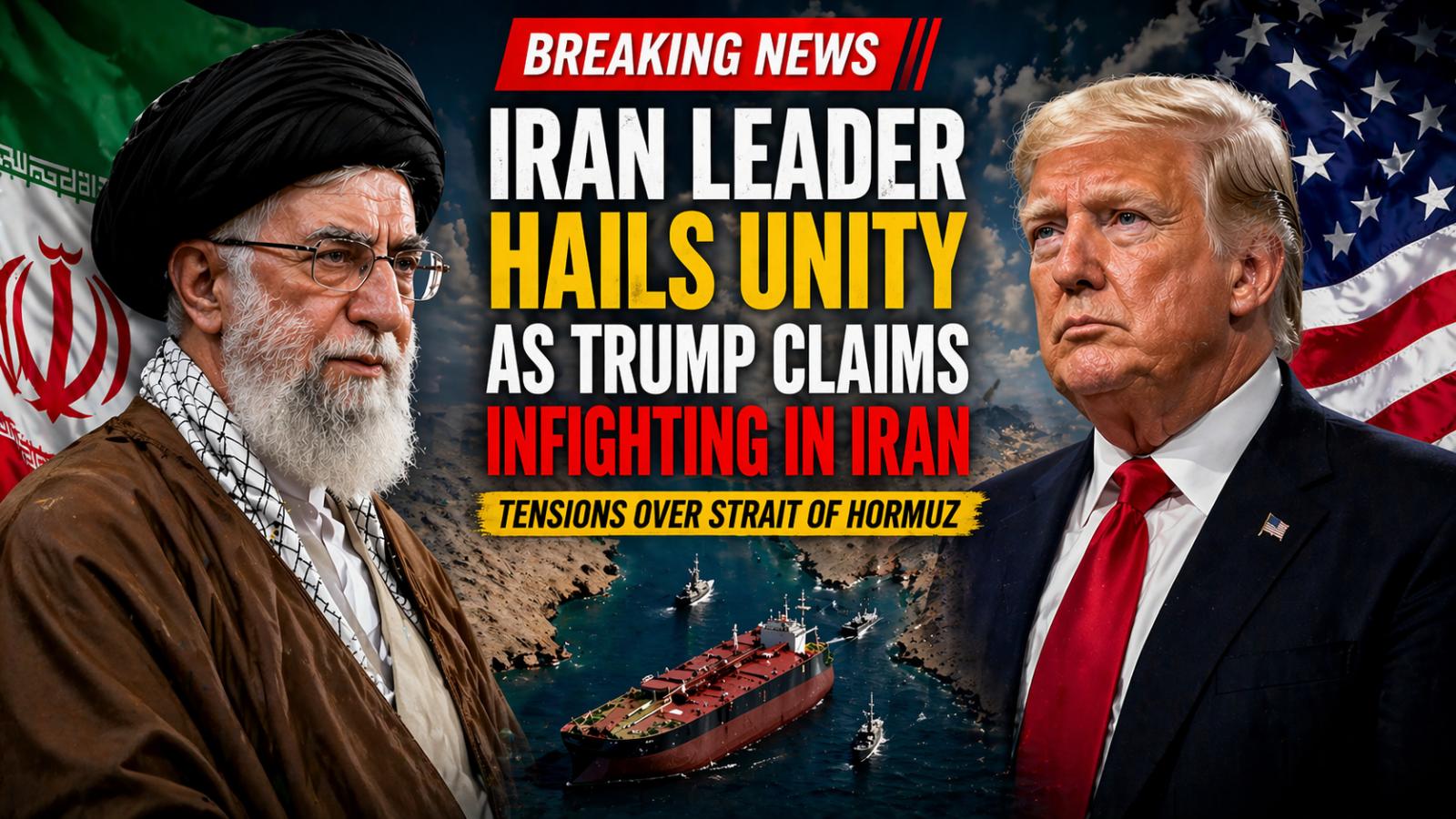
Mojtaba Khamenei has emphasized national unity in Iran, stating that collective cohesion among citizens has strengthened the country’s position amid ongoing tensions with the United States. In a public message, he described unity as a decisive factor in countering external pressure, urging continued commitment to national solidarity.
Khamenei’s remarks come as
Mojtaba Khamenei has emphasized national unity in Iran, stating that collective cohesion among citizens has strengthened the country’s position amid ongoing tensions with the United States. In a public message, he described unity as a decisive factor in countering external pressure, urging continued commitment to national solidarity.
Khamenei’s remarks come as
Iran released footage of naval forces seizing two merchant ships in the Strait of Hormuz, including an India-bound vessel, intensifying regional tensions and raising global shipping concerns.
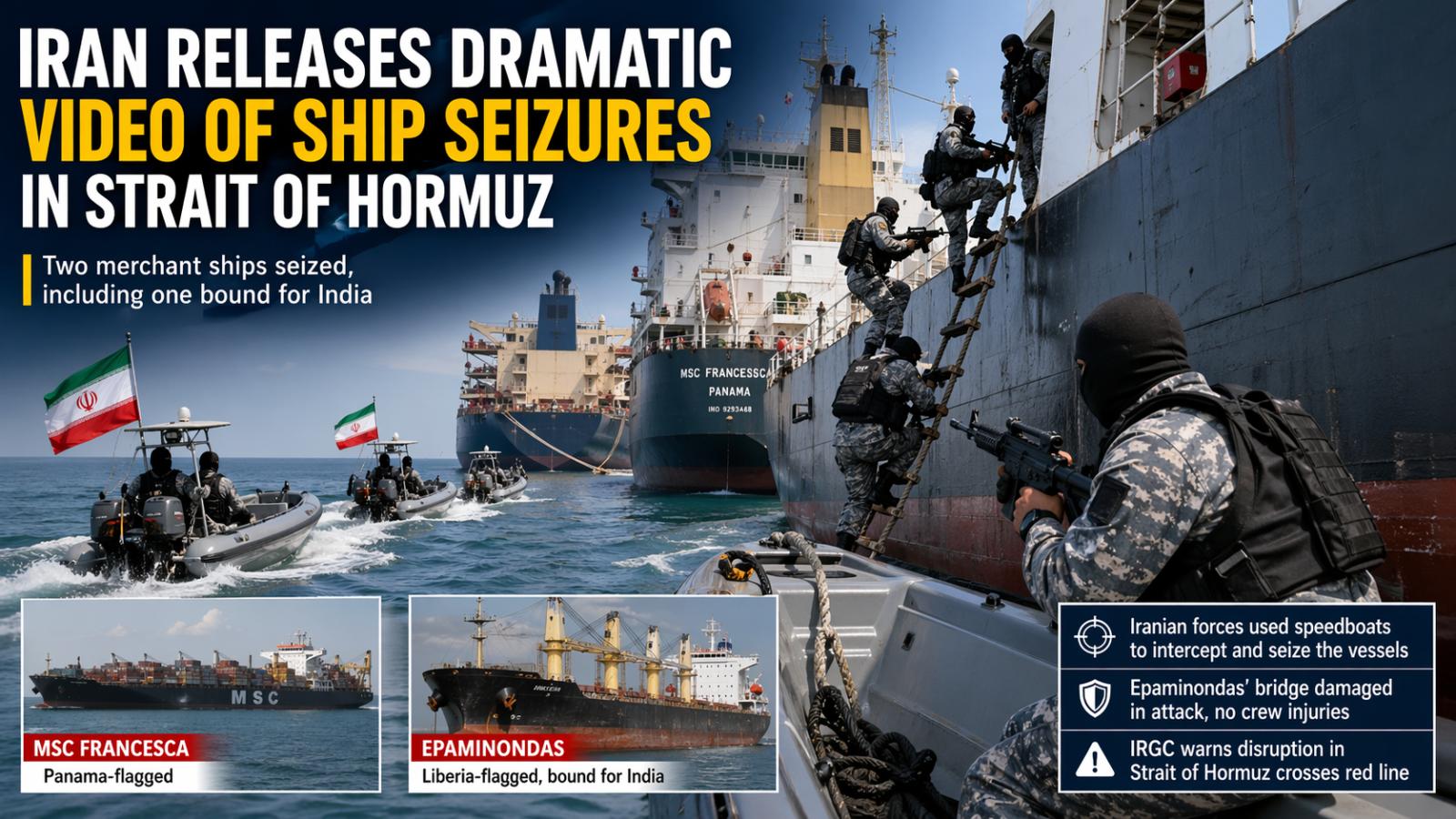
Iranian authorities released a dramatic video on Thursday, April 23, 2026, a day after naval forces seized two merchant vessels in the strategically critical Strait of Hormuz, including one ship bound for India. The footage shows masked commandos in speedboats pursuing the vessels, boarding them, and taking control in an operation that underscores escalating tensions in the region.
The seizures occurred on Wednesday, April 22, 2026, shortly after U.S. President Donald Trump announced an extension of a ceasefire. Iranian naval units intercepted the Panama-flagged MSC Francesca and the Liberia-flagged Epaminondas, the latter traveling from Dubai to Mundra Port in Gujarat, India. Both ships were escorted to Iranian waters, marking Tehran’s first such action since the latest conflict began.
The released footage shows fast-moving boats approaching the vessels, with armed personnel boarding and conducting searches. U.S. officials attributed the operation to Iran’s “mosquito fleet,” small, agile craft associated with the Islamic Revolutionary Guard Corps. Commandos are seen climbing ladders, sweeping through decks, and entering critical areas such as engine rooms to secure control.
The Epaminondas sustained damage to its bridge after Iranian forces reportedly opened fire and used grenades during the boarding. Despite the intensity of the operation, no crew injuries were reported. The MSC Francesca, located about six miles off Iran’s coast, also came under heavy fire during the seizure.
Iranian officials stated the vessels lacked proper authorization and had interfered with navigation systems, posing a threat to maritime safety in the Strait of Hormuz. Authorities warned that disruptions in the waterway would be treated as a serious violation.The incident follows a recent U.S. operation targeting an Iranian-linked vessel accused of breaching a maritime blockade. Analysts view the seizures as a potential retaliatory move, raising concerns about further escalation in one of the world’s most vital shipping corridors. The involvement of an India-bound vessel may also complicate diplomatic relations between Tehran and New Delhi as tensions continue to rise.
Iran released footage of naval forces seizing two merchant ships in the Strait of Hormuz, including an India-bound vessel, intensifying regional tensions and raising global shipping concerns.
Iranian authorities released a dramatic video on Thursday, April 23, 2026, a day after naval forces seized two merchant vessels in the strategically critical Strait of Hormuz, including one ship bound for India. The footage shows masked commandos in speedboats pursuing the vessels, boarding them, and taking control in an operation that underscores escalating tensions in the region.
The seizures occurred on Wednesday, April 22, 2026, shortly after U.S. President Donald Trump announced an extension of a ceasefire. Iranian naval units intercepted the Panama-flagged MSC Francesca and the Liberia-flagged Epaminondas, the latter traveling from Dubai to Mundra Port in Gujarat, India. Both ships were escorted to Iranian waters, marking Tehran’s first such action since the latest conflict began.
The released footage shows fast-moving boats approaching the vessels, with armed personnel boarding and conducting searches. U.S. officials attributed the operation to Iran’s “mosquito fleet,” small, agile craft associated with the Islamic Revolutionary Guard Corps. Commandos are seen climbing ladders, sweeping through decks, and entering critical areas such as engine rooms to secure control.
The Epaminondas sustained damage to its bridge after Iranian forces reportedly opened fire and used grenades during the boarding. Despite the intensity of the operation, no crew injuries were reported. The MSC Francesca, located about six miles off Iran’s coast, also came under heavy fire during the seizure.
Iranian officials stated the vessels lacked proper authorization and had interfered with navigation systems, posing a threat to maritime safety in the Strait of Hormuz. Authorities warned that disruptions in the waterway would be treated as a serious violation.The incident follows a recent U.S. operation targeting an Iranian-linked vessel accused of breaching a maritime blockade. Analysts view the seizures as a potential retaliatory move, raising concerns about further escalation in one of the world’s most vital shipping corridors. The involvement of an India-bound vessel may also complicate diplomatic relations between Tehran and New Delhi as tensions continue to rise.
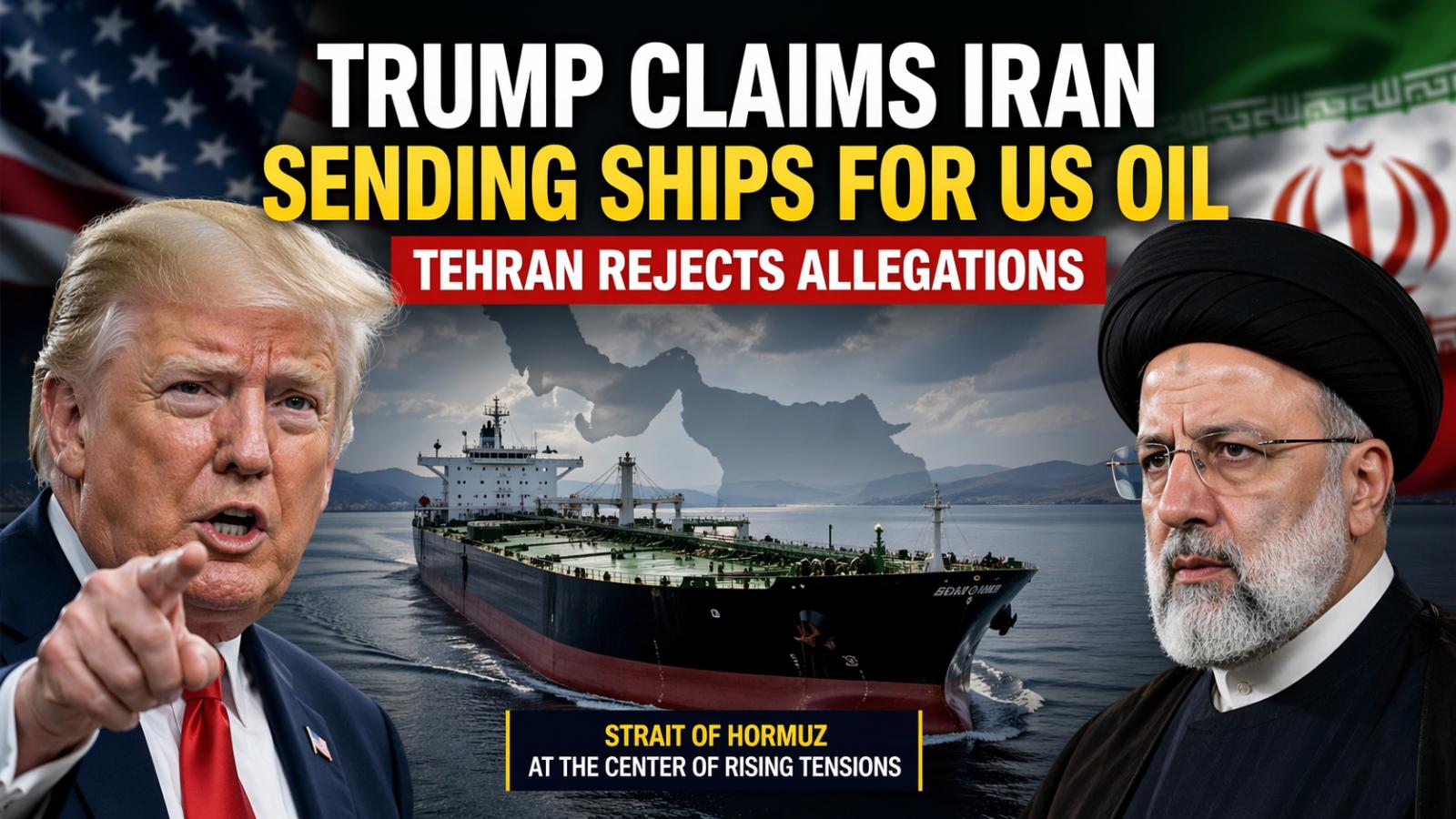
US President Donald Trump has claimed that Iran is sending ships to the United States to access its oil reserves, a statement that has drawn swift rejection from Tehran amid already heightened tensions in the Strait of Hormuz. Posting on Truth Social, Trump alleged that Iranian leadership was directing vessels toward states such as Texas, Louisiana, and Alaska to secure oil, though he did not provid
US President Donald Trump has claimed that Iran is sending ships to the United States to access its oil reserves, a statement that has drawn swift rejection from Tehran amid already heightened tensions in the Strait of Hormuz. Posting on Truth Social, Trump alleged that Iranian leadership was directing vessels toward states such as Texas, Louisiana, and Alaska to secure oil, though he did not provid
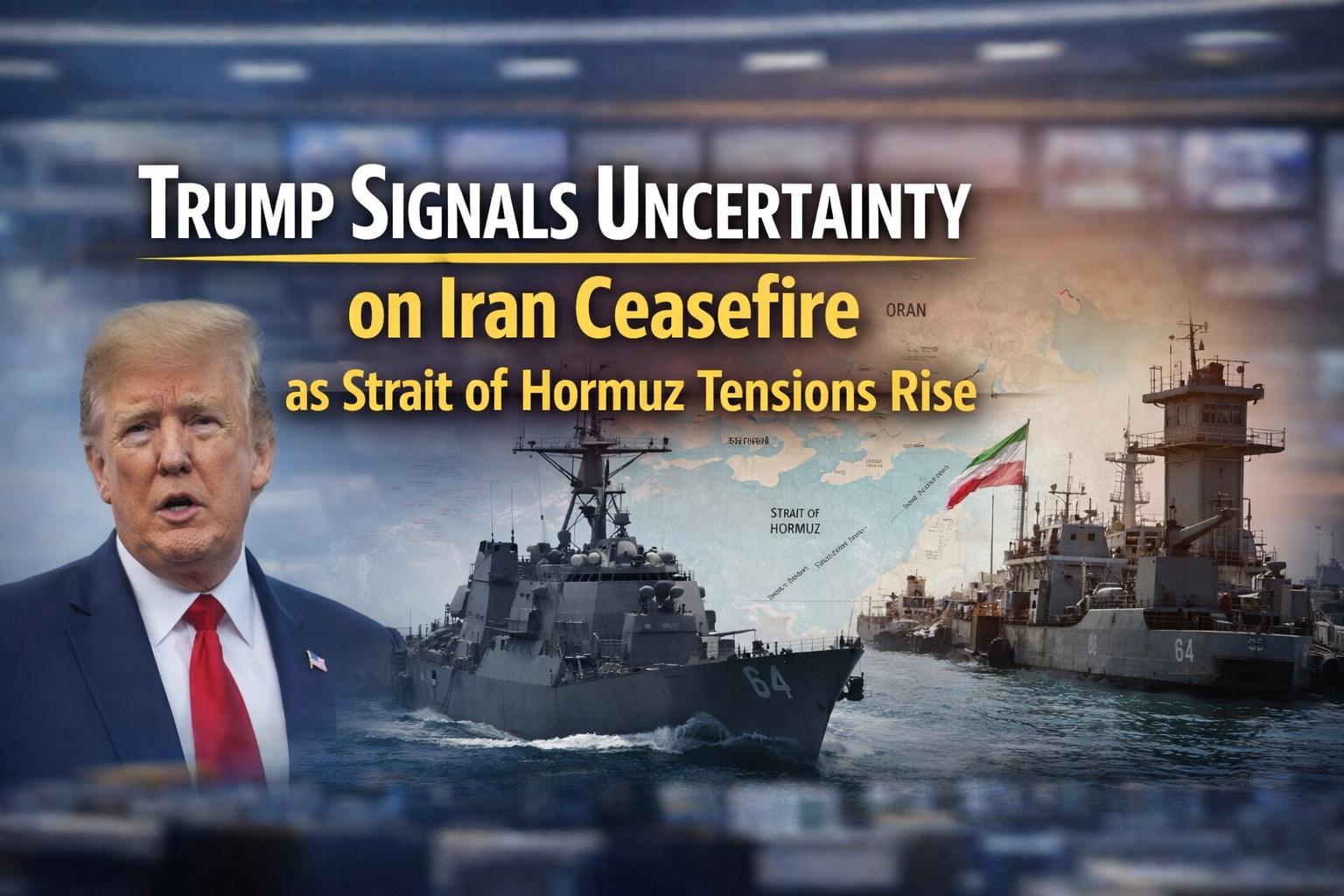
Donald Trump indicated that the United States may not extend its ceasefire with Iran, as tensions continue to rise over maritime security and regional control. Speaking to reporters, he said the naval blockade of Iranian ports would remain in place regardless of whether the ceasefire expires, signaling a f
Donald Trump indicated that the United States may not extend its ceasefire with Iran, as tensions continue to rise over maritime security and regional control. Speaking to reporters, he said the naval blockade of Iranian ports would remain in place regardless of whether the ceasefire expires, signaling a f
U.S. President Donald Trump signaled both optimism and uncertainty regarding ongoing tensions with Iran, stating that a potential agreement could end hostilities while warning that military action may resume if negotiations fail. Speaking aboard Air Force One at 09:05 AM IST on Saturday, April 18, 2026, Trump said he would host a celebratory gathering at the White House if the conflict concludes throug
U.S. President Donald Trump signaled both optimism and uncertainty regarding ongoing tensions with Iran, stating that a potential agreement could end hostilities while warning that military action may resume if negotiations fail. Speaking aboard Air Force One at 09:05 AM IST on Saturday, April 18, 2026, Trump said he would host a celebratory gathering at the White House if the conflict concludes throug
The United States has announced the start of a naval blockade targeting Iranian maritime activity, marking a significant escalation in tensions in the Middle East. Speaking to reporters outside the Oval Office on Monday, April 13, 2026, President Donald Trump said the blockade of the Strait of Hormuz had begun, adding that other countries would assist in the operation, though he did not identify them.
The Strait of Hormuz, one of the world’s most critical oil transit routes, has b
The United States has announced the start of a naval blockade targeting Iranian maritime activity, marking a significant escalation in tensions in the Middle East. Speaking to reporters outside the Oval Office on Monday, April 13, 2026, President Donald Trump said the blockade of the Strait of Hormuz had begun, adding that other countries would assist in the operation, though he did not identify them.
The Strait of Hormuz, one of the world’s most critical oil transit routes, has b
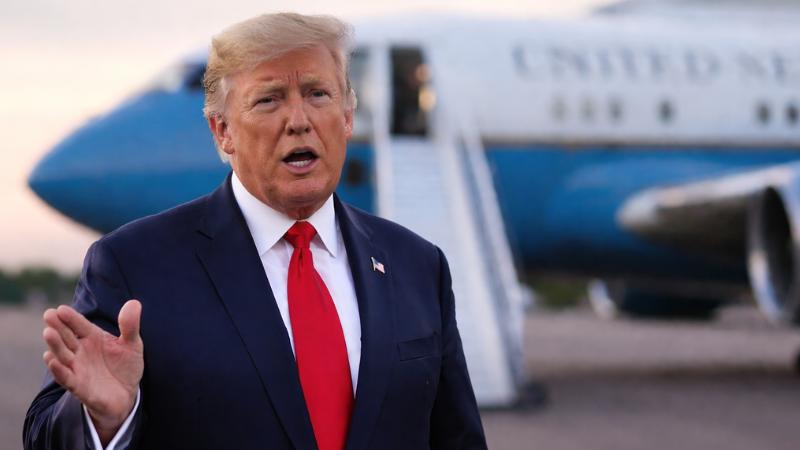
In the wake of a failed peace negotiation between the United States and Iran in Pakistan, US President Donald Trump announced a blockade on the Strait of Hormuz, which would come into effect at 10 AM on 13th April 2026. Speaking outside Air Force One, Trump stated that Iran is in a "very bad shape," emphasizing that the United States had a superior understanding of the situation. Despite the 21-hour long talks between the two nations, no agreement was reached, particularly on the issue of Ira
In the wake of a failed peace negotiation between the United States and Iran in Pakistan, US President Donald Trump announced a blockade on the Strait of Hormuz, which would come into effect at 10 AM on 13th April 2026. Speaking outside Air Force One, Trump stated that Iran is in a "very bad shape," emphasizing that the United States had a superior understanding of the situation. Despite the 21-hour long talks between the two nations, no agreement was reached, particularly on the issue of Ira
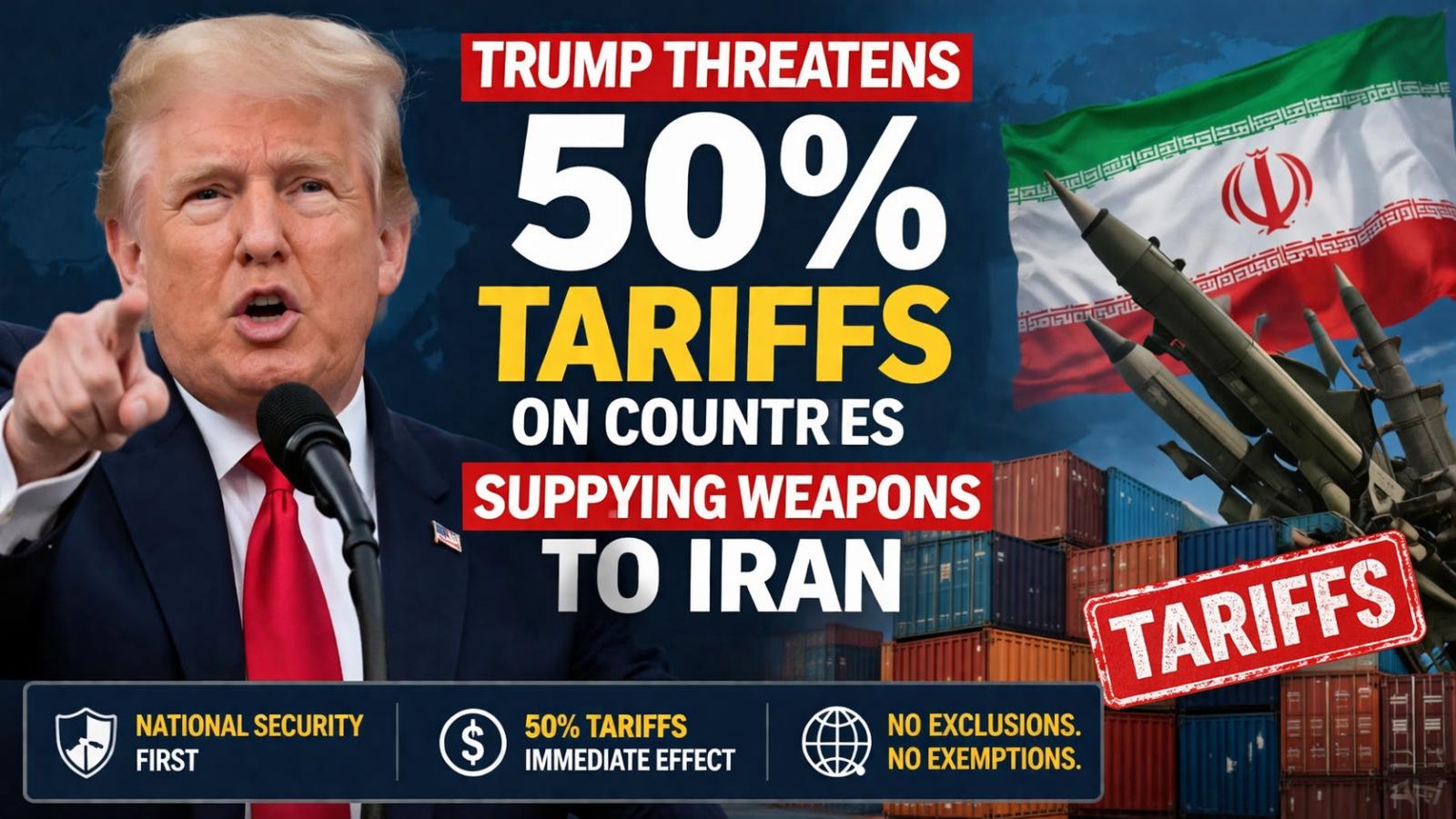
U.S. President Donald Trump announced that the United States will impose tariffs of 50% on goods imported from any country found to be supplying military weapons to Iran, marking a sharp escalation in trade measures tied to geopolitical tensions.
In a statement posted on Wednesday, April 8, 2026 (local U.S. time), Trump said the tariffs would take effect immediately and apply broadly. He emphasized that there would be no “exclusions or exemptions,” warning that “any and all” g
U.S. President Donald Trump announced that the United States will impose tariffs of 50% on goods imported from any country found to be supplying military weapons to Iran, marking a sharp escalation in trade measures tied to geopolitical tensions.
In a statement posted on Wednesday, April 8, 2026 (local U.S. time), Trump said the tariffs would take effect immediately and apply broadly. He emphasized that there would be no “exclusions or exemptions,” warning that “any and all” g
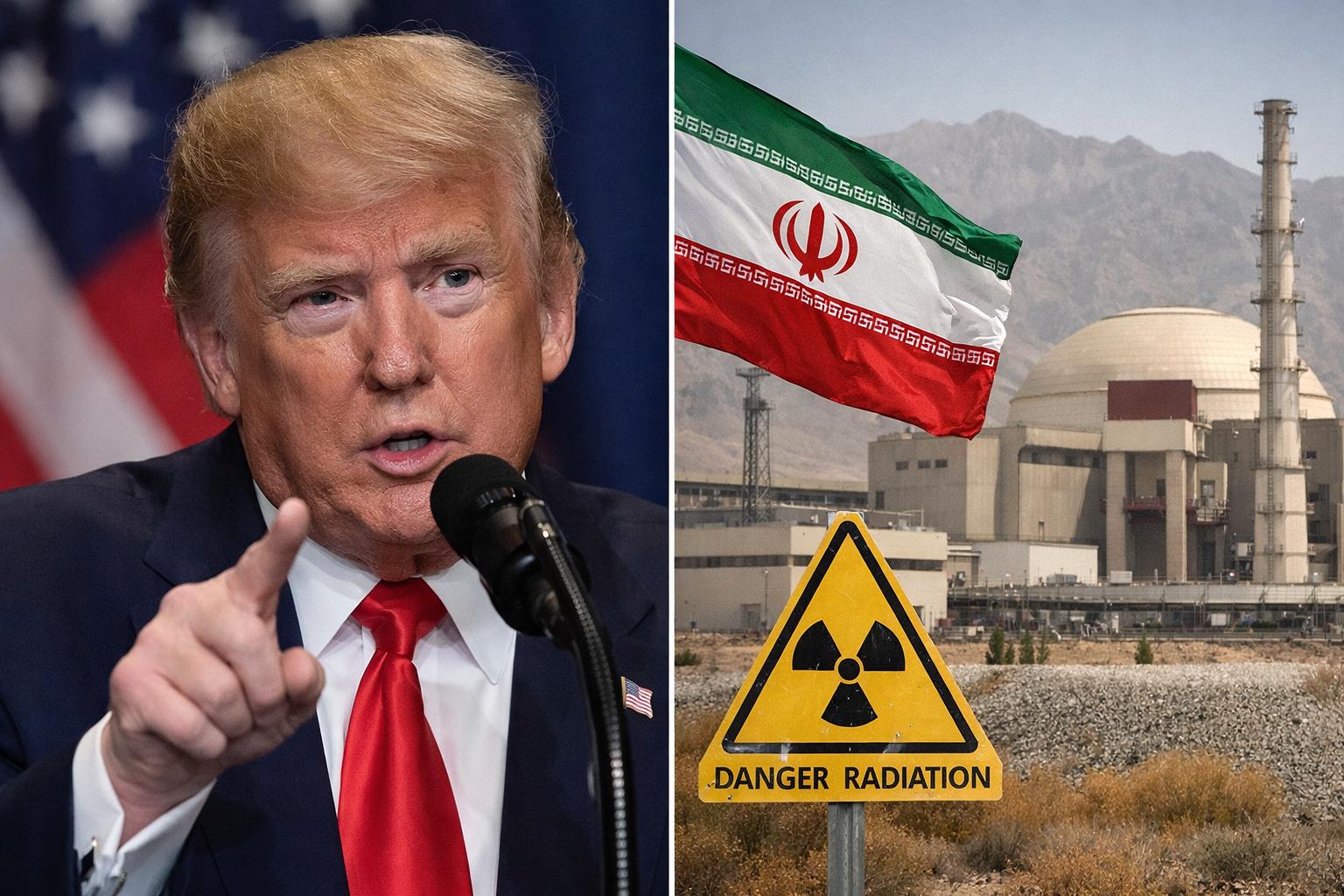
U.S. President Donald Trump said on Wednesday, April 8, 2026, that the United States is prepared to work with Iran to recover enriched uranium believed to be buried beneath sites targeted during joint U.S.-Israeli strikes in June 2025. The comments signal a potential shift in U.S.-Iran engagement, though Iranian officials have not confirmed any such cooperation.
In a social media post, Trump stated that “there will be no enrichment of uranium” moving forward and asserted that the
U.S. President Donald Trump said on Wednesday, April 8, 2026, that the United States is prepared to work with Iran to recover enriched uranium believed to be buried beneath sites targeted during joint U.S.-Israeli strikes in June 2025. The comments signal a potential shift in U.S.-Iran engagement, though Iranian officials have not confirmed any such cooperation.
In a social media post, Trump stated that “there will be no enrichment of uranium” moving forward and asserted that the
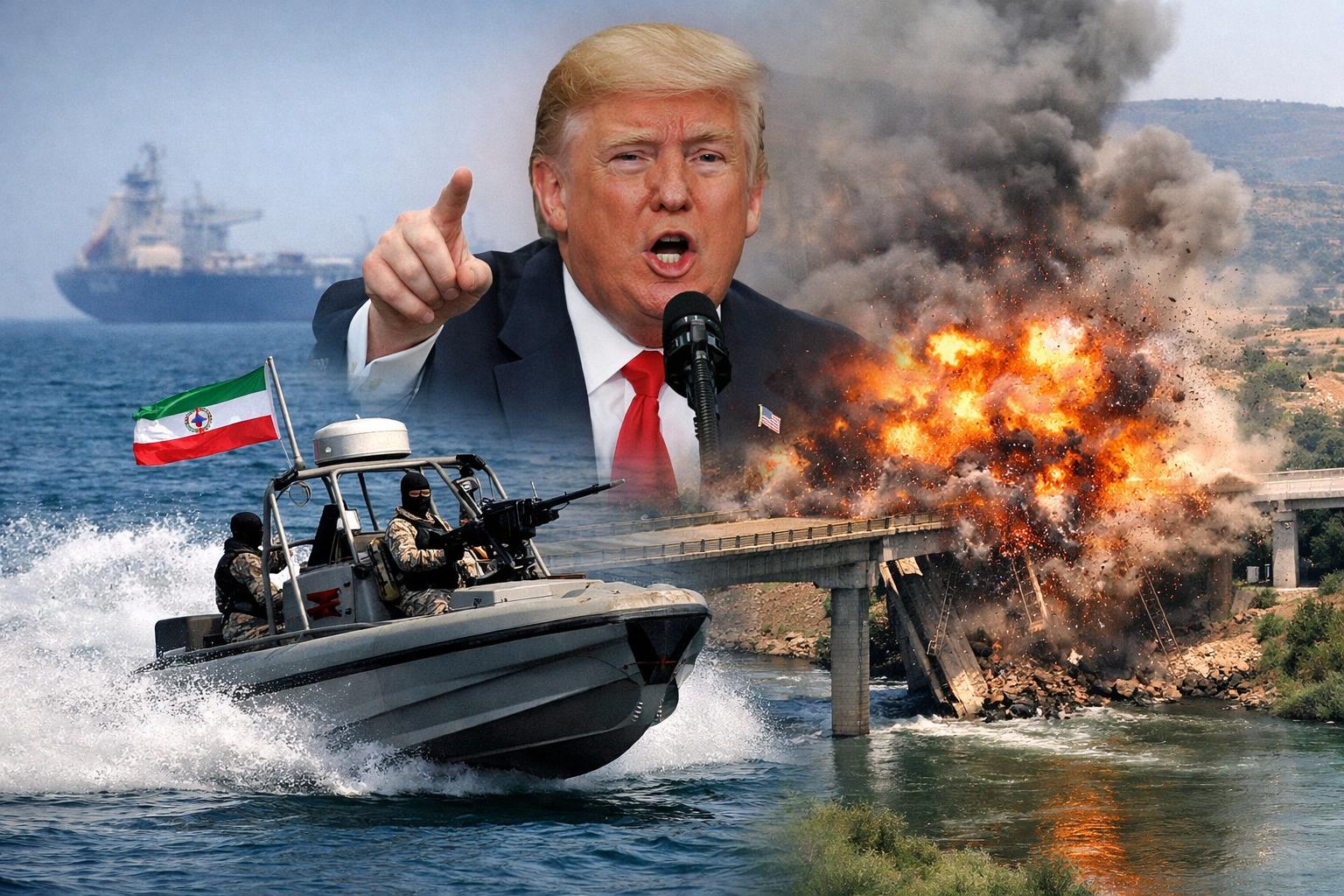
U.S. President Donald Trump on Monday, April 6, 2026, warned that the United States has a plan to destroy critical infrastructure in Iran if ongoing ceasefire efforts fail, signaling a potential escalation in already heightened tensions between the two countries. Speaking publicly, Trump described a scenario in which “every bridge, every power plant in Iran will be out of business,” adding that such an operation would result in “complete demolition by 12:00,” though he did not specify a time zone for that reference.
The president emphasized that he does not want to pursue such action, noting the long-term consequences for Iran’s recovery. He stated that rebuilding could take “100 years,” underscoring the scale of destruction implied in his remarks. His comments come at a critical moment in the broader Middle East crisis, where diplomatic efforts and military posturing continue simultaneously.
Trump also introduced a proposal involving the Strait of Hormuz, a vital global shipping route through which a significant portion of the world’s oil supply passes. He suggested that the United States, rather than Iran, should collect tolls from vessels transiting the waterway. “What about us charging tolls?” he said, positioning the idea as an alternative to allowing Iran to control revenue from the route. Iran recently announced its own toll system for tankers, asserting authority over the strategically important passage.
Addressing the status of negotiations, Trump declined to provide a definitive assessment of whether tensions are easing or intensifying. “I can’t tell you, it depends on what they do. This is a critical period,” he said. He also referenced a deadline related to reopening the waterway, stating that Iran had “’til tomorrow at 8:00” following an extension he granted, though further details were not disclosed.
Despite the strong rhetoric, Trump indicated that diplomatic engagement remains ongoing. He described Iran as an “active, willing participant” in negotiations and suggested that both sides may be exploring a potential agreement. However, he stopped short of confirming any progress toward a ceasefire, leaving the situation uncertain as global markets and policymakers continue to monitor developments closely.
U.S. President Donald Trump on Monday, April 6, 2026, warned that the United States has a plan to destroy critical infrastructure in Iran if ongoing ceasefire efforts fail, signaling a potential escalation in already heightened tensions between the two countries. Speaking publicly, Trump described a scenario in which “every bridge, every power plant in Iran will be out of business,” adding that such an operation would result in “complete demolition by 12:00,” though he did not specify a time zone for that reference.
The president emphasized that he does not want to pursue such action, noting the long-term consequences for Iran’s recovery. He stated that rebuilding could take “100 years,” underscoring the scale of destruction implied in his remarks. His comments come at a critical moment in the broader Middle East crisis, where diplomatic efforts and military posturing continue simultaneously.
Trump also introduced a proposal involving the Strait of Hormuz, a vital global shipping route through which a significant portion of the world’s oil supply passes. He suggested that the United States, rather than Iran, should collect tolls from vessels transiting the waterway. “What about us charging tolls?” he said, positioning the idea as an alternative to allowing Iran to control revenue from the route. Iran recently announced its own toll system for tankers, asserting authority over the strategically important passage.
Addressing the status of negotiations, Trump declined to provide a definitive assessment of whether tensions are easing or intensifying. “I can’t tell you, it depends on what they do. This is a critical period,” he said. He also referenced a deadline related to reopening the waterway, stating that Iran had “’til tomorrow at 8:00” following an extension he granted, though further details were not disclosed.
Despite the strong rhetoric, Trump indicated that diplomatic engagement remains ongoing. He described Iran as an “active, willing participant” in negotiations and suggested that both sides may be exploring a potential agreement. However, he stopped short of confirming any progress toward a ceasefire, leaving the situation uncertain as global markets and policymakers continue to monitor developments closely.
U.S. President Donald Trump on Sunday (exact date not specified in the source) dismissed concerns that potential strikes on Iran’s power plants and civilian infrastructure could constitute a war crime, delivering a series of controversial remarks that further escalated tensions between Washington and Tehran. Speaking to reporters during a public event at the White House, Trump defended his position, stating he was “not worried” about such concerns and using inflammatory language to describ
U.S. President Donald Trump on Sunday (exact date not specified in the source) dismissed concerns that potential strikes on Iran’s power plants and civilian infrastructure could constitute a war crime, delivering a series of controversial remarks that further escalated tensions between Washington and Tehran. Speaking to reporters during a public event at the White House, Trump defended his position, stating he was “not worried” about such concerns and using inflammatory language to describ
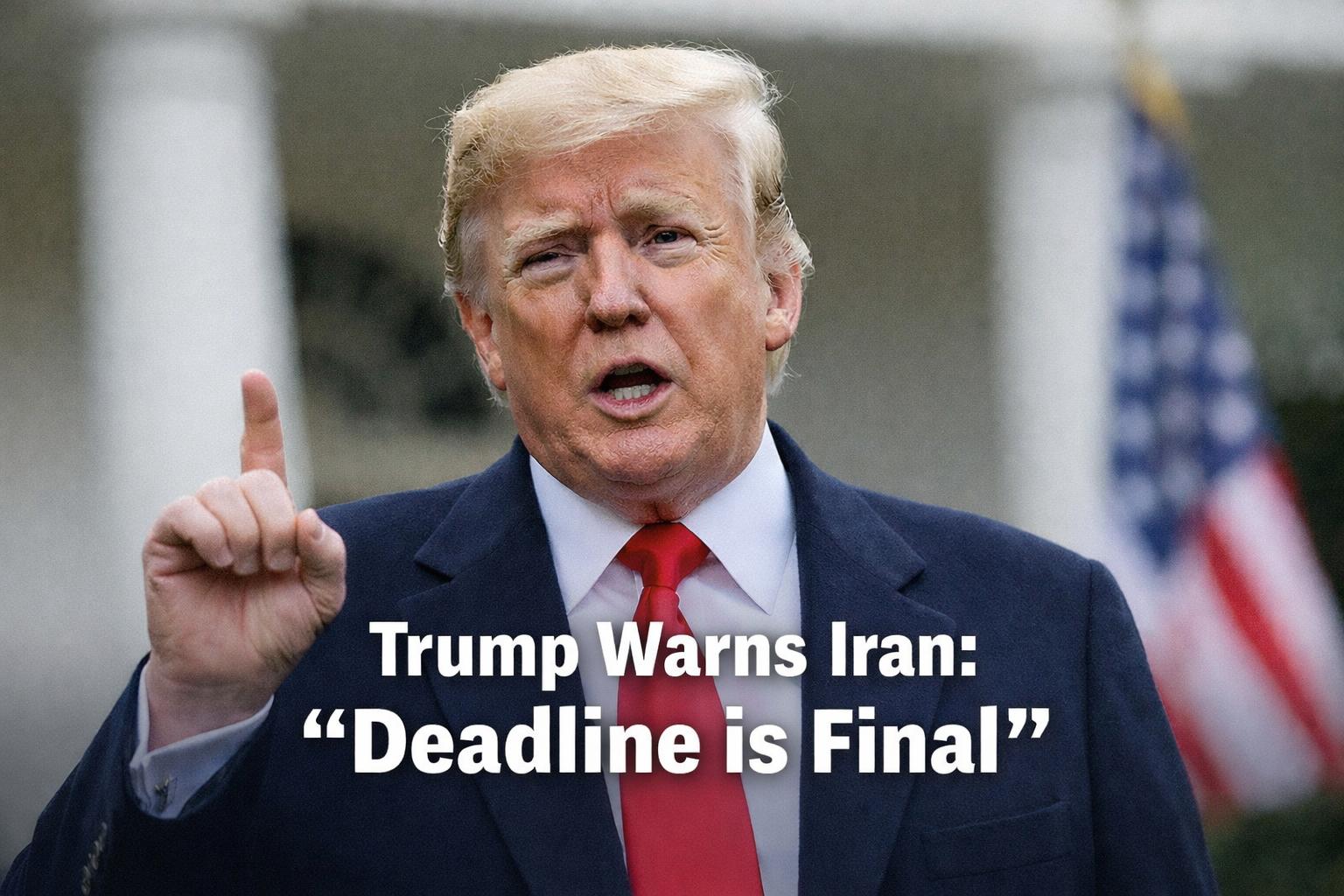
US President Donald Trump stated on Monday April 6, 2026, that the deadline he set for Iran to reach a negotiated agreement remains final, signaling increased pressure on Tehran amid ongoing diplomatic efforts. Speaking during a public event on the White House South Lawn, Trump described Iran’s latest proposal as a meaningful step forward but emphasized that it falls short of US expectations.
According to his remarks, the proposal reflects progress in negotiations, yet does not meet the conditions the United States considers necessary for a resolution. Trump indicated that Iranian officials are aware of the specific requirements being sought, suggesting that discussions have been conducted in what he characterized as good faith.
The president also reiterated his warning that failure to meet the Tuesday deadline could result in significant military consequences. He stated that US forces are prepared to carry out broad attacks targeting Iranian infrastructure if an agreement is not reached within the specified timeframe. This position underscores a sharp escalation in rhetoric as diplomatic channels remain active but uncertain.
Iran has rejected the imposed deadline, maintaining its stance against external pressure in the negotiation process. The divergence highlights ongoing challenges in reaching consensus, as both sides continue to navigate complex political and strategic considerations.
Trump added that a resolution could be achieved quickly if Iran complies with the outlined demands, suggesting that the situation remains fluid despite the firm deadline. The developments reflect heightened geopolitical tensions, with global observers closely monitoring whether diplomacy or confrontation will shape the next phase of US-Iran relations.
US President Donald Trump stated on Monday April 6, 2026, that the deadline he set for Iran to reach a negotiated agreement remains final, signaling increased pressure on Tehran amid ongoing diplomatic efforts. Speaking during a public event on the White House South Lawn, Trump described Iran’s latest proposal as a meaningful step forward but emphasized that it falls short of US expectations.
According to his remarks, the proposal reflects progress in negotiations, yet does not meet the conditions the United States considers necessary for a resolution. Trump indicated that Iranian officials are aware of the specific requirements being sought, suggesting that discussions have been conducted in what he characterized as good faith.
The president also reiterated his warning that failure to meet the Tuesday deadline could result in significant military consequences. He stated that US forces are prepared to carry out broad attacks targeting Iranian infrastructure if an agreement is not reached within the specified timeframe. This position underscores a sharp escalation in rhetoric as diplomatic channels remain active but uncertain.
Iran has rejected the imposed deadline, maintaining its stance against external pressure in the negotiation process. The divergence highlights ongoing challenges in reaching consensus, as both sides continue to navigate complex political and strategic considerations.
Trump added that a resolution could be achieved quickly if Iran complies with the outlined demands, suggesting that the situation remains fluid despite the firm deadline. The developments reflect heightened geopolitical tensions, with global observers closely monitoring whether diplomacy or confrontation will shape the next phase of US-Iran relations.
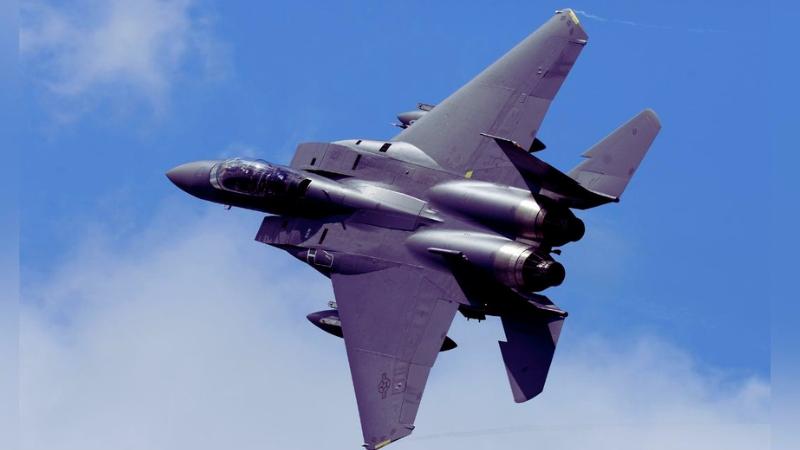
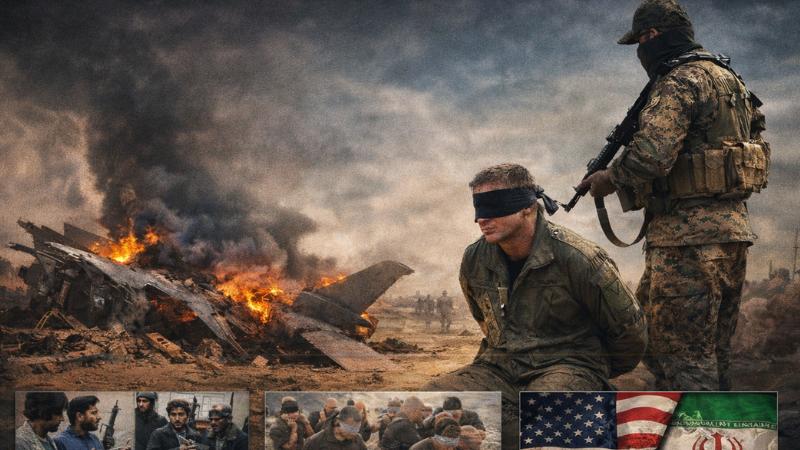
US President Donald Trump recently revealed the three-word radio message sent by a US pilot trapped in Iran, which initially sparked fears of an Iranian trap. The pilot, a weapons system officer, had ejected from his downed F-15E Strike Eagle over southern Iran on April 3, 2026, during the ongoing conflict. After his aircraft was shot down, the first pilot was rescued, but the second remained missing, and both US and Iranian forces raced to locate him.
During the search, Trump expla
US President Donald Trump recently revealed the three-word radio message sent by a US pilot trapped in Iran, which initially sparked fears of an Iranian trap. The pilot, a weapons system officer, had ejected from his downed F-15E Strike Eagle over southern Iran on April 3, 2026, during the ongoing conflict. After his aircraft was shot down, the first pilot was rescued, but the second remained missing, and both US and Iranian forces raced to locate him.
During the search, Trump expla
On Saturday, April 4, 2026, a significant event unfolded when Iran shot down a US F-15E fighter jet, marking the first confirmed loss of an American aircraft inside Iranian territory since the war began on February 28, 2026. The downing of the F-15E came as a shocking turn of events in the ongoing tensions between the two nations. The aircraft, which was operated by a two-member crew, resulted in one of the crew members being rescued by US forces, while the other remains missing. The incident
On Saturday, April 4, 2026, a significant event unfolded when Iran shot down a US F-15E fighter jet, marking the first confirmed loss of an American aircraft inside Iranian territory since the war began on February 28, 2026. The downing of the F-15E came as a shocking turn of events in the ongoing tensions between the two nations. The aircraft, which was operated by a two-member crew, resulted in one of the crew members being rescued by US forces, while the other remains missing. The incident
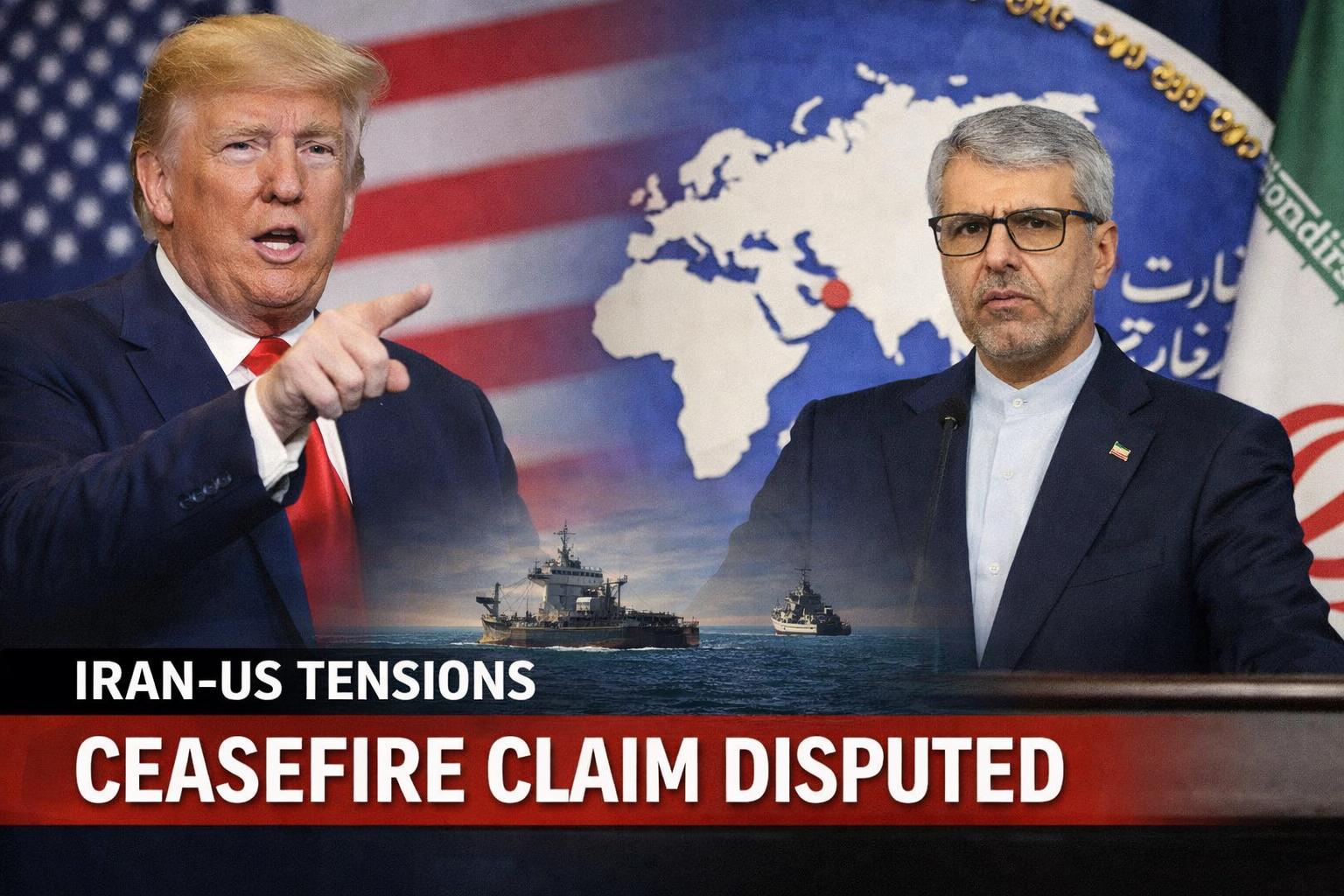
Iran has firmly rejected claims that it sought a ceasefire with the United States, calling recent remarks by U.S. President Donald Trump “false and baseless.” The statement was issued by Iran’s foreign ministry spokesman Esmaeil Baqaei and broadcast on Iranian state television, amid heightened geopolitical tensions in the Middle East.
Trump had earlier stated on his social media platform that Iran had requested a ceasefire, referring to what he described as the country’s “new regime president,” though he did not provide a name. He added that any consideration of a ceasefire would depend on the Strait of Hormuz being “open, free, and clear,” highlighting the strategic importance of the waterway.
Iran’s foreign ministry swiftly denied the claim, emphasizing that no such request had been made to Washington. Officials described the statement as misleading and reiterated that there are currently no ceasefire negotiations underway between the two nations. The response underscores the strained relationship between Iran and the United States, particularly at a time when tensions surrounding the Strait of Hormuz remain elevated.
The Strait of Hormuz is a critical global shipping route through which a significant portion of the world’s oil supply passes. Any disruption in this region can have immediate and far-reaching effects on global energy markets and international trade. Recent developments have already contributed to concerns about oil supply stability and rising fuel costs.
The conflicting statements from both sides reflect the broader uncertainty surrounding the current geopolitical climate. While Trump’s comments suggested the possibility of diplomatic engagement, Iran’s denial indicates that no formal communication regarding a ceasefire has taken place.
As tensions continue to unfold, the situation remains closely monitored by governments and analysts worldwide. The absence of confirmed negotiations highlights the fragile nature of U.S.-Iran relations and the ongoing challenges in achieving stability in the region.
Iran has firmly rejected claims that it sought a ceasefire with the United States, calling recent remarks by U.S. President Donald Trump “false and baseless.” The statement was issued by Iran’s foreign ministry spokesman Esmaeil Baqaei and broadcast on Iranian state television, amid heightened geopolitical tensions in the Middle East.
Trump had earlier stated on his social media platform that Iran had requested a ceasefire, referring to what he described as the country’s “new regime president,” though he did not provide a name. He added that any consideration of a ceasefire would depend on the Strait of Hormuz being “open, free, and clear,” highlighting the strategic importance of the waterway.
Iran’s foreign ministry swiftly denied the claim, emphasizing that no such request had been made to Washington. Officials described the statement as misleading and reiterated that there are currently no ceasefire negotiations underway between the two nations. The response underscores the strained relationship between Iran and the United States, particularly at a time when tensions surrounding the Strait of Hormuz remain elevated.
The Strait of Hormuz is a critical global shipping route through which a significant portion of the world’s oil supply passes. Any disruption in this region can have immediate and far-reaching effects on global energy markets and international trade. Recent developments have already contributed to concerns about oil supply stability and rising fuel costs.
The conflicting statements from both sides reflect the broader uncertainty surrounding the current geopolitical climate. While Trump’s comments suggested the possibility of diplomatic engagement, Iran’s denial indicates that no formal communication regarding a ceasefire has taken place.
As tensions continue to unfold, the situation remains closely monitored by governments and analysts worldwide. The absence of confirmed negotiations highlights the fragile nature of U.S.-Iran relations and the ongoing challenges in achieving stability in the region.
US President Donald Trump has stated that Iran has agreed to never develop nuclear weapons, describing the development as a sign of progress in ongoing diplomatic engagement between the two countries. His remarks come at a time when tensions in the Middle East remain high, with regional conflict continuing to shape the broader geopolitical landscape.
Speaking to reporters at the Oval Office, Trump adopted an optimistic tone, indicating that backchannel communicati
US President Donald Trump has stated that Iran has agreed to never develop nuclear weapons, describing the development as a sign of progress in ongoing diplomatic engagement between the two countries. His remarks come at a time when tensions in the Middle East remain high, with regional conflict continuing to shape the broader geopolitical landscape.
Speaking to reporters at the Oval Office, Trump adopted an optimistic tone, indicating that backchannel communicati
As the conflict in the Middle East enters its fourth week, Iran has firmly denied engaging in any negotiations or discussions with the United States since the hostilities began, contradicting recent remarks by US President Donald Trump. The Iranian government’s statement comes after Trump publicly claimed that Washington and Tehran had held “very good and productive conversations” aimed at achieving a comprehensive resolution to the ongoing crisis. Iranian officials dismissed the assertion
As the conflict in the Middle East enters its fourth week, Iran has firmly denied engaging in any negotiations or discussions with the United States since the hostilities began, contradicting recent remarks by US President Donald Trump. The Iranian government’s statement comes after Trump publicly claimed that Washington and Tehran had held “very good and productive conversations” aimed at achieving a comprehensive resolution to the ongoing crisis. Iranian officials dismissed the assertion