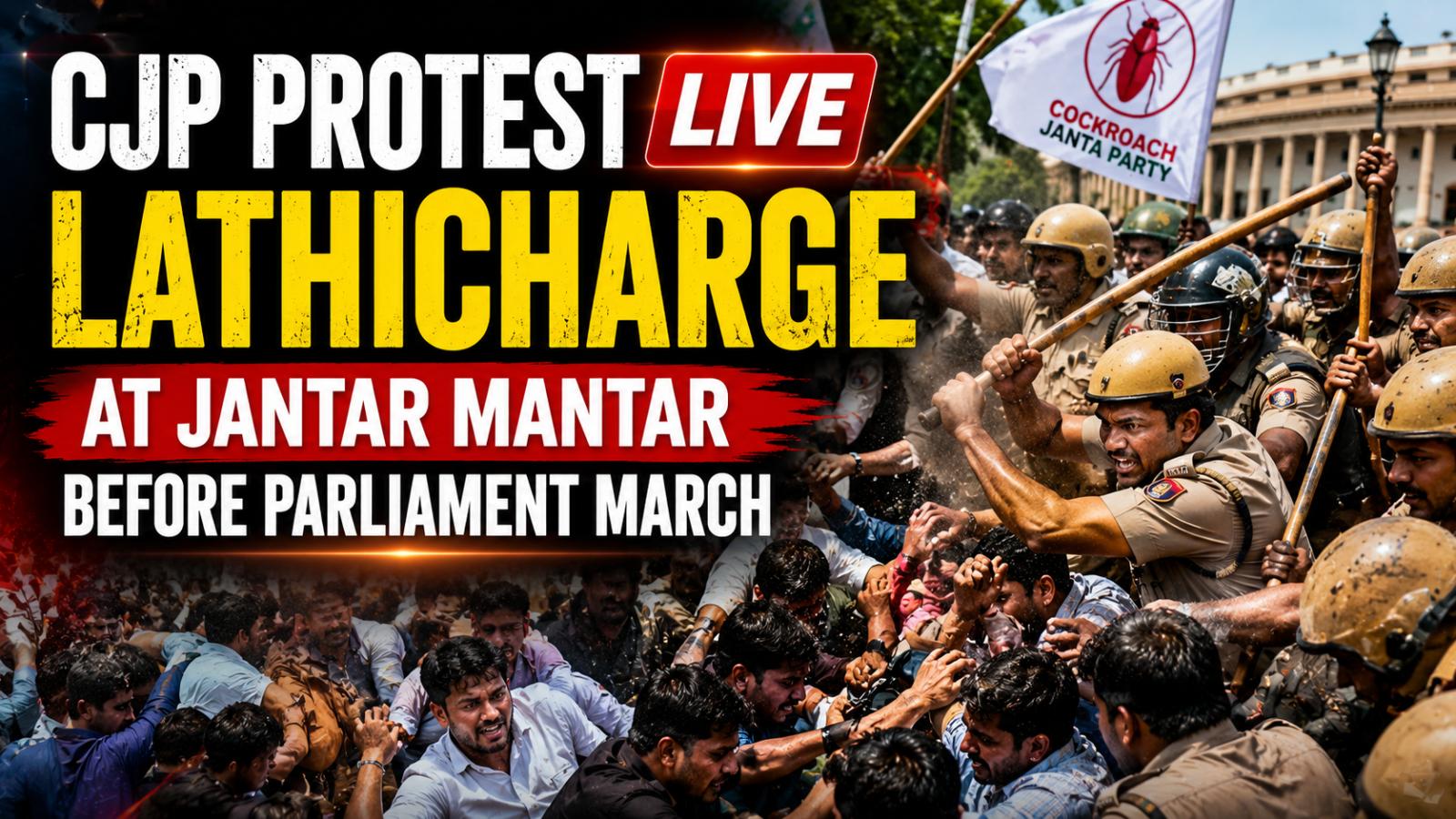
The CJP Protest Live situation intensified at Jantar Mantar after police used lathis while demonstrators gathered for the proposed Chalo Sansad march. Protesters are demanding accountability over alleged NEET irregularities as strict security restrictions remain in force around Parliament and central Delhi.
Delhi Police Tighten Security Before Parliament March
Tension gripped central Delhi on Monday, 20-07-2026 as thousands of Cockroach Janta Party supporters gathered at Jantar Mantar ahead of their planned march towards Parliament. The demonstration coincided with the opening day of the Parliament Monsoon Session 2026, prompting authorities to deploy large numbers of police personnel across sensitive areas.
Barricades were installed around Jantar Mantar, Parliament House and major connecting roads to stop protesters from moving towards the high-security parliamentary zone. Prohibitory orders under Section 163 of the Bharatiya Nagarik Suraksha Sanhita were imposed across the New Delhi district to prevent unauthorised gatherings and maintain public order. Delhi Police had said that permission was neither sought nor granted for the proposed Parliament march. Officials warned that any attempt to cross the designated protest area could result in legal action.
Jantar Mantar Chaos After Police Lathicharge
Chaotic scenes were reported as sections of the crowd attempted to move beyond police barricades. Security personnel used lathis to push protesters back, leading to clashes, confusion and frantic movement near the protest site.
Videos from the area showed police confronting demonstrators as slogans echoed across Jantar Mantar. Protest organisers asked supporters to remain peaceful and avoid confrontations with security personnel, even if they were stopped from proceeding towards Parliament.
The authorities expressed concern that the growing crowd could create a stampede risk. Additional personnel were stationed near entry points, roads and transport hubs as officials worked to prevent the gathering from spreading into nearby areas.
CJP Demands Education Accountability
The Cockroach Janta Party called the Chalo Sansad mobilisation to protest alleged irregularities in competitive examinations and demand greater accountability in India’s education system. The movement has repeatedly raised concerns about examination paper leaks, student pressure, unemployment and the functioning of agencies responsible for conducting national-level tests.
The protesters initially demanded the resignation of Union Education Minister Dharmendra Pradhan over the alleged NEET irregularities. Reports later indicated that parts of the movement were also willing to discuss broader education reforms and accountability measures with government representatives. CJP organisers had advised participants to carry the Indian national flag, avoid party flags and maintain a peaceful, non-partisan demonstration. The group said its Parliament march was intended to draw lawmakers’ attention to the concerns of students and young jobseekers.
Parliament March Raises Political Tensions
The protest has gained wider attention because of activist Sonam Wangchuk’s hunger strike in support of education accountability. His participation increased public interest in the movement, with students, families, professionals and activists joining the mobilisation.
Wangchuk was moved to Safdarjung Hospital after his health deteriorated. His family said he was prepared to end the fast if political leaders provided an assurance that education accountability would be raised during the Monsoon Session.
With Parliament beginning its three-week session, the protest has added to the political pressure on the government. Opposition parties are expected to raise examination irregularities and the treatment of protesters, while the government is likely to emphasise security, parliamentary functioning and compliance with restrictions. The situation around Jantar Mantar remains sensitive as police continue to monitor the crowd. Further developments will depend on talks between organisers and officials, the movement of protesters and whether an agreement is reached on presenting their demands to Parliament.