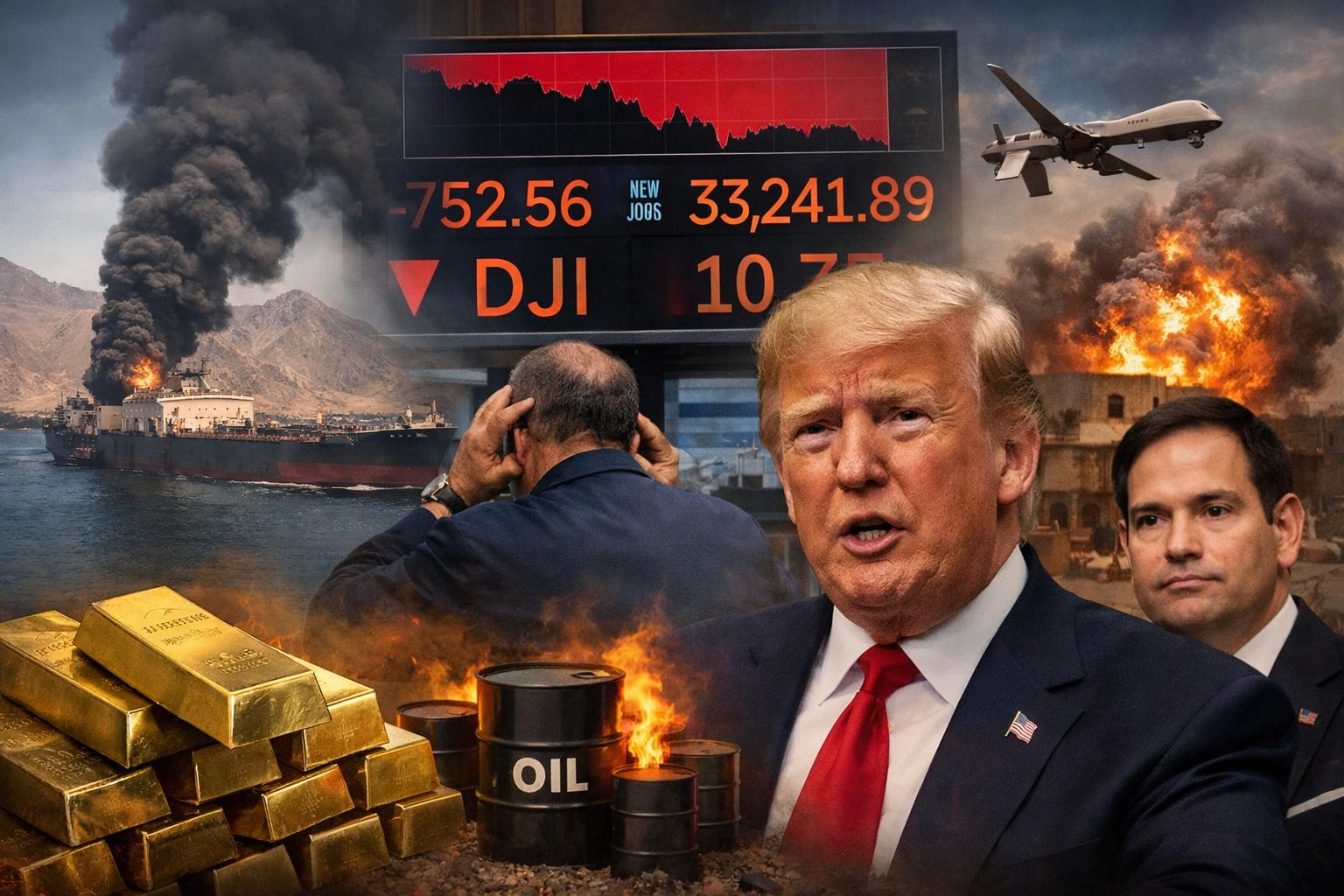
The U.S.-Iran war entered its fourth day on Tuesday, widening beyond its initial flashpoints and sending shockwaves through global financial and energy markets. Investors reacted swiftly to the escalating Middle East conflict, with U.S. stocks opening sharply lower. European stocks and major Asian markets also declined, reflecting mounting concerns over geopolitical instability and the risk of a broader regional confrontation.
Oil prices surged amid growing fears of an energy supply shock after Iran reportedly closed the Strait of Hormuz, a critical artery for global oil shipments. Iranian authorities warned that vessels attempting to transit the strategic waterway could be targeted, intensifying anxiety in energy markets. The threat to the Strait of Hormuz, through which a significant portion of the world’s crude exports pass, heightened volatility and fueled speculation about prolonged disruption to global supply chains.
Gold, traditionally viewed as a safe-haven asset during periods of uncertainty, initially saw futures rise as investors sought protection from market turbulence. However, spot gold prices later reversed gains and traded lower, underscoring the unpredictable nature of investor sentiment as the conflict evolves. Analysts noted that continued instability could further pressure global markets and complicate economic recovery efforts.
The conflict has also affected critical tech infrastructure in the region. Amazon Web Services confirmed that multiple data centers in the Middle East were knocked offline following reported drone attacks. The disruption raised fresh concerns about the vulnerability of digital infrastructure in conflict zones and the potential ripple effects on businesses relying on cloud services.
At the White House, President Donald Trump rejected claims that Israel had compelled the United States to enter the war following an initial strike on Tehran. Asked whether Israel forced his decision to authorize strikes, Trump said, “No, I might’ve forced their hand.” He argued that U.S. intelligence assessments indicated Iran was preparing to attack first and that preemptive action was necessary to prevent higher casualties.
Secretary of State Marco Rubio had earlier stated that U.S. officials anticipated Israeli military action and expected retaliatory attacks against American forces. He said the administration believed preemptive strikes would limit potential losses. The remarks drew scrutiny from critics across the political spectrum, though the administration maintained that its actions were driven by security considerations and evolving negotiations.
As tensions continue to escalate, global markets remain on edge, with investors closely monitoring developments in the Middle East and the potential for further economic fallout.