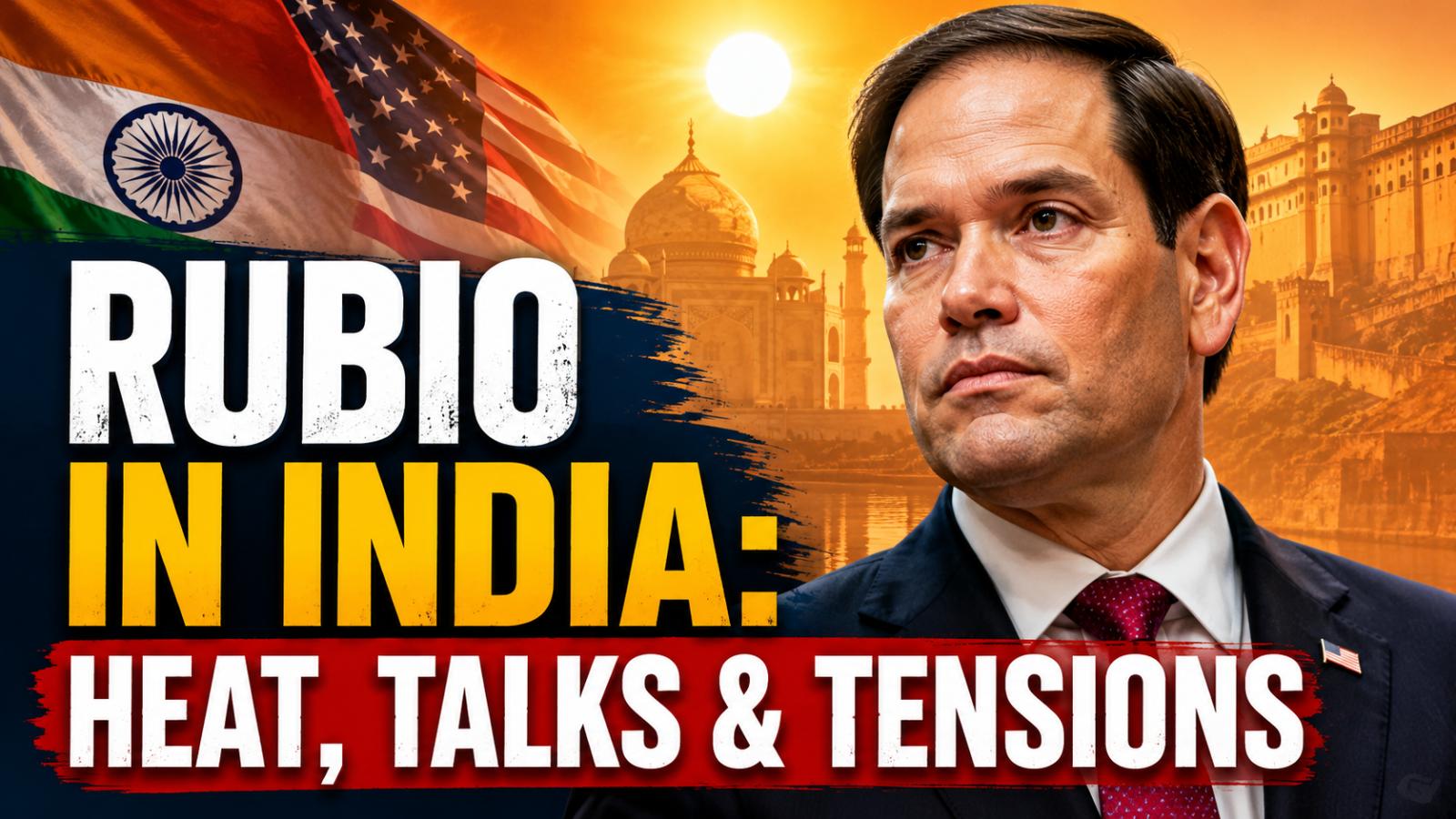
Marco Rubio’s India visit became more than a routine diplomatic tour. The US Secretary of State’s trip brought together serious India-US discussions, Quad cooperation, regional security concerns, critical minerals strategy and public attention around India’s extreme summer heat.
Rubio visited India from May 23 to May 26, 2026, with his schedule covering Kolkata, Delhi, Agra and Jaipur. His visit came at a time when Washington and New Delhi were trying to strengthen cooperation on trade, energy security, defence, technology and Indo-Pacific strategy. The Ministry of External Affairs listed the visit dates and official programme, while reports also highlighted Quad-level talks in New Delhi.
Delhi Talks Focus on India-US Cooperation
The main diplomatic focus of the visit was in New Delhi, where Rubio held discussions with Indian leaders, including External Affairs Minister S. Jaishankar. The talks covered India-US relations, strategic cooperation, regional stability and the wider Indo-Pacific agenda.
The visit also connected with the Quad foreign ministers’ meeting involving India, the United States, Japan and Australia. The Quad discussions focused on maritime security, energy security, infrastructure and supply-chain cooperation. This gave Rubio’s India trip a broader regional importance beyond bilateral ties.
Critical Minerals Become a Key Talking Point
One of the biggest outcomes of the visit was the focus on critical minerals and rare earth supply chains. These minerals are important for clean energy, defence systems, electric vehicles, semiconductors and advanced technology.
The issue has become more urgent because many countries are trying to reduce dependence on limited supply sources. India and the United States are looking for stronger cooperation in mining, processing, recycling and supply security. During the Quad meeting, critical minerals and energy-security initiatives were highlighted as major areas of cooperation.
Heatwave Adds an Unusual Angle to the Visit
While diplomacy remained the main purpose, India’s summer heat became a major part of public discussion around Rubio’s visit. Delhi, Agra and Jaipur were facing harsh weather conditions, with temperatures in several parts of North India crossing 40 degrees Celsius.
Rubio’s outdoor stops attracted attention because they came during peak summer. His visit to the Taj Mahal in Agra and Amber Fort in Jaipur became widely discussed online, not just for their cultural value but also because of the severe heat during the schedule.
Taj Mahal and Jaipur Stops Draw Public Attention
Rubio and his wife, Jeanette Dousdebes Rubio, visited the Taj Mahal in Agra as part of the India schedule. The stop gave the trip a cultural dimension, but the extreme heat made it physically demanding.
His Jaipur visit also included Amber Fort, one of Rajasthan’s most recognised heritage locations. Jaipur offered a more visible cultural welcome, but the timing of outdoor visits during intense summer conditions led many people online to question whether the itinerary could have been planned differently.
Pakistan and Regional Security Remain Sensitive Issues
Regional security also remained part of the diplomatic conversation. India’s concerns about Pakistan-linked terrorism and cross-border threats continue to influence New Delhi’s foreign policy priorities.
Rubio’s comments around regional security suggested that Washington understands India’s concerns, even as the United States continues to maintain tactical communication with different countries in the region. For India, the key issue remains terrorism and the need for stronger international pressure on groups operating across borders.
Quad Gives the Visit Bigger Strategic Weight
Rubio’s India visit was not only about one-on-one talks between India and the United States. The Quad meeting in New Delhi gave the visit a larger strategic meaning.
The Quad countries discussed maritime security, Indo-Pacific stability, energy security and infrastructure cooperation. They also announced initiatives linked to regional connectivity and supply-chain resilience. This showed that India-US cooperation is now tied closely to larger Indo-Pacific strategy.
Visit Shows Both Opportunity and Pressure in India-US Ties
Rubio’s India trip showed the growing importance of India-US relations, but it also came with pressure points. Trade, technology, China, Pakistan, energy security and defence cooperation all remain sensitive areas.
The visit made one thing clear: both countries want to keep the relationship moving forward, even when there are disagreements. The focus on critical minerals, Quad cooperation and regional security shows that India and the United States are thinking beyond short-term diplomacy.