One of the most striking lessons from the war with Iran is how a relatively low-cost adversary has exposed vulnerabilities in U.S. defense strategy. Iran has demonstrated both a willingness to go on the offensive and an ability to leverage inexpensive drone technology at scale.
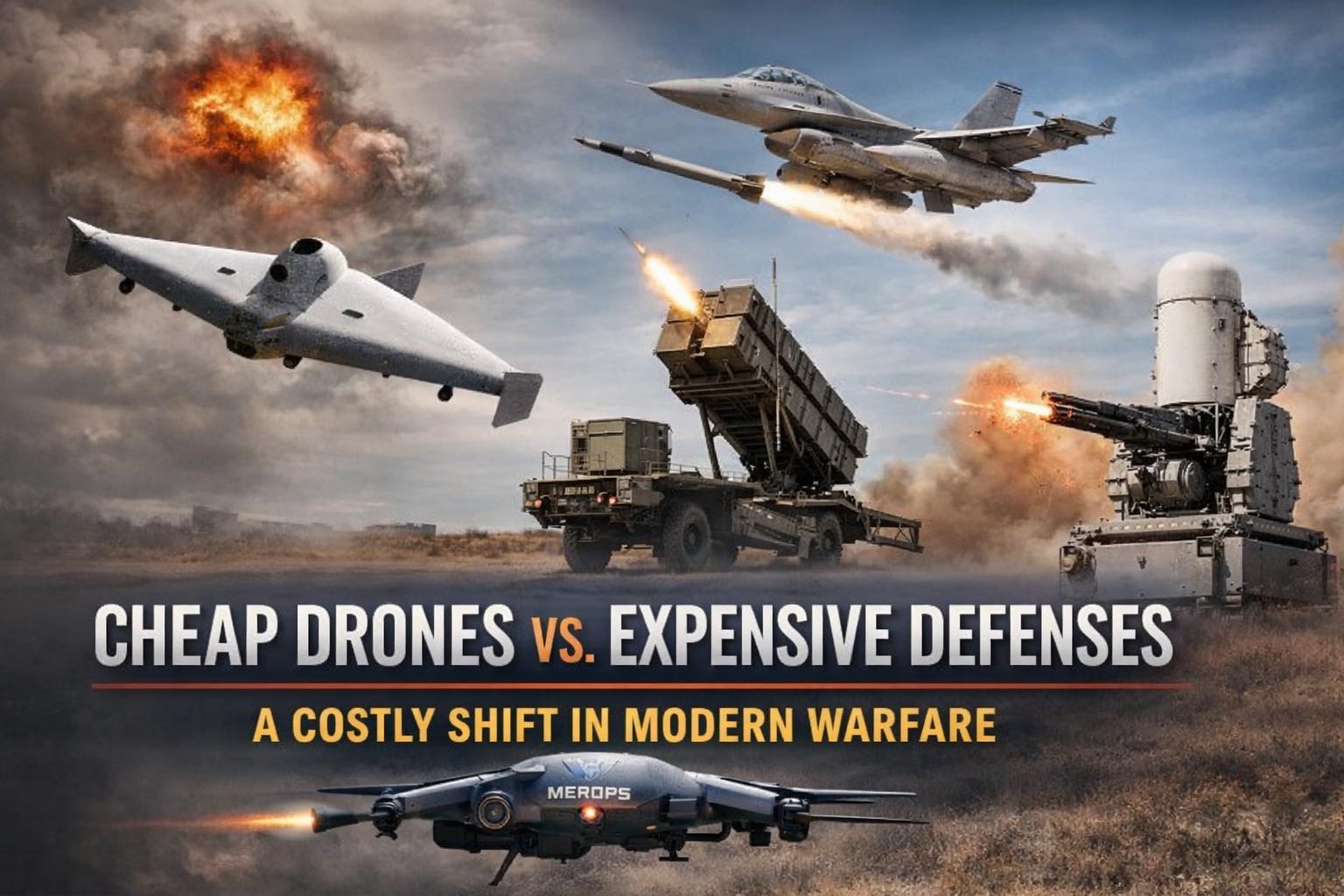
These drones, often built with commercial-grade components, cost roughly $35,000 each—far less than the high-end interceptors used to destroy them. This imbalance has forced the United States and its allies to confront a new reality: modern warfare is no longer dominated solely by precision and sophistication, but also by affordability and volume.
Cheap drones had already reshaped the battlefield in Ukraine, and Iran has now applied similar tactics in the Middle East, exploiting a long-standing gap in U.S. defense investments that favored fewer, more expensive systems over scalable solutions.
Why are U.S. defenses struggling with cost efficiency? Because interceptors far exceed drone prices
The financial mismatch is stark. In just the first six days of the conflict, the U.S. spent $11.3 billion, with estimates later rising to between $25 billion and $35 billion. A significant portion of that cost comes from interceptor missiles used to shoot down relatively inexpensive drones.
Despite years of Pentagon focus on counter-drone capabilities, experts like Michael C. Horowitz note that there has been little urgency to scale affordable solutions.
The result is a defense strategy where each engagement can cost far more than the threat itself—an unsustainable model in prolonged conflicts.
How do air-based defenses work against drones? By using early detection and precision strikes—when available
In an ideal scenario, airborne early warning systems detect drones hundreds of miles away. Fighter jets such as the F-16 Fighting Falcon are then deployed to intercept them using relatively cheaper rocket systems like APKWS II.
This method is among the most cost-efficient, but it depends heavily on maintaining constant air patrols and intact detection systems. Iran has targeted these early warning assets, limiting their effectiveness and reducing the availability of this optimal defense approach.
What role do ground and naval systems play? They offer range and reliability but at a steep price
When air defenses are unavailable, the U.S. relies on ground- and sea-based systems. These include:
- Short-range systems like the Coyote, designed specifically for drones and relatively cost-effective—but in short supply.
- Naval destroyers using radar and SM-2 interceptors, which are powerful but expensive and designed for larger threats.
- The Patriot missile system, capable of intercepting drones from long distances using costly PAC-3 missiles.
These systems were originally built to counter high-end threats like ballistic missiles, not swarms of cheap drones. As a result, they are often overkill—both technologically and financially—for the task at hand.
Still, their use can be justified when defending high-value assets, such as billion-dollar radar installations or critical military infrastructure.
What are the emerging solutions to counter drones? AI interceptors and lasers show promise but remain unproven
New approaches aim to fix the cost imbalance. AI-powered interceptor drones, such as the Merops system developed by a company founded by Eric Schmidt, represent a potential shift toward cheaper, scalable defenses. These systems have been tested in collaboration with Ukrainian forces experienced in countering Iranian drones.
The U.S. has already sent thousands of these units to the Middle East and begun training troops, though it remains unclear whether they have been deployed in combat.
Meanwhile, the Pentagon has invested heavily in directed energy weapons—lasers that could cost as little as $3 per shot and reach targets up to 12 miles away. However, these systems have yet to be fielded in real-world combat.
Why is ammunition depletion a growing concern? Because stockpiles may run out faster than they can be replaced
Beyond cost, a more immediate concern is supply. Experts warn that interceptor stockpiles are being depleted at an alarming rate.
As Tom Karako explains, the issue is not just affordability but availability: the U.S. risks running out of munitions before it can replenish them.
This highlights a deeper strategic challenge. Modern conflicts—defined by mass-produced, low-cost threats—require not just advanced technology, but also sustainable production and scalable defense systems.


 Joyful
0%
Joyful
0%
 Cool
0%
Cool
0%
 Thrilled
0%
Thrilled
0%
 Upset
0%
Upset
0%
 Unhappy
0%
Unhappy
0%