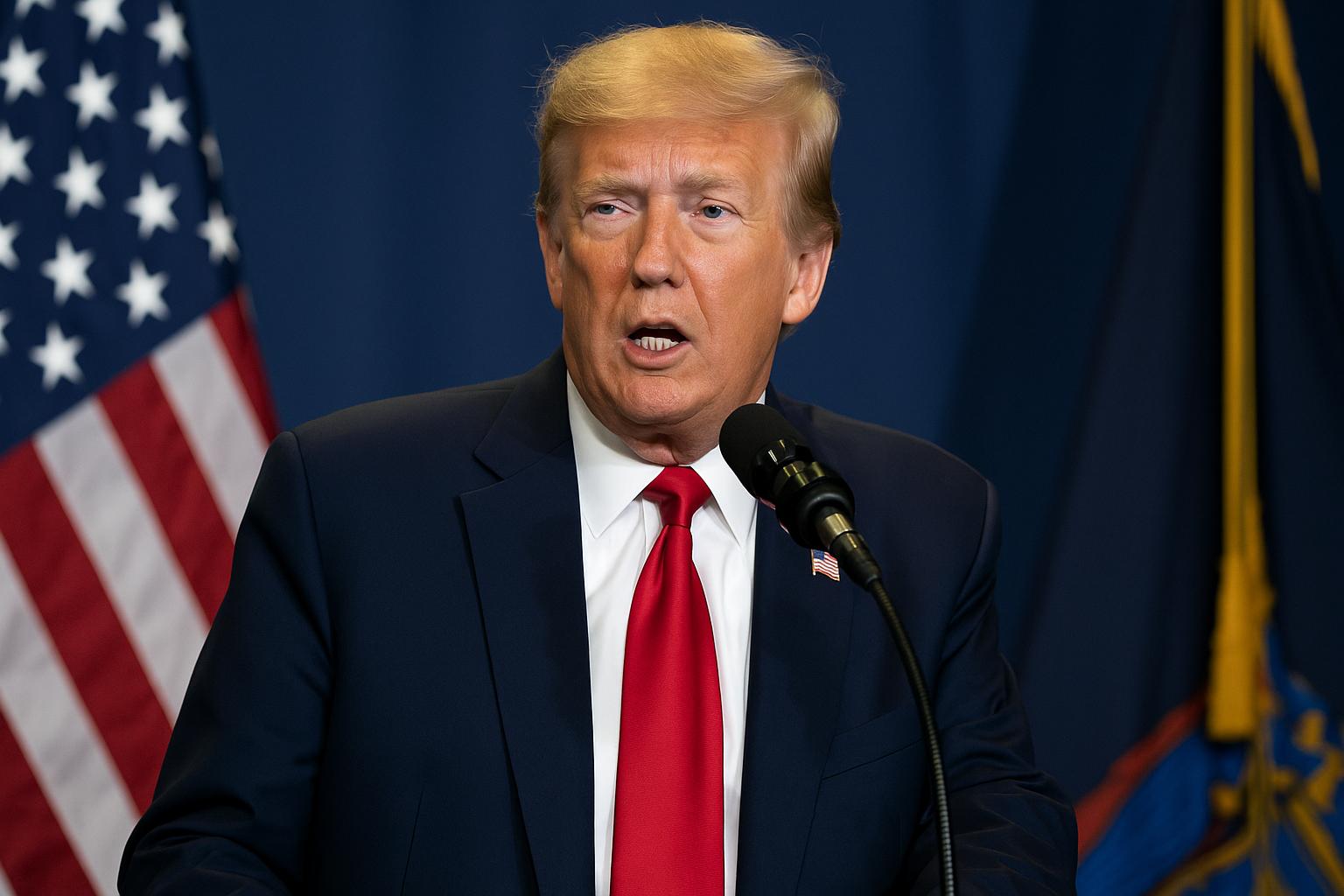
The United States is preparing a major escalation in its economic pressure campaign against Russia, with President Donald Trump announcing that he supports Senate legislation enabling Washington to impose tariffs of up to 500 percent on countries that continue significant trade with Moscow. The measure represents one of the most aggressive attempts yet to curtail Russian war funding and signals growing frustration in Washington over the prolonged conflict in Ukraine.
Speaking before departing Florida for the White House, Trump said that congressional Republicans are advancing a proposal that would authorise severe penalties on any country still engaging in substantial business with Russia. The plan has gained momentum among both parties, particularly as lawmakers have urged the administration to respond more forcefully to Russia’s recent military advances in eastern Ukraine and its continued missile strikes across the country.
The legislation would give the president authority to target imports from nations that purchase Russian oil or gas while failing to support Western efforts to isolate Moscow. Russia’s most important energy buyers include China and India, both of which have increased purchases of discounted Russian crude since the start of the war. Trump also suggested that Iran may be added to the list of countries eligible for punitive tariffs, although he provided no specifics.
The proposed law coincides with intensifying combat near the strategically important Ukrainian rail hub of Pokrovsk. Ukrainian forces have carried out deeper strikes on Russian oil infrastructure in response, hoping to weaken Moscow’s ability to sustain long-range attacks. US officials believe that restricting revenue from energy exports remains one of the few remaining levers capable of limiting Russia’s military capacity.
Pressure for additional sanctions has mounted in Congress for months, with both Democrats and Republicans accusing Russia of rejecting diplomatic initiatives and prolonging the fighting. Trump previously hesitated to endorse new economic measures, insisting he could mediate a settlement between Russian President Vladimir Putin and Ukrainian President Volodymyr Zelenskyy. A widely discussed meeting between Trump and Putin in Alaska earlier this year failed to produce progress toward negotiations.
The United States has already used tariffs to pressure India over its continued purchases of Russian crude. In August 2025, Trump signed an executive order applying a 25 percent surcharge on top of an existing 25 percent reciprocal duty on Indian exports, raising the effective tariff rate to 50 percent. The administration framed the move as a penalty for governments “indirectly funding Russia’s war machine” through energy purchases.
Indian officials later indicated that they had reduced imports of Russian oil. Trump said in October that he believed New Delhi had “significantly” cut purchases and suggested that the US might lower duties if cooperation continued. Over recent months, Washington has shifted toward a more conciliatory tone with India, signaling that negotiations on trade and strategic cooperation may resume.
Despite multiple rounds of sanctions, Western officials acknowledge that Moscow continues to generate significant wartime revenue. Expanded energy partnerships with Asian economies have helped offset earlier trade restrictions, allowing Russia to maintain weapons production and large-scale battlefield operations. The newly proposed tariff authority reflects a growing belief in Washington that indirect financial pressure on Russia’s trading partners may now be necessary to alter the course of the conflict.