Iran Tightens Control Over Strait of Hormuz Shipping
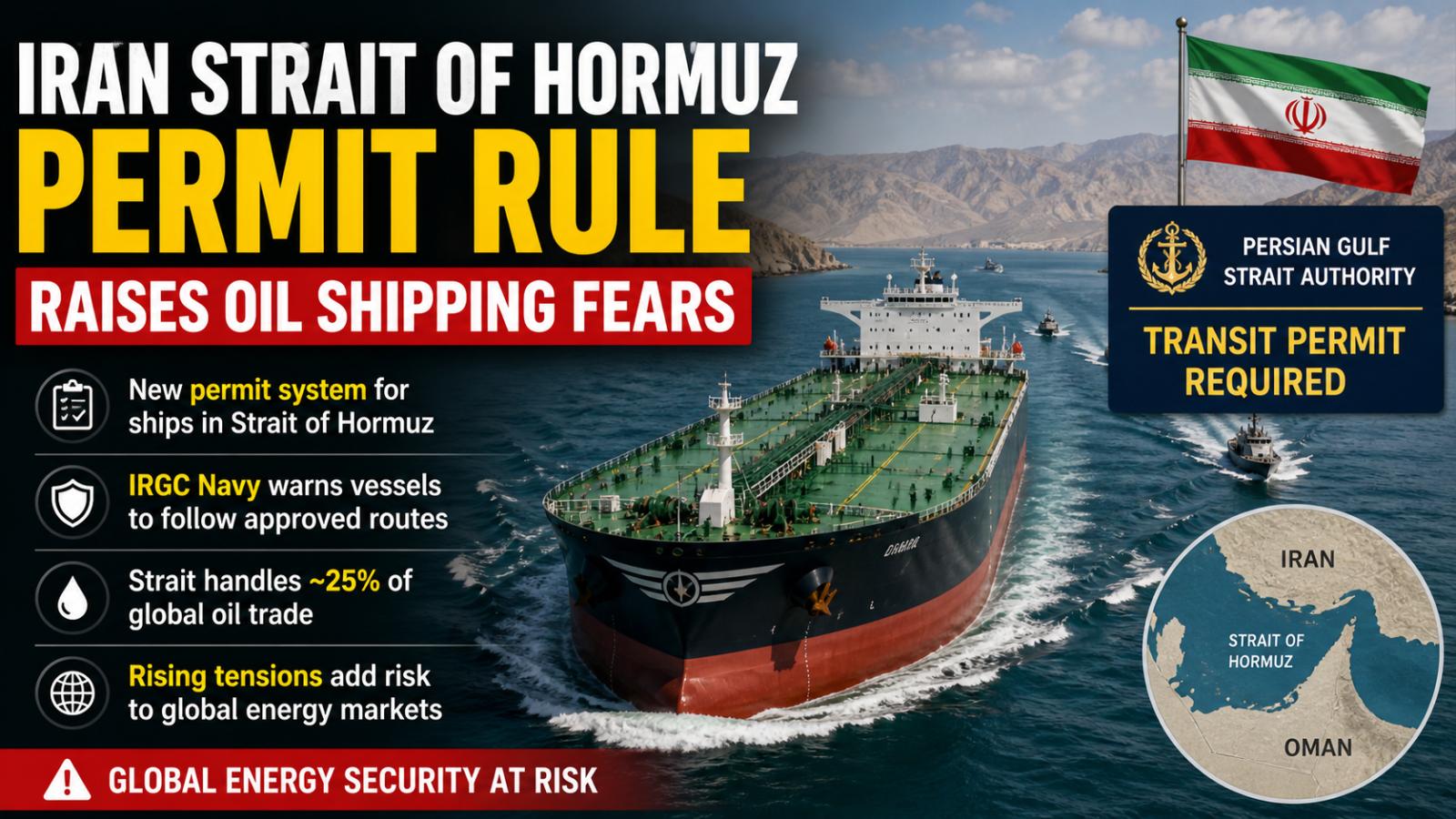
Iran has introduced a new Strait of Hormuz permit system, requiring ships to follow official transit instructions before entering one of the world’s most vital oil routes. The move raises fresh concerns for global energy markets, as the Strait of Hormuz carries a major share of seaborne oil trade and remains a flashpoint in rising US-Iran tensions.
What Iran’s New Permit Rule Means
According to reports citing Iranian state media, vessels will receive official communication from the Persian Gulf Strait Authority before crossing the waterway. Ships are expected to follow approved routes and obtain transit clearance under the new maritime control framework. Iranian officials have described the system as a sovereign measure to regulate traffic and strengthen oversight in the strait.
IRGC Warns Ships Against Route Violations
The IRGC Navy has warned commercial vessels to remain within designated corridors, saying deviations could be treated as unsafe. The warning adds pressure on shipping firms already navigating military tensions, insurance risks, and possible delays.
Why the Strait of Hormuz Matters Globally
The Strait of Hormuz sits between Iran and Oman and is one of the world’s most sensitive energy chokepoints. Any disruption can affect oil prices, tanker movement, fuel costs, and supply chains far beyond the Persian Gulf.
The timing is critical. With US forces active in the region and Iran asserting tighter maritime control, traders and governments are watching closely for signs of escalation. For now, the key question is whether the new permit system becomes a managed shipping process — or another trigger point in an already volatile Gulf crisis.