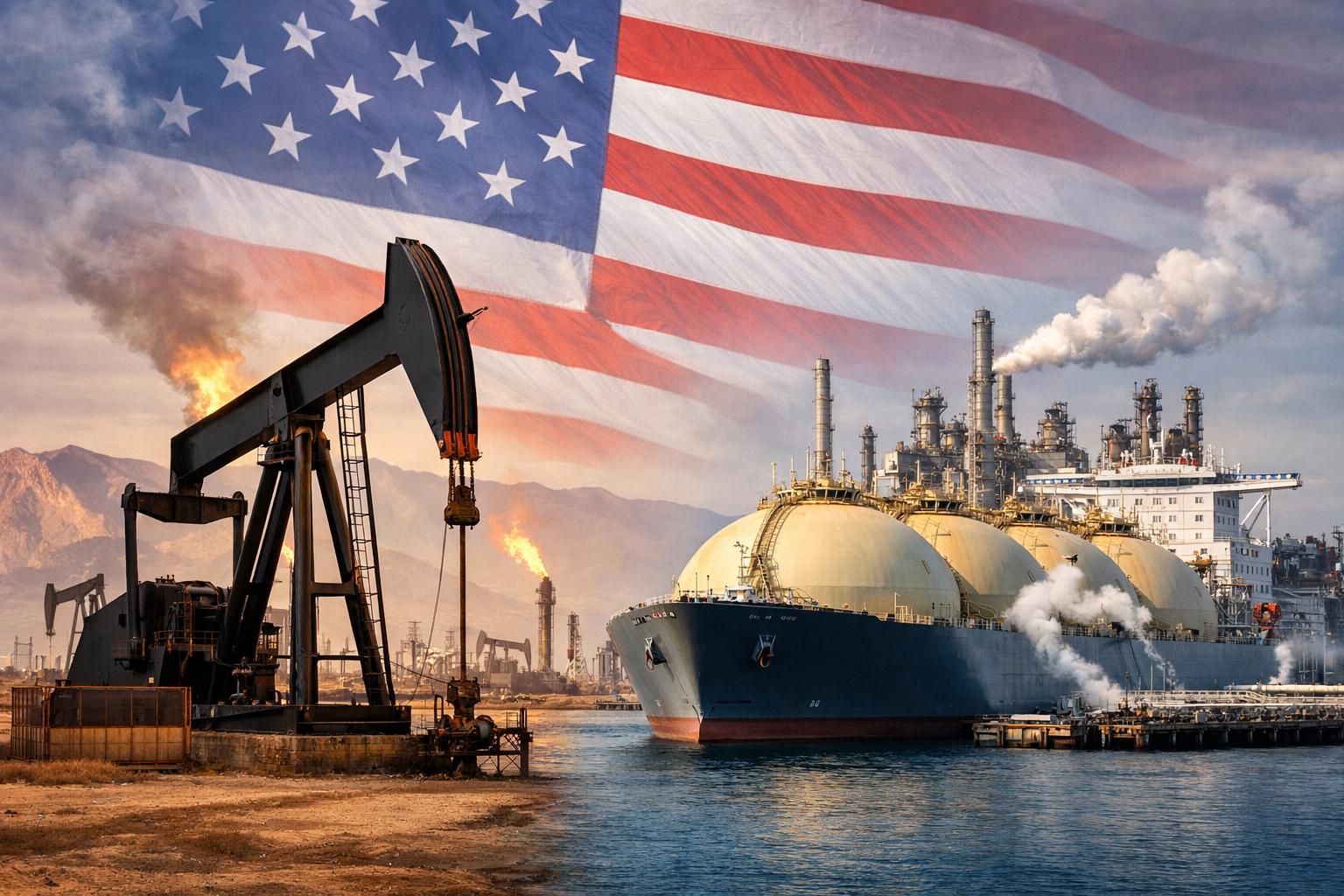
Recent figures from the US Energy Information Administration for March 2026 highlight the scale of this transformation. American oil production has reached roughly 24 million barrels per day, surpassing the combined output of two traditional energy giants, Saudi Arabia and Russia. Saudi Arabia currently produces about 10.9 million barrels per day, while Russia’s output stands near 10.5 million barrels. Much of the surge in US production has been attributed to technological advances in shale extraction, which have unlocked vast reserves previously considered uneconomical to develop.
The United States has also strengthened its position in natural gas. Dry natural gas production has now climbed above 110 billion cubic feet per day, making the country the world’s leading producer. Annual output is estimated to be close to one trillion cubic metres, significantly higher than Russia’s production, which is estimated between 618 and 642 billion cubic metres. Iran and China follow behind in global rankings, but their combined output still falls short of current US levels.
The expansion has also transformed the United States into the world’s largest exporter of liquefied natural gas. Since shipping its first LNG cargo in 2016, American export capacity has steadily expanded, with shipments recently averaging between 15 and 16 billion cubic feet per day. Forecasts from the EIA’s Short-Term Energy Outlook suggest that dry gas production could remain above 110 billion cubic feet per day in 2026, while marketed production may climb to around 122 billion cubic feet per day by 2027.
Supporters of expanded drilling policies argue that deregulation and a strong push for domestic energy development have played a crucial role in these gains. Officials promoting the “American Energy Dominance” agenda say expanded drilling and increased output have strengthened economic security while boosting the country’s influence in global energy markets. Critics, however, continue to warn that aggressive fossil fuel expansion raises environmental concerns even as it reshapes the global balance of energy power.