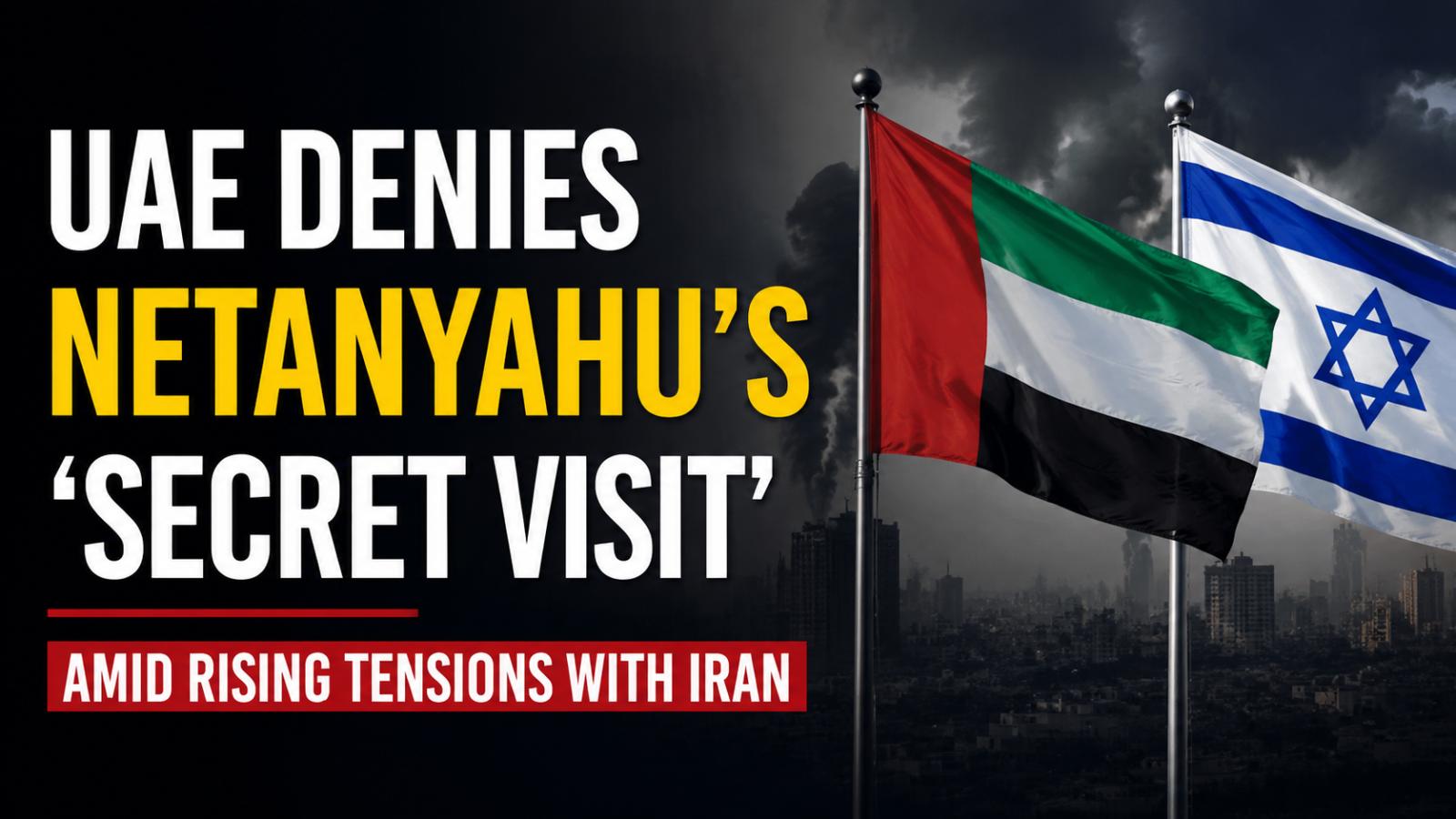
The United Arab Emirates (UAE) has officially denied reports claiming that Israeli Prime Minister Benjamin Netanyahu secretly visited the country amid escalating tensions in the Middle East, particularly with Iran. These claims initially surfaced from Netanyahu's office, which stated that the Israeli leader traveled to the UAE to strengthen military and diplomatic ties during a period of heightened regional conflict.
Netanyahu’s office had described the alleged visit as a “historic breakthrough” in Israel-UAE relations. According to their statement, Netanyahu met with UAE President Sheikh Mohamed bin Zayed (MBZ) in the midst of Operation Roaring Lion, a key Israeli operation linked to the ongoing tensions with Iran. The statement claimed that this covert visit marked a significant moment in the two nations' relations.
However, the UAE’s Ministry of Foreign Affairs swiftly responded to these reports, firmly rejecting them as unfounded. The ministry issued an official statement declaring that Netanyahu or any Israeli military officials had not visited the UAE during the specified time. It emphasized that the UAE’s diplomatic relations with Israel, which were formalized through the Abraham Accords in 2020, are transparent and openly communicated. Any discussions involving Israeli officials would be publicly disclosed through official channels. The statement concluded, “The UAE denies the existence of any secret visit by Israeli officials.”
This denial came in response to reports from news agencies like Reuters, which suggested a possible meeting between Netanyahu and MBZ on March 26. Sources close to the matter claimed the meeting involved discussions about coordinating military actions amidst the broader regional tensions tied to Iran. Furthermore, U.S. Ambassador to Israel Mike Huckabee had previously revealed that Israel had deployed its Iron Dome defense systems in the UAE during this time.
The situation in the Middle East has become increasingly volatile since late February, with the conflict between Israel, the United States, and Iran intensifying. Following strikes by Israeli and U.S. forces, including the assassination of Iranian Supreme Leader Ali Khamenei, Iran retaliated with missile and drone attacks targeting U.S. interests and Gulf nations like the UAE. Despite a fragile ceasefire between Washington and Tehran, the UAE has faced repeated attacks from Iranian-backed forces.
As a strategic ally of the United States, the UAE was the first Arab country to normalize relations with Israel through the Abraham Accords. This agreement opened the door for stronger cooperation between the two countries, particularly in defense and military matters, even as tensions in the region continue to rise. The UAE remains a key player in the Gulf, walking a fine line between maintaining strong ties with the West and addressing its own regional security concerns.
While Netanyahu’s office maintains the importance of the alleged visit, the UAE’s position remains clear: their relationship with Israel is one built on transparency, open diplomacy, and formal agreements. As the conflict with Iran persists, it’s clear that the political dynamics of the Middle East will continue to influence international relations and strategic partnerships across the region.