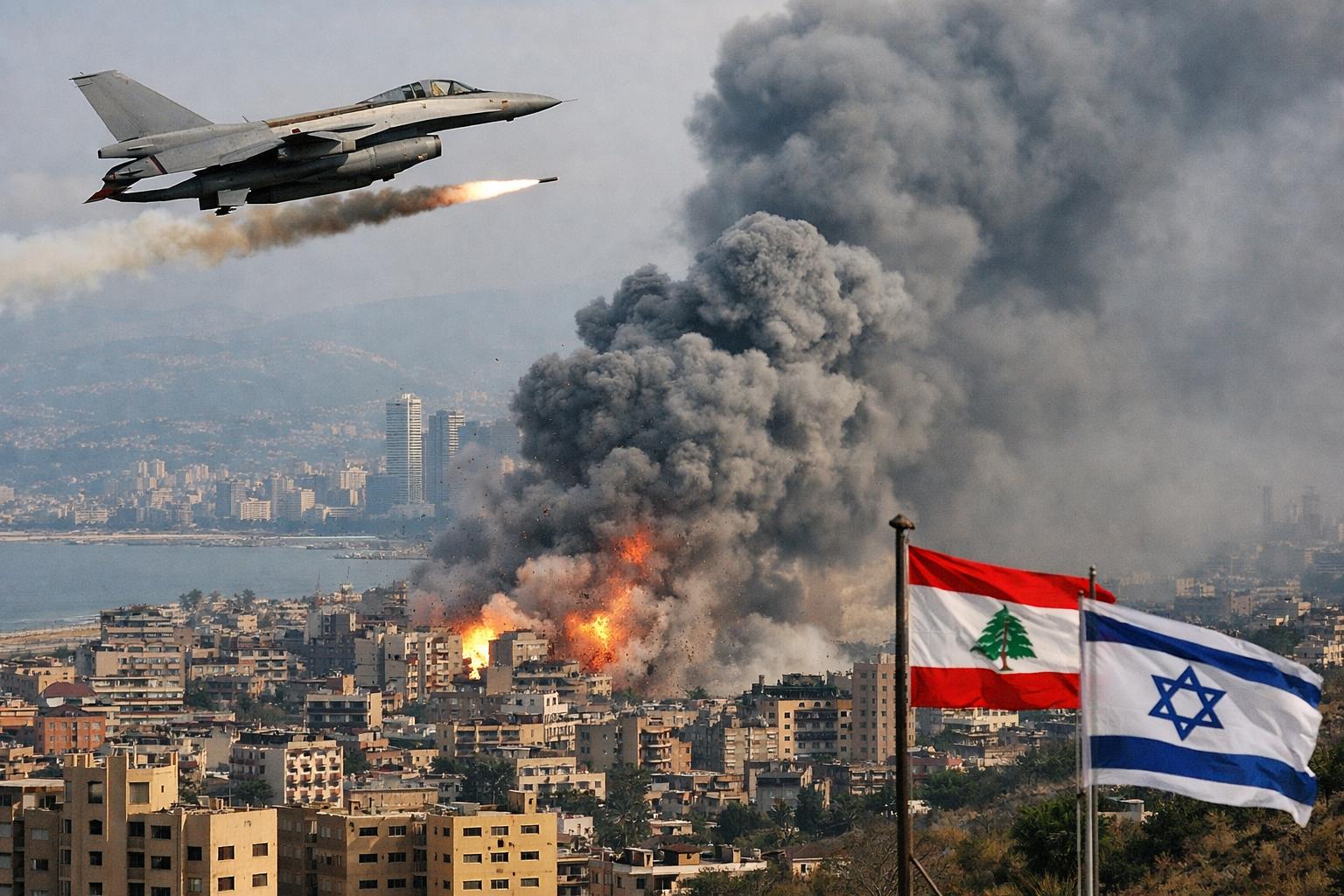
A fragile two-week ceasefire between the United States and Iran is facing renewed uncertainty after Israel launched military strikes targeting Lebanon, a key regional ally of Tehran. The escalation has raised concerns about the stability of the agreement, which was brokered with diplomatic involvement from Pakistan and was expected to ease tensions across parts of the Middle East.
Iranian officials have maintained that the ceasefire framework extended beyond bilateral commitments and included Lebanon’s capital, Beirut, as part of a broader de-escalation understanding. However, Israeli Prime Minister Benjamin Netanyahu rejected that interpretation, stating explicitly that “there is no ceasefire in Lebanon,” signaling a divergence in how the agreement is being applied on the ground.
The Israeli position underscores ongoing regional complexities, particularly regarding security concerns tied to groups operating in Lebanon that Israel considers hostile. Analysts note that this distinction could significantly undermine the intended scope of the ceasefire and risk reigniting wider conflict dynamics involving multiple actors.
The latest developments also come shortly after U.S. President Donald Trump publicly indicated that he had urged Israel to adopt a more restrained approach. Speaking to reporters, Trump suggested that he had advised Netanyahu to remain “low-key” in order to preserve the fragile diplomatic progress achieved through the ceasefire arrangement.
Despite these calls for restraint, Israel’s military action highlights ongoing disagreements between key stakeholders over the interpretation and enforcement of ceasefire terms. The situation continues to evolve, with international observers closely monitoring whether the escalation in Lebanon could derail broader efforts to stabilize relations between Washington and Tehran.
As tensions persist, the future of the ceasefire remains uncertain, with potential implications for regional security, U.S. foreign policy, and ongoing diplomatic efforts aimed at preventing further escalation in the Middle East.
Iranian officials have maintained that the ceasefire framework extended beyond bilateral commitments and included Lebanon’s capital, Beirut, as part of a broader de-escalation understanding. However, Israeli Prime Minister Benjamin Netanyahu rejected that interpretation, stating explicitly that “there is no ceasefire in Lebanon,” signaling a divergence in how the agreement is being applied on the ground.
The Israeli position underscores ongoing regional complexities, particularly regarding security concerns tied to groups operating in Lebanon that Israel considers hostile. Analysts note that this distinction could significantly undermine the intended scope of the ceasefire and risk reigniting wider conflict dynamics involving multiple actors.
The latest developments also come shortly after U.S. President Donald Trump publicly indicated that he had urged Israel to adopt a more restrained approach. Speaking to reporters, Trump suggested that he had advised Netanyahu to remain “low-key” in order to preserve the fragile diplomatic progress achieved through the ceasefire arrangement.
Despite these calls for restraint, Israel’s military action highlights ongoing disagreements between key stakeholders over the interpretation and enforcement of ceasefire terms. The situation continues to evolve, with international observers closely monitoring whether the escalation in Lebanon could derail broader efforts to stabilize relations between Washington and Tehran.
As tensions persist, the future of the ceasefire remains uncertain, with potential implications for regional security, U.S. foreign policy, and ongoing diplomatic efforts aimed at preventing further escalation in the Middle East.