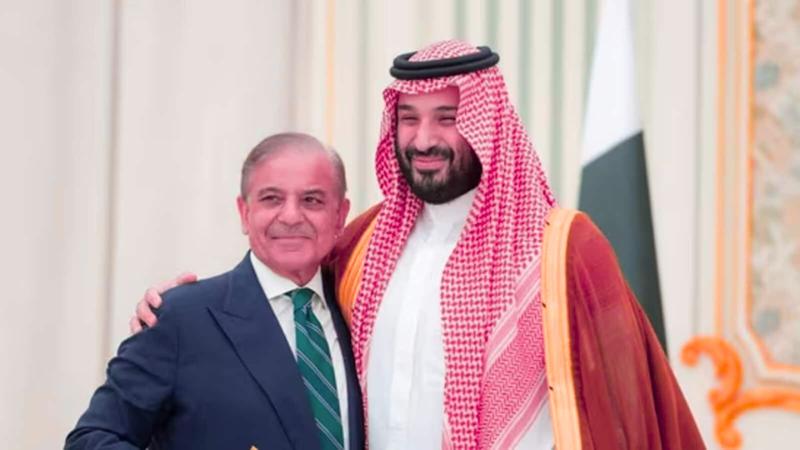
Saudi Arabia’s decision to sign a Strategic Mutual Defence Agreement with Pakistan has stirred debates across South Asia and the Middle East. The pact, which promises that an attack on one country will be treated as an attack on both, resembles a NATO-style commitment. For Pakistan, struggling with economic and diplomatic challenges, this deal is seen as a significant political win and a potential deterrence against India. Yet, beneath the surface, experts believe the agreement is more symbolic than practical.
The text of the deal makes no mention of India, but Islamabad interprets it as a shield. However, analysts caution that Riyadh is unlikely to jeopardize its strong relationship with New Delhi. India is Saudi Arabia’s second-largest trading partner, with bilateral trade worth nearly USD 42 billion in 2024–25. By contrast, trade with Pakistan barely touches USD 3–4 billion. This vast difference underscores the unlikelihood of Saudi Arabia risking vital economic and strategic ties with India. Saudi officials also moved quickly to clarify that the pact is not directed at India, emphasizing that relations with New Delhi remain stronger than ever.
Another angle is the pact’s timing, which coincides with heightened tensions involving Israel in the Middle East. Recent Israeli military actions in Qatar and across the region have rattled Gulf states, raising questions about Washington’s reliability as a long-standing security guarantor. By aligning with Pakistan, Riyadh appears to be sending a message of Islamic unity and solidarity, particularly toward Israel, rather than preparing to intervene in South Asian conflicts. This suggests the defence pact is less about deterring India and more about reshaping perceptions in the wider Middle Eastern context.
There is also the nuclear factor. Saudi Arabia has long been suspected of quietly funding Pakistan’s nuclear program. Some retired Pakistani officials and analysts have suggested that Riyadh might even seek to benefit from Pakistan’s nuclear umbrella in the future. The new pact has reignited speculation about whether Saudi Arabia is aiming for closer access to Islamabad’s nuclear assets, even though officials deny it. At the same time, experts argue that this aspect of the deal is more about signaling power and deterrence than about actual war planning.
If anything, the agreement could complicate Pakistan’s position. Riyadh faces ongoing threats from Houthi rebels in Yemen, who frequently launch missile and drone attacks into Saudi territory. Under the pact’s “attack on one equals attack on both” clause, Pakistani troops may find themselves involved in prolonged conflicts in the Middle East rather than receiving military aid from Riyadh in case of a clash with India. Pakistan has historically sent military advisors and trainers to Saudi Arabia, and this pact may reinforce such commitments.
Ultimately, the defence pact reflects posturing more than practical defence coordination. It strengthens symbolic ties between Saudi Arabia and Pakistan while signaling defiance to Israel. For India, the deal is unlikely to alter the strategic balance in the region. Saudi Arabia’s economic priorities, diplomatic calculations, and regional focus make direct military involvement in an India-Pakistan war improbable. Instead, Pakistan risks being drawn deeper into Saudi Arabia’s regional struggles, turning what it perceives as a shield against India into a new burden.