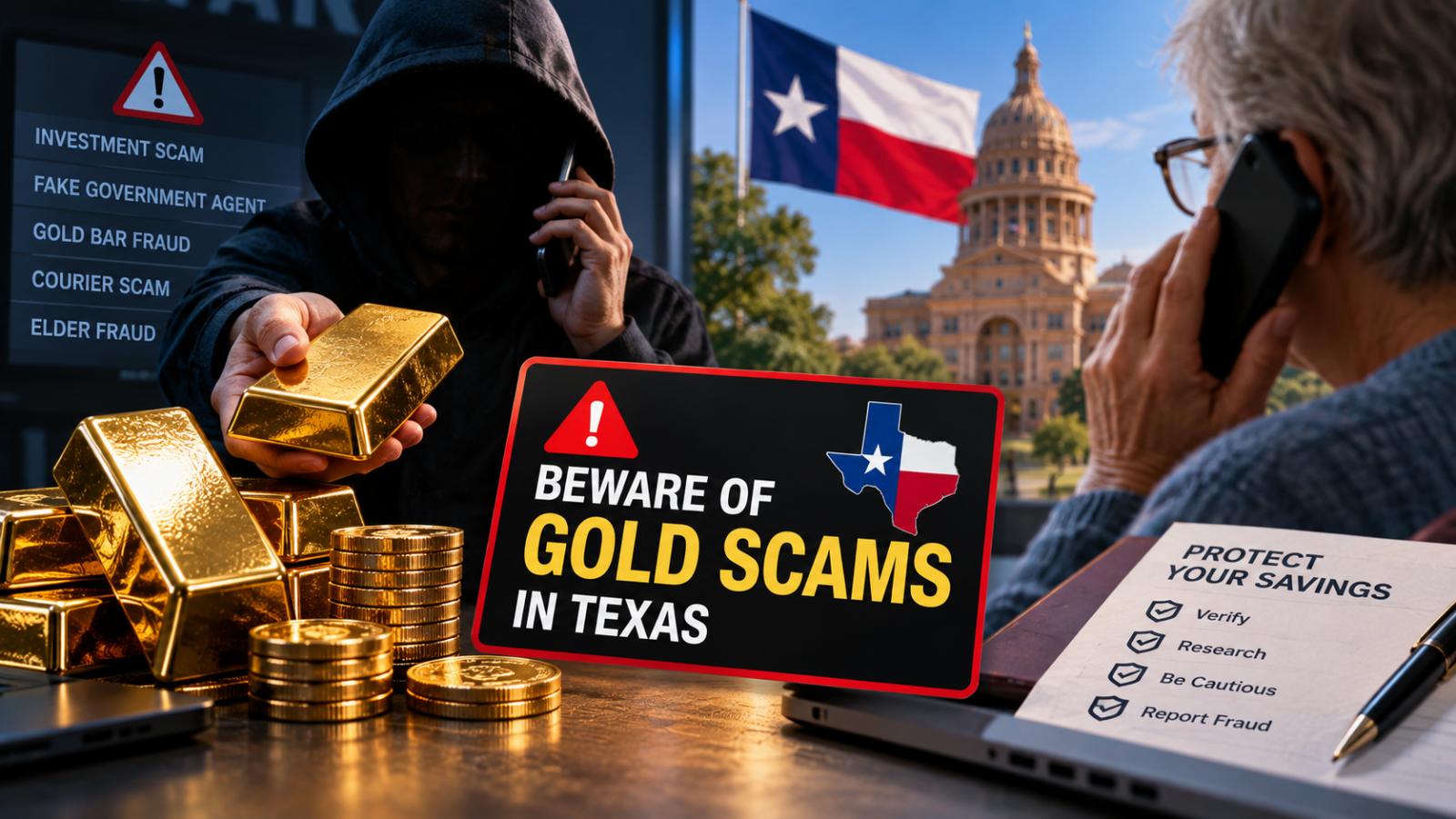
Texas gold scams can take several forms, from overpriced precious-metals sales to government impersonation schemes that pressure victims to buy or surrender gold. Recent federal cases in Texas show why families should verify claims, reject urgent demands and report suspected fraud quickly.
Gold-related fraud remains a concern for Texas families as federal authorities continue investigating schemes involving precious metals, retirement savings and fake government warnings.
In a North Texas case announced on July 10, 2026, federal prosecutors said a Dallas man had been indicted on 10 counts of wire fraud over an alleged scheme targeting elderly customers who were encouraged to use retirement savings to buy gold and silver coins. Prosecutors allege some metals were sold at undisclosed, significantly inflated markups and that some purchased metals were never delivered. The charges are allegations, and the defendant is presumed innocent unless proven guilty.
Precious metals investment scams
One warning sign is pressure to move large portions of retirement or savings funds into gold or silver without giving the buyer enough time to research prices, fees or the seller.
The FBI advises consumers to carefully research investment opportunities before transferring money. Buyers should independently compare bullion prices, dealer premiums and delivery terms rather than relying only on claims made by a salesperson.
Consumers considering secure precious-metal custody can also understand how the Texas Bullion Depository stores approved gold and silver
Government impersonation and gold bar scams
A separate scam pattern begins with a phone call, email, popup or message claiming that a bank account, Social Security number or identity has been compromised.
Fraudsters may pose as federal agents, banks or technology-support representatives and tell victims to convert their money into gold for “protection.” In previous Texas federal cases, victims were instructed to withdraw funds, obtain cash or gold and give the assets to couriers.
The FBI says government agencies will not instruct people to buy gold, silver, cryptocurrency or gift cards to resolve an investigation or protect their money.
Warning signs families should recognize
Major red flags include demands for secrecy, threats of arrest, urgent instructions to withdraw savings, requests to purchase gold bars, and arrangements for a stranger or courier to collect money or precious metals.
Families who already keep valuable precious metals at home should also know how to safely store gold jewelry in the U.S. and maintain records of their valuables.
Scammers may also provide a password or code that victims are told to give the courier, making the transaction appear official. The FBI has specifically identified courier pickups, unusual payment methods and requests to conceal the real purpose of a transaction as warning signs.
What to do if you suspect a gold scam
Stop communicating with the caller or sender and do not hand over gold, cash or account information. Contact the bank, investment provider or government agency independently using an official phone number rather than a number provided by the caller.
Suspected internet-enabled fraud can also be reported to the FBI’s Internet Crime Complaint Center. Families should act quickly because once cash or precious metals are transferred to a courier, recovering the assets can become significantly more difficult.
Residents who want to understand when they can pay with gold and silver in Texas should also remember that legal transactions under the new law depend on voluntary agreement between the parties.
The Texas gold and silver legal tender law does not change these basic fraud precautions.