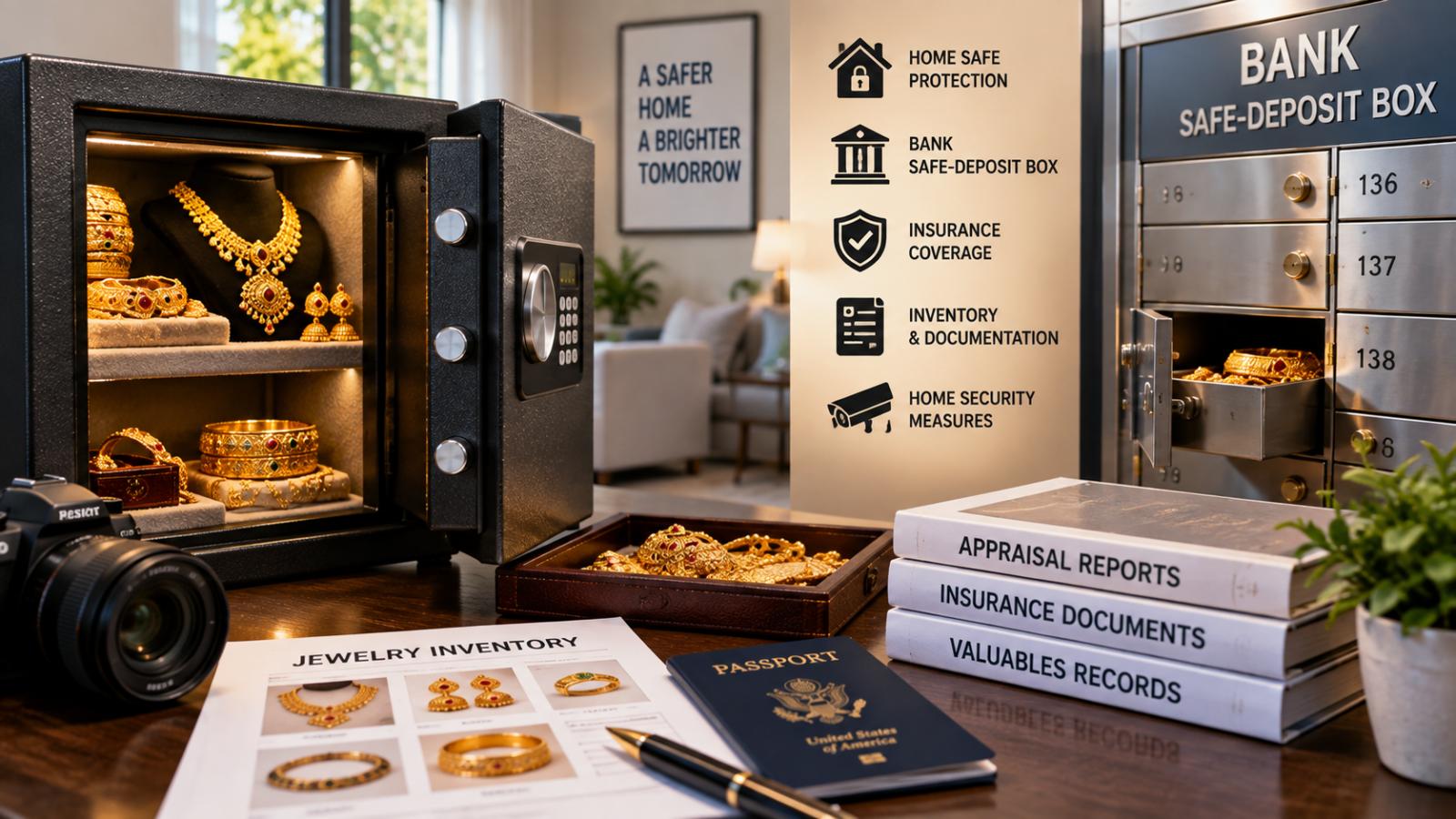
Safely storing gold jewelry in the U.S. requires more than hiding valuables at home. A secure safe, bank safe-deposit box, detailed inventory, current appraisals, home security and appropriate insurance can help Indian families reduce theft, loss and financial risk.
Gold jewelry can carry substantial financial and sentimental value, particularly for Indian families who may own wedding jewelry, inherited pieces or high-purity 22-karat ornaments.
Safely storing gold jewelry in the U.S. requires a combination of secure physical storage, documentation, insurance and basic home-security measures rather than simply hiding valuables in a drawer.
Use a secure home safe for gold jewelry
Frequently worn jewelry can be kept at home, but experts recommend avoiding obvious locations such as bedroom drawers or ordinary jewelry boxes.
A heavy, quality safe that is securely anchored in an inconspicuous location offers greater protection. Fire- and water-resistant protection can also reduce risks beyond burglary. Jewelers Mutual recommends a home safe and notes that securing it to the floor can make removal more difficult.
Home security should complement the safe. Strong door and window locks, exterior lighting, alarms and monitoring systems can help deter unauthorized entry.
Consider a safe-deposit box for rarely used jewelry
Wedding sets, inherited ornaments and other jewelry that is worn only occasionally may be better suited to an off-site bank safe-deposit box.
For investment-grade precious metals, families can also review how the Texas Bullion Depository stores approved gold and silver.
The Federal Deposit Insurance Corporation notes that bank vault storage can offer greater physical security than a typical home safe. However, safe-deposit box contents are not insured by the FDIC, because a box is storage rather than a bank deposit account.
Owners should review the bank's rental agreement and their own insurance policy before relying on a safe-deposit box for valuable jewelry.
Photograph and document every valuable piece
Storage alone is not enough. Owners should maintain clear photographs, receipts when available, purchase information and professional appraisals for valuable pieces.
A home inventory can help establish ownership and value after theft, fire or another covered loss. The Insurance Information Institute recommends documenting possessions and keeping copies of important inventory records somewhere away from the home.
For Indian jewelry bought or inherited abroad, retaining available invoices, certificates, appraisal reports and detailed photographs can make future identification and valuation easier.
Check gold jewelry insurance limits
A standard homeowners policy may cover jewelry, but theft coverage often has a relatively low special limit. The Insurance Information Institute says a typical limit can be around $1,500, although actual coverage varies by policy and insurer.
Families with high-value pieces should also understand whether homeowners insurance covers gold and Indian jewelry and when additional coverage may be needed.
Owners of valuable collections can ask their insurer about scheduling individual pieces or purchasing additional coverage based on professional appraisals.
Be careful when leaving home
Avoid publicly advertising extended travel while valuable jewelry remains at home. Use locks, alarms and lighting, and consider moving rarely used high-value pieces to secure off-site storage before a long trip.
If jewelry is lost during a burglary, knowing what to do if gold or jewelry is stolen in Texas can help with police reports, insurance claims and possible recovery.
For families holding substantial gold jewelry, the safest approach is layered: secure storage, limited access, documentation, appropriate insurance and sensible home-security practices. Owners should also remain alert to Texas gold scams, particularly when approached with unusual investment, resale or payment offers involving precious metals. These steps cannot eliminate theft or disaster risk, but they can reduce both the likelihood of loss and the difficulty of documenting a claim afterward.