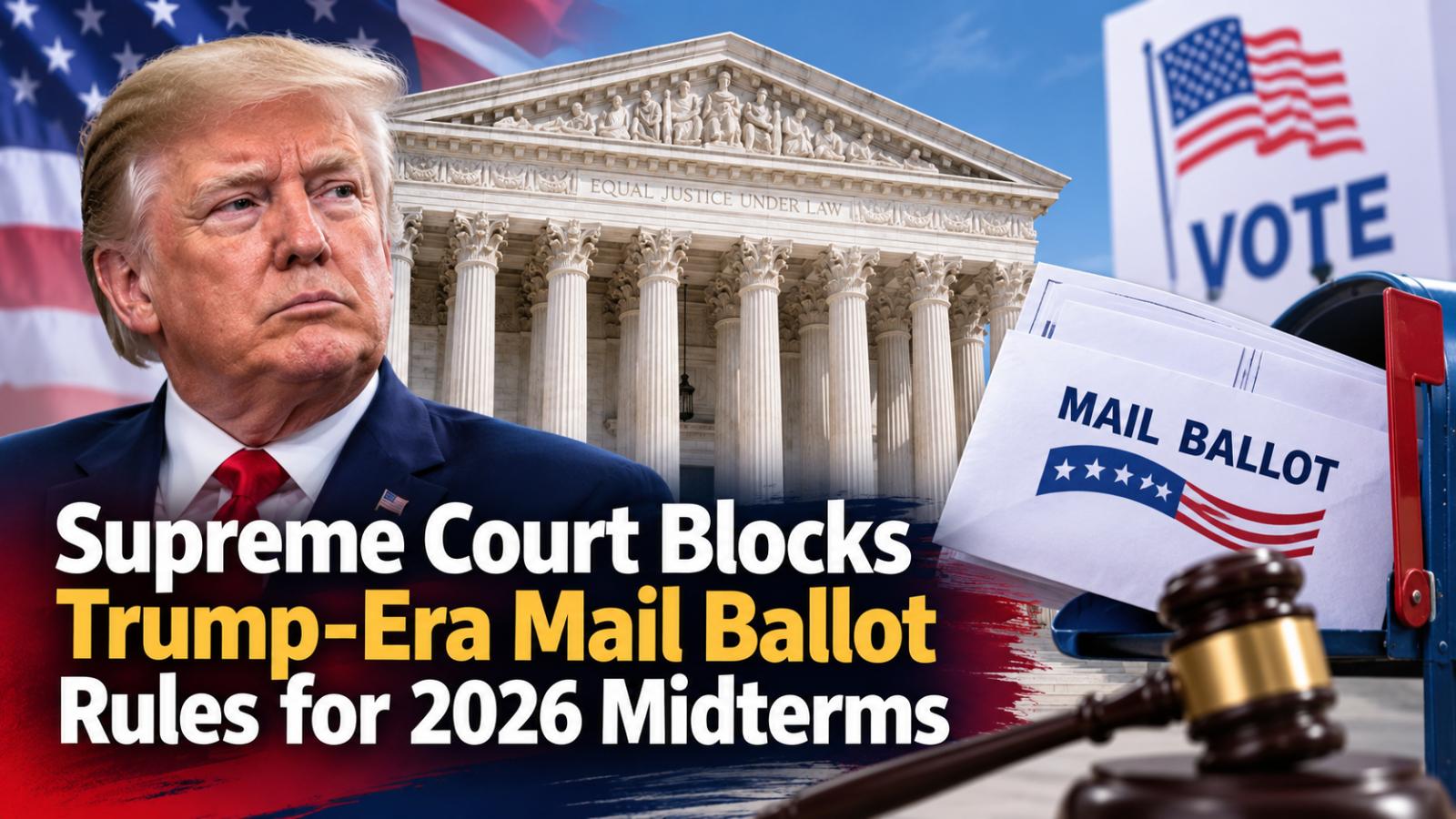
The US Supreme Court has declined to allow a new Postal Service rule affecting mail ballots to take effect ahead of the 2026 midterm elections, leaving existing state vote-by-mail procedures in place for the approaching election. The court said the federal government was unlikely to succeed in its challenge to a lower-court injunction and that the circumstances did not justify emergency relief.
Mail ballot procedures remain unchanged
The disputed rule would have required election officials to use ballot envelopes meeting new Postal Service standards, including automated-processing requirements and voter-specific barcodes. States would also have been required to submit envelope designs for approval and upload certain voter information to an online Postal Service system. Non-compliant ballot mail could have been returned to election authorities rather than accepted for delivery.
State officials and voting groups challenging the rule argued that introducing the requirements shortly before the midterms could disrupt ballot distribution and create problems for voters and election administrators. A federal court issued a nationwide preliminary injunction preventing the rule from taking effect, leading the government to seek emergency relief from the Supreme Court.
Kavanaugh cites lack of time before elections
Justice Brett Kavanaugh agreed with the decision not to let the rule take effect for the 2026 elections. In a separate opinion, he said there was at least a reasonable possibility that the Postal Service had statutory authority to issue such requirements.
However, Kavanaugh concluded that applying the rule during the current election cycle would violate administrative-law requirements because state and local election officials did not have sufficient time to reasonably implement the changes before voting.
Alito and Thomas dissent
Justices Samuel Alito and Clarence Thomas disagreed with the court’s decision. Alito argued that the Postal Service has broad legal authority over the handling and delivery of mail and said the government had made the necessary showing for the rule to be allowed to proceed while litigation continued. Thomas joined his dissent.
The disagreement among the justices means the court’s order does not necessarily resolve every underlying legal question surrounding the Postal Service’s authority over election mail. Instead, the immediate effect is that the challenged requirements will not be implemented for the 2026 midterm elections.
Legal battle could continue after midterms
The dispute began after President Donald Trump directed the Postal Service in March 2026 to develop new requirements for federal election ballot mail. The Postal Service issued its final rule in late August, triggering additional legal challenges from states and voting organisations.
The Supreme Court’s September 14 order leaves the lower-court injunction in place while the litigation continues. States can therefore proceed with their established mail-ballot systems for the upcoming midterms without implementing the new envelope, barcode and voter-information requirements.
The ruling addresses whether the restrictions could take effect immediately; broader questions about the scope of the Postal Service’s authority and the legality of similar future rules could still return to the courts after the election.