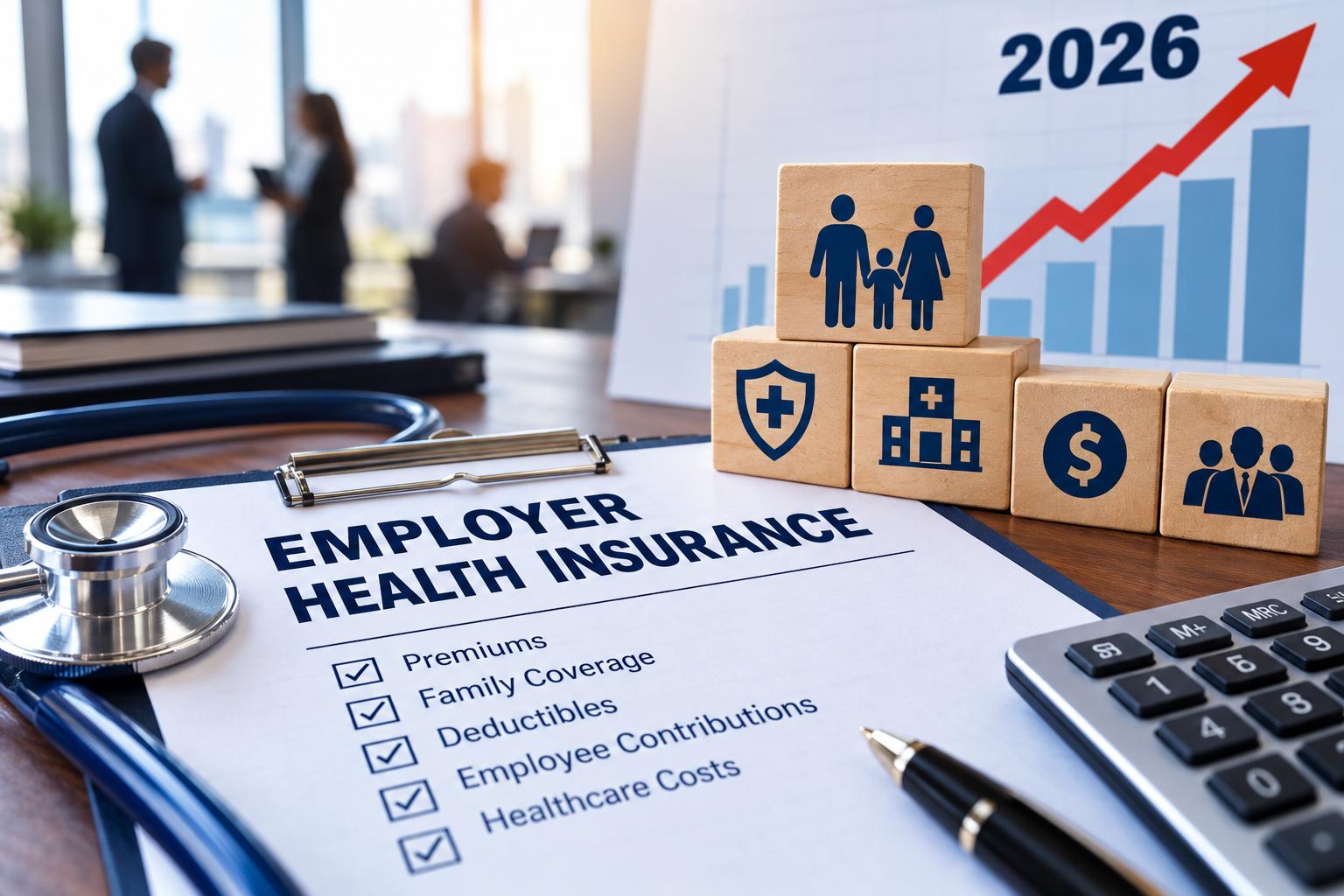
Employer health insurance costs rose in 2026, with workers contributing an average of $7,471 toward annual family premiums, up 9%, according to KFF. Employees at small businesses paid significantly more, adding pressure on household budgets and employers ahead of the U.S. midterms.
Employer health insurance costs climbed in 2026, with American workers paying more toward family coverage and employees at small businesses facing the heaviest burden, according to a KFF survey released Thursday, October 22, 2026.
The nonprofit healthcare research organization's findings show that worker contributions to family premiums increased 9% from 2025, intensifying affordability pressures for employers and households.
Family health insurance premiums increase in 2026
Workers contributed an average of $7,471 annually toward employer-sponsored family health insurance premiums in 2026, an increase of $621 from the previous year.
The 9% increase reflects the amount employees pay toward family coverage, rather than the rise in total insurance premiums.
Nearly 157 million Americans under retirement age rely on employer-sponsored health insurance, making changes in workplace benefits significant for household budgets nationwide.
Small business health insurance costs remain higher
Employees at businesses with 10 to 99 workers contributed an average of $9,687 toward annual family coverage, compared with $6,840 at companies employing at least 200 people.
Small-business employees paid approximately 37% of family premiums, compared with 25% at larger employers.
The survey also found that 32% of covered workers at smaller businesses were enrolled in plans requiring them to pay more than half the family premium. That figure was just 6% at larger companies.
KFF reported that smaller employers also face higher deductibles and greater fluctuations in insurance costs.
Employers face rising healthcare expenses
Jenna Caligaris, who manages a contracting business in upstate New York with approximately 25 employees, described the financial pressure of maintaining competitive health benefits.
Her company covers 80% of health insurance costs for nonunion employees, despite experiencing a 25% premium increase in 2026.
The business has reduced bonuses and other expenses rather than passing more of the insurance burden to workers.
Healthcare affordability becomes a key election issue
The findings come ahead of the November 2026 U.S. midterm elections, with healthcare expenses emerging as a major concern for voters.
An October AP-NORC poll found that approximately seven in 10 registered voters considered healthcare one of the election's most important issues.
KFF's annual employer benefits survey, based on responses from roughly 1,900 employers with at least 10 workers, illustrates the growing financial trade-offs facing businesses that provide health coverage.
With smaller employers confronting higher premiums and less predictable costs, maintaining affordable employee benefits remains a difficult balancing act.