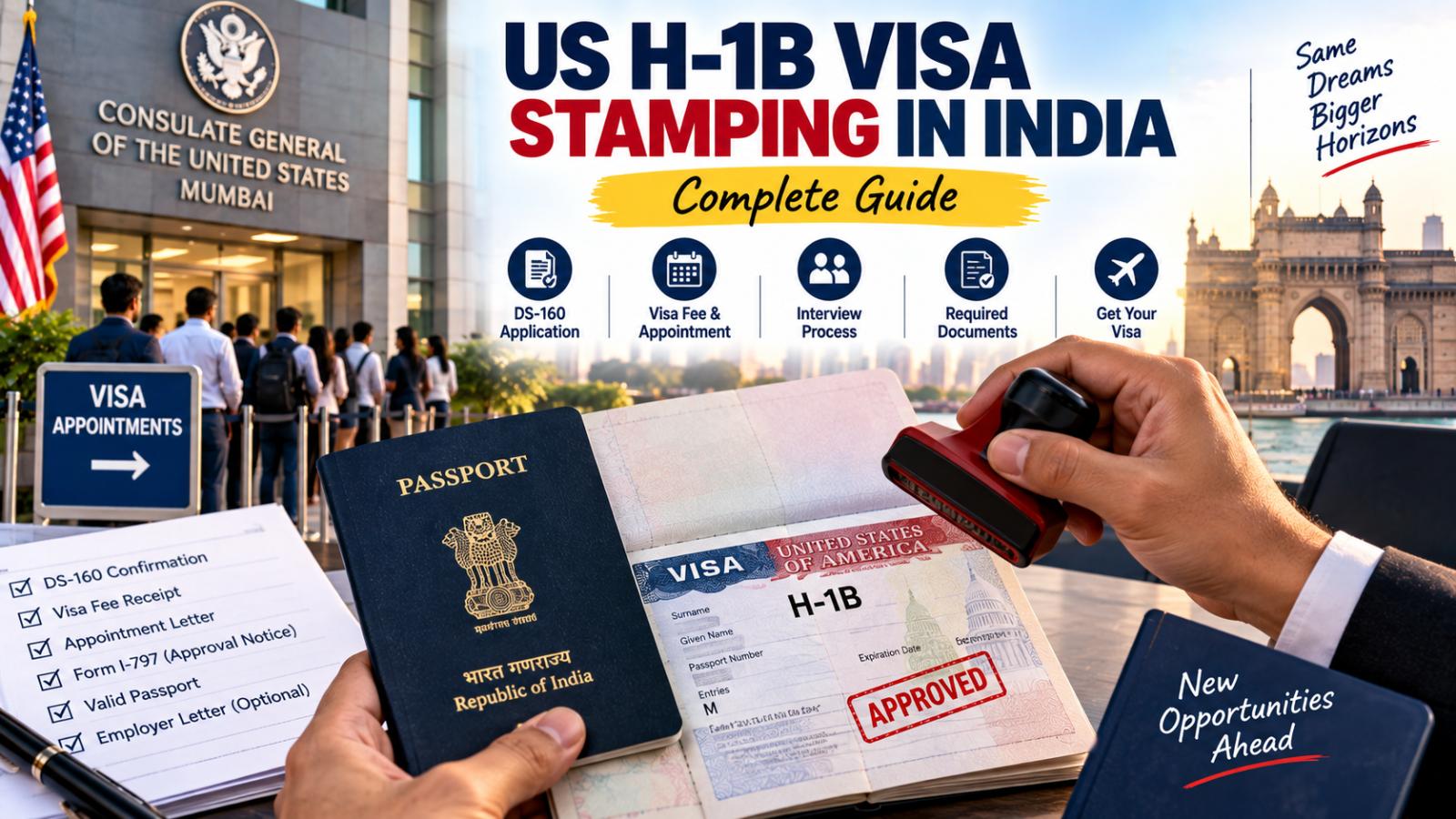
H-1B visa eligibility depends on more than holding a degree. The US job must qualify as a specialty occupation, the worker must have appropriate education, training or equivalent experience, and a qualifying employer must offer a bona fide position and file the petition.
The job must qualify as an H-1B specialty occupation
Most H-1B workers qualify through a specialty occupation. Under current federal rules, the position must require theoretical and practical application of highly specialized knowledge and normally require at least a bachelor's degree in a directly related specific specialty, or its equivalent.
A general degree by itself is not enough. However, a position may accept more than one degree field when each field has a logical connection to the job duties.
Fields that can include specialty occupations range from engineering and mathematics to medicine, education, accounting, business specialties and the arts. Eligibility ultimately depends on the requirements and duties of the particular position rather than simply its job title.
H-1B degree requirements can include foreign qualifications
A worker may qualify with a U.S. bachelor's or higher degree required by the specialty occupation. A foreign degree can also qualify if it is determined to be equivalent to the required U.S. degree.
USCIS can also consider combinations of education, specialized training and progressively responsible work experience that are equivalent to completing the required U.S. bachelor's or higher degree.
This means an applicant does not necessarily need to have studied in the United States to qualify for H-1B classification.
Some jobs require a professional license
For occupations regulated by state or local authorities, professional licensing can also affect H-1B eligibility. If a license is required to fully perform the occupation, the worker generally must possess the appropriate authorization to practice in the intended state of employment before the petition can be approved for unrestricted employment.
This can be particularly relevant in licensed professions where possessing the academic qualification alone does not authorize someone to perform all job duties.
A qualifying US employer must offer a real position
H-1B classification is generally based on a petition filed by a U.S. employer. Current rules require the employer to have a bona fide job offer, a legal presence in the United States and an IRS tax identification number. Remote or telework positions within the United States can qualify when the other requirements are satisfied.
Before filing the H-1B petition, employers also generally obtain a certified Labor Condition Application from the Department of Labor covering matters including wages and working conditions.
Meeting the eligibility requirements does not by itself guarantee H-1B approval. Cap-subject workers may also have to go through the annual H-1B selection process, while some employers and positions qualify for cap exemptions. Those requirements are separate from whether the worker and job satisfy the underlying H-1B eligibility rules.