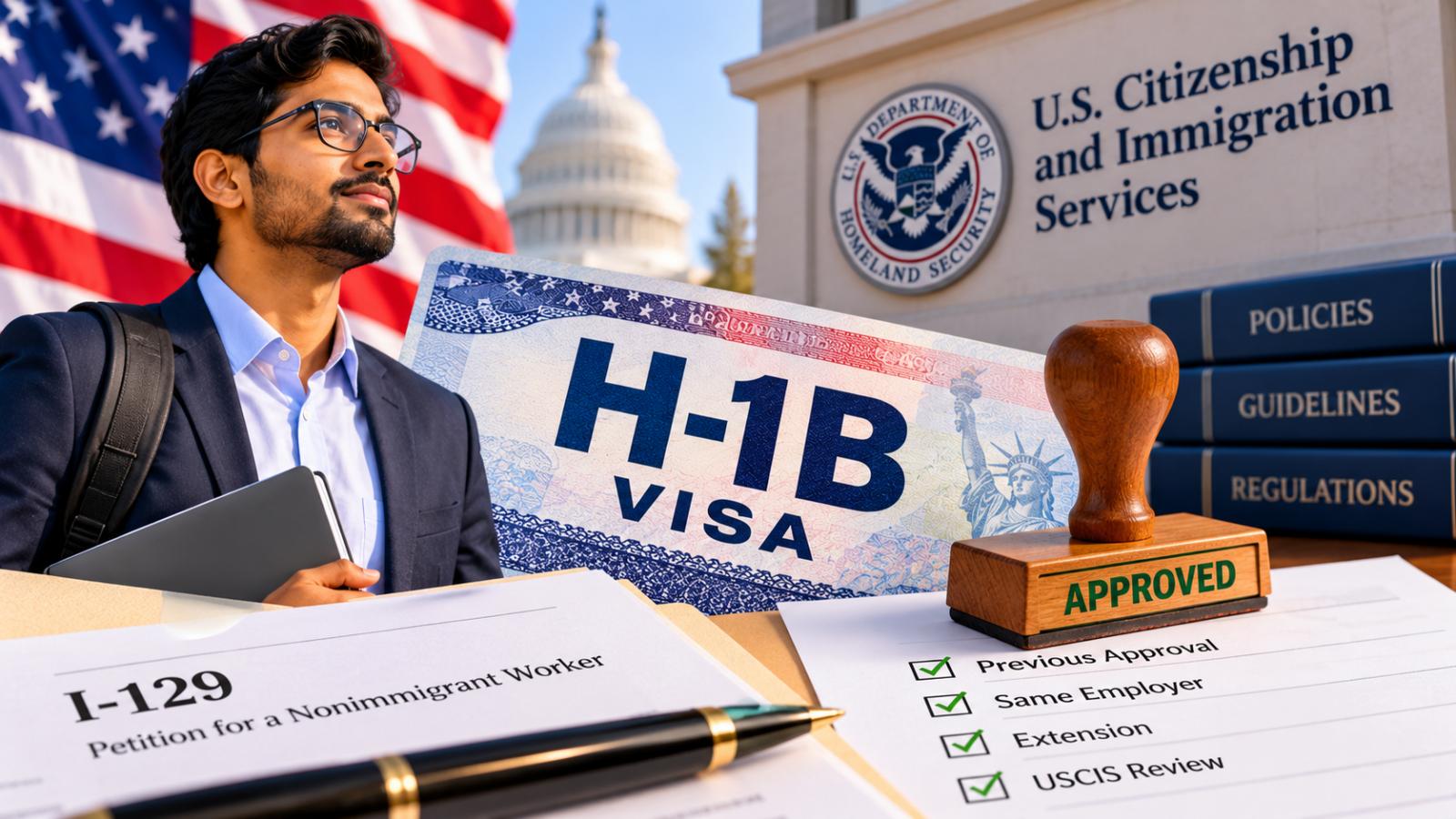
The H-1B deference policy directs USCIS officers to give weight to previous approvals when employers seek extensions involving unchanged circumstances. Learn how the policy works, its exceptions and what a proposed DHS rule could change for Indian professionals working in the US.
The H-1B deference policy is a U.S. immigration rule that generally requires officers to respect previous eligibility decisions when reviewing certain employment-based visa petitions involving the same employer, worker and underlying facts.
The policy is particularly relevant to Indian professionals seeking H-1B extensions, because it can limit unnecessary reconsideration of eligibility issues already examined by U.S. Citizenship and Immigration Services (USCIS).
How does the USCIS deference policy work?
When an employer files Form I-129 to extend an employee's H-1B petition, USCIS reviews whether the employer and worker continue to meet immigration requirements.
Under the existing rule, officers generally defer to an earlier eligibility determination if the parties and underlying circumstances remain unchanged.
For example, an Indian software engineer continuing in the same qualifying position with the same employer may benefit from deference to the previous approval.
However, deference does not guarantee approval. Employers must still establish eligibility for the requested extension.
When can USCIS reconsider previous approvals?
USCIS is not required to defer to an earlier decision when:
- The previous approval involved a material error.
- Employment circumstances or eligibility requirements materially changed.
- New material information adversely affects eligibility.
A significant change in job responsibilities or employment conditions may therefore require closer examination.
USCIS may request additional evidence before deciding whether the petition qualifies.
How did the H-1B deference policy develop?
USCIS introduced deference guidance in April 2004 to promote consistency in extension decisions.
The agency rescinded that guidance in October 2017, reinstated it in April 2021 and formally incorporated deference into federal regulations in December 2024.
These changes reflect different approaches to balancing administrative consistency with independent eligibility reviews.
What does the 2026 DHS proposal change?
On Wednesday, October 14, 2026, the Department of Homeland Security proposed removing the regulatory requirement to defer to previous USCIS determinations.
If finalized, the change would allow officers to reassess eligibility without mandatory deference, even when an employer and worker remain in similar circumstances.
The proposal covers Form I-129 petitions beyond H-1B cases.
What should H-1B workers know?
As of October 17, 2026, the proposal has not taken effect. The existing deference requirement remains applicable.
Employers should continue maintaining accurate documentation supporting the position, employment conditions and worker's eligibility.
Public comments on the proposal are due November 13, 2026. The final regulatory outcome will determine whether future H-1B extensions continue receiving mandatory deference to previous approvals.