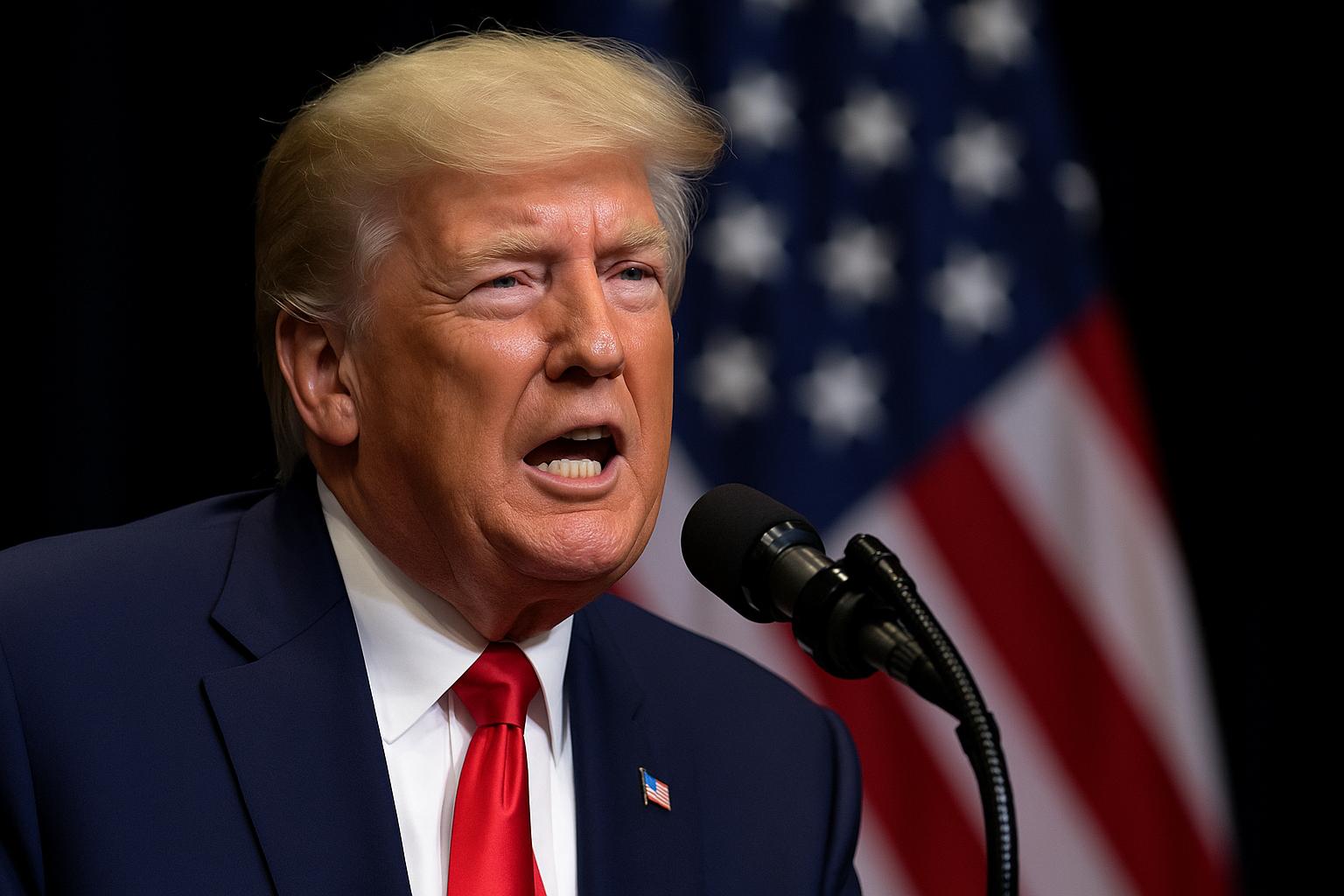
United States President Donald Trump has once again defended his administration’s tariff policies, claiming that the strategy has played a major role in strengthening the U.S. economy and boosting the stock market. Since returning to office for his second term, Trump has emphasized a renewed focus on economic nationalism, arguing that countries trading with the United States must pay tariffs determined by the government to protect American interests.
In his latest remarks, Trump asserted that his tariff measures have made the nation “wealthy, powerful, and nationally secure again.” He added that the U.S. stock market is now “stronger than ever,” directly linking the growth to his protectionist economic policies. “The United States is wealthy, powerful, and nationally secure again, all because of tariffs! The most important case ever is in the United States Supreme Court. God bless America,” he wrote on social media, reinforcing his belief that tariffs are essential to maintaining American dominance in global trade.
Trump’s administration has repeatedly highlighted tariffs as a strategic tool to pressure other nations, particularly China. Over the past several months, Washington has introduced multiple rounds of tariffs on Chinese goods, citing unfair trade practices and intellectual property concerns. However, the U.S. president’s approach has been characterized by frequent changes in tone and policy, leading to uncertainty in financial markets and international trade circles.
On October 10, Trump announced a 100 percent tariff on Chinese imports, stating that the decision would take effect on November 1. The move was perceived as one of the harshest trade actions against Beijing, aimed at compelling Chinese authorities to engage in new trade negotiations. Days later, however, Trump clarified that the tariff was a temporary measure designed to pressure China ahead of his planned meeting with President Xi Jinping.
In an interview on October 17, Trump told Fox Business Network that the 100 percent tariff “is not sustainable” but claimed it was necessary to “force Beijing to the table.” He said, “A 100 percent tariff is not sustainable; they forced me to do that.” The president’s shifting stance has drawn mixed reactions from investors and policymakers, with some viewing it as a calculated negotiation tactic and others criticizing it for creating volatility in global markets.
Trump’s earlier social media posts also hinted at rising tensions between Washington and Beijing. He accused China of becoming “very hostile” in the lead-up to the summit planned in South Korea, while also suggesting that he might cancel his meeting with Xi due to China’s restrictions on rare earth exports. Following his announcement of the tariff hike, financial markets reacted sharply, with the S&P 500 index dropping approximately 1.2 percent in late-morning trading that day.
Despite the short-term turbulence, Trump has maintained that his economic approach is yielding long-term benefits. His administration insists that higher tariffs protect domestic industries, create jobs, and restore America’s leverage in international trade. Supporters of the policy argue that it encourages global partners to renegotiate trade terms more favorable to the U.S., while critics warn that escalating trade conflicts could disrupt global supply chains and increase consumer prices.
The latest claim that tariffs have strengthened the stock market underscores Trump’s confidence in his economic strategy. Financial analysts, however, have noted that the market’s performance reflects multiple factors, including interest rates, technology growth, and post-pandemic recovery trends, not solely tariffs.
As the trade dispute with China continues, both nations are expected to revisit their negotiations in the coming weeks. Trump’s administration has signaled readiness to adjust tariff levels depending on Beijing’s response, suggesting that the current measures could shift again. The president’s insistence that tariffs contribute to national strength and financial stability remains a central theme of his economic narrative, setting the tone for ongoing debates over the future of global trade policy.
With the world closely observing Washington’s moves, Trump’s tariff strategy continues to shape not only the American economy but also the international trade order. Whether the policies will achieve the long-term economic dominance he envisions remains to be seen, but they have undeniably redefined the global conversation around protectionism, trade fairness, and economic sovereignty.