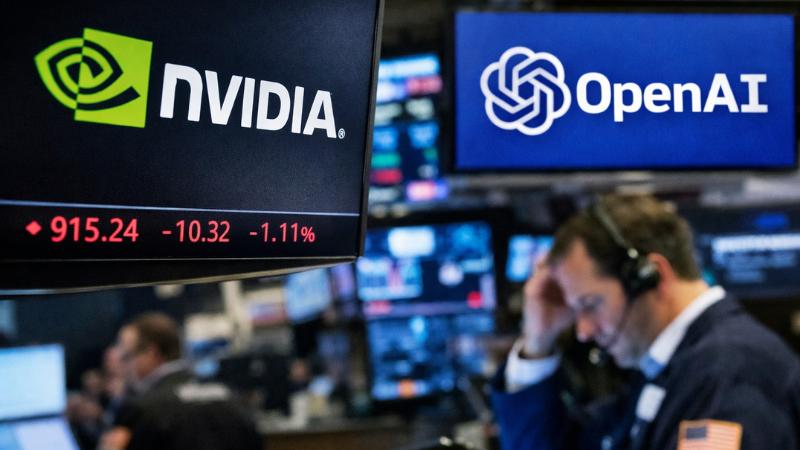
Nvidia shares declined on Monday as uncertainty surrounding the chipmaker’s potential investment in OpenAI weighed on investor sentiment. The stock slipped in early trading after reports suggested that previously announced plans involving a massive financial commitment to the artificial intelligence company may not yet be finalized. The market reaction underscored growing sensitivity around large-scale AI investments and the evolving relationships among major technology players.
The semiconductor giant’s shares were down 1.1 percent by late morning trading, reflecting renewed questions about the scope and structure of a proposed agreement with OpenAI. According to people familiar with the matter, discussions between the two companies remain unresolved, leaving investors unclear about the ultimate size and timing of any investment. Nvidia had announced in September that it planned to invest up to $100 billion in OpenAI while also committing to build at least 10 gigawatts of computing capacity to support the AI firm’s operations.
Subsequent remarks from Nvidia Chief Executive Officer Jensen Huang, however, introduced a more cautious tone. Huang indicated in recent discussions with industry contacts that the figure cited earlier was nonbinding and subject to change. He also expressed concerns about the overall discipline of OpenAI’s business strategy and pointed to intensifying competition in the artificial intelligence sector as a factor influencing Nvidia’s approach. Rival AI developers backed by other major technology companies have raised questions about long-term profitability and strategic alignment across the industry.
Over the weekend, Huang pushed back against reports suggesting dissatisfaction with OpenAI, describing such claims as inaccurate. While reaffirming his confidence in the company and its leadership, he emphasized that any investment would not necessarily reach the $100 billion level. Huang said Nvidia expects to make a significant financial commitment and described OpenAI as one of the most influential technology companies of the current era, highlighting the importance of continued collaboration.
Despite the reassurance, analysts noted that the absence of a firm figure has contributed to short-term uncertainty in the market. Investors appeared unsettled by the lack of clarity, particularly given the scale of the potential transaction and Nvidia’s central role in supplying hardware for advanced AI systems. Market observers said such high-profile negotiations rarely unfold in public view, adding to the perception of instability.
Some analysts pointed to broader concerns about so-called circular financing within the artificial intelligence ecosystem, where leading companies invest heavily in one another. This dynamic has prompted debate about whether financial ties among AI firms obscure true profitability and risk exposure. Clarifying the limits of its commitment may help Nvidia address those concerns while preserving its negotiating position.
Even as questions persist, analysts broadly expect Nvidia to remain deeply involved in OpenAI’s future funding. Many believe any eventual investment will still rank among the largest in the company’s history, reinforcing Nvidia’s influence in the rapidly expanding AI market. For now, however, the uncertainty surrounding the deal has injected volatility into Nvidia’s stock, reflecting investor caution as negotiations continue and the artificial intelligence landscape evolves.