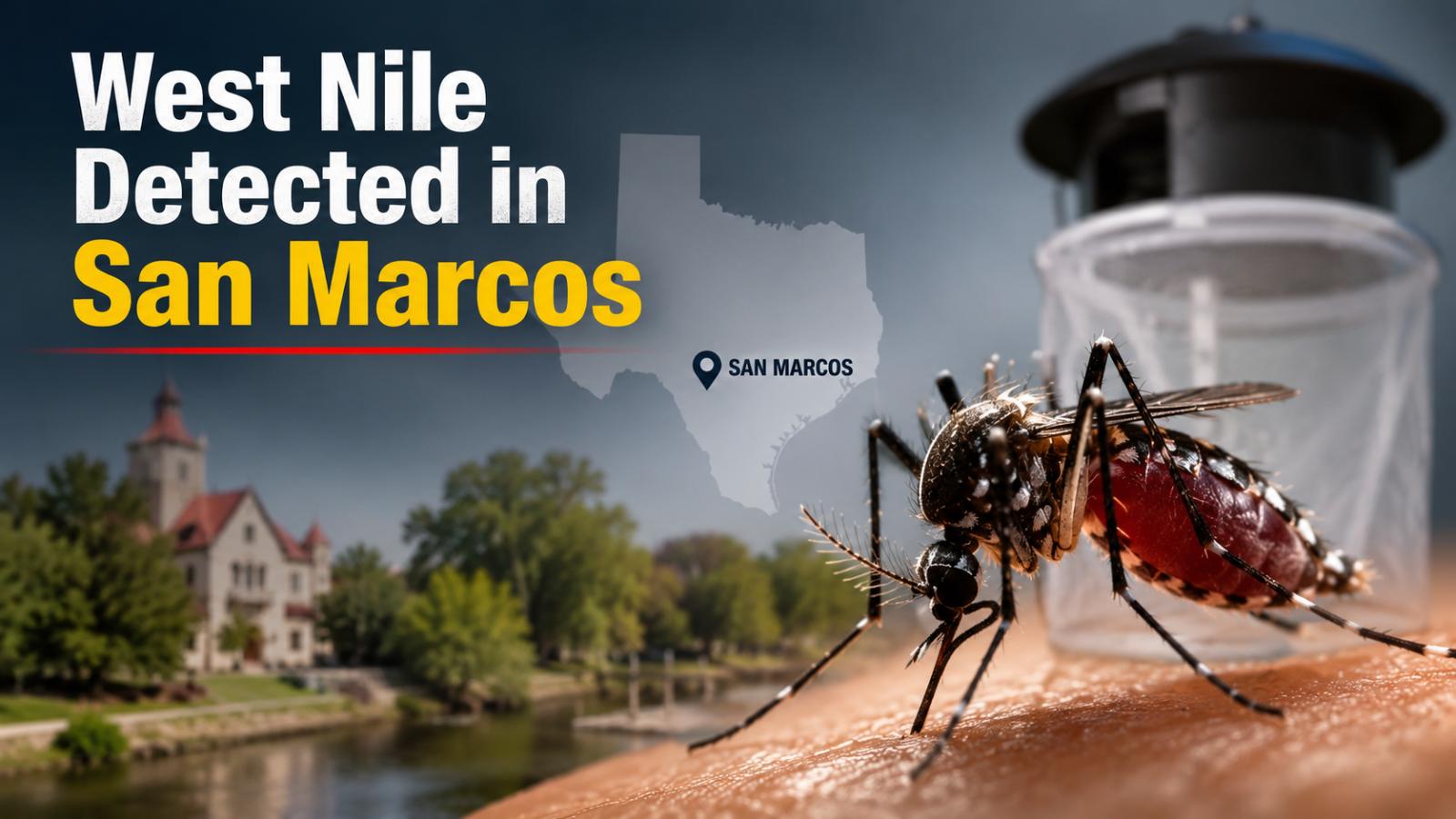
West Nile virus in San Marcos has been confirmed in two mosquito traps collected from separate locations in ZIP code 78666 on Tuesday, July 7, 2026. They are Hays County’s first positive traps of the season, although no human infections have been reported locally.
The samples were collected in ZIP code 78666 on Tuesday, July 7, 2026, through the Hays County Development Services Mosquito Surveillance Program. The Texas Department of State Health Services confirmed the results. No human cases have been reported in Hays County at this time.
Texas West Nile Activity Continues
As of Sunday, July 5, 2026, Texas had recorded 462 mosquito traps that tested positive for West Nile virus, according to information included in the county’s public-health notice. State health officials had also confirmed Texas’ first human West Nile illness of 2026 in Harris County in May.
A positive mosquito trap does not mean everyone nearby has been exposed. It indicates that mosquitoes carrying the virus are present and that residents should take precautions against bites.
West Nile Virus Symptoms
West Nile virus is transmitted primarily through the bite of an infected mosquito. About 80% of infected people experience no symptoms, while others may develop fever, headache, body aches, joint pain, vomiting, diarrhea, a rash or swollen lymph nodes.
Adults aged 50 and older and people with weakened immune systems face a greater risk of severe disease. Serious symptoms can include neck stiffness, confusion, tremors, vision problems, muscle weakness or paralysis.
People experiencing concerning symptoms after mosquito exposure should contact a healthcare provider. There is no specific antiviral treatment for West Nile virus, and medical care generally focuses on managing symptoms.
Preventing Mosquito Bites and Breeding
Hays County officials are encouraging residents to follow the “Three Ds”:
Defend: Apply an EPA-registered insect repellent and follow the product instructions.
Dress: Wear loose, light-colored clothing, including long sleeves and pants, when practical.
Drain: Empty or treat standing water around homes and workplaces, including water in buckets, planters, gutters, pet dishes and other containers.
Mosquitoes are most active in Texas from May through November, although they may be present throughout the year. Continued surveillance will help health officials determine whether infected mosquito activity is spreading to additional parts of Hays County.