A new Pew Research Center survey shows the India-Pakistan threat perception remains deeply rooted. Rivalry, China’s role, Russia ties, mistrust and public opinion reveal how decades of tension continue to shape South Asia despite major changes in the global order.
Rivalry
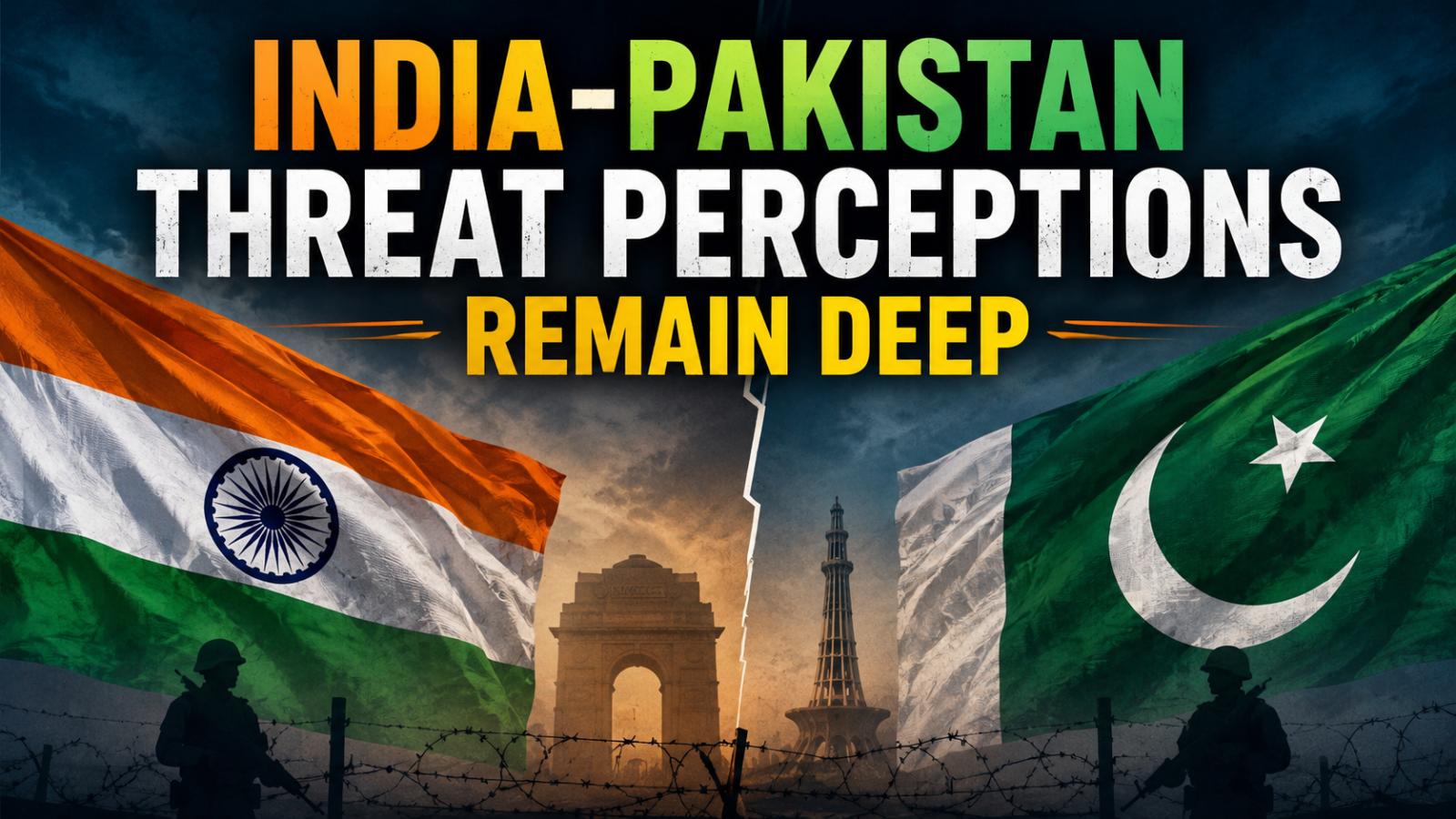
India and Pakistan continue to see each other as their biggest geopolitical threat nearly eight decades after Partition. According to the Pew Research Center survey released on August 13, 2026, 54% of Indians named Pakistan as their country’s greatest threat, while 43% of Pakistanis identified India.
China ranked second among Indian respondents, with 21% calling it the biggest threat. In Pakistan, Israel and the United States were each named by 24% of respondents. The findings show that security concerns remain central to the India-Pakistan rivalry despite shifts in regional diplomacy and international partnerships.
China ally
Pakistan’s outlook toward China stands in sharp contrast to its views of India and the United States. About 75% of Pakistani adults named China as their country’s most important ally, while 12% chose Saudi Arabia.
Pew also found that 90% of Pakistanis held a favourable opinion of China, highlighting Beijing’s strong position in Pakistan’s strategic outlook. Economic cooperation, defence relations and wider geopolitical interests have helped strengthen the China-Pakistan partnership over the years.
Russia ties
India’s choice of allies was considerably more divided. Around 36% of Indians named Russia as the country’s most important ally, while 16% selected the United States. Roughly one-third did not provide an answer.
The results reflect India’s broader approach of maintaining important relationships with several major powers. Pew found that Indians generally viewed Russia and the United States more positively than China, showing how India’s international outlook differs sharply from Pakistan’s closer alignment with Beijing.
Mistrust
The divide goes beyond governments and military strategy. Around 78% of Indians held an unfavourable view of Pakistan, including 65% who described their opinion as very unfavourable. In Pakistan, roughly nine in ten respondents viewed India unfavourably, with 73% holding a very unfavourable opinion.
The survey also found that people in both countries tend to believe their own side is committed to better relations while questioning whether the other country shares that commitment. Such perceptions make rebuilding diplomatic trust considerably harder.
Public opinion
The findings are based on surveys of 3,566 adults in India conducted from February 8 to April 27, 2026, and 1,039 adults in Pakistan surveyed from April 8 to May 7, 2026.
The wider global order may be changing, but public opinion suggests the psychological distance between India and Pakistan remains substantial. Competing security priorities, border tensions, different international partnerships and decades of political disputes continue to reinforce the divide.
For South Asia, this is significant. Future diplomatic initiatives will have to address not only disputes between governments but also deeply established public perceptions. Without sustained engagement and greater confidence on both sides, changing the India-Pakistan relationship may prove much harder than reshaping formal alliances.