










Israel says Hamas intelligence leader killed in Gaza strike
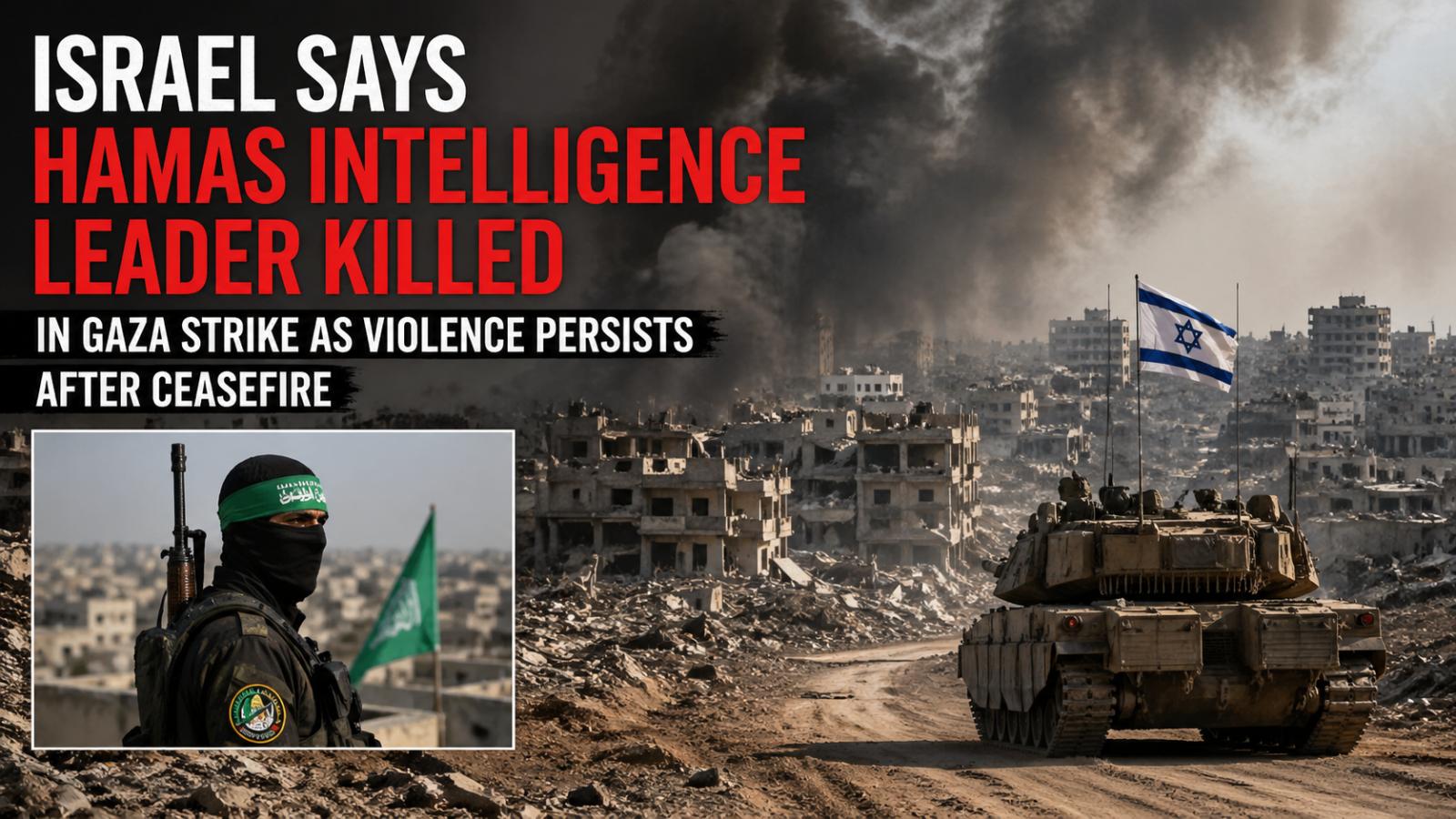
Israel says it killed a senior Hamas intelligence leader involved in planning the October 7 attack, as violence continues in Gaza despite a ceasefire, with reports of additional casualties from a separate drone strike. The Israel Defense Forces said on Wednesday, April 29, 2026, that Iyad Ahmed Abd al Rahman Shambari, a senior figure in Hamas’s military intelligence wing, was killed in the Gaza Strip. According to the IDF, Shambari led the operations department within Hamas military intelligence and played a key role in planning the October 7, 2023, attack on Israel that triggered the ongoing war. The IDF statement did not specify the exact time of the strike or provide additional operational details. The Israeli military has repeatedly targeted senior Hamas figures as part of its broader campaign in Gaza following the large-scale assault that prompted Israel’s ground offensive in the enclave. A ceasefire announced on Friday, October 10, 2025, has largely reduced large-scale combat, but violence has continued across Gaza. The Gaza health ministry, which operates under Hamas authority, reported that at least 818 Palestinians have been killed since the truce began. The United Nations has previously considered such figures broadly reliable, though independent verification remains limited. Separately, Gaza’s civil defense agency said four people were killed and six others injured in a drone strike targeting a vehicle in the western Al Rimal neighborhood of Gaza City. A Gaza security official identified two of the victims as Hamas commander Iyad al Shanbari and his son Salah. The identities of the other two individuals were not disclosed. There was no immediate independent confirmation of the identities of those killed in that strike. The IDF has not publicly commented on the specific incident described by local authorities. The developments underscore ongoing instability in Gaza despite the ceasefire, with sporadic strikes and casualties continuing to be reported.
Israel says Hamas intelligence leader killed in Gaza strike
Israel says it killed a senior Hamas intelligence leader involved in planning the October 7 attack, as violence continues in Gaza despite a ceasefire, with reports of additional casualties from a separate drone strike. The Israel Defense Forces said on Wednesday, April 29, 2026, that Iyad Ahmed Abd al Rahman Shambari, a senior figure in Hamas’s military intelligence wing, was killed in the Gaza Strip. According to the IDF, Shambari led the operations department within Hamas military intelligence and played a key role in planning the October 7, 2023, attack on Israel that triggered the ongoing war. The IDF statement did not specify the exact time of the strike or provide additional operational details. The Israeli military has repeatedly targeted senior Hamas figures as part of its broader campaign in Gaza following the large-scale assault that prompted Israel’s ground offensive in the enclave. A ceasefire announced on Friday, October 10, 2025, has largely reduced large-scale combat, but violence has continued across Gaza. The Gaza health ministry, which operates under Hamas authority, reported that at least 818 Palestinians have been killed since the truce began. The United Nations has previously considered such figures broadly reliable, though independent verification remains limited. Separately, Gaza’s civil defense agency said four people were killed and six others injured in a drone strike targeting a vehicle in the western Al Rimal neighborhood of Gaza City. A Gaza security official identified two of the victims as Hamas commander Iyad al Shanbari and his son Salah. The identities of the other two individuals were not disclosed. There was no immediate independent confirmation of the identities of those killed in that strike. The IDF has not publicly commented on the specific incident described by local authorities. The developments underscore ongoing instability in Gaza despite the ceasefire, with sporadic strikes and casualties continuing to be reported.
Massive Fire Breaks Out at Gaur Green Avenue in Ghaziabad, Residents Evacuated
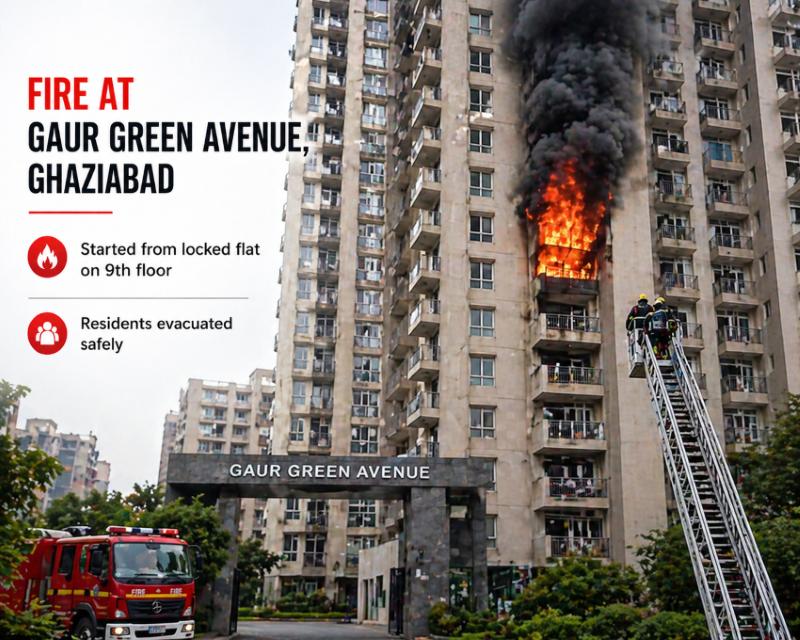
A major fire broke out at Gaur Green Avenue, a residential society in Indirapuram, Ghaziabad, on Tuesday morning. The incident caused panic among residents, but timely evacuation helped prevent casualties.According to reports, the fire started around 9:00 AM in a locked apartment on the ninth floor of one of the towers. Thick smoke quickly spread to nearby floors, forcing residents to rush out of their homes. Fire department teams arrived at the spot soon after receiving the alert.
Massive Fire Breaks Out at Gaur Green Avenue in Ghaziabad, Residents Evacuated
A major fire broke out at Gaur Green Avenue, a residential society in Indirapuram, Ghaziabad, on Tuesday morning. The incident caused panic among residents, but timely evacuation helped prevent casualties.According to reports, the fire started around 9:00 AM in a locked apartment on the ninth floor of one of the towers. Thick smoke quickly spread to nearby floors, forcing residents to rush out of their homes. Fire department teams arrived at the spot soon after receiving the alert.
Iran offers Strait of Hormuz reopening if US lifts blockade, delays nuclear talks
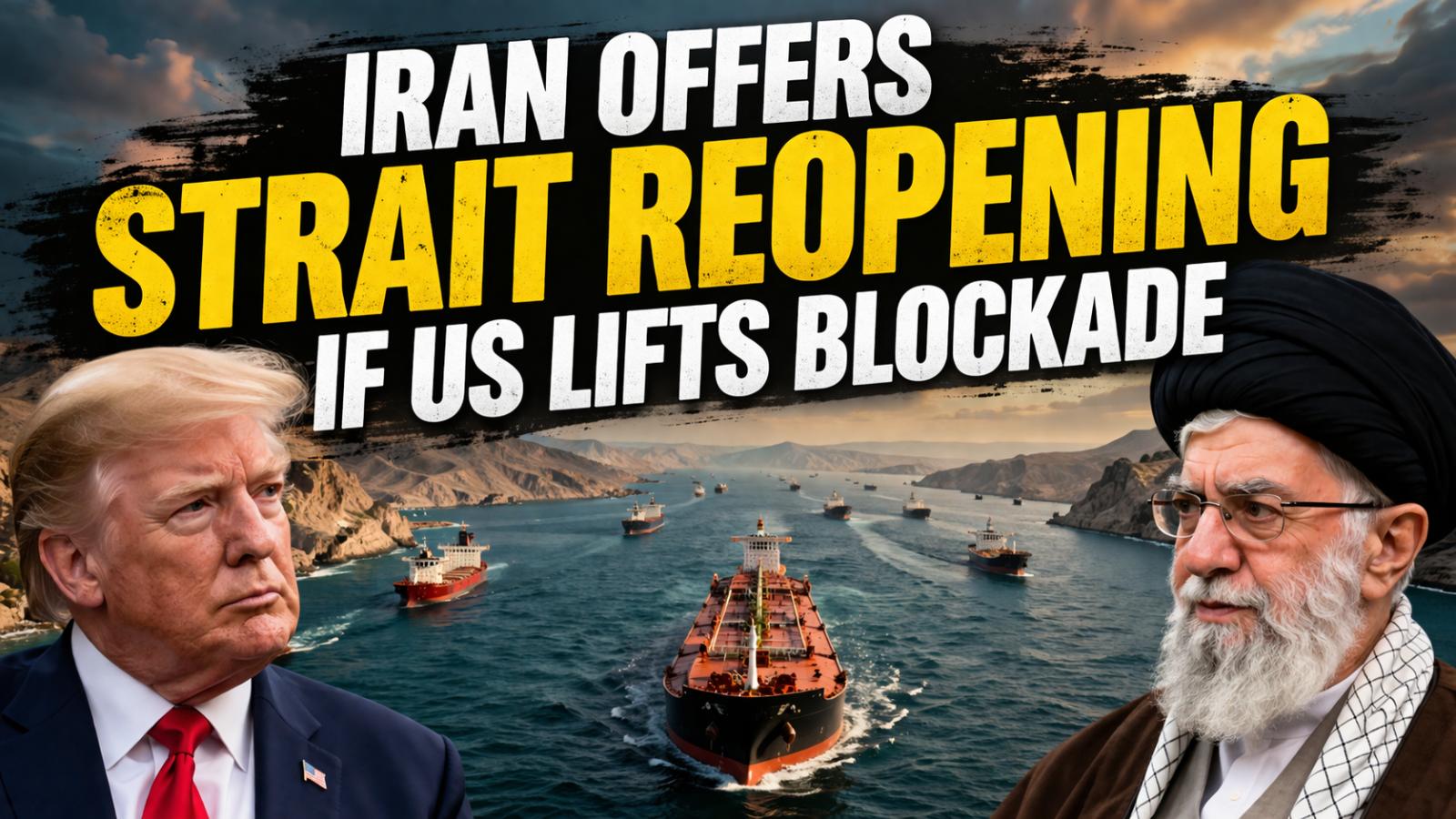
Iran offered to reopen the Strait of Hormuz if the U.S. lifts its blockade and ends hostilities, but Washington insists any deal must address Tehran’s nuclear program, leaving tensions high and global energy markets under strain. Iran has proposed reopening the Strait of Hormuz if the United States lifts its blockade and agrees to end hostilities, according to regional officials familiar with negotiations disclosed on Monday, April 28, 2026. The proposal, deliver
Iran offers Strait of Hormuz reopening if US lifts blockade, delays nuclear talks
Iran offered to reopen the Strait of Hormuz if the U.S. lifts its blockade and ends hostilities, but Washington insists any deal must address Tehran’s nuclear program, leaving tensions high and global energy markets under strain. Iran has proposed reopening the Strait of Hormuz if the United States lifts its blockade and agrees to end hostilities, according to regional officials familiar with negotiations disclosed on Monday, April 28, 2026. The proposal, deliver
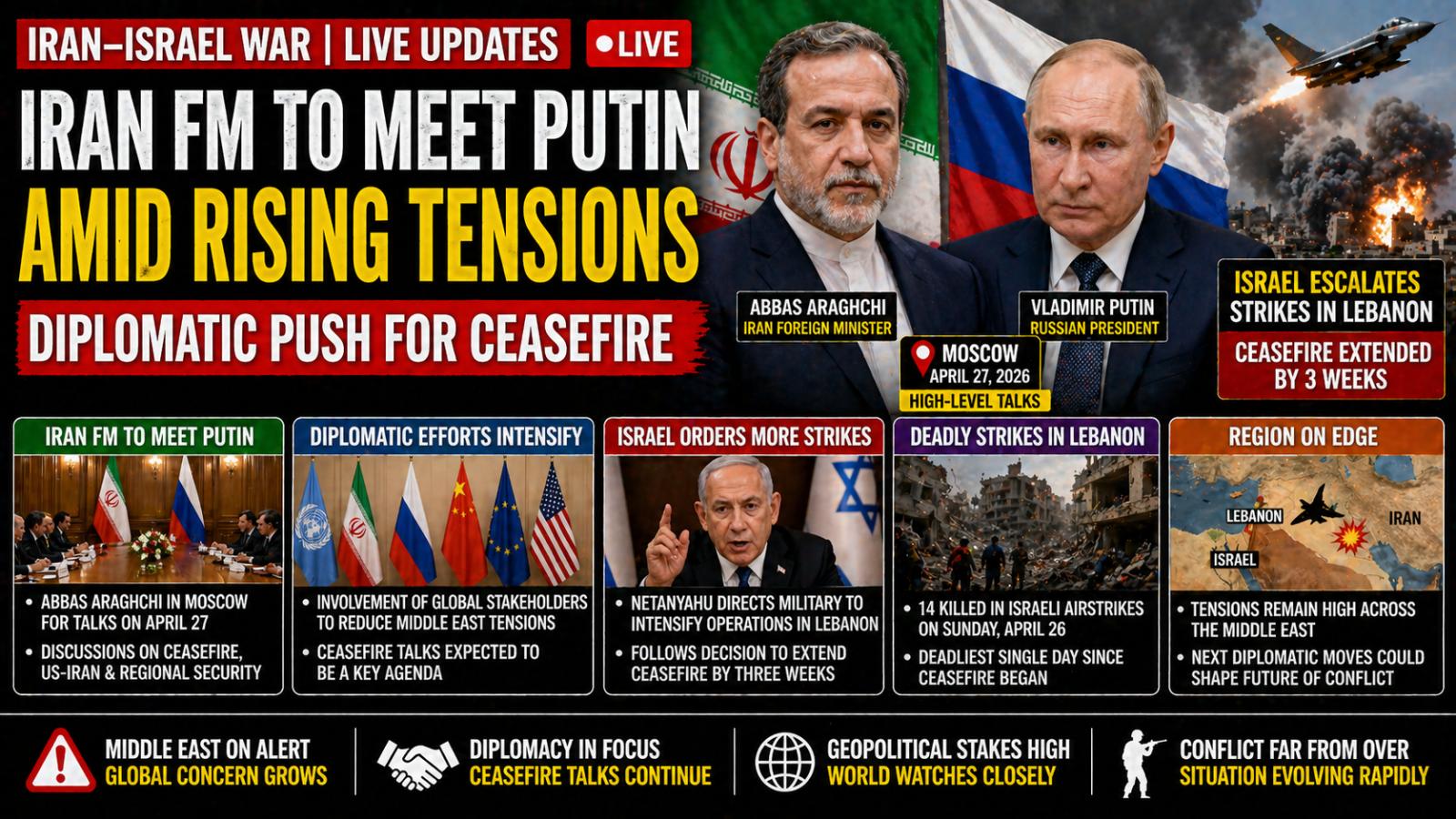
Iran-Israel war live updates: Iran FM to meet Putin amid rising tensions
Iran’s foreign minister Abbas Araghchi meets Vladimir Putin in Moscow on Monday, April 27, for ceasefire talks as Israel intensifies strikes on Hezbollah in Lebanon, where 14 were killed Sunday, April 26, marking the deadliest day since the truce began. Iran-Israel war live updates: Iran FM to meet Putin amid rising tensions as Abbas Araghchi prepares for high-level tal
Iran-Israel war live updates: Iran FM to meet Putin amid rising tensions
Iran’s foreign minister Abbas Araghchi meets Vladimir Putin in Moscow on Monday, April 27, for ceasefire talks as Israel intensifies strikes on Hezbollah in Lebanon, where 14 were killed Sunday, April 26, marking the deadliest day since the truce began. Iran-Israel war live updates: Iran FM to meet Putin amid rising tensions as Abbas Araghchi prepares for high-level tal
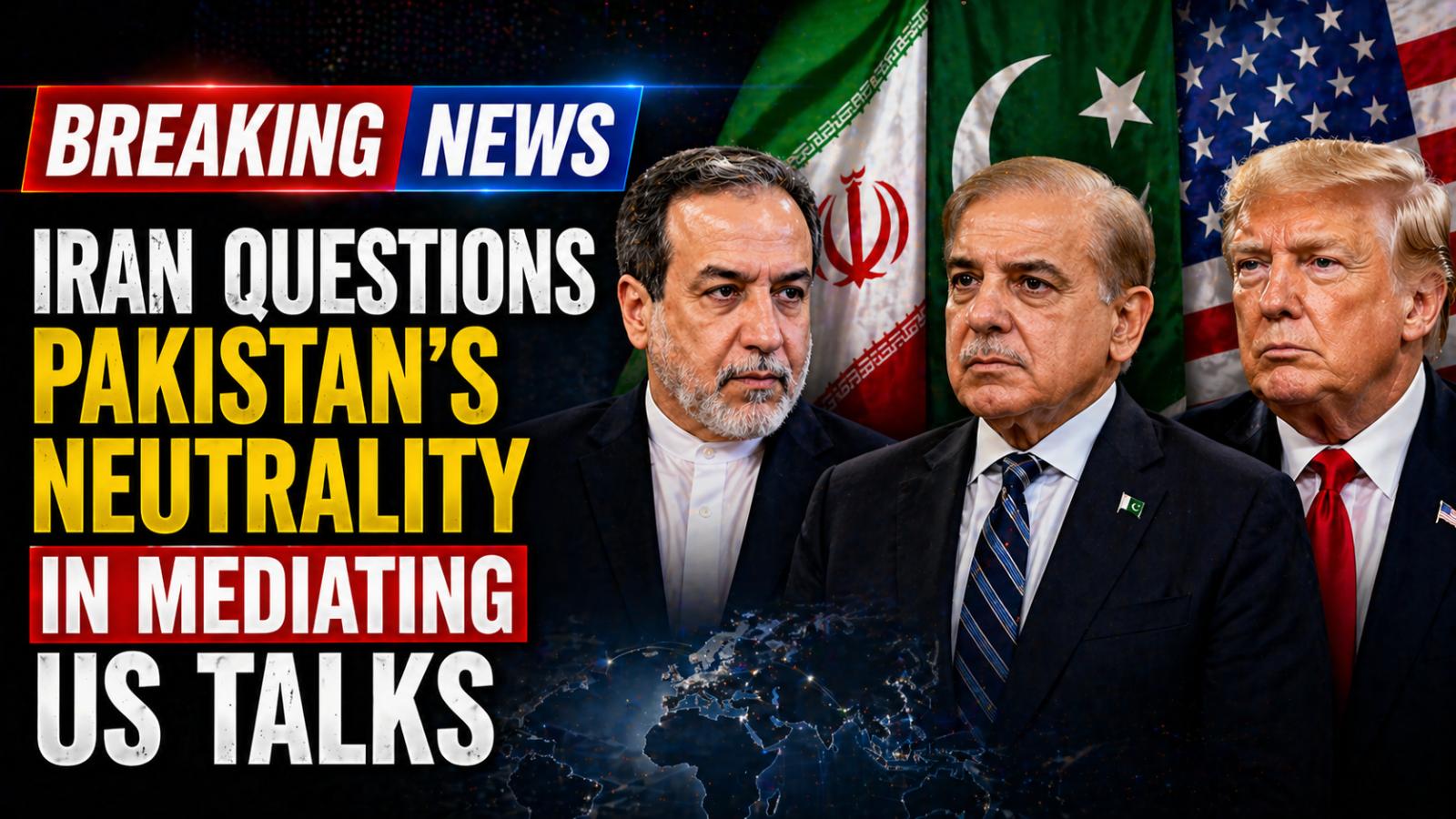
Tehran Raises Doubts Over Pakistan Role in US-Iran Negotiations
Iran has raised concerns about Pakistan’s role as a mediator in ongoing diplomatic efforts with the United States, with officials questioning Islamabad’s neutrality. Ebrahim Rezaei, spokesperson for Iran’s National Security and Foreign Policy Commission, said Pakistan lacks the credibility required to act as an impartial intermediary in sensitive negotiations. Rezaei argued that Paki
Tehran Raises Doubts Over Pakistan Role in US-Iran Negotiations
Iran has raised concerns about Pakistan’s role as a mediator in ongoing diplomatic efforts with the United States, with officials questioning Islamabad’s neutrality. Ebrahim Rezaei, spokesperson for Iran’s National Security and Foreign Policy Commission, said Pakistan lacks the credibility required to act as an impartial intermediary in sensitive negotiations. Rezaei argued that Paki
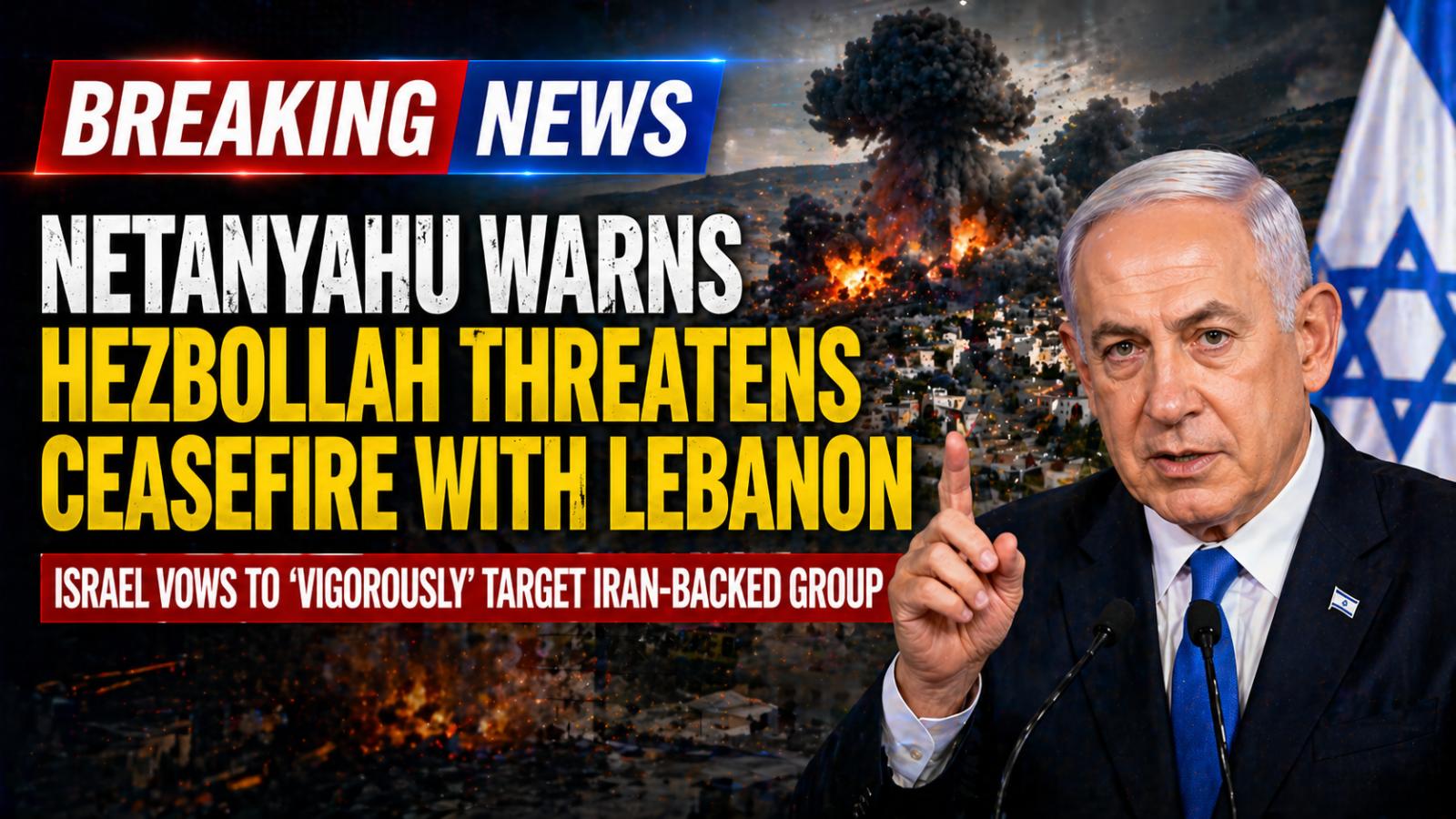
Israel Accuses Hezbollah of Violating Ceasefire Amid Rising Tensions
Israeli Prime Minister Benjamin Netanyahu has warned that ongoing actions by Hezbollah are placing the fragile ceasefire between Israel and Lebanon under increasing strain. Speaking during a weekly Cabinet meeting, Netanyahu stated that repeated violations by the Iran-backed group were effectively undermining the agreement intended to reduce hostilities along the border. In a separate statement, the Israeli military said recent activity attributed to Hezbollah represented a direct breach of ceasefire understandings. The Israel Defense Forces confirmed that it conducted overnight strikes on multiple structures in southern Lebanon, describing them as locations used by Hezbollah for operational purposes. These developments come amid heightened tensions despite ongoing diplomatic efforts to stabilize the region. The ceasefire arrangement, initially agreed upon for a limited period, was recently extended following discussions in Washington. During those talks, US President Donald Trump described the negotiations as productive, while acknowledging the complexities posed by Hezbollah’s involvement. The agreement aimed to provide additional time for de-escalation and further dialogue between the parties. Despite these efforts, reports of violations have continued to emerge from both sides since the truce came into effect. The situation remains fluid, with both Israel and Hezbollah accusing each other of actions that could destabilize the agreement. The initial ceasefire period, originally set to expire soon after its implementation, has faced mounting challenges as regional dynamics continue to shift. Observers note that the involvement of Iran-backed forces and the broader geopolitical context add complexity to maintaining the ceasefire. With both sides remaining on alert, the risk of escalation persists, even as diplomatic channels remain open.
Israel Accuses Hezbollah of Violating Ceasefire Amid Rising Tensions
Israeli Prime Minister Benjamin Netanyahu has warned that ongoing actions by Hezbollah are placing the fragile ceasefire between Israel and Lebanon under increasing strain. Speaking during a weekly Cabinet meeting, Netanyahu stated that repeated violations by the Iran-backed group were effectively undermining the agreement intended to reduce hostilities along the border. In a separate statement, the Israeli military said recent activity attributed to Hezbollah represented a direct breach of ceasefire understandings. The Israel Defense Forces confirmed that it conducted overnight strikes on multiple structures in southern Lebanon, describing them as locations used by Hezbollah for operational purposes. These developments come amid heightened tensions despite ongoing diplomatic efforts to stabilize the region. The ceasefire arrangement, initially agreed upon for a limited period, was recently extended following discussions in Washington. During those talks, US President Donald Trump described the negotiations as productive, while acknowledging the complexities posed by Hezbollah’s involvement. The agreement aimed to provide additional time for de-escalation and further dialogue between the parties. Despite these efforts, reports of violations have continued to emerge from both sides since the truce came into effect. The situation remains fluid, with both Israel and Hezbollah accusing each other of actions that could destabilize the agreement. The initial ceasefire period, originally set to expire soon after its implementation, has faced mounting challenges as regional dynamics continue to shift. Observers note that the involvement of Iran-backed forces and the broader geopolitical context add complexity to maintaining the ceasefire. With both sides remaining on alert, the risk of escalation persists, even as diplomatic channels remain open.

Japan earthquake hits Hokkaido, raising concerns over further tremors
A magnitude 6.2 earthquake struck Hokkaido, Japan, at 5:23 AM JST on Monday, April 27, 2026. No tsunami warning was issued, but officials warned of possible aftershocks amid heightened seismic activity following recent quakes. Japan earthquake hits Hokkaido, raising concerns over further tremors A strong earthquake struck Japan’s northern island of Hokkaido at 5:23 AM JST on Monday, April 27, 2026, according to the Japan Meteorological Agency and the U.S. Geologi
Japan earthquake hits Hokkaido, raising concerns over further tremors
A magnitude 6.2 earthquake struck Hokkaido, Japan, at 5:23 AM JST on Monday, April 27, 2026. No tsunami warning was issued, but officials warned of possible aftershocks amid heightened seismic activity following recent quakes. Japan earthquake hits Hokkaido, raising concerns over further tremors A strong earthquake struck Japan’s northern island of Hokkaido at 5:23 AM JST on Monday, April 27, 2026, according to the Japan Meteorological Agency and the U.S. Geologi

Pope Leo XIV condemns death penalty as US restores firing squad executions
Hours after the US Justice Department announced the lifting of the federal moratorium on capital punishment and the reinstatement of firing squad executions, Pope Leo XIV issued a strongly worded message condemning the death penalty. Delivered through a video address to DePaul University in Chicago, the Pope’s remarks coincided with the 15th anniversary of Illinois abolishing capital punishment, underscoring the significance of the moment. In his message, Pope Leo XIV emphasized t
Pope Leo XIV condemns death penalty as US restores firing squad executions
Hours after the US Justice Department announced the lifting of the federal moratorium on capital punishment and the reinstatement of firing squad executions, Pope Leo XIV issued a strongly worded message condemning the death penalty. Delivered through a video address to DePaul University in Chicago, the Pope’s remarks coincided with the 15th anniversary of Illinois abolishing capital punishment, underscoring the significance of the moment. In his message, Pope Leo XIV emphasized t

Fire engulfs historic Queens church after blaze spreads from rectory
A five-alarm fire in Queens severely damaged a historic church after spreading from a nearby rectory Thursday evening. Six firefighters were injured as crews battled the blaze for hours. Fire engulfs historic Queens church after blaze spreads from rectory as a massive fire tore through a historic house of worship in New York City, sending flames through the structure and prompting a large-scale emergency response. The New York City Fire Department said the blaze be
Fire engulfs historic Queens church after blaze spreads from rectory
A five-alarm fire in Queens severely damaged a historic church after spreading from a nearby rectory Thursday evening. Six firefighters were injured as crews battled the blaze for hours. Fire engulfs historic Queens church after blaze spreads from rectory as a massive fire tore through a historic house of worship in New York City, sending flames through the structure and prompting a large-scale emergency response. The New York City Fire Department said the blaze be
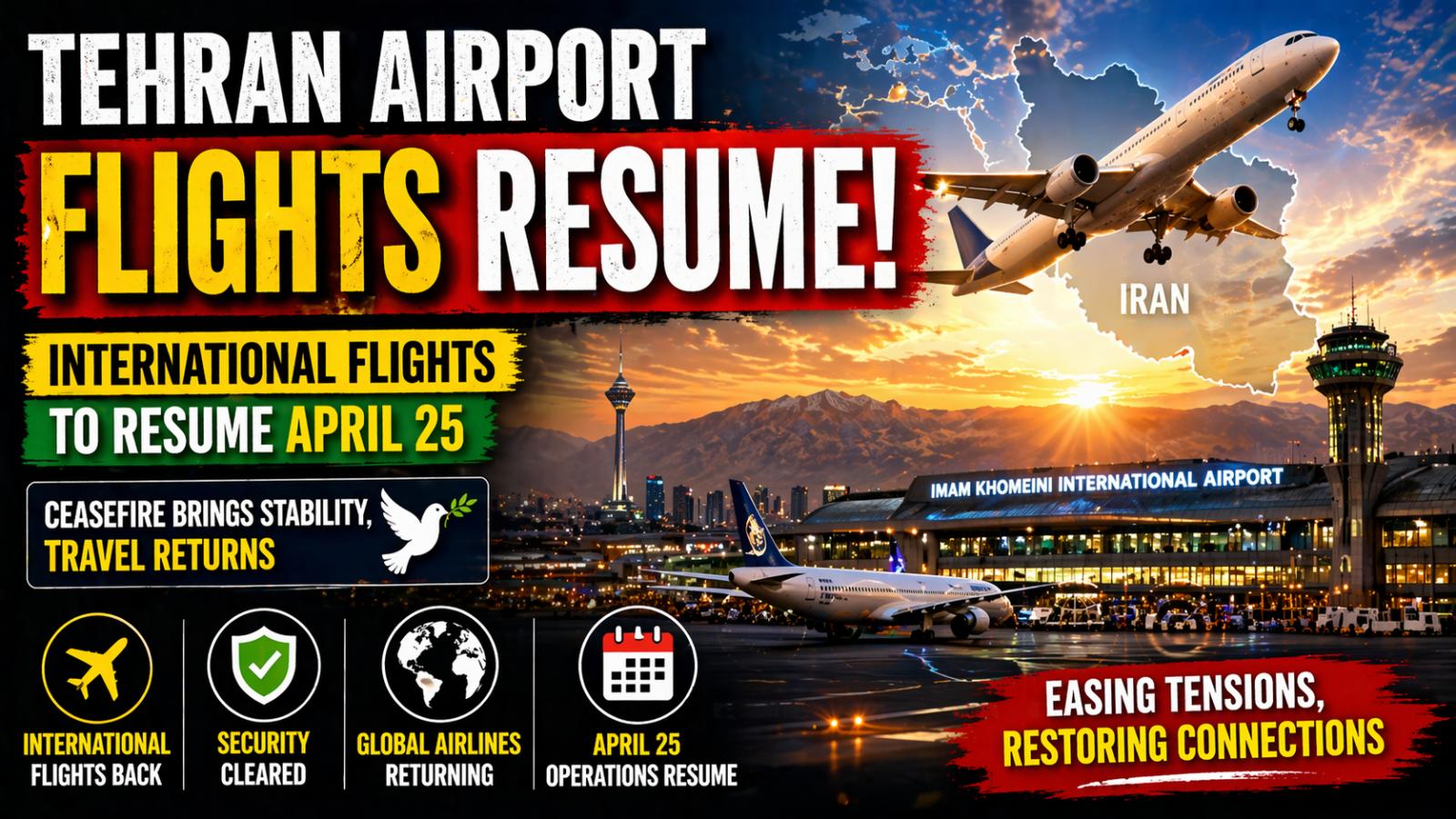
What does Tehran airport reopening signal? It marks easing regional tensions
What does Tehran airport reopening signal? It marks easing regional tensions, Tehran’s primary international gateway is preparing to resume global flight operations on Saturday, April 25, 2026, according to Iranian aviation authorities, marking a significant step toward restoring stability after a week-long suspension tied to heightened regional tensions. Airport reopening follows week-long aviation shutdown Imam Khomeini International
What does Tehran airport reopening signal? It marks easing regional tensions
What does Tehran airport reopening signal? It marks easing regional tensions, Tehran’s primary international gateway is preparing to resume global flight operations on Saturday, April 25, 2026, according to Iranian aviation authorities, marking a significant step toward restoring stability after a week-long suspension tied to heightened regional tensions. Airport reopening follows week-long aviation shutdown Imam Khomeini International
US Deploys Third Aircraft Carrier as Trump Signals No Urgency for Iran Deal
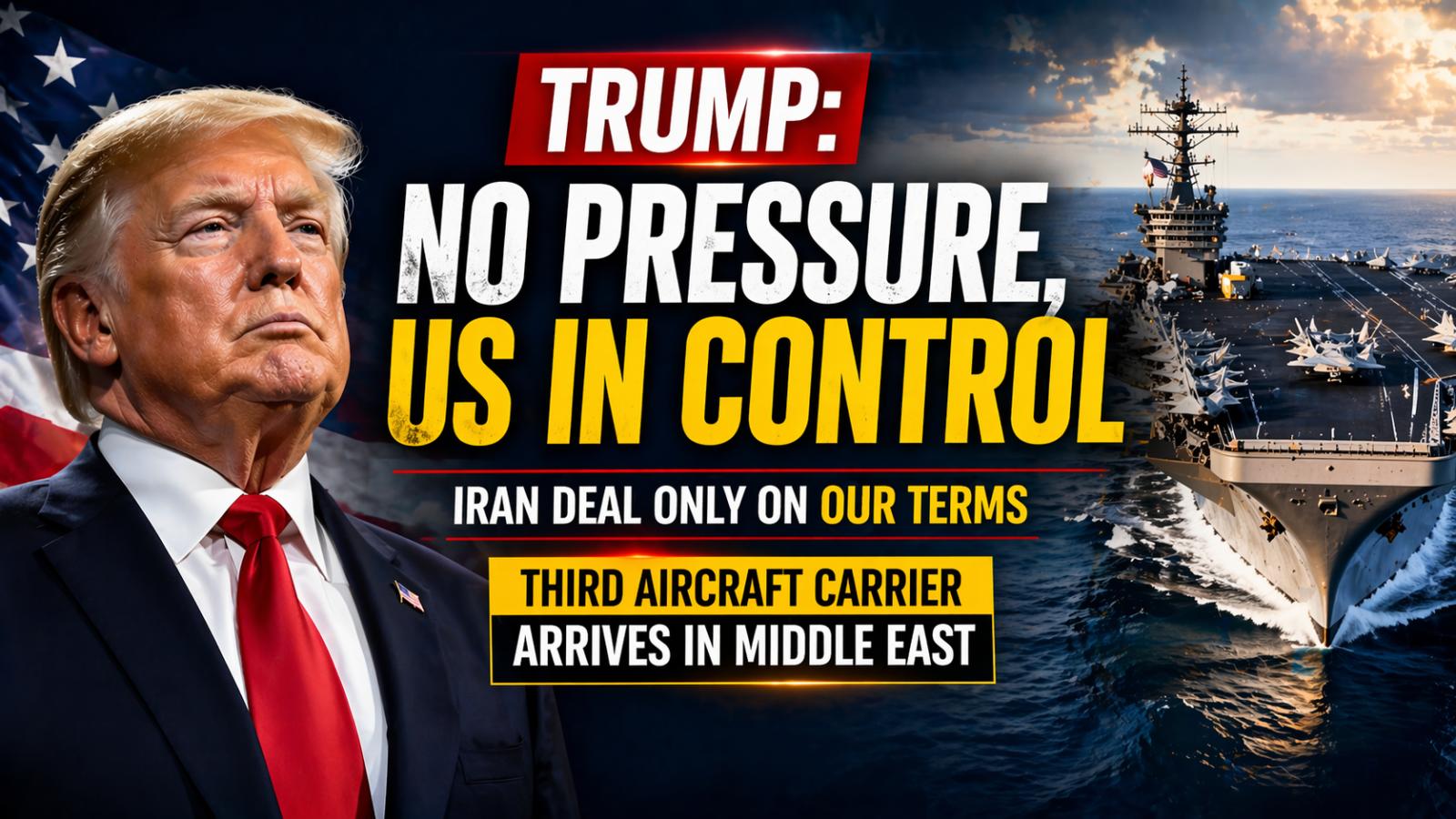
US President Donald Trump has dismissed speculation that Washington is under pressure to secure a deal with Iran, stating that the United States is in no rush to negotiate amid ongoing tensions. In a recent statement, Trump emphasized that while the US has the flexibility to wait, Iran faces increasing urgency as conditions evolve. He asserted that recent developments have significantly weakened Iran’s military capabilities, pointing to setbacks across its naval and air forces as well as the degradation of its defense systems. Trump also highlighted what he described as a tightening blockade, suggesting that the strategic balance currently favors the United States and its allies. He reiterated that any agreement would only move forward if it aligns with American interests and broader global stability, rejecting claims that his administration is eager to conclude talks quickly. At the same time, the US military has reinforced its presence in the region. United States Central Command confirmed the arrival of a third aircraft carrier, the USS George H.W. Bush, into its operational zone. The carrier is currently positioned in the Indian Ocean, joining the USS Abraham Lincoln in the Arabian Sea and the USS Gerald R. Ford in the Red Sea. The deployment marks a notable expansion of US naval strength in the Middle East during a fragile ceasefire period. The USS George H.W. Bush followed an unusual route, traveling around the Horn of Africa before entering the region, underscoring the strategic importance of its positioning. These developments reflect a continued emphasis on military readiness while diplomatic uncertainty persists, with Washington signaling that timing and terms of any agreement will remain firmly under its control.
US Deploys Third Aircraft Carrier as Trump Signals No Urgency for Iran Deal
US President Donald Trump has dismissed speculation that Washington is under pressure to secure a deal with Iran, stating that the United States is in no rush to negotiate amid ongoing tensions. In a recent statement, Trump emphasized that while the US has the flexibility to wait, Iran faces increasing urgency as conditions evolve. He asserted that recent developments have significantly weakened Iran’s military capabilities, pointing to setbacks across its naval and air forces as well as the degradation of its defense systems. Trump also highlighted what he described as a tightening blockade, suggesting that the strategic balance currently favors the United States and its allies. He reiterated that any agreement would only move forward if it aligns with American interests and broader global stability, rejecting claims that his administration is eager to conclude talks quickly. At the same time, the US military has reinforced its presence in the region. United States Central Command confirmed the arrival of a third aircraft carrier, the USS George H.W. Bush, into its operational zone. The carrier is currently positioned in the Indian Ocean, joining the USS Abraham Lincoln in the Arabian Sea and the USS Gerald R. Ford in the Red Sea. The deployment marks a notable expansion of US naval strength in the Middle East during a fragile ceasefire period. The USS George H.W. Bush followed an unusual route, traveling around the Horn of Africa before entering the region, underscoring the strategic importance of its positioning. These developments reflect a continued emphasis on military readiness while diplomatic uncertainty persists, with Washington signaling that timing and terms of any agreement will remain firmly under its control.
Air defense activated in Tehran as tensions rise despite ceasefire
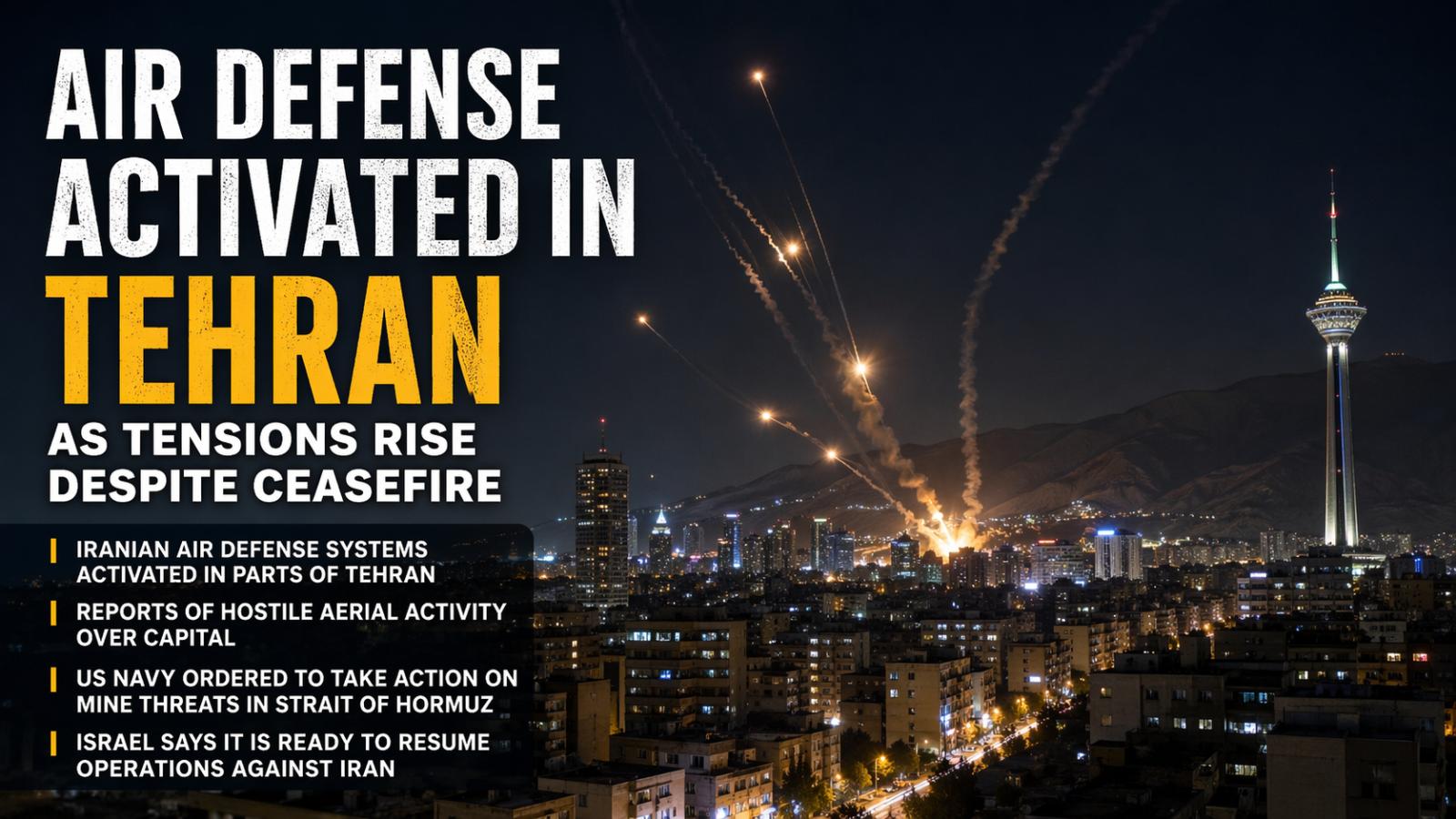
Air defense systems light up Tehran’s night sky as tensions escalate despite a ceasefire, with U.S. naval warnings and Israel signaling readiness for possible renewed conflict. Air defense activated in Tehran as tensions rise despite ceasefire as Iran’s capital experienced renewed military alert activity on Thursday, April 23, 2026, according to state media reports, marking the first such incident since a ceasefire was announced in the region. The developments
Air defense activated in Tehran as tensions rise despite ceasefire
Air defense systems light up Tehran’s night sky as tensions escalate despite a ceasefire, with U.S. naval warnings and Israel signaling readiness for possible renewed conflict. Air defense activated in Tehran as tensions rise despite ceasefire as Iran’s capital experienced renewed military alert activity on Thursday, April 23, 2026, according to state media reports, marking the first such incident since a ceasefire was announced in the region. The developments

“Butter Chicken Tsunami” Comment Triggers Debate Over Immigration and Trade
Comments by New Zealand lawmaker Shane Jones have sparked criticism from the Indian community and political leaders, highlighting tensions within the ruling coalition over immigration and a proposed trade agreement with India. Jones referred to the potential deal as a “butter chicken tsunami” during a radio interview, a remark that quickly drew backlash across political and community circles. Prime Minister Christopher Luxon described the statement as unhelpful but stopped short of labeling it discriminatory. The proposed agreement between New Zealand and India is already facing political hurdles, as Jones’s party, New Zealand First, has voiced opposition. This stance could force the governing party to seek support from the opposition Labour Party to secure parliamentary approval. Jones defended his position by raising concerns about immigration, arguing that unrestricted inflows could impact wages, infrastructure, and public services. His remarks have reignited broader debates about immigration policy and economic priorities, especially as the country navigates its trade relationships. Community leaders expressed strong concern over the tone of the comments. Representatives from Indian associations emphasized the contributions of Indians, who form one of the largest ethnic groups in the country. They argued that such rhetoric risks undermining social cohesion and creating unnecessary divisions within a multicultural society. The controversy has also drawn reactions from political opponents. Labour leader Chris Hipkins criticized the remarks, calling for more responsible discourse from public officials. Business representatives echoed similar sentiments, suggesting that policymakers should focus on constructive dialogue rather than rhetoric that could damage bilateral ties. Jones later acknowledged that colleagues had advised him to moderate his language, though he maintained that his comments were intended to emphasize concerns. As debate continues, the episode underscores the challenges facing New Zealand’s leadership in balancing trade ambitions, immigration policy, and maintaining unity within a diverse population.
“Butter Chicken Tsunami” Comment Triggers Debate Over Immigration and Trade
Comments by New Zealand lawmaker Shane Jones have sparked criticism from the Indian community and political leaders, highlighting tensions within the ruling coalition over immigration and a proposed trade agreement with India. Jones referred to the potential deal as a “butter chicken tsunami” during a radio interview, a remark that quickly drew backlash across political and community circles. Prime Minister Christopher Luxon described the statement as unhelpful but stopped short of labeling it discriminatory. The proposed agreement between New Zealand and India is already facing political hurdles, as Jones’s party, New Zealand First, has voiced opposition. This stance could force the governing party to seek support from the opposition Labour Party to secure parliamentary approval. Jones defended his position by raising concerns about immigration, arguing that unrestricted inflows could impact wages, infrastructure, and public services. His remarks have reignited broader debates about immigration policy and economic priorities, especially as the country navigates its trade relationships. Community leaders expressed strong concern over the tone of the comments. Representatives from Indian associations emphasized the contributions of Indians, who form one of the largest ethnic groups in the country. They argued that such rhetoric risks undermining social cohesion and creating unnecessary divisions within a multicultural society. The controversy has also drawn reactions from political opponents. Labour leader Chris Hipkins criticized the remarks, calling for more responsible discourse from public officials. Business representatives echoed similar sentiments, suggesting that policymakers should focus on constructive dialogue rather than rhetoric that could damage bilateral ties. Jones later acknowledged that colleagues had advised him to moderate his language, though he maintained that his comments were intended to emphasize concerns. As debate continues, the episode underscores the challenges facing New Zealand’s leadership in balancing trade ambitions, immigration policy, and maintaining unity within a diverse population.
US Maintains Pressure on Iran as Talks Remain Uncertain Amid Ceasefire
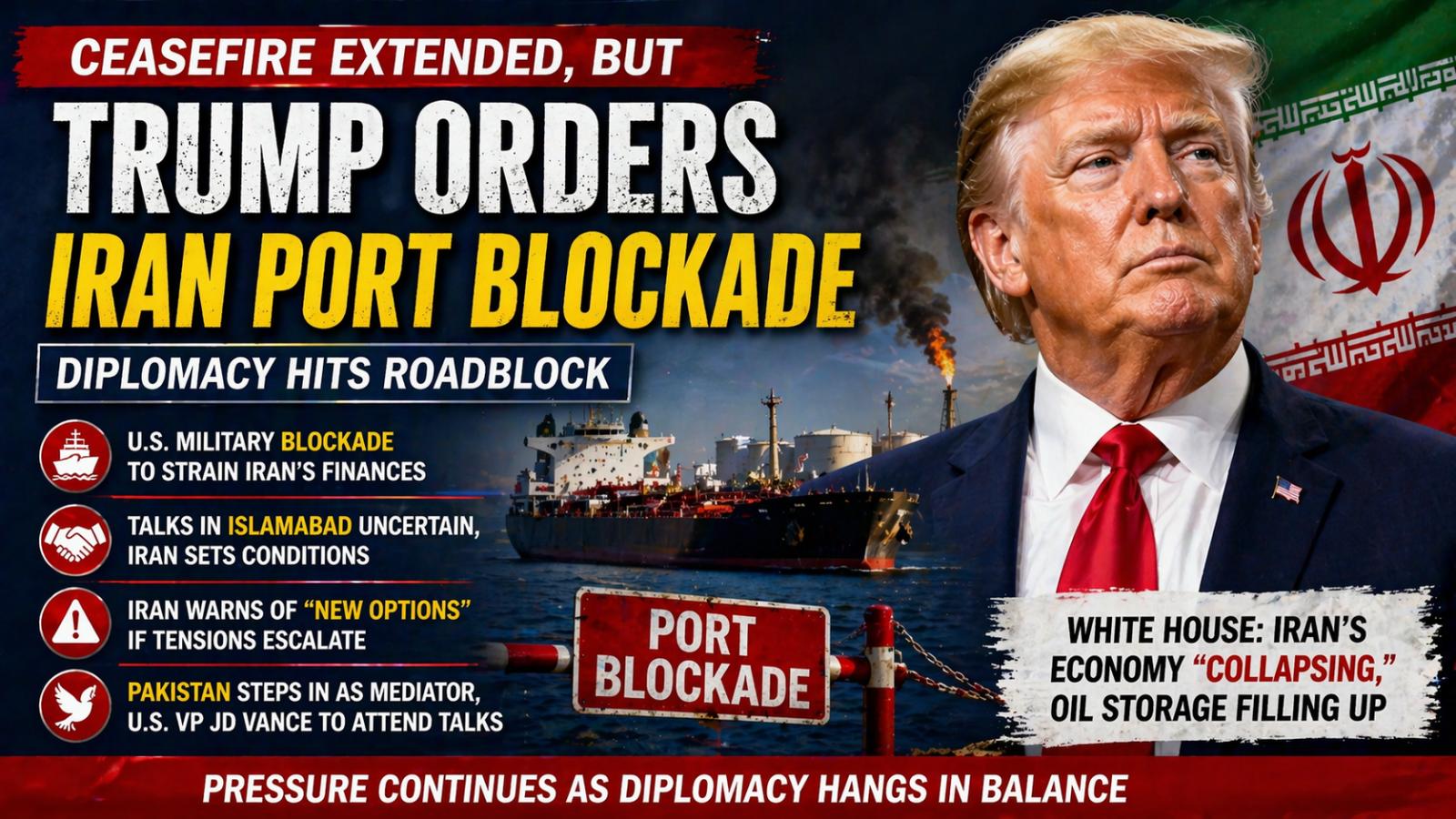
The United States has maintained pressure on Iran despite a formal agreement to extend a ceasefire aimed at creating space for diplomacy. President Donald Trump has ordered the continuation of a military blockade targeting Iranian ports, a move designed to restrict Tehran’s financial resources. The administration has indicated that Iran’s economy is under significant strain, citing limited cash reserves and increasing pressure on oil storage facilities, particularly at Kharg Island. While the ceasefire extension was initially viewed as an opportunity to advance negotiations, diplomatic progress remains uncertain. Reports of a possible summit in Islamabad have been challenged by Iranian officials, who state that no delegation has departed for Pakistan. Iranian state authorities have dismissed claims of imminent talks, emphasizing that key preconditions have not been met. Tehran has maintained that any formal negotiations would require a complete halt to Israeli military actions in Lebanon. Without such assurances, Iranian leaders have expressed reluctance to engage in further discussions. Officials have also accused the United States of pursuing a strategy focused on coercion rather than constructive dialogue, raising concerns about the credibility of ongoing diplomatic efforts. Senior Iranian figures have issued strong warnings about the potential consequences of continued pressure. Parliamentary speaker Mohammad Baqer Ghalibaf suggested that Iran could explore alternative responses if tensions escalate further. Foreign Minister Abbas Araghchi criticized what he described as repeated violations of the ceasefire, while President Masoud Pezeshkian underscored the importance of trust and consistency in any negotiation process. Pakistan has emerged as a potential mediator, preparing to host talks in Islamabad in an effort to bridge differences between the two sides. The United States is expected to send Vice President JD Vance to participate in discussions, although Iran has yet to confirm its involvement. As both diplomatic and military dynamics continue to unfold, the path toward resolution remains uncertain.
US Maintains Pressure on Iran as Talks Remain Uncertain Amid Ceasefire
The United States has maintained pressure on Iran despite a formal agreement to extend a ceasefire aimed at creating space for diplomacy. President Donald Trump has ordered the continuation of a military blockade targeting Iranian ports, a move designed to restrict Tehran’s financial resources. The administration has indicated that Iran’s economy is under significant strain, citing limited cash reserves and increasing pressure on oil storage facilities, particularly at Kharg Island. While the ceasefire extension was initially viewed as an opportunity to advance negotiations, diplomatic progress remains uncertain. Reports of a possible summit in Islamabad have been challenged by Iranian officials, who state that no delegation has departed for Pakistan. Iranian state authorities have dismissed claims of imminent talks, emphasizing that key preconditions have not been met. Tehran has maintained that any formal negotiations would require a complete halt to Israeli military actions in Lebanon. Without such assurances, Iranian leaders have expressed reluctance to engage in further discussions. Officials have also accused the United States of pursuing a strategy focused on coercion rather than constructive dialogue, raising concerns about the credibility of ongoing diplomatic efforts. Senior Iranian figures have issued strong warnings about the potential consequences of continued pressure. Parliamentary speaker Mohammad Baqer Ghalibaf suggested that Iran could explore alternative responses if tensions escalate further. Foreign Minister Abbas Araghchi criticized what he described as repeated violations of the ceasefire, while President Masoud Pezeshkian underscored the importance of trust and consistency in any negotiation process. Pakistan has emerged as a potential mediator, preparing to host talks in Islamabad in an effort to bridge differences between the two sides. The United States is expected to send Vice President JD Vance to participate in discussions, although Iran has yet to confirm its involvement. As both diplomatic and military dynamics continue to unfold, the path toward resolution remains uncertain.
Deadly Uttar Pradesh crash leaves 11 dead after truck collision and fire
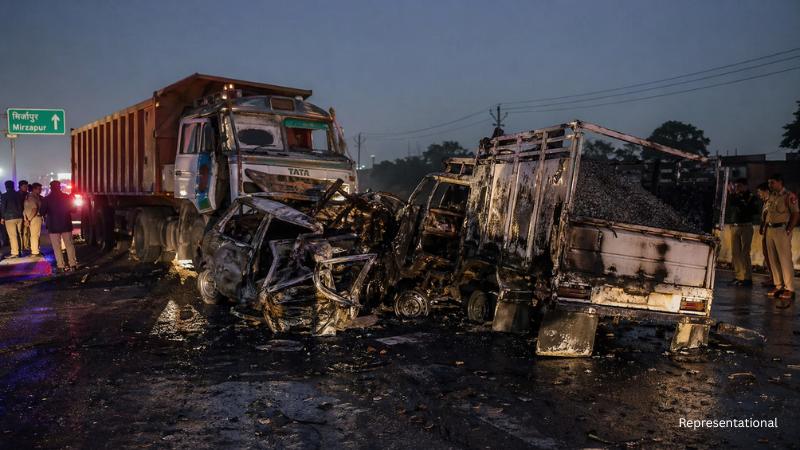
A fatal road accident in Mirzapur district of Uttar Pradesh, India, around 8:00 PM IST on Wednesday, April 22, 2026evening resulted in the deaths of 11 people after a truck collided with multiple vehicles and triggered a fire, authorities confirmed. The incident highlights ongoing concerns about road safety and traffic enforcement in the region. According to police officials, the crash occurred when a speeding truck rammed into a Swift car. The force of the impact pushed the smalle
Deadly Uttar Pradesh crash leaves 11 dead after truck collision and fire
A fatal road accident in Mirzapur district of Uttar Pradesh, India, around 8:00 PM IST on Wednesday, April 22, 2026evening resulted in the deaths of 11 people after a truck collided with multiple vehicles and triggered a fire, authorities confirmed. The incident highlights ongoing concerns about road safety and traffic enforcement in the region. According to police officials, the crash occurred when a speeding truck rammed into a Swift car. The force of the impact pushed the smalle
Wildfires intensify across Georgia and Florida, forcing evacuations
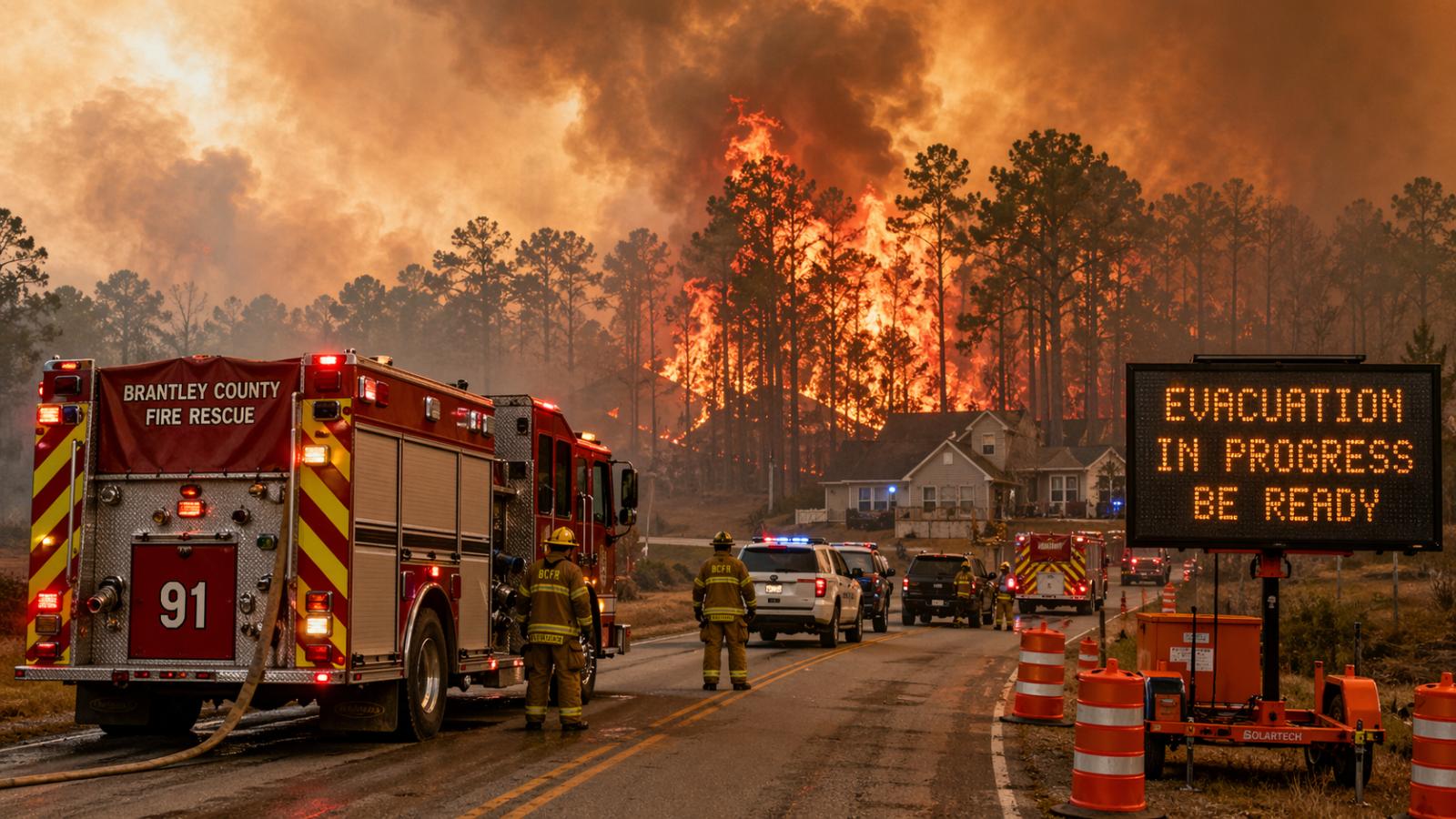
NAHUNTA, Georgia — Wildfires burning across the southeastern United States intensified on Wednesday, April 22, 2026, destroying dozens of homes in Georgia and forcing widespread evacuations, school closures, and emergency responses across multiple communities. Officials reported that nearly 50 homes were destroyed in Georgia, with the most severe damage concentrated in Brantley County. County Manager Joey Cason said the fast-moving fire there expanded roughly sixfold within half a d
Wildfires intensify across Georgia and Florida, forcing evacuations
NAHUNTA, Georgia — Wildfires burning across the southeastern United States intensified on Wednesday, April 22, 2026, destroying dozens of homes in Georgia and forcing widespread evacuations, school closures, and emergency responses across multiple communities. Officials reported that nearly 50 homes were destroyed in Georgia, with the most severe damage concentrated in Brantley County. County Manager Joey Cason said the fast-moving fire there expanded roughly sixfold within half a d
What is happening with Iran-US talks in Pakistan? Uncertainty remains despite security buildup
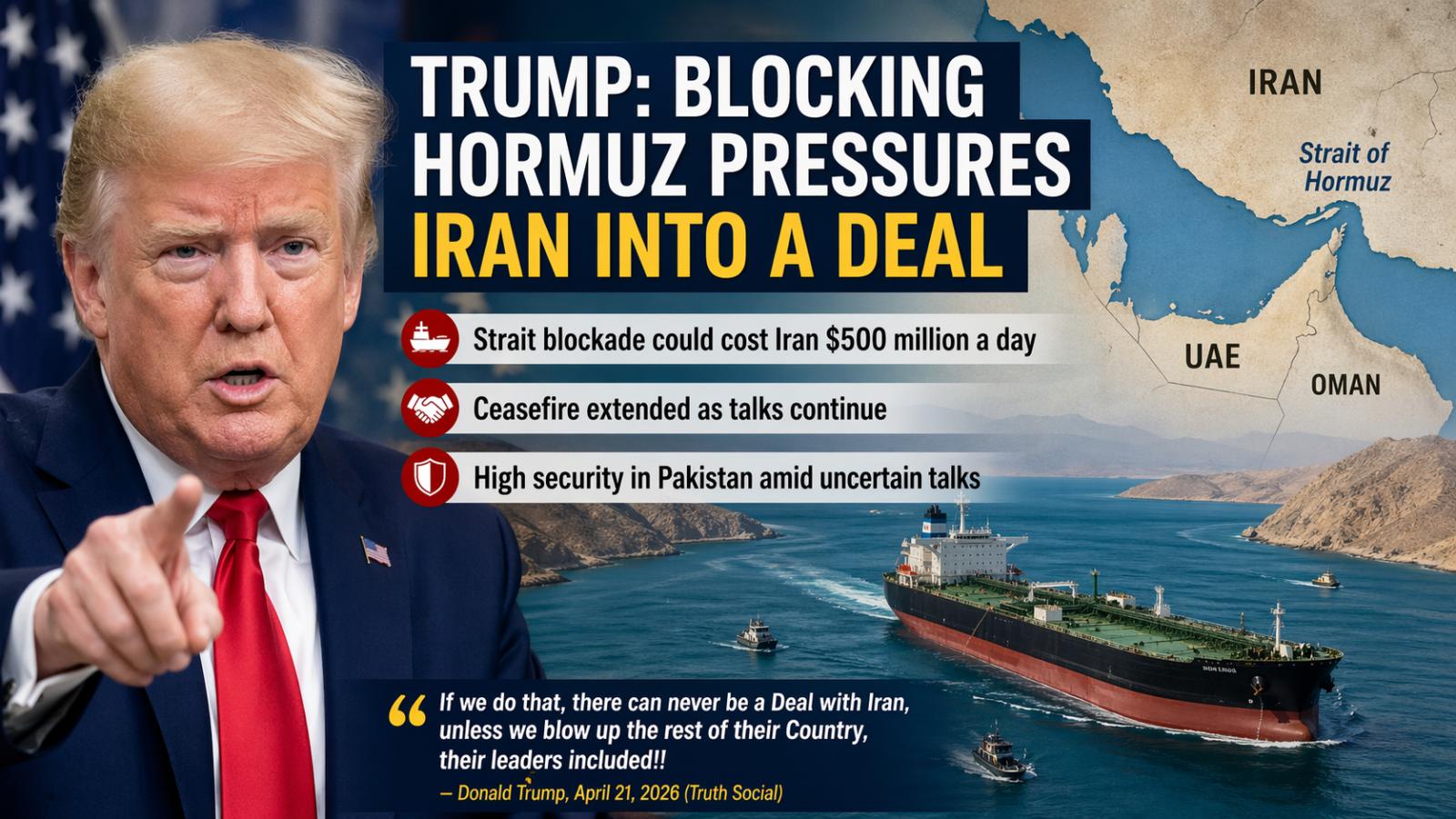
US President Donald Trump said on Tuesday, April 21, 2026, that Iran is seeking to reopen the Strait of Hormuz but argued that maintaining a blockade is key to forcing Tehran into a negotiated agreement. Writing on Truth Social, Trump claimed Iran could generate up to $500 million per day if the passage were reopened, adding that its closure has significantly constrained the country’s finances. Trump stated that he has “totally blocked” the strait and suggested Iranian officials are publicly calling for closure only to “save face.” He further warned that reopening the waterway prematurely would weaken US leverage in ongoing negotiations, reiterating aggressive rhetoric about potential military escalation if talks fail. He also described Iran as facing severe economic strain, claiming it is “collapsing financially.” Ceasefire extension linked to diplomatic efforts The remarks came as Trump confirmed an extension of a 10-day ceasefire with Iran, originally set to expire on Wednesday, April 22, 2026. He said the extension followed requests from Asim Munir and Shehbaz Sharif, with the goal of allowing more time for diplomatic engagement. While the US has not confirmed Iran’s participation in talks, Tehran’s envoy to the United Nations, Amir Saeid Iravani, indicated that lifting naval restrictions could create conditions for negotiations. However, the White House said Vice President JD Vance and the US delegation would not travel to Pakistan for discussions. Security tightens around Pakistan negotiations In Islamabad and nearby Rawalpindi, authorities deployed more than 20,000 security personnel amid uncertainty surrounding the talks. The heightened security underscores regional tensions as diplomatic channels remain unclear. Trump’s ongoing messaging and additional demands Trump has continued frequent postings on Iran, combining threats with appeals. He called for the release of eight women reportedly facing execution in Iran, framing it as a goodwill step ahead of potential negotiations. At the same time, he accused Iran of violating the ceasefire multiple times without providing details. In separate comments, Trump praised what he described as a prior US military operation targeting Iranian nuclear sites and repeated claims about Iran’s economic and strategic vulnerabilities.
What is happening with Iran-US talks in Pakistan? Uncertainty remains despite security buildup
US President Donald Trump said on Tuesday, April 21, 2026, that Iran is seeking to reopen the Strait of Hormuz but argued that maintaining a blockade is key to forcing Tehran into a negotiated agreement. Writing on Truth Social, Trump claimed Iran could generate up to $500 million per day if the passage were reopened, adding that its closure has significantly constrained the country’s finances. Trump stated that he has “totally blocked” the strait and suggested Iranian officials are publicly calling for closure only to “save face.” He further warned that reopening the waterway prematurely would weaken US leverage in ongoing negotiations, reiterating aggressive rhetoric about potential military escalation if talks fail. He also described Iran as facing severe economic strain, claiming it is “collapsing financially.” Ceasefire extension linked to diplomatic efforts The remarks came as Trump confirmed an extension of a 10-day ceasefire with Iran, originally set to expire on Wednesday, April 22, 2026. He said the extension followed requests from Asim Munir and Shehbaz Sharif, with the goal of allowing more time for diplomatic engagement. While the US has not confirmed Iran’s participation in talks, Tehran’s envoy to the United Nations, Amir Saeid Iravani, indicated that lifting naval restrictions could create conditions for negotiations. However, the White House said Vice President JD Vance and the US delegation would not travel to Pakistan for discussions. Security tightens around Pakistan negotiations In Islamabad and nearby Rawalpindi, authorities deployed more than 20,000 security personnel amid uncertainty surrounding the talks. The heightened security underscores regional tensions as diplomatic channels remain unclear. Trump’s ongoing messaging and additional demands Trump has continued frequent postings on Iran, combining threats with appeals. He called for the release of eight women reportedly facing execution in Iran, framing it as a goodwill step ahead of potential negotiations. At the same time, he accused Iran of violating the ceasefire multiple times without providing details. In separate comments, Trump praised what he described as a prior US military operation targeting Iranian nuclear sites and repeated claims about Iran’s economic and strategic vulnerabilities.
Multiple refinery fires worldwide spark investigations and security concerns
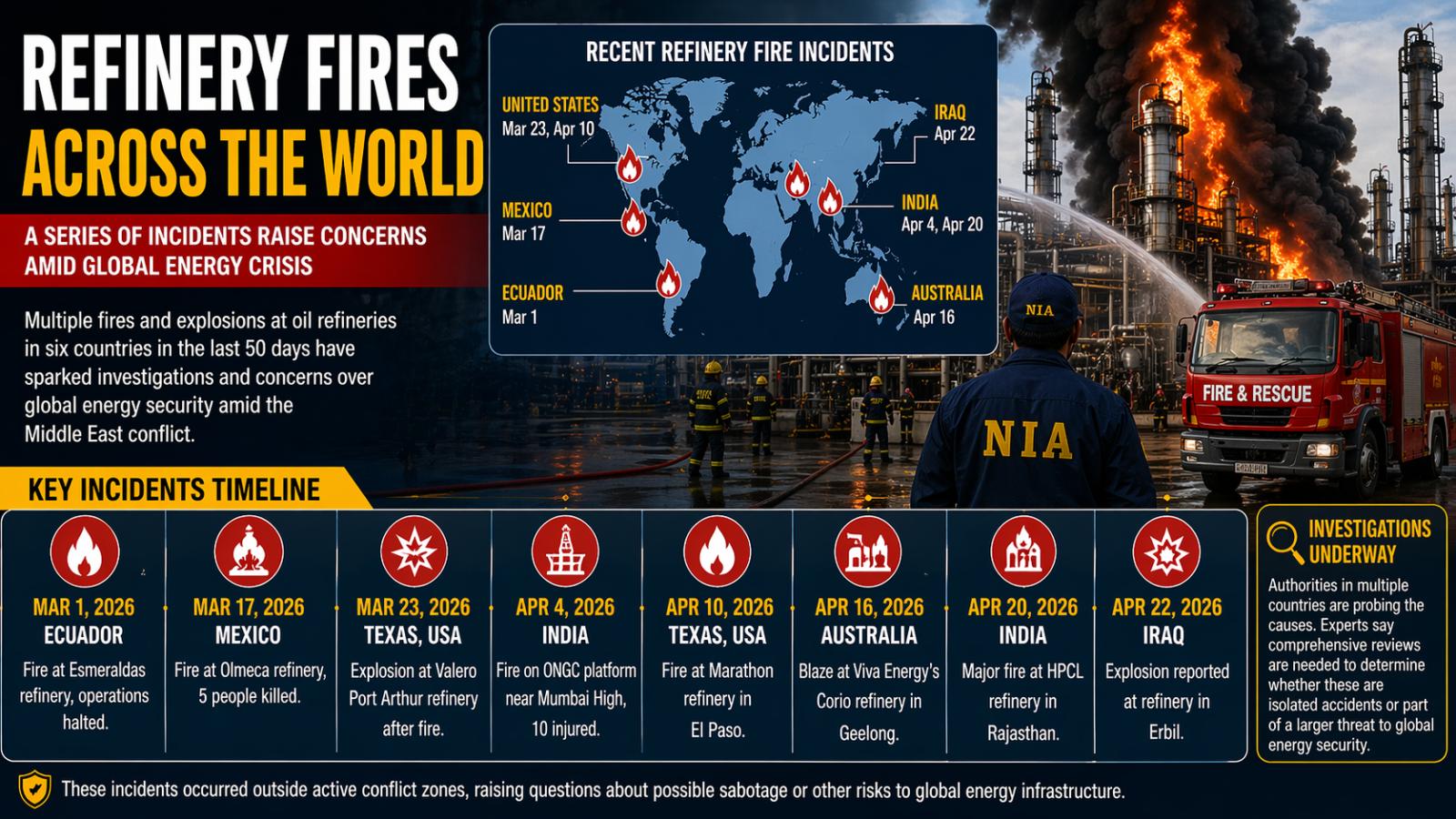
A series of fires and explosions at oil refineries across multiple countries has raised global concerns about energy security as geopolitical tensions escalate following the Middle East conflict that began on Friday, February 28, 2026. Incidents have been reported in India, Iraq, the United States, Mexico, Ecuador, and Australia over a span of approximately 50 days, prompting investigations and speculation about possible underlying causes. In India, a major fire broke out at the Hindu
Multiple refinery fires worldwide spark investigations and security concerns
A series of fires and explosions at oil refineries across multiple countries has raised global concerns about energy security as geopolitical tensions escalate following the Middle East conflict that began on Friday, February 28, 2026. Incidents have been reported in India, Iraq, the United States, Mexico, Ecuador, and Australia over a span of approximately 50 days, prompting investigations and speculation about possible underlying causes. In India, a major fire broke out at the Hindu
CENTCOM Highlights Military Preparedness Amid Iran Talks
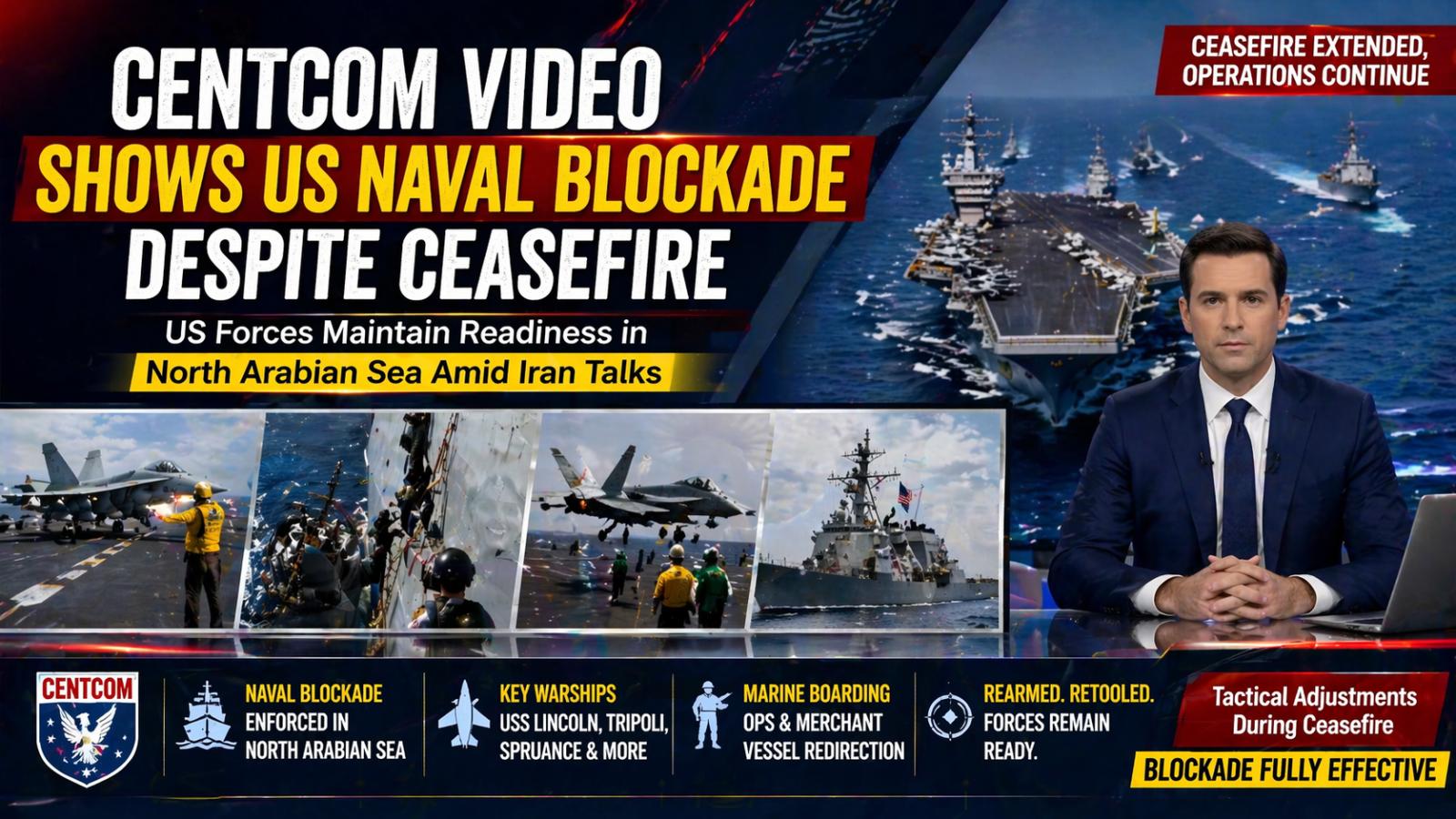
A newly released video by United States Central Command (CENTCOM) has drawn attention to ongoing military operations in the North Arabian Sea, even as a ceasefire extension remains in place. The footage, shared shortly after an announcement by US President Donald Trump, emphasizes that American forces continue to maintain operational readiness and strategic positioning in the region.
CENTCOM Highlights Military Preparedness Amid Iran Talks
A newly released video by United States Central Command (CENTCOM) has drawn attention to ongoing military operations in the North Arabian Sea, even as a ceasefire extension remains in place. The footage, shared shortly after an announcement by US President Donald Trump, emphasizes that American forces continue to maintain operational readiness and strategic positioning in the region.

UK hosts global talks on Hormuz security amid Iran-US tensions
Britain is hosting senior military planners from more than 30 countries at the UK Permanent Joint Headquarters for high-level discussions on securing the Strait of Hormuz, a critical global oil transit route. The two-day meeting in northwest London, being held from April 22 to April 23, 2026, aims to advance a multinational maritime security initiative jointly led by the United Kingdom and France, following earlier consultations involving over 40 nations chaired by Keir Starmer and Emmanuel M
UK hosts global talks on Hormuz security amid Iran-US tensions
Britain is hosting senior military planners from more than 30 countries at the UK Permanent Joint Headquarters for high-level discussions on securing the Strait of Hormuz, a critical global oil transit route. The two-day meeting in northwest London, being held from April 22 to April 23, 2026, aims to advance a multinational maritime security initiative jointly led by the United Kingdom and France, following earlier consultations involving over 40 nations chaired by Keir Starmer and Emmanuel M










