Iran declares Strait of Hormuz closed after US airstrikes
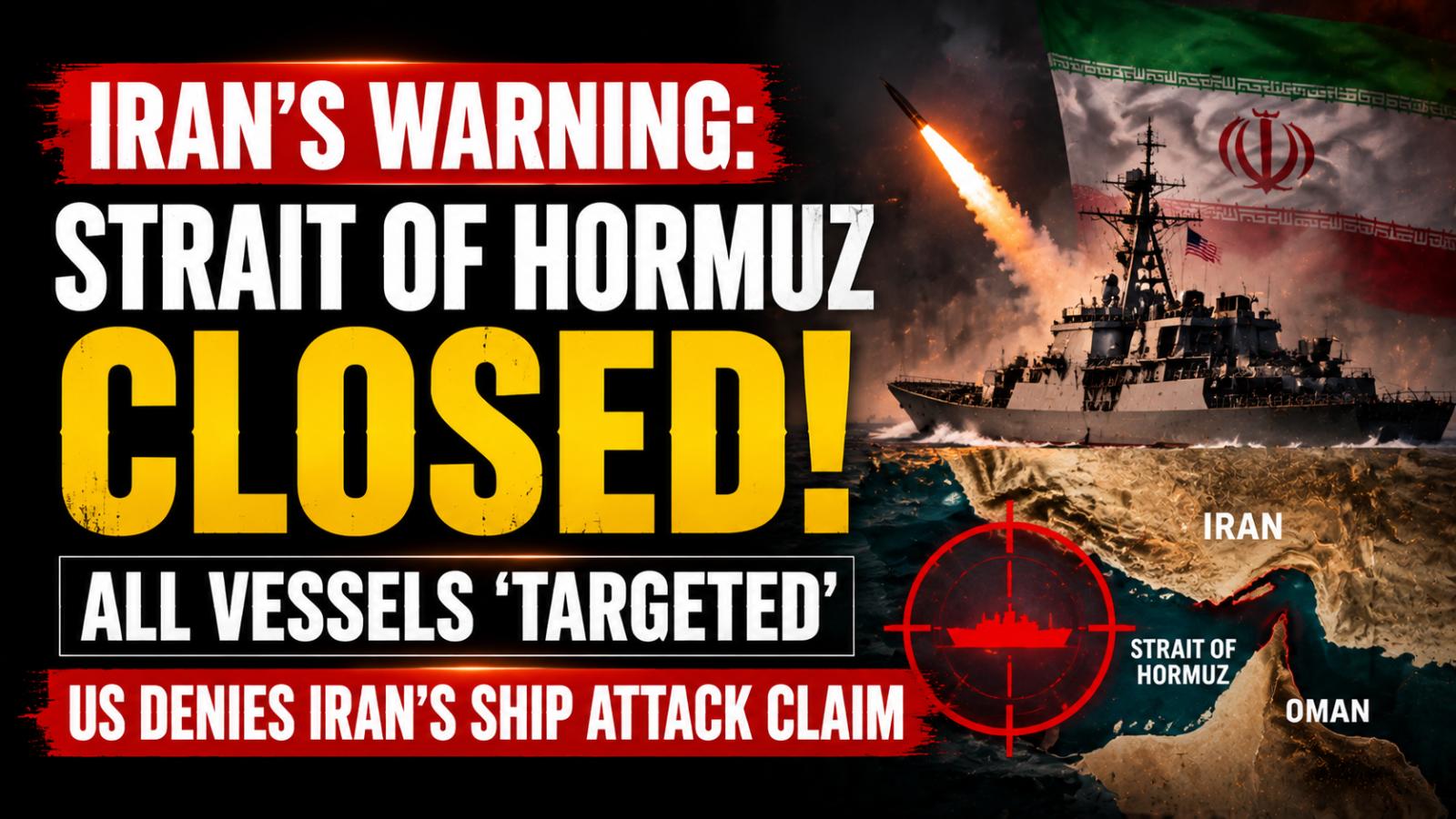
Iran Declares Strait of Hormuz Closed Iran’s military command announced on Wednesday, June 10, 2026, that the Strait of Hormuz would be closed to all vessel traffic following recent U.S. airstrikes. The Khatam al Anbiya command stated that any vessel transiting the strategic waterway would be targeted. According to Iranian reports, the navy struck two ships attempting to pass through
Iran declares Strait of Hormuz closed after US airstrikes
Iran Declares Strait of Hormuz Closed Iran’s military command announced on Wednesday, June 10, 2026, that the Strait of Hormuz would be closed to all vessel traffic following recent U.S. airstrikes. The Khatam al Anbiya command stated that any vessel transiting the strategic waterway would be targeted. According to Iranian reports, the navy struck two ships attempting to pass through
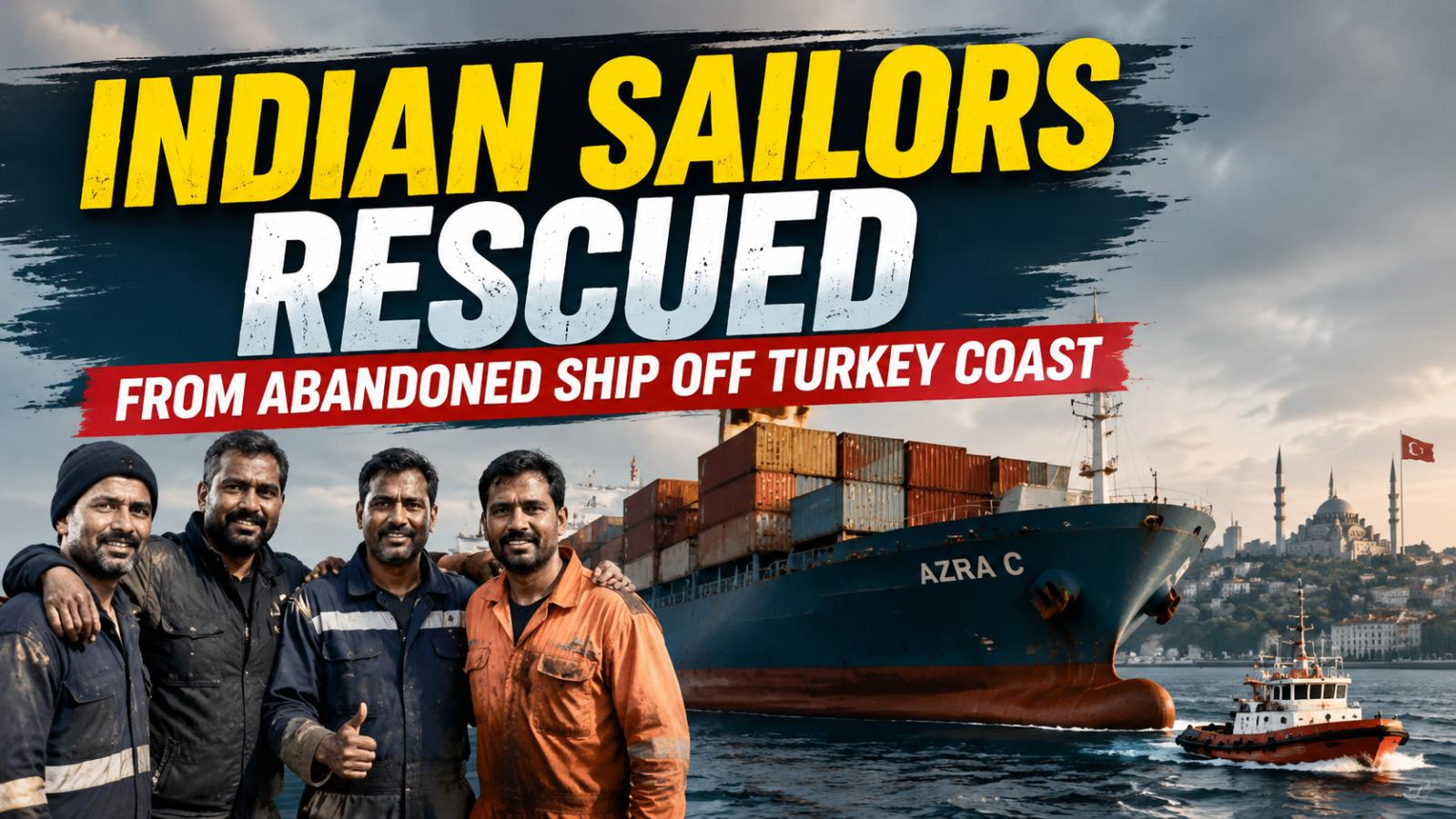
Indian sailors freed from abandoned AZRA C near Turkey’s coast
Four Indian sailors have finally been rescued after being trapped for ten months on the container ship AZRA C off Turkey’s coast. The Mongolia-flagged vessel had been left near Istanbul in the Sea of Marmara since August 2025. Their release came after the ship’s alleged owners were arrested in January 2026 during an international investigation. Selahattin Polat, Turkey representative for the International Transport Workers’ Federation (ITF), confirmed the crew’s ordeal had c
Indian sailors freed from abandoned AZRA C near Turkey’s coast
Four Indian sailors have finally been rescued after being trapped for ten months on the container ship AZRA C off Turkey’s coast. The Mongolia-flagged vessel had been left near Istanbul in the Sea of Marmara since August 2025. Their release came after the ship’s alleged owners were arrested in January 2026 during an international investigation. Selahattin Polat, Turkey representative for the International Transport Workers’ Federation (ITF), confirmed the crew’s ordeal had c
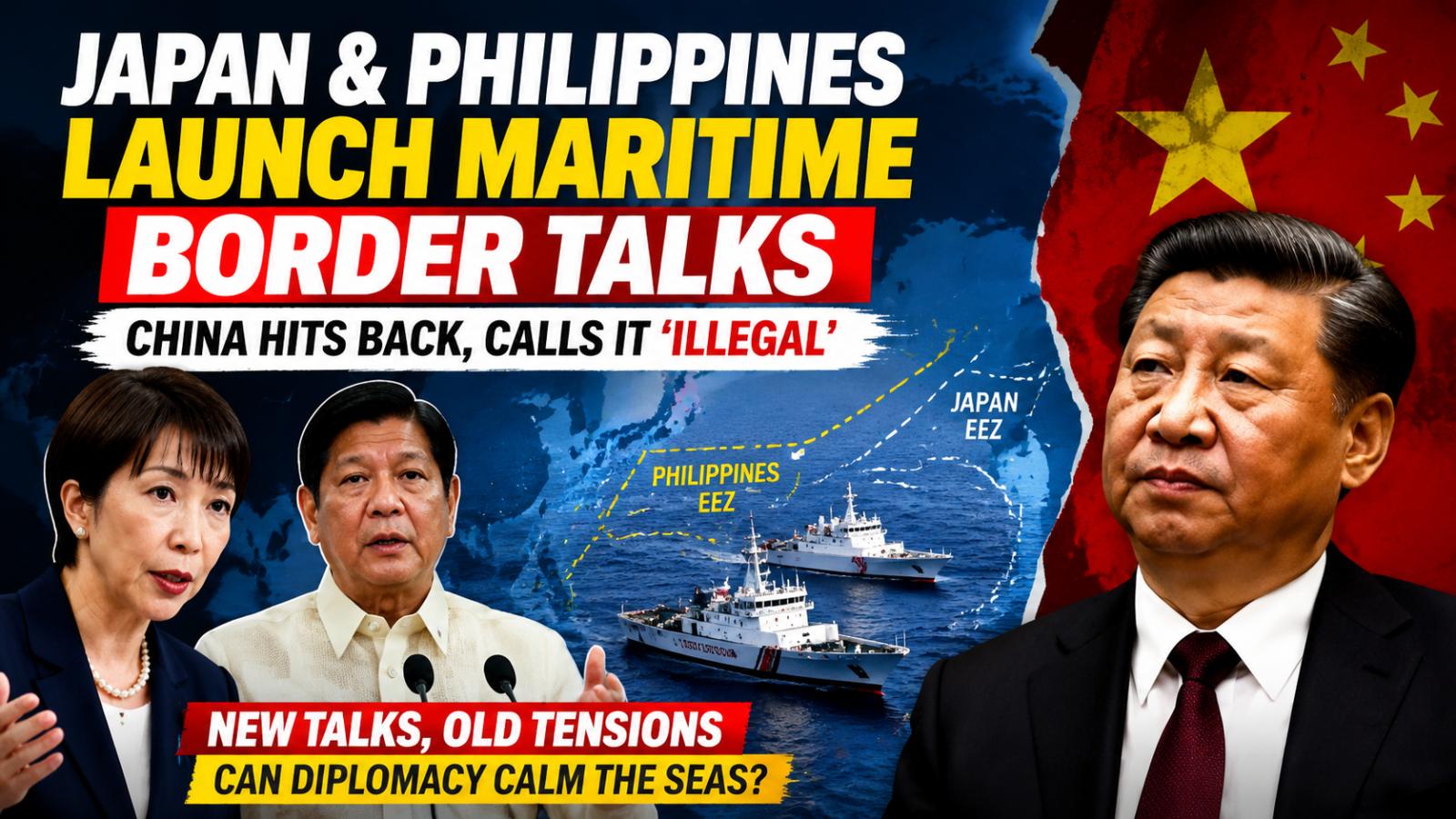
Japan and Philippines Begin Maritime Boundary Talks Amid China Tension
Japan and the Philippines have officially started discussions to define their maritime boundaries in areas where economic zones and continental shelves overlap. This follows Philippine President Ferdinand Marcos’ diplomatic visit to Japan, where he met Prime Minister Sanae Takaichi. The goal is to clarify boundaries while securing trade, fisheries, and energy interests. China Voices Strong Objection
Japan and Philippines Begin Maritime Boundary Talks Amid China Tension
Japan and the Philippines have officially started discussions to define their maritime boundaries in areas where economic zones and continental shelves overlap. This follows Philippine President Ferdinand Marcos’ diplomatic visit to Japan, where he met Prime Minister Sanae Takaichi. The goal is to clarify boundaries while securing trade, fisheries, and energy interests. China Voices Strong Objection
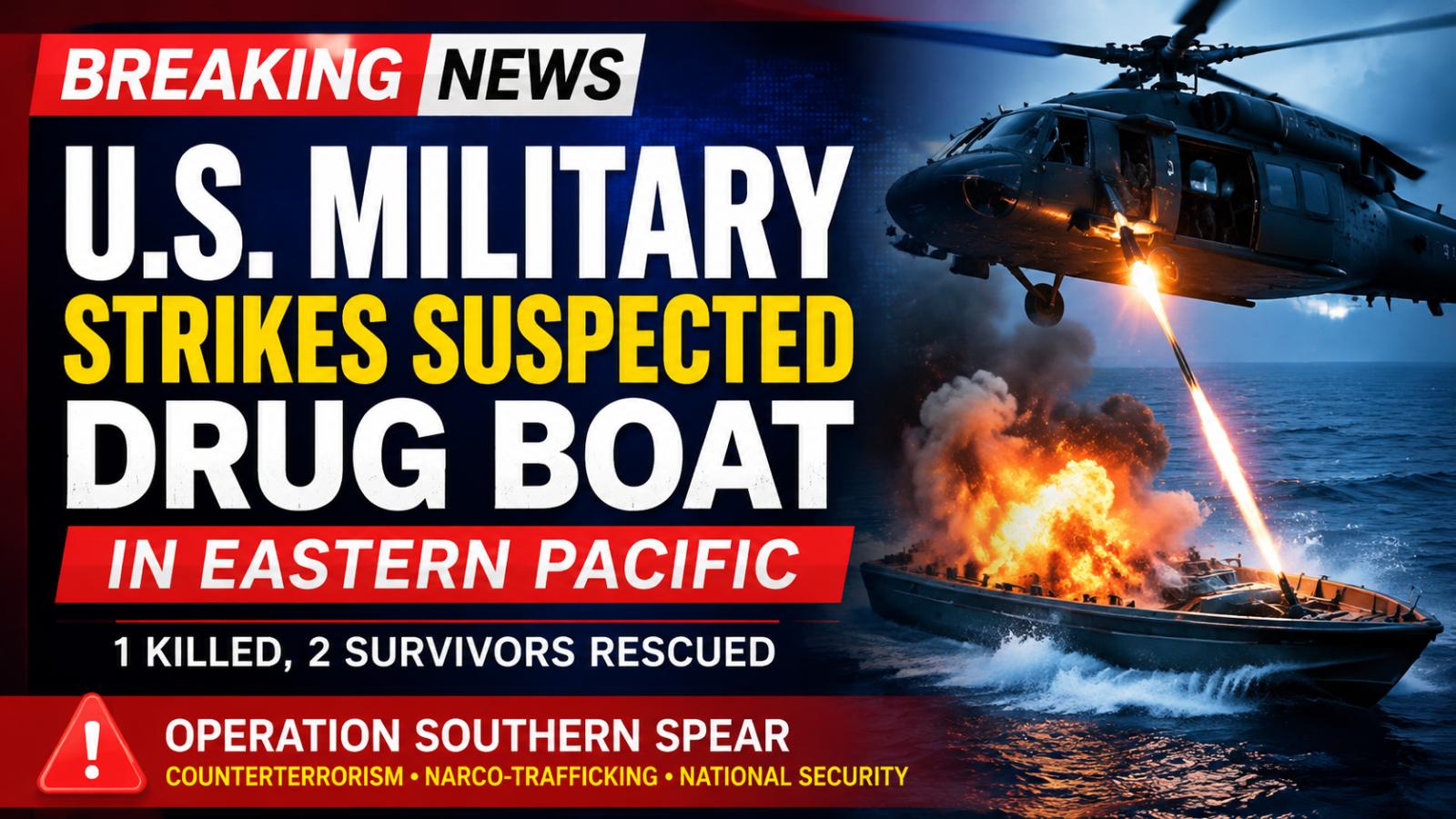
US Military Targets Suspected Drug Vessel in Eastern Pacific
The US military executed a targeted strike on a vessel suspected of transporting illegal narcotics in the Eastern Pacific on Tuesday. The operation resulted in one fatality and two individuals rescued alive. Officials confirmed that the vessel was navigating known drug trafficking routes and linked to transnational criminal networks. No US personnel were injured, and the Coast Guard immediately initiated search and rescue efforts for the survivors.
US Military Targets Suspected Drug Vessel in Eastern Pacific
The US military executed a targeted strike on a vessel suspected of transporting illegal narcotics in the Eastern Pacific on Tuesday. The operation resulted in one fatality and two individuals rescued alive. Officials confirmed that the vessel was navigating known drug trafficking routes and linked to transnational criminal networks. No US personnel were injured, and the Coast Guard immediately initiated search and rescue efforts for the survivors.
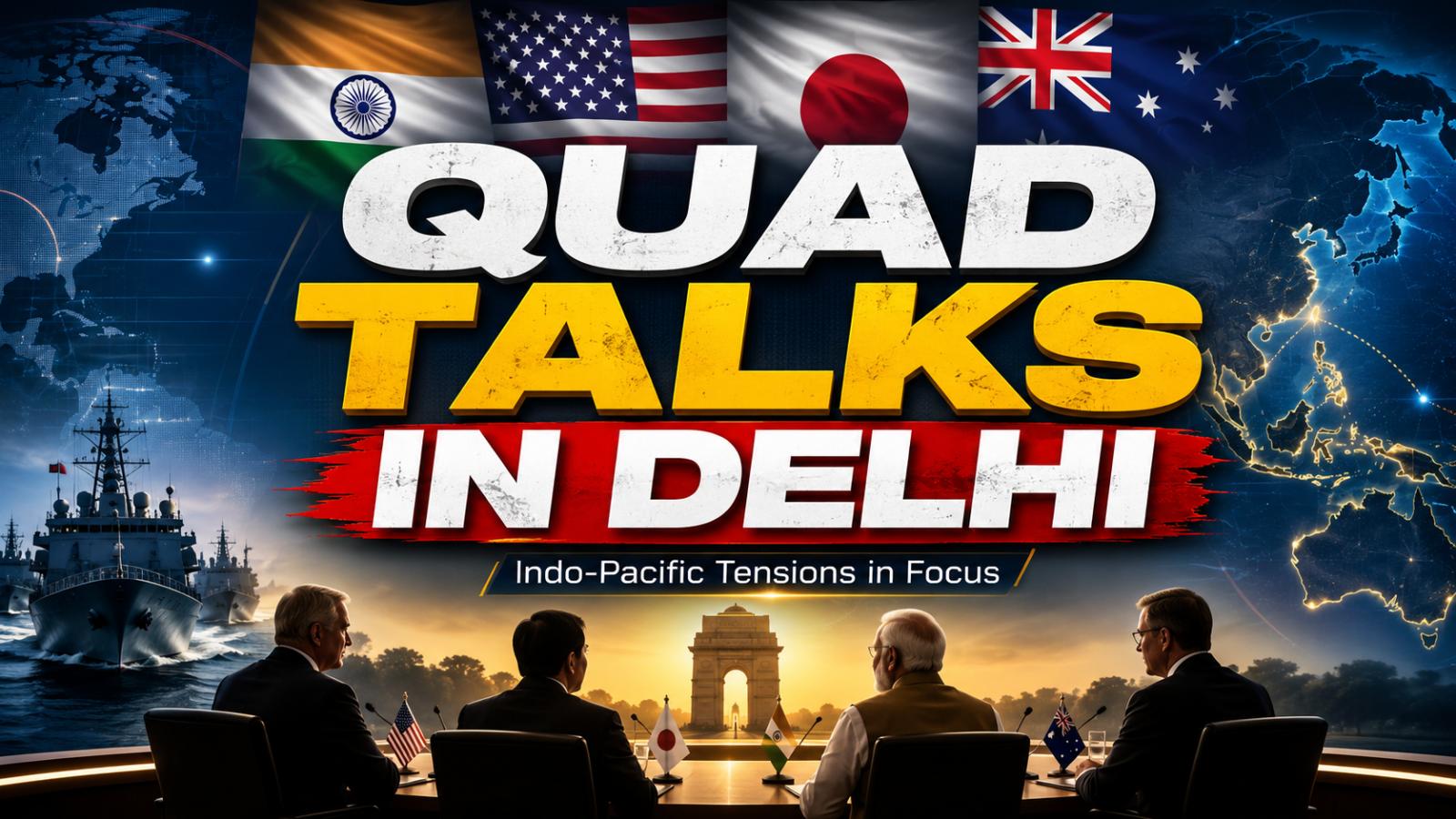
India Hosts Quad Delhi Meeting as Indo-Pacific Security, China and West Asia Tensions Take Centre Stage
India is hosting the Quad foreign ministers’ meeting in New Delhi on May 26, 2026, bringing together senior leaders from India, the United States, Japan and Australia. External Affairs Minister S. Jaishankar is chairing the meeting, with U.S. Secretary of State Marco Rubio, Australian Foreign Minister Penny Wong and Japanese Foreign Minister Toshimitsu Motegi attending the talks. The participation details are confirmed by India’s Ministry of External Affairs. The meeting comes a
India Hosts Quad Delhi Meeting as Indo-Pacific Security, China and West Asia Tensions Take Centre Stage
India is hosting the Quad foreign ministers’ meeting in New Delhi on May 26, 2026, bringing together senior leaders from India, the United States, Japan and Australia. External Affairs Minister S. Jaishankar is chairing the meeting, with U.S. Secretary of State Marco Rubio, Australian Foreign Minister Penny Wong and Japanese Foreign Minister Toshimitsu Motegi attending the talks. The participation details are confirmed by India’s Ministry of External Affairs. The meeting comes a
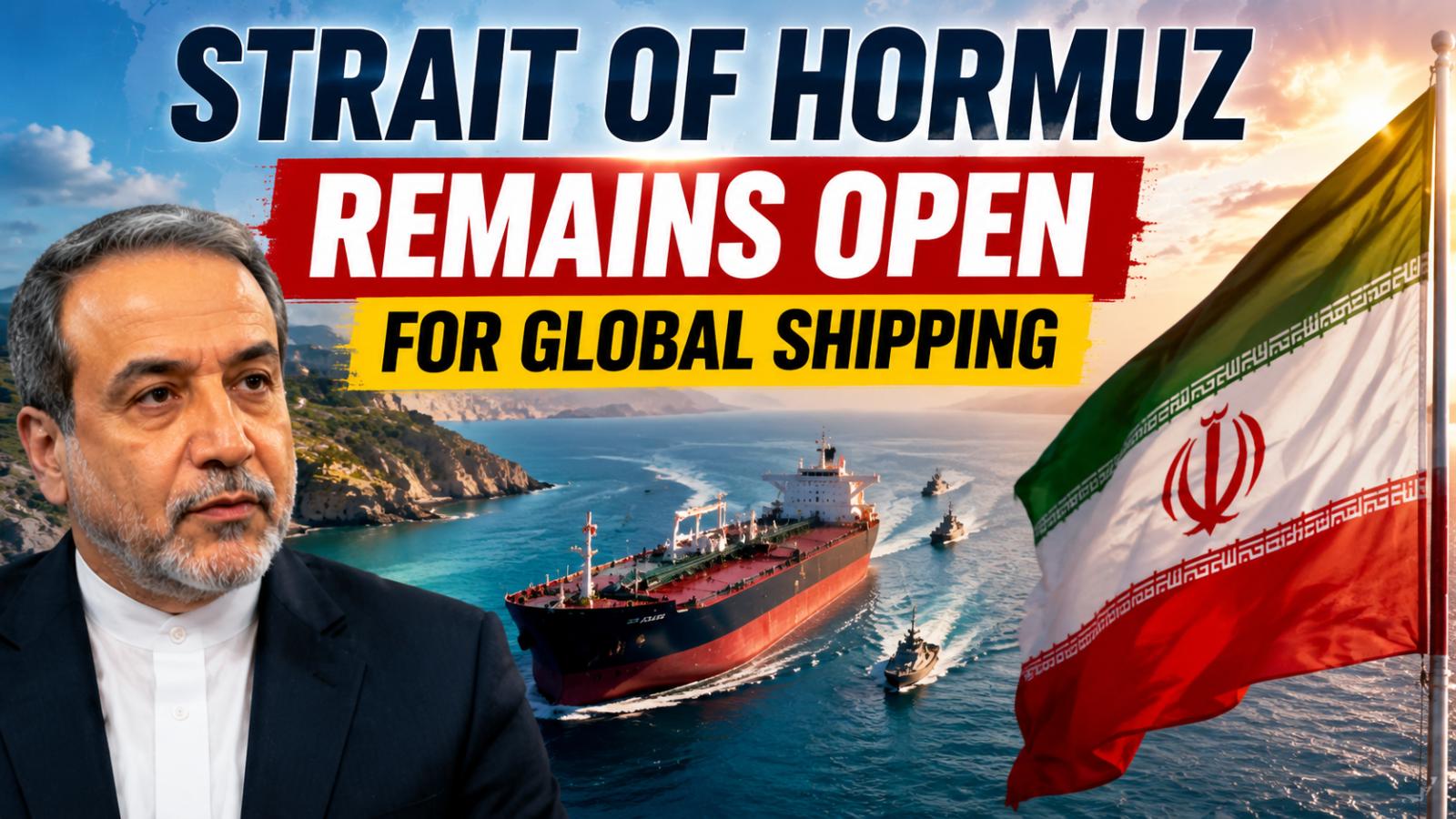
Iran says strait of hormuz open for global shipping
Iranian Foreign Minister Seyyed Abbas Araghchi confirmed that the Strait of Hormuz remains open to international shipping, except for vessels from countries currently at war with Iran. Speaking in New Delhi, Araghchi emphasized that Tehran prioritizes safe navigation through this vital maritime corridor. Strategic Importance of the Strait The minister highlighted the strait’s significance for oil, gas, and global trade. With a substantial share of worl
Iran says strait of hormuz open for global shipping
Iranian Foreign Minister Seyyed Abbas Araghchi confirmed that the Strait of Hormuz remains open to international shipping, except for vessels from countries currently at war with Iran. Speaking in New Delhi, Araghchi emphasized that Tehran prioritizes safe navigation through this vital maritime corridor. Strategic Importance of the Strait The minister highlighted the strait’s significance for oil, gas, and global trade. With a substantial share of worl
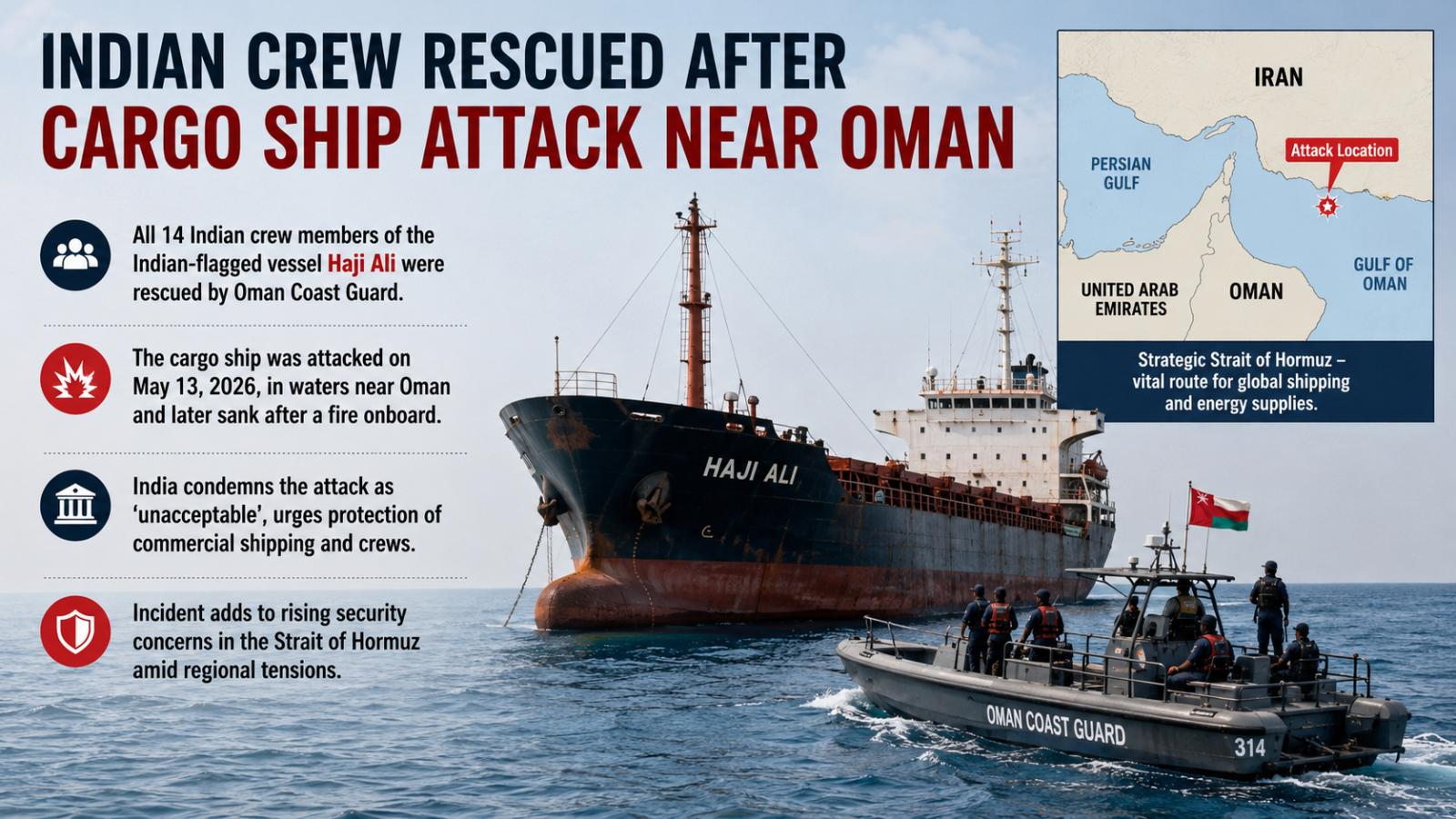
Indian Crew Rescued After Cargo Ship Attack Near Oman
India condemned an attack on an Indian-flagged cargo vessel near Oman after all 14 Indian crew members were safely rescued, raising fresh concerns over commercial shipping near the Strait of Hormuz. The vessel, identified by Indian shipping officials as Haji Ali, sank after a suspected attack in Omani waters on Wednesday, May 13, 2026. Indian Crew Rescued After Ship Attack Near Oman India’s Ministry of External Affairs said o
Indian Crew Rescued After Cargo Ship Attack Near Oman
India condemned an attack on an Indian-flagged cargo vessel near Oman after all 14 Indian crew members were safely rescued, raising fresh concerns over commercial shipping near the Strait of Hormuz. The vessel, identified by Indian shipping officials as Haji Ali, sank after a suspected attack in Omani waters on Wednesday, May 13, 2026. Indian Crew Rescued After Ship Attack Near Oman India’s Ministry of External Affairs said o
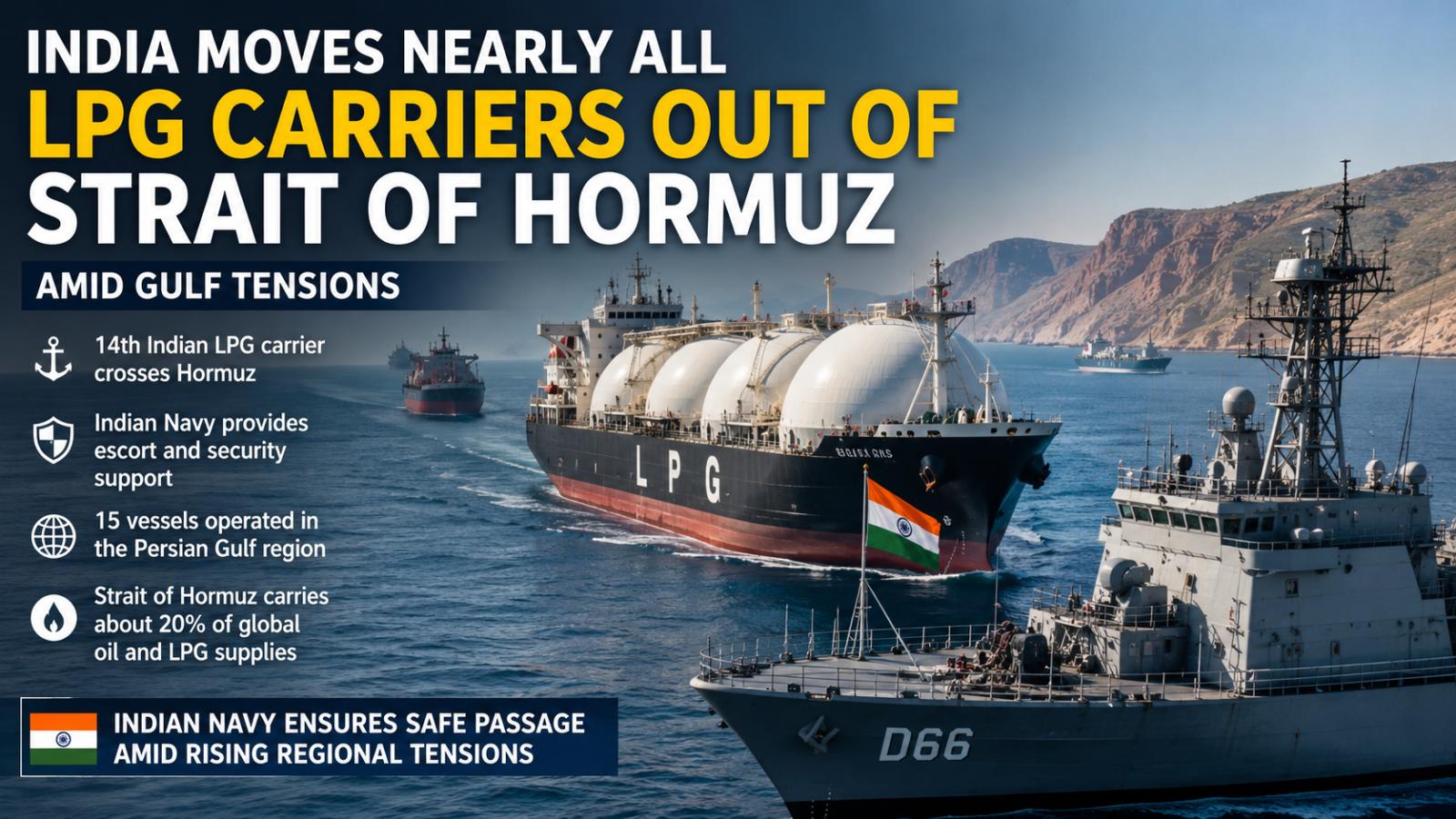
India Escorts LPG Carriers Through Strait of Hormuz as Gulf Tensions Rise
India LPG Carriers Move Through Strait of Hormuz India has moved nearly all of its LPG carriers out of the Strait of Hormuz with support from the Indian Navy as tensions continue to affect shipping security in the Persian Gulf region. Government sources said on Thursday, May 14, 2026, that the 14th Indian liquefied petroleum gas carrier had crossed the strategic waterway, while one final vessel remained in the process of crossing under close monitoring.
India Escorts LPG Carriers Through Strait of Hormuz as Gulf Tensions Rise
India LPG Carriers Move Through Strait of Hormuz India has moved nearly all of its LPG carriers out of the Strait of Hormuz with support from the Indian Navy as tensions continue to affect shipping security in the Persian Gulf region. Government sources said on Thursday, May 14, 2026, that the 14th Indian liquefied petroleum gas carrier had crossed the strategic waterway, while one final vessel remained in the process of crossing under close monitoring.
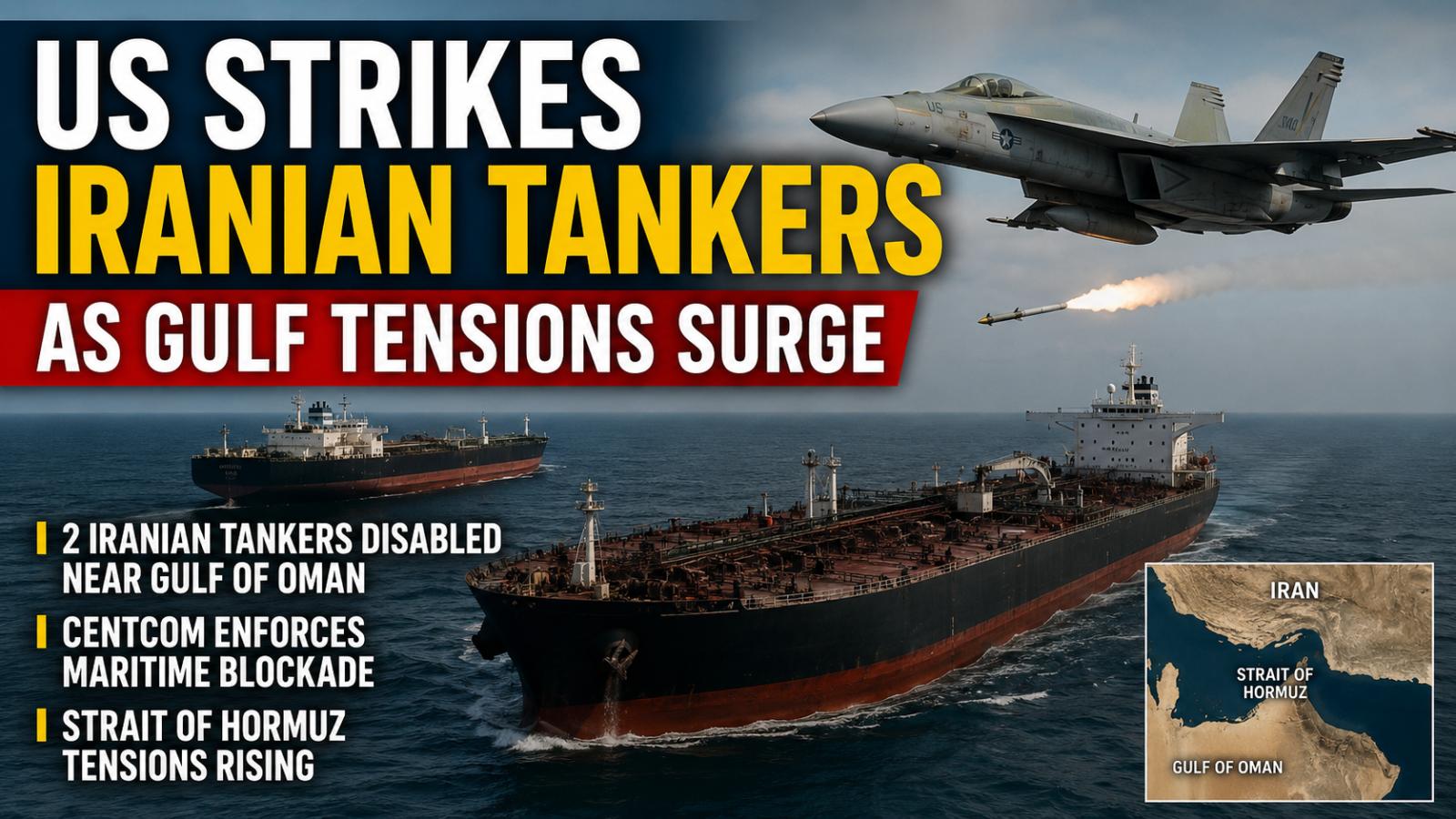
US Strikes Iranian Tankers as Strait of Hormuz Tensions Surge
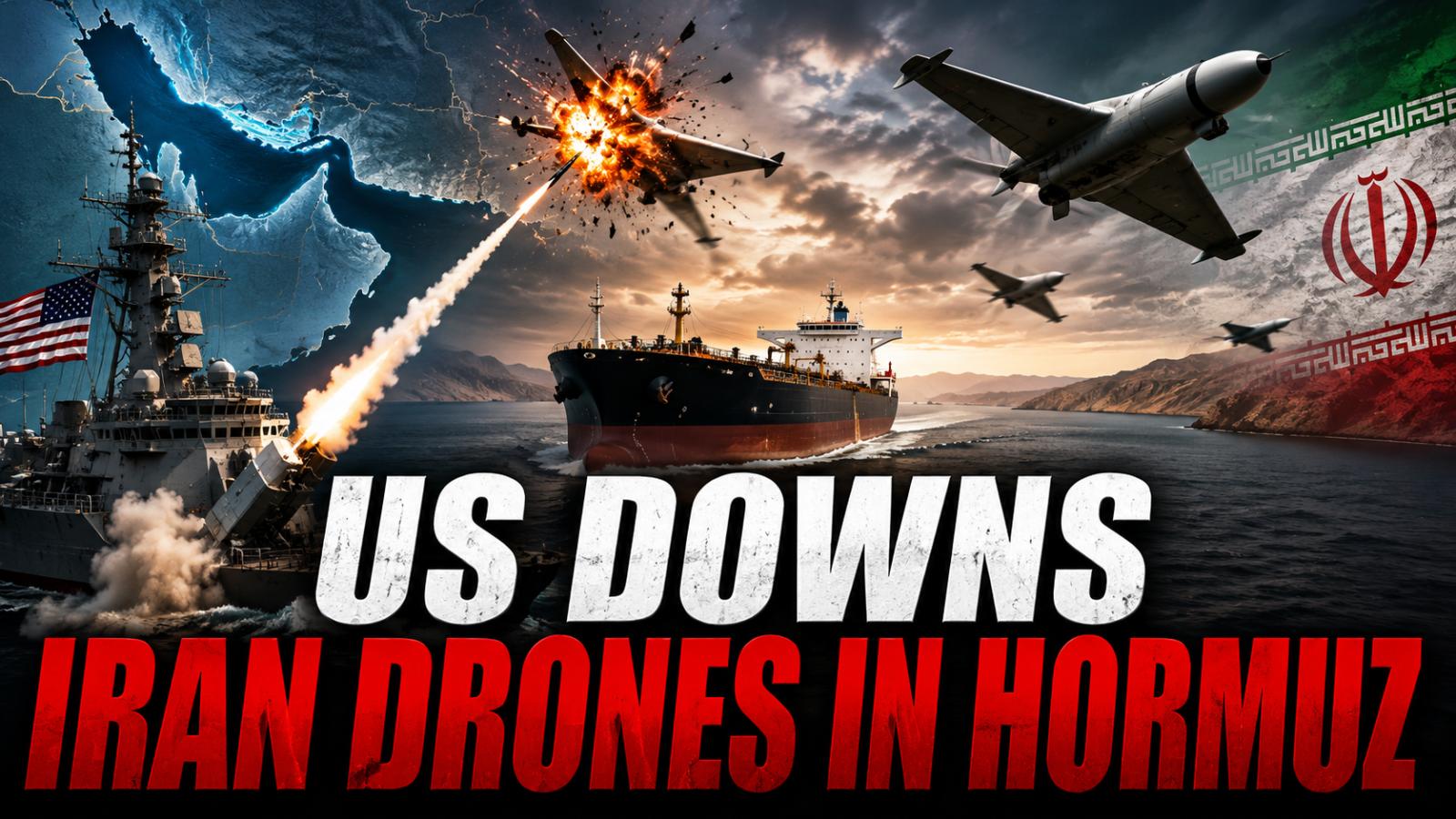
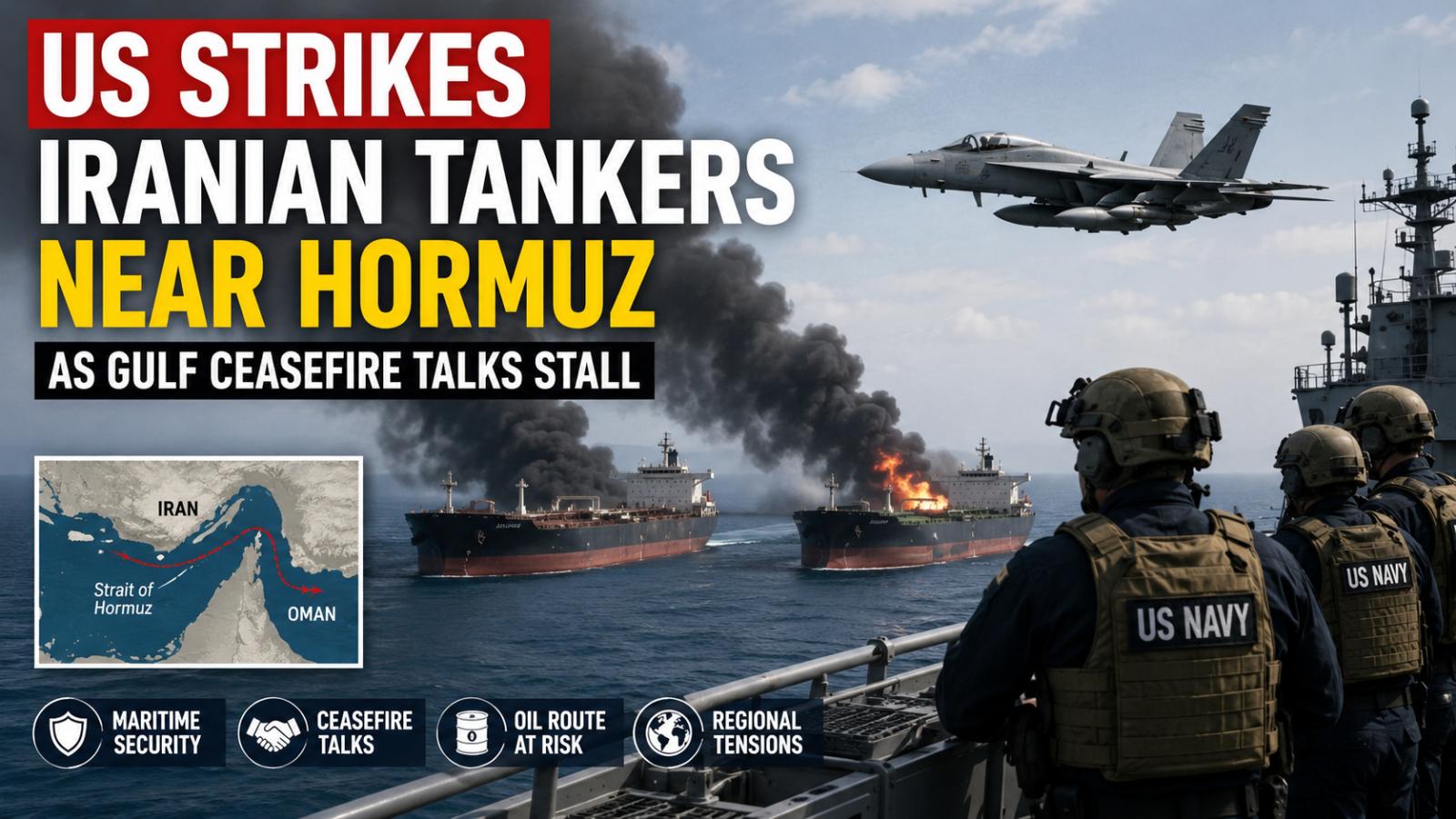
US Iran Tanker Strike Raises Gulf Tensions US forces disabled two Iranian-flagged tankers near the Gulf of Oman on Friday, May 8, 2026, after CENTCOM said the vessels violated an ongoing maritime blockade. The tankers, identified as M/T Sea Star III and M/T Sevda, were stopped before entering an Iranian port. US Central Command said both vessels were empty at the time and were no longer heading toward Iran after the strike. CENTCOM Says Blockade Enforcement Is Continuing Officials said the operation was carried out as part of wider US efforts to enforce maritime restrictions around Iranian ports. The action follows a similar incident earlier in the week, when another Iranian-linked vessel was disabled while attempting to reach Iran. The latest strike comes as US Navy assets remain active across the Gulf region, including carrier-based aircraft supporting blockade enforcement and maritime security operations. Why the Strait of Hormuz Matters The Strait of Hormuz is one of the world’s most important energy corridors, making any military escalation there a direct concern for oil markets, shipping companies, and regional governments. Reports of sporadic clashes and rising naval activity have increased fears of wider disruption. While US officials describe the strikes as limited enforcement action, the incident adds fresh pressure to already fragile diplomatic efforts between Washington and Tehran. For global markets, the key question is whether the confrontation remains contained—or turns into a longer Gulf shipping crisis.
US Strikes Iranian Tankers as Strait of Hormuz Tensions Surge
US Iran Tanker Strike Raises Gulf Tensions US forces disabled two Iranian-flagged tankers near the Gulf of Oman on Friday, May 8, 2026, after CENTCOM said the vessels violated an ongoing maritime blockade. The tankers, identified as M/T Sea Star III and M/T Sevda, were stopped before entering an Iranian port. US Central Command said both vessels were empty at the time and were no longer heading toward Iran after the strike. CENTCOM Says Blockade Enforcement Is Continuing Officials said the operation was carried out as part of wider US efforts to enforce maritime restrictions around Iranian ports. The action follows a similar incident earlier in the week, when another Iranian-linked vessel was disabled while attempting to reach Iran. The latest strike comes as US Navy assets remain active across the Gulf region, including carrier-based aircraft supporting blockade enforcement and maritime security operations. Why the Strait of Hormuz Matters The Strait of Hormuz is one of the world’s most important energy corridors, making any military escalation there a direct concern for oil markets, shipping companies, and regional governments. Reports of sporadic clashes and rising naval activity have increased fears of wider disruption. While US officials describe the strikes as limited enforcement action, the incident adds fresh pressure to already fragile diplomatic efforts between Washington and Tehran. For global markets, the key question is whether the confrontation remains contained—or turns into a longer Gulf shipping crisis.
US Strikes Iranian Tankers Near Hormuz as Gulf Ceasefire Talks Face Breaking Point
US-Iran Hormuz Tanker Strike Deepens Gulf Crisis US forces struck two Iranian tankers near the Strait of Hormuz on May 8, 2026, as fragile Gulf ceasefire talks stalled. The move has raised fresh fears over oil shipping, regional security and the next step in Washington-Tehran diplomacy. What Happened Near the Strait of Hormuz? US Central Command said American forces d
US Strikes Iranian Tankers Near Hormuz as Gulf Ceasefire Talks Face Breaking Point
US-Iran Hormuz Tanker Strike Deepens Gulf Crisis US forces struck two Iranian tankers near the Strait of Hormuz on May 8, 2026, as fragile Gulf ceasefire talks stalled. The move has raised fresh fears over oil shipping, regional security and the next step in Washington-Tehran diplomacy. What Happened Near the Strait of Hormuz? US Central Command said American forces d
Chinese Tanker Attack Near Strait of Hormuz Sparks Oil Route Alarm Amid Iran-US Tensions
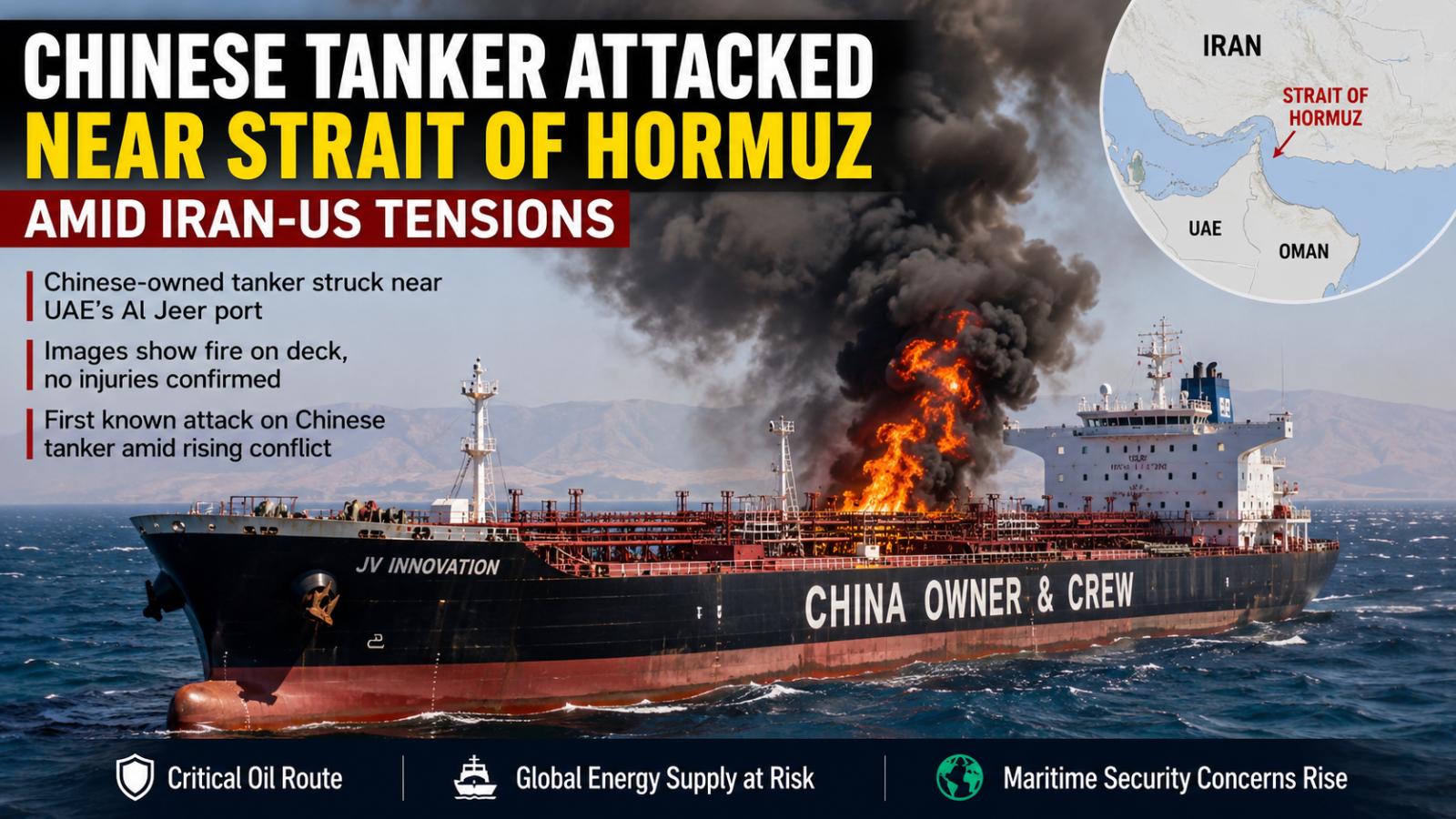
Chinese Tanker Attack Near Strait of Hormuz Raises Global Oil Fears A Chinese-owned oil tanker was attacked near the Strait of Hormuz, intensifying fears over oil shipping safety as Iran-US tensions deepen across Gulf waters. The vessel, identified in reports as JV Innovation, was reportedly hit off UAE’s Al Jeer port on May 4, with images showing flames on deck and markings reading “CHINA OWNER & CREW.”
Chinese Tanker Attack Near Strait of Hormuz Sparks Oil Route Alarm Amid Iran-US Tensions
Chinese Tanker Attack Near Strait of Hormuz Raises Global Oil Fears A Chinese-owned oil tanker was attacked near the Strait of Hormuz, intensifying fears over oil shipping safety as Iran-US tensions deepen across Gulf waters. The vessel, identified in reports as JV Innovation, was reportedly hit off UAE’s Al Jeer port on May 4, with images showing flames on deck and markings reading “CHINA OWNER & CREW.”
Trump warns of escalation over Strait of Hormuz access
U.S. President Donald Trump on Wednesday warned Iran that any move to restrict access to the Strait of Hormuz could trigger a stronger U.S. military response, according to a statement posted on Truth Social. Trump said tensions could ease if Tehran ensures open maritime access for all nations, describing it as a condition previously understood between the sides. He added that failure to comply would lead to “significantly intensified” action, signaling a potential shift toward a more aggressive U.S. stance in the region. The Strait of Hormuz is one of the world’s most critical oil transit routes, carrying a large share of global crude shipments. Any disruption could affect energy markets and international shipping security. Trump’s remarks come amid ongoing uncertainty in the Middle East, where regional rivalries and strategic interests continue to drive tensions. No immediate response from Iranian officials was reported. Analysts say heightened rhetoric around the waterway often fuels volatility in oil prices and raises the risk of military escalation in the Gulf.
Trump warns of escalation over Strait of Hormuz access
U.S. President Donald Trump on Wednesday warned Iran that any move to restrict access to the Strait of Hormuz could trigger a stronger U.S. military response, according to a statement posted on Truth Social. Trump said tensions could ease if Tehran ensures open maritime access for all nations, describing it as a condition previously understood between the sides. He added that failure to comply would lead to “significantly intensified” action, signaling a potential shift toward a more aggressive U.S. stance in the region. The Strait of Hormuz is one of the world’s most critical oil transit routes, carrying a large share of global crude shipments. Any disruption could affect energy markets and international shipping security. Trump’s remarks come amid ongoing uncertainty in the Middle East, where regional rivalries and strategic interests continue to drive tensions. No immediate response from Iranian officials was reported. Analysts say heightened rhetoric around the waterway often fuels volatility in oil prices and raises the risk of military escalation in the Gulf.
Trump Announces Pause in Maritime Escort Operations in the Strait of Hormuz
In a recent update, President Donald Trump announced a temporary pause in the United States’ maritime escort operation in the Strait of Hormuz, while confirming the continuation of a blockade. The decision follows progress in diplomatic discussions with Iran, aimed at finalizing an agreement. Trump explained on Truth Social that the blockade would remain active, but the project known as “Project Freedom,” which involves the movement of ships through the Strait of Hormuz, would be paused
Trump Announces Pause in Maritime Escort Operations in the Strait of Hormuz
In a recent update, President Donald Trump announced a temporary pause in the United States’ maritime escort operation in the Strait of Hormuz, while confirming the continuation of a blockade. The decision follows progress in diplomatic discussions with Iran, aimed at finalizing an agreement. Trump explained on Truth Social that the blockade would remain active, but the project known as “Project Freedom,” which involves the movement of ships through the Strait of Hormuz, would be paused
Strait of Hormuz Crisis Deepens as U.S. Navy Pushes to Reopen Key Oil Shipping Route
Strait of Hormuz Shipping Still Restricted Strait of Hormuz shipping remains severely limited despite new U.S. efforts to reopen one of the world’s most important oil trade routes. Vessel movement stayed subdued Monday as carriers awaited clearer safety guarantees amid Iran tensions. U.S. Navy Pushes to Restore Transit U.S. Central Command said its forces are assisting efforts to restore commercial navigation, with Navy destroyers and two U.S.-flagged merchant ships reportedly crossing the waterway. Officials described the mission as defensive, aimed at protecting freedom of navigation while pressure remains on Iranian ports. But the wider shipping industry is still cautious. Tracking data showed only scattered vessel movement, with no major return of oil tankers or large commercial ships through the narrow Gulf chokepoint. Carriers Await Clear Safety Rules German shipping firm Hapag-Lloyd said its vessels still cannot transit the Strait of Hormuz because safety procedures remain unclear. BIMCO has also warned that shipping companies need firm guidance and credible security assurances before resuming normal routes. The Joint Maritime Information Center continues to rate the regional threat as “critical,” advising vessels to consider safer routing through Omani waters where possible. Why the Strait Matters The Strait of Hormuz is a vital passage for global oil and gas shipments, making any disruption a direct risk to energy markets, freight costs and seafarer safety. Hundreds of ships and thousands of crew members remain affected by the crisis. Iran has warned foreign naval forces to stay away and said commercial vessels must coordinate transit with its military. Until both security risks and operating rules are resolved, global shipping through the Strait of Hormuz is likely to remain slow, uncertain and highly vulnerable.
Strait of Hormuz Crisis Deepens as U.S. Navy Pushes to Reopen Key Oil Shipping Route
Strait of Hormuz Shipping Still Restricted Strait of Hormuz shipping remains severely limited despite new U.S. efforts to reopen one of the world’s most important oil trade routes. Vessel movement stayed subdued Monday as carriers awaited clearer safety guarantees amid Iran tensions. U.S. Navy Pushes to Restore Transit U.S. Central Command said its forces are assisting efforts to restore commercial navigation, with Navy destroyers and two U.S.-flagged merchant ships reportedly crossing the waterway. Officials described the mission as defensive, aimed at protecting freedom of navigation while pressure remains on Iranian ports. But the wider shipping industry is still cautious. Tracking data showed only scattered vessel movement, with no major return of oil tankers or large commercial ships through the narrow Gulf chokepoint. Carriers Await Clear Safety Rules German shipping firm Hapag-Lloyd said its vessels still cannot transit the Strait of Hormuz because safety procedures remain unclear. BIMCO has also warned that shipping companies need firm guidance and credible security assurances before resuming normal routes. The Joint Maritime Information Center continues to rate the regional threat as “critical,” advising vessels to consider safer routing through Omani waters where possible. Why the Strait Matters The Strait of Hormuz is a vital passage for global oil and gas shipments, making any disruption a direct risk to energy markets, freight costs and seafarer safety. Hundreds of ships and thousands of crew members remain affected by the crisis. Iran has warned foreign naval forces to stay away and said commercial vessels must coordinate transit with its military. Until both security risks and operating rules are resolved, global shipping through the Strait of Hormuz is likely to remain slow, uncertain and highly vulnerable.

Trump’s Project Freedom sparks Iran warning amid Strait of Hormuz crisis
The Strait of Hormuz crisis has intensified after Ebrahim Azizi warned that any US intervention would be treated as a ceasefire violation. His remarks came in response to Donald Trump’s announcement of Project Freedom, a naval initiative aimed at guiding merchant vessels through the strategically vital w
Trump’s Project Freedom sparks Iran warning amid Strait of Hormuz crisis
The Strait of Hormuz crisis has intensified after Ebrahim Azizi warned that any US intervention would be treated as a ceasefire violation. His remarks came in response to Donald Trump’s announcement of Project Freedom, a naval initiative aimed at guiding merchant vessels through the strategically vital w
US Launches Project Freedom to Escort Ships in Strait of Hormuz
The United States has announced a new maritime initiative aimed at assisting commercial vessels stranded in the Strait of Hormuz, a critical global shipping route impacted by ongoing tensions. The operation, referred to as Project Freedom, is intended to guide ships safely through restricted waters as part of what officials described as a humanitarian effort to stabilize maritime activity in the region. According to statements from US leadership, the initiative will focus on escorti


US Launches Project Freedom to Escort Ships in Strait of Hormuz
The United States has announced a new maritime initiative aimed at assisting commercial vessels stranded in the Strait of Hormuz, a critical global shipping route impacted by ongoing tensions. The operation, referred to as Project Freedom, is intended to guide ships safely through restricted waters as part of what officials described as a humanitarian effort to stabilize maritime activity in the region. According to statements from US leadership, the initiative will focus on escorti
US-Iran Standoff Deepens with Reports of Experimental Maritime Strategies
Iran is reportedly evaluating unconventional military approaches as tensions continue in the Gulf, with discussions centered on alternative maritime tactics that could impact security in the Strait of Hormuz. The move comes at a time when economic pressure from ongoing restrictions on oil exports is intensifying internal debate within the country’s leadership. Officials are said to be considering a range of options that extend beyond traditional naval operations. These deliberations reflect growing frustration among certain factions, which increasingly view the prolonged blockade as a direct threat to national stability. While a fragile ceasefire remains in place, some policymakers argue that the economic consequences of continued restrictions could outweigh the risks of escalation. Iran has previously explored the use of trained marine animals for defense-related purposes, highlighting a history of experimental approaches within its military planning. Such methods, if pursued, would represent a broader shift toward unconventional strategies aimed at countering perceived disadvantages in conventional naval power. Alongside these discussions, there are concerns that Iran could deploy submarines or other underwater capabilities within the strategic waterway. Additional threats have included the potential disruption of critical telecommunications infrastructure, which could have far-reaching consequences for global connectivity and trade. For international shipping, the primary concern remains surface-level disruptions that could directly affect the flow of goods through one of the world’s most vital energy corridors. Security officials continue to monitor developments closely, as any escalation in the region could have immediate implications for global markets and maritime safety.
US-Iran Standoff Deepens with Reports of Experimental Maritime Strategies
Iran is reportedly evaluating unconventional military approaches as tensions continue in the Gulf, with discussions centered on alternative maritime tactics that could impact security in the Strait of Hormuz. The move comes at a time when economic pressure from ongoing restrictions on oil exports is intensifying internal debate within the country’s leadership. Officials are said to be considering a range of options that extend beyond traditional naval operations. These deliberations reflect growing frustration among certain factions, which increasingly view the prolonged blockade as a direct threat to national stability. While a fragile ceasefire remains in place, some policymakers argue that the economic consequences of continued restrictions could outweigh the risks of escalation. Iran has previously explored the use of trained marine animals for defense-related purposes, highlighting a history of experimental approaches within its military planning. Such methods, if pursued, would represent a broader shift toward unconventional strategies aimed at countering perceived disadvantages in conventional naval power. Alongside these discussions, there are concerns that Iran could deploy submarines or other underwater capabilities within the strategic waterway. Additional threats have included the potential disruption of critical telecommunications infrastructure, which could have far-reaching consequences for global connectivity and trade. For international shipping, the primary concern remains surface-level disruptions that could directly affect the flow of goods through one of the world’s most vital energy corridors. Security officials continue to monitor developments closely, as any escalation in the region could have immediate implications for global markets and maritime safety.
India’s High-Risk Energy Move: LPG Tanker Braces for Dangerous Strait of Hormuz Crossing
In a moment that could quietly shape global energy markets, an India-linked LPG tanker is attempting something most ships are now avoiding. The vessel, Sarv Shakti, loaded with nearly 45,000 tonnes of liquefied petroleum gas, is moving toward the tense waters of the Strait of Hormuz — a route that has suddenly become one of the world’s most dangerous maritime
India’s High-Risk Energy Move: LPG Tanker Braces for Dangerous Strait of Hormuz Crossing
In a moment that could quietly shape global energy markets, an India-linked LPG tanker is attempting something most ships are now avoiding. The vessel, Sarv Shakti, loaded with nearly 45,000 tonnes of liquefied petroleum gas, is moving toward the tense waters of the Strait of Hormuz — a route that has suddenly become one of the world’s most dangerous maritime
Pakistan commissions first Hangor-class submarine built in China
Pakistan submarine induction marks major naval boost Pakistan submarine induction marked a major milestone as the country commissioned its first Hangor-class submarine built in China. The ceremony was held in Sanya and attended by President Asif Ali Zardari and Naval Chief Admiral Naveed Ashraf. This move highlights strong China Pakistan defence cooperation and signals a major expansion in naval fleet capacity.
Pakistan commissions first Hangor-class submarine built in China
Pakistan submarine induction marks major naval boost Pakistan submarine induction marked a major milestone as the country commissioned its first Hangor-class submarine built in China. The ceremony was held in Sanya and attended by President Asif Ali Zardari and Naval Chief Admiral Naveed Ashraf. This move highlights strong China Pakistan defence cooperation and signals a major expansion in naval fleet capacity.
US pushes global coalition for Strait of Hormuz as Iran conflict disrupts oil trade
The United States is accelerating efforts to form a global coalition to secure the Strait of Hormuz, as the ongoing US-Iran conflict continues to disrupt critical shipping routes and drive volatility in global oil trade. The initiative, known as the Maritime Freedom Construct, aims to coordinate international maritime security, sanctions policy, and intelligence sharing to ensure safe navigation through one of the world’s most strategic waterways. The Strait of Hormuz, a narrow pa
US pushes global coalition for Strait of Hormuz as Iran conflict disrupts oil trade
The United States is accelerating efforts to form a global coalition to secure the Strait of Hormuz, as the ongoing US-Iran conflict continues to disrupt critical shipping routes and drive volatility in global oil trade. The initiative, known as the Maritime Freedom Construct, aims to coordinate international maritime security, sanctions policy, and intelligence sharing to ensure safe navigation through one of the world’s most strategic waterways. The Strait of Hormuz, a narrow pa