






Russian Ship Sinking Raises North Korea Nuclear Cargo Questions
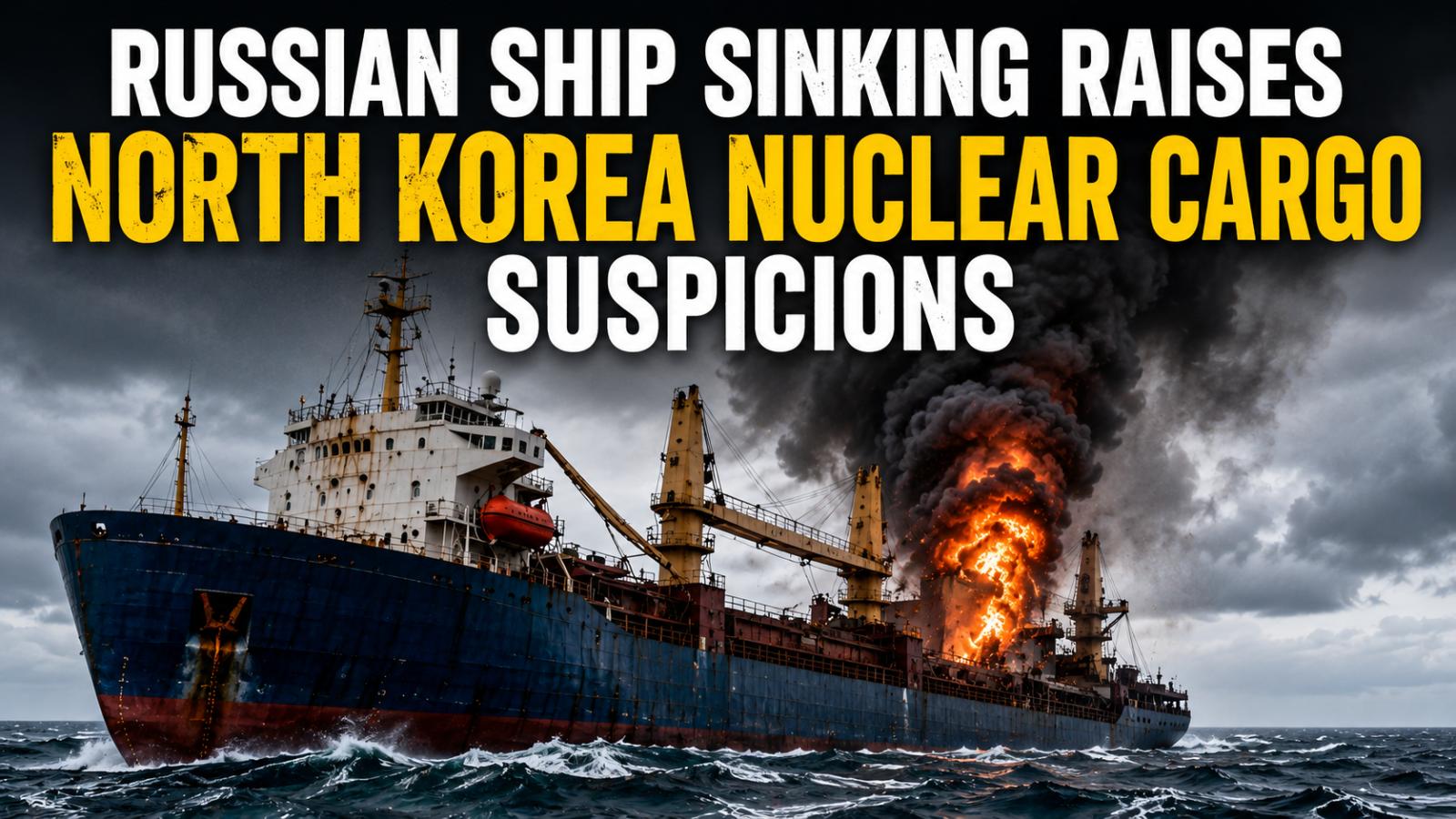
The sinking of the Russian cargo ship Ursa Major near Spain has triggered new questions over whether the vessel was carrying sensitive nuclear reactor components possibly linked to North Korea. The ship sank in the Mediterranean Sea on Monday, December 23, 2024, after explosions struck the vessel near its engine room. Fourteen crew members were rescued, while two died or were reported missing, according to official accounts. Why Spain Is Investiga
Russian Ship Sinking Raises North Korea Nuclear Cargo Questions
The sinking of the Russian cargo ship Ursa Major near Spain has triggered new questions over whether the vessel was carrying sensitive nuclear reactor components possibly linked to North Korea. The ship sank in the Mediterranean Sea on Monday, December 23, 2024, after explosions struck the vessel near its engine room. Fourteen crew members were rescued, while two died or were reported missing, according to official accounts. Why Spain Is Investiga
Iran Reportedly Parked RC-130 Aircraft in Pakistan Amid US Tensions
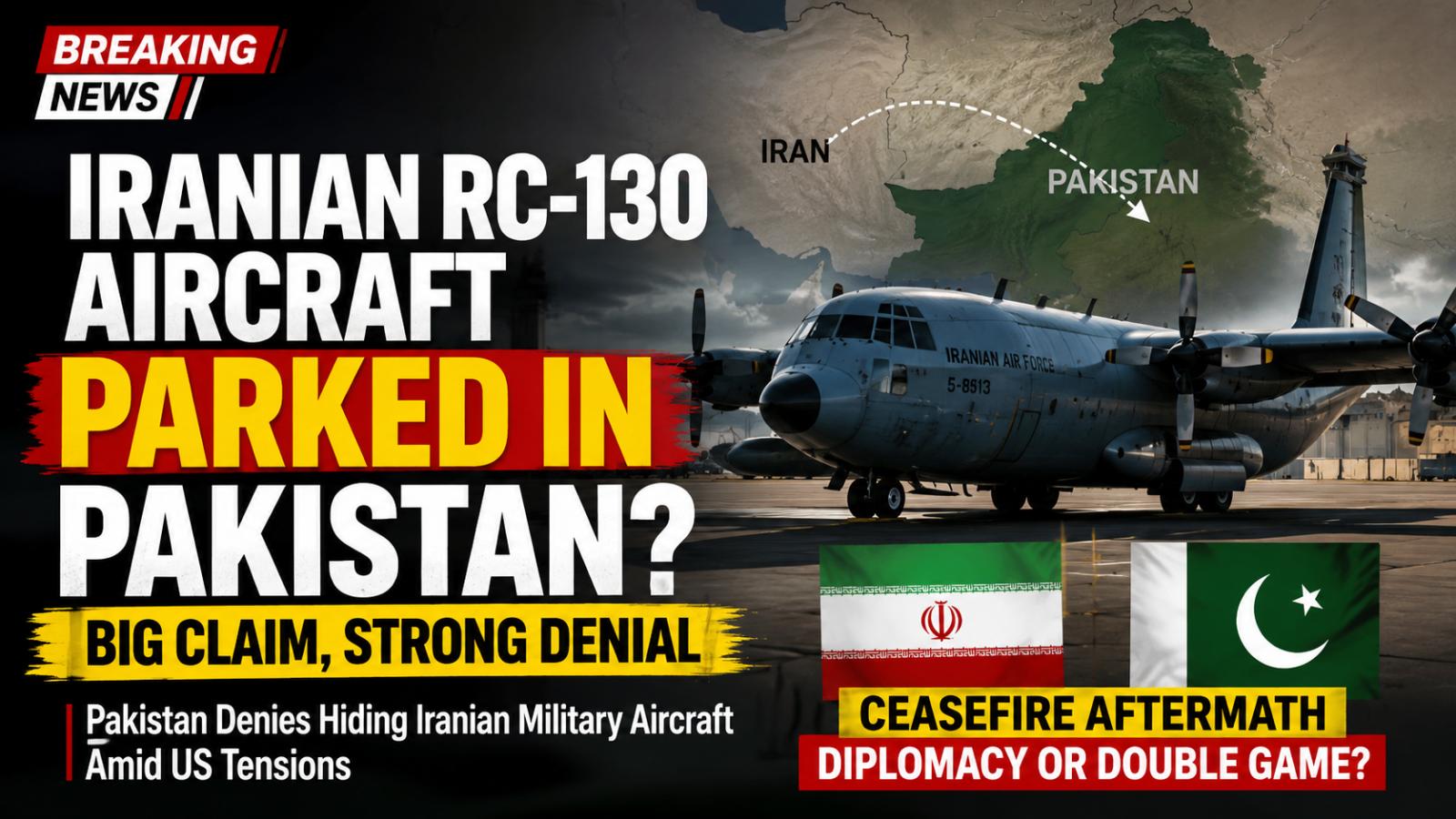
Questions have emerged over Pakistan’s role during the period following the US-Iran ceasefire after reports claimed Iranian military aircraft were temporarily stationed at Pakistani airbases. According to US officials cited in recent reports, Iran allegedly moved several aircraft into Pakistan, including an Iranian Air Force RC-130 reconnaissance aircraft, a surveillance and intelligence-gathering variant of the widely used C-130 transport plane. The aircraft was reportedly parked
Iran Reportedly Parked RC-130 Aircraft in Pakistan Amid US Tensions
Questions have emerged over Pakistan’s role during the period following the US-Iran ceasefire after reports claimed Iranian military aircraft were temporarily stationed at Pakistani airbases. According to US officials cited in recent reports, Iran allegedly moved several aircraft into Pakistan, including an Iranian Air Force RC-130 reconnaissance aircraft, a surveillance and intelligence-gathering variant of the widely used C-130 transport plane. The aircraft was reportedly parked
Pakistan Army Chief Asim Munir Calls India Conflict a Battle of Ideologies
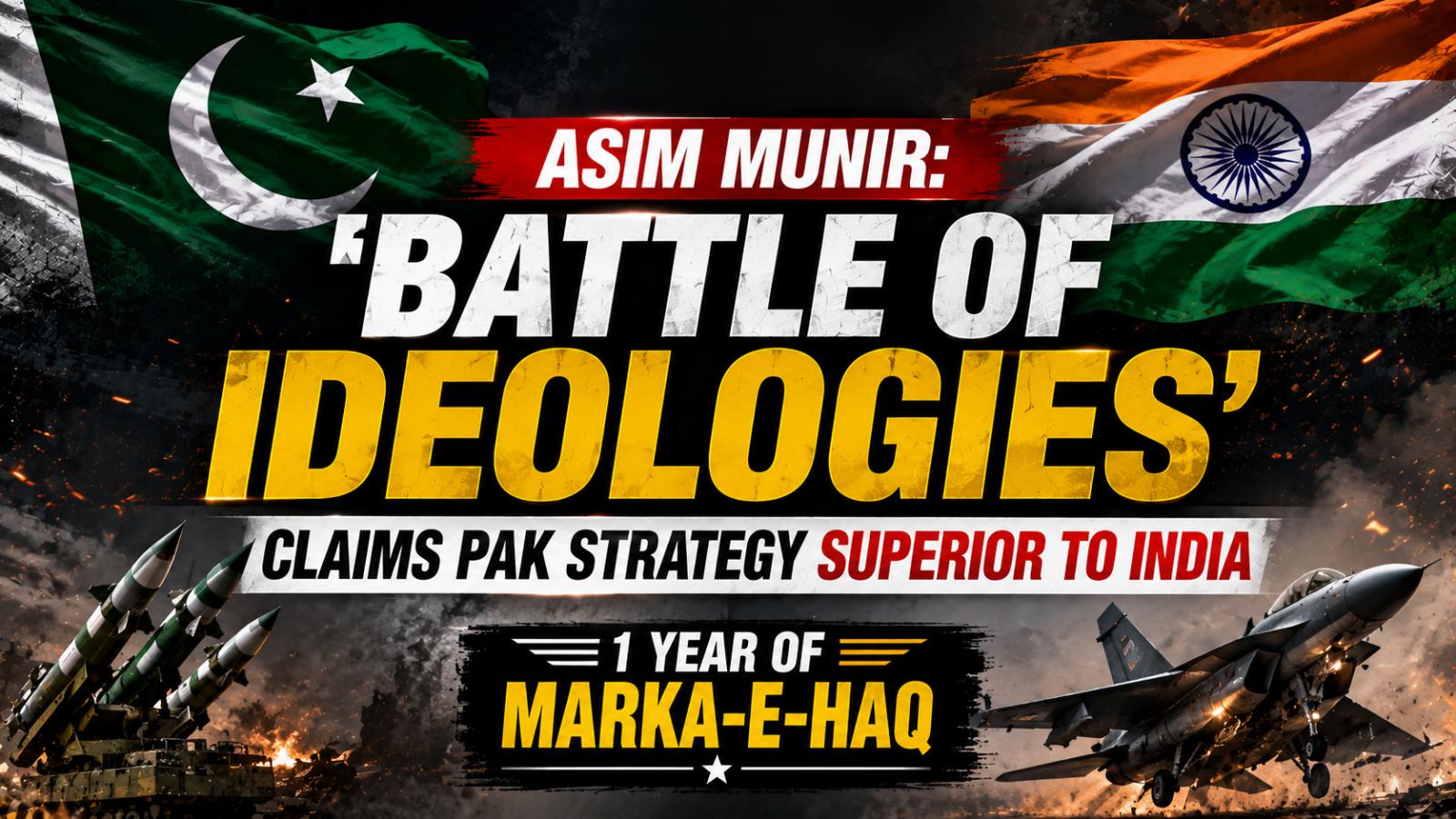
Pakistan’s Chief of Defence Forces, General Asim Munir, on Sunday described last year’s four-day conflict with India as a “battle between two ideologies” while claiming that Pakistan’s military strategy proved superior during the hostilities. Speaking at a ceremony held at the General Headquarters in Rawalpindi to mark the first anniversary of “Marka-e-Haq,” the title Islamabad uses for the conflict, Munir said Pakistan responded with unity and military preparedness during the e
Pakistan Army Chief Asim Munir Calls India Conflict a Battle of Ideologies
Pakistan’s Chief of Defence Forces, General Asim Munir, on Sunday described last year’s four-day conflict with India as a “battle between two ideologies” while claiming that Pakistan’s military strategy proved superior during the hostilities. Speaking at a ceremony held at the General Headquarters in Rawalpindi to mark the first anniversary of “Marka-e-Haq,” the title Islamabad uses for the conflict, Munir said Pakistan responded with unity and military preparedness during the e
US KC-135 Sends Distress Signal Over Persian Gulf
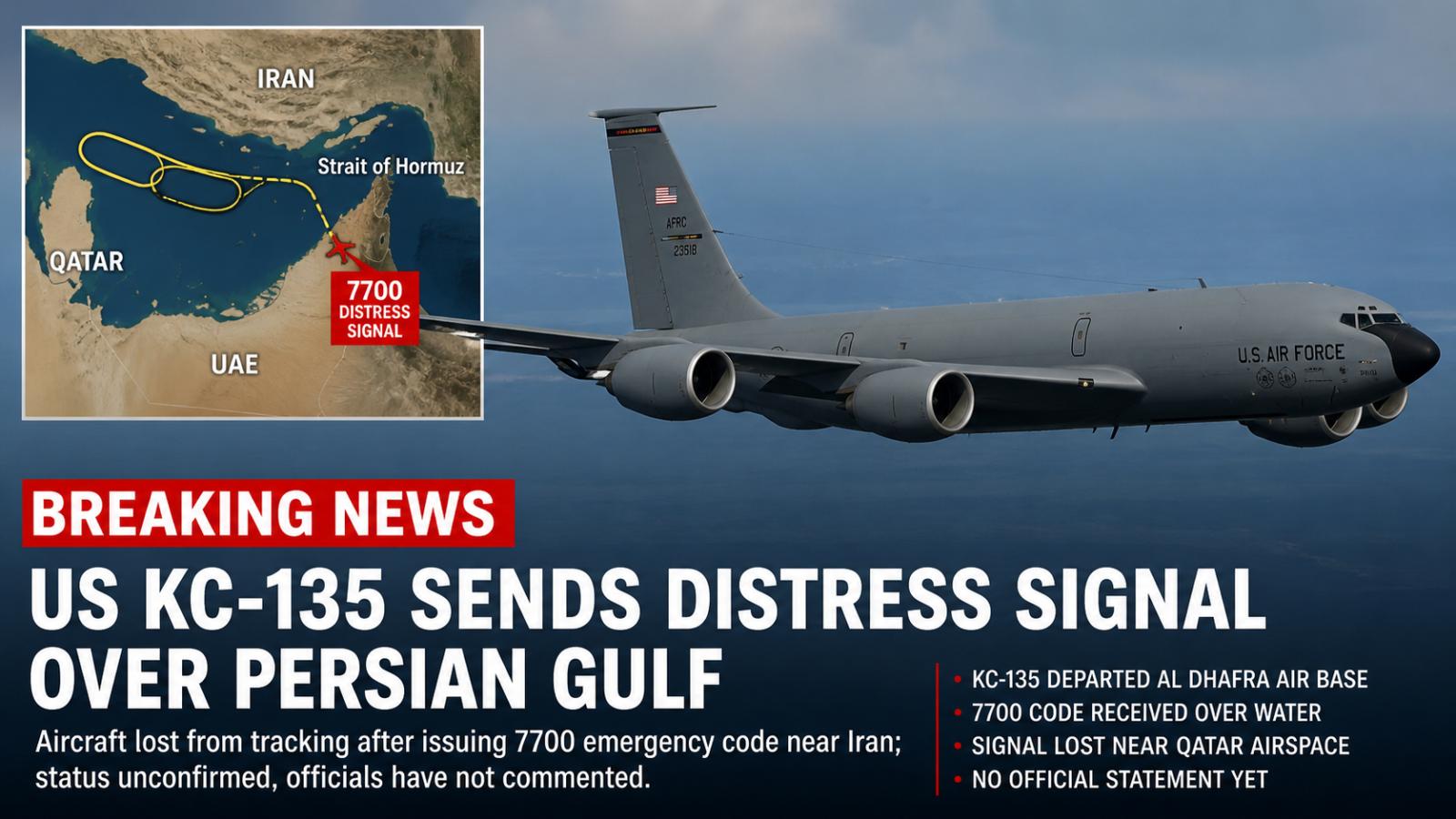
A U.S. military Boeing KC-135 Stratotanker transmitted a 7700 emergency distress signal while flying over the Persian Gulf near the Strait of Hormuz on Tuesday May 5, 2026, according to flight tracking data. The aircraft, which departed from Al Dhafra Air Base in the United Arab Emirates, was later no long
US KC-135 Sends Distress Signal Over Persian Gulf
A U.S. military Boeing KC-135 Stratotanker transmitted a 7700 emergency distress signal while flying over the Persian Gulf near the Strait of Hormuz on Tuesday May 5, 2026, according to flight tracking data. The aircraft, which departed from Al Dhafra Air Base in the United Arab Emirates, was later no long
Putin’s security tightened amid coup fears and military assassinations
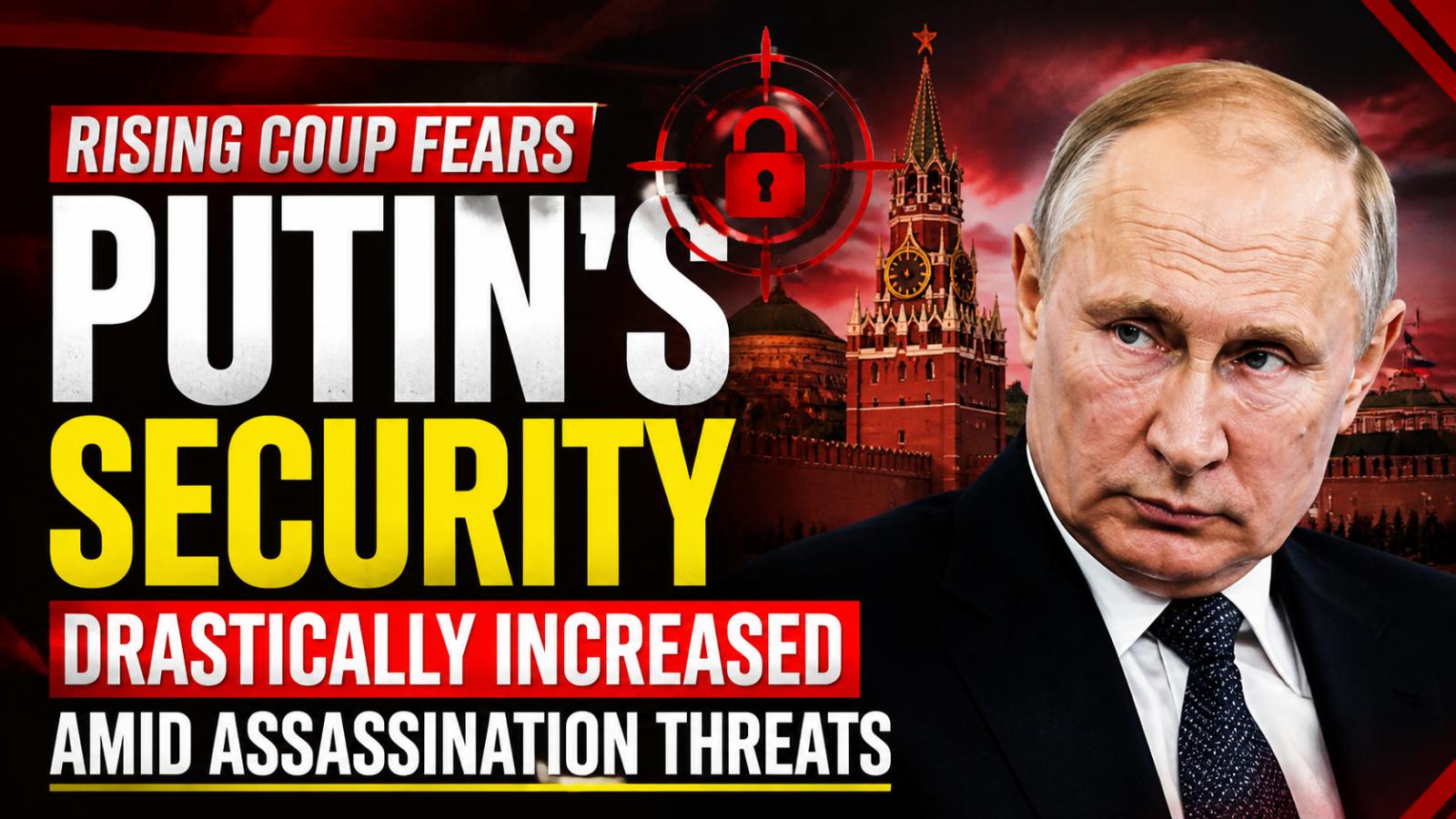
Russian President Vladimir Putin is facing an unprecedented level of security following growing concerns about a potential coup. These fears stem from a series of recent assassinations of senior Russian military figures, sparking widespread unease within the Kremlin. A European intelligence report reveals that Putin's security measures have been drastically increased, with surveillance systems now installed in the homes of his closest staff. These measures aim to prevent leaks of sensitive information and reduce the possibility of a plot against the president. Additionally, those who work directly with the president, including his bodyguards, chefs, and photographers, are now prohibited from using public transportation. Instead, all personnel visiting Putin must undergo two rounds of screening. Moreover, they are restricted to using phones without internet access to further minimize the risk of communication leaks. The intensified security is reportedly a response to fears of assassination attempts, particularly from the growing power of Russian elites who are displeased with Putin's leadership, especially amid the ongoing conflict in Ukraine. Former confidante’s role in coup fears One of the major concerns surrounding Putin’s safety involves Sergei Shoigu, a former confidante and the former defense minister of Russia. Shoigu was removed from his post but still retains significant influence within the Russian military. According to the report, Shoigu is now linked to potential coup efforts, as he remains a powerful figure within Russia’s military high command. Shoigu's influence over the Russian military is seen as a significant threat to Putin's reign, especially after the arrest of Ruslan Tsalikov, Shoigu's close associate, in March. This arrest has stirred political unrest within the Kremlin and raised suspicions about potential power shifts. The tensions within Russia's elite circles have added fuel to the fears of an internal coup, though the report does not provide direct evidence linking Shoigu to any active conspiracy. Kremlin in turmoil over Ukraine war and dissent The political climate within the Kremlin has grown increasingly unstable, particularly since the death of a top general in December, which triggered many of the heightened security measures. The fallout from this incident has led to fractures within Russia's security establishment, which is now divided over how to handle the fallout from the war in Ukraine. The rising costs and significant Russian military fatalities, estimated at 30,000 a month, have led to growing dissent within the political elite. Many believe the war has become unsustainable, further intensifying the pressure on Putin’s leadership. Putin has not publicly visited a military facility in 2023 and has avoided his usual residences, including those in the Moscow region and Valdai. The president has stopped making public appearances out of fear for his safety, with the Kremlin opting to release pre-recorded videos and images to maintain his presence in the media. According to reports, Putin has spent weeks at a time in upgraded bunkers, particularly in the Krasnodar coastal region, in response to the escalating threat of a coup and potential drone attacks. The ongoing crisis inside Russia's political structure Amidst the growing security concerns, the Kremlin is facing increasing instability, with political dissidents pushing back against Putin’s decisions. The Ukraine war has become a focal point of this unrest, with many within the political and military elite questioning its sustainability. These issues, compounded by the rising death toll among Russian soldiers, continue to contribute to the growing volatility of Putin’s rule. As fears of a coup mount, the situation inside the Kremlin remains precarious, with Putin’s tight security measures highlighting the level of tension and distrust among Russia’s political and military circles. The coming months may reveal whether these intensified precautions will be enough to protect Putin or if the risks posed by internal dissent and external threats will continue to grow.
Putin’s security tightened amid coup fears and military assassinations
Russian President Vladimir Putin is facing an unprecedented level of security following growing concerns about a potential coup. These fears stem from a series of recent assassinations of senior Russian military figures, sparking widespread unease within the Kremlin. A European intelligence report reveals that Putin's security measures have been drastically increased, with surveillance systems now installed in the homes of his closest staff. These measures aim to prevent leaks of sensitive information and reduce the possibility of a plot against the president. Additionally, those who work directly with the president, including his bodyguards, chefs, and photographers, are now prohibited from using public transportation. Instead, all personnel visiting Putin must undergo two rounds of screening. Moreover, they are restricted to using phones without internet access to further minimize the risk of communication leaks. The intensified security is reportedly a response to fears of assassination attempts, particularly from the growing power of Russian elites who are displeased with Putin's leadership, especially amid the ongoing conflict in Ukraine. Former confidante’s role in coup fears One of the major concerns surrounding Putin’s safety involves Sergei Shoigu, a former confidante and the former defense minister of Russia. Shoigu was removed from his post but still retains significant influence within the Russian military. According to the report, Shoigu is now linked to potential coup efforts, as he remains a powerful figure within Russia’s military high command. Shoigu's influence over the Russian military is seen as a significant threat to Putin's reign, especially after the arrest of Ruslan Tsalikov, Shoigu's close associate, in March. This arrest has stirred political unrest within the Kremlin and raised suspicions about potential power shifts. The tensions within Russia's elite circles have added fuel to the fears of an internal coup, though the report does not provide direct evidence linking Shoigu to any active conspiracy. Kremlin in turmoil over Ukraine war and dissent The political climate within the Kremlin has grown increasingly unstable, particularly since the death of a top general in December, which triggered many of the heightened security measures. The fallout from this incident has led to fractures within Russia's security establishment, which is now divided over how to handle the fallout from the war in Ukraine. The rising costs and significant Russian military fatalities, estimated at 30,000 a month, have led to growing dissent within the political elite. Many believe the war has become unsustainable, further intensifying the pressure on Putin’s leadership. Putin has not publicly visited a military facility in 2023 and has avoided his usual residences, including those in the Moscow region and Valdai. The president has stopped making public appearances out of fear for his safety, with the Kremlin opting to release pre-recorded videos and images to maintain his presence in the media. According to reports, Putin has spent weeks at a time in upgraded bunkers, particularly in the Krasnodar coastal region, in response to the escalating threat of a coup and potential drone attacks. The ongoing crisis inside Russia's political structure Amidst the growing security concerns, the Kremlin is facing increasing instability, with political dissidents pushing back against Putin’s decisions. The Ukraine war has become a focal point of this unrest, with many within the political and military elite questioning its sustainability. These issues, compounded by the rising death toll among Russian soldiers, continue to contribute to the growing volatility of Putin’s rule. As fears of a coup mount, the situation inside the Kremlin remains precarious, with Putin’s tight security measures highlighting the level of tension and distrust among Russia’s political and military circles. The coming months may reveal whether these intensified precautions will be enough to protect Putin or if the risks posed by internal dissent and external threats will continue to grow.
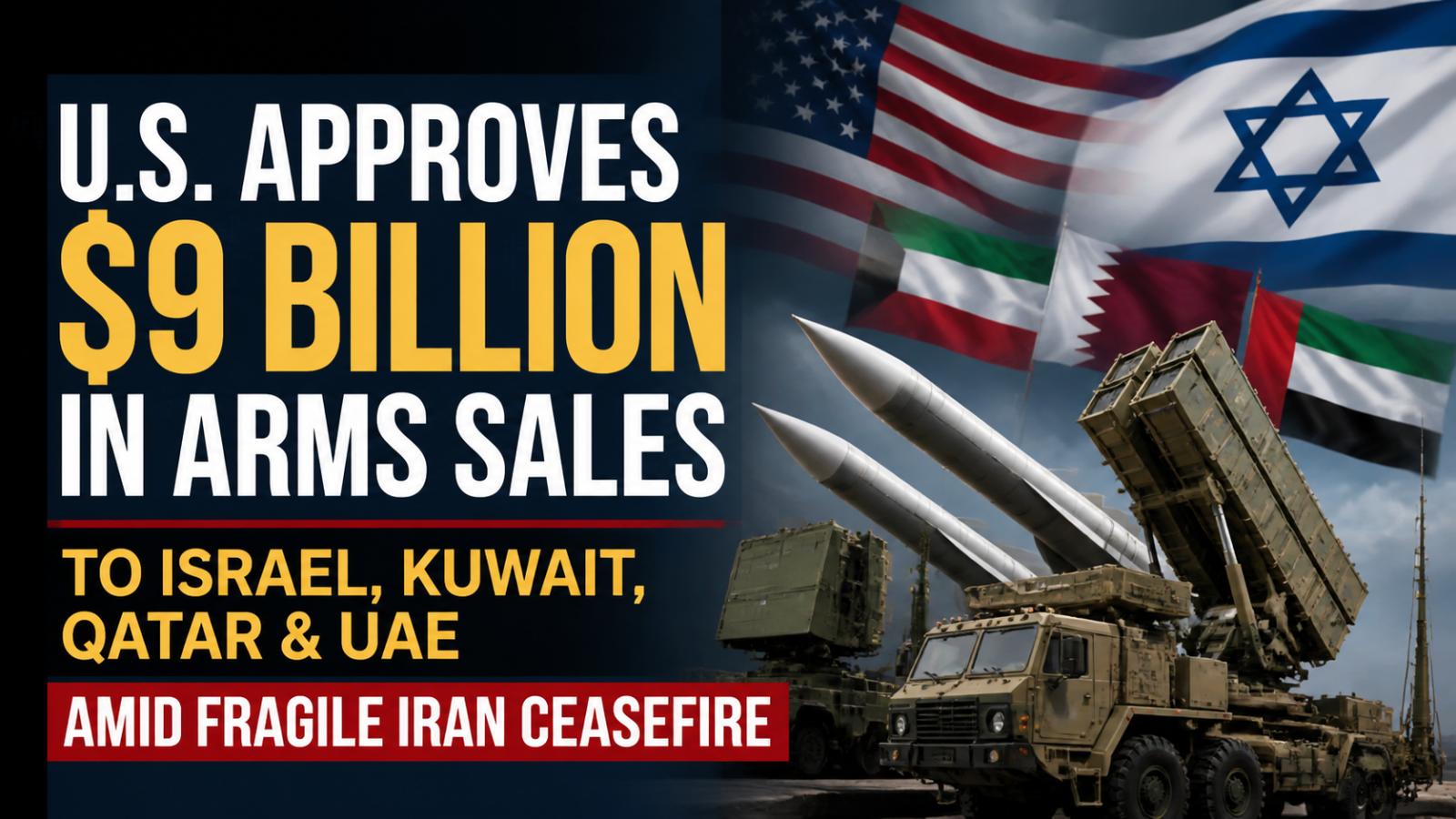
US fast-tracks $9 billion arms deals to Middle East allies
US Authorizes $9 Billion in Arms Sales to Middle East Allies The United States has authorized the expedited sale of arms to Israel, Kuwait, Qatar, and the UAE, totaling nearly $9 billion. This decision, approved by Secretary of State Marco Rubio, bypasses the standard congressional review process and is designed t
US fast-tracks $9 billion arms deals to Middle East allies
US Authorizes $9 Billion in Arms Sales to Middle East Allies The United States has authorized the expedited sale of arms to Israel, Kuwait, Qatar, and the UAE, totaling nearly $9 billion. This decision, approved by Secretary of State Marco Rubio, bypasses the standard congressional review process and is designed t
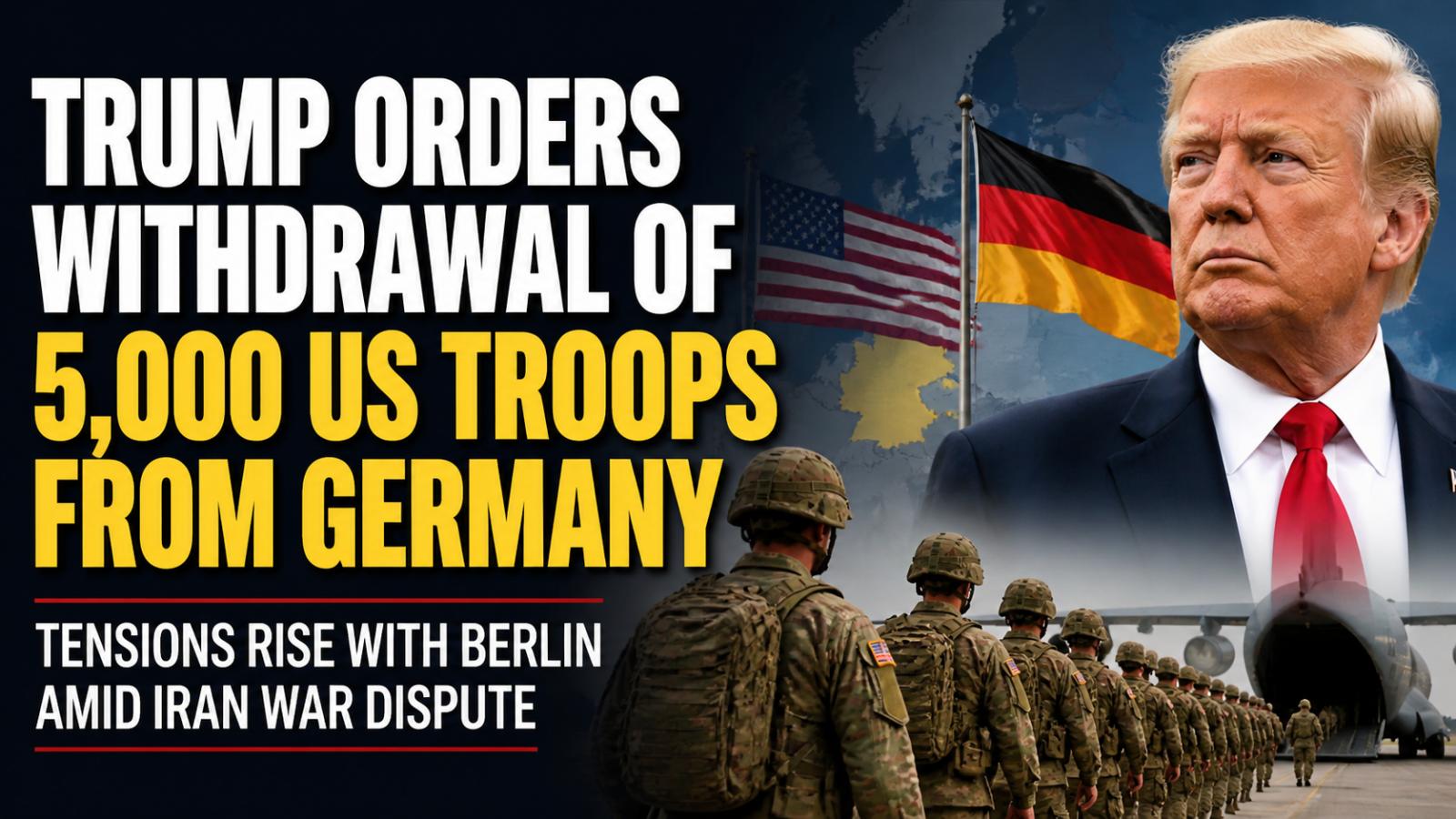
Trump orders the withdrawal of 5,000 US troops from Germany amid rising tensions
Trump Orders US Troops Withdrawal From Germany President Donald Trump has ordered the withdrawal of 5,000 US troops from Germany, escalating tensions with Berlin and NATO allies. This decision comes amid ongoing disagreements over the Iran conflict and US military operations in the Middle East. The Pentagon confirmed the move on Friday, May 1, as part of a broader shift in US military strategy, which seeks to reduce America's pres
Trump orders the withdrawal of 5,000 US troops from Germany amid rising tensions
Trump Orders US Troops Withdrawal From Germany President Donald Trump has ordered the withdrawal of 5,000 US troops from Germany, escalating tensions with Berlin and NATO allies. This decision comes amid ongoing disagreements over the Iran conflict and US military operations in the Middle East. The Pentagon confirmed the move on Friday, May 1, as part of a broader shift in US military strategy, which seeks to reduce America's pres
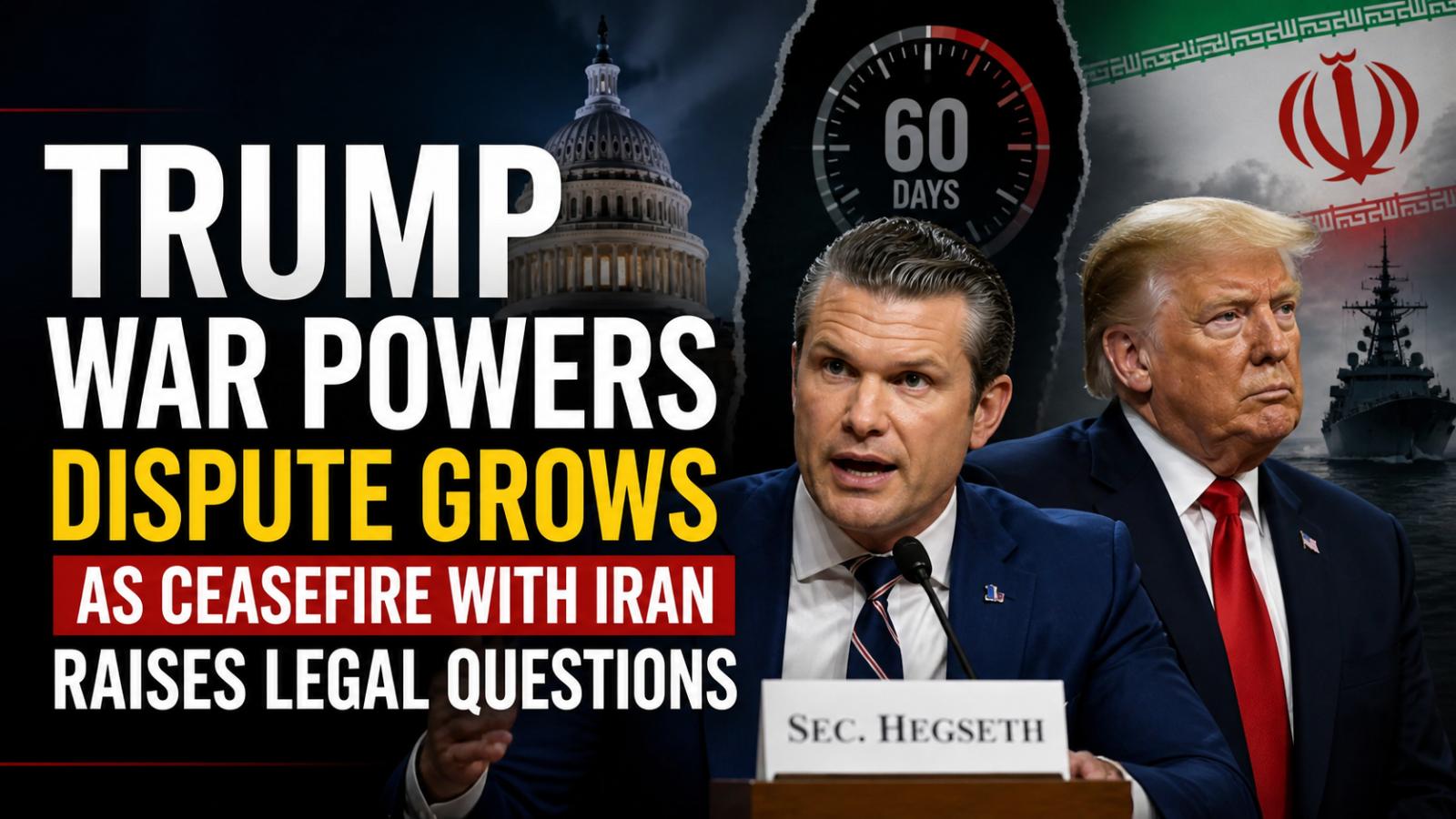
Hegseth says Iran ceasefire pauses war powers clock amid congressional concerns
The Trump war powers debate took center stage in Washington as Defense Secretary Pete Hegseth told lawmakers that a ceasefire with Iran pauses the legal clock under the War Powers Resolution, a claim that has triggered strong political and legal reactions. The dispute comes just before the 60-day deadline that typically requires the president to seek approval from Congress to continue military action, raising questions about how the law should be applied during a ceasefire. Speaking before the Senate Armed Services Committee, Hegseth argued that ongoing ceasefire conditions mean the countdown does not apply in the usual way. Under the War Powers Resolution, introduced in 1973, presidents must inform Congress within 48 hours of military action and must withdraw troops within 60 days unless lawmakers approve continued engagement. Lawmakers had expected this deadline to expire on May 1, but Hegseth’s interpretation suggests otherwise. Hegseth avoided giving a clear answer when asked if the administration of Donald Trump would seek formal authorization. Instead, he defended the administration’s actions and criticized opponents, saying that internal political disagreements weaken the country’s position. His remarks came during discussions on the Pentagon’s proposed $1.45 trillion budget, though much of the focus shifted to the Iran conflict and its legal implications. Several lawmakers from both parties expressed concern. Senator Tim Kaine warned that the situation raises serious constitutional questions, while some Republicans also indicated they may oppose continuing military operations without approval. Others supported a more flexible interpretation, especially during active negotiations or ceasefire periods. Legal experts, however, strongly rejected the argument that a ceasefire pauses the law. Analysts pointed out that US naval forces remain active in the region, including operations in the Strait of Hormuz, suggesting that hostilities have not fully stopped. Scholars emphasized that the law does not include any provision for pausing the timeline. The conflict has already had wider consequences, including rising energy prices and increased tensions in the region. Critics have also accused the administration of starting the conflict without a clear immediate threat. During the hearing, Senator Elissa Slotkin questioned whether the administration could truly claim progress while key trade routes remain unstable. The exchange grew tense at times, reflecting deep divisions over the handling of the situation. While military officials maintained a more measured tone, political leaders continued to clash over strategy, legality, and communication with the public. As the deadline passes, the debate over war powers, presidential authority, and congressional oversight is expected to intensify further.
Hegseth says Iran ceasefire pauses war powers clock amid congressional concerns
The Trump war powers debate took center stage in Washington as Defense Secretary Pete Hegseth told lawmakers that a ceasefire with Iran pauses the legal clock under the War Powers Resolution, a claim that has triggered strong political and legal reactions. The dispute comes just before the 60-day deadline that typically requires the president to seek approval from Congress to continue military action, raising questions about how the law should be applied during a ceasefire. Speaking before the Senate Armed Services Committee, Hegseth argued that ongoing ceasefire conditions mean the countdown does not apply in the usual way. Under the War Powers Resolution, introduced in 1973, presidents must inform Congress within 48 hours of military action and must withdraw troops within 60 days unless lawmakers approve continued engagement. Lawmakers had expected this deadline to expire on May 1, but Hegseth’s interpretation suggests otherwise. Hegseth avoided giving a clear answer when asked if the administration of Donald Trump would seek formal authorization. Instead, he defended the administration’s actions and criticized opponents, saying that internal political disagreements weaken the country’s position. His remarks came during discussions on the Pentagon’s proposed $1.45 trillion budget, though much of the focus shifted to the Iran conflict and its legal implications. Several lawmakers from both parties expressed concern. Senator Tim Kaine warned that the situation raises serious constitutional questions, while some Republicans also indicated they may oppose continuing military operations without approval. Others supported a more flexible interpretation, especially during active negotiations or ceasefire periods. Legal experts, however, strongly rejected the argument that a ceasefire pauses the law. Analysts pointed out that US naval forces remain active in the region, including operations in the Strait of Hormuz, suggesting that hostilities have not fully stopped. Scholars emphasized that the law does not include any provision for pausing the timeline. The conflict has already had wider consequences, including rising energy prices and increased tensions in the region. Critics have also accused the administration of starting the conflict without a clear immediate threat. During the hearing, Senator Elissa Slotkin questioned whether the administration could truly claim progress while key trade routes remain unstable. The exchange grew tense at times, reflecting deep divisions over the handling of the situation. While military officials maintained a more measured tone, political leaders continued to clash over strategy, legality, and communication with the public. As the deadline passes, the debate over war powers, presidential authority, and congressional oversight is expected to intensify further.
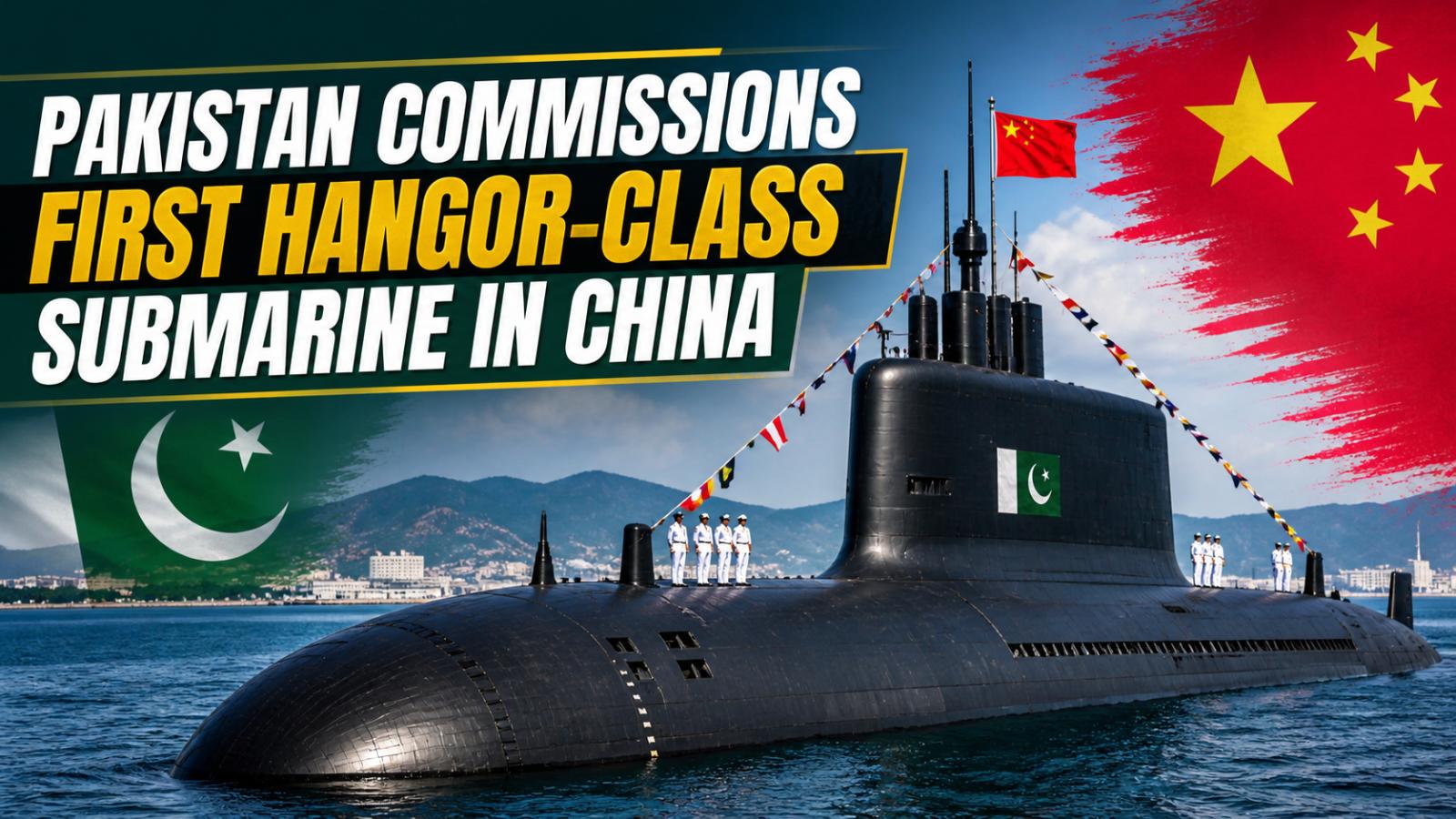
Pakistan commissions first Hangor-class submarine built in China
Pakistan submarine induction marks major naval boost Pakistan submarine induction marked a major milestone as the country commissioned its first Hangor-class submarine built in China. The ceremony was held in Sanya and attended by President Asif Ali Zardari and Naval Chief Admiral Naveed Ashraf. This move highlights strong China Pakistan defence cooperation and signals a major expansion in naval fleet capacity.
Pakistan commissions first Hangor-class submarine built in China
Pakistan submarine induction marks major naval boost Pakistan submarine induction marked a major milestone as the country commissioned its first Hangor-class submarine built in China. The ceremony was held in Sanya and attended by President Asif Ali Zardari and Naval Chief Admiral Naveed Ashraf. This move highlights strong China Pakistan defence cooperation and signals a major expansion in naval fleet capacity.
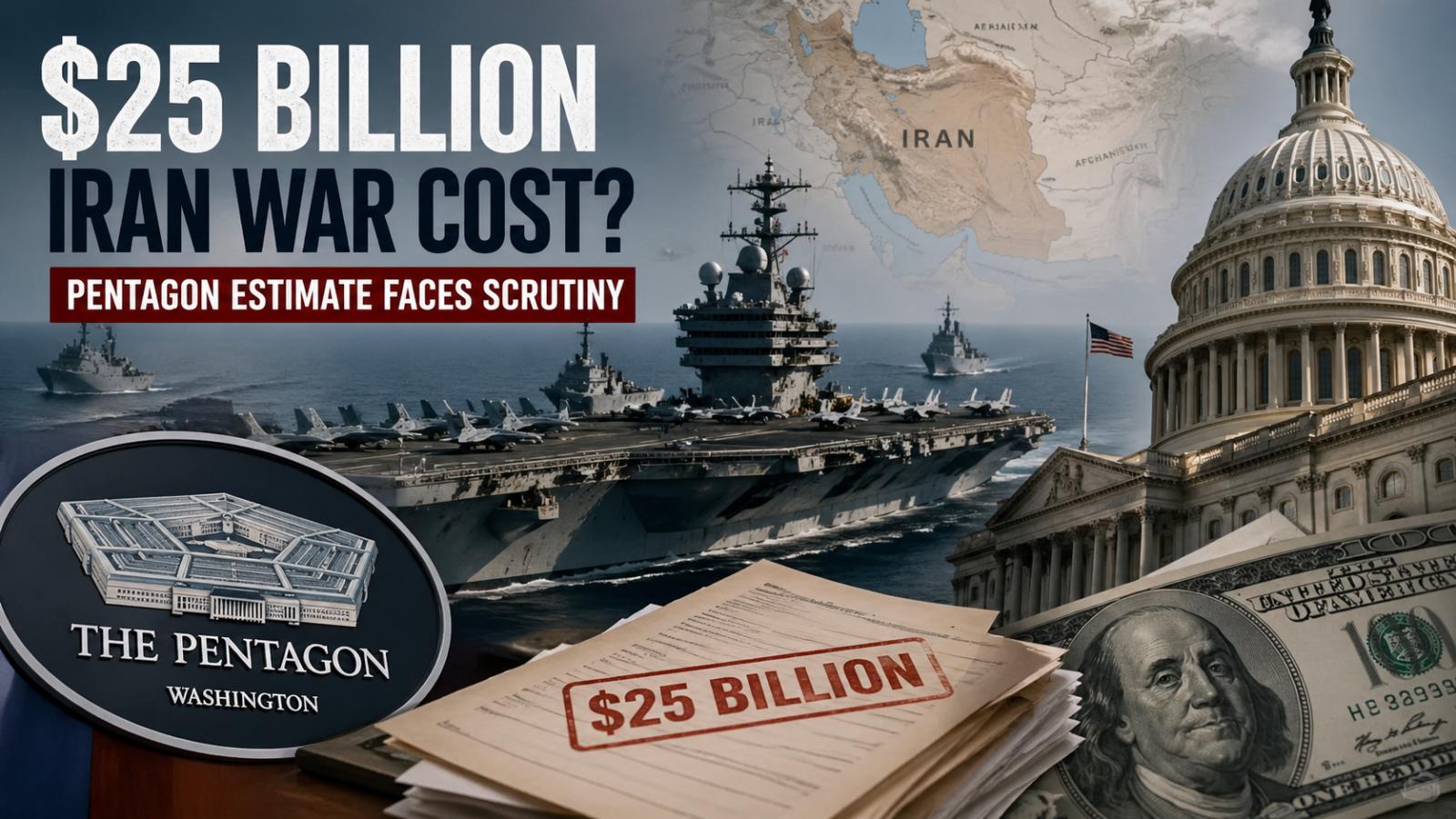
Why is the Pentagon’s $25 billion war cost estimate questioned? Experts say it may be incomplete
The United States Department of Defense has estimated that its ongoing military conflict with Iran has cost approximately $25 billion, but analysts and lawmakers are raising concerns that the figure may significantly understate the true financial burden. The estimate was presented during a congressional hearing on Tuesday, April 29, 2026, where Pentagon officials outlined current war-related expenditures without offering a detailed breakdown. Congressional hearing reveals l
Why is the Pentagon’s $25 billion war cost estimate questioned? Experts say it may be incomplete
The United States Department of Defense has estimated that its ongoing military conflict with Iran has cost approximately $25 billion, but analysts and lawmakers are raising concerns that the figure may significantly understate the true financial burden. The estimate was presented during a congressional hearing on Tuesday, April 29, 2026, where Pentagon officials outlined current war-related expenditures without offering a detailed breakdown. Congressional hearing reveals l

Trump Comments on Ukraine and Iran Wars Spark Confusion
US President Donald Trump drew attention during a recent press interaction after appearing to confuse details while discussing two major international conflicts. The exchange took place as Trump addressed reporters during an event linked to the Artemis II mission crew, where he was asked which conflict might conclude first: the prolonged Russia-Ukraine war or the ongoing tensions involving Iran and Israel. In response, Trump suggested that both situations could follow a similar timeline, stating that he was uncertain which would end sooner. However, his subsequent remarks raised questions as he began describing military conditions that appeared inconsistent or unclear in context. He claimed that Ukraine was militarily defeated, referencing significant naval and air losses, including statements about ships being destroyed and aircraft being eliminated. Trump also cited reductions in missile and drone capabilities, though his comments did not clearly distinguish whether he was referring to Ukraine or Iran at various points. This lack of clarity led to widespread attention, with observers noting the difficulty in separating his analysis of the two conflicts. The Russia-Ukraine war has continued for years with ongoing military engagements, while tensions involving Iran, Israel, and US involvement have added another layer of complexity to global security dynamics. Trump’s remarks came at a time when both conflicts remain active and under close international observation. The moment quickly gained traction due to the ambiguity in the president’s statements, highlighting the challenges of addressing multiple geopolitical crises simultaneously in public forums.
Trump Comments on Ukraine and Iran Wars Spark Confusion
US President Donald Trump drew attention during a recent press interaction after appearing to confuse details while discussing two major international conflicts. The exchange took place as Trump addressed reporters during an event linked to the Artemis II mission crew, where he was asked which conflict might conclude first: the prolonged Russia-Ukraine war or the ongoing tensions involving Iran and Israel. In response, Trump suggested that both situations could follow a similar timeline, stating that he was uncertain which would end sooner. However, his subsequent remarks raised questions as he began describing military conditions that appeared inconsistent or unclear in context. He claimed that Ukraine was militarily defeated, referencing significant naval and air losses, including statements about ships being destroyed and aircraft being eliminated. Trump also cited reductions in missile and drone capabilities, though his comments did not clearly distinguish whether he was referring to Ukraine or Iran at various points. This lack of clarity led to widespread attention, with observers noting the difficulty in separating his analysis of the two conflicts. The Russia-Ukraine war has continued for years with ongoing military engagements, while tensions involving Iran, Israel, and US involvement have added another layer of complexity to global security dynamics. Trump’s remarks came at a time when both conflicts remain active and under close international observation. The moment quickly gained traction due to the ambiguity in the president’s statements, highlighting the challenges of addressing multiple geopolitical crises simultaneously in public forums.
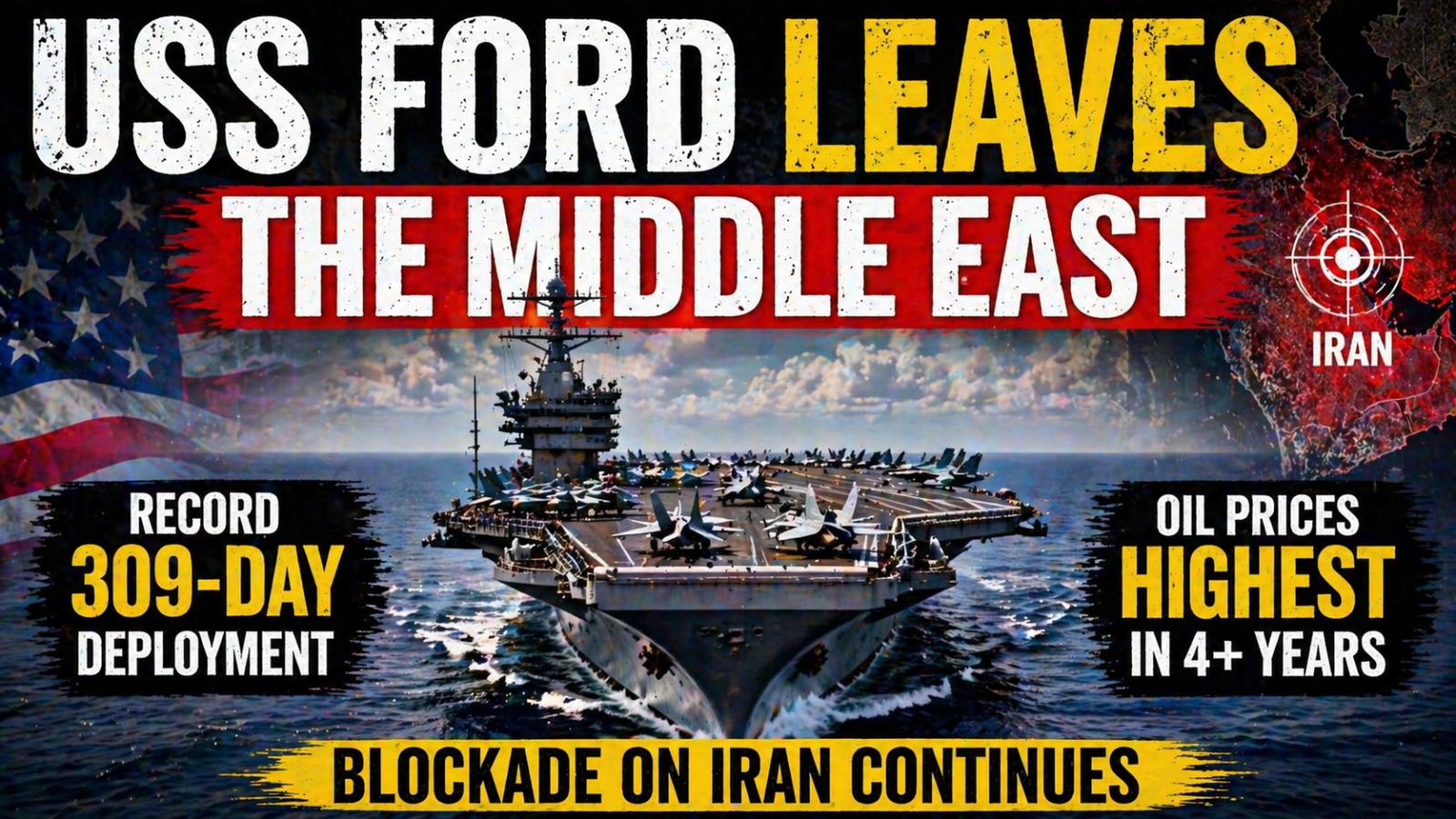
USS Gerald R. Ford Set to Leave Middle East After Record Deployment
The USS Gerald R. Ford, the US Navy’s newest aircraft carrier, is preparing to leave the Middle East after completing a record 309-day deployment, marking the longest continuous mission for a modern American carrier. The vessel is expected to return to its home port at Naval Station Norfolk, Virginia, around mid-May, concluding an extended operational period that has drawn attention from lawmakers and defense officials. The decision to bring the USS Ford back follows a demanding d
USS Gerald R. Ford Set to Leave Middle East After Record Deployment
The USS Gerald R. Ford, the US Navy’s newest aircraft carrier, is preparing to leave the Middle East after completing a record 309-day deployment, marking the longest continuous mission for a modern American carrier. The vessel is expected to return to its home port at Naval Station Norfolk, Virginia, around mid-May, concluding an extended operational period that has drawn attention from lawmakers and defense officials. The decision to bring the USS Ford back follows a demanding d
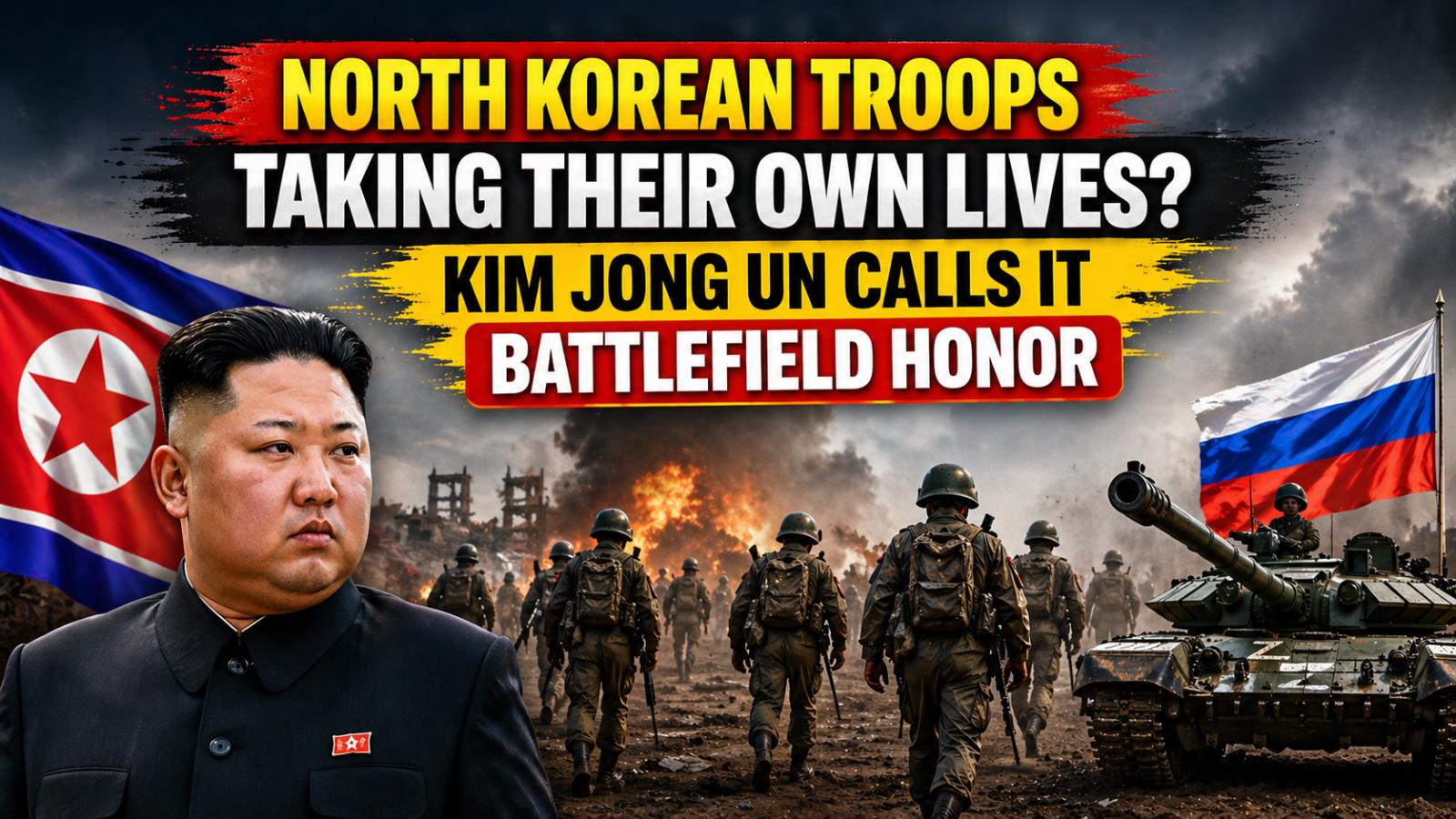
Why are North Korean troops reportedly taking their own lives? Kim Jong Un calls it battlefield honor
Why are North Korean troops reportedly taking their own lives? Kim Jong Un calls it battlefield honor has drawn international scrutiny after reports emerged that North Korean soldiers fighting alongside Russia in the war in Ukraine may be taking their own lives to avoid capture. The claims
Why are North Korean troops reportedly taking their own lives? Kim Jong Un calls it battlefield honor
Why are North Korean troops reportedly taking their own lives? Kim Jong Un calls it battlefield honor has drawn international scrutiny after reports emerged that North Korean soldiers fighting alongside Russia in the war in Ukraine may be taking their own lives to avoid capture. The claims
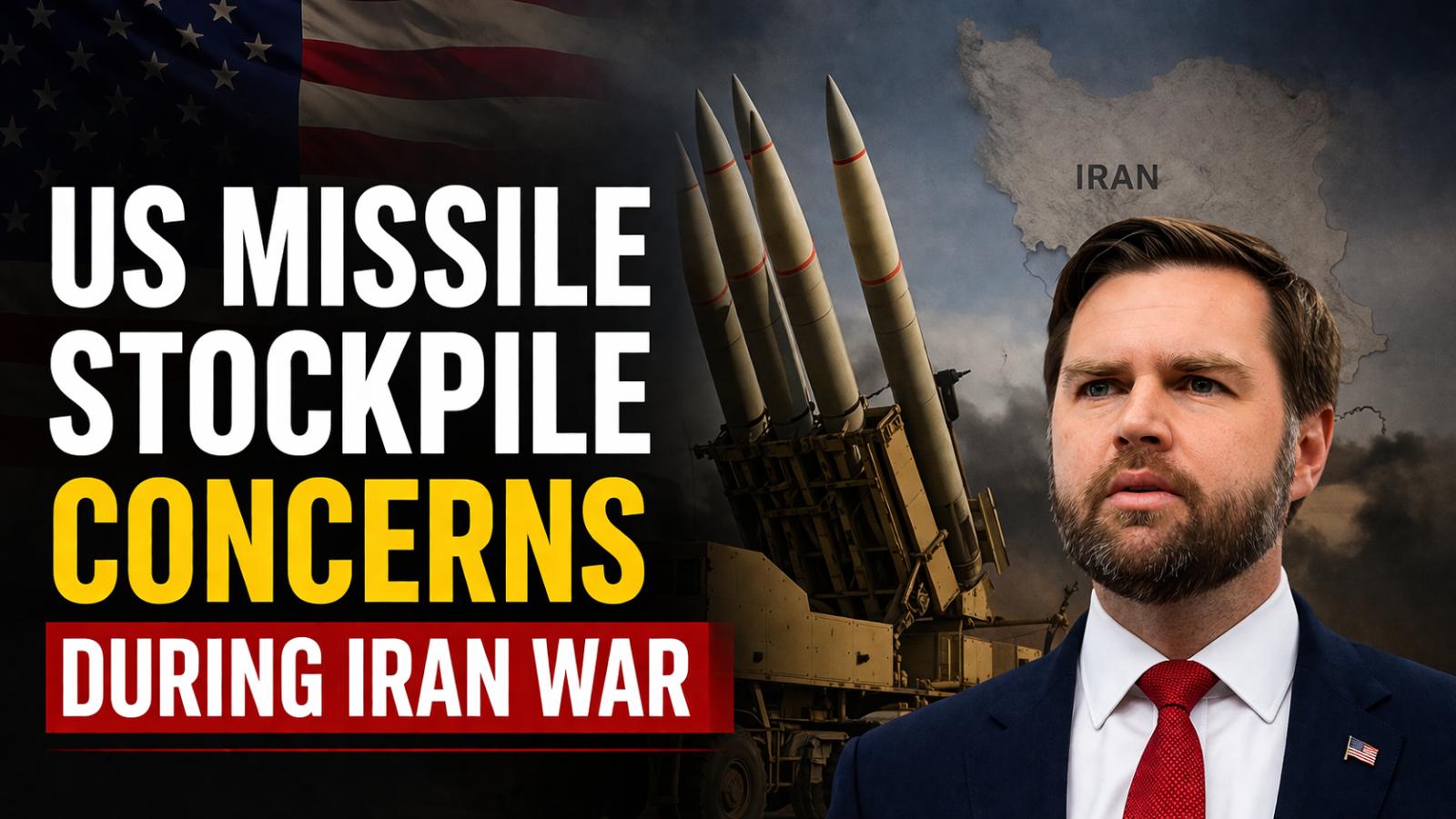
US missile stockpile concerns grow amid iran conflict scrutiny
US missile stockpile concerns during Iran war
US missile stockpile concerns grow amid iran conflict scrutiny
US missile stockpile concerns during Iran war
India Enters Top Five as Global Defense Spending Surge
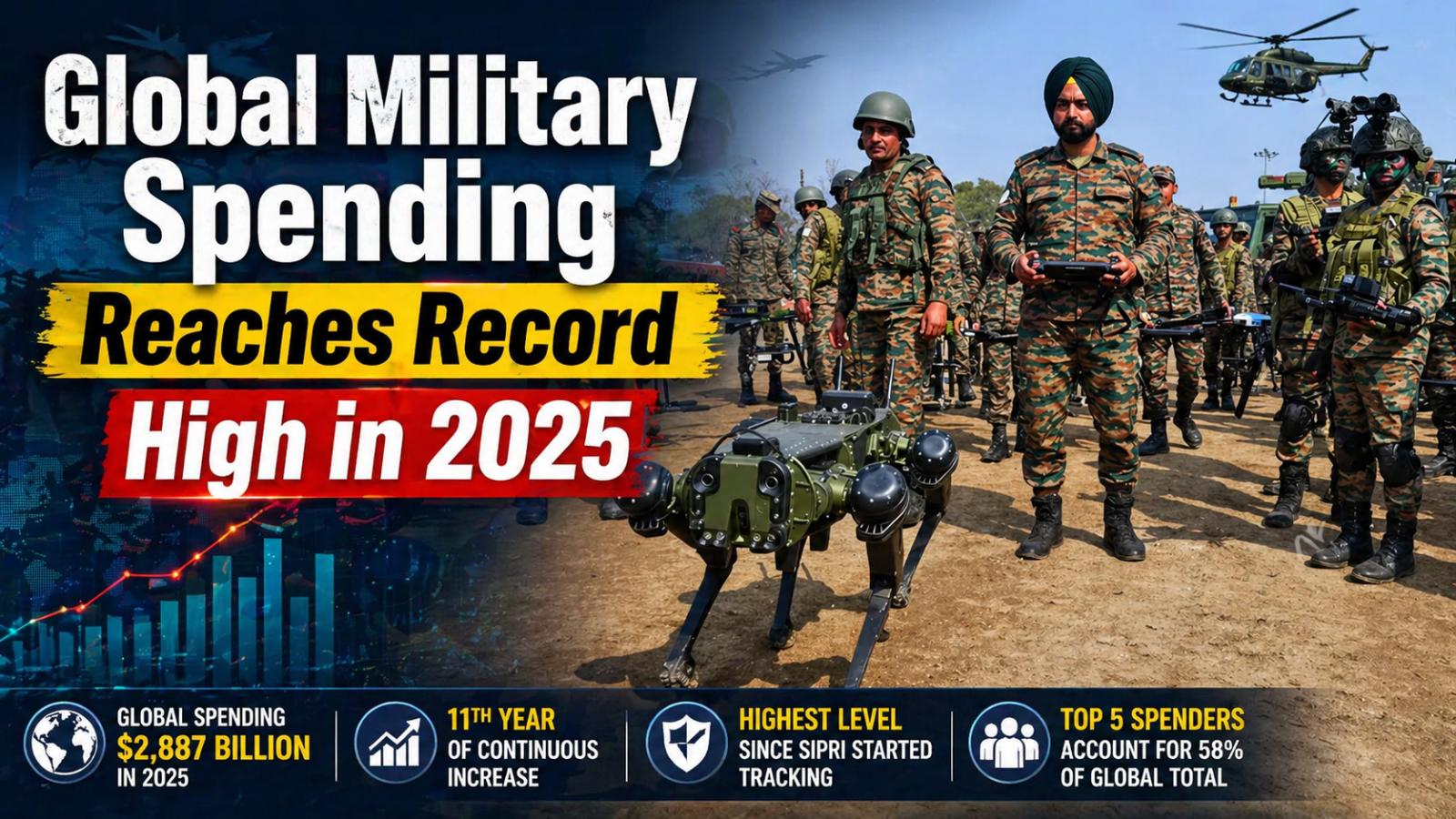
Global military spending reached a record $2,887 billion in 2025, marking the eleventh consecutive year of growth and the highest level ever recorded. According to the latest SIPRI report, the increase reflects rising geopolitical tensions, ongoing conflicts, and a shifting global security environment that has prompted governments to expand their defense budgets. India emerged as one of the world’s top military spenders, entering the top five for the first time with total expenditure of $92.1 billion. The country’s defense spending rose by 8.9 percent, reflecting heightened security concerns and operational demands. The report noted that this increase coincided with armed tensions involving Pakistan in May 2025, during which India deployed a range of military assets including aircraft, drones, and missile systems. The five largest spenders—the United States, China, Russia, Germany, and India—collectively accounted for 58 percent of global military expenditure, totaling $1,686 billion. Pakistan also increased its defense budget by 11 percent to $11.9 billion, driven largely by procurement activities and ongoing modernization efforts following regional tensions. Europe was identified as the primary contributor to the global rise in military spending, with a 14 percent increase bringing the region’s total to $864 billion. This marked the fastest growth in Central and Western Europe since the Cold War, as countries accelerated rearmament programs in response to security concerns, particularly the ongoing conflict involving Russia and Ukraine. The United States remained the largest military spender globally, allocating $954 billion in 2025. However, this represented a 7.5 percent decline compared to the previous year. The decrease was attributed mainly to reduced financial assistance to Ukraine, contrasting with higher levels of support in earlier years. Overall, the data highlights a continued global trend toward increased defense investment, driven by evolving security challenges and shifting geopolitical dynamics.
India Enters Top Five as Global Defense Spending Surge
Global military spending reached a record $2,887 billion in 2025, marking the eleventh consecutive year of growth and the highest level ever recorded. According to the latest SIPRI report, the increase reflects rising geopolitical tensions, ongoing conflicts, and a shifting global security environment that has prompted governments to expand their defense budgets. India emerged as one of the world’s top military spenders, entering the top five for the first time with total expenditure of $92.1 billion. The country’s defense spending rose by 8.9 percent, reflecting heightened security concerns and operational demands. The report noted that this increase coincided with armed tensions involving Pakistan in May 2025, during which India deployed a range of military assets including aircraft, drones, and missile systems. The five largest spenders—the United States, China, Russia, Germany, and India—collectively accounted for 58 percent of global military expenditure, totaling $1,686 billion. Pakistan also increased its defense budget by 11 percent to $11.9 billion, driven largely by procurement activities and ongoing modernization efforts following regional tensions. Europe was identified as the primary contributor to the global rise in military spending, with a 14 percent increase bringing the region’s total to $864 billion. This marked the fastest growth in Central and Western Europe since the Cold War, as countries accelerated rearmament programs in response to security concerns, particularly the ongoing conflict involving Russia and Ukraine. The United States remained the largest military spender globally, allocating $954 billion in 2025. However, this represented a 7.5 percent decline compared to the previous year. The decrease was attributed mainly to reduced financial assistance to Ukraine, contrasting with higher levels of support in earlier years. Overall, the data highlights a continued global trend toward increased defense investment, driven by evolving security challenges and shifting geopolitical dynamics.
Global military spending hits $2.9 trillion in 2025 amid rising tensions
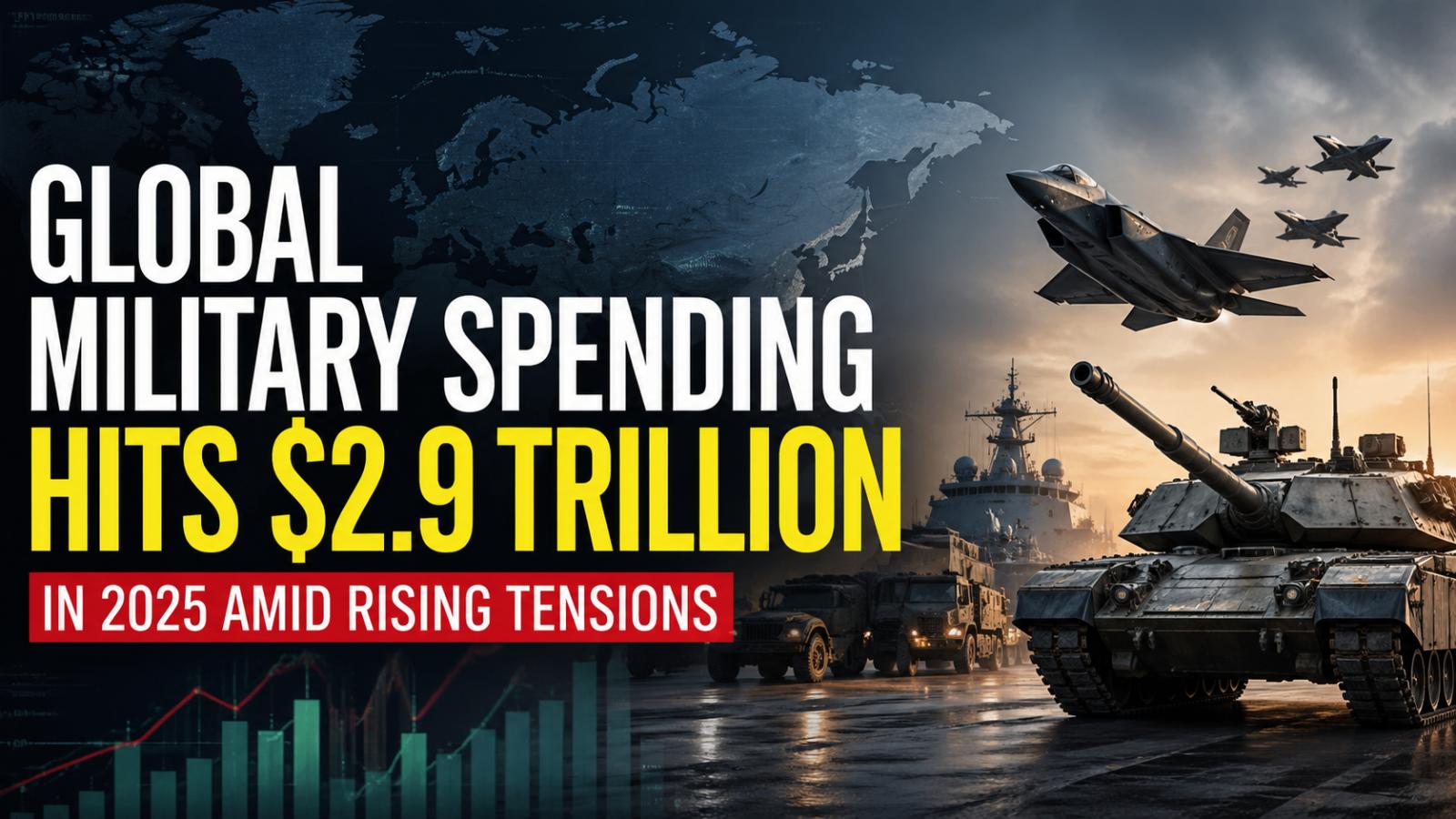
Global military spending 2025 overview Global military spending in 2025 has reached nearly $2.9 trillion, clearly showing how countries are increasing defence budgets as global tensions continue to rise. The total spending stood at $2887 billion in 2025, marking a 2.9 per cent increase from 2024, highlighting a steady rise in military expenditure trends worldwide. This reflects a world becoming less secure, with nations investing more in defence to protect themselves. The United States, Russia, and China remained the top three military spenders, with a combined total of $1.48 trillion. These nations continue to dominate global defence spending, shaping international security dynamics. Experts say this rise in defence budget growth shows that countries are preparing for both current conflicts and future uncertainties. Europe witnessed a major surge, with military spending increasing by 14 per cent to $864 billion in 2025. This sharp rise is mainly driven by the ongoing Russia-Ukraine war and reduced dependence on the United States for security. Countries like Germany increased spending by 24 per cent to $114 billion, while Spain recorded a significant 50 per cent jump to $40.2 billion, crossing two per cent of GDP for the first time in decades. The United States remained the largest spender despite a decline of 7.5 per cent, bringing its total to $954 billion in 2025. The decrease is linked to reduced financial aid approvals for Ukraine, although future budgets suggest spending could exceed $1 trillion in 2026, indicating a possible rebound. In Eastern Europe, Russia increased its military expenditure by 5.9 per cent to $190 billion, while Ukraine saw a sharp rise of 20 per cent to $84.1 billion. Ukraine’s defence spending now accounts for a large share of its GDP, showing the intensity of the ongoing conflict. Asia and Oceania recorded one of the fastest growth rates, with spending reaching $681 billion in 2025, an 8.5 per cent increase. China led the region with $336 billion, followed by Japan and India. India increased its defence budget by 8.9 per cent to $92.1 billion, making it the fifth-largest military spender globally. This growth highlights rising security concerns across the region. In the Middle East, spending patterns were mixed. Iran’s defence expenditure fell by 5.6 per cent to $7.4 billion, mainly due to high inflation. Israel also saw a decline of 4.9 per cent to $48.3 billion after reducing military operations following a ceasefire in early 2025, although its spending remains significantly higher compared to earlier years. Regional tensions continue to influence defence strategies across the Middle East. Overall, the SIPRI report shows that global military spending is steadily increasing as countries respond to rising geopolitical tensions and conflicts. The trend highlights a shift toward stronger military preparedness, reflecting uncertainty in the global security environment.
Global military spending hits $2.9 trillion in 2025 amid rising tensions
Global military spending 2025 overview Global military spending in 2025 has reached nearly $2.9 trillion, clearly showing how countries are increasing defence budgets as global tensions continue to rise. The total spending stood at $2887 billion in 2025, marking a 2.9 per cent increase from 2024, highlighting a steady rise in military expenditure trends worldwide. This reflects a world becoming less secure, with nations investing more in defence to protect themselves. The United States, Russia, and China remained the top three military spenders, with a combined total of $1.48 trillion. These nations continue to dominate global defence spending, shaping international security dynamics. Experts say this rise in defence budget growth shows that countries are preparing for both current conflicts and future uncertainties. Europe witnessed a major surge, with military spending increasing by 14 per cent to $864 billion in 2025. This sharp rise is mainly driven by the ongoing Russia-Ukraine war and reduced dependence on the United States for security. Countries like Germany increased spending by 24 per cent to $114 billion, while Spain recorded a significant 50 per cent jump to $40.2 billion, crossing two per cent of GDP for the first time in decades. The United States remained the largest spender despite a decline of 7.5 per cent, bringing its total to $954 billion in 2025. The decrease is linked to reduced financial aid approvals for Ukraine, although future budgets suggest spending could exceed $1 trillion in 2026, indicating a possible rebound. In Eastern Europe, Russia increased its military expenditure by 5.9 per cent to $190 billion, while Ukraine saw a sharp rise of 20 per cent to $84.1 billion. Ukraine’s defence spending now accounts for a large share of its GDP, showing the intensity of the ongoing conflict. Asia and Oceania recorded one of the fastest growth rates, with spending reaching $681 billion in 2025, an 8.5 per cent increase. China led the region with $336 billion, followed by Japan and India. India increased its defence budget by 8.9 per cent to $92.1 billion, making it the fifth-largest military spender globally. This growth highlights rising security concerns across the region. In the Middle East, spending patterns were mixed. Iran’s defence expenditure fell by 5.6 per cent to $7.4 billion, mainly due to high inflation. Israel also saw a decline of 4.9 per cent to $48.3 billion after reducing military operations following a ceasefire in early 2025, although its spending remains significantly higher compared to earlier years. Regional tensions continue to influence defence strategies across the Middle East. Overall, the SIPRI report shows that global military spending is steadily increasing as countries respond to rising geopolitical tensions and conflicts. The trend highlights a shift toward stronger military preparedness, reflecting uncertainty in the global security environment.
US Expands Anti-Drug Campaign With New Pacific Strike
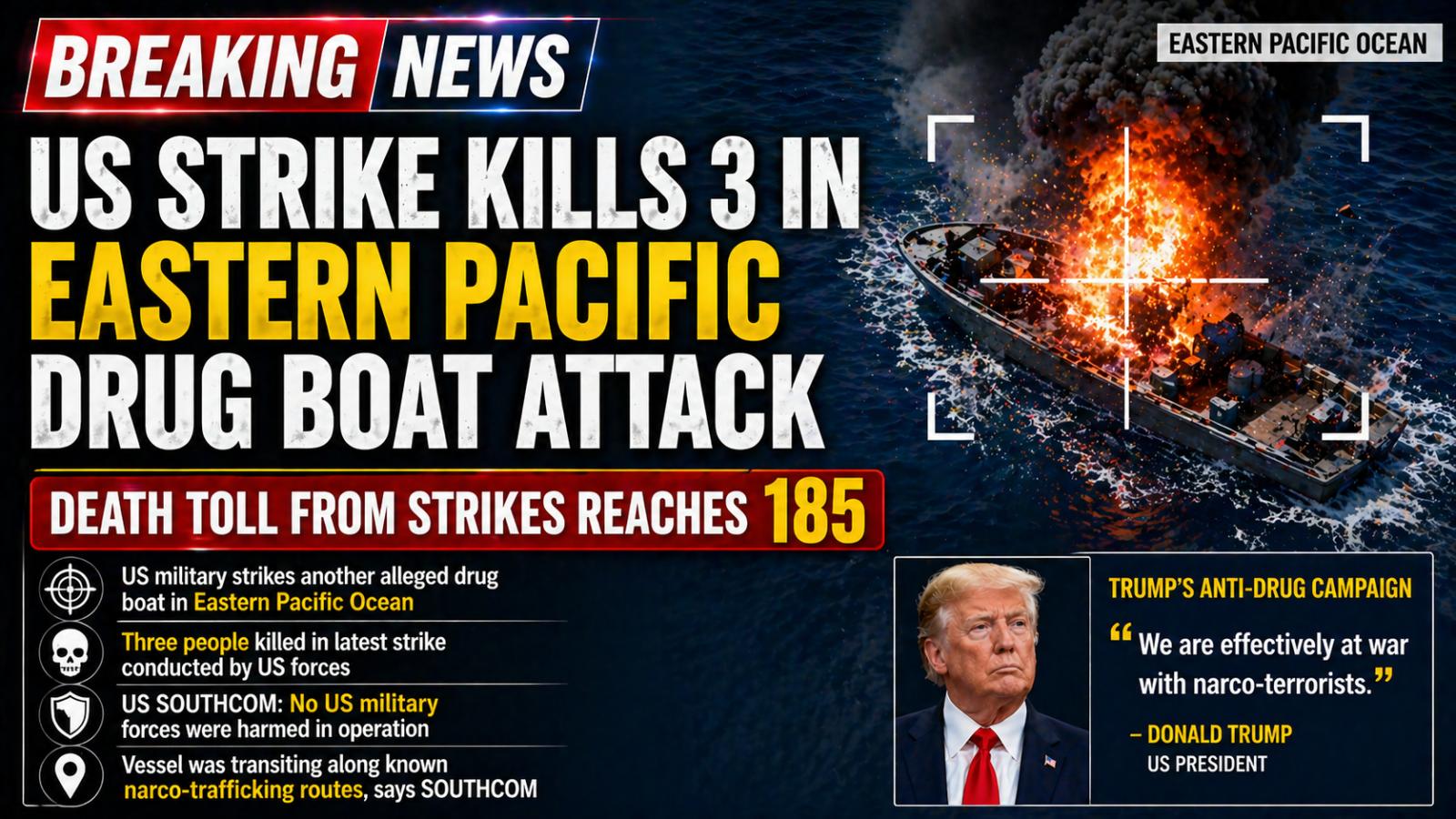
The United States military carried out another strike on a suspected drug-trafficking vessel in the Eastern Pacific, resulting in the deaths of three individuals, on Sunday (Apr 26), according to officials. The operation was conducted under the direction of US Southern Command, which stated that the vessel was operating along known narcotics trafficking routes and was actively engaged in il
US Expands Anti-Drug Campaign With New Pacific Strike
The United States military carried out another strike on a suspected drug-trafficking vessel in the Eastern Pacific, resulting in the deaths of three individuals, on Sunday (Apr 26), according to officials. The operation was conducted under the direction of US Southern Command, which stated that the vessel was operating along known narcotics trafficking routes and was actively engaged in il
What happened in Mali? Defense minister killed in coordinated attacks across regions
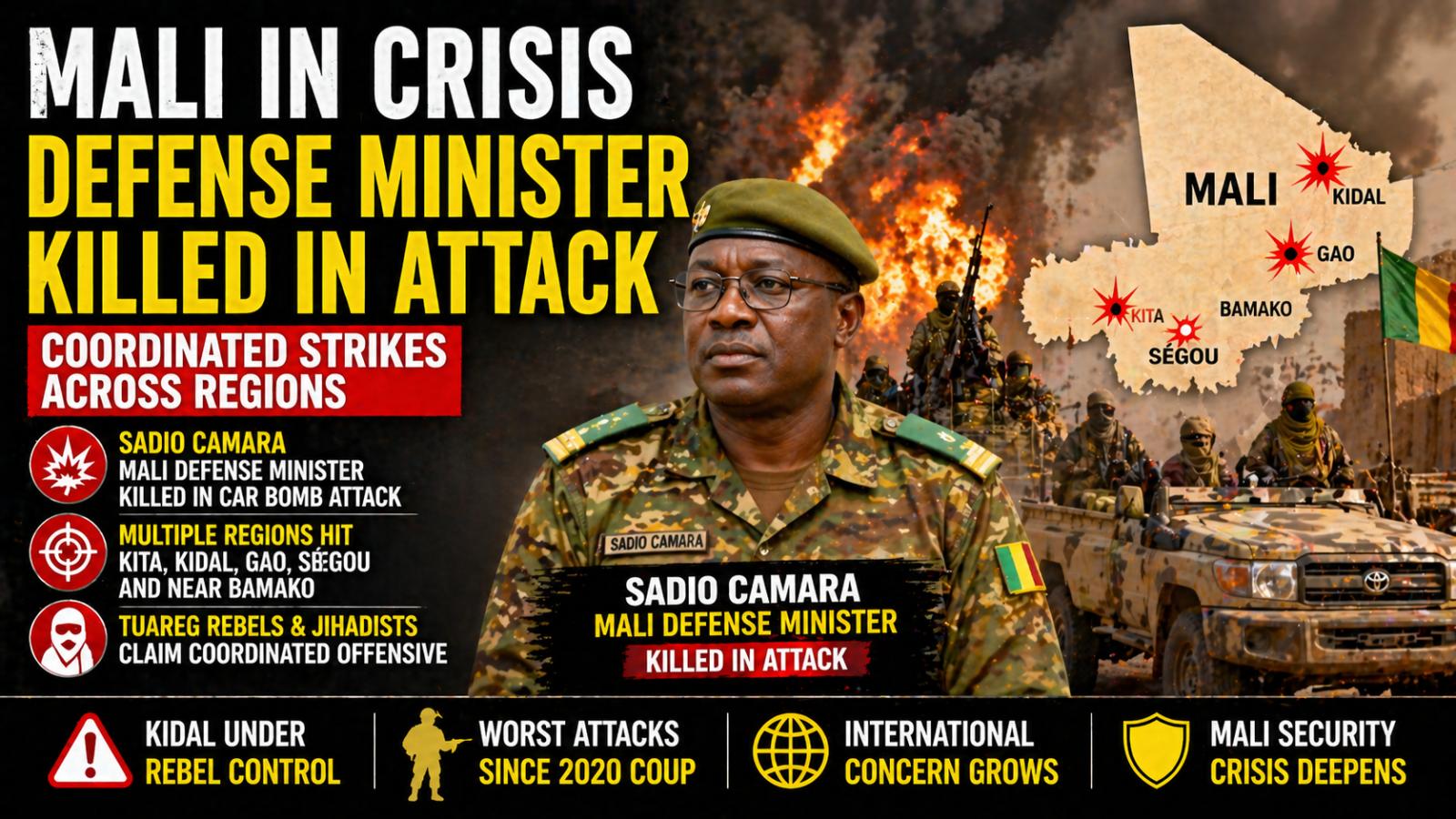
Mali’s defense minister Sadio Camara was killed in a coordinated attack as insurgent violence escalates across the country. Camara died alongside family members after a car bomb struck his residence in Kita, a key stronghold of the ruling military junta, according to family sources and officials cited by AFP. The attack formed part of a broader wave of coordinated assaults that targeted multiple regions across Mali, including Kita, Kidal, Gao, and Ségou. Fighting continued into
What happened in Mali? Defense minister killed in coordinated attacks across regions
Mali’s defense minister Sadio Camara was killed in a coordinated attack as insurgent violence escalates across the country. Camara died alongside family members after a car bomb struck his residence in Kita, a key stronghold of the ruling military junta, according to family sources and officials cited by AFP. The attack formed part of a broader wave of coordinated assaults that targeted multiple regions across Mali, including Kita, Kidal, Gao, and Ségou. Fighting continued into

Federal Charges Filed in Case of Military Insider Trading and Crypto Bets
A United States Army soldier has been indicted on multiple federal charges after authorities alleged he used classified information tied to a covert military operation for personal financial gain. The case centers on claims that sensitive intelligence was exploited to place high-value prediction market bets before key developments became public. According to federal prosecutors, the accused, identified as Gannon Ken Van Dyke, was stationed in North Carolina and had access to restric
Federal Charges Filed in Case of Military Insider Trading and Crypto Bets
A United States Army soldier has been indicted on multiple federal charges after authorities alleged he used classified information tied to a covert military operation for personal financial gain. The case centers on claims that sensitive intelligence was exploited to place high-value prediction market bets before key developments became public. According to federal prosecutors, the accused, identified as Gannon Ken Van Dyke, was stationed in North Carolina and had access to restric
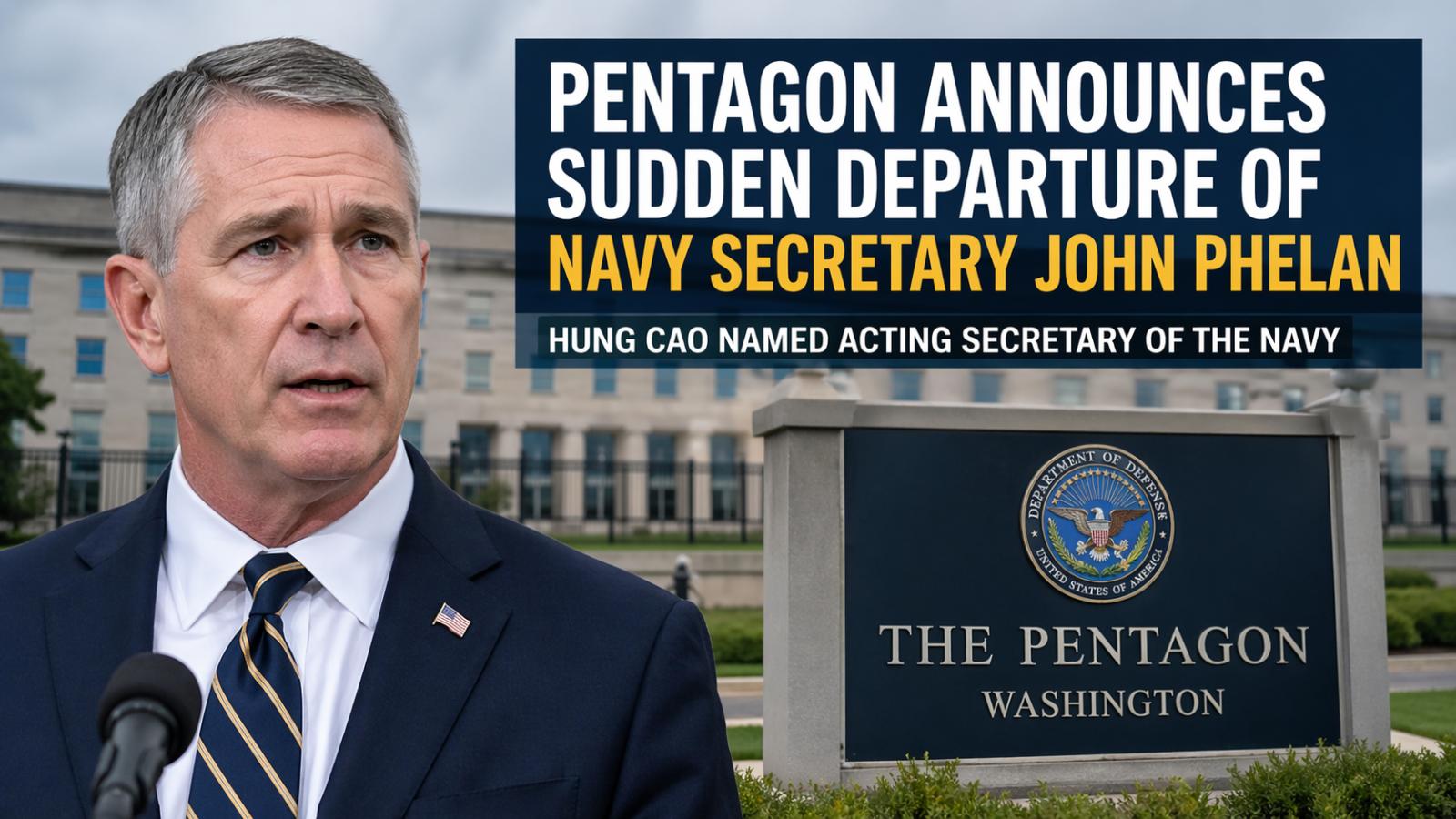
Pentagon announces sudden departure of Navy Secretary John Phelan
Pentagon confirms Navy Secretary John Phelan's sudden exit as Hung Cao becomes acting leader, signaling a major US defense leadership shift in Washington, DC. Pentagon announces sudden departure of Navy Secretary John Phelan as the Defense Department confirmed on Wednesday, April 23, 2026, that John Phelan is leaving his position effective immediately, marking a su
Pentagon announces sudden departure of Navy Secretary John Phelan
Pentagon confirms Navy Secretary John Phelan's sudden exit as Hung Cao becomes acting leader, signaling a major US defense leadership shift in Washington, DC. Pentagon announces sudden departure of Navy Secretary John Phelan as the Defense Department confirmed on Wednesday, April 23, 2026, that John Phelan is leaving his position effective immediately, marking a su