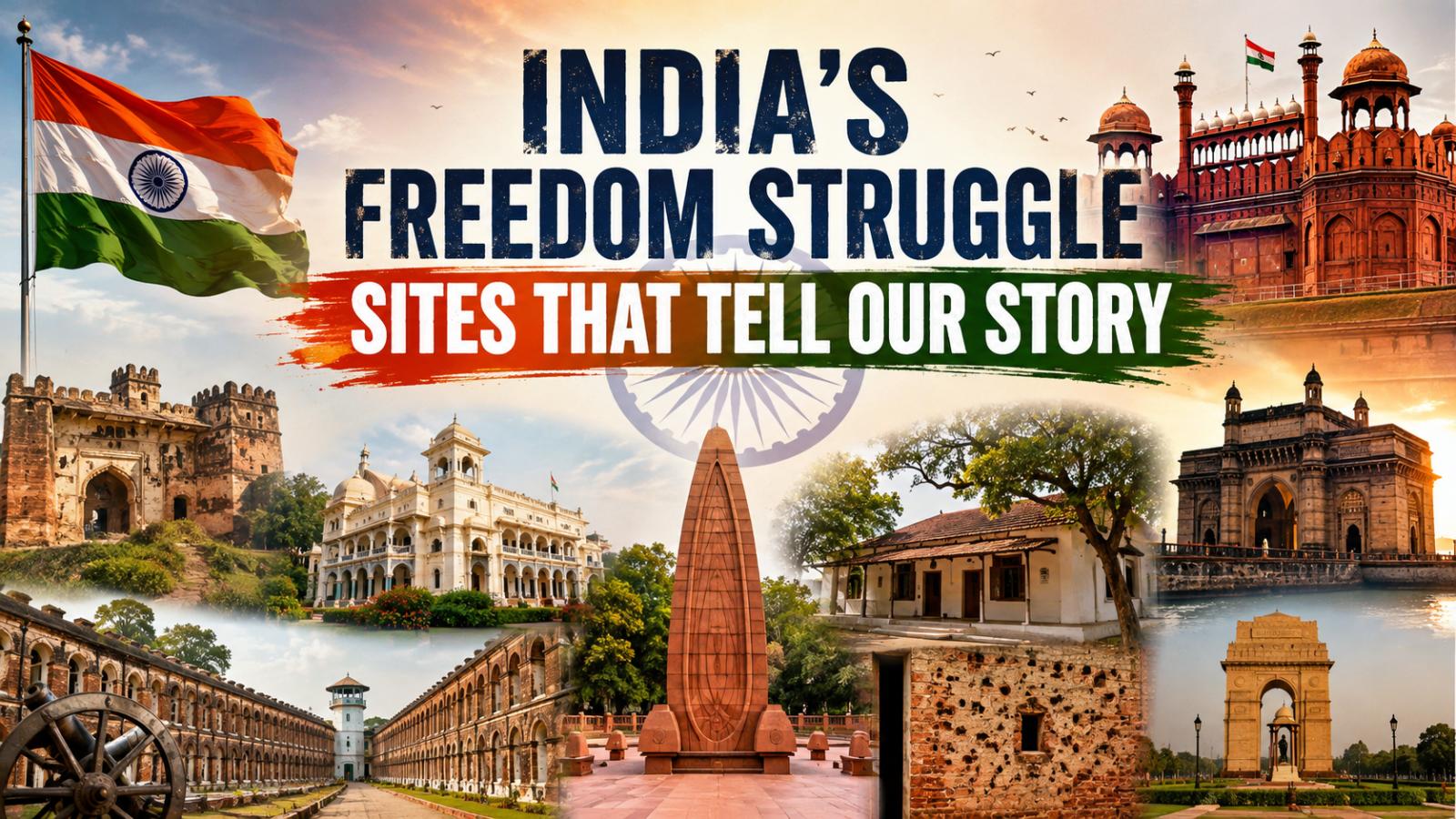
As India celebrates its 80th Independence Day on August 15, 2026, India freedom struggle sites offer a powerful journey through the nation’s past. From the Red Fort and 1857 revolt landmarks to Gandhi sites, Jallianwala and Kala Pani, these places preserve stories of courage, resistance and sacrifice. India officially celebrates Independence Day every August 15 to mark freedom from British colonial rule.
Red Fort: From Rebellion to Independence
Delhi’s Red Fort connects two defining periods of Indian history. During the 1857 revolt, Bahadur Shah Zafar became a symbolic figure of resistance after rebels rallied around the ageing Mughal emperor. Almost 90 years later, the fort emerged as one of the most recognisable symbols of independent India.
Jawaharlal Nehru first unfurled the Tricolour at the Red Fort on August 16, 1947. The tradition later developed into the annual August 15 ceremony in which the Prime Minister hoists the national flag and addresses the country from the historic ramparts.
1857 Revolt: Lucknow and Jhansi Remember Resistance
The ruins of the Lucknow Residency still carry visible traces of the fierce fighting during the 1857 revolt. The prolonged siege turned the complex into one of the most significant battlefields of the uprising.
Jhansi tells another chapter of that struggle. Rani Lakshmibai’s defence of Jhansi against British forces transformed her into an enduring symbol of resistance. Jhansi Fort remains closely associated with her courage and leadership, keeping the memory of one of India’s most celebrated freedom fighters alive.
Gandhi Sites: Sabarmati and Aga Khan Palace
Sabarmati Ashram in Ahmedabad became a major centre of Mahatma Gandhi’s campaign based on non-violence and civil disobedience. On March 12, 1930, Gandhi left the ashram with his followers for the historic Dandi March against the British salt monopoly, helping turn the Salt Satyagraha into a nationwide challenge to colonial authority.
Aga Khan Palace in Pune represents a more painful chapter. Gandhi and other leaders were detained there following the Quit India Movement. Kasturba Gandhi and Mahadev Desai died during the period of detention, giving the palace lasting significance as a place of remembrance.
Jallianwala: A Tragedy That Changed the Freedom Movement
Jallianwala Bagh in Amritsar remains one of the most solemn landmarks associated with India’s freedom struggle. On April 13, 1919, British troops opened fire on a peaceful gathering, killing and wounding large numbers of people. The incident became a defining symbol of colonial repression and intensified anger against British rule. Bullet marks preserved at the site continue to bear witness to the tragedy.
Kala Pani: Remembering Imprisoned Revolutionaries
Cellular Jail in the Andaman and Nicobar Islands, remembered as Kala Pani, represents another side of the independence struggle. Political prisoners transported far from mainland India endured isolation, forced labour and severe punishment within its cellular structure.
Other landmarks complete this national story. Mumbai’s Gateway of India became associated with the departure of British troops after independence, while India Gate evolved from a colonial-era war memorial into a prominent place of national remembrance.
Together, these India freedom struggle sites show that independence did not emerge from one leader, one battle or one ideology. As the country marks its 80th Independence Day in 2026, they preserve the human stories behind freedom and give younger generations a tangible connection to the sacrifices that shaped modern India.