Dedicated Freight Corridor takes centre stage in Vadodara
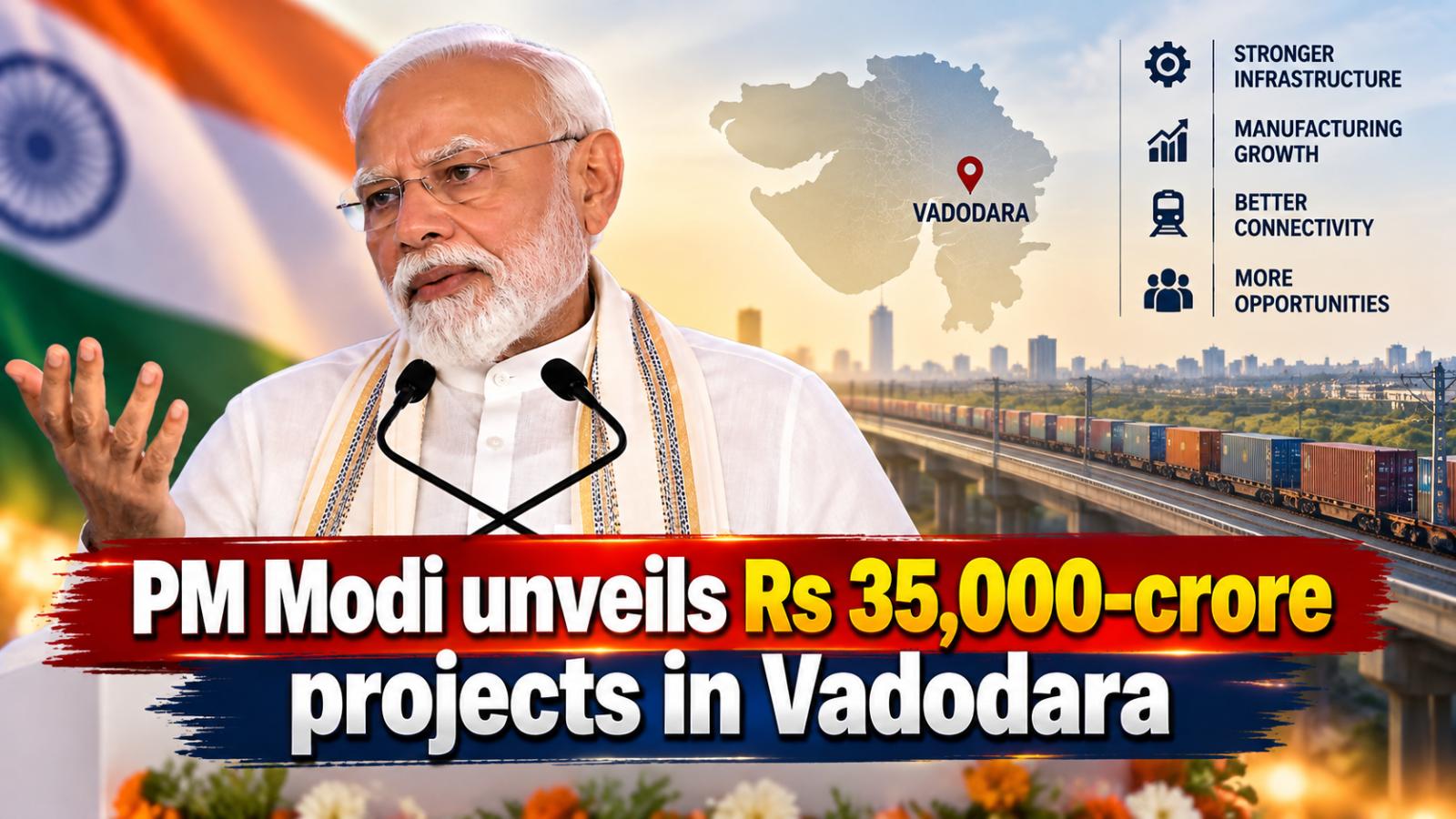
Prime Minister Narendra Modi unveiled and launched development projects worth around Rs 35,000 crore in Vadodara, Gujarat, placing large-scale infrastructure, railway connectivity and freight movement at the heart of his government’s latest development push.
Speaking at the NaMo for Viksit Bharat event, Modi highlighted the Dedicated Freight Corridor as a major step towards transforming the movement of goods across India. He said the project would improve connectivity between industrial hubs, ports and key markets while easing pressure on existing railway networks.
The Prime Minister also used the occasion to contrast the progress of major infrastructure projects under his government with that of previous administrations. Referring to the freight corridor, Modi said the project had been conceived years ago but gained meaningful momentum after 2014.
During his speech, Modi revived his “Naraz Fufa” remark while targeting critics who question the usefulness of major government projects. Referring to possible concerns over the impact of freight rail expansion on truck drivers, he joked that some critics would continue to find reasons to complain even after new opportunities were created.
Modi said the freight corridor would also help extend rail connectivity to regions that had remained outside major transport networks for decades. Better freight movement, he added, could reduce logistics costs, improve delivery efficiency and strengthen connections between manufacturing centres and ports.
The Vadodara development projects are part of a wider infrastructure programme that includes railway upgrades, roads and other connectivity initiatives. The government expects these investments to support business activity, improve transport efficiency and encourage industrial development across Gujarat and beyond.
India manufacturing growth drives self-reliance push
Alongside infrastructure, Modi placed strong emphasis on India manufacturing growth and the country’s push towards greater self-reliance.
Using the phrase “from chips to ships”, the Prime Minister said India was entering a new phase in which both key components and finished products would increasingly be manufactured within the country. He linked this ambition with stronger freight corridors, modern railway infrastructure, ports and improved domestic supply chains.
Modi also pointed to railway manufacturing as an example of increased domestic capacity, saying India had produced tens of thousands of modern railway coaches since 2014. He argued that stronger local manufacturing could create jobs, reduce dependence on imports and improve India’s competitiveness in global markets.
The broader Viksit Bharat initiative has placed infrastructure expansion, industrial development, manufacturing and connectivity among its central priorities. The latest projects in Vadodara fit into that strategy by combining freight efficiency with regional development and domestic production.
The Prime Minister’s speech also carried a clear political message. While presenting the Rs 35,000-crore project package as evidence of development progress, Modi repeatedly targeted critics and compared his government’s performance with that of previous regimes.
For Gujarat, the projects are expected to improve connectivity and support industries that depend on faster freight movement. At the national level, the government is positioning such investments as part of a larger effort to build a more efficient logistics network, expand domestic manufacturing and strengthen India’s long-term economic growth.