Iran Saudi Arabia UAE talks pave way for consensus
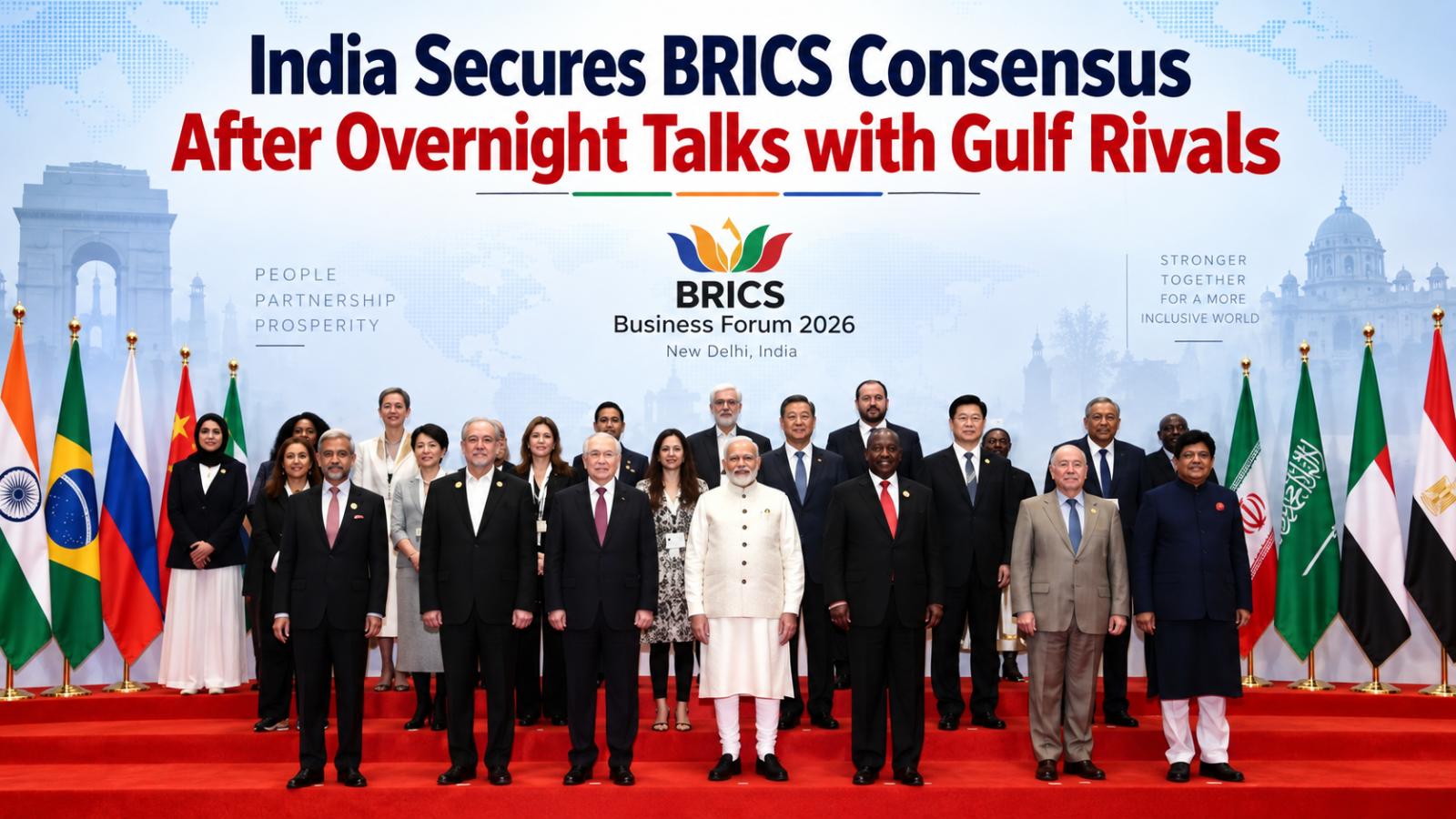
India managed to secure agreement on the BRICS joint statement after negotiations continued into the early hours, reportedly until around 4 am. The discussions were particularly sensitive because Iran, Saudi Arabia and the United Arab Emirates have differing strategic interests and positions on developments in West Asia. Finding language acceptable to all sides had emerged as one of the biggest diplomatic challenges facing India during its BRICS chairship.
Before the breakthrough, differences over the West Asia situation had already raised doubts over whether members would be able to produce a unified declaration. Earlier discussions at the foreign ministers’ level had failed to produce a consensual statement, increasing pressure on negotiators ahead of the leaders’ summit. India therefore pushed for wording that could acknowledge concerns across the grouping without allowing the disagreement to derail the broader BRICS agenda.
New Delhi’s approach focused on dialogue, diplomacy, respect for the UN Charter, civilian protection and freedom of navigation. These themes were seen as possible common ground among members despite their differences over the regional conflict. India’s ability to keep Iran, Saudi Arabia and the UAE engaged in the same negotiating process became central to reaching a workable compromise.
BRICS Summit 2026 puts India diplomacy in focus
The agreement comes as India hosts the 18th BRICS Summit in New Delhi under its 2026 chairship. The expanded grouping now includes 11 members and brings together countries with very different political, economic and strategic priorities. While this wider membership gives BRICS greater global weight, it also makes consensus harder to achieve on sensitive geopolitical issues.
India has used its chairship to promote cooperation in areas such as resilience, innovation, economic development, trade and sustainability. At the same time, the West Asia crisis has tested whether the group can maintain unity when members hold sharply different positions on regional conflicts. The overnight negotiations show how much diplomatic effort is now required to keep an expanded BRICS functioning through consensus.
For New Delhi, securing the joint statement is more than a procedural success. It strengthens India’s effort to present itself as a bridge between countries with competing interests and demonstrates the role of patient diplomacy in multilateral forums. The outcome also allows the summit to move forward with a unified document rather than letting disagreements over West Asia overshadow the broader economic and strategic agenda.