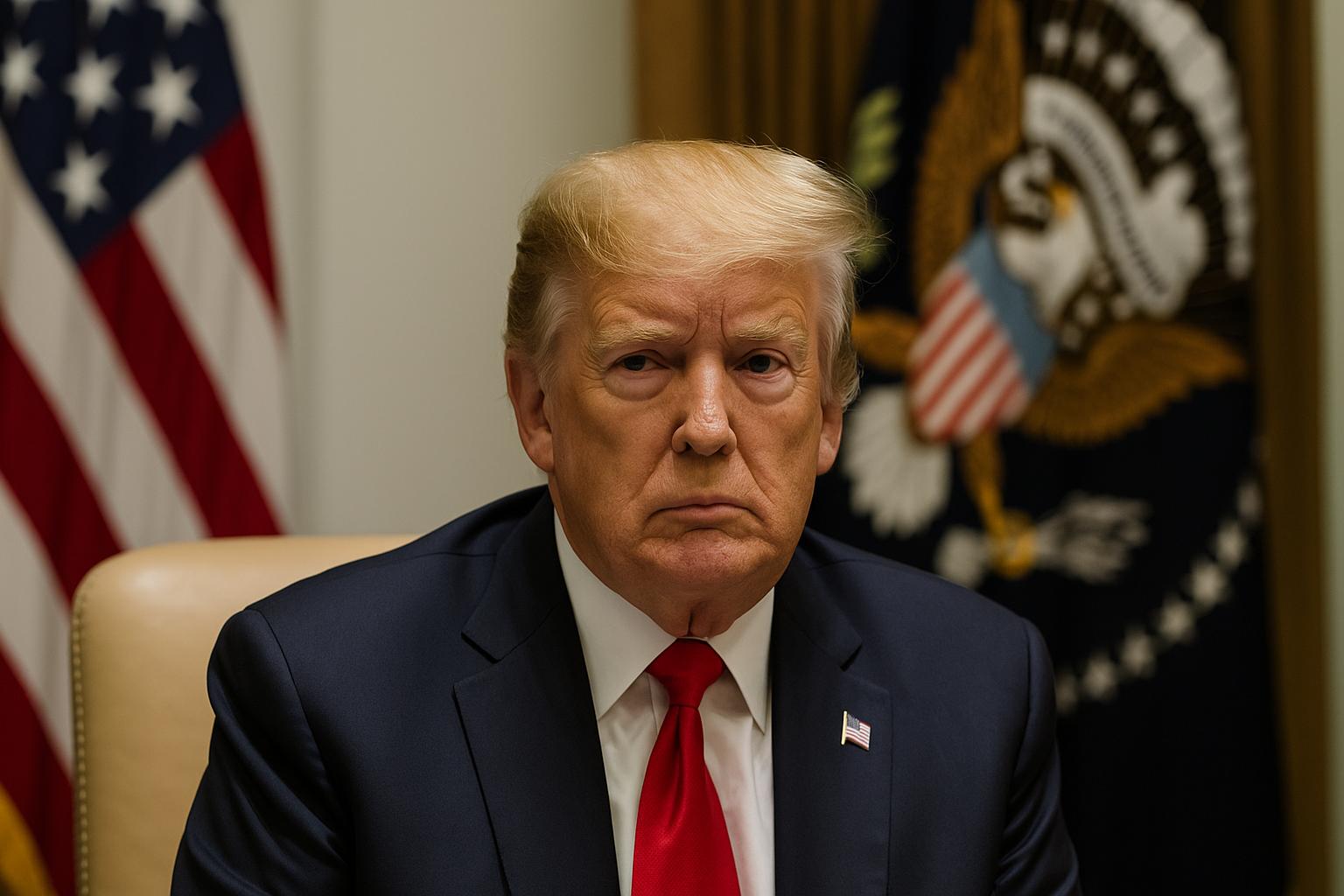
US President Donald Trump has reignited debate over the influence of the BRICS bloc, claiming that the group represents “an attack on the dollar” and warning that countries joining it could face tariffs from the United States. Trump made the remarks during a bilateral lunch with Argentine President Javier Milei at the White House, reiterating his stance on protecting the dominance of the US dollar in global trade.
Speaking to reporters, Trump asserted that the United States would impose economic penalties on any nation that aligns with the BRICS grouping, which has been exploring alternatives to the dollar in international trade. “I told anybody who wants to be in BRICS, that’s fine, but we’re going to put tariffs on your nation,” Trump said. “Everybody dropped out. They’re all dropping out of BRICS.”
He added that the US currency remains a global benchmark and that those who trade in dollars enjoy a “clear advantage.” Trump, emphasizing his “strong stance on the dollar,” claimed that his warning to potential BRICS participants had led several nations to reconsider their association with the bloc. “BRICS was an attack on the dollar, and I said, you want to play that game, I’m going to put tariffs on all of your products coming into the US. They said, like I said, we’re dropping out of BRICS… They don’t even talk about it anymore,” he remarked.
Trump’s comments arrive at a time when BRICS—an alliance originally comprising Brazil, Russia, India, China, and South Africa—has expanded to include several new members, namely Iran, Egypt, Ethiopia, the United Arab Emirates, and Indonesia. The bloc’s recent push for a new financial framework aims to reduce global dependence on the dollar, prompting concerns in Washington about potential shifts in the world’s financial order.
The president’s statement reflects his broader protectionist economic philosophy, which emphasizes tariffs as a means to safeguard US economic interests. During his presidency, Trump frequently used tariffs as a diplomatic tool, applying them to allies and rivals alike to secure favorable trade terms for the United States. His latest remarks suggest that this hardline approach would extend into his foreign policy if he returns to power.
Global economists have noted that BRICS’ discussions around developing alternative trade mechanisms could challenge the long-standing dominance of the US dollar. The bloc’s initiatives, such as promoting transactions in local currencies or exploring the idea of a shared currency, have fueled speculation about a gradual shift away from dollar-centric trade. However, experts also point out that the US dollar remains deeply entrenched in international finance, with more than 80 percent of global transactions still conducted in it.
Trump’s stance underscores his determination to defend that dominance. By threatening tariffs on countries aligning with BRICS, he positions himself as a defender of the US economic system, appealing to domestic constituencies concerned about globalization’s impact. The former president’s comments also align with his “America First” agenda, which prioritizes national economic sovereignty over multinational alliances.
Meanwhile, India, one of the founding members of BRICS, has maintained a balanced view on the dollar’s global role. Addressing speculation about India’s position, External Affairs Minister S. Jaishankar clarified that New Delhi does not intend to undermine the US currency. “Regarding the role of the dollar, we are realistic. We have no issue with the dollar, and our relations with the US are at their best. We have no interest in undermining the dollar,” he said recently.
The BRICS alliance, initially formed in 2009 as a coalition of emerging economies, aims to promote multipolarity in global governance. Its expansion in recent years signifies a growing ambition to reshape international trade and finance structures traditionally dominated by Western institutions. However, political differences among member nations and the logistical complexity of replacing the dollar as the global reserve currency pose significant challenges to these ambitions.
Trump’s remarks may further intensify the geopolitical debate surrounding BRICS, especially as nations weigh the potential benefits of diversification against the risks of antagonizing Washington. His warning that tariffs could be imposed on BRICS participants signals a continuation of his assertive trade policy and suggests that the US will closely monitor any global attempts to dilute the influence of its currency.
As discussions about alternative economic systems continue, the former president’s comments reinforce a key message: the United States intends to defend the supremacy of the dollar and its central role in global finance. Whether this stance will influence the trajectory of BRICS’ expansion or deter nations from joining remains to be seen, but Trump’s remarks have once again placed the future of the world’s financial balance in sharp focus.