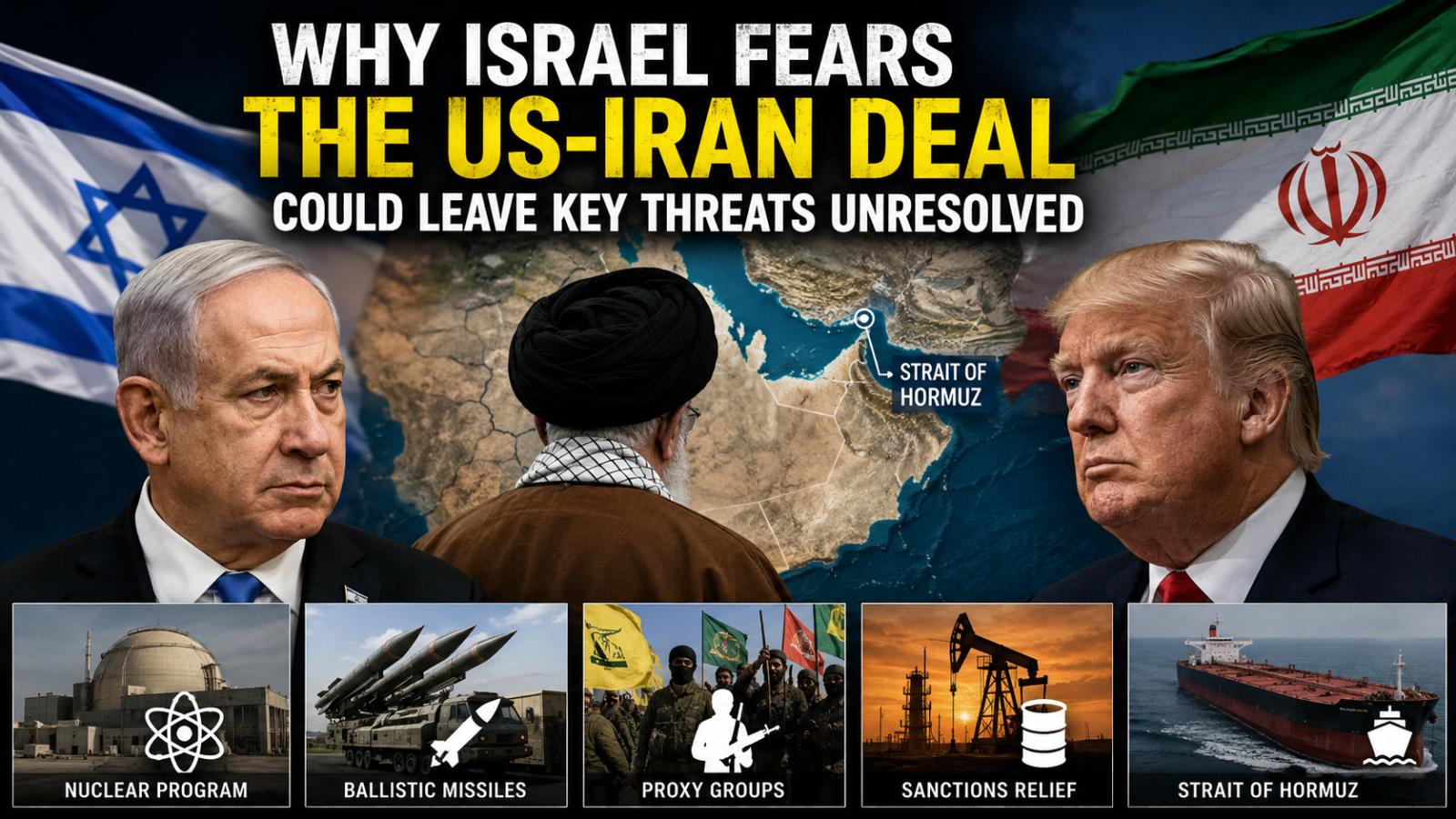
The US-Iran deal has opened a 60-day diplomatic window, but it has also sharpened security concerns in Israel. Israeli officials and analysts worry that Tehran could receive economic relief while decisions on uranium enrichment, ballistic missiles and regional armed groups remain unsettled.
The negotiation period began on Thursday, June 18, 2026, under an interim memorandum approved by President Donald Trump and Iranian leaders. The framework seeks to halt hostilities, restore commercial passage through the Strait of Hormuz and begin negotiations toward a broader settlement.
Why Israel fears the US-Iran deal
Israel’s central concern is that the interim framework preserves the current state of Iran’s nuclear program while leaving permanent enrichment limits, inspections and the future of nuclear facilities for later negotiations. The Times of Israel, citing Channel 12, reported that senior Israeli officials fear Tehran could use the negotiating period to advance its nuclear position.
The agreement also does not impose immediate restrictions on Iran’s ballistic missile program or its support for regional groups including Hezbollah, Hamas and the Houthis. Reuters reported that these unresolved issues fall outside the pact’s immediate limits, despite being central Israeli security demands.
Sanctions relief adds to Israel’s concerns
Reported provisions include waivers for Iranian oil exports and access to frozen assets. Israeli critics argue that early financial relief could strengthen Iran before negotiators secure enforceable limits on its nuclear, missile and proxy activities.
Lebanon is another point of tension. A ceasefire covering regional fronts could restrict Israeli military action against Hezbollah, while renewed fighting could undermine the wider US-Iran framework.
Strait of Hormuz becomes an early test
Iran announced on Saturday, June 20, 2026, that it would close the Strait of Hormuz over alleged ceasefire violations linked to Israeli attacks in Lebanon. U.S. officials said they had not observed military movements showing that the waterway had actually been blocked.
The agreement’s importance now depends on whether the 60-day talks produce verifiable nuclear restrictions, address missiles and regional proxies, and establish consequences for violations. Without those safeguards, Israel is likely to view the pact as a temporary pause rather than a durable security settlement.