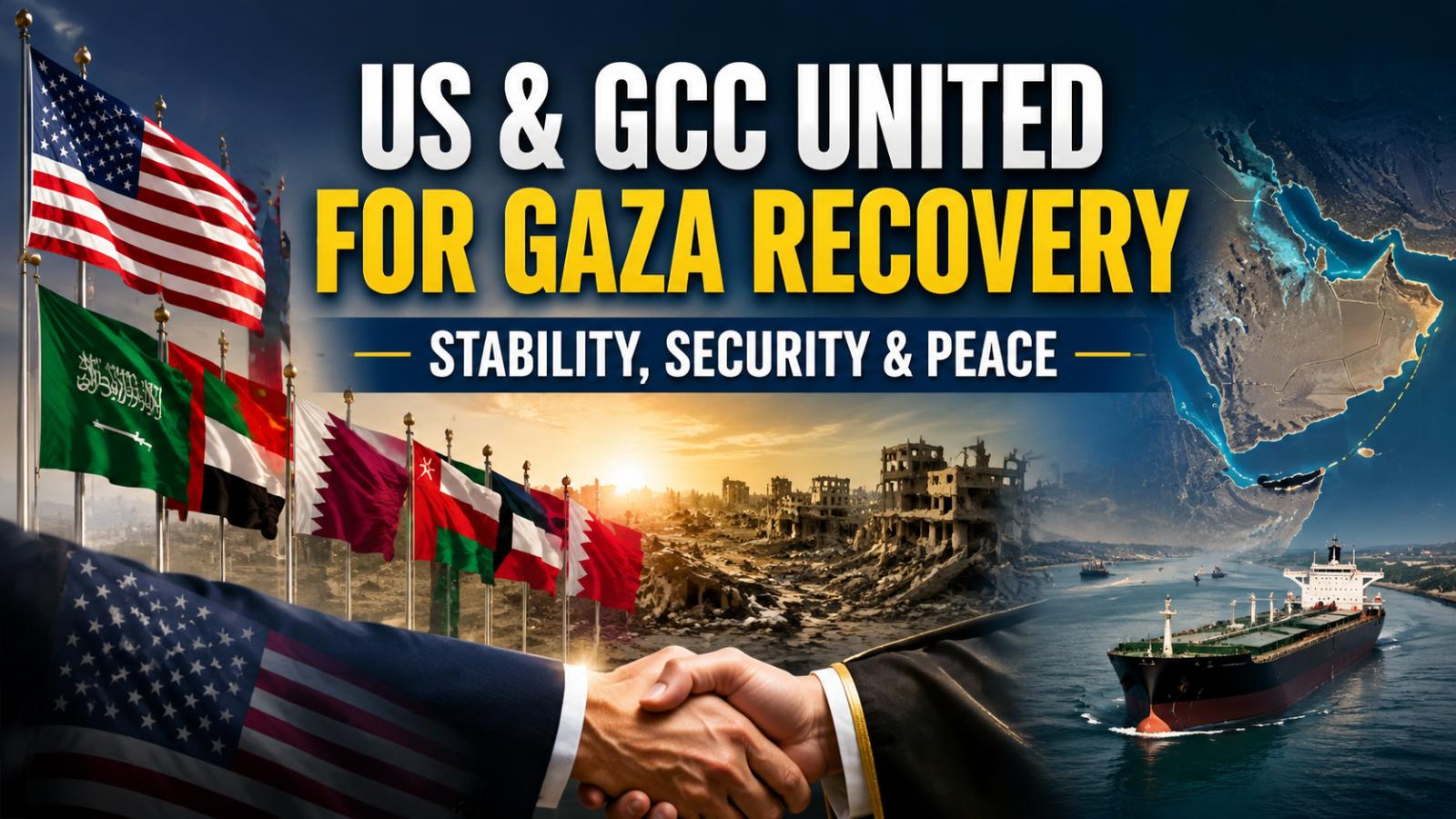
A recent round of discussions between the United States and Gulf Cooperation Council members centered on the future of Gaza, with a strong emphasis on preventing forced displacement and prioritizing civilian safety. The participating sides underscored that any population movement must remain voluntary and reversible, rejecting any framework that would permanently alter the demographic structure of the territory.
The talks also reflected growing pressure to move beyond short-term crisis management and toward a structured political and humanitarian roadmap that reduces instability across the wider region.
Gaza governance and recovery framework
A central focus of the discussions was the post-conflict administration model for Gaza. The proposed direction favors a neutral civilian administrative structure responsible for essential services, rather than any faction-driven governance arrangement.
Reconstruction planning was placed at the center of this approach, with emphasis on rebuilding housing, healthcare systems, utilities, and public infrastructure in phased stages. The goal outlined by officials is to avoid fragmented aid distribution and instead coordinate recovery through a unified international mechanism that ensures oversight and transparency.
Regional spillover risks and Lebanon situation
The dialogue also addressed rising instability linked to Lebanon, where sovereignty and internal control over armed actors remain a key concern. Participants highlighted that sustainable peace requires stronger state authority and reduced external or non-state military influence.
At the same time, there was recognition that escalation in Lebanon could quickly spread across neighboring conflict zones, increasing pressure on already fragile regional security conditions.
Iran-related security concerns and deterrence risks
Iran’s military and nuclear trajectory was another major point of discussion. Participants expressed concern over continued advances in missile systems and unmanned aerial capabilities, viewing them as contributing factors to regional tension.
While diplomatic engagement remains part of the broader strategy, the emphasis was placed on preventing escalation and reducing the risk of wider confrontation through sustained monitoring and coordinated international pressure.
Strait of Hormuz and maritime security concerns
The security of the Strait of Hormuz was highlighted as a critical global priority due to its role in international energy transport. Any disruption in the passage was described as having immediate consequences for oil supply chains and global shipping costs.
Officials reaffirmed the importance of ensuring uninterrupted commercial navigation through the waterway, rejecting any measures that could impose additional barriers or financial burdens on maritime traffic.
Broader regional outlook
Overall, the discussions reflected an attempt to balance immediate humanitarian concerns in Gaza with broader geopolitical stability across the Middle East. The convergence of positions between the US and GCC states signals a coordinated effort to manage multiple interconnected risks, ranging from reconstruction challenges to maritime security and regional deterrence dynamics.