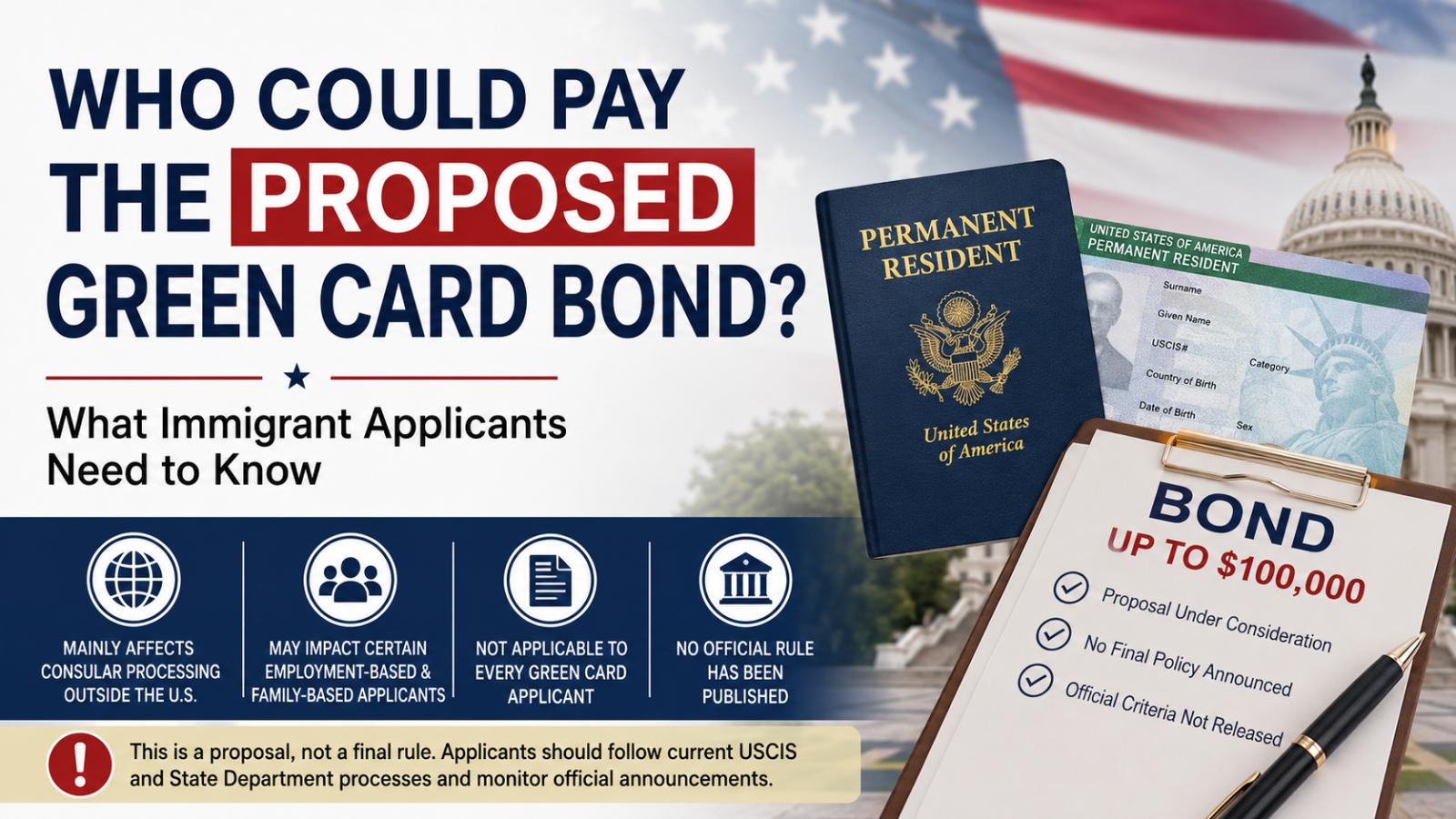
The proposed green card bond has created uncertainty among immigrants applying for permanent residency. Although no final policy has been announced, reports suggest certain applicants processing immigrant visas abroad could be affected if the proposal is implemented.
The Trump administration's reported proposal to require certain green card applicants to post bonds of up to $100,000 has raised questions about who could actually be affected. While the proposal has received significant attention, no final rule has been published and the administration has not identified every applicant category that would be covered.
The proposal has not been finalized and remains under review. Read the full news report: Trump Administration Weighs $100,000 Green Card Bond
Which Applicants Could Be Included?
Based on publicly reported information, the proposal has primarily been linked to certain immigrant visa applicants completing Consular Processing outside the United States. The reported goal is to reduce the financial risk associated with applicants who may become dependent on public assistance.
H-1B professionals may face different risks depending on whether they complete their green card case inside or outside the United States. Read: Will H-1B Holders Have to Pay the Proposed $100,000 Green Card Bond?
However, officials have not released a definitive list of eligible countries, visa categories or selection criteria.
Would Every Green Card Applicant Pay the Bond?
No.
There is currently no official announcement stating that every family-based, employment-based or diversity visa applicant would automatically be required to post a bond.
Likewise, there has been no confirmation that applicants filing Adjustment of Status inside the United States would be subject to the proposed requirement.
The applicant’s processing route could be important if the proposal moves forward. See: Could the Green Card Bond Affect Consular Processing?
Could Employment-Based Applicants Be Affected?
Some employment-based immigrants who complete their green card process through U.S. embassies or consulates abroad could potentially fall within the scope of the proposal if it is implemented.
However, many H-1B professionals already living in the United States complete their green card applications through Adjustment of Status, and there has been no official guidance indicating they would automatically be required to provide a bond.
Could Family-Based Applicants Be Affected?
Family-sponsored immigrants processing immigrant visas outside the United States could also be affected if the proposal is finalized. At this stage, though, the administration has not announced whether immediate relatives, preference categories or other family-based applicants would be treated differently.
What Should Applicants Do Now?
For now, applicants should continue following the existing USCIS and State Department immigration process. Since the proposal has not become official policy, immigration cases continue to be processed under current regulations.
The proposed bond would also be different from the standard immigration fees applicants already pay. Learn more: Green Card Bond vs. Green Card Fees: What’s the Difference?
Those with pending applications should monitor official announcements rather than relying solely on speculation or unofficial reports.
Bottom Line
The proposed green card bond remains under consideration, and many important questions remain unanswered. Until the federal government releases formal regulations, no applicant should assume that a bond payment will automatically become part of the green card process.