Edit
US–Israel–Iran War | Mojtaba Khamenei warns of more attacks on US bases after becoming Iran’s Supreme Leader
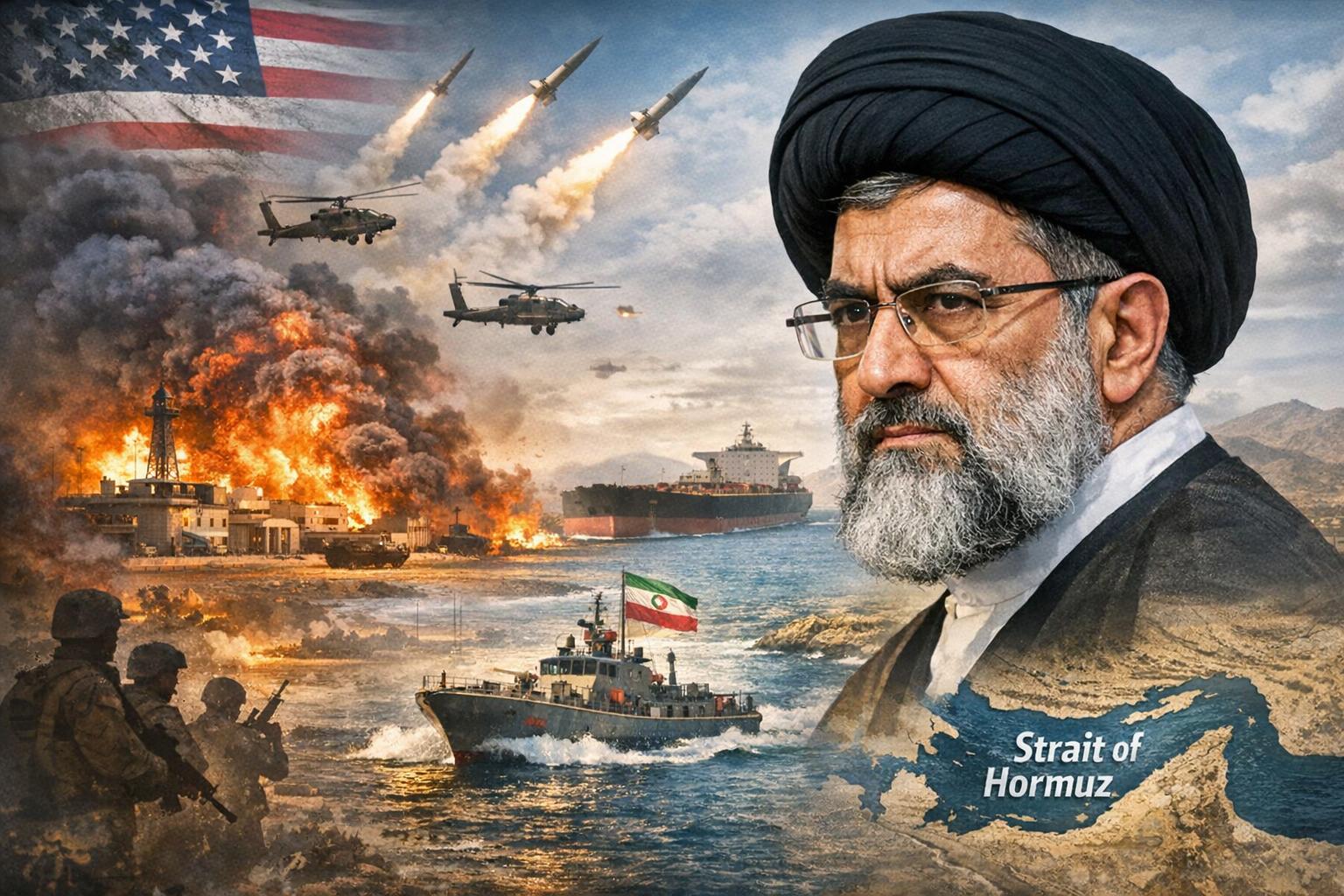
Iran’s newly appointed Supreme Leader Mojtaba Khamenei delivered a strong and defiant message in his first public statement since assuming the country’s highest leadership position, warning that Iran will continue responding to what it describes as hostile actions by the United States and its allies. In the message broadcast on state television on Thursday, March 12, Khamenei vowed revenge for what he called crimes committed against Iran and signaled that attacks linked to ongoing regional tensions could continue, particularly against American military installations located in neighboring countries.
The message, read by a news anchor on national television, did not include a live appearance by Khamenei himself, but it clearly outlined the new leadership’s stance toward the United States and regional security. His remarks emphasized that Iran considers the presence of American military bases in the region as a direct threat and accused Washington of using those facilities to exert influence and control over nearby nations. According to the statement, Iran believes that the network of US bases across the Middle East has played a central role in actions that Tehran views as aggression against the country.
Khamenei also stressed that the strategic Strait of Hormuz should remain closed as a form of leverage in the ongoing confrontation with the United States. The narrow waterway, which connects the Persian Gulf to the Gulf of Oman and the Arabian Sea, is one of the most critical oil transit routes in the world, carrying a significant share of global energy supplies. Any disruption in the strait could have far-reaching consequences for international energy markets and global trade. By calling for its continued closure, Iran’s new leader signaled a willingness to use strategic geography as a tool in the country’s broader geopolitical struggle.
In the statement, Khamenei said that Iran had resisted what he described as attempts by outside forces to weaken or divide the country. He argued that Iran’s leadership had successfully thwarted efforts aimed at partitioning the nation and undermining its sovereignty. According to him, continued pressure against the United States is necessary to protect Iran’s independence and counter what Tehran perceives as foreign interference in its affairs.
At the same time, the message attempted to distinguish between military targets and the countries hosting them. Khamenei insisted that Iran’s actions have been directed specifically at American military installations and not at the nations where those bases are located. He said that Iran still believes in maintaining friendly relations with neighboring countries and does not wish to harm them, but claimed that the presence of US forces within those nations creates a situation in which Iran feels compelled to respond.
Khamenei argued that attacks carried out by Iran or groups aligned with it have been a direct reaction to operations launched from American bases in the region. According to his remarks, Iran has repeatedly warned that such installations would be considered legitimate targets if they were used for actions against Iranian interests. He maintained that the strikes conducted so far have been deliberately limited to those facilities and that Iran has taken steps to avoid targeting civilian areas or the host countries themselves.
The statement underscores the increasingly tense relationship between Tehran and Washington, which has seen repeated confrontations across the Middle East in recent years. The presence of US military forces in several countries across the region has long been a point of contention for Iranian leaders, who view those deployments as part of a broader strategy to contain Iran’s influence. Meanwhile, the United States and its allies argue that their military presence is intended to ensure regional stability and deter potential threats.
Khamenei’s comments are likely to heighten concerns about the possibility of further escalation in the region. Any continued attacks on US bases could lead to retaliatory actions, raising fears of a broader conflict that might involve multiple countries across the Middle East. Analysts also note that threats to close or disrupt traffic through the Strait of Hormuz have historically been viewed as one of the most serious risks to global energy markets, given the waterway’s role as a vital shipping corridor for oil and gas.
The first statement from Iran’s new Supreme Leader therefore signals that Tehran’s confrontational stance toward the United States is expected to continue under his leadership. By emphasizing resistance, retaliation and strategic pressure, Khamenei appears to be setting the tone for Iran’s policy in a period marked by deep geopolitical tensions and ongoing security challenges across the Middle East.
The message, read by a news anchor on national television, did not include a live appearance by Khamenei himself, but it clearly outlined the new leadership’s stance toward the United States and regional security. His remarks emphasized that Iran considers the presence of American military bases in the region as a direct threat and accused Washington of using those facilities to exert influence and control over nearby nations. According to the statement, Iran believes that the network of US bases across the Middle East has played a central role in actions that Tehran views as aggression against the country.
Khamenei also stressed that the strategic Strait of Hormuz should remain closed as a form of leverage in the ongoing confrontation with the United States. The narrow waterway, which connects the Persian Gulf to the Gulf of Oman and the Arabian Sea, is one of the most critical oil transit routes in the world, carrying a significant share of global energy supplies. Any disruption in the strait could have far-reaching consequences for international energy markets and global trade. By calling for its continued closure, Iran’s new leader signaled a willingness to use strategic geography as a tool in the country’s broader geopolitical struggle.
In the statement, Khamenei said that Iran had resisted what he described as attempts by outside forces to weaken or divide the country. He argued that Iran’s leadership had successfully thwarted efforts aimed at partitioning the nation and undermining its sovereignty. According to him, continued pressure against the United States is necessary to protect Iran’s independence and counter what Tehran perceives as foreign interference in its affairs.
At the same time, the message attempted to distinguish between military targets and the countries hosting them. Khamenei insisted that Iran’s actions have been directed specifically at American military installations and not at the nations where those bases are located. He said that Iran still believes in maintaining friendly relations with neighboring countries and does not wish to harm them, but claimed that the presence of US forces within those nations creates a situation in which Iran feels compelled to respond.
Khamenei argued that attacks carried out by Iran or groups aligned with it have been a direct reaction to operations launched from American bases in the region. According to his remarks, Iran has repeatedly warned that such installations would be considered legitimate targets if they were used for actions against Iranian interests. He maintained that the strikes conducted so far have been deliberately limited to those facilities and that Iran has taken steps to avoid targeting civilian areas or the host countries themselves.
The statement underscores the increasingly tense relationship between Tehran and Washington, which has seen repeated confrontations across the Middle East in recent years. The presence of US military forces in several countries across the region has long been a point of contention for Iranian leaders, who view those deployments as part of a broader strategy to contain Iran’s influence. Meanwhile, the United States and its allies argue that their military presence is intended to ensure regional stability and deter potential threats.
Khamenei’s comments are likely to heighten concerns about the possibility of further escalation in the region. Any continued attacks on US bases could lead to retaliatory actions, raising fears of a broader conflict that might involve multiple countries across the Middle East. Analysts also note that threats to close or disrupt traffic through the Strait of Hormuz have historically been viewed as one of the most serious risks to global energy markets, given the waterway’s role as a vital shipping corridor for oil and gas.
The first statement from Iran’s new Supreme Leader therefore signals that Tehran’s confrontational stance toward the United States is expected to continue under his leadership. By emphasizing resistance, retaliation and strategic pressure, Khamenei appears to be setting the tone for Iran’s policy in a period marked by deep geopolitical tensions and ongoing security challenges across the Middle East.